About this sheet
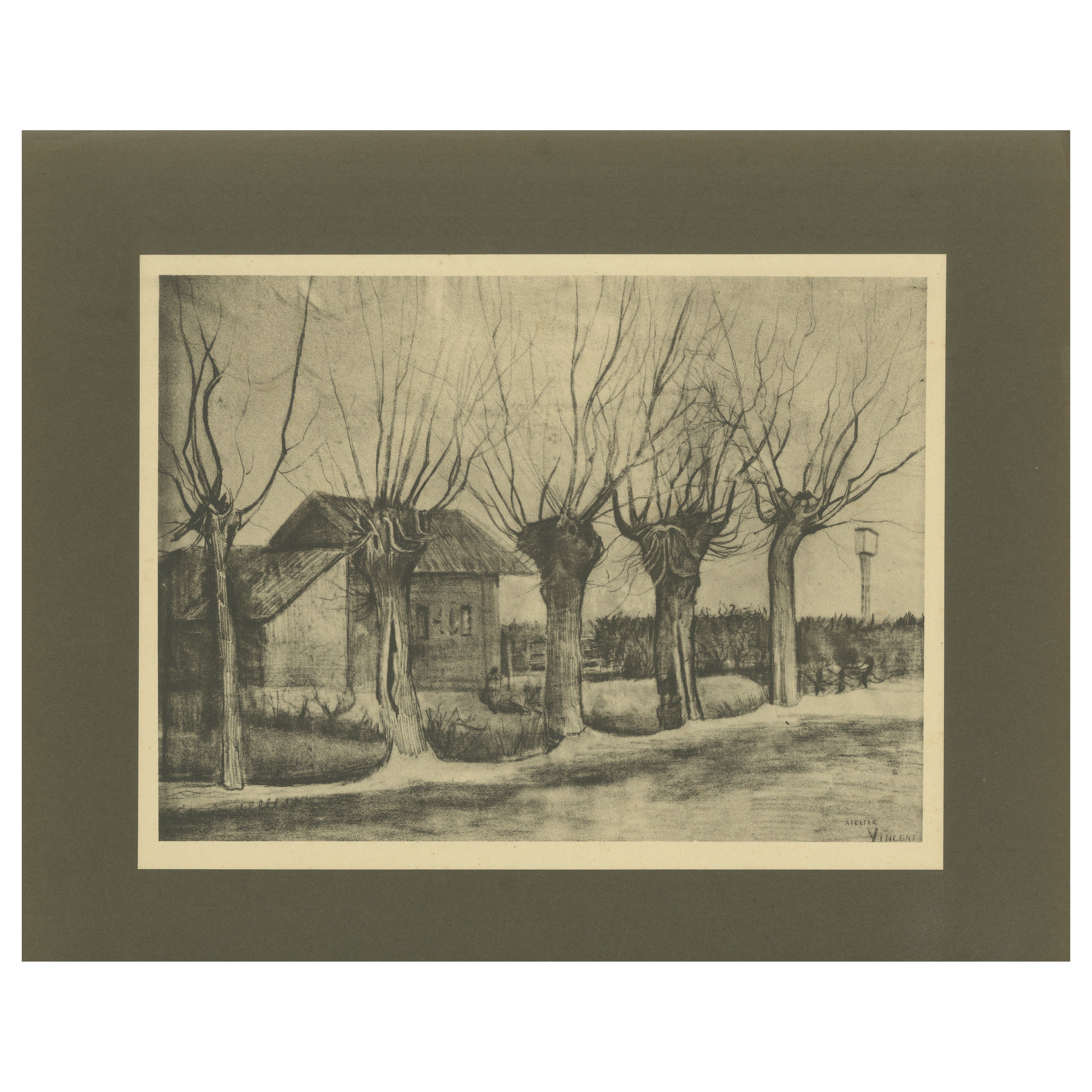
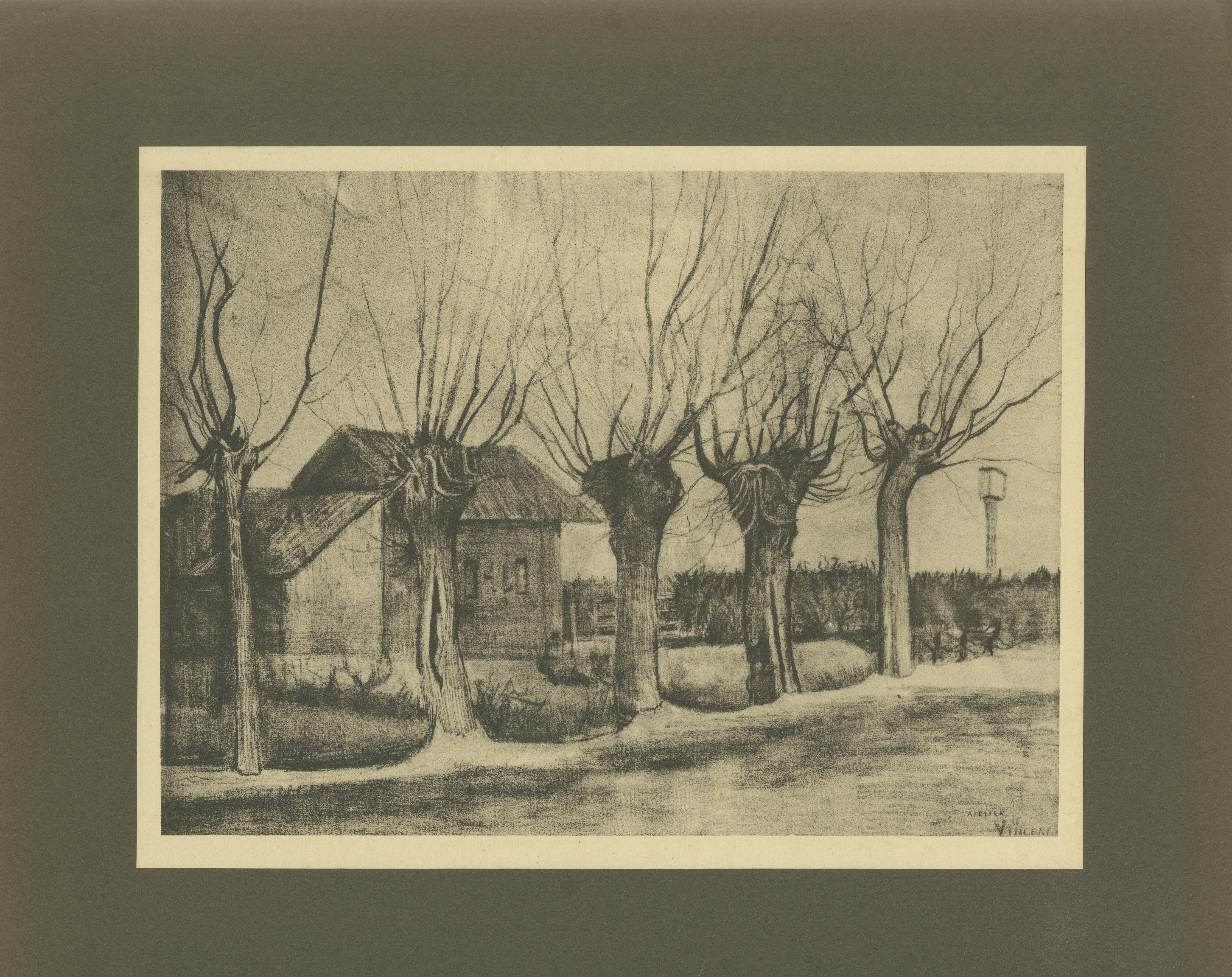
This 1928 print is a reproduction of Pollard Willows, a drawing by Vincent van Gogh created in 1882-1883 during his Dutch period. The scene features a row of distinctive pollarded willow trees lining a rural road, their gnarled trunks and bare branches standing stark against the sky. A simple farmhouse and a distant water tower complete the landscape, reinforcing the quiet and subdued character of the Dutch countryside.
Executed in charcoal and pencil, Van Gogh uses strong lines and cross-hatching techniques to give depth and texture to the trees, creating a sense of structure and rhythm. The bold contrast between the dark trunks and the lighter sky emphasizes the dramatic forms of the willows, which were a recurring subject in Van Gogh’s early works. The drawing captures the stillness of winter, with the barren trees acting as silent witnesses to the passing of time.
Van Gogh was deeply inspired by the rural landscapes of the Netherlands, often focusing on themes of solitude and resilience. The pollard willows, regularly pruned and shaped by human hands, symbolize both endurance and the relationship between nature and agricultural life. This drawing foreshadows the artist’s later, more expressive landscapes, where trees and fields take on a deeply personal and symbolic meaning.
Condition Summary:
The print is in good condition, with slight age-related wear along the edges.
Matting and Framing Tips:
A neutral or soft gray mat will enhance the subtle details of the drawing, while a simple black or dark wood frame will provide an elegant presentation. UV-protective glass is recommended for long-term preservation.