About this sheet
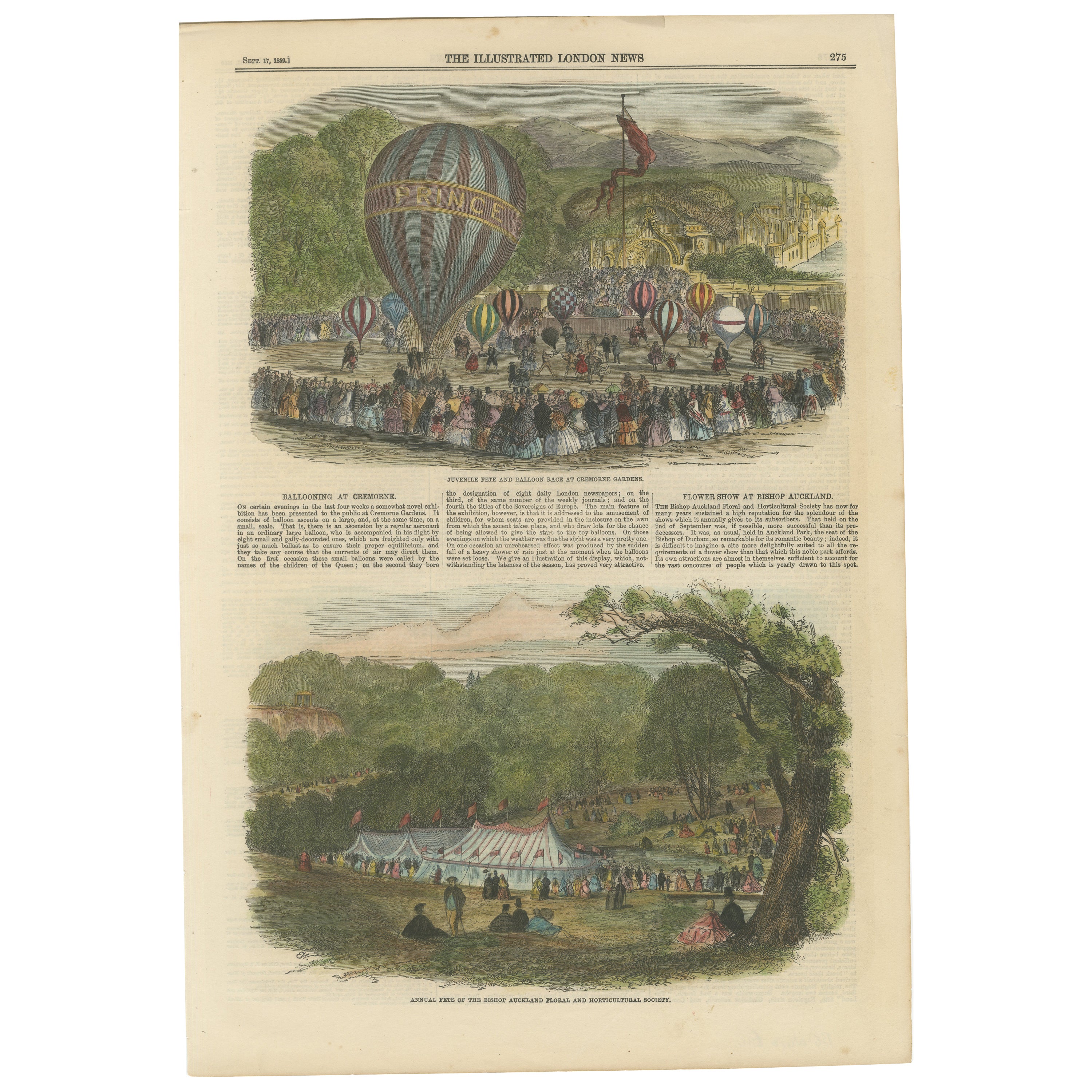
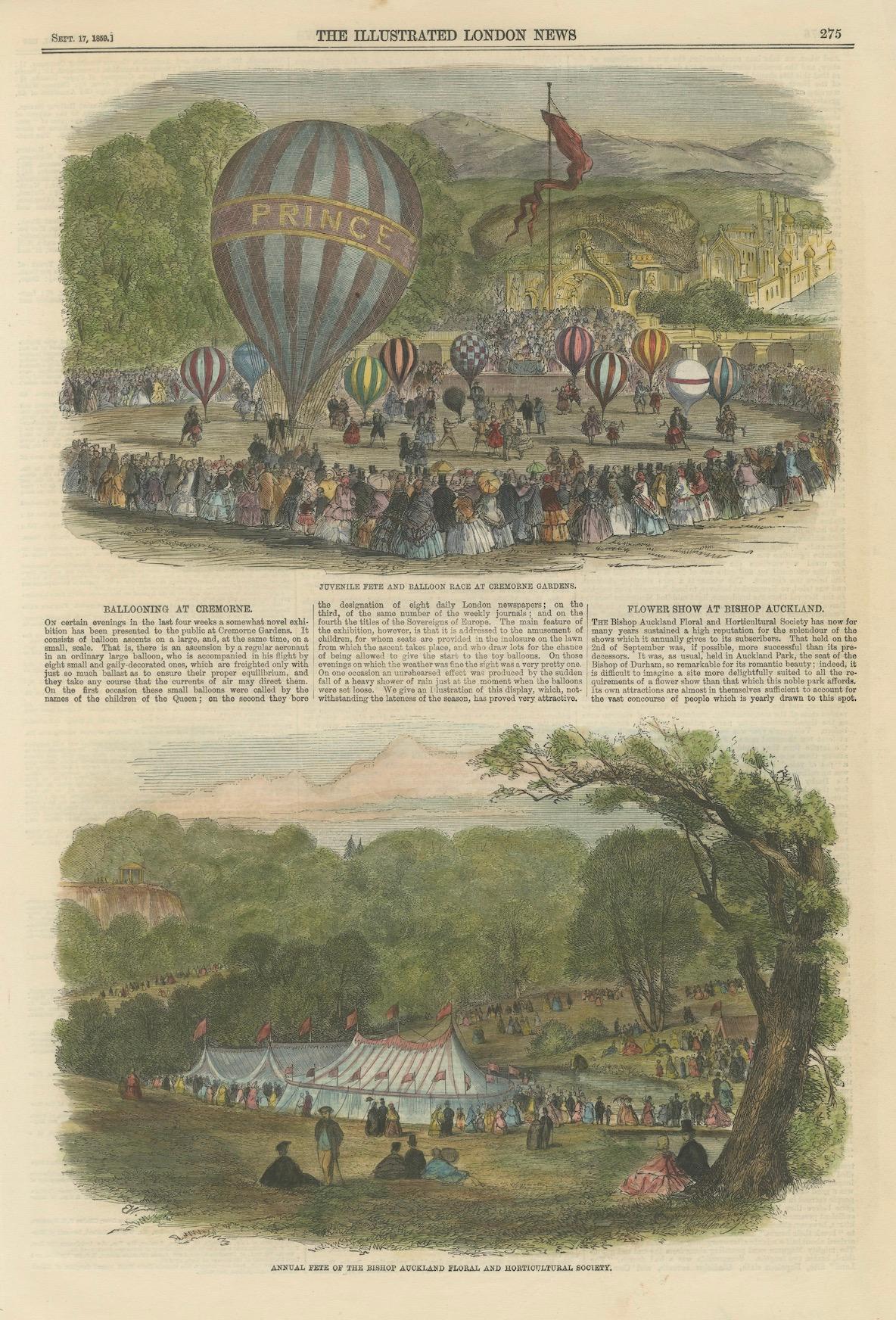
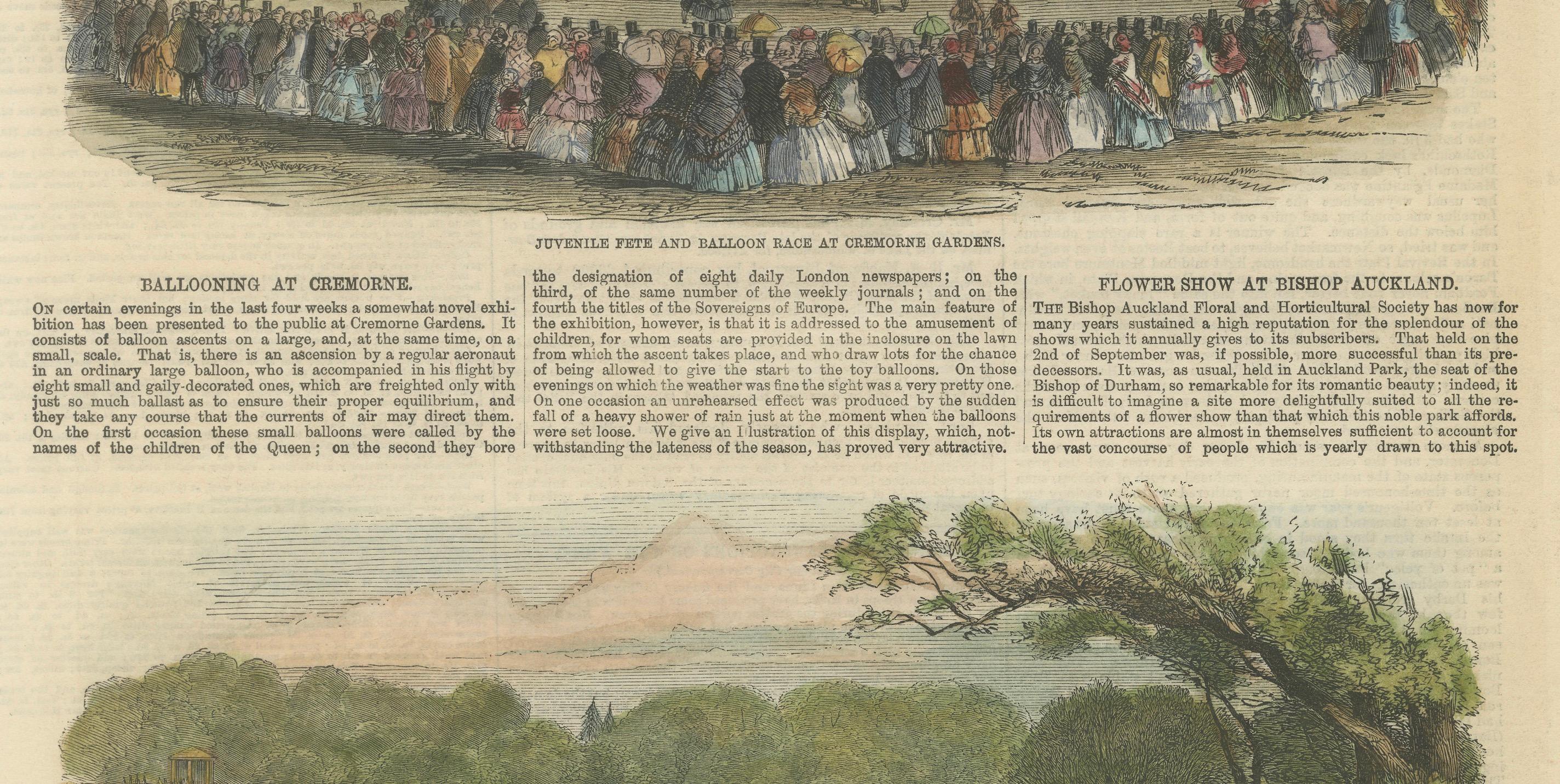
This page from "The Illustrated London News," dated 1863, captures two vibrant scenes from Victorian England, highlighting the era's popular leisure activities.
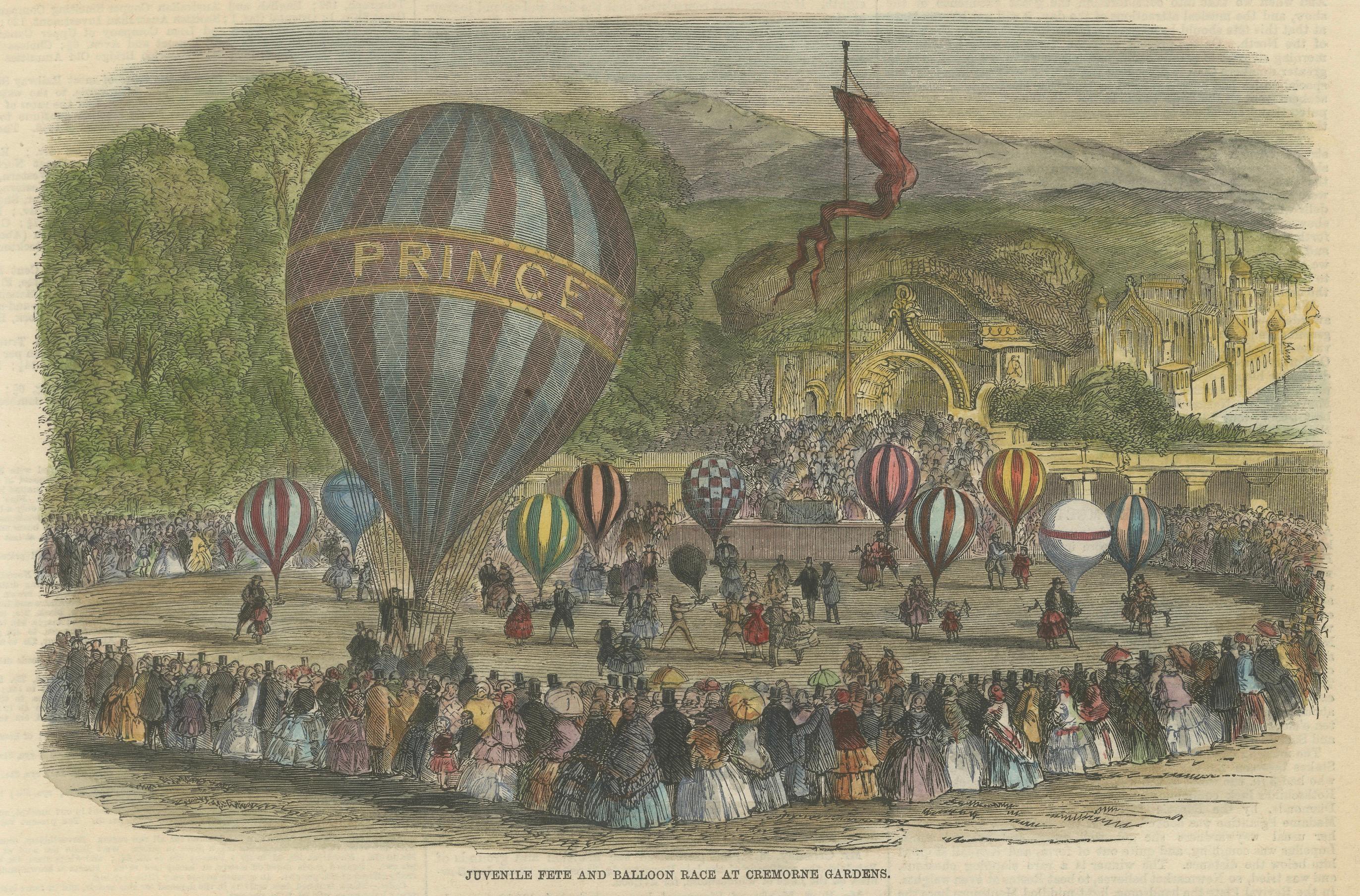
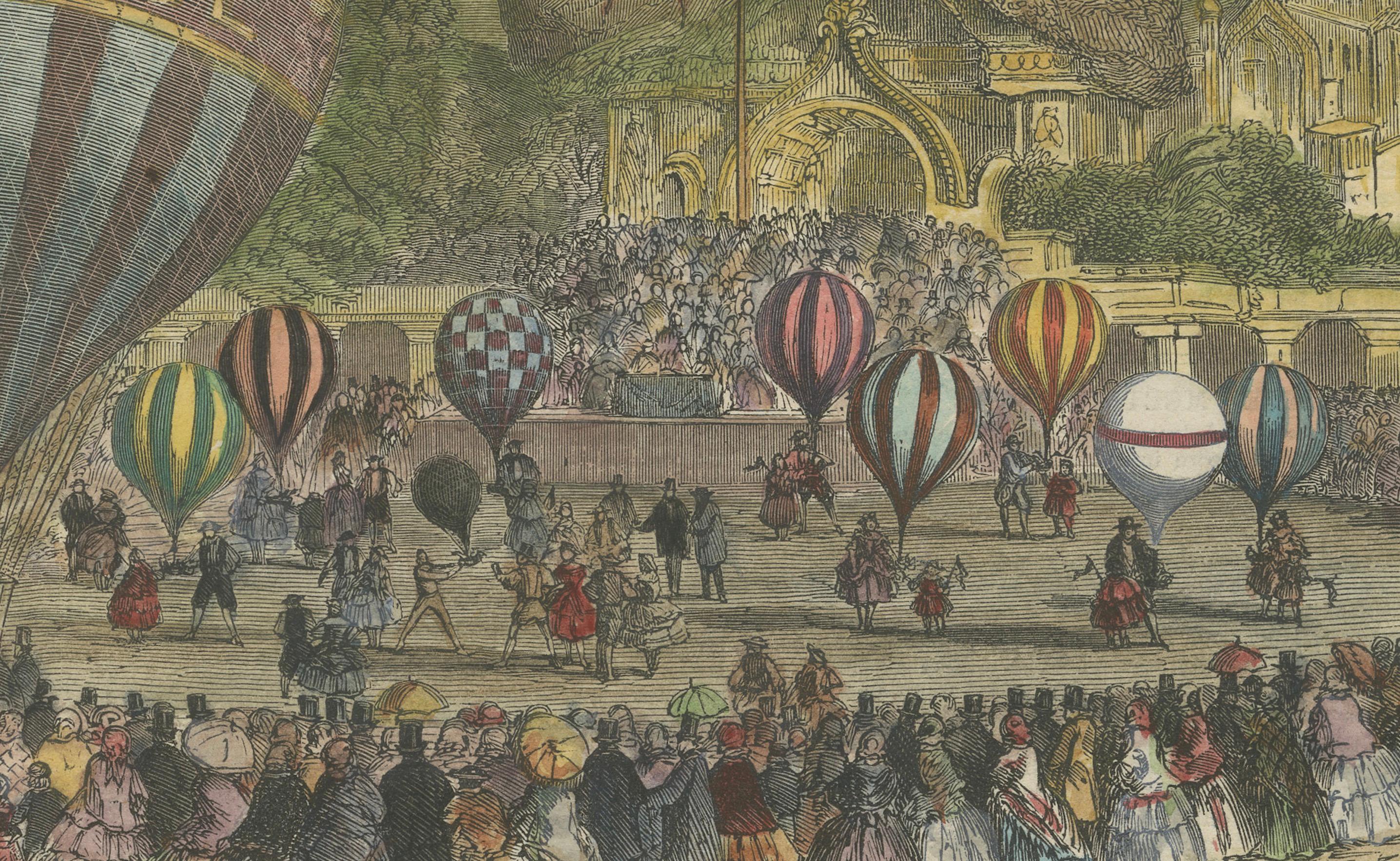
1. Top Illustration: "Ballooning at Cremorne"
The upper image showcases the excitement of a balloon race at Cremorne Gardens in London. This lively scene features several hot air balloons, with the central one prominently labeled "Prince." A large, well-dressed crowd gathers to witness the spectacle, reflecting the public's fascination with ballooning, a novel and thrilling form of entertainment during the 19th century. The detailed depiction of the gardens and the gathering crowd brings to life the bustling atmosphere of this popular event.
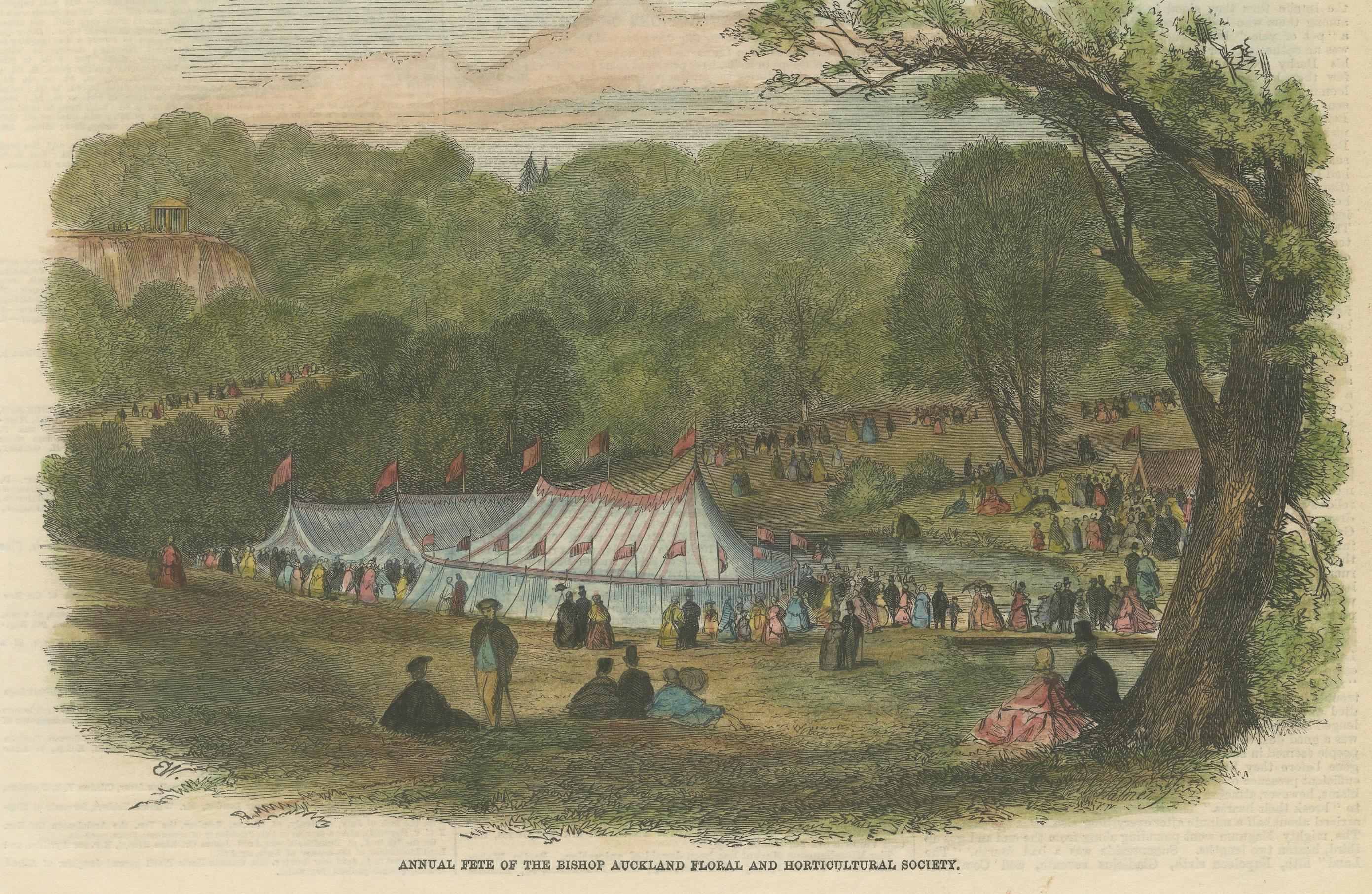
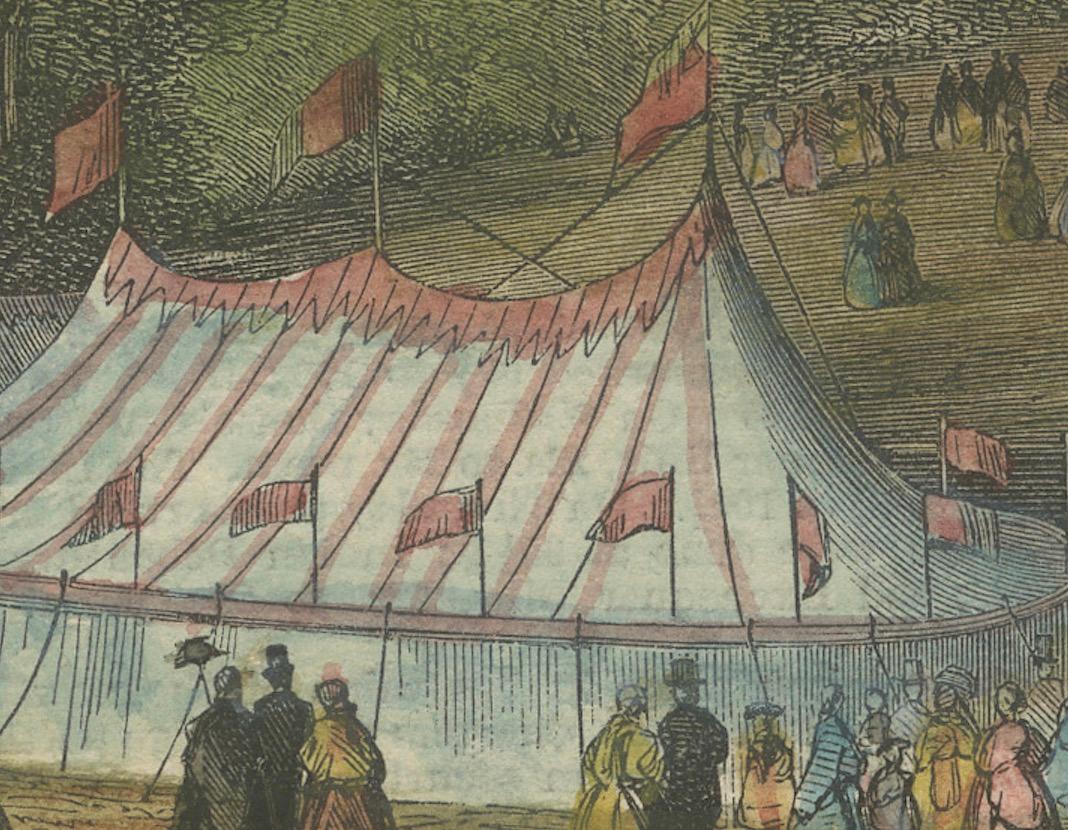
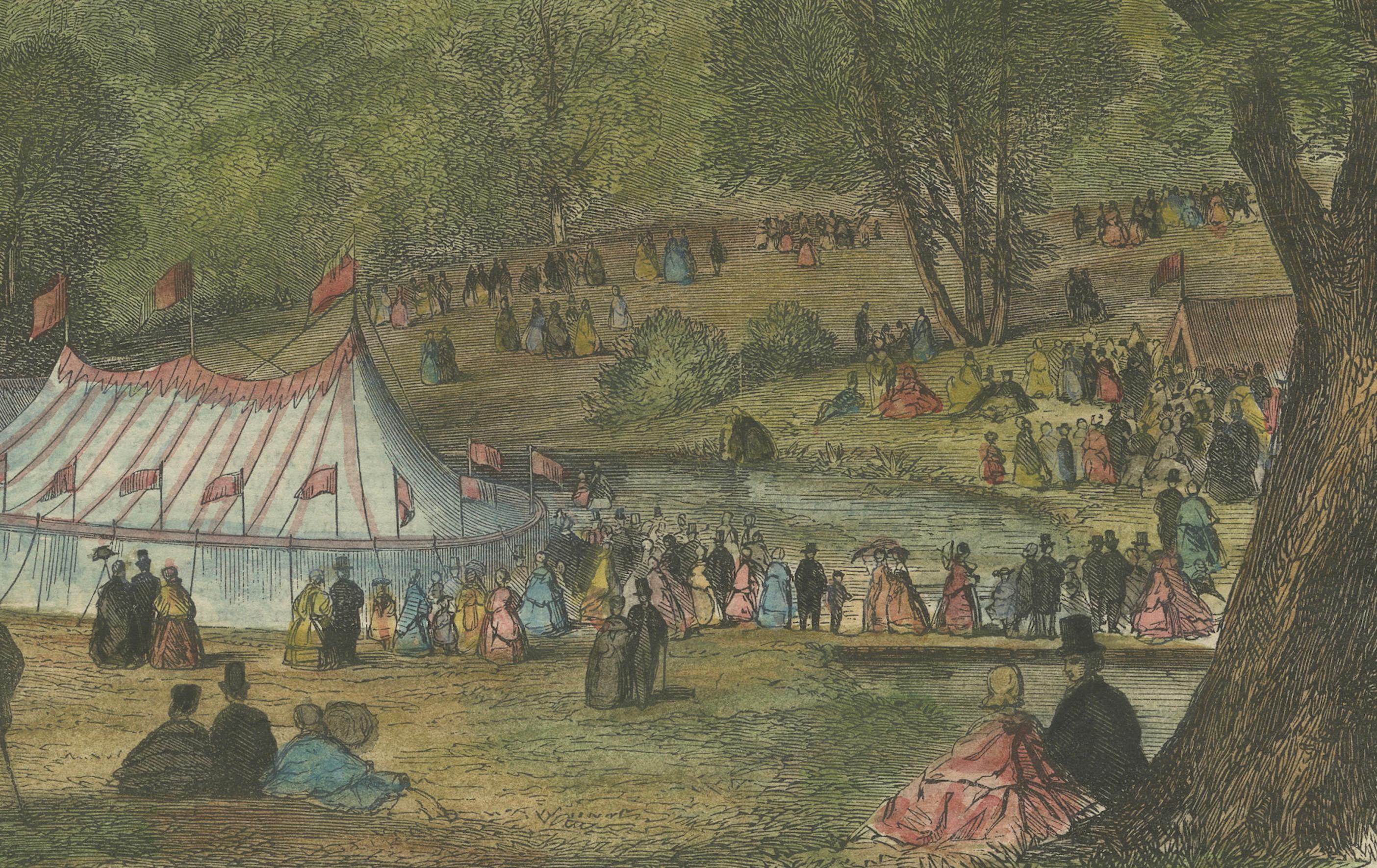
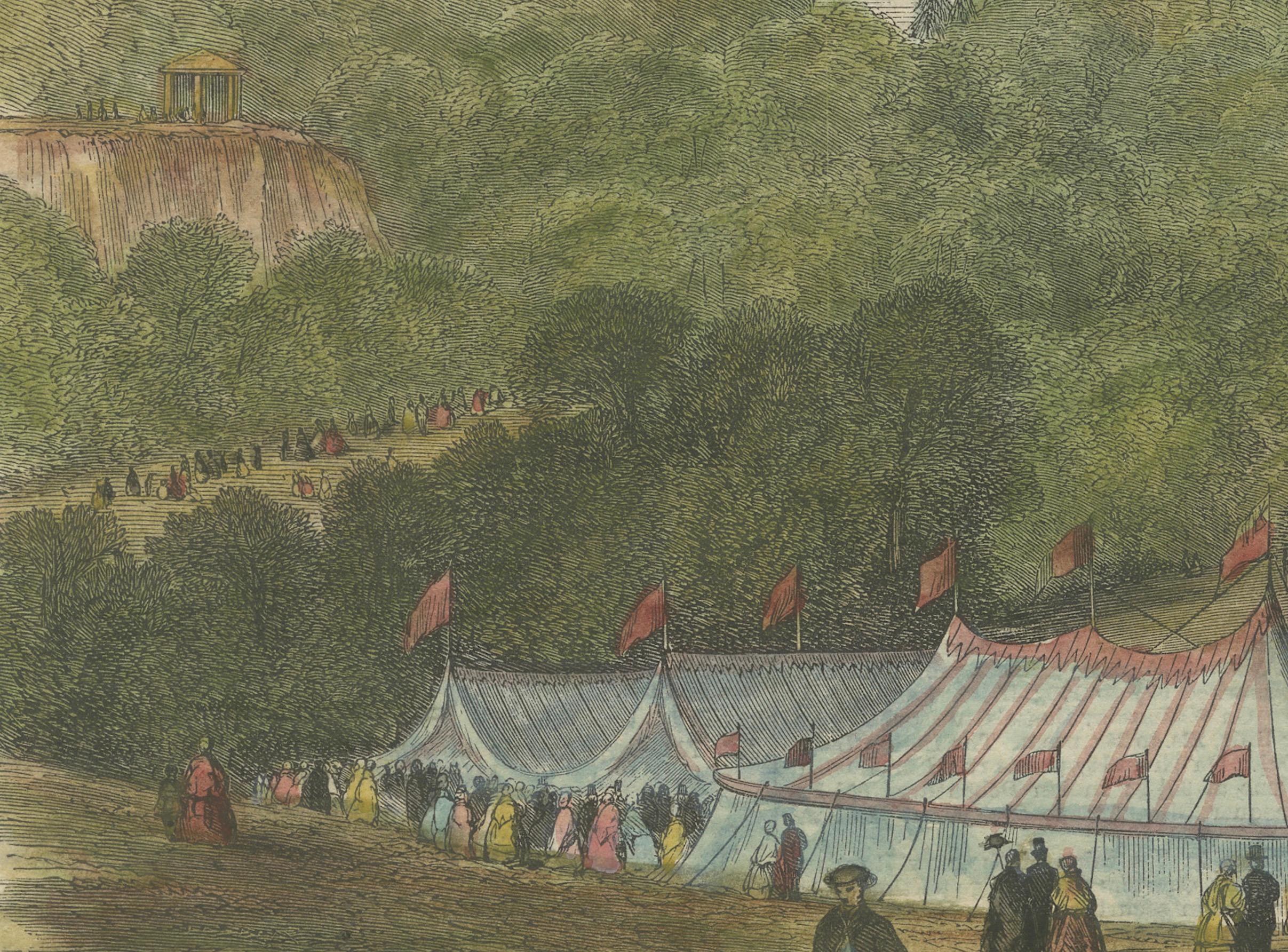
2. Bottom Illustration: "Annual Fête of the Bishop Auckland Floral and Horticultural Society"
The lower illustration presents a more tranquil setting at the annual fête organized by the Bishop Auckland Floral and Horticultural Society. Set in a lush, green landscape, a large tent stands at the center, surrounded by attendees enjoying the floral displays and horticultural exhibits. The scene conveys a sense of community and the peaceful enjoyment of nature, contrasting with the excitement of the balloon race above.
Together, these illustrations provide a vivid snapshot of mid-19th century English society, showcasing both the thrill of technological advances and the enduring appreciation of nature and communal gatherings.
In the 1860s, Auckland, New Zealand, was still a relatively small city, though it was growing steadily. By 1861, the population of Auckland was approximately 12,000 to 13,000 people. This figure includes both the urban area and its surrounding suburbs. Auckland was one of the major centers of European settlement in New Zealand at the time, and its population continued to grow rapidly throughout the decade as more settlers arrived and the city developed.
During the 1860s, "The Illustrated London News" was one of the most popular and widely circulated newspapers in the world. At its peak during this period, the newspaper had a circulation of around 300,000 to 400,000 copies per issue. This was a significant number for the time, reflecting the publication's popularity and reach, both in the United Kingdom and internationally, including in the colonies such as Australia. The exact number of copies printed for each issue could vary, but it consistently remained in the hundreds of thousands.