About this sheet
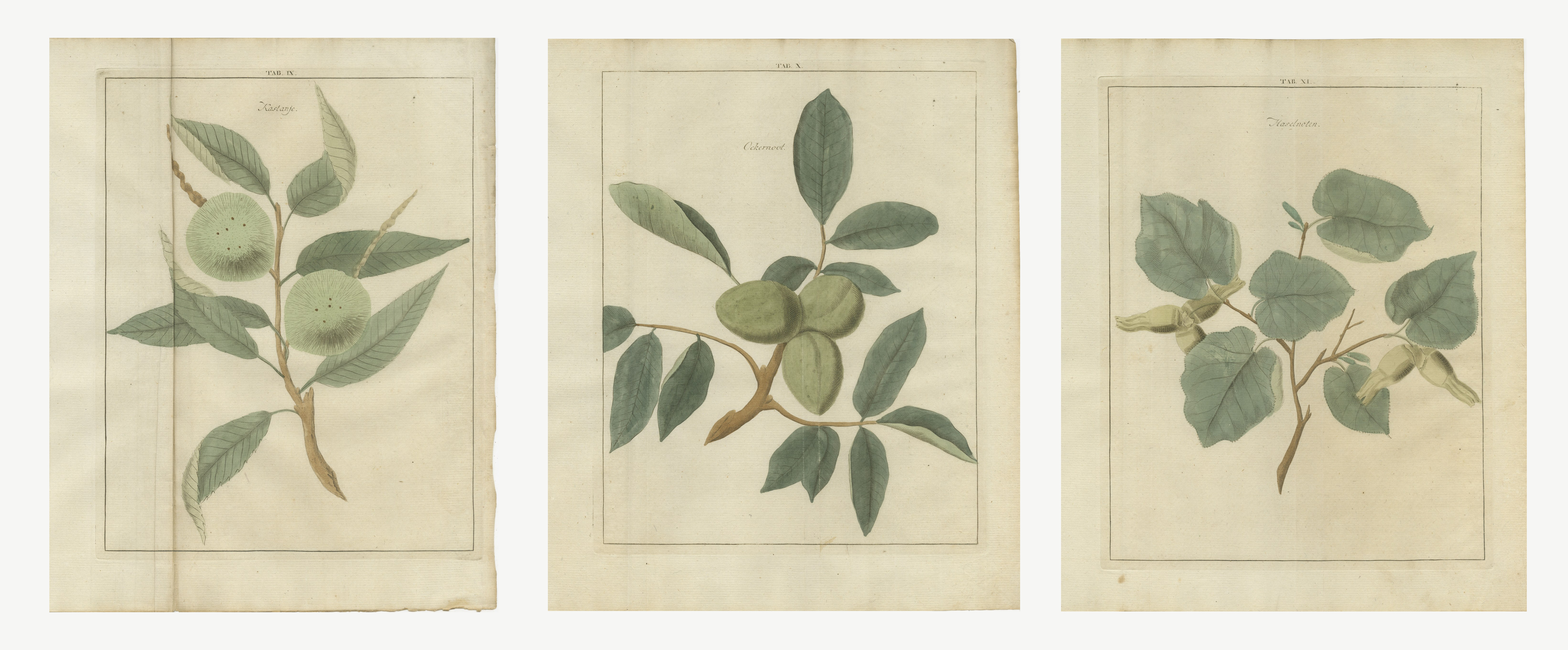
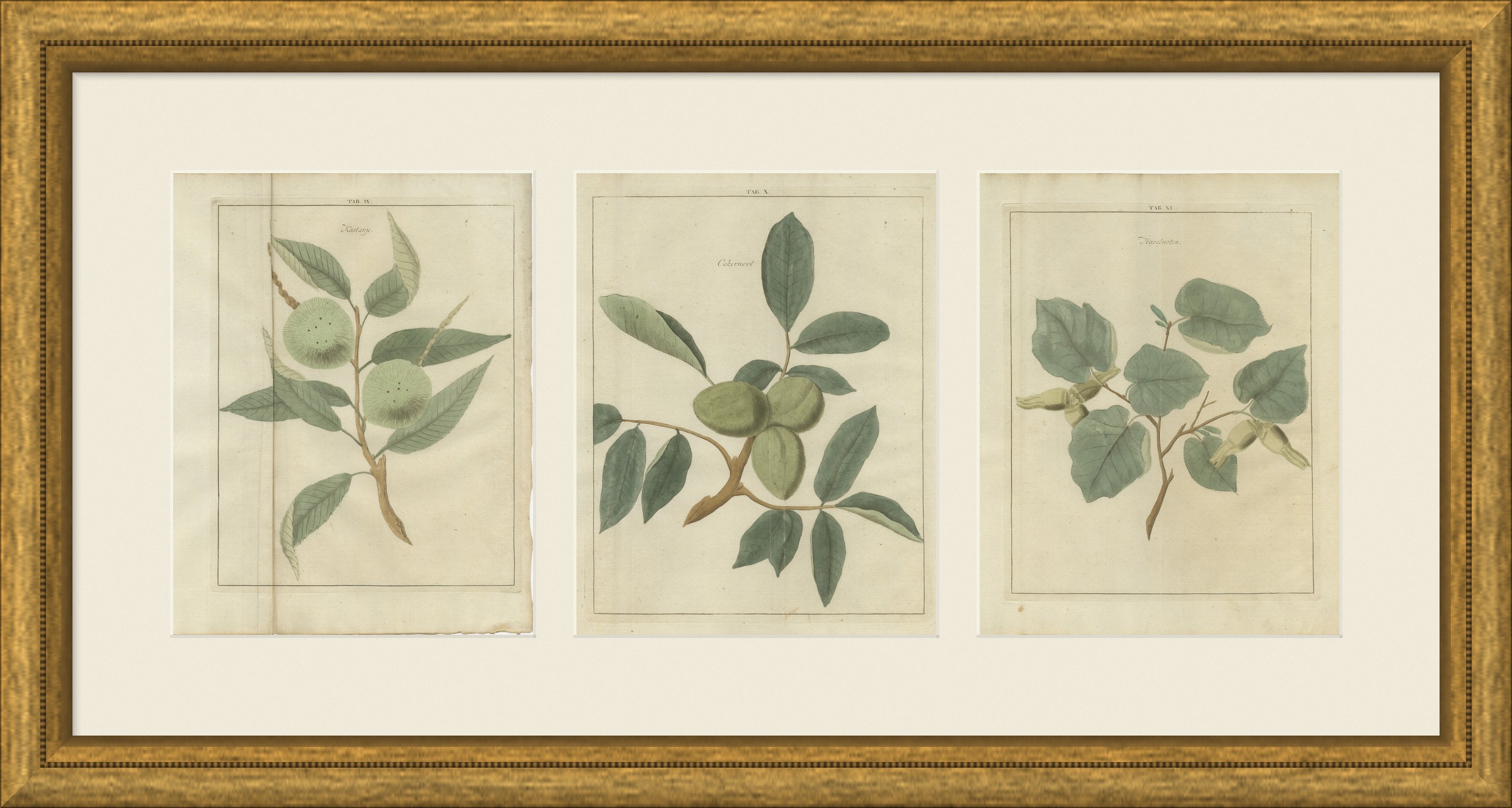
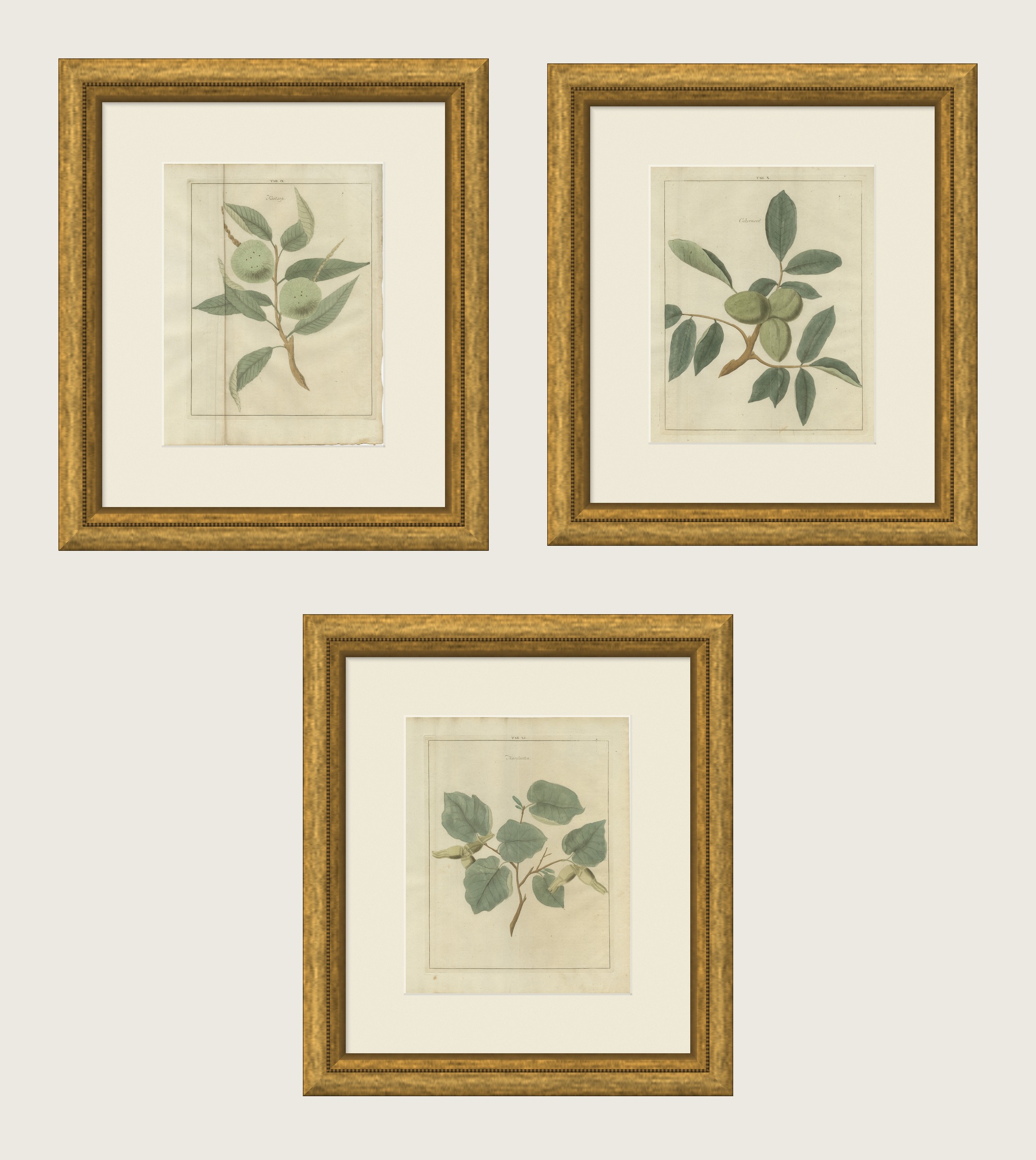
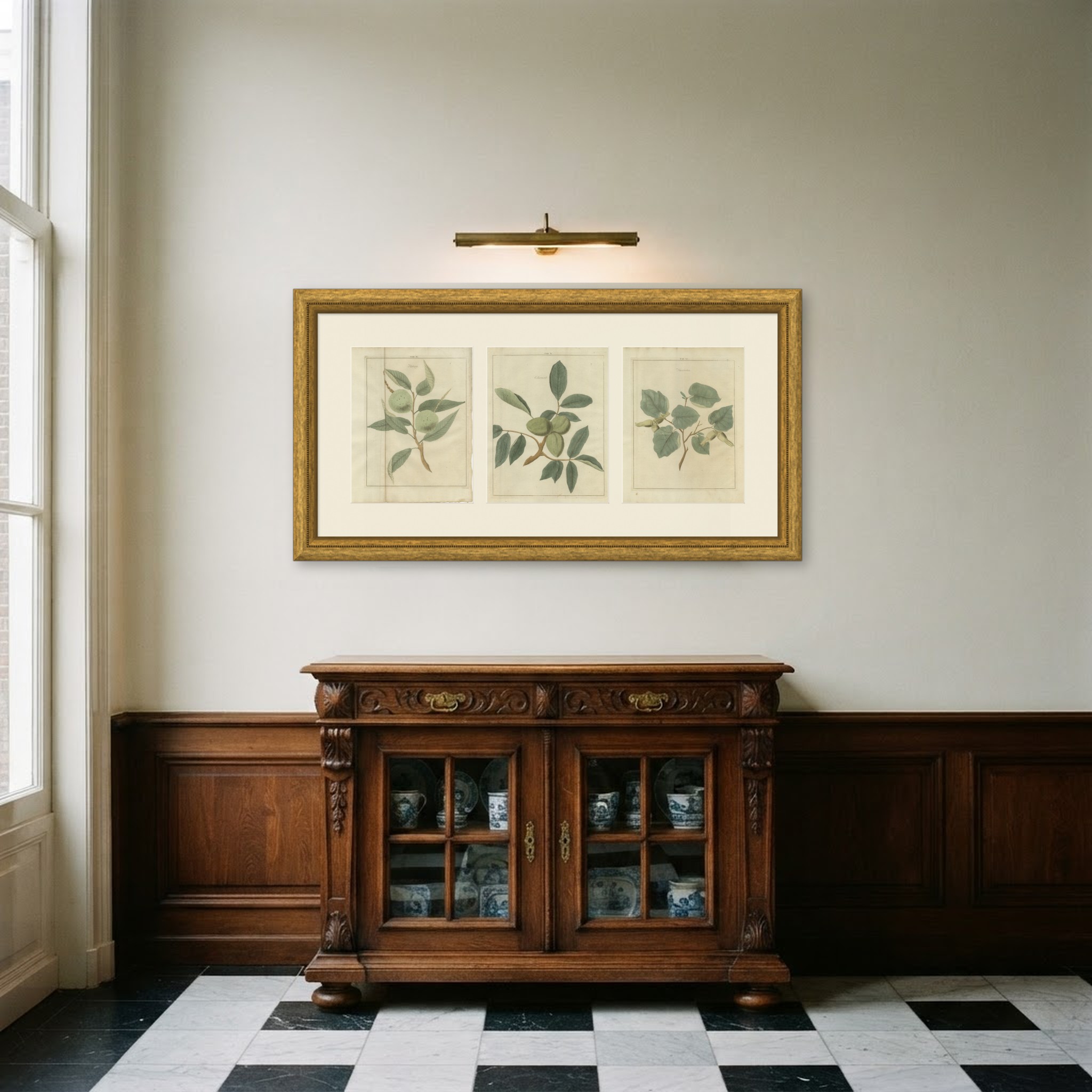
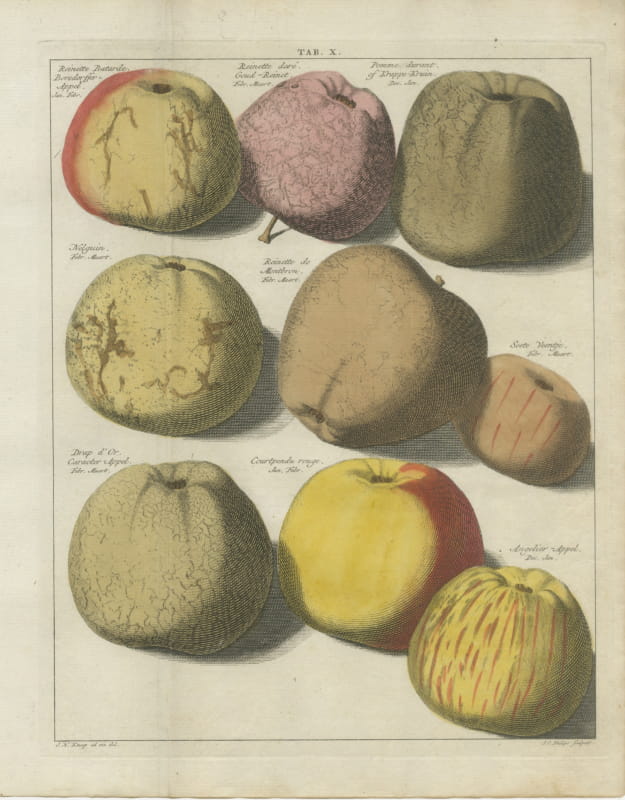
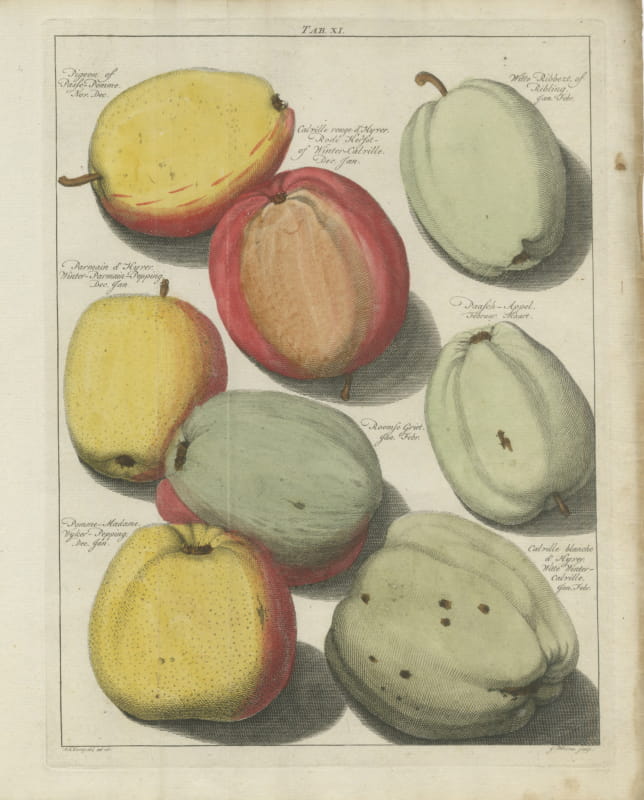
A set of three original hand-colored antique fruit plates: sweet chestnut, walnut and hazelnut, the nut sheets from Johann Hermann Knoop's Dutch pomological folio, offered together. Their printed numbers run consecutively, "TAB. IX", "TAB. X" and "TAB. XI", and all three were taken from one copy of the book, so paper, engraving and original coloring agree across the group. Each plate shows one species on its own branch, the nut still in its burr or husk, with leaves and in one case catkins, and with the Dutch name lettered in engraved script. Knoop drew each from the living branch. The three share a quiet palette of greens and browns, unusual in a fruit book and the reason this group hangs as easily as it does. They are three original sheets sold together as one lot, and the set is never split.
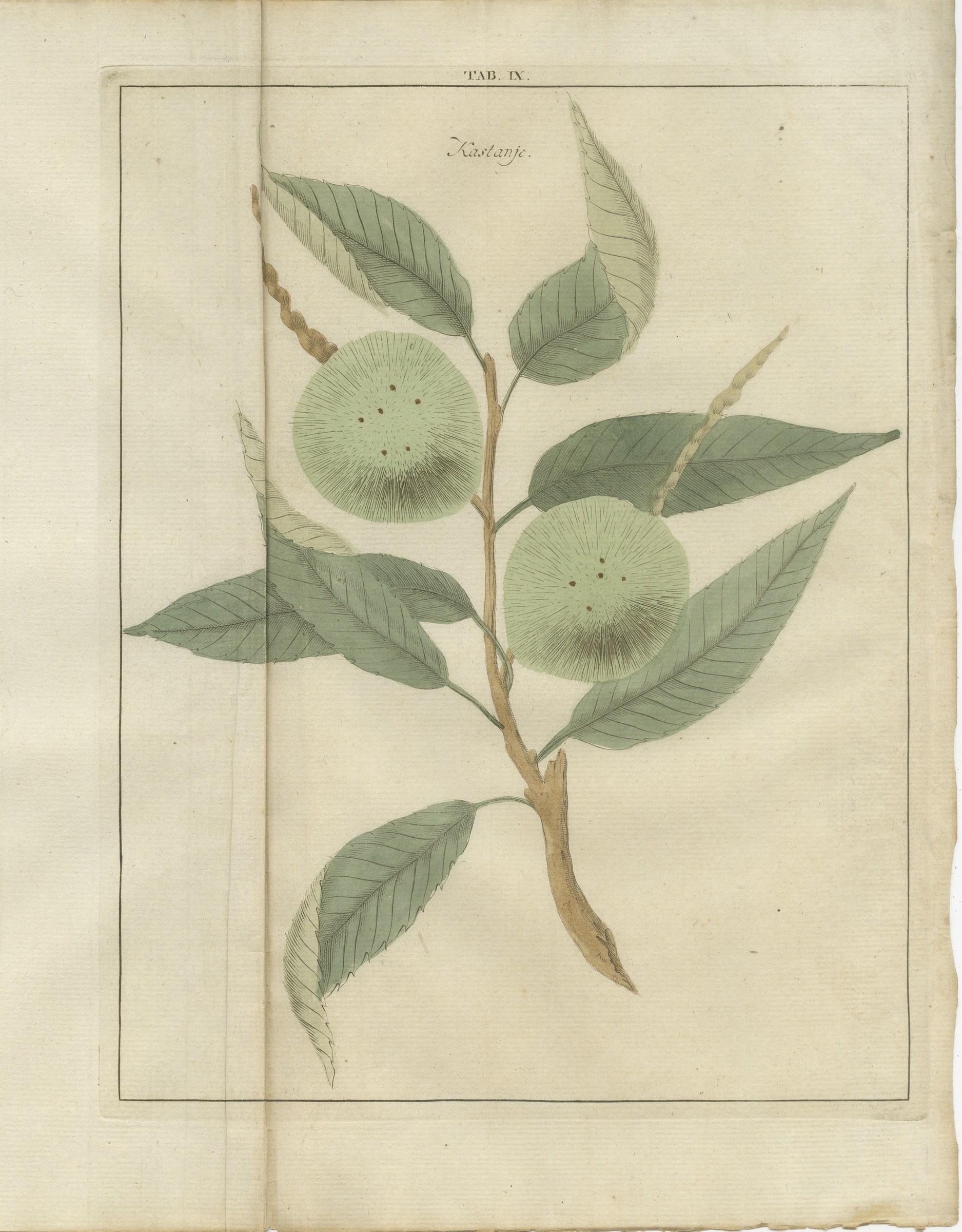
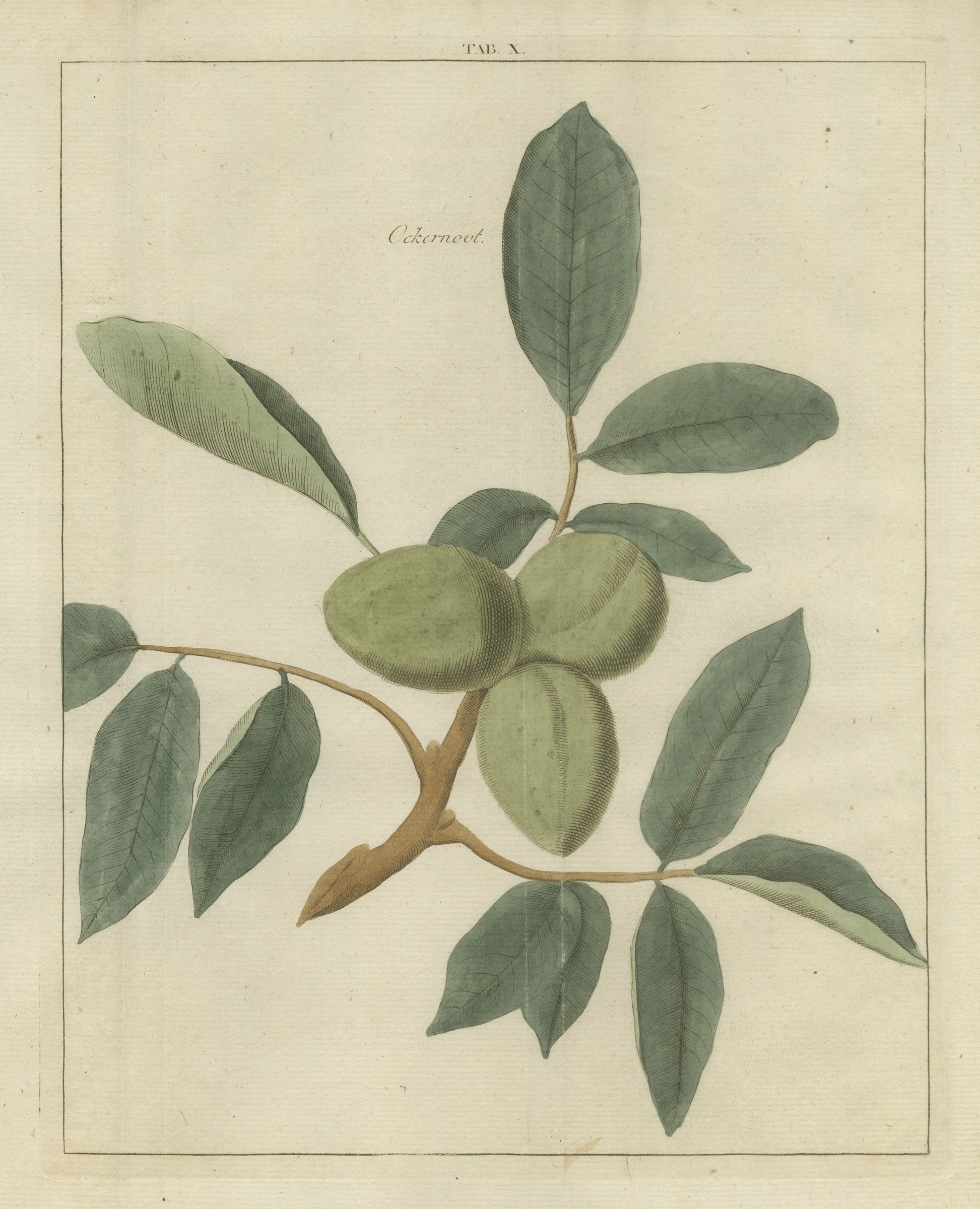
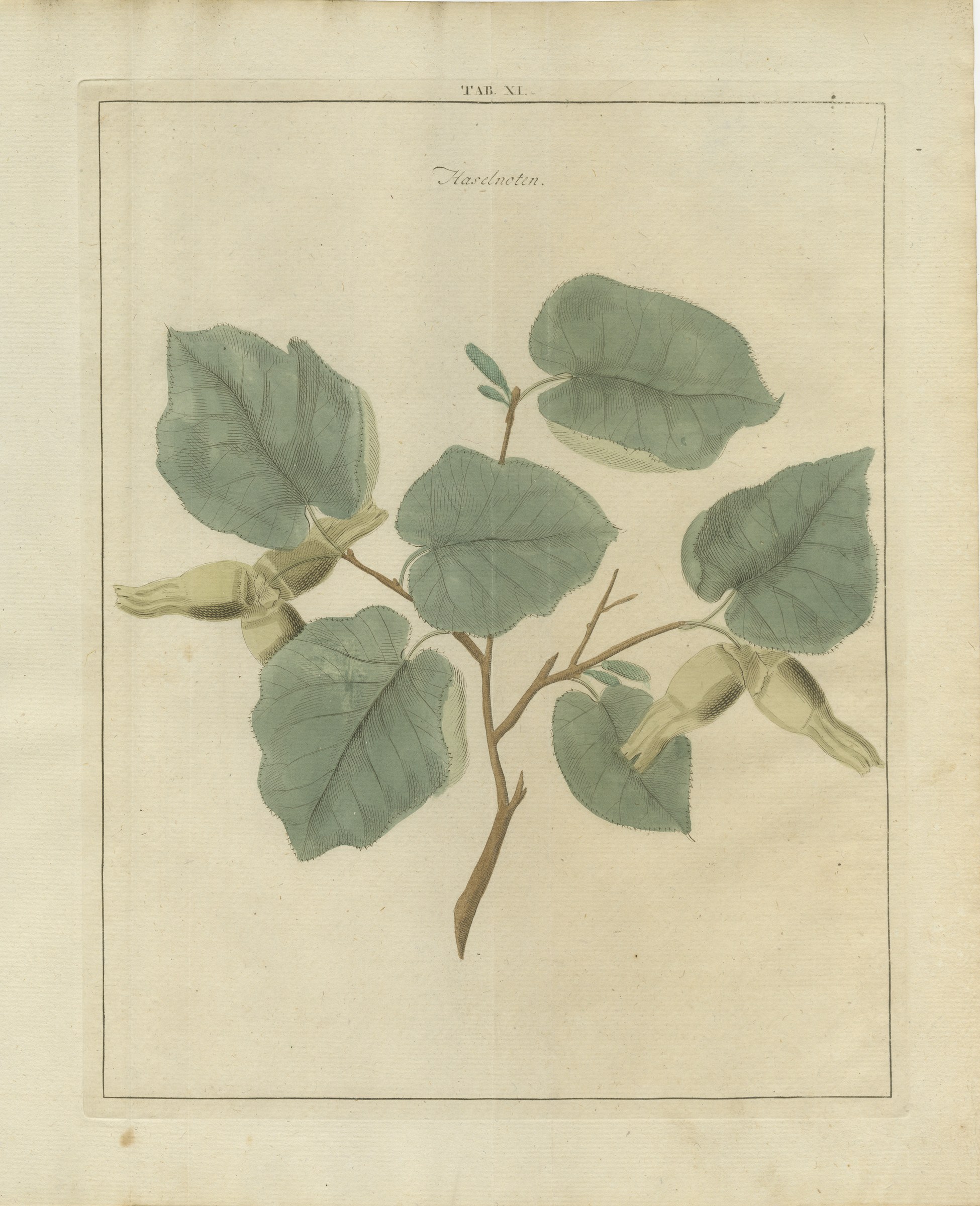
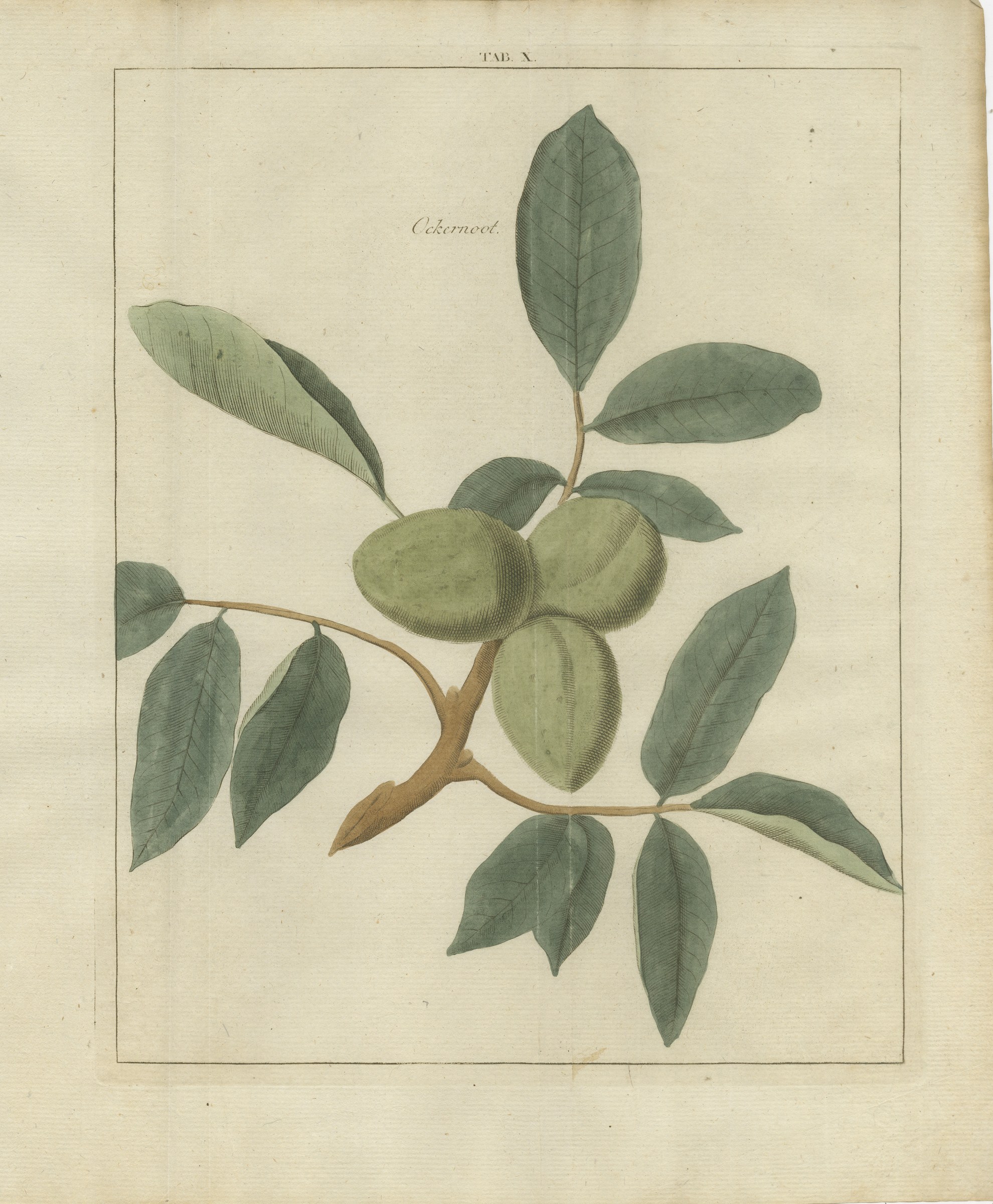
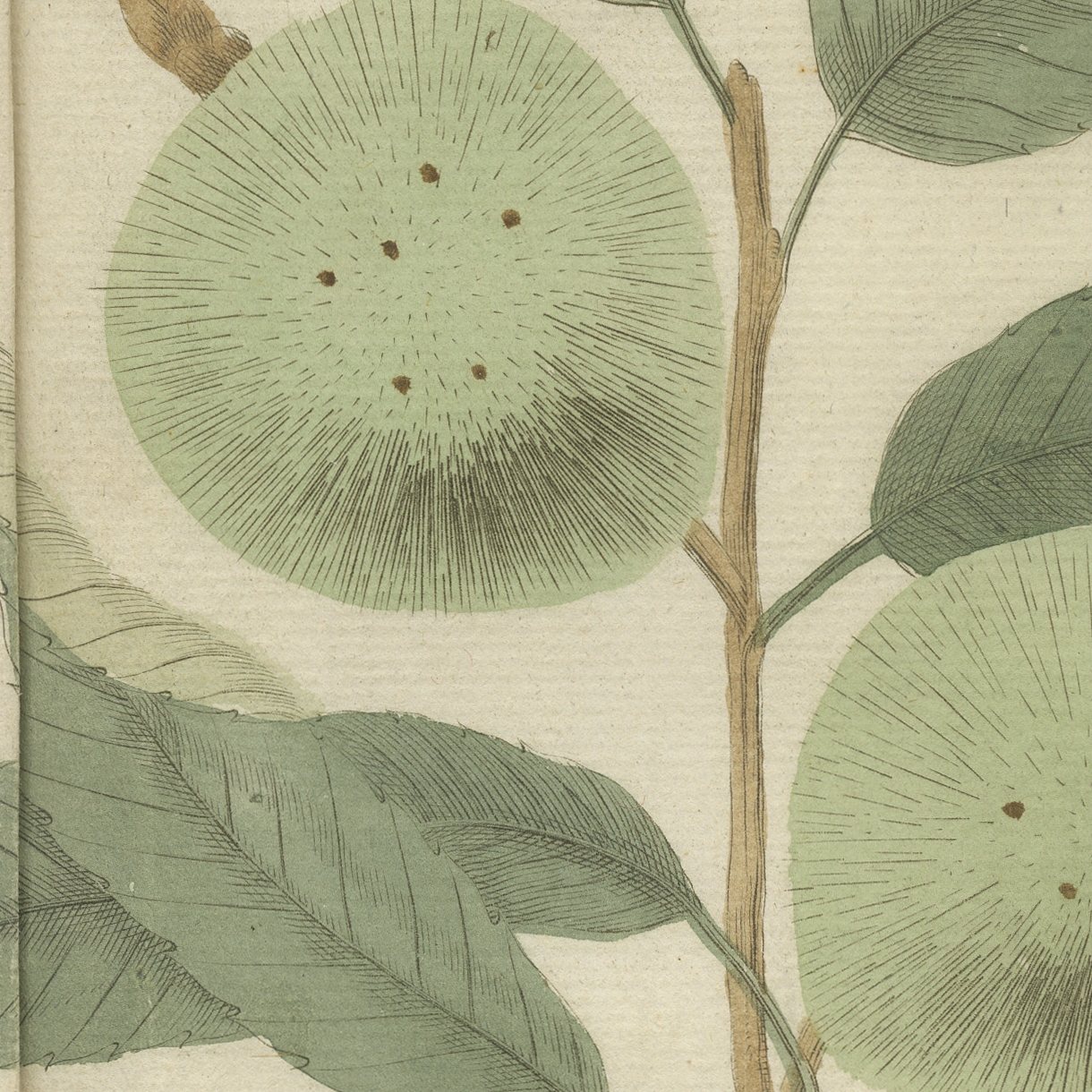
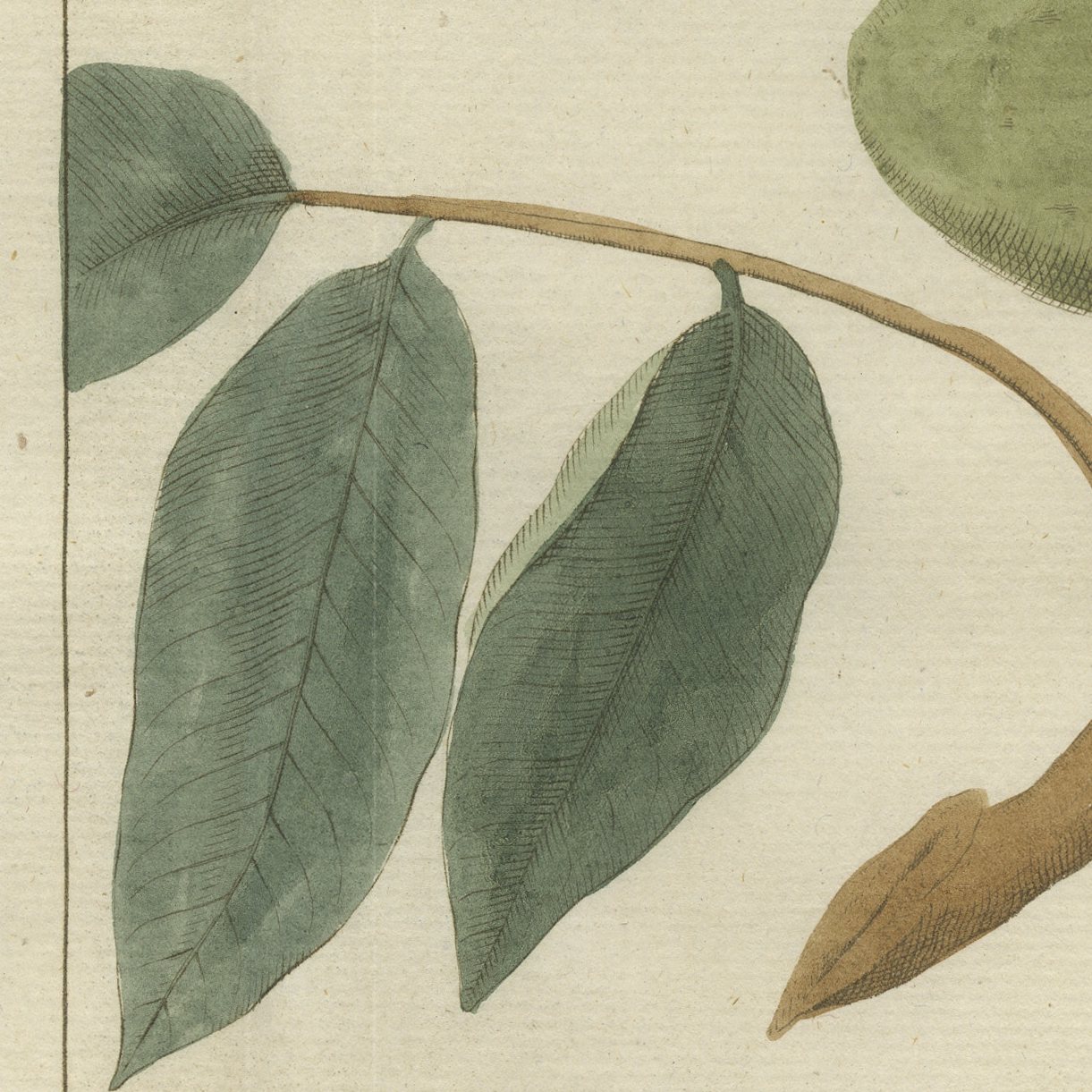
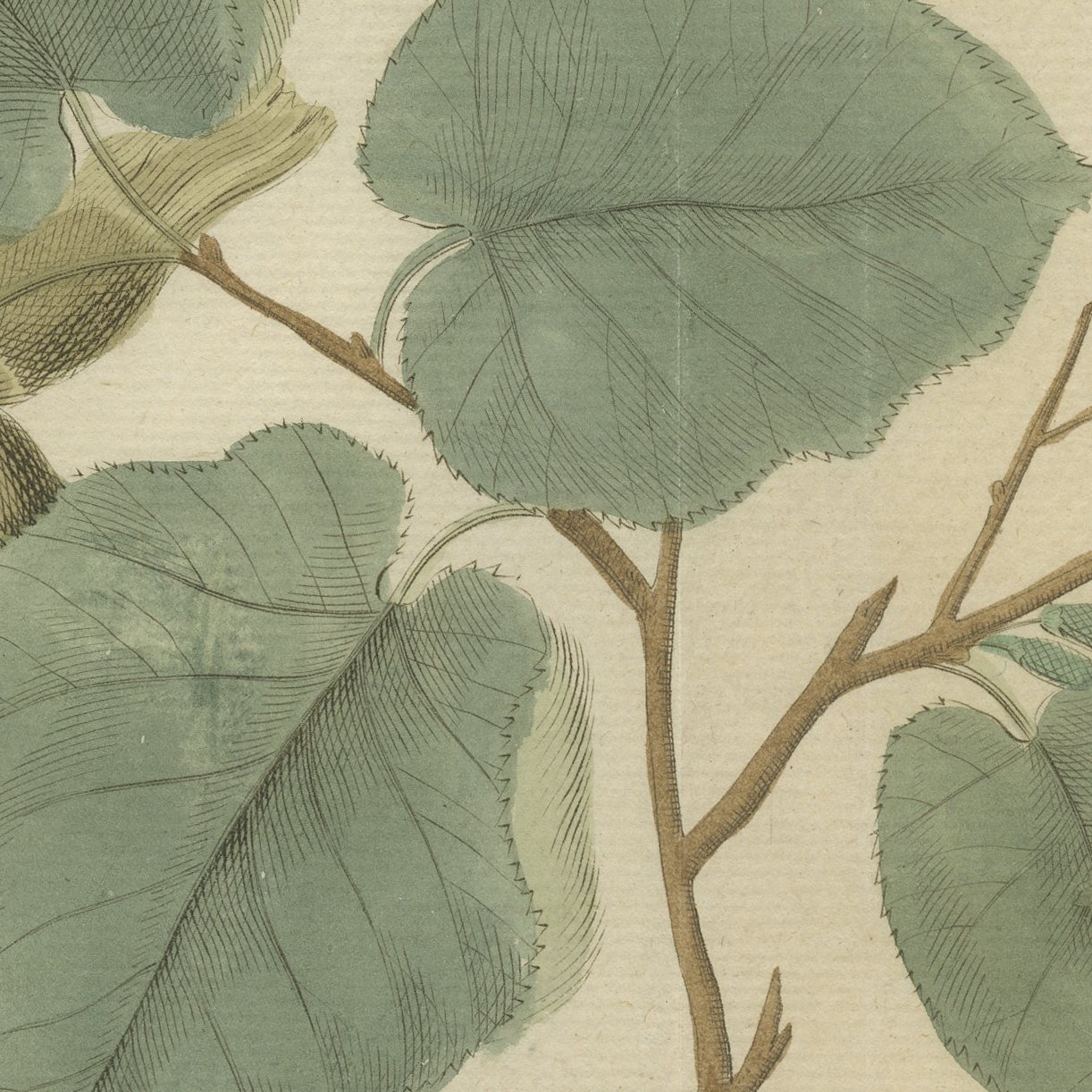
Sweet chestnuts begin the group on plate "TAB. IX", two spined burrs still closed on the branch with their cream catkins trailing beside them and long saw-toothed leaves below. Every spine is engraved on its own and then washed yellow-green browning at the tip, so the husk looks prickly to the touch. It is the largest and most architectural of the three nut sheets, and it anchors the trio. Walnuts come next, on plate "TAB. X": three nuts still sealed in smooth green husks, drawn before they split, with paired leaflets running along the branch. The olive greens here are flatter and cooler than the chestnut sheet, broken only by a yellow bloom on the lit side of each husk, and that restraint is what makes the three nut plates sit together so quietly when they are hung in a row. Hazelnuts complete the group on plate "TAB. XI", five nuts in two clusters, each cupped in a ragged leafy husk whose torn edges are cut line by line and then washed a yellow-green that pales to cream at the fringe. Where a shell shows through it is a warm hazel brown, the one really warm note in the three nut sheets, and it finishes the trio on a softer tone than it began.
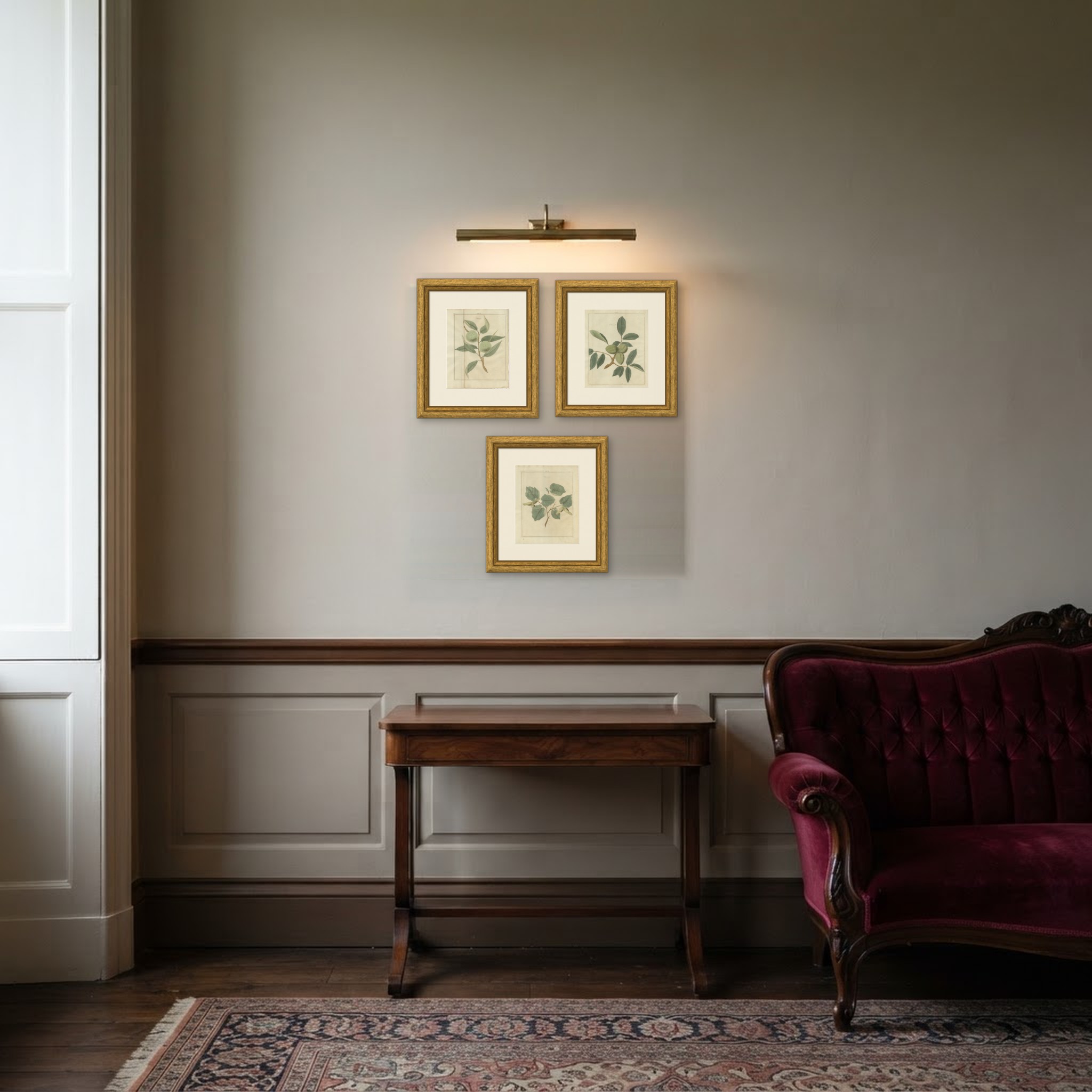
This sheet was published at Amsterdam and Dordrecht in 1790 by Allart, Holtrop, de Leeuw and Krap, in Johann Hermann Knoop's description and figures of the best sorts of apples and pears, introduced by Johannes Florentius Martinet. Knoop had charge of the Mariënburg garden at Leeuwarden and knew his fruit as a working gardener rather than a compiler, which is why his plates are still consulted on old Dutch varieties. Each is a copper engraving finished by hand in watercolor, the washes sitting over the engraved line and varying in strength from fruit to fruit as only hand color does. What makes these three work as a set is restraint. Where the berry and stone fruit sheets of the same volume are bright, the nut plates keep to greens, olives and browns, so three of them together give a wall texture rather than color: the spined chestnut burr, the smooth green walnut husk and the frayed hazel cups answer one another in structure. That suits rooms where a vivid print would be wrong, a library, a paneled study, a stairwell or a corridor, and dark frames with narrow mounts carry the mood. Hung as a horizontal row of three they read as one considered work, and a matched nut group from a 1790 Dutch folio is not a thing that turns up assembled.
Light uneven toning, browner towards the edges. Marked handling soiling along the edges of all three sheets. Scattered foxing in the margins of all three sheets. Slight wear at the corners of one of the three sheets.
These are original antique plates, not modern reproductions. This item is sold unframed. Any framed or interior images are shown for presentation and inspiration only, unless the listing explicitly states that the item is sold framed.