About this sheet
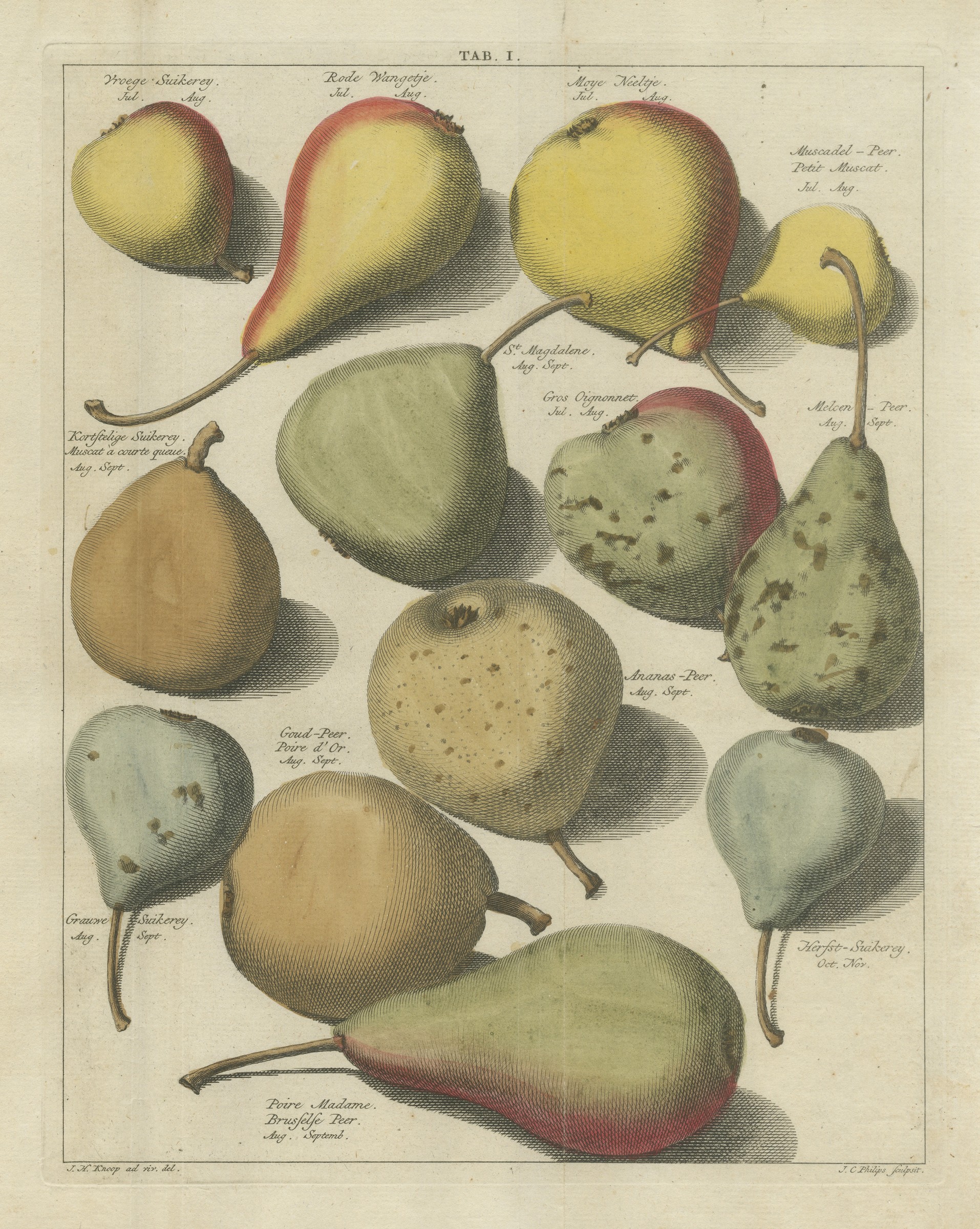
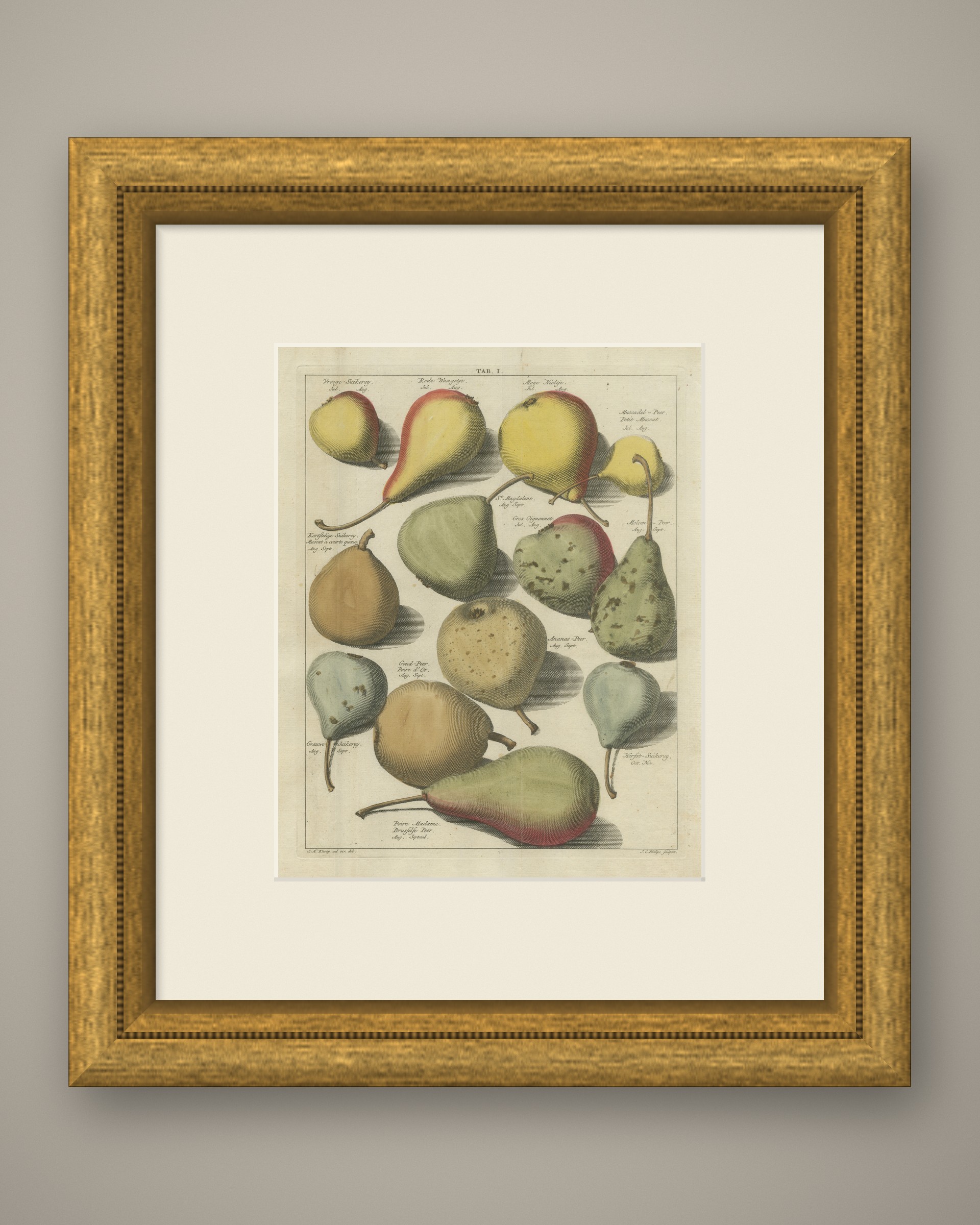
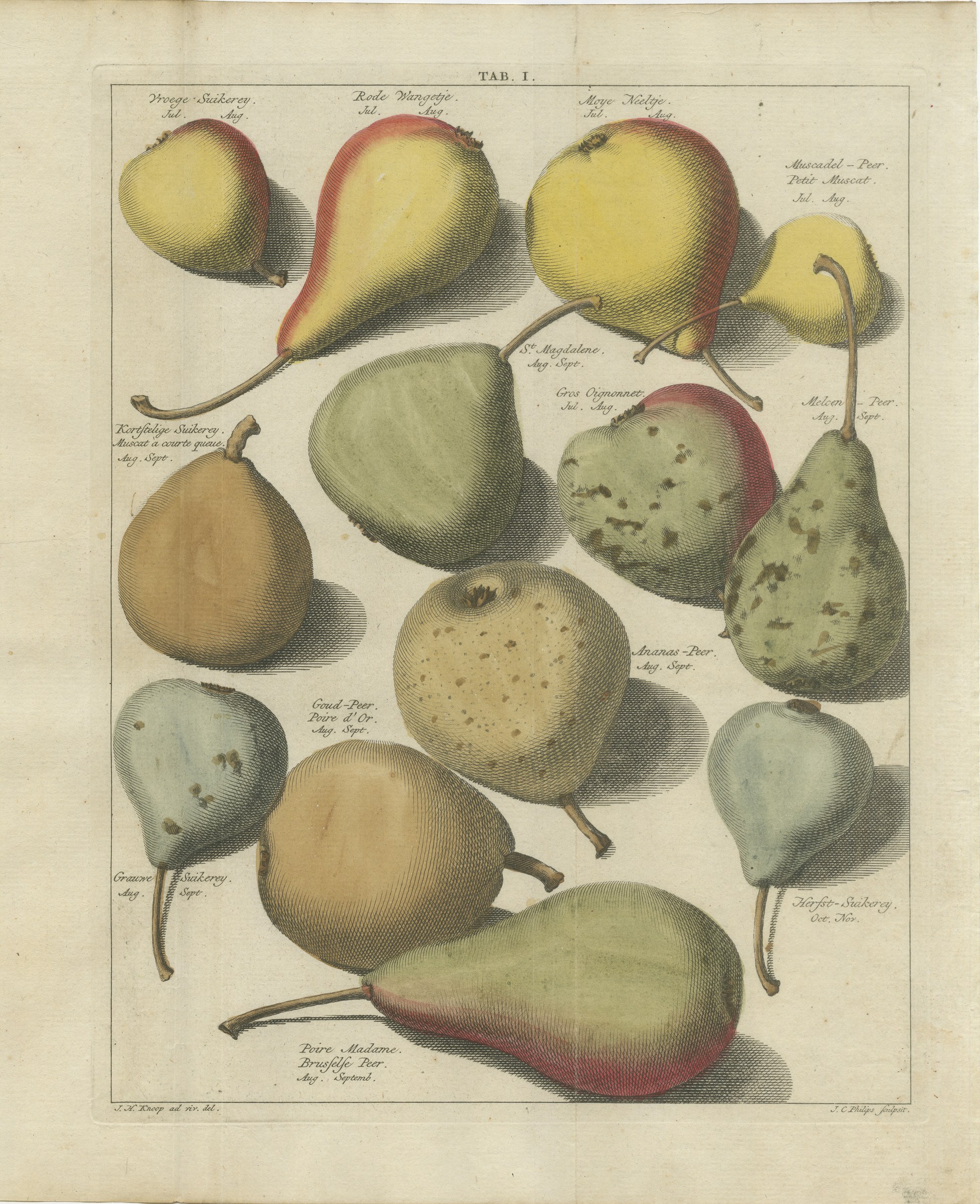
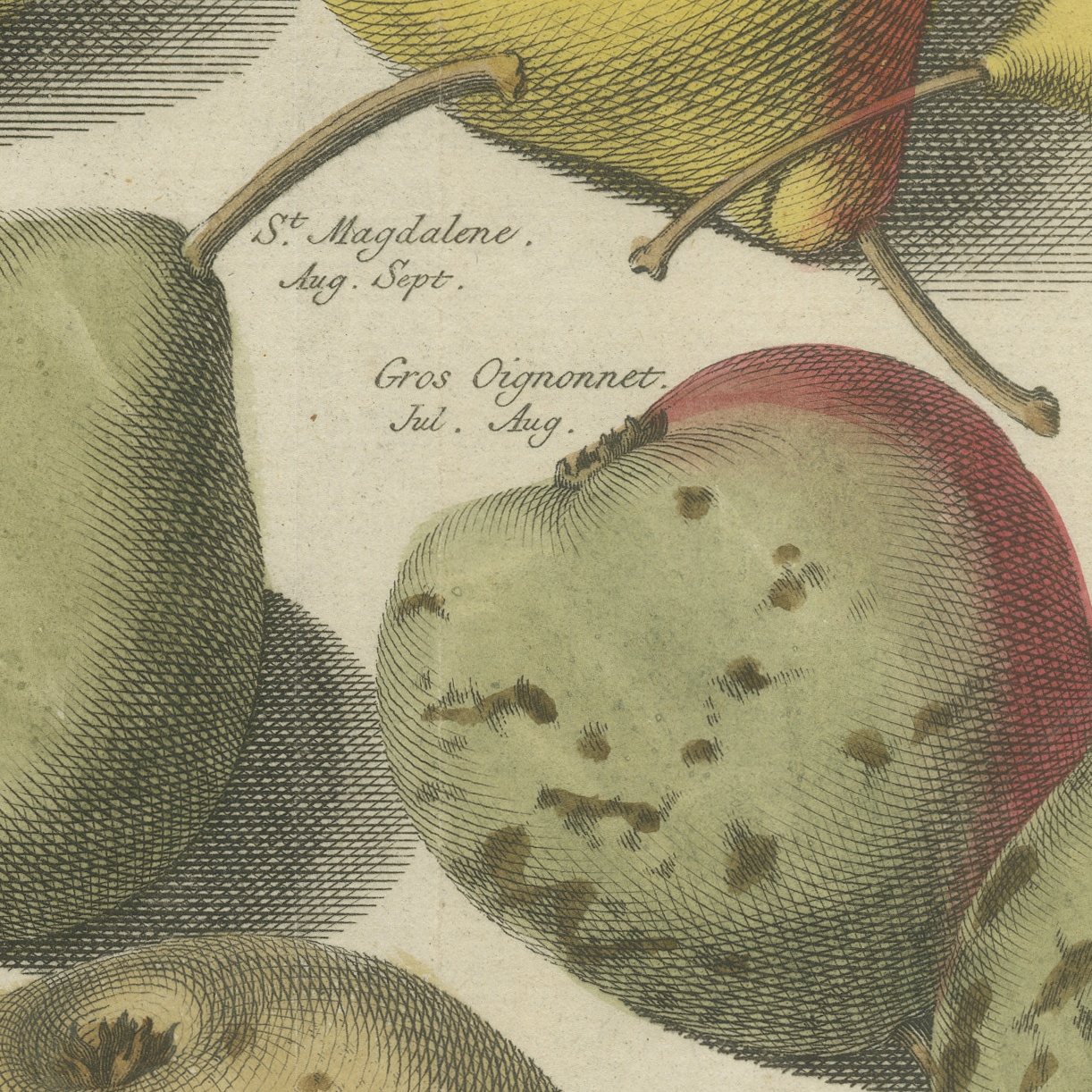
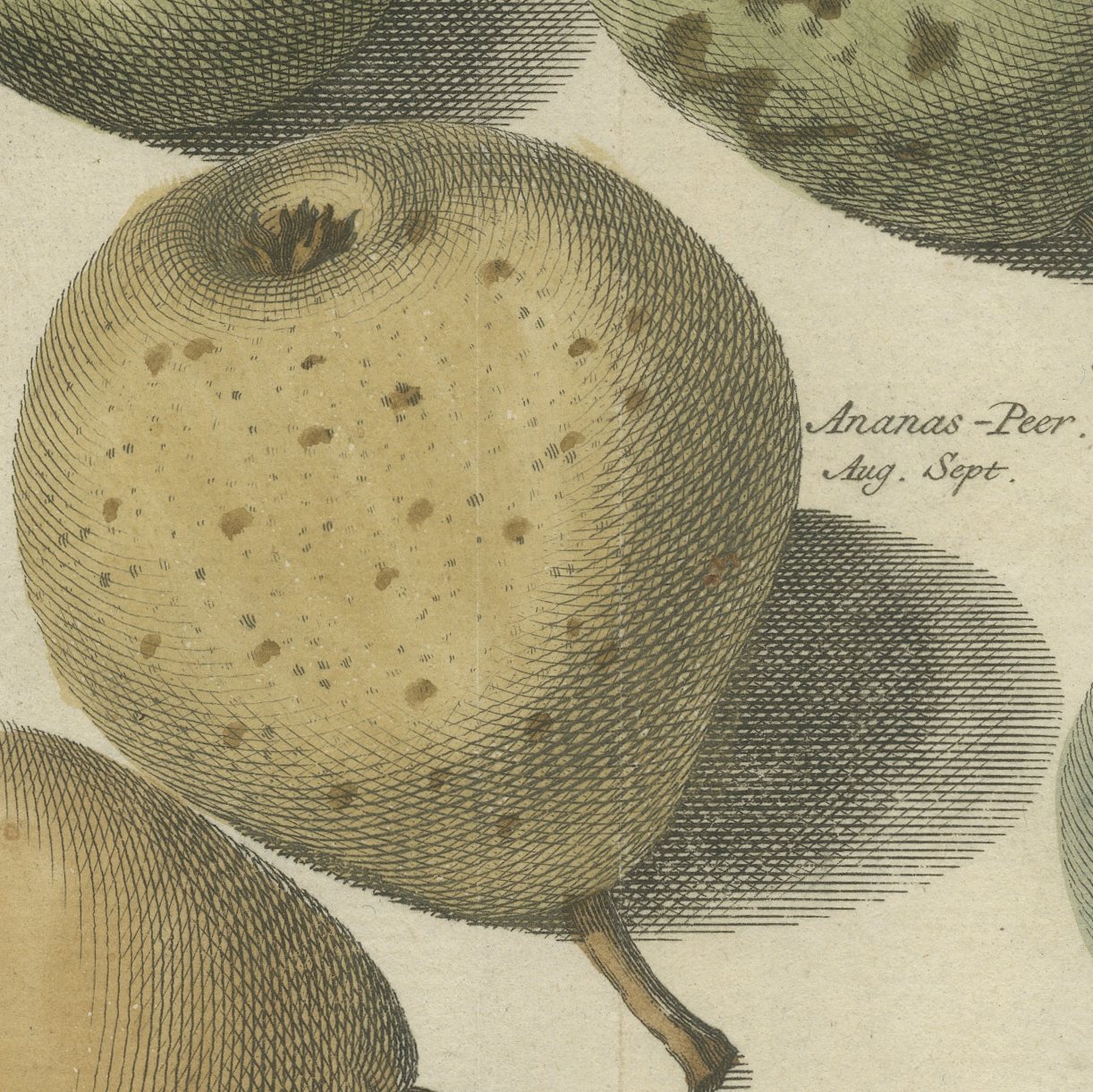
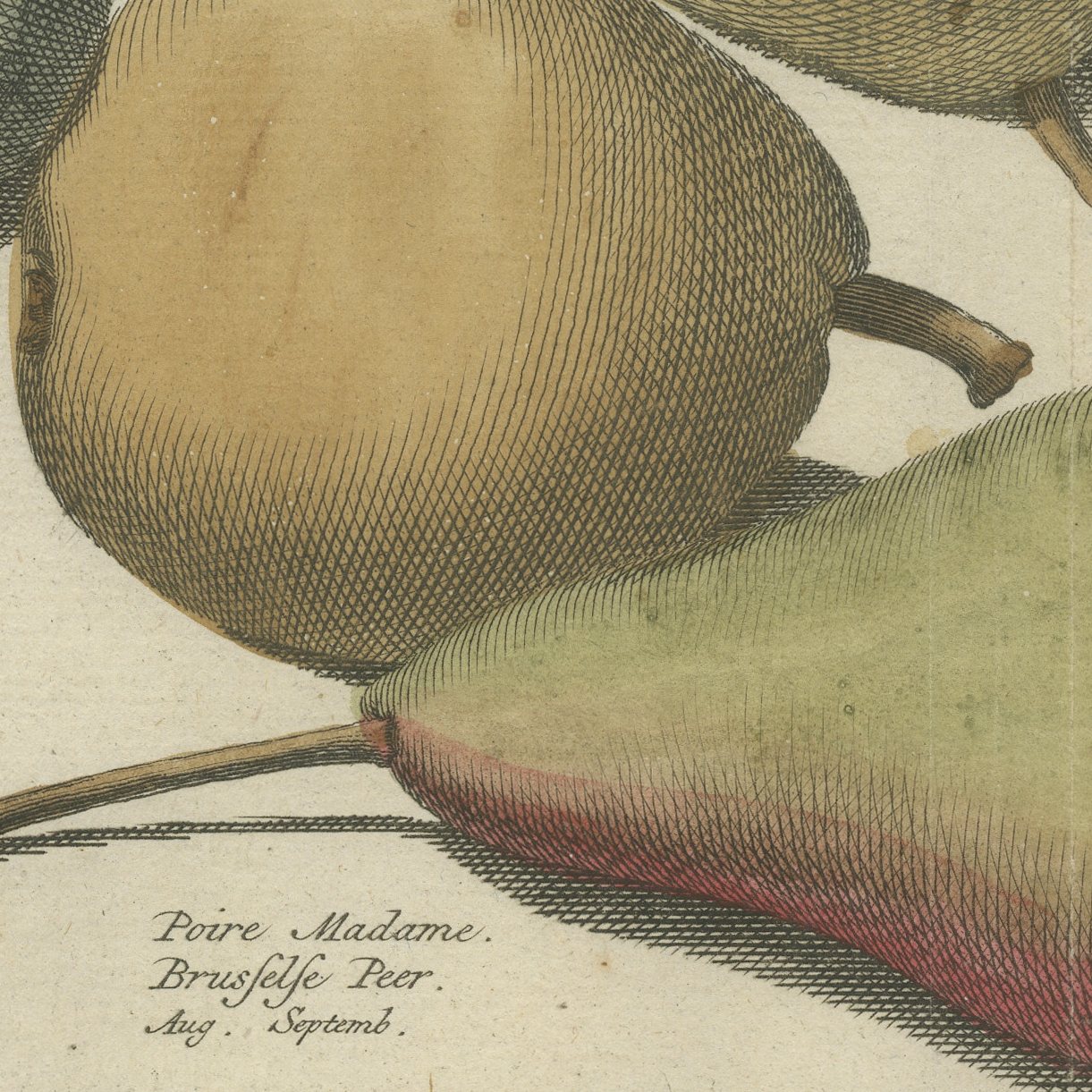
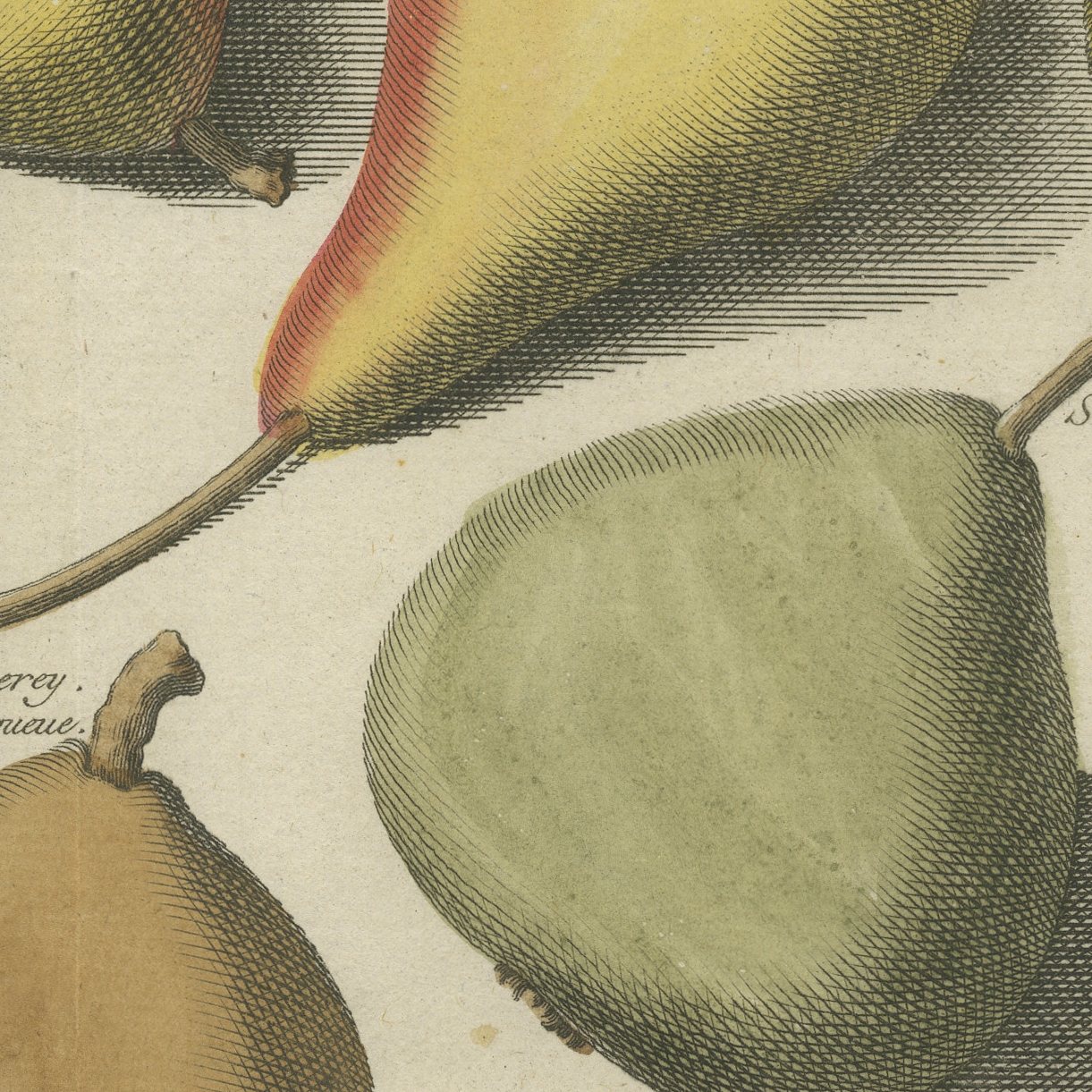
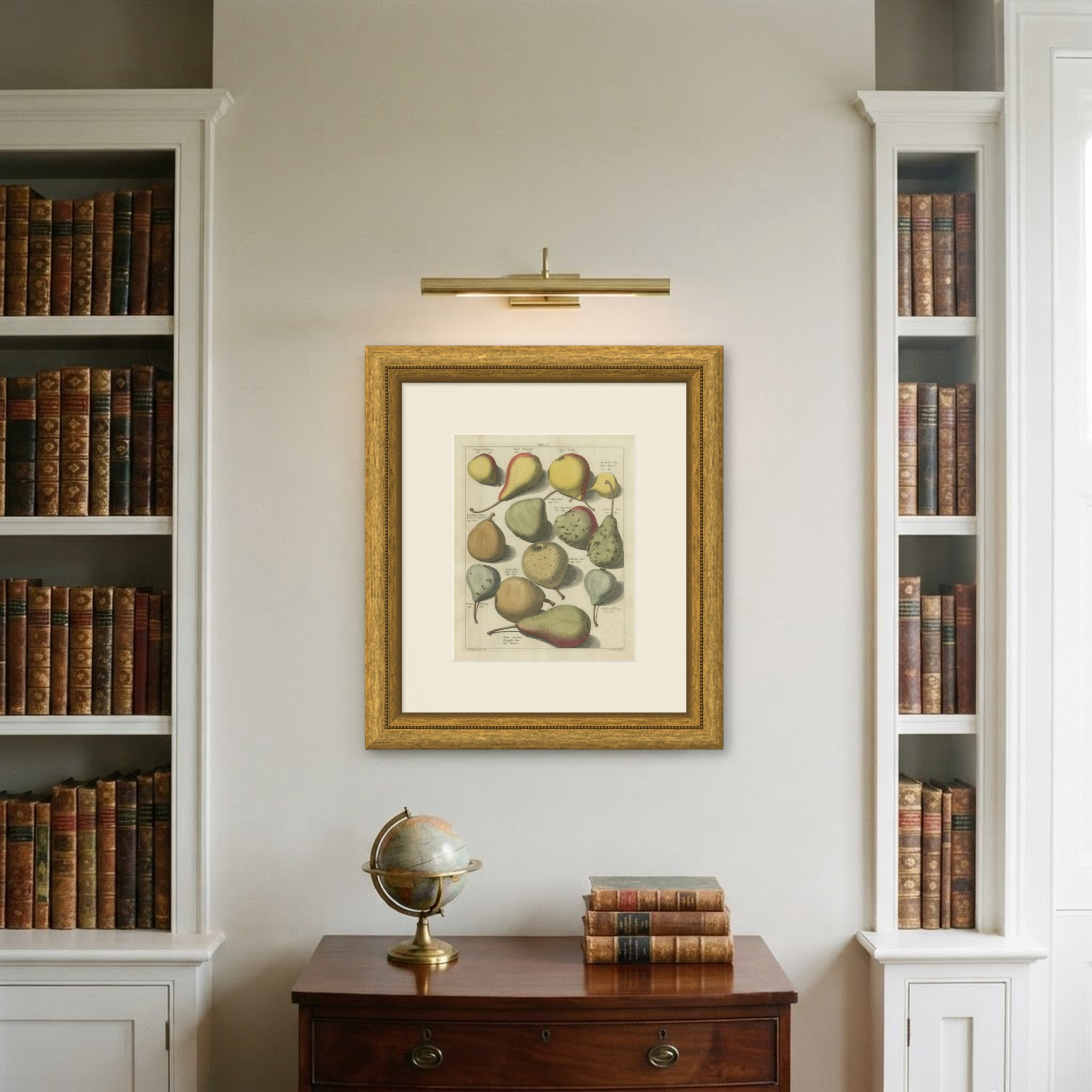
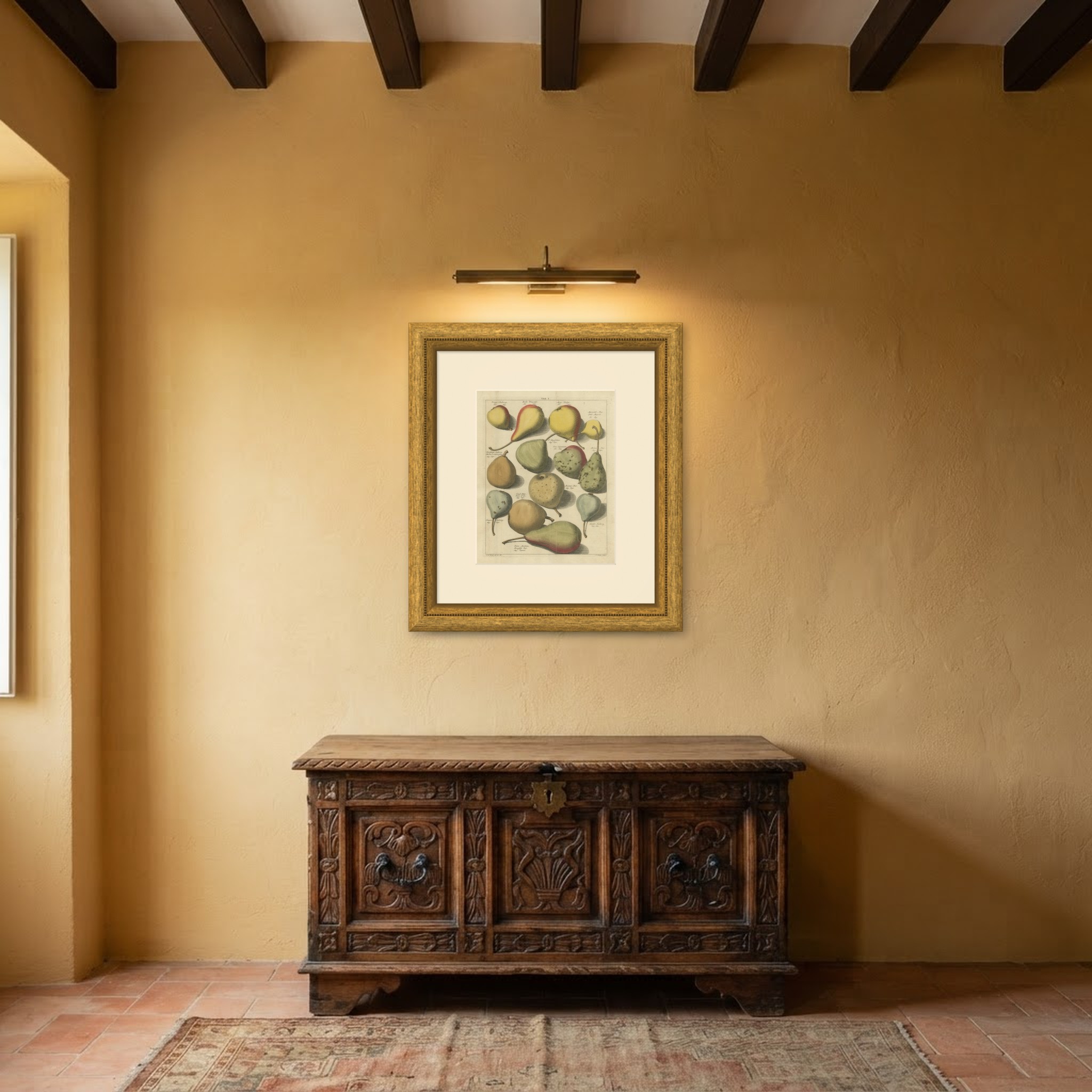
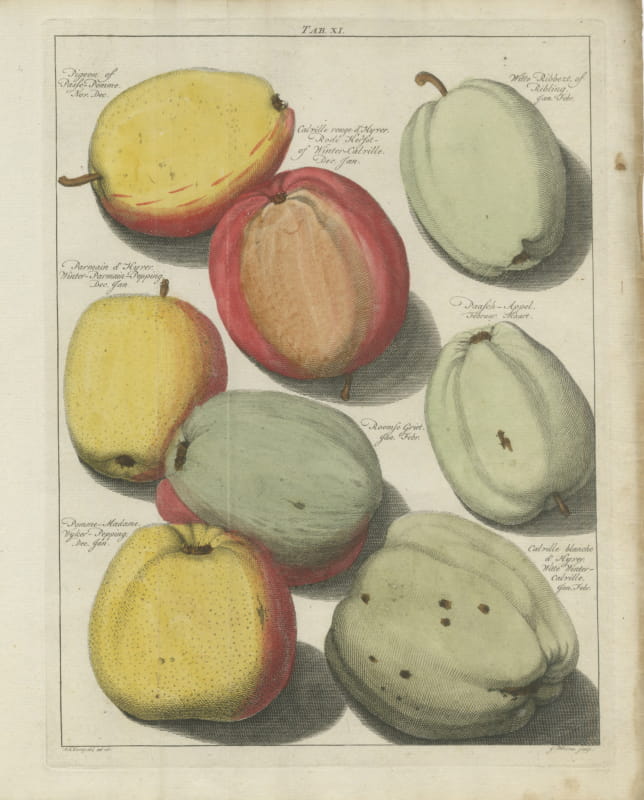
An original hand-colored copper engraving carrying thirteen named pear varieties, the most crowded plate in Knoop's book, each fruit lettered with its name and its ripening months. The sheet opens the pear series with the early sorts: Vroege-Suikerey, Rode Wangetje, Moye Neeltje, Muscadel-Peer or Petit Muscat, Saint Magdalene, Gros Oignonnet, Meloen-Peer, Kortstelige Suikerey, Ananas-Peer, Grauwe Suikerey, Goud-Peer or Poire d'Or, Herfst-Suikerey and Poire Madame or Brusselse Peer. Nearly all ripen in July, August or September. Knoop fitted the thirteen together like a puzzle, long-necked fruit laid against round ones, each on its stalk and drawn from the living pear. The hand coloring in yellows, soft greens and russet blush varies within each fruit and runs over the engraved outline in places.
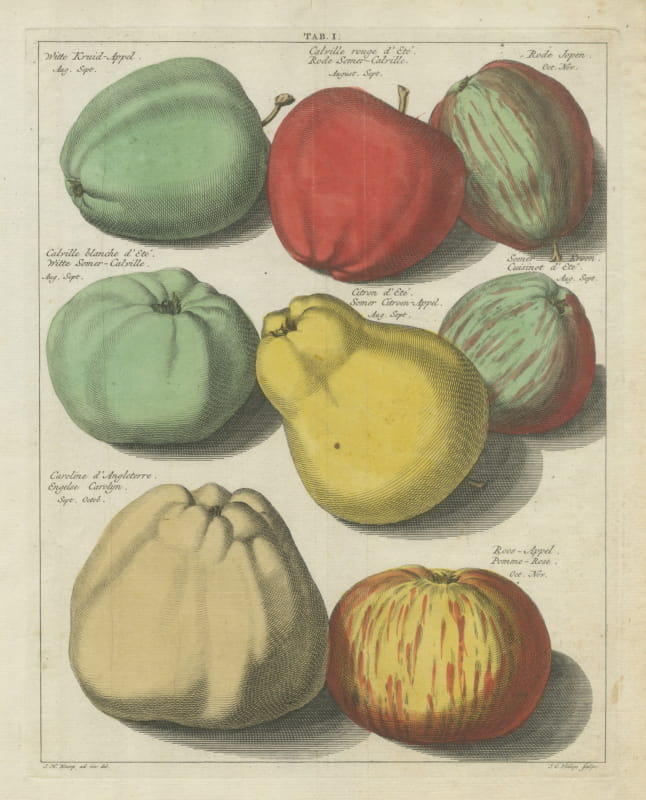
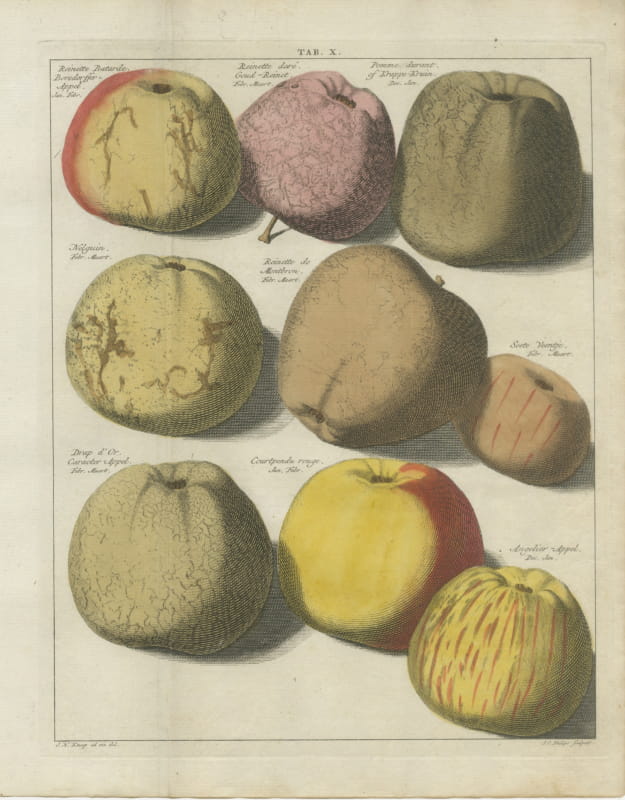
The plate comes from Johann Hermann Knoop's Beschrijving en Afbeeldingen van de beste soorten van Appelen en Peeren, published at Amsterdam and Dordrecht by Allart, Holtrop, de Leeuw and Krap in 1790, with a preface by the Zutphen minister and naturalist Johannes Florentius Martinet. Knoop was gardener to the widow of the Frisian stadtholder at Leeuwarden and the first systematic Dutch pomologist. He drew every fruit from the living specimen, and the plates are lettered ad vivum to say so. The engraving is on copper and the color is original hand color in watercolor, laid over the engraved hatching.
No other sheet in the volume names thirteen varieties, which makes this the plate specialist collectors ask for first. The names are a pleasure in themselves, from Moye Neeltje, pretty little Nelly, to the Ananas-Peer called after the taste of pineapple, and the ripening months beneath them lay out the whole early pear season in order. Knoop drew every one from the fruit itself, so the shapes record what these old varieties actually looked like before the nineteenth-century nurseries replaced them. Densely filled and beautifully balanced, the plate holds a wall on its own: it is a natural choice for a dining room, or above a long kitchen counter where its thirteen fruits can be read one by one.
Light uneven toning, browner towards the edges. Handling soiling along the bottom and top edges. Scattered light foxing in the margin. All four corners complete.
This is an original antique plate, not a modern reproduction. This item is sold unframed. Any framed or interior images are shown for presentation and inspiration only, unless the listing explicitly states that the item is sold framed.