About this sheet
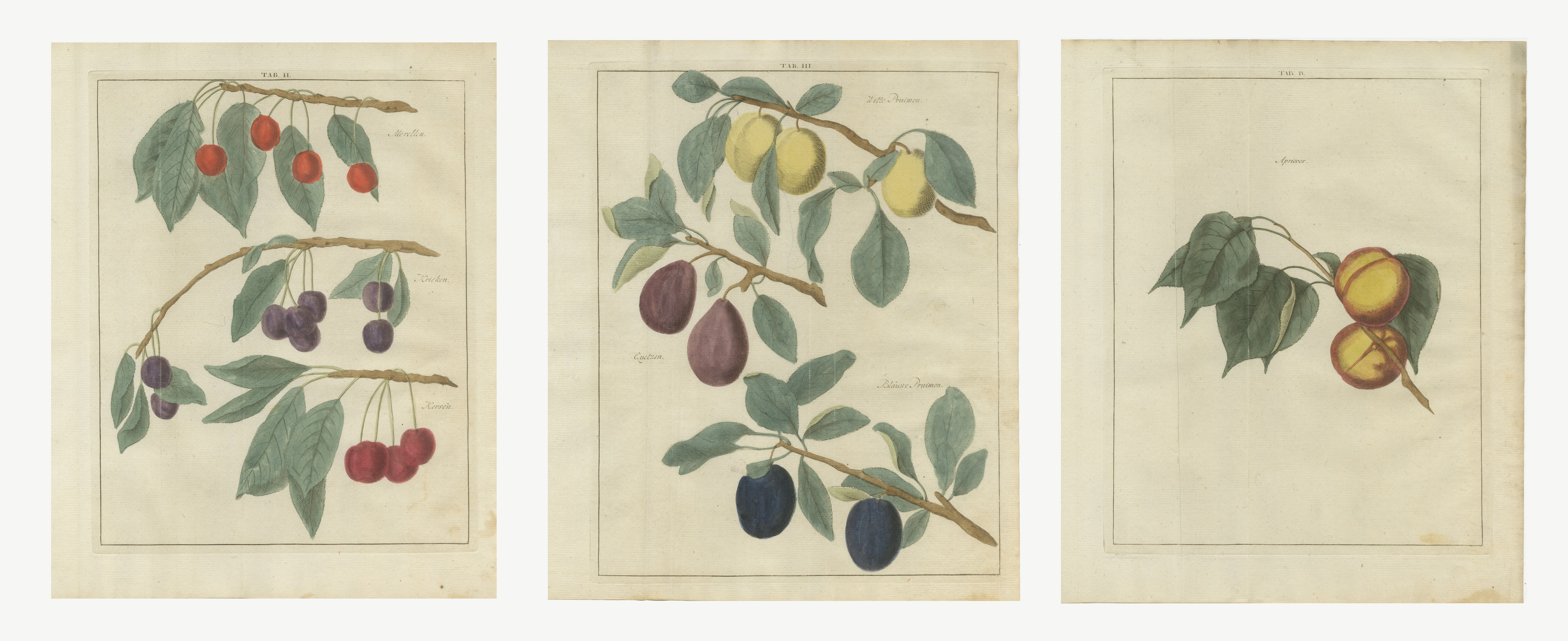
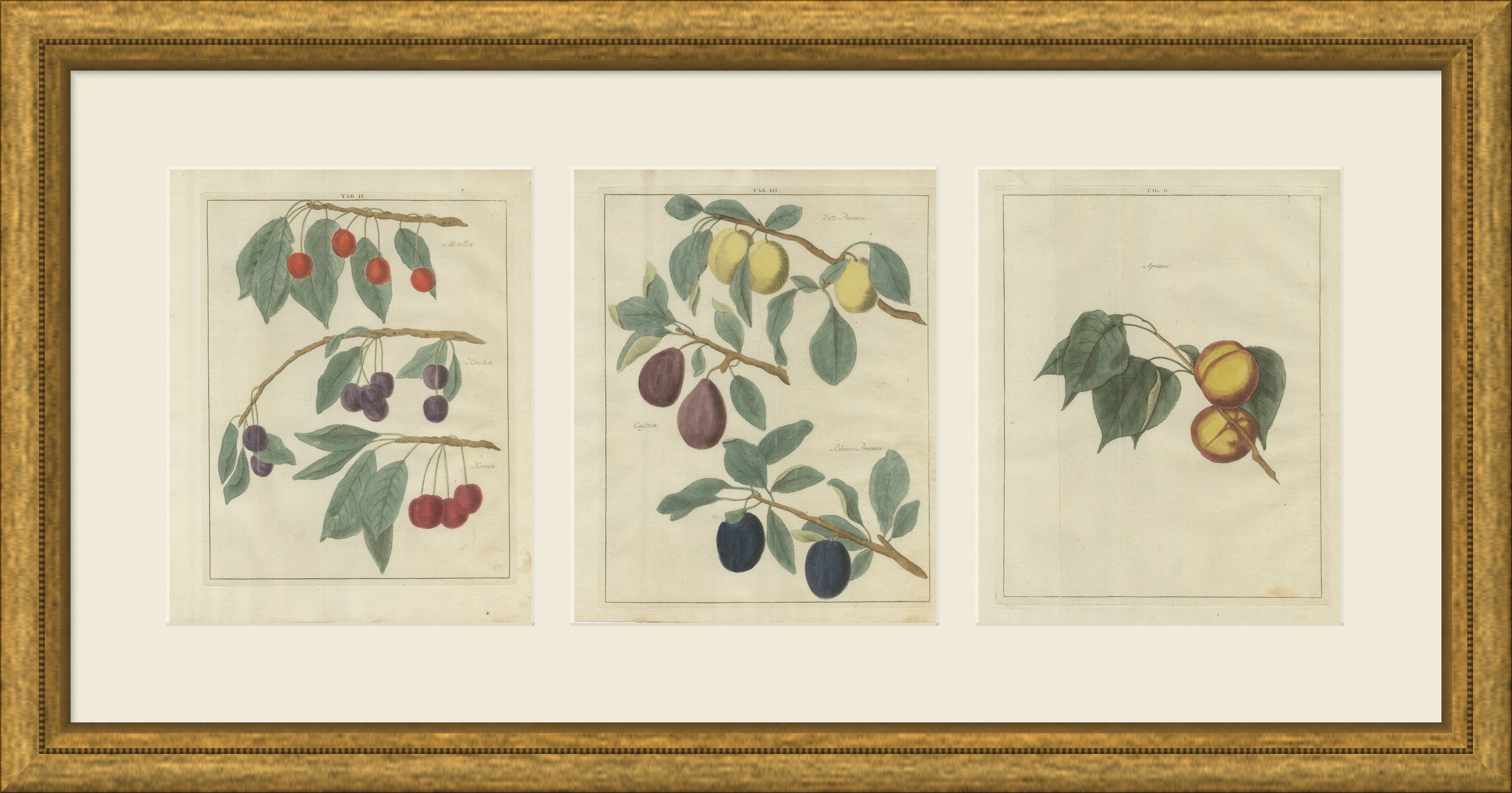
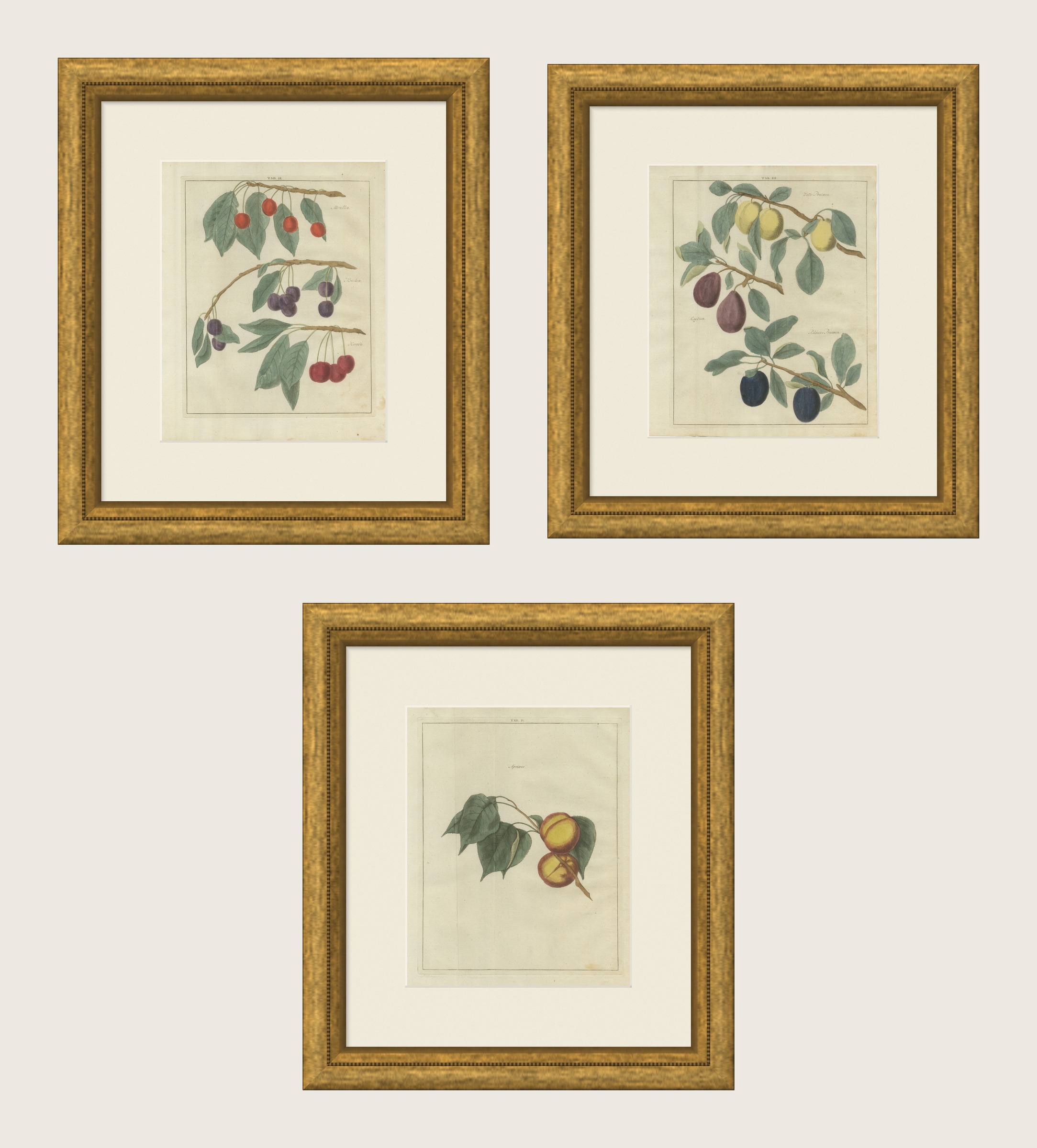
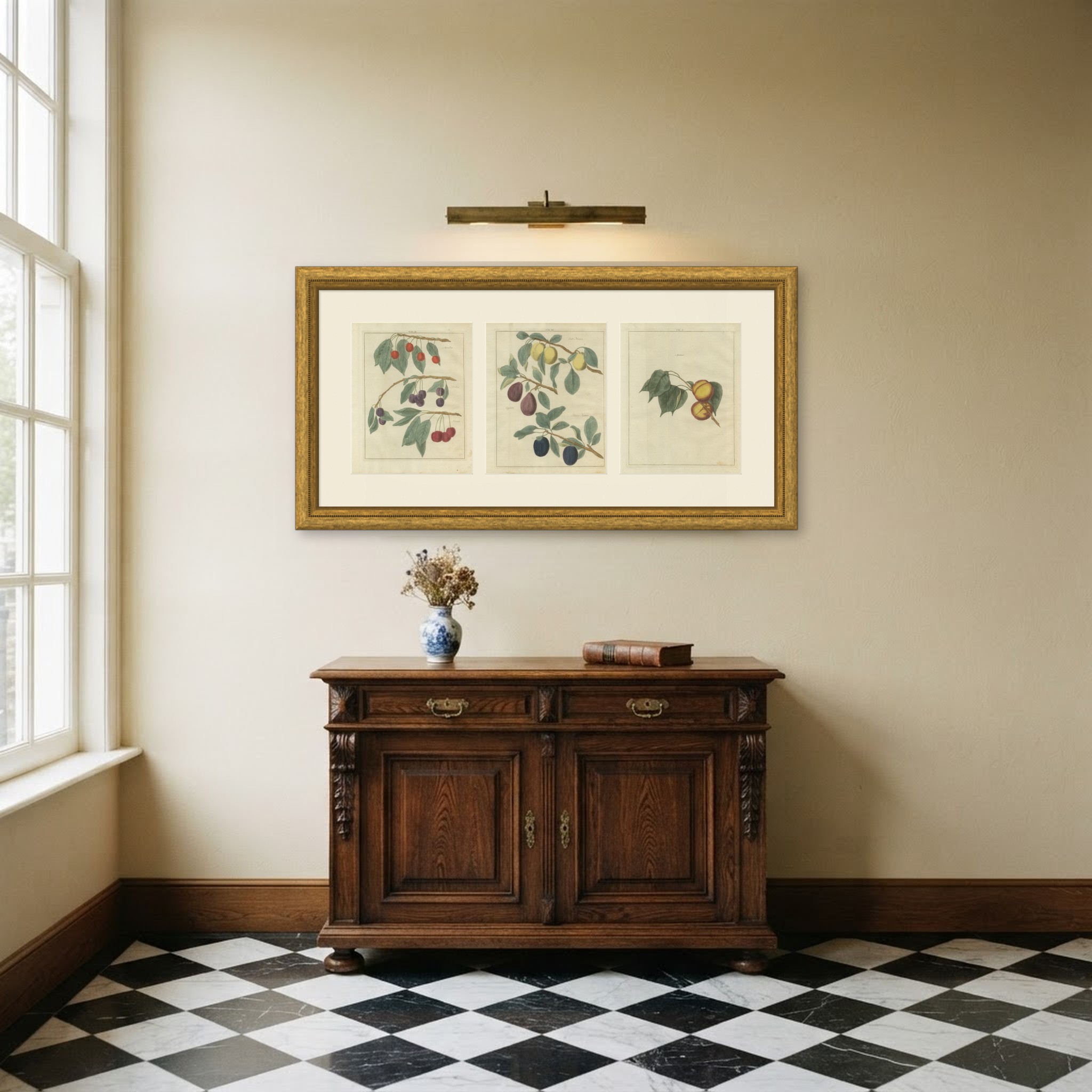
A set of three original hand-colored antique fruit plates: cherries, plums and apricots, the stone fruit sheets of Johann Hermann Knoop's Dutch pomological folio, sold together as a group. The three carry consecutive printed numbers, "TAB. II", "TAB. III" and "TAB. IV", and they come from one copy of the book, so the paper, the engraved style and the palette of the original coloring match across all three. Each sheet gives a single kind of fruit on its own leafy branch with the Dutch name lettered in engraved script beneath, and each was drawn from the living fruit rather than copied from an earlier plate. Taken in order they move from the sharpest reds to the softest orange, which is why they read as one work rather than three. They are three original sheets sold together as one lot, and the set is never split.
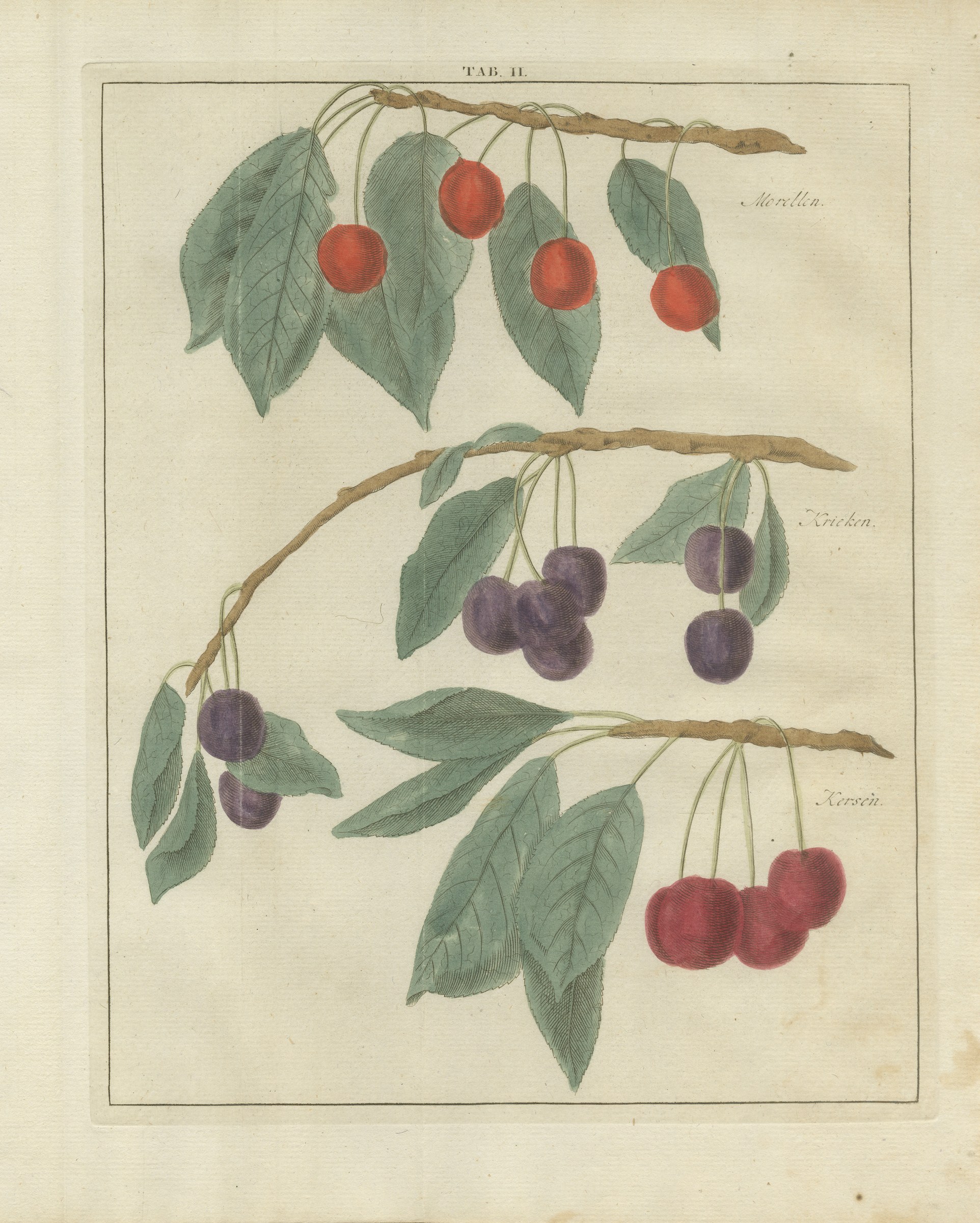
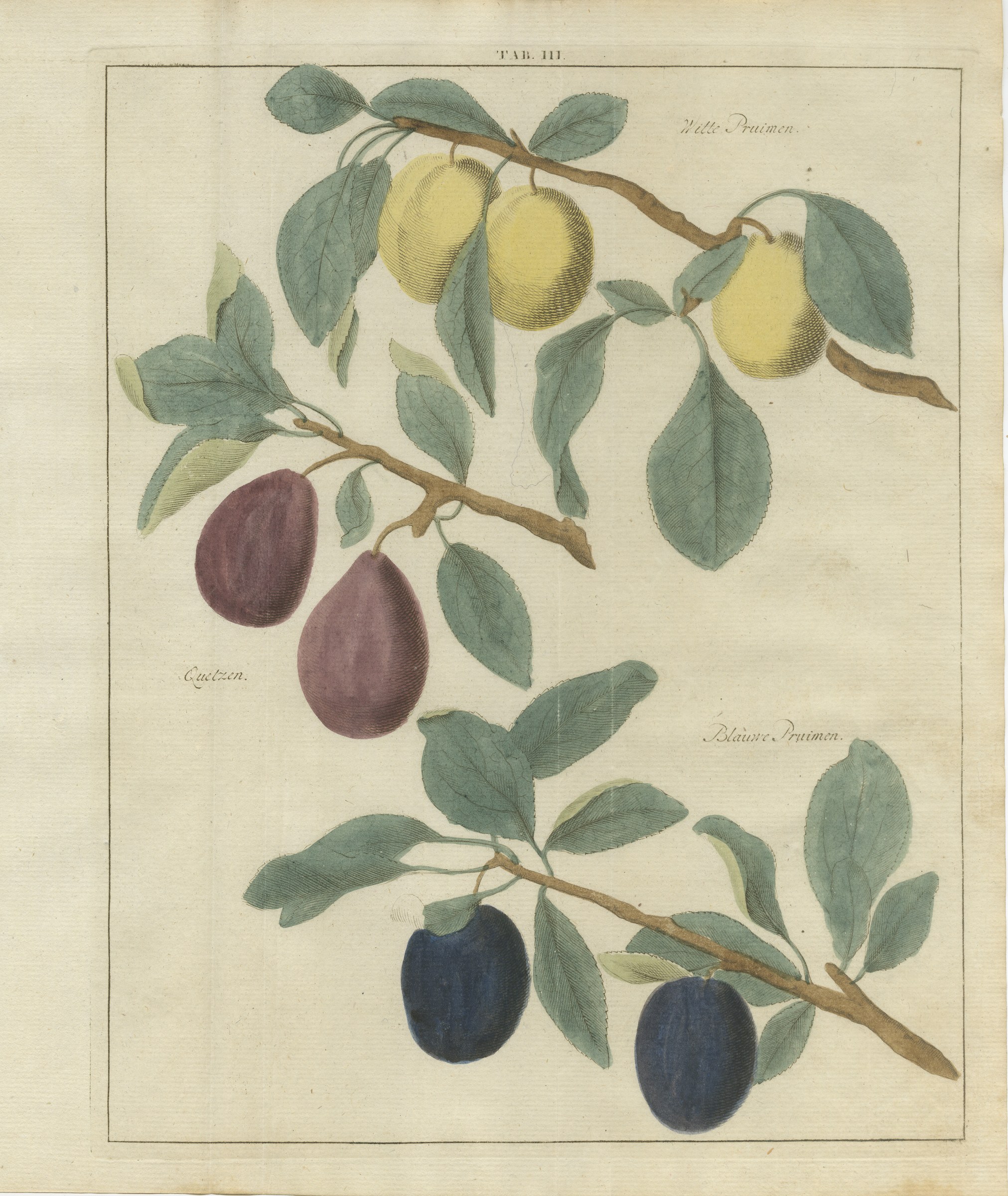
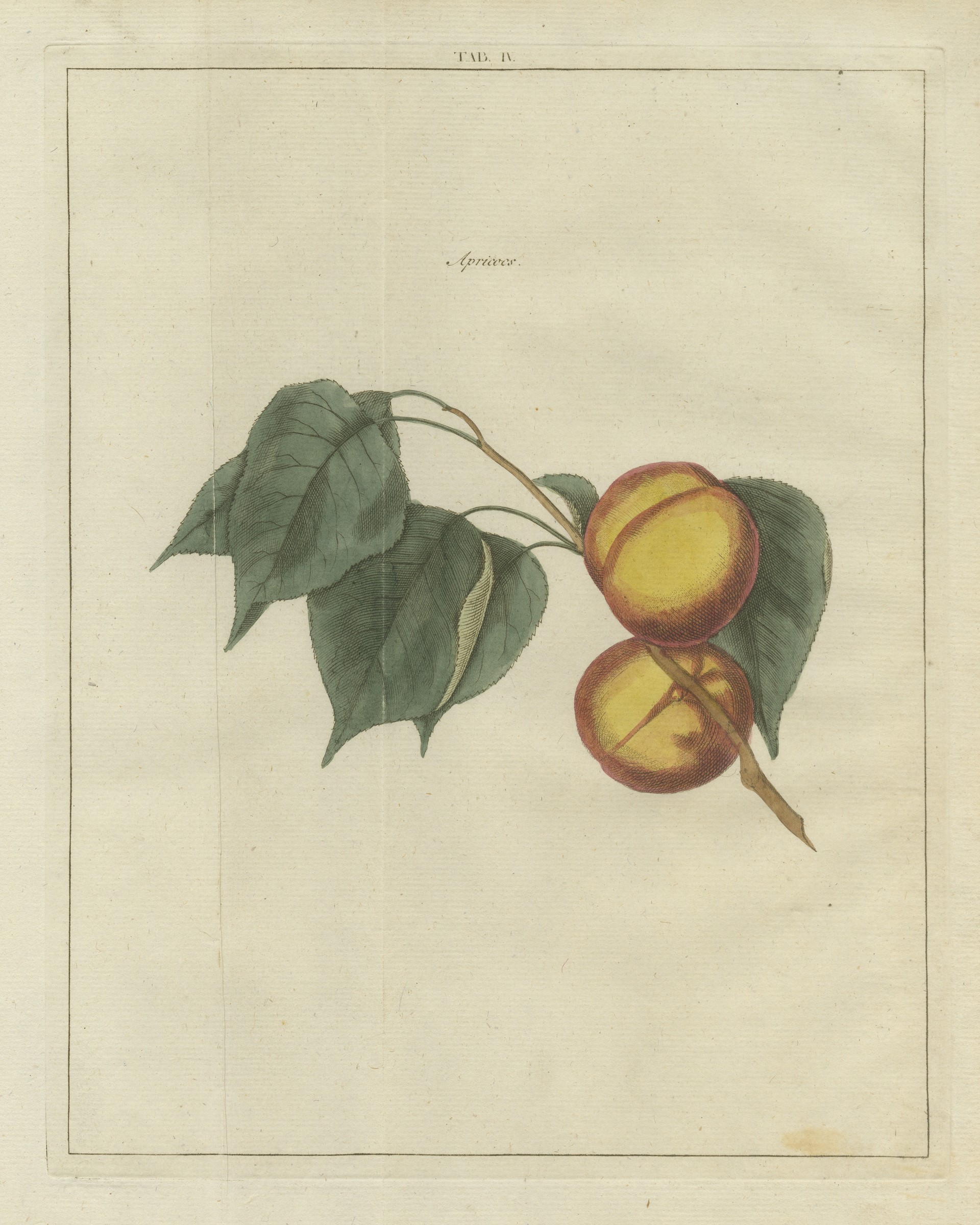
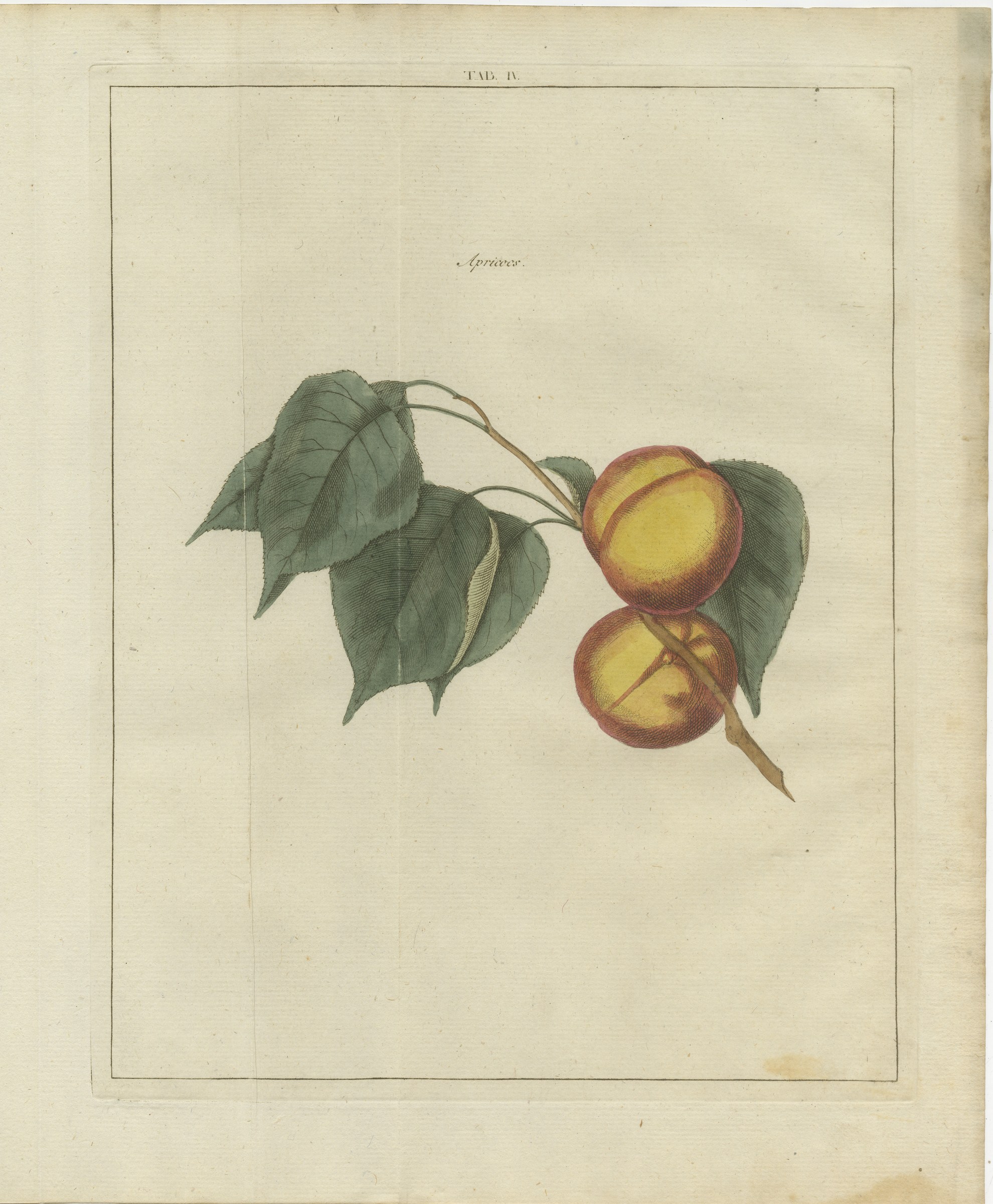
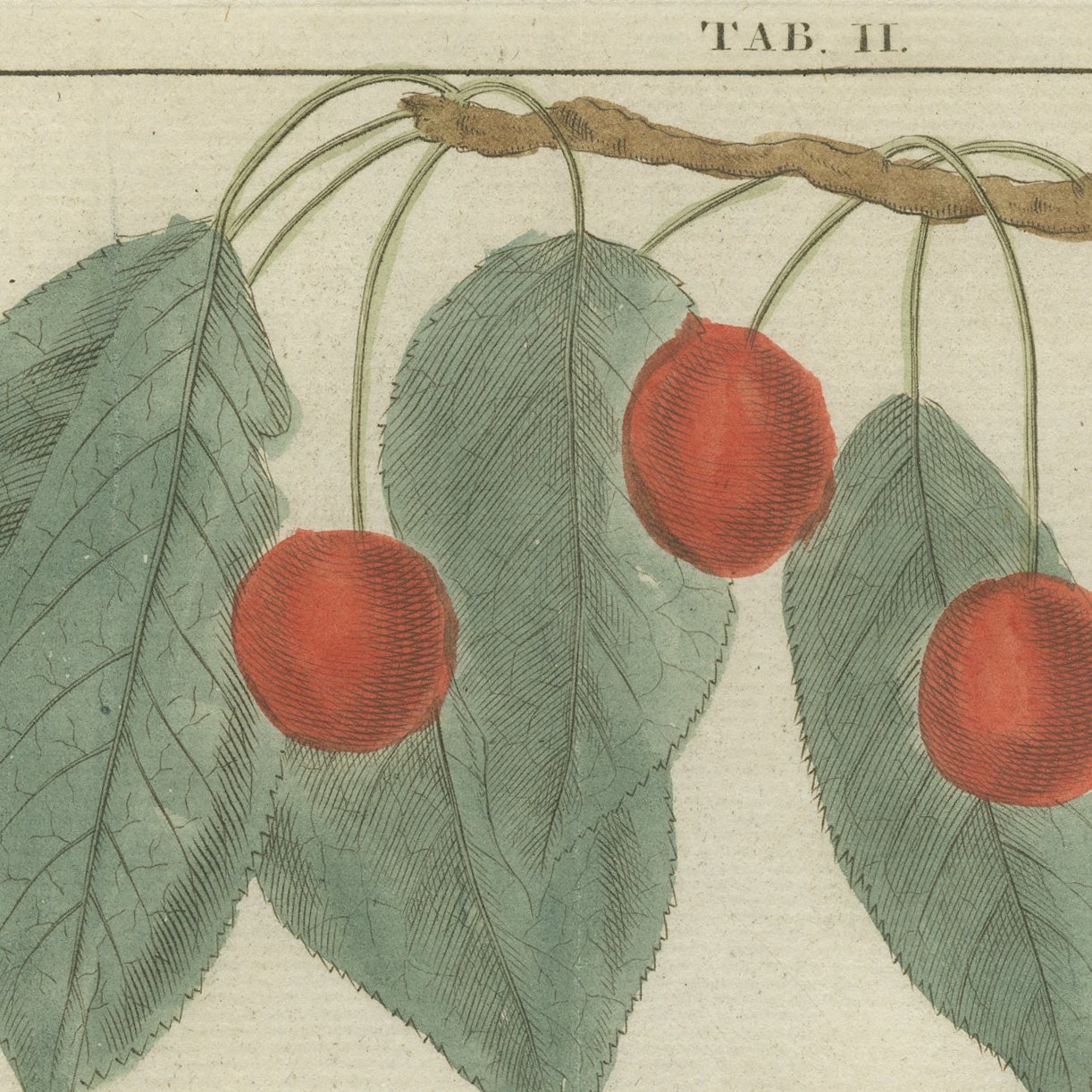
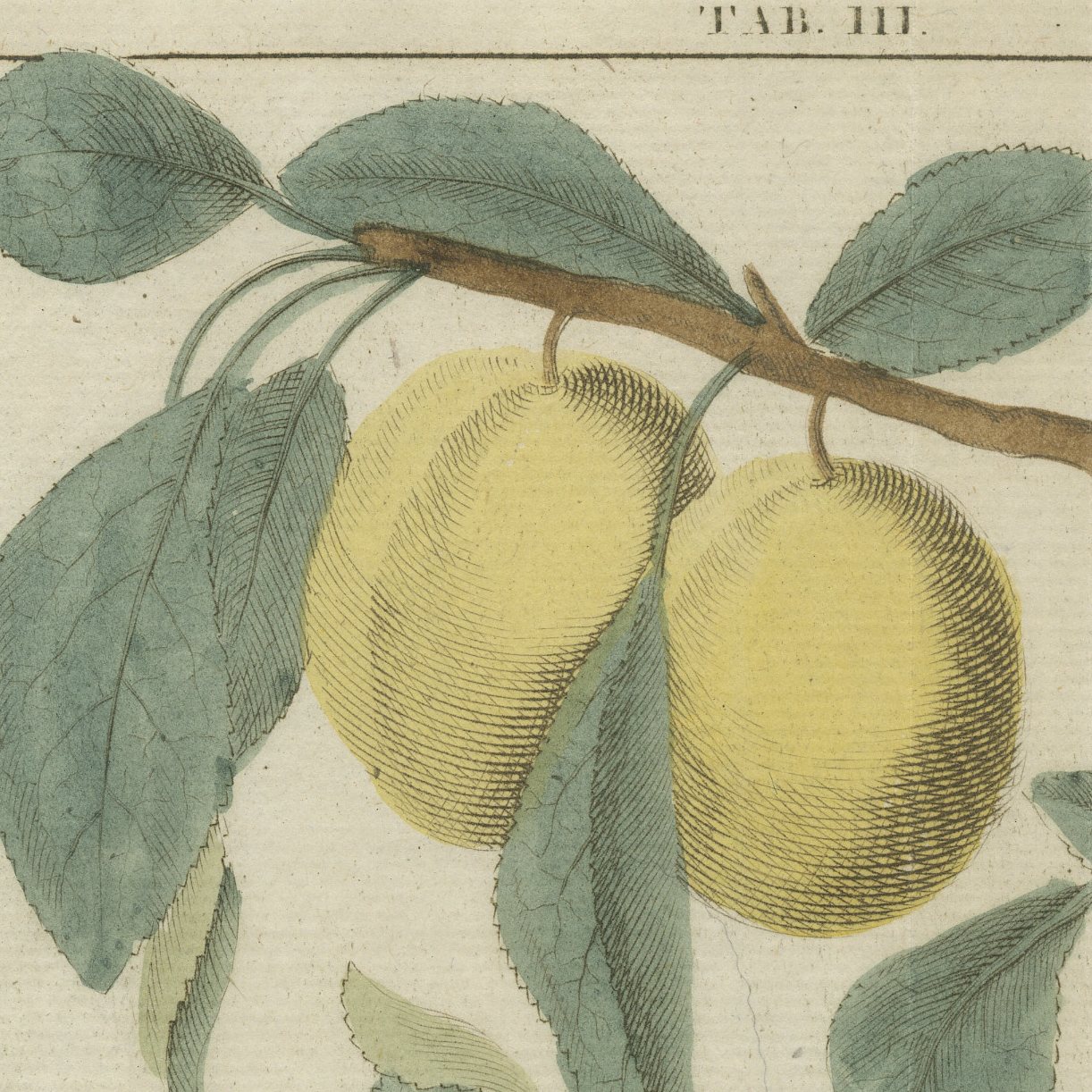
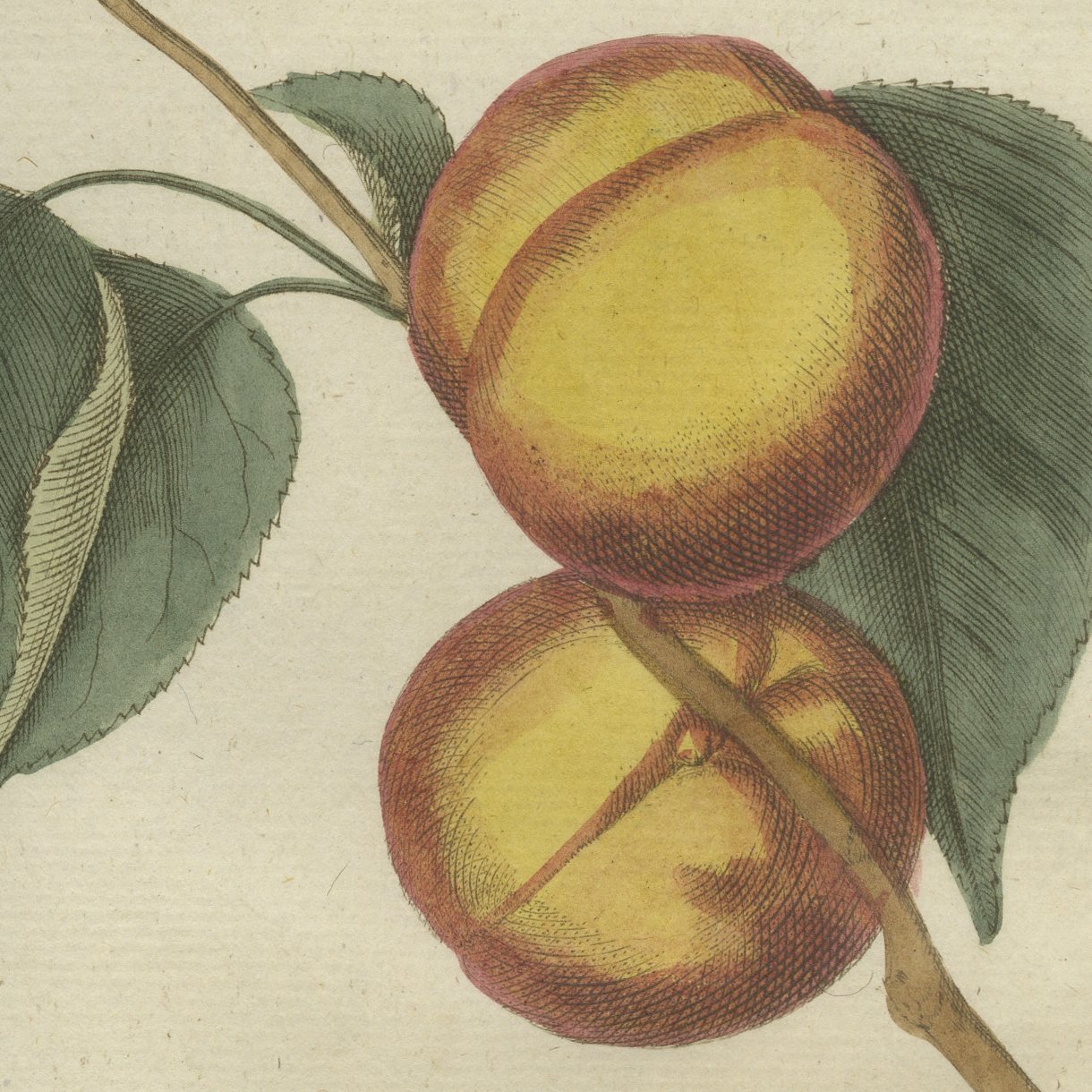
Cherries open the group on plate "TAB. II", where three sorts share one sheet: the sour "Morellen.", the small "Krieken." and the sweet garden "Kersen.", sixteen fruits in all swinging on long stalks among serrated leaves. It is the liveliest image of the three, the scarlets and dark carmines carrying the eye straight to it, and the comparison of the three sorts on one branch is Knoop the gardener thinking aloud. Plums follow on plate "TAB. III", three sorts again: the pale "Witte Pruimen.", the long baking "Quetzen." and the round "Blaùwe Pruimen." The colorist's work is at its most delicate here, a thin blue-gray bloom laid over darker ground so the skin looks dusty to the touch, and the straw yellow of the white plum gives the middle of the group a quieter, cooler note between the cherries and the apricots. Apricots close the group on plate "TAB. IV", three fruits on one leafy branch, the warmest coloring of the three sheets: an orange that flushes red on the sunward cheek and cools to green-yellow in the cleft. The engraved name is faint in its final letters and is not quoted here as certain. Against the cherries and the plums the apricots supply the group's high note and settle it.
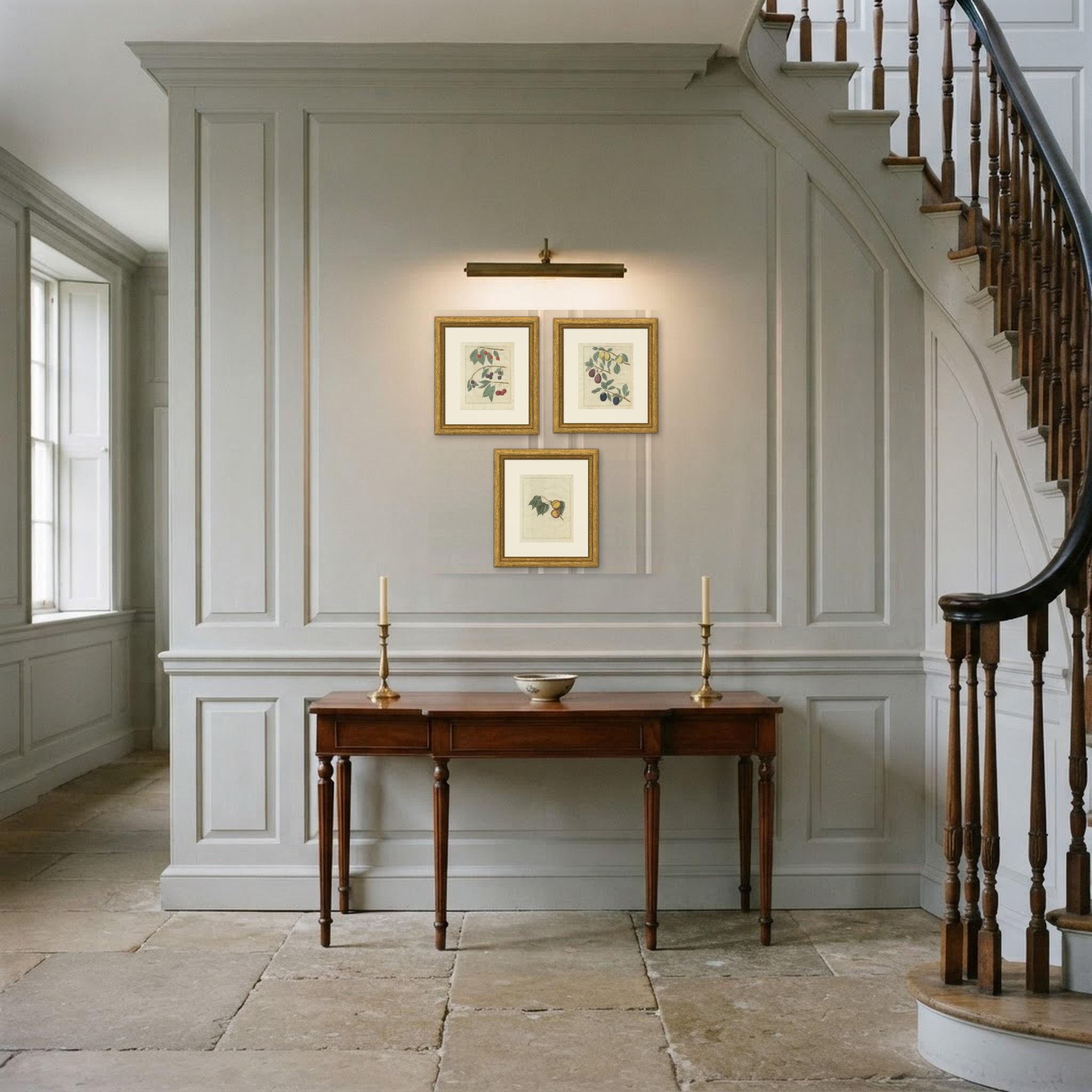
The plate comes from Johann Hermann Knoop's Beschrijving en Afbeeldingen van de beste soorten van Appelen en Peeren, published at Amsterdam and Dordrecht by Allart, Holtrop, de Leeuw and Krap in 1790, with a preface by the Zutphen minister and naturalist Johannes Florentius Martinet. Knoop was gardener to the widow of the Frisian stadtholder at Leeuwarden and the first systematic Dutch pomologist. He drew every fruit from the living specimen, and the plates are lettered ad vivum to say so. The engraving is on copper and the color is original hand color in watercolor, laid over the engraved hatching. The three plates belong together in the book and they belong together on a wall. Knoop's stone fruit sheets share a format, a scale and a hand, so a row of three gives a room the rhythm that a single fruit print cannot, and the color runs deliberately from the scarlets and dark carmines of the cherries, through the cool violets and straw yellows of the plums, to the warm orange of the apricots. Hung in a line above a sideboard or a kitchen bench, in matching plain frames with generous mounts, they hold a long wall comfortably; stacked three high they suit a narrow chimney breast. Grouped stone fruit plates of this age and in original hand color are hard to assemble one sheet at a time.
Light uneven toning, browner towards the edges. Marked handling soiling along the edges of all three sheets. Scattered foxing in the margins of all three sheets. Slight wear at the corners of one of the three sheets.
These are original antique plates, not modern reproductions. This item is sold unframed. Any framed or interior images are shown for presentation and inspiration only, unless the listing explicitly states that the item is sold framed.