About this sheet
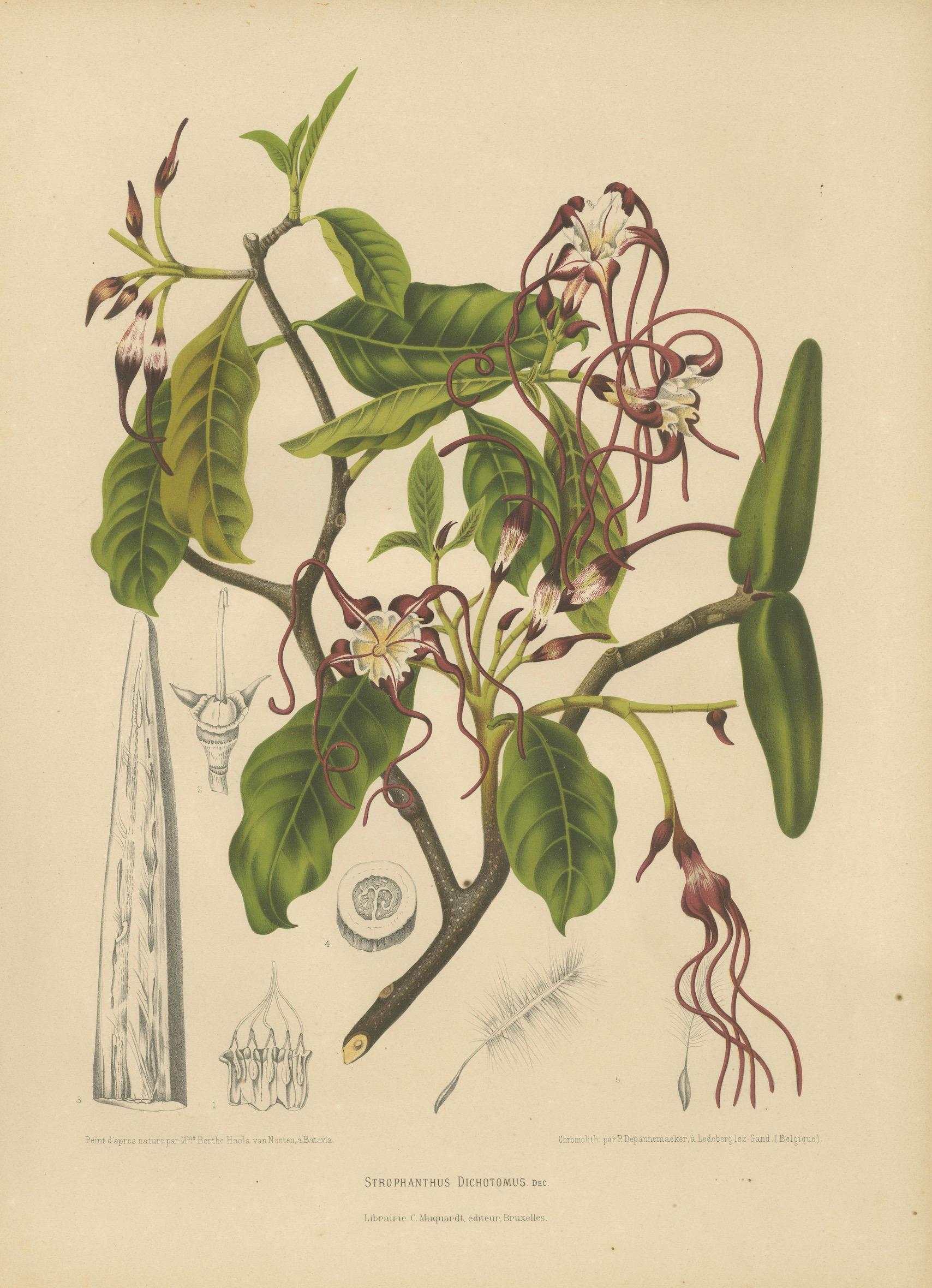
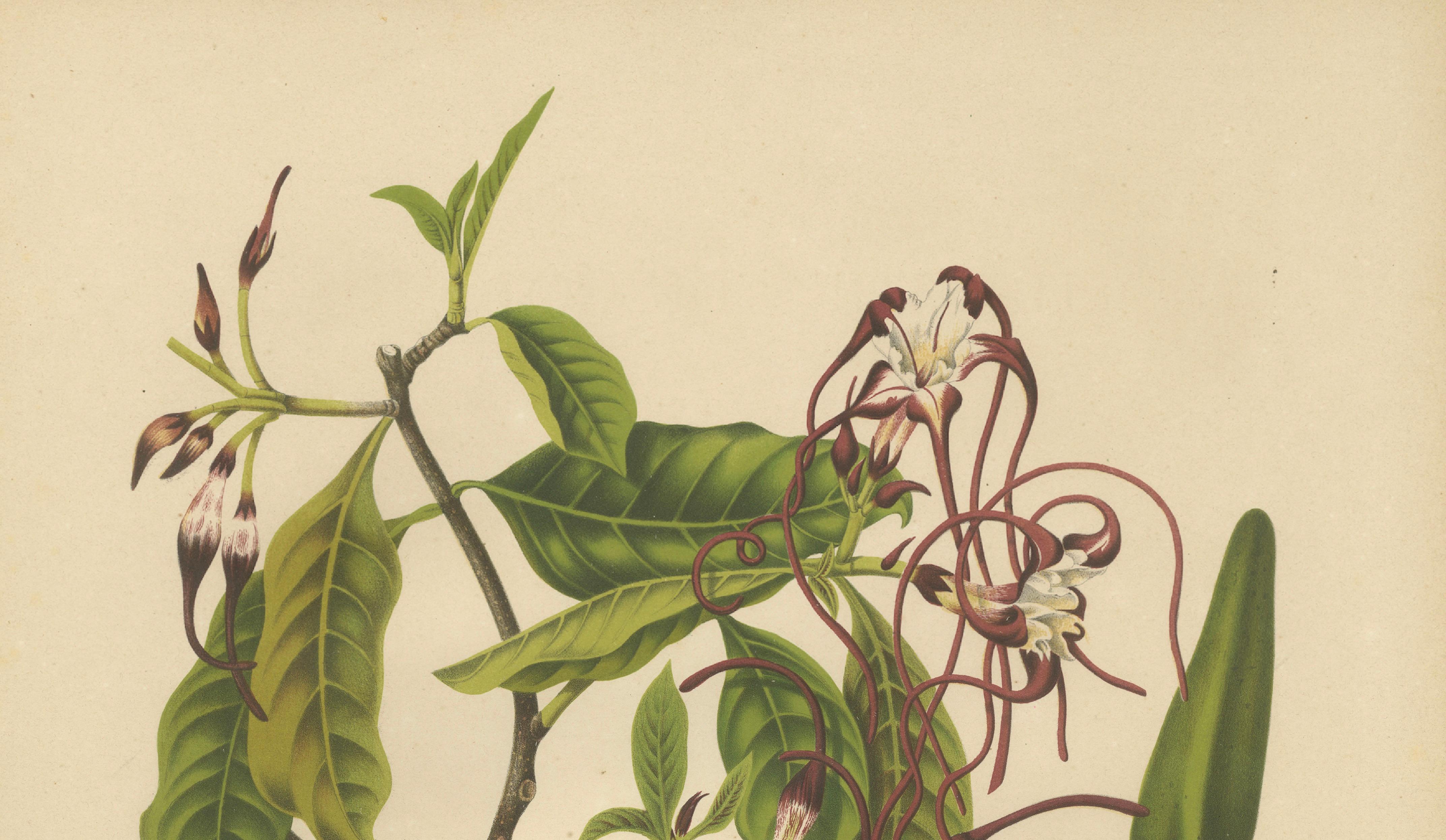
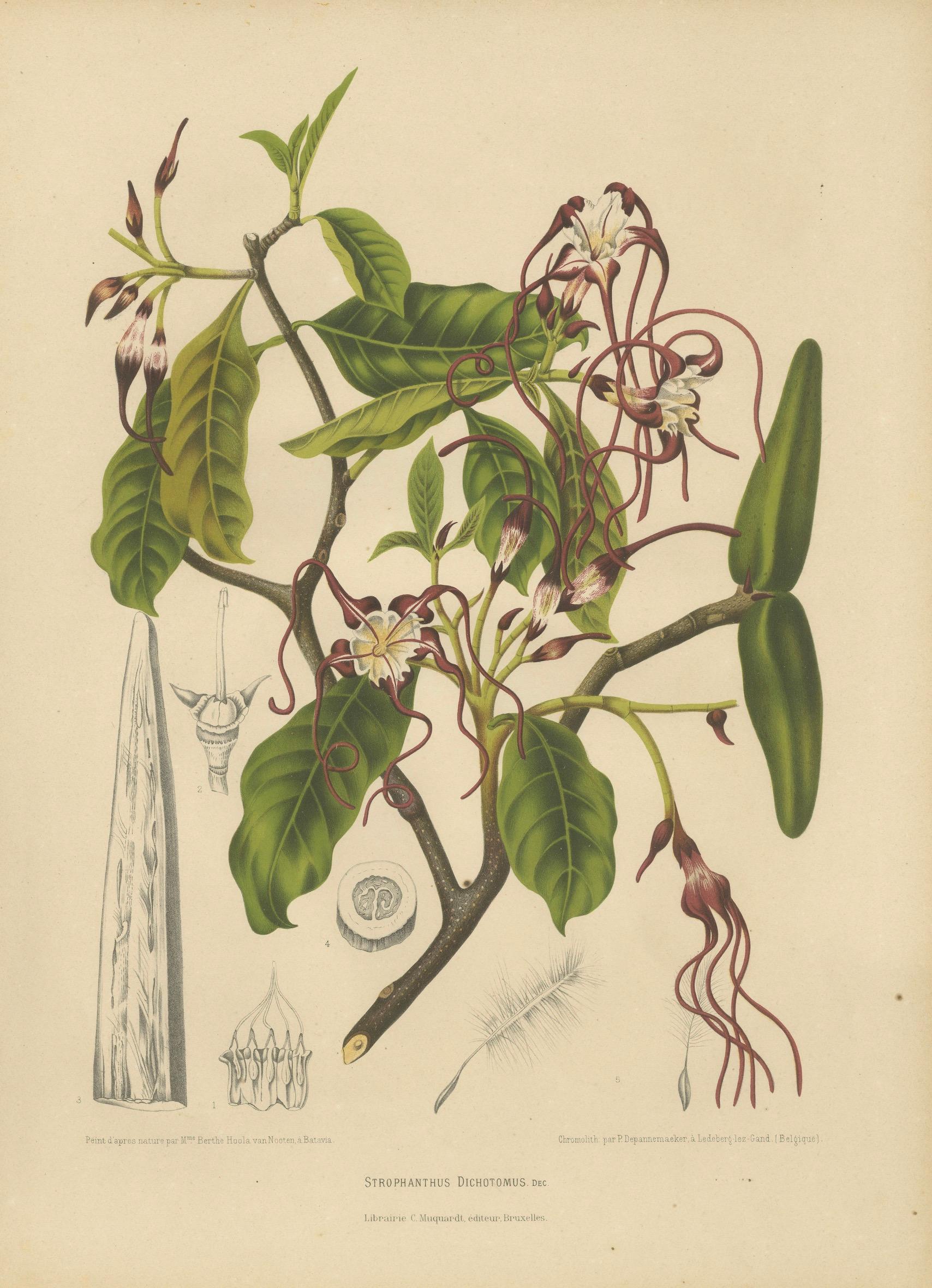
A remarkable original antique botanical chromolithograph depicting Strophanthus dichotomus, commonly known as the Poison Arrow Vine. This extraordinary tropical climbing plant is renowned for its spectacular flowers with long, ribbon-like maroon petals that twist and curl into elegant spirals, making it one of the most exotic flowering plants illustrated in Berthe Hoola van Nooten's celebrated botanical masterpiece.
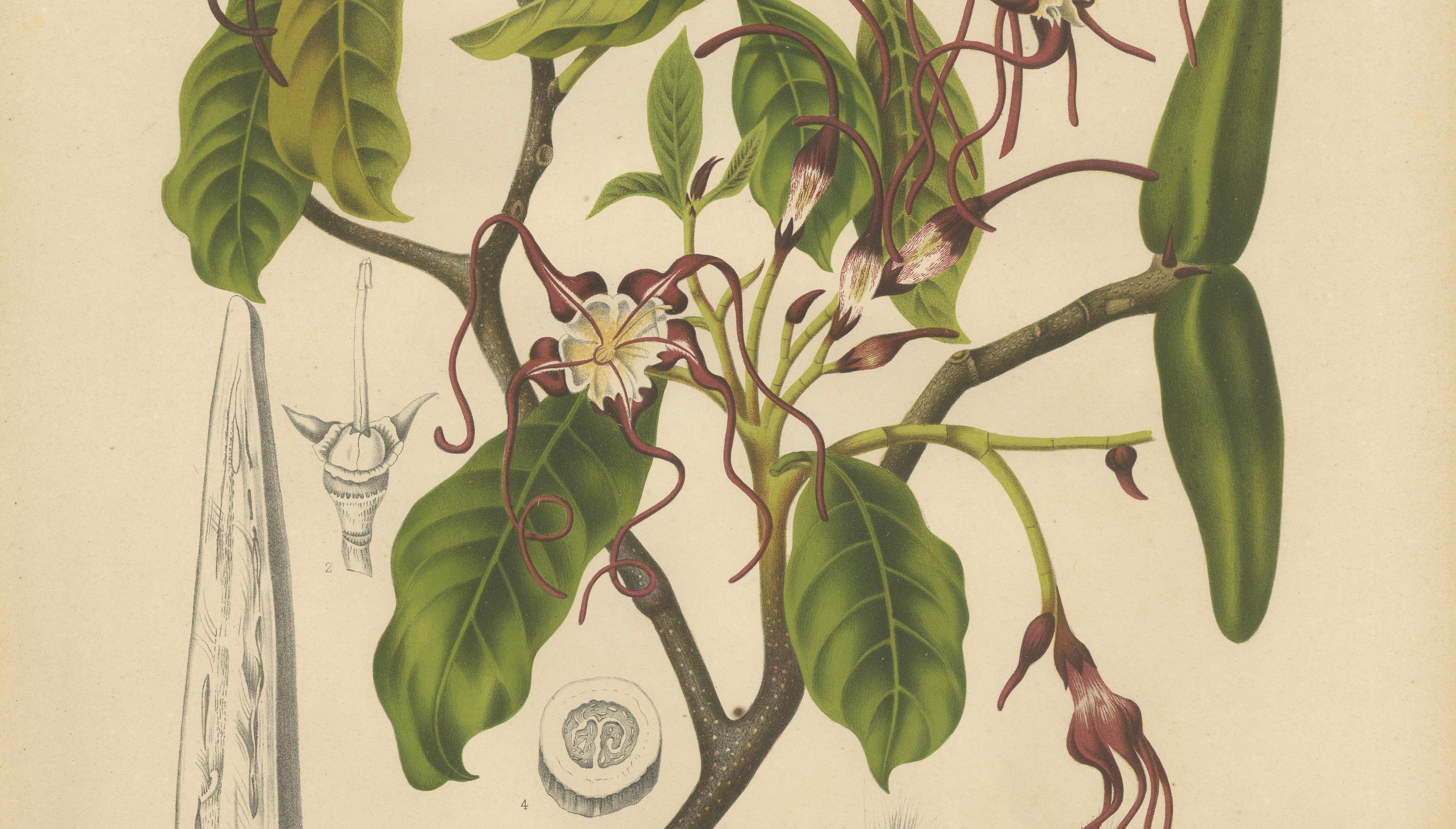
Native to tropical Southeast Asia, Strophanthus species have long fascinated botanists not only for their striking ornamental beauty but also for their historical importance. Several members of the genus were traditionally used to prepare arrow poisons, while compounds extracted from their seeds later became important in nineteenth-century medicine for treating heart conditions. The dramatic flowers and elongated paired seed pods make this one of the most distinctive botanical subjects from the publication.
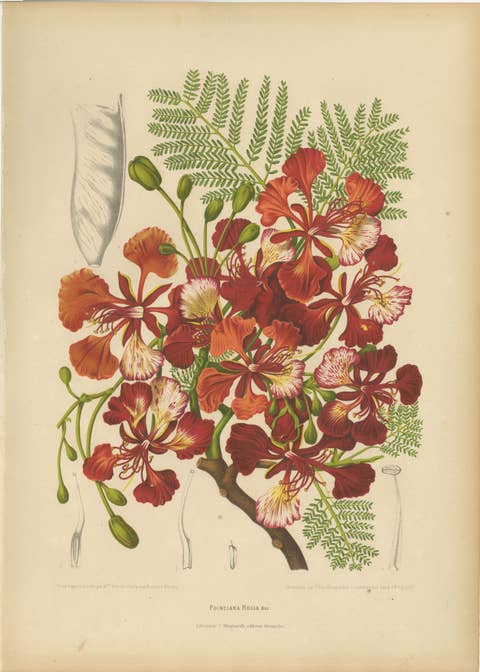
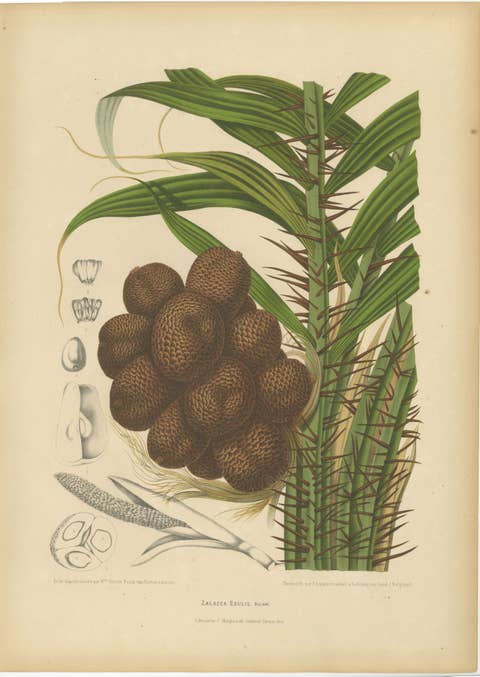
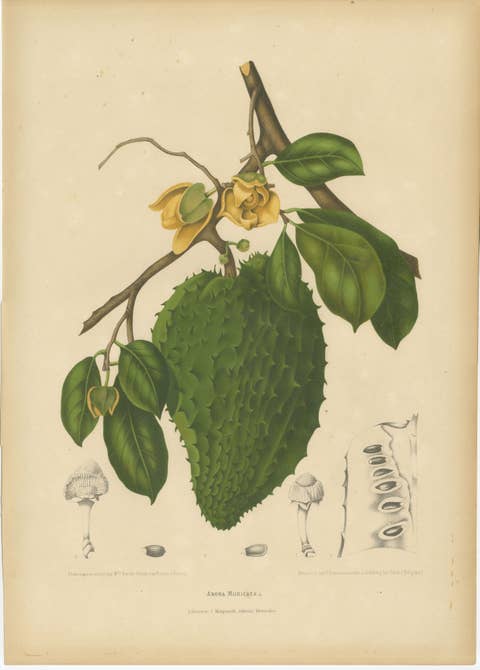
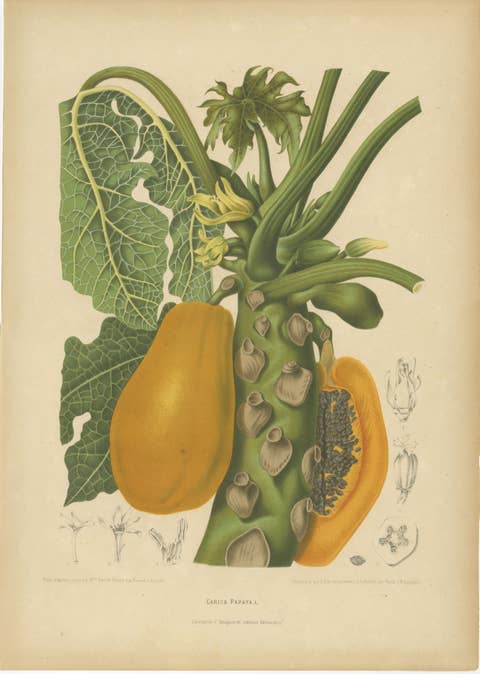
The artwork was painted from life on the island of Java by the distinguished Dutch botanical artist Berthe Hoola van Nooten (1817–1892). It was published in her masterpiece, Fleurs, Fruits et Feuillages Choisis de l'Ile de Java, widely regarded as one of the finest nineteenth-century botanical publications devoted to the flora of the Dutch East Indies. Printed in vibrant chromolithography by P. De Pannemaeker of Ghent, this plate was issued in the third edition published in Brussels by Librairie Européenne C. Muquardt around 1880.
With its elegant twisting petals, graceful foliage and detailed botanical studies, this print is among the most unusual and visually captivating plates from the series, appealing equally to collectors of botanical art, natural history and tropical flora.
This is an original antique print, printed circa 1880, and not a modern reproduction or later copy.
Publication:
Fleurs, Fruits et Feuillages Choisis de l'Ile de Java
Printer:
P. De Pannemaeker, Ghent
Medium:
Original chromolithograph on wove paper.
Condition:
Good antique condition with age-related toning, occasional foxing and light handling wear consistent with age. Please examine all photographs carefully, as they form part of the description.
Please note that any framed images are for display inspiration only. The print is sold unframed. Framed mock-ups are not always shown to exact scale and are intended solely to illustrate how the artwork may look when displayed.