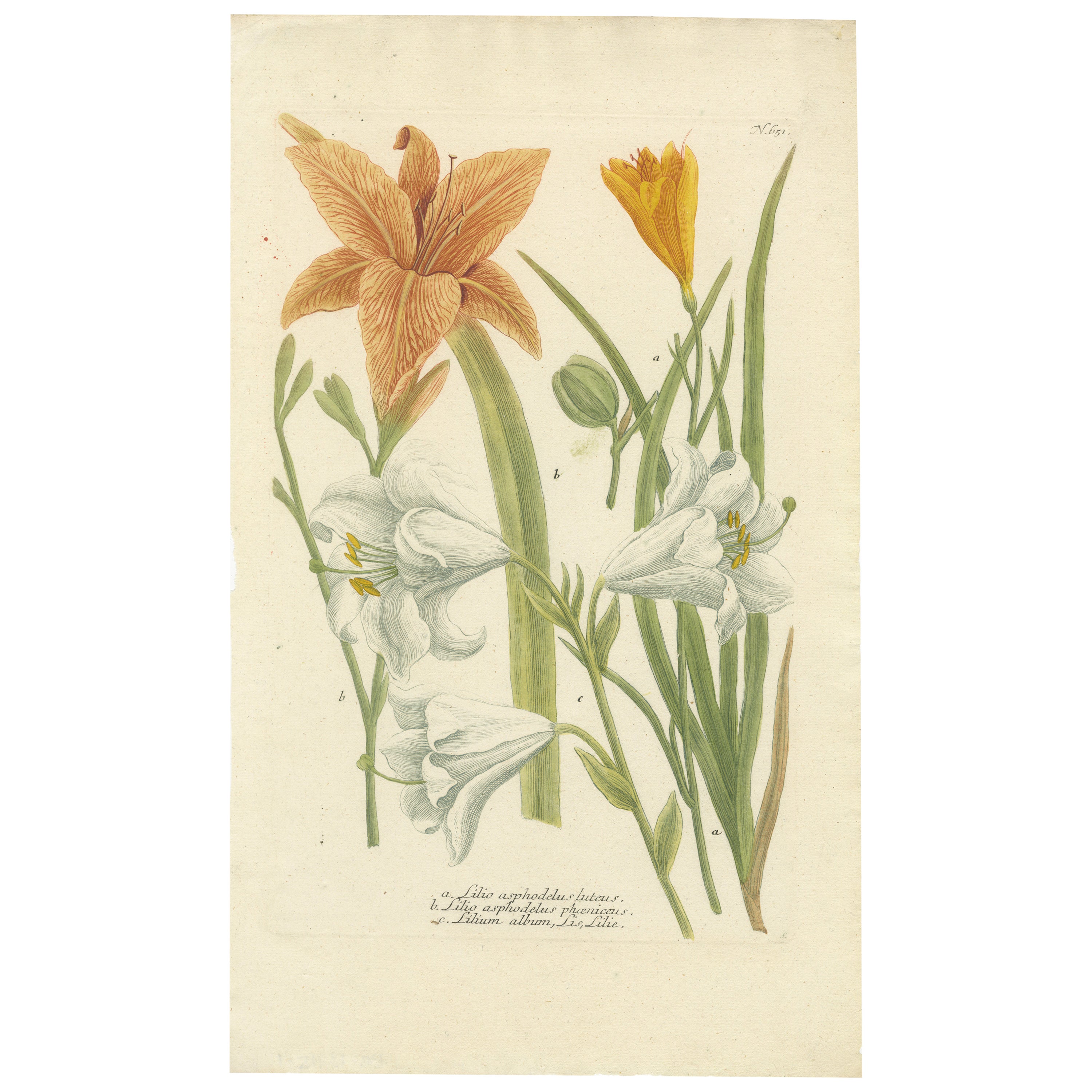
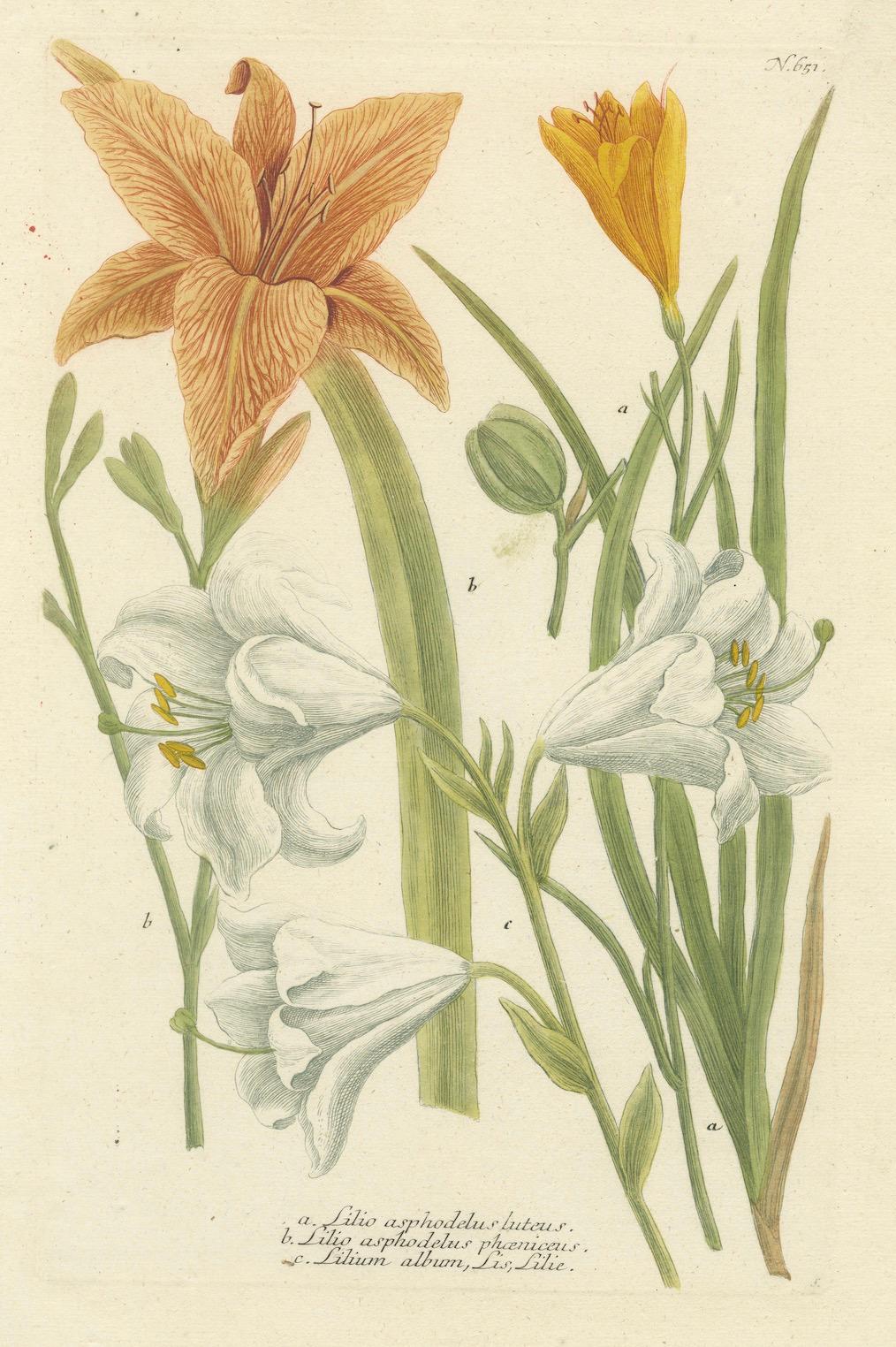
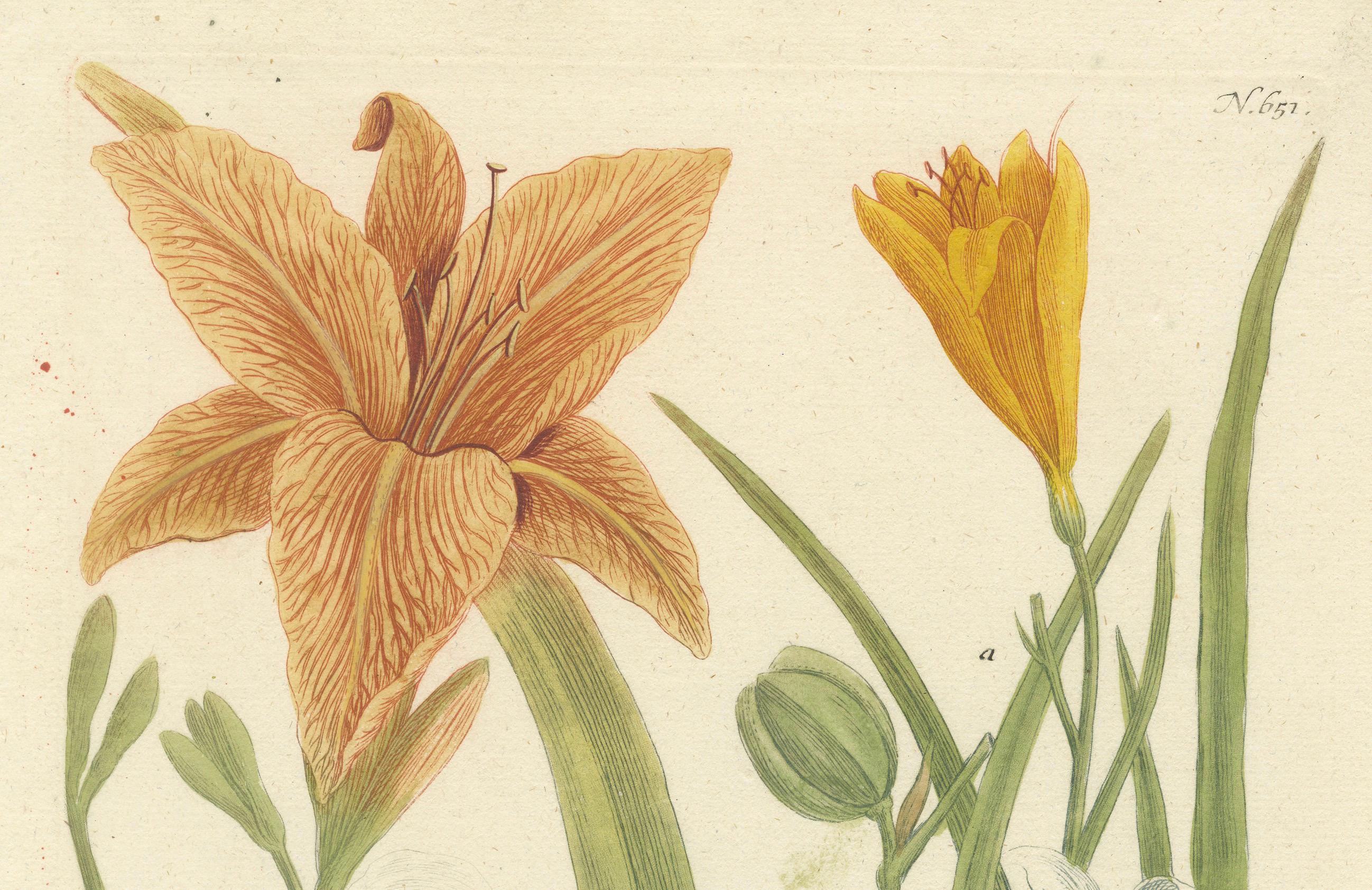
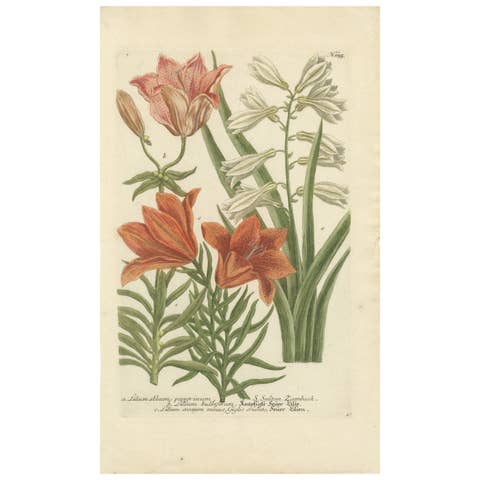
Hand-colored Mezzotint Engraving of a Lily from Johann Weinmann's Work, 1748
€ 790
One of a kind: this is the sheet in the photographs. Ships from Langweer, the Netherlands.
Date
1748
Sheet size
43 × 25 cm (16.9 × 9.8 in)
Condition
Good
Reference
BG-13715-1
Condition
Good with some light soiling due to handling. Slightly unevenly trimmed left blank margin (remaining width of blank margin still at least 1 cm.) Study the images carefully.
About this sheet
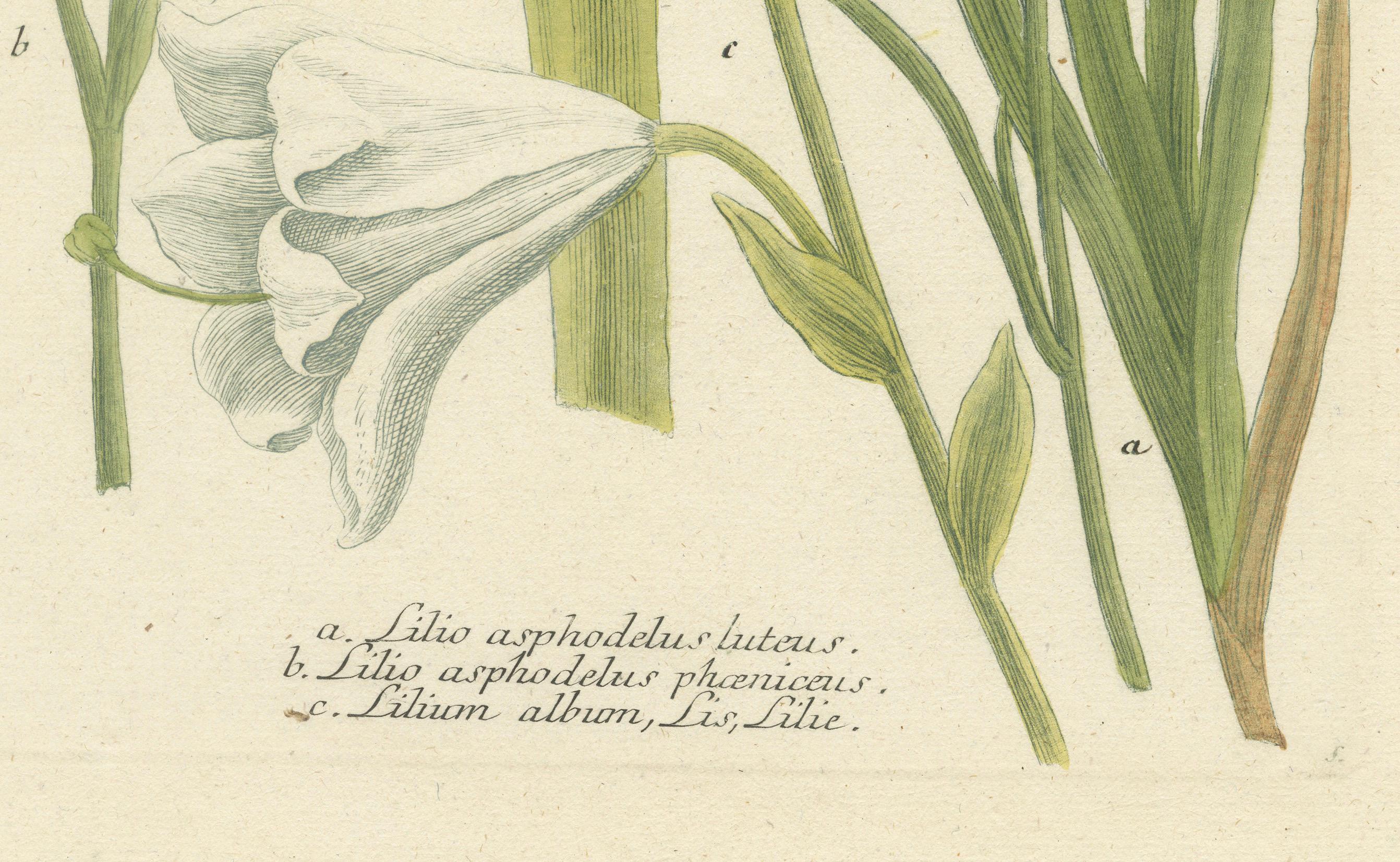
Artist or Maker: Johann Wilhelm Weinmann Title: "Lilio asphodelus luteus. Lilio asphodelus phoeniceus. Lilium album" Medium: Colored etching Source: "Duidelyke vertoning eeniger duizend in alle vier waerelds deelen wassende bomen, stammen, kruiden" (A Clear Representation of Several Thousand Trees, Shrubs, Herbs, Growing in All Four Parts of the World)
Date: Published in Amsterdam, 1748
Catalog Number: N.651
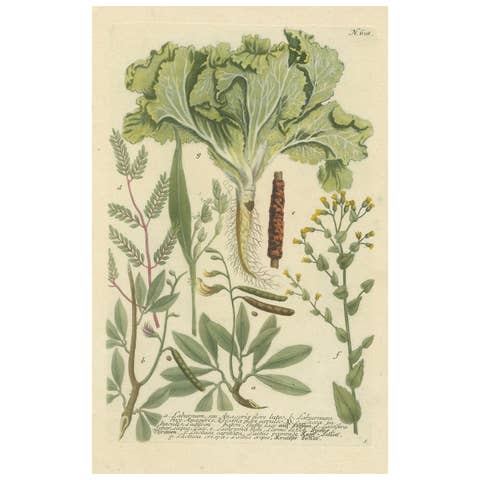
This engraved detailed botanical illustration is from the 18th century, specifically from Johann Weinmann's "Phytanthoza Iconographia," which is a celebrated work in botanical illustration and taxonomy. The Dutch edition, indicates its wide reach and influence across Europe during that period.
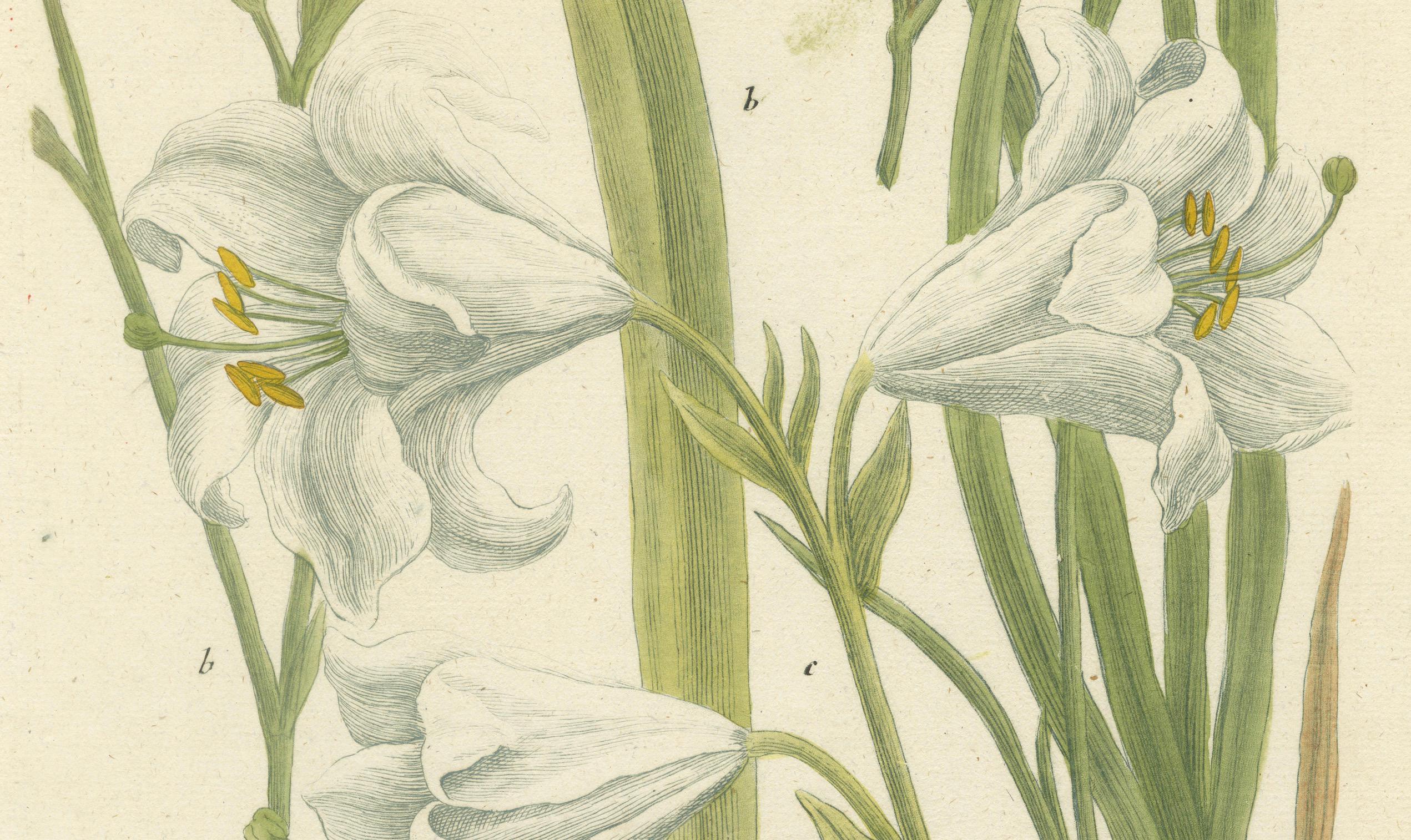
This work is significant for its use of color mezzotint engraving, a technique that was quite advanced for its time, offering a rich texture and depth to the illustrations. It's also notable for the contributions of various artists, including Georg Dionysus Ehret, who is renowned for his botanical artistry. The fact that Ehret's work is unacknowledged in this collection reflects the complexities of artistic collaboration and recognition in the period.
Weinmann's collection provided a critical reference for botanists and horticulturists, documenting the flora cultivated in early 18th-century Europe with a level of precision and artistry that was unprecedented. The plates not only served scientific and educational purposes but also inspired decorative arts, influencing designs in ceramics and beyond. This particular print, featuring lilies and possibly other flowers, showcases the intricate detail and delicate coloration that make the "Phytanthoza Iconographia" such a valuable resource for understanding the botanical knowledge and artistic skill of the era.