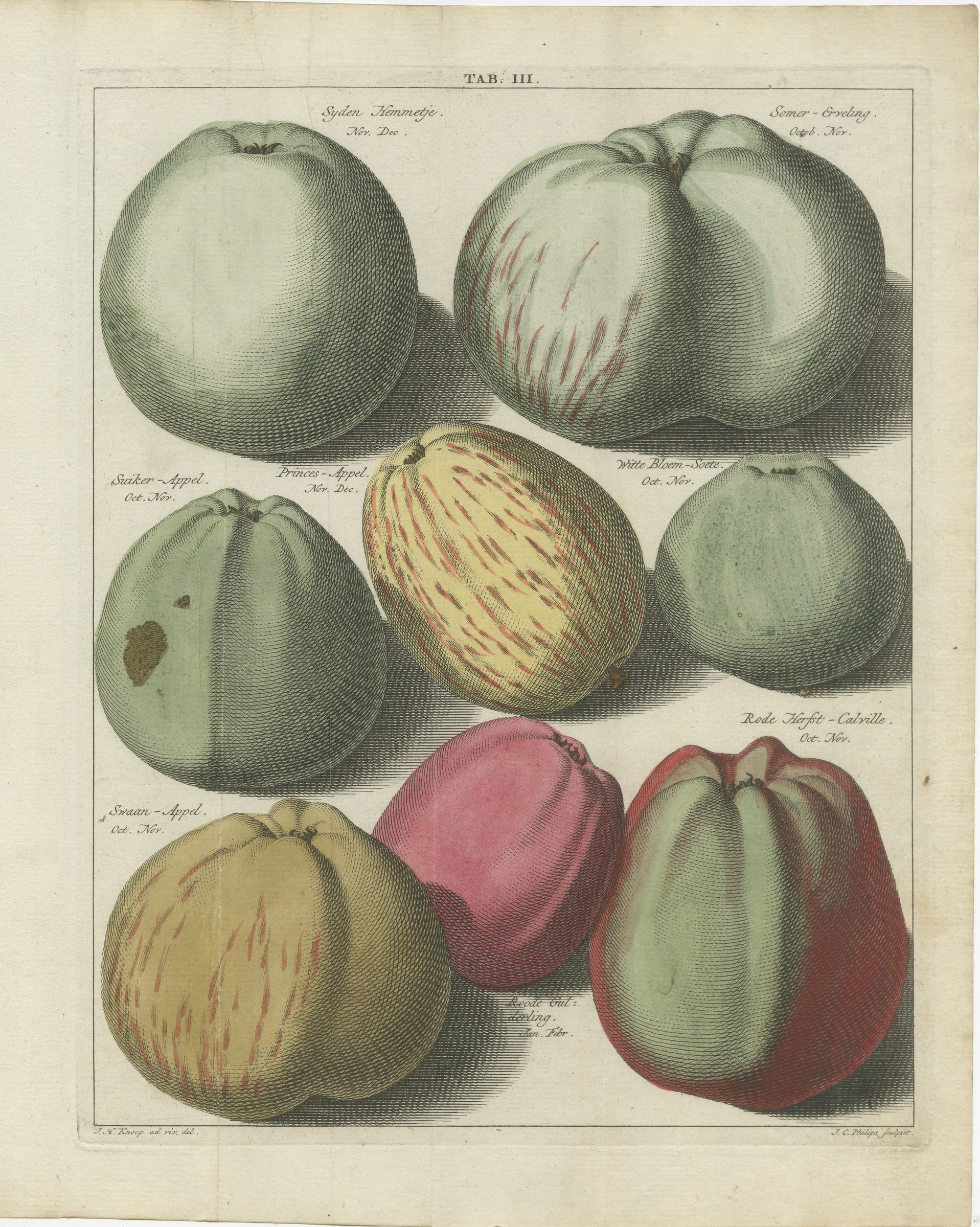
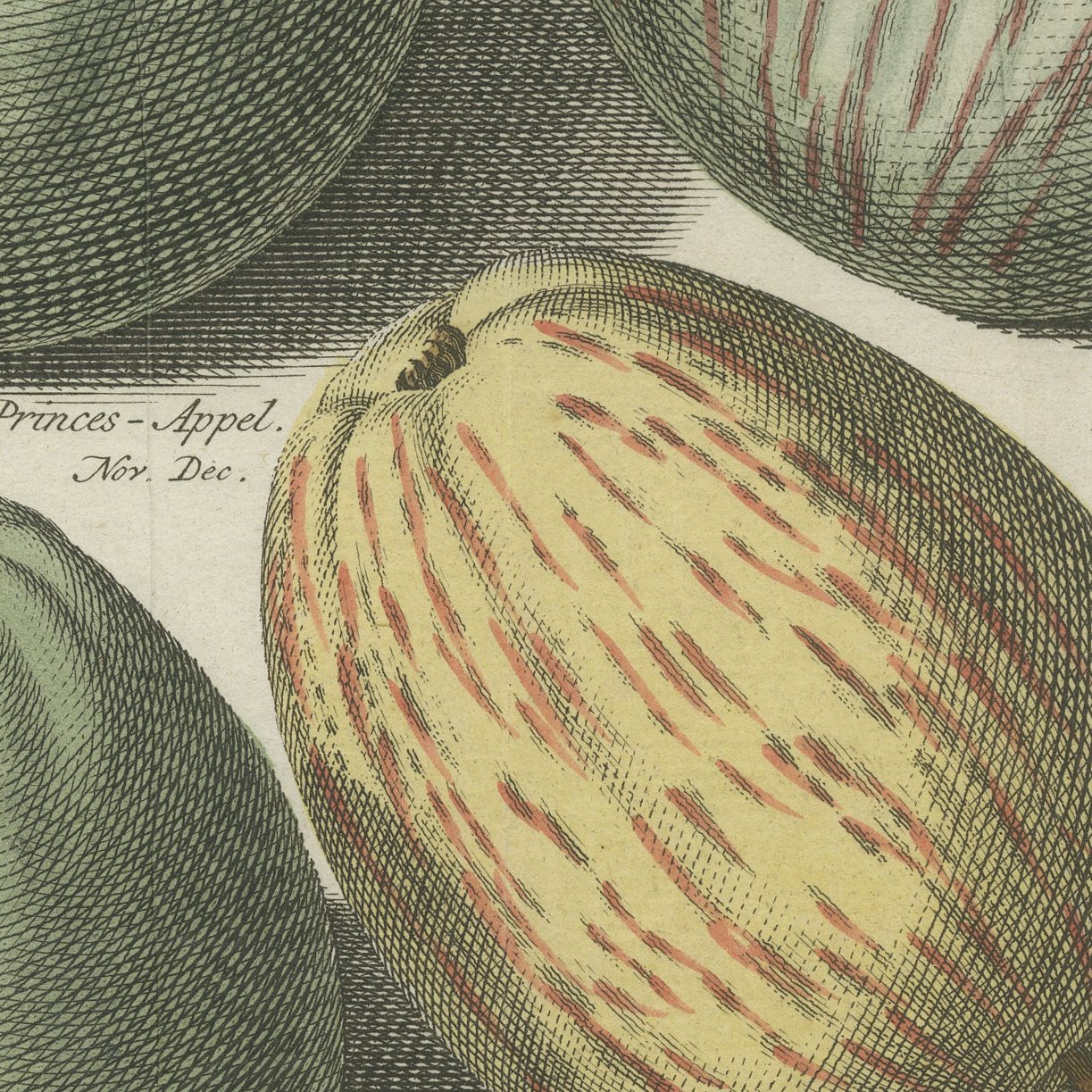
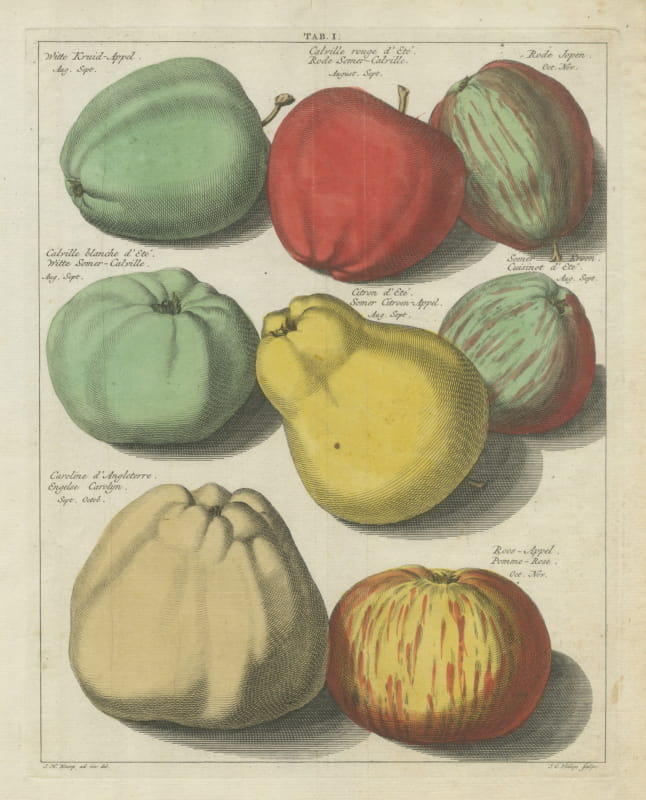
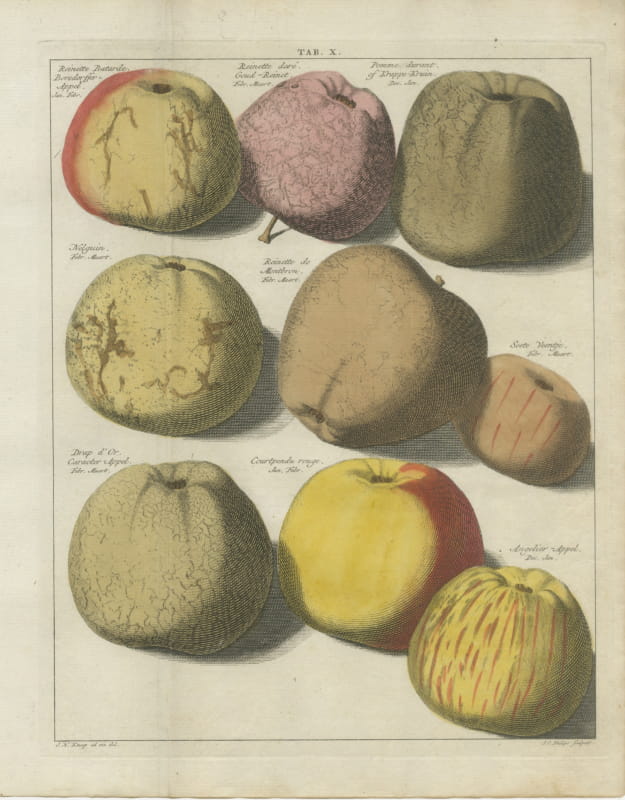
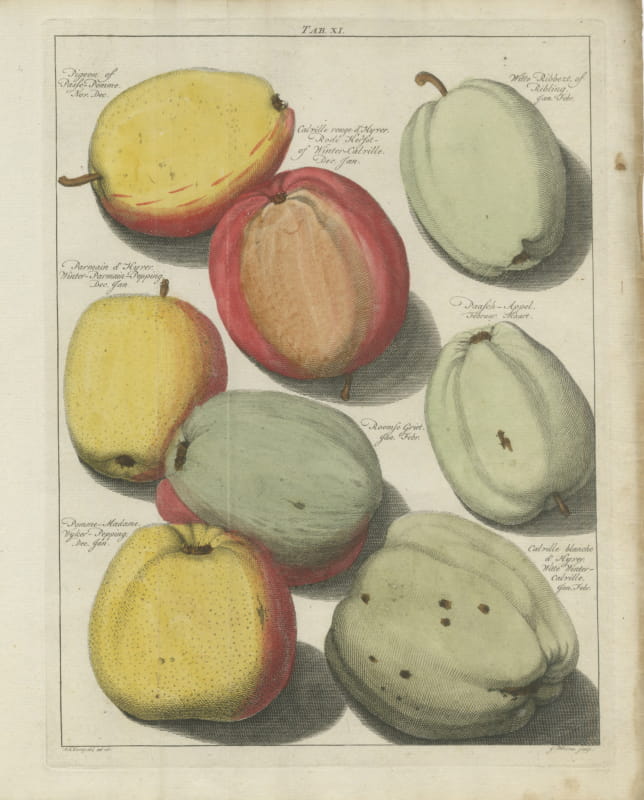
Hand-Colored Dutch Apples: Swaan-Appel and Princes-Appel, Knoop, 1790
€ 290
Original antique · The actual sheet photographed · Certificate of authenticity on request · Sold unframed · Worldwide shipping from € 15 (rates)
Date
1790
Mapmaker / artist
Johann Hermann Knoop, drawn from life, lettered "J. H. Knoop ad viv. del."; engraved by Jan Caspar Philips, lettered "J. C. Philips sculpsit."
Publisher
Allart, Holtrop, de Leeuw en Krap, Amsterdam and Dordrecht
Technique
Copper Engraving
Coloring
Original hand color
Sheet size
32 × 24 cm (12.6 × 9.4 in)
Condition
Good
Reference
BG-05122-3
What the condition grades mean
Excellent
Bright and clean, with no faults worth mentioning.
Very good
Only light signs of age, such as faint toning.
Good
Normal signs of age for a sheet of this period: toning, some foxing, small marks or neat old repairs.
Fair
Clear faults such as staining, tears or repairs, priced to match.
Every fault we see is written in the condition note, and the whole sheet is shown uncropped in the photos.
Condition
Light uneven toning, browner towards the edges. Marked handling soiling along the bottom and top edges. Scattered light foxing in the margin. Slight wear at the bottom left corner. Minor edge wear, shallow nicks along the bottom.
About this sheet
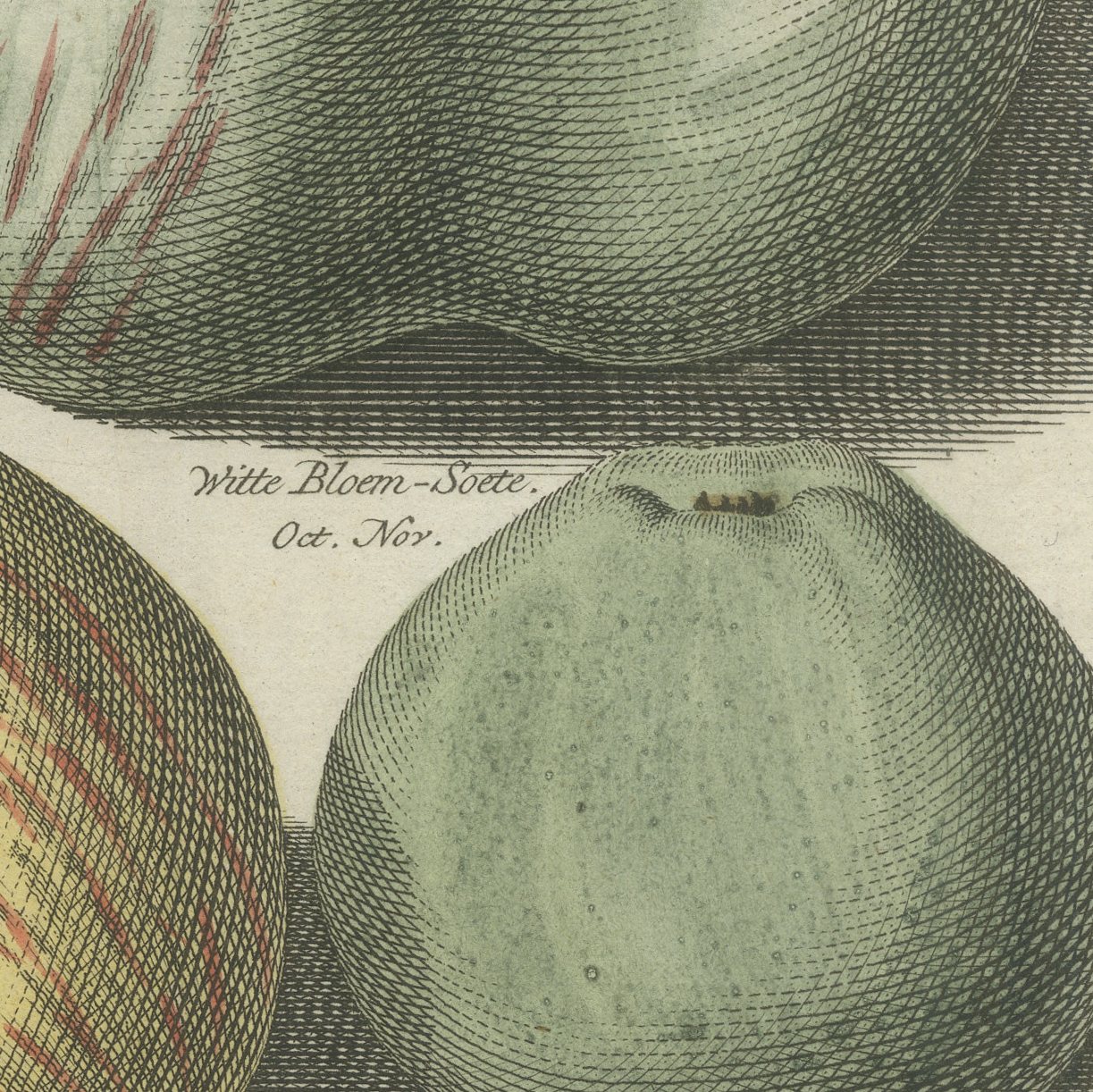
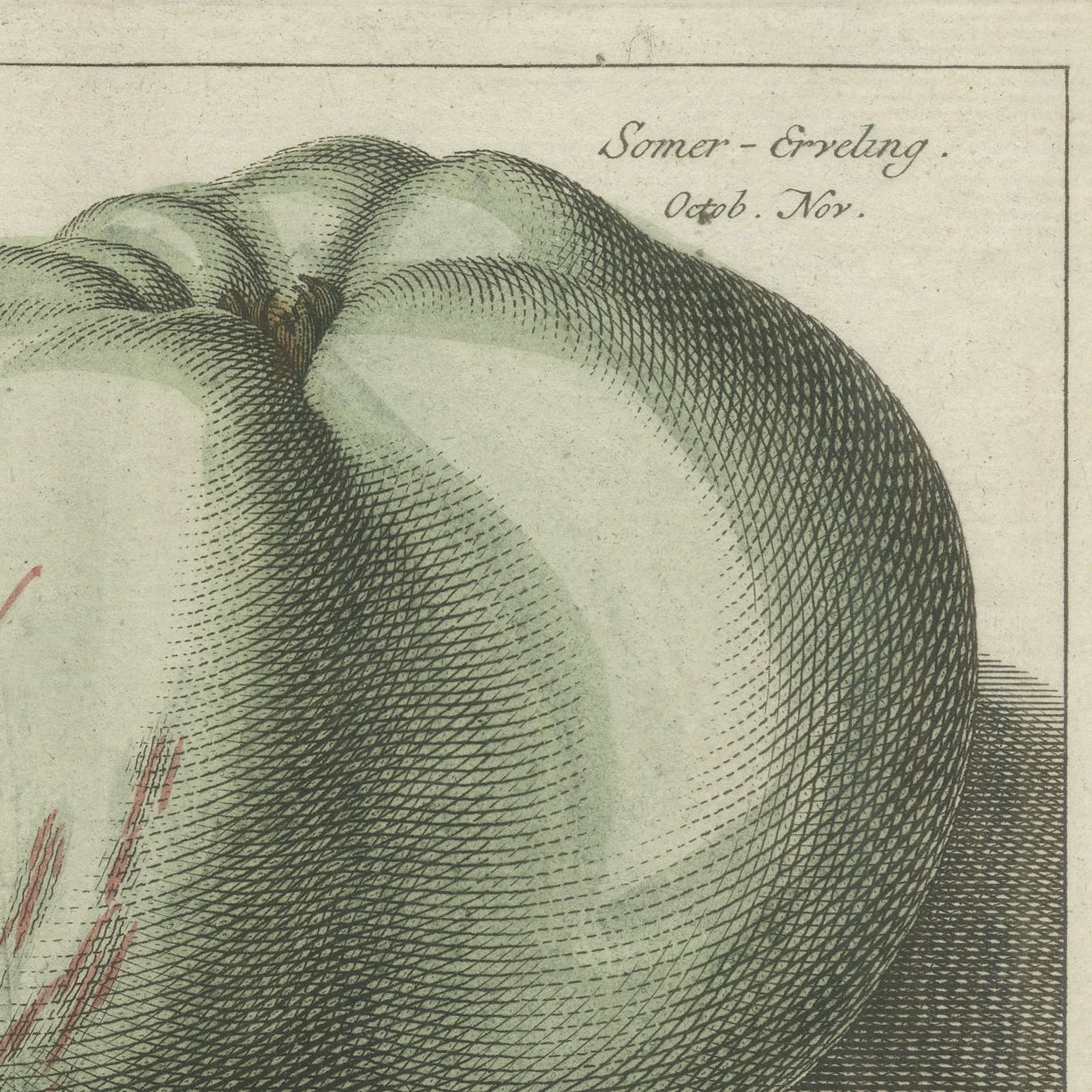
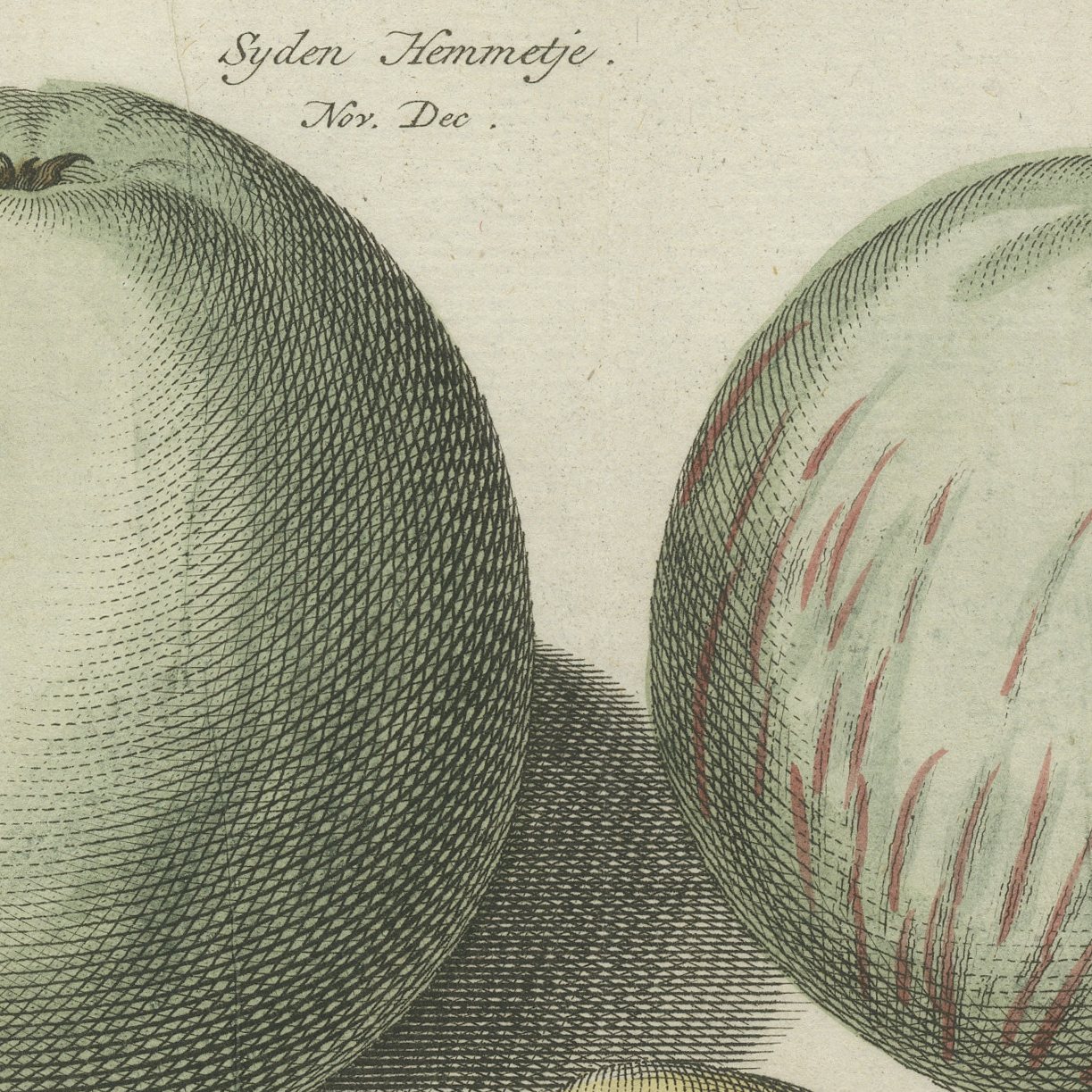
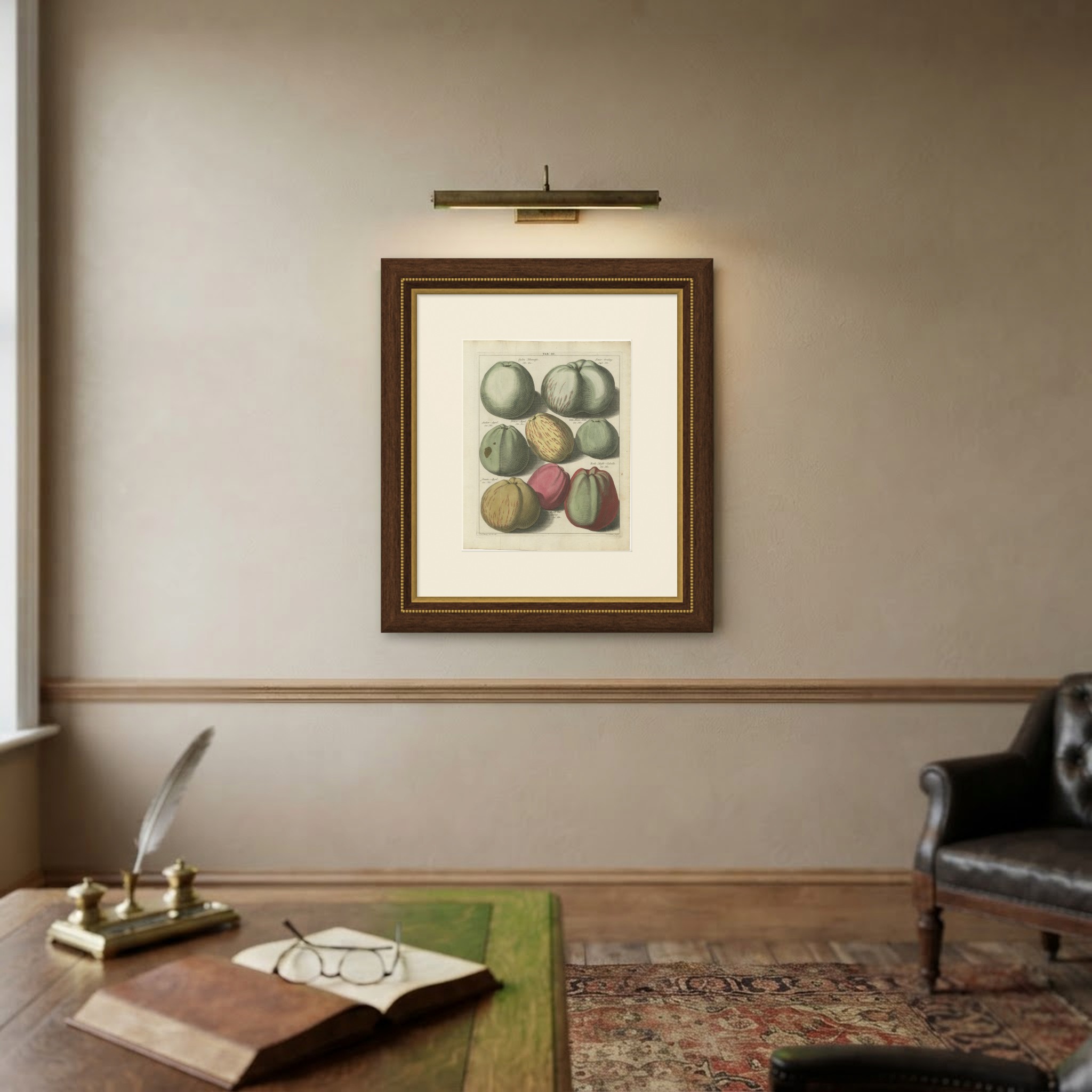
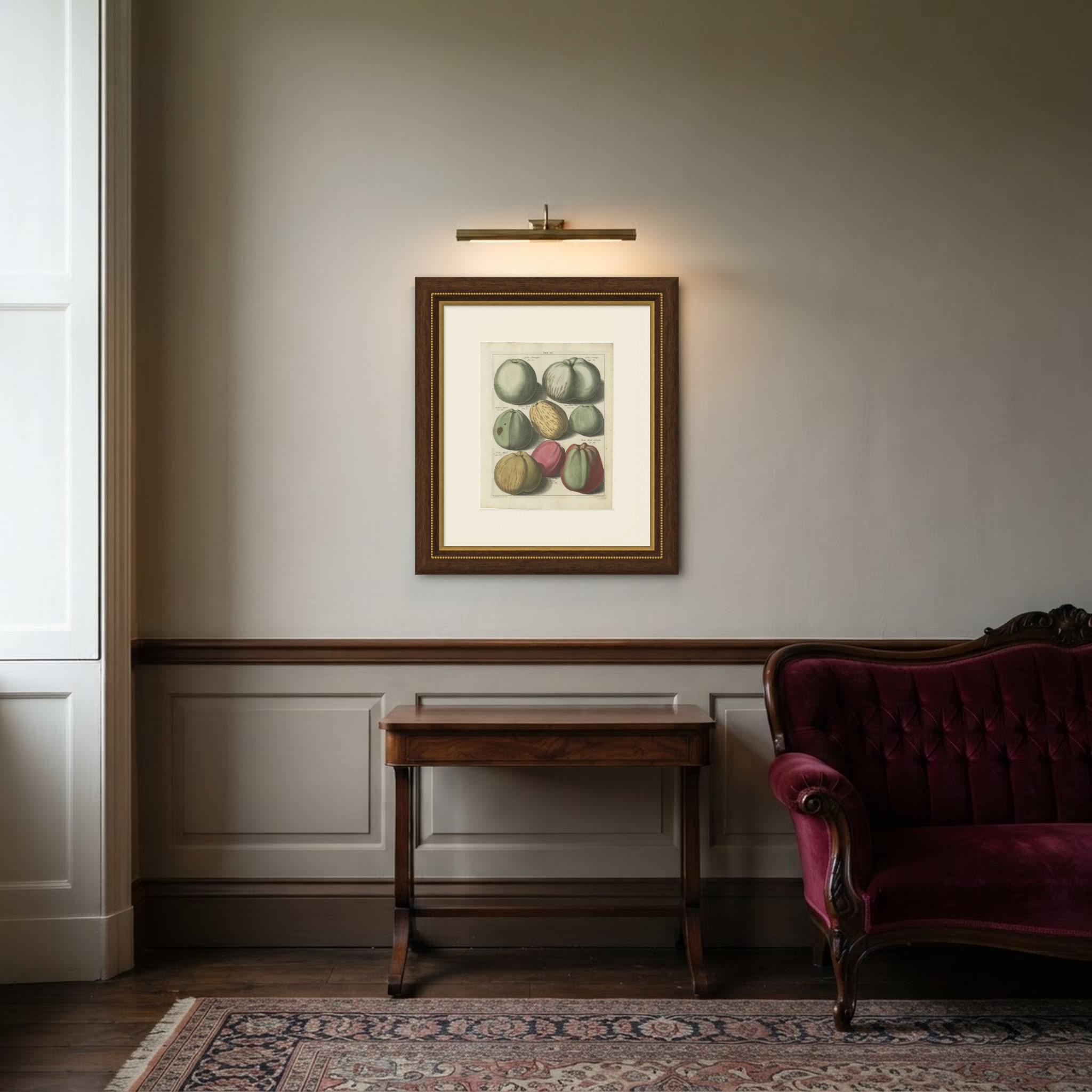
This original hand-colored copper engraving shows eight named Dutch apple varieties, each lettered with its name and the months of its ripening. On the sheet are Syden Hemmetje, Somer-Erveling, Suiker-Appel, Princes-Appel, Witte Bloem-Soete, Swaan-Appel, Roode Guldeling and Rode Herfst-Calville, a run of autumn sorts closing with one that keeps into January and February. The apples sit in an open grid, drawn at full size and tilted so that the ribbing of the Calville and the broad flat shoulders of the Swaan-Appel are both legible. Original watercolor lies over the engraved hatching in varied strength, deep on the blush of the Guldeling and barely tinted on the pale Bloem-Soete, and in several places the wash runs just past the engraved line.
Knoop's pomology appeared at Amsterdam and Dordrecht in 1790 from the presses of Allart, Holtrop, de Leeuw and Krap, carrying a preface by Johannes Florentius Martinet. The plates had first been cut for the Leeuwarden editions of 1758 and 1763 and were printed again here from the same coppers. Johann Hermann Knoop drew the fruit from life in the stadtholder's garden at Leeuwarden. The technique is copper engraving with original hand coloring, and the brushwork crosses the engraved outline in places, which is the plain evidence that the color was laid on by hand and not printed.
The named grid plates are the heart of Knoop's achievement: he brought order to a muddle of local Dutch apple names by drawing each fruit from the living tree and fixing its season in print. Reading the months under the names, a buyer can follow a Frisian orchard from the first September sorts through to the keepers eaten in late winter. That double life, picture and reference, is why these sheets suit a kitchen, a pantry or a garden room so well, where the soft original coloring looks at ease beside plain wood and painted shelves. For collectors of heirloom fruit material the plate is a primary source.
Light uneven toning, browner towards the edges. Marked handling soiling along the bottom and top edges. Scattered light foxing in the margin. Slight wear at the bottom left corner. Minor edge wear, shallow nicks along the bottom.
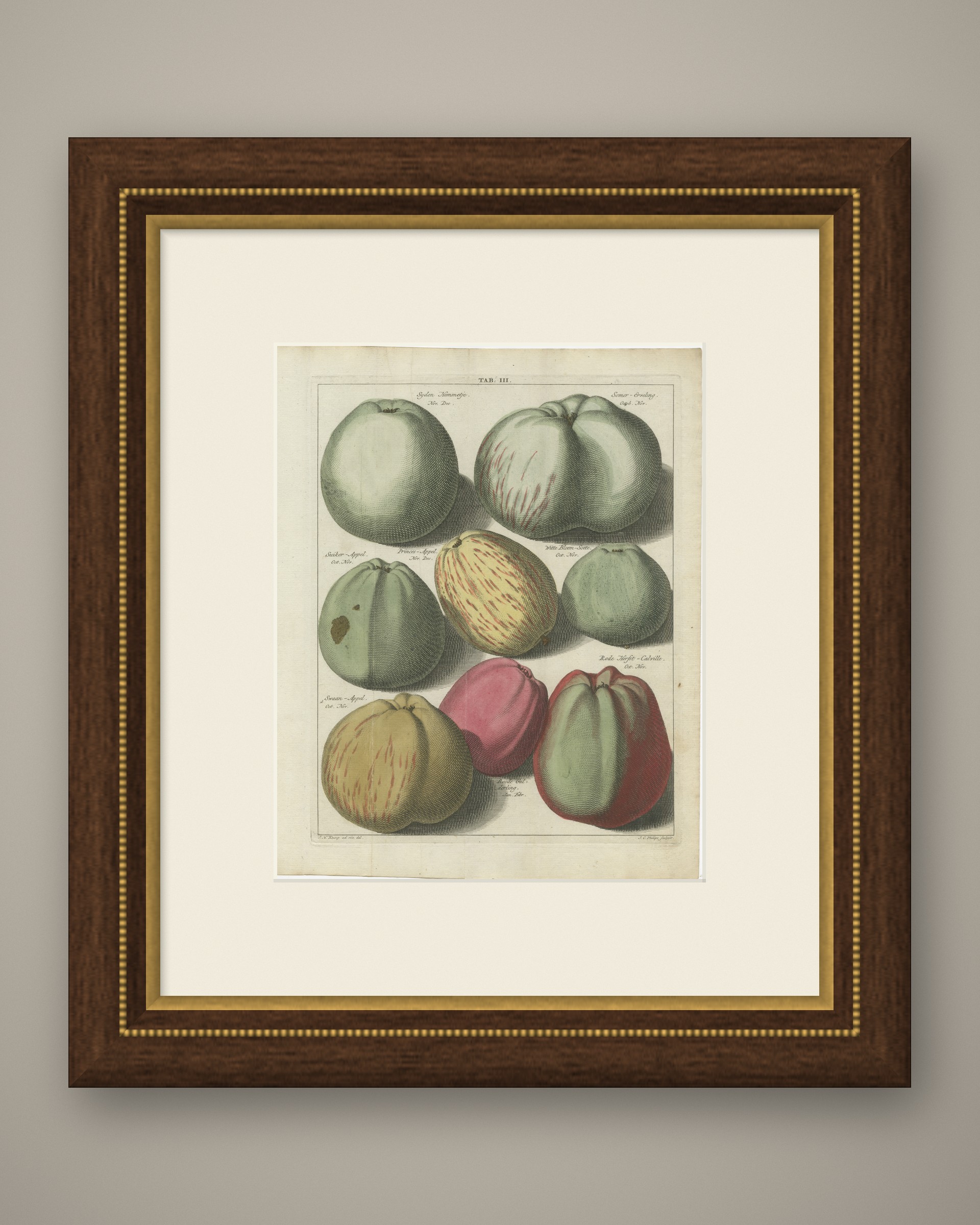
This is an original antique plate, not a modern reproduction. This item is sold unframed. Any framed or interior images are shown for presentation and inspiration only, unless the listing explicitly states that the item is sold framed.