Hand-Colored Botanical Lithograph of Wild Mustard and Charlock, Calwer, 1854
€ 230
Original antique · The actual sheet photographed · Certificate of authenticity on request · Sold unframed · Worldwide shipping from € 15 (rates)
Date
1854
Sheet size
26 × 20.5 cm (10.2 × 8.1 in)
Reference
BG-14010-5
What the condition grades mean
Excellent
Bright and clean, with no faults worth mentioning.
Very good
Only light signs of age, such as faint toning.
Good
Normal signs of age for a sheet of this period: toning, some foxing, small marks or neat old repairs.
Fair
Clear faults such as staining, tears or repairs, priced to match.
Every fault we see is written in the condition note, and the whole sheet is shown uncropped in the photos.
Condition
The print is in excellent condition with minor signs of age-related foxing and light edge wear. Colors remain bright and vibrant, with sharp detailing throughout.
About this sheet
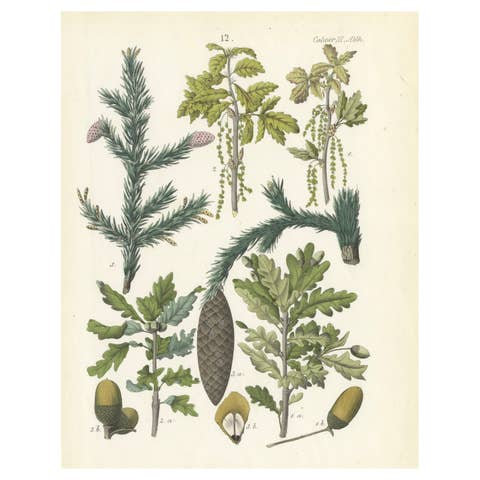
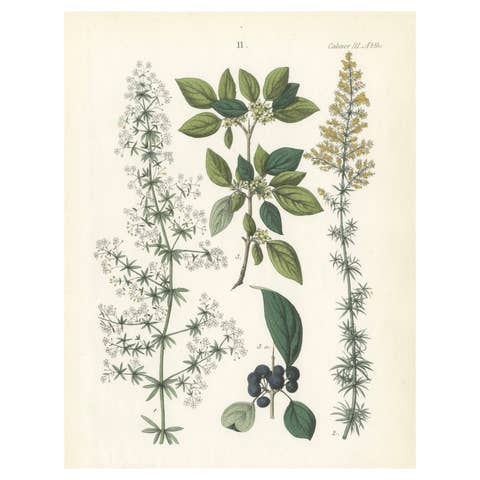
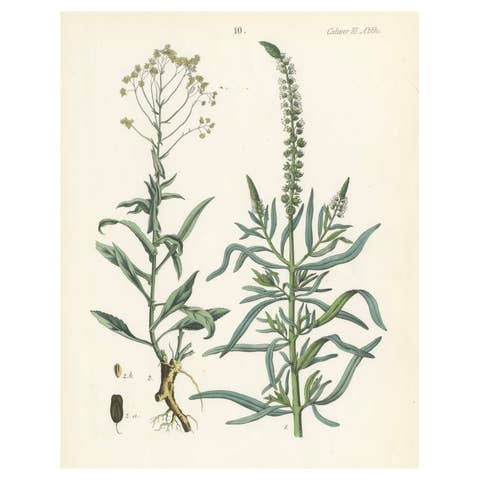
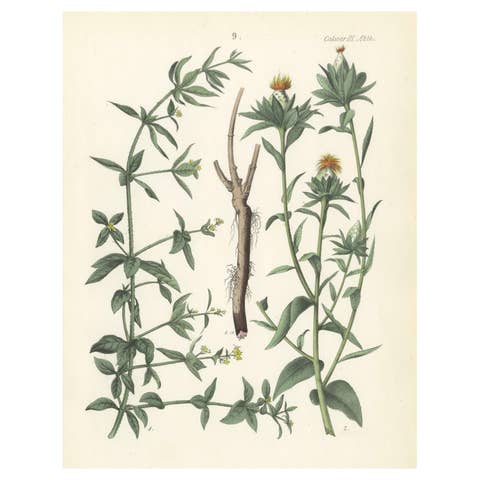
Hand-Colored Botanical Lithograph of Wild Mustard and Charlock, Calwer, 1854 This beautifully detailed botanical lithograph is from Carl Georg Calwer’s Deutschlands Technische Pflanzen (1854), an essential work illustrating the technical plants of Germany. The artwork features Sinapis arvensis (wild mustard) and Raphanus raphanistrum (charlock), both depicted with exceptional precision and hand-applied coloring. Wild mustard, with its bright yellow flowers and slender seed pods, was historically significant as a source of oil and a foraging plant. Charlock, known for its similar yellow blossoms, has long been a common field plant with traditional medicinal uses.
The print captures the delicate flowers, leaves, and seed pods in fine detail, accompanied by scientific annotations that emphasize the botanical and utilitarian importance of these species in 19th-century agriculture and medicine. Its composition combines artistic appeal with educational value, making it a remarkable piece for collectors and enthusiasts of botanical history.
Measuring approximately 24 x 30 cm, this rare lithograph is an excellent choice for framing or display in libraries, studies, or collections focused on natural history. It embodies the timeless beauty of botanical art while offering insight into the practical uses of plants during this period.