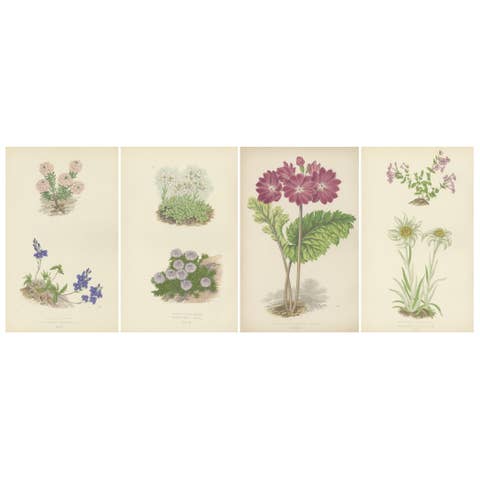
Golden Fleece: Old Vibrant Botanical Illustration from Van Houtte's Collection
€ 140
One of a kind: this is the sheet in the photographs. Ships from Langweer, the Netherlands.
Sheet size
25 × 16.3 cm (9.8 × 6.4 in)
Reference
BG-13761-27
Condition
Very good, given age. General age-related toning and/or occasional minor defects from handling. Colors are vivid. Please study scan carefully.
About this sheet
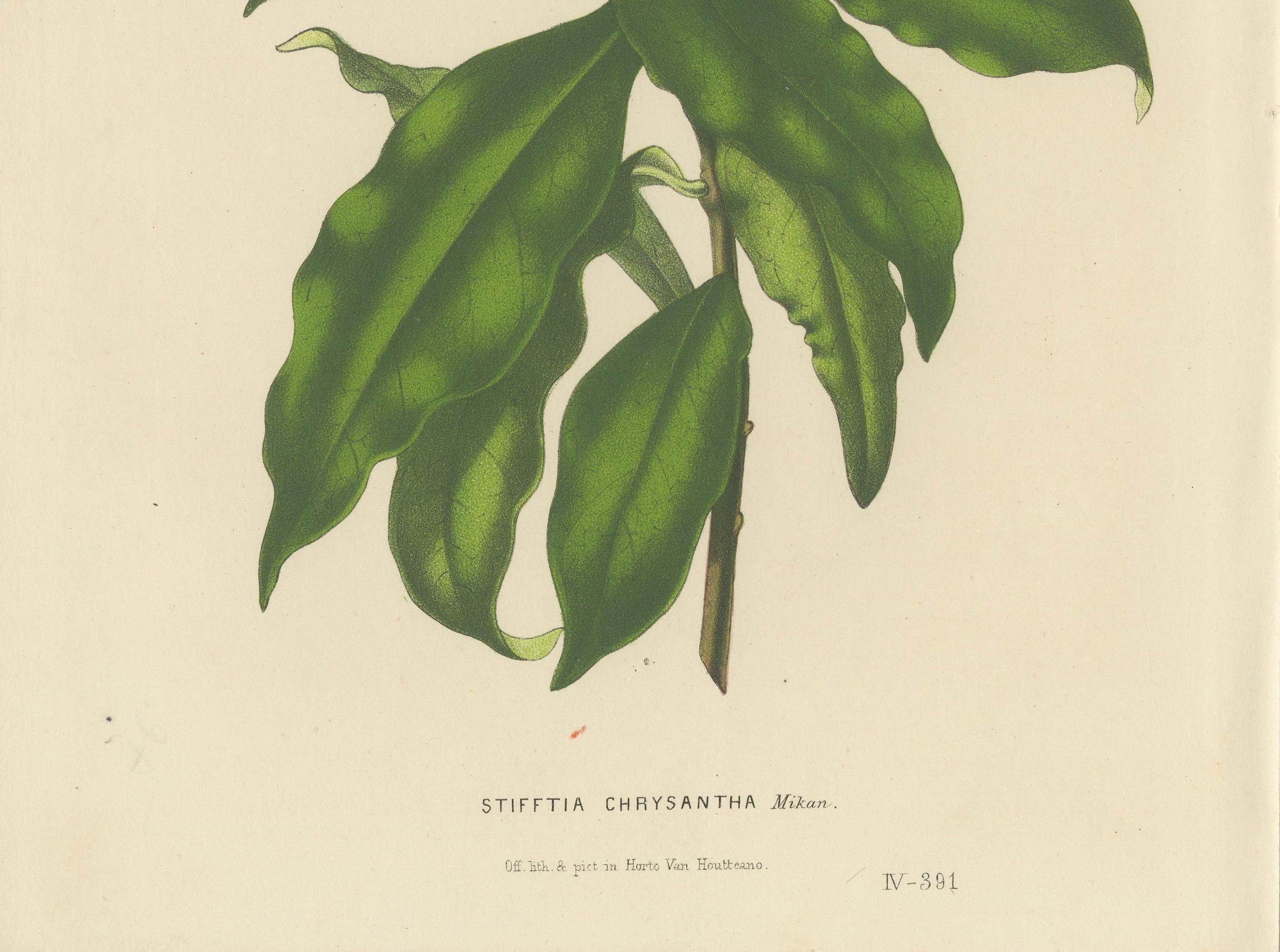
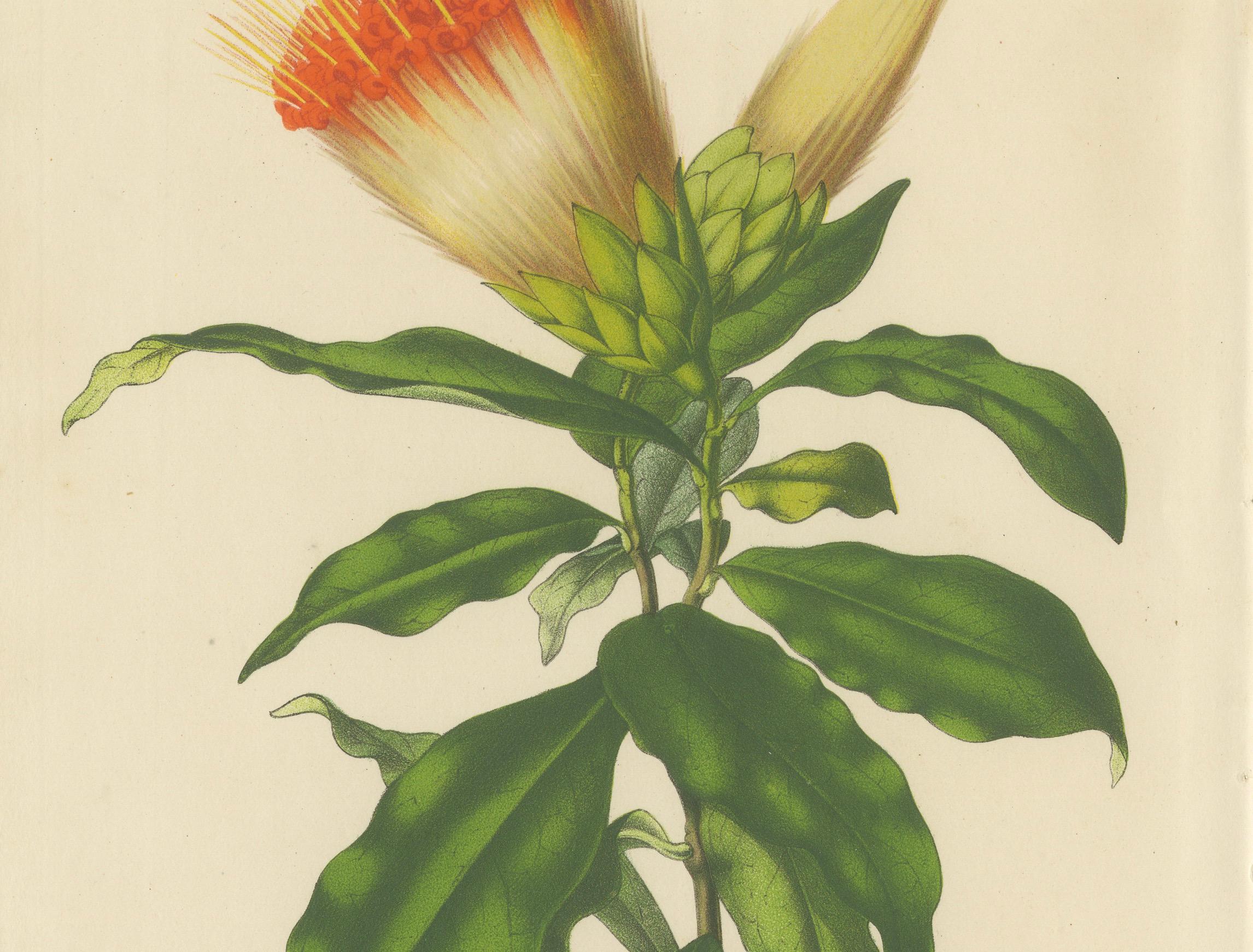
The print is the plant Stifftia chrysantha, also known as the Golden Fleece or Saffron Brush. This illustration is a color lithograph from Louis Van Houtte's "Flore des Serres et des Jardins de l'Europe."
Description of Stifftia chrysantha: - Botanical Characteristics: Stifftia chrysantha features striking, dense floral heads comprised of bright orange-yellow bristles that radiate outward, resembling a brush or a flame. The plant has robust, green leaves that provide a lush backdrop to the vibrant flowers. - Flowering and Growth: It is a perennial shrub native to Brazil, particularly noted for its ornamental value due to these distinctive and vibrant inflorescences.
Translation of the Text on the Print: - Text: "Stifftia chrysantha Mikan. – Off. tab. & pict in Horto Van Houtteano – IV-391." - Translation: Stifftia chrysantha Mikan. - Officially described and illustrated in Van Houtte's Garden – Volume 4, Plate 391.
Significance: The Stifftia chrysantha is particularly celebrated not only for its aesthetic appeal but also for its rarity and exotic origin, making it a prized specimen in botanical collections and ornamental gardens. Its inclusion in Van Houtte's work underscores its desirability and the horticultural interest in exotic New World plants during the 19th century.
The use of color lithography in depicting this plant allows for a vivid and detailed portrayal, capturing the texture and color gradients of the flowers with great precision. This technique, popular during the period for its effectiveness in producing colorful and accurate botanical illustrations, helps convey the unique beauty of such exotic species to a European audience, fostering greater appreciation and study of global plant diversity.