About this sheet
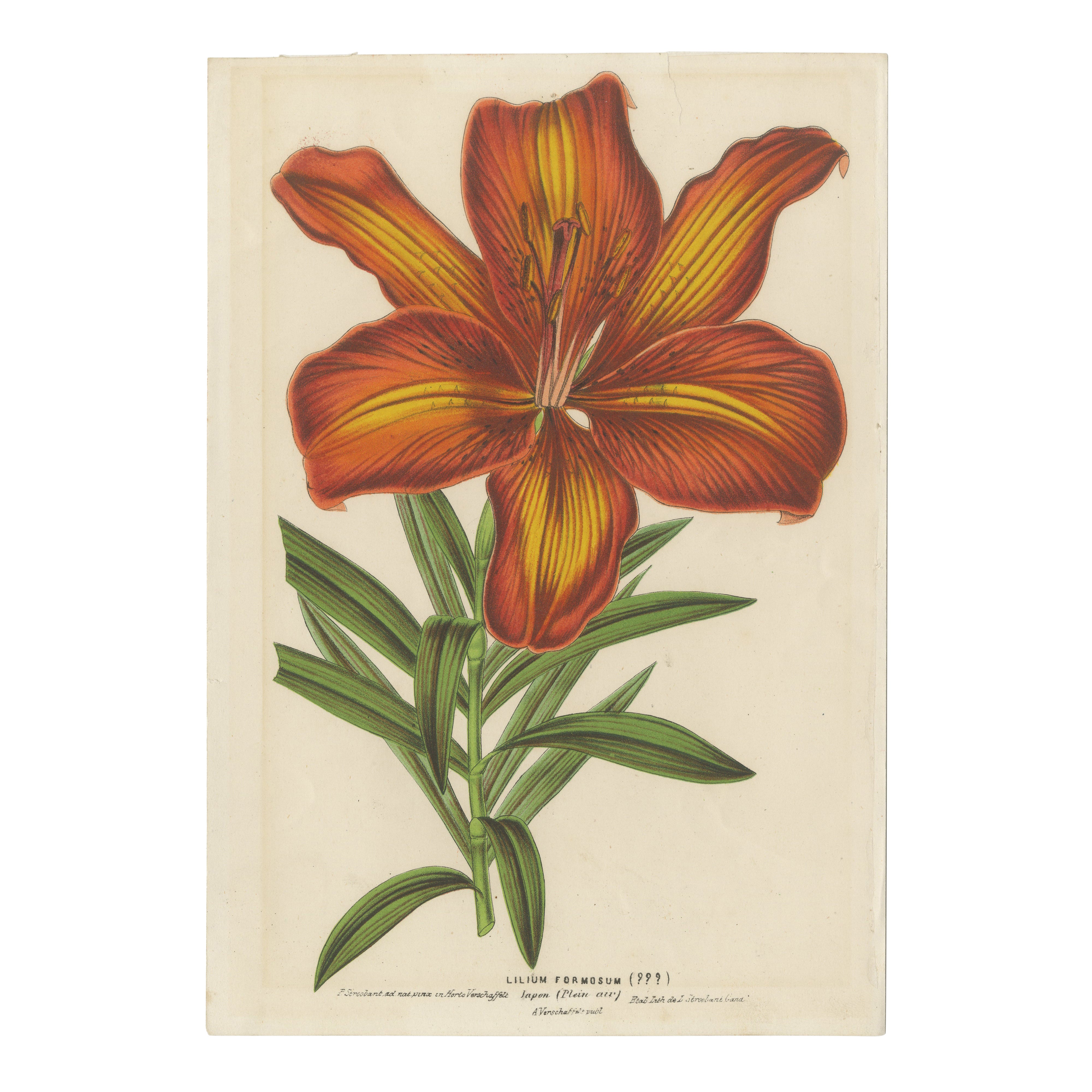
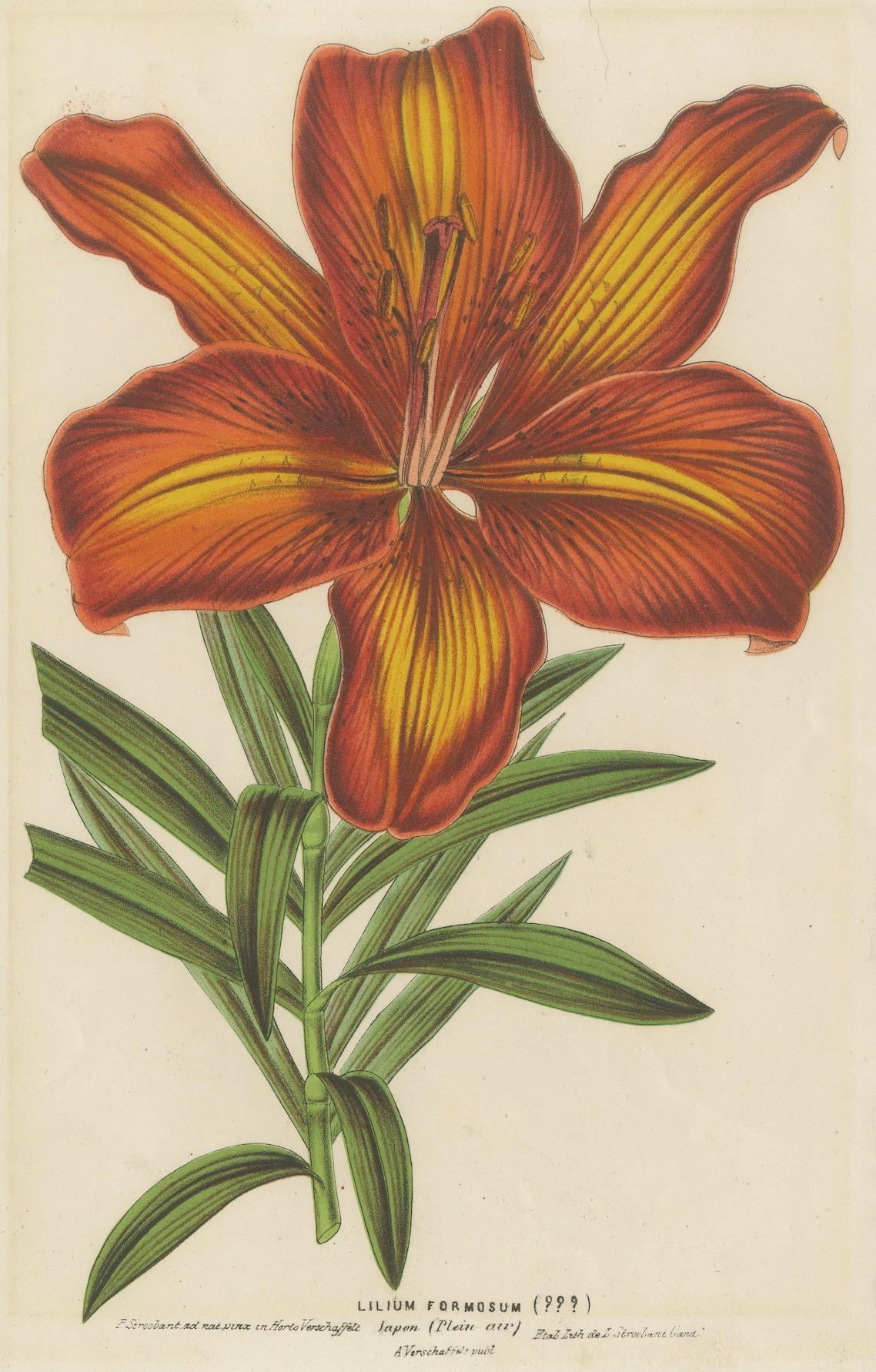
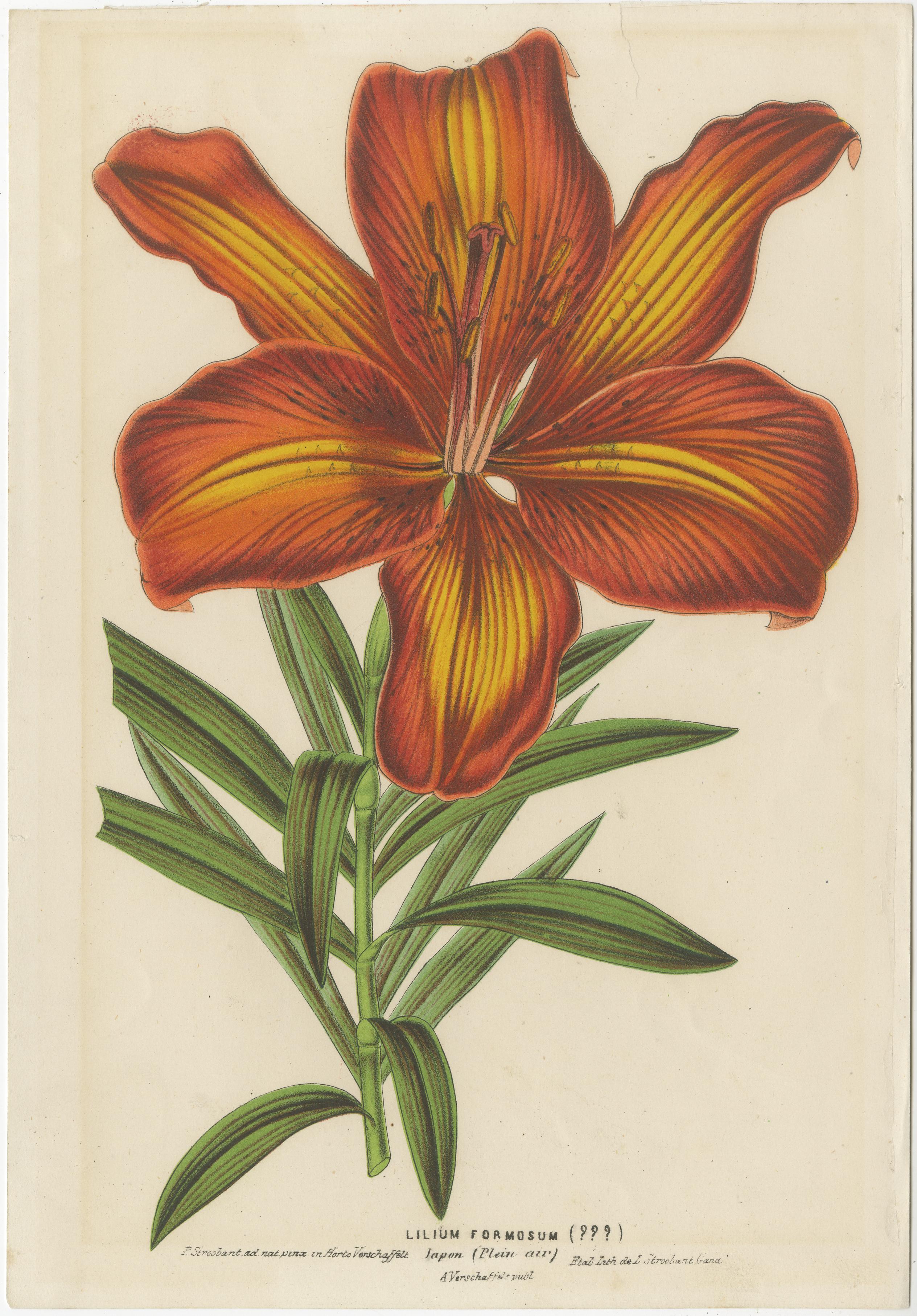
This vibrant hand-colored lithograph of the Siberian Lily (Lilium pensylvanicum), also referred to as Lilium formosum, was created circa 1860.
Illustrated by P. Stroobant and published by Alexandre Verschaffelt, this piece originates from the renowned Horto Verschaffelt, one of the premier botanical nurseries in 19th-century Belgium.
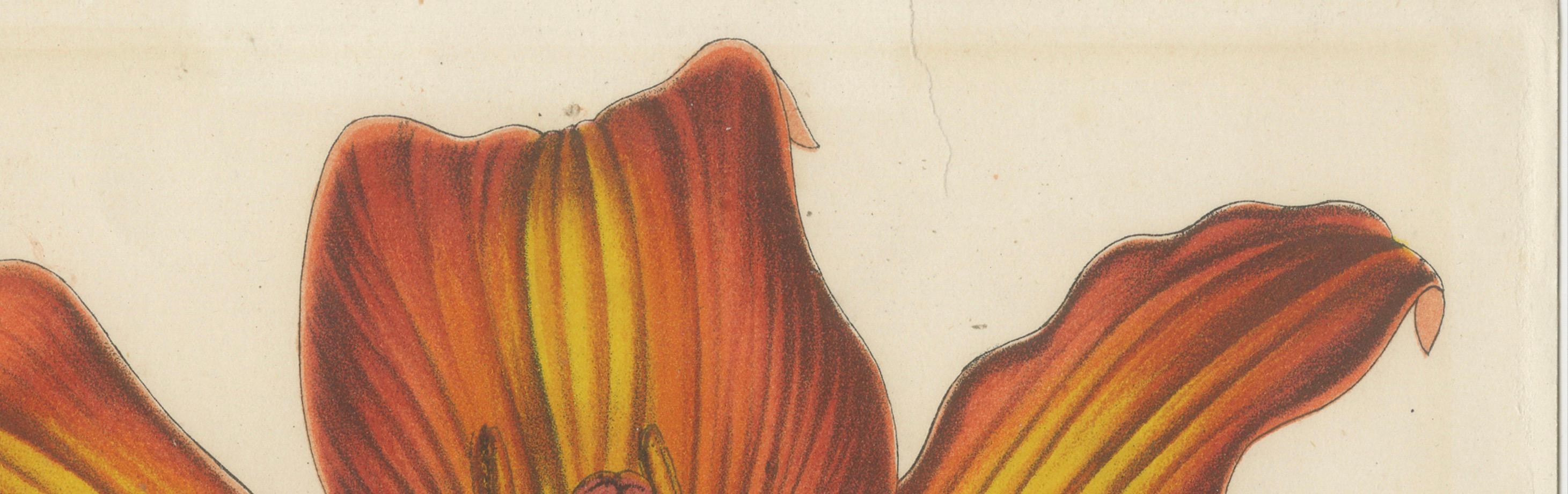
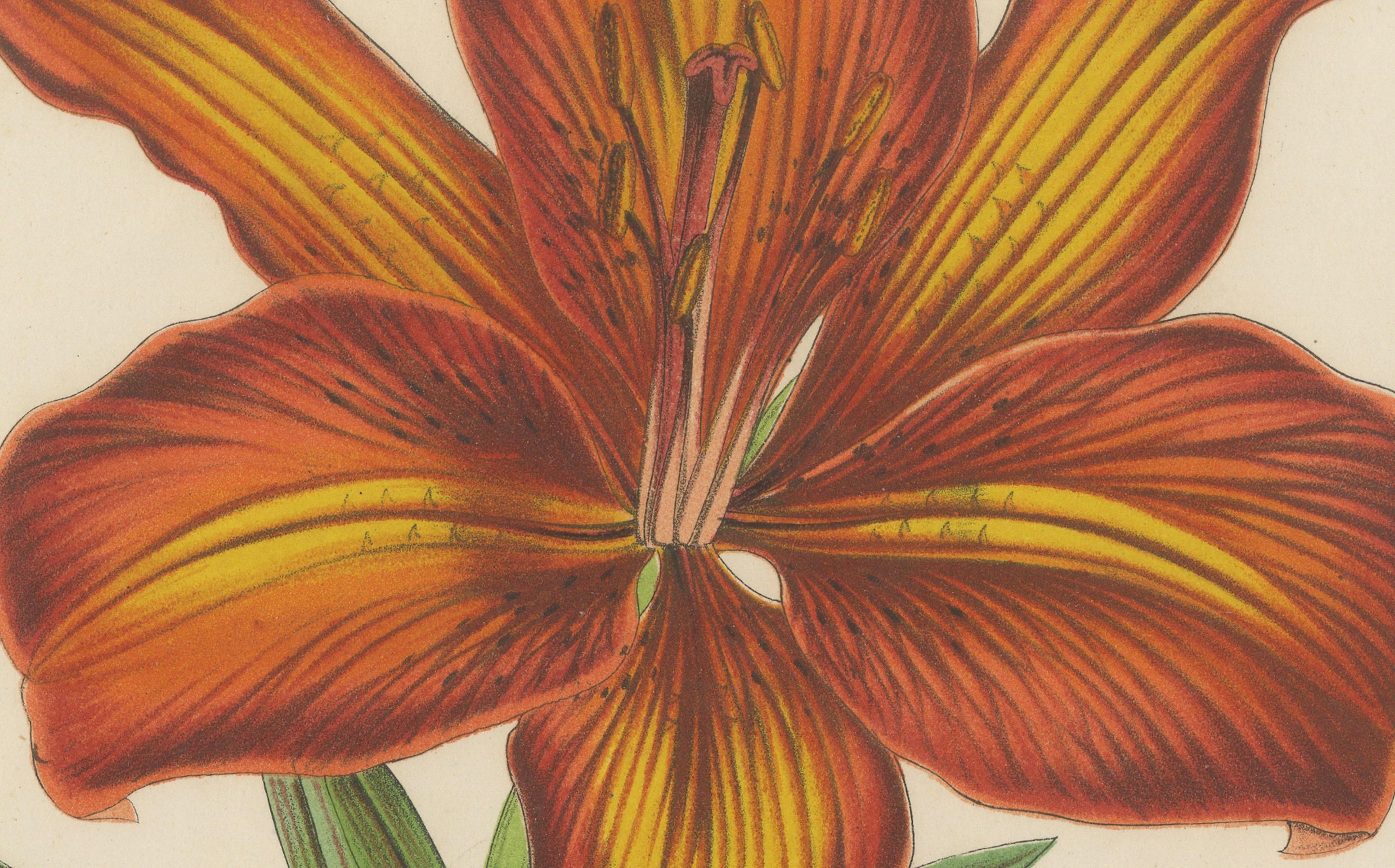
The plant is depicted in stunning detail, with fiery red and yellow petals and a strong, upright stem. Though the species was mistakenly named Pensylvanicum by the botanist John Bellenden Ker, the lily is native to Siberia and northeastern Asia.
The print is lithographed by Stroobant in Ghent (*Gand*), reflecting the mid-19th century’s rich tradition of botanical art, blending scientific accuracy with artistic elegance. This print serves as both a visual celebration of nature and a significant contribution to horticultural history.
This print was made between 1850 and 1870. The key clues to its date are the involvement of Alexandre Verschaffelt (1825–1886), a renowned Belgian horticulturist, and P. Stroobant, a lithographer active during the mid-19th century.
Alexandre Verschaffelt was known for his work in horticulture and for publishing beautiful botanical illustrations, particularly in collaboration with artists like Stroobant. Given their activity and the style of the lithograph, this print fits within the mid-19th-century botanical illustration boom, particularly in Belgium. Therefore, a date around circa 1860 would be a reasonable estimate for when this print was produced.
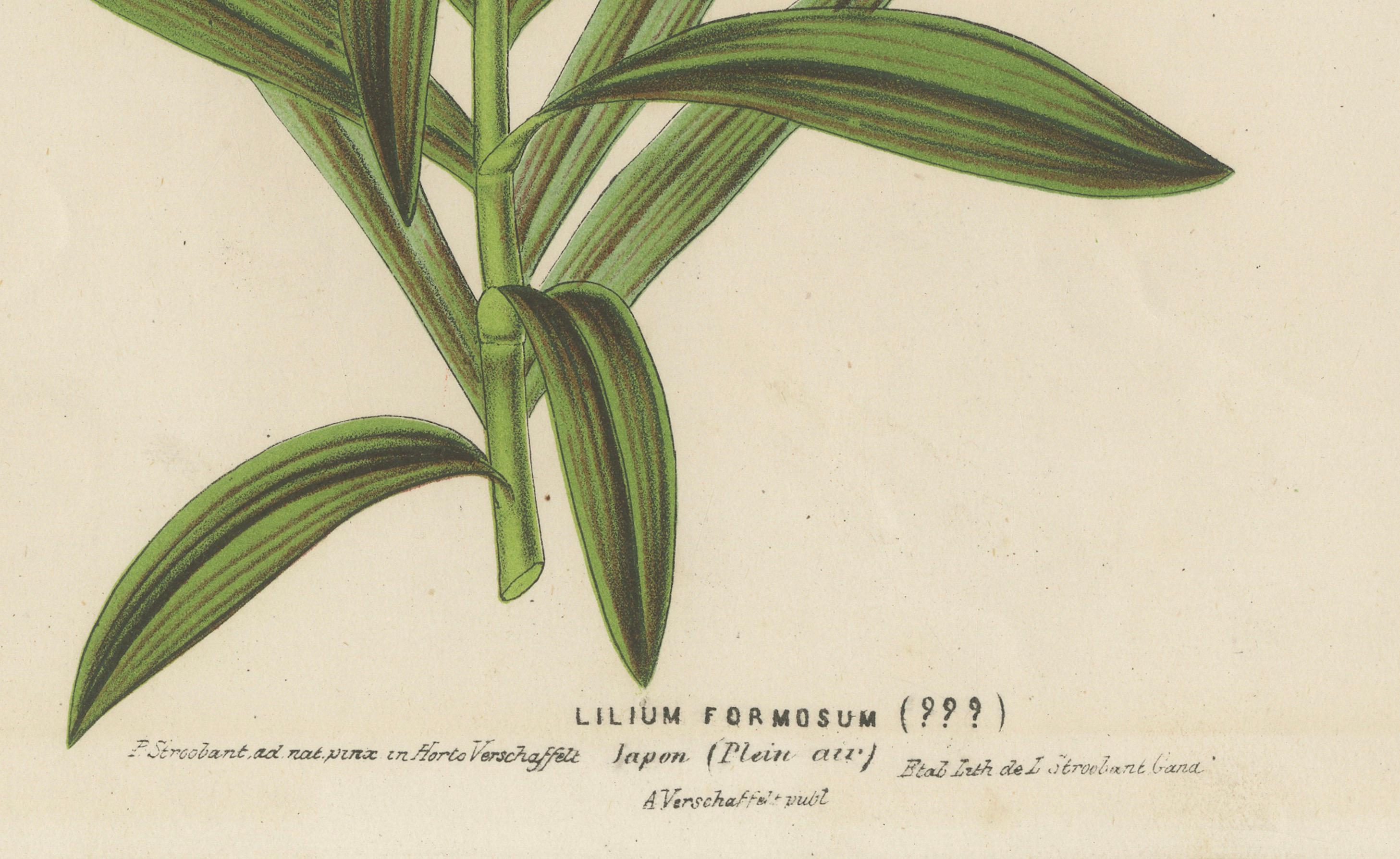
The text at the bottom of the print:
- "P. Stroobant ad nat. pinx in Horto Verschaffelt"
- "Lilium Formosum (???)"
- "Japon (Plein air)"
- "A. Verschaffelt publ."
- "Étab. Lith de P. Stroobant, Gand"
This suggests that the print was:
- Illustrated by P. Stroobant, who painted it after nature ("ad nat. pinx").
- The location of the plant was in Horto Verschaffelt, referring to the gardens of Verschaffelt.
- Published by A. Verschaffelt.
- Lithographed at the establishment of P. Stroobant in Ghent (Gand).
This confirms the connection to the Verschaffelt family, notable horticulturists and publishers.