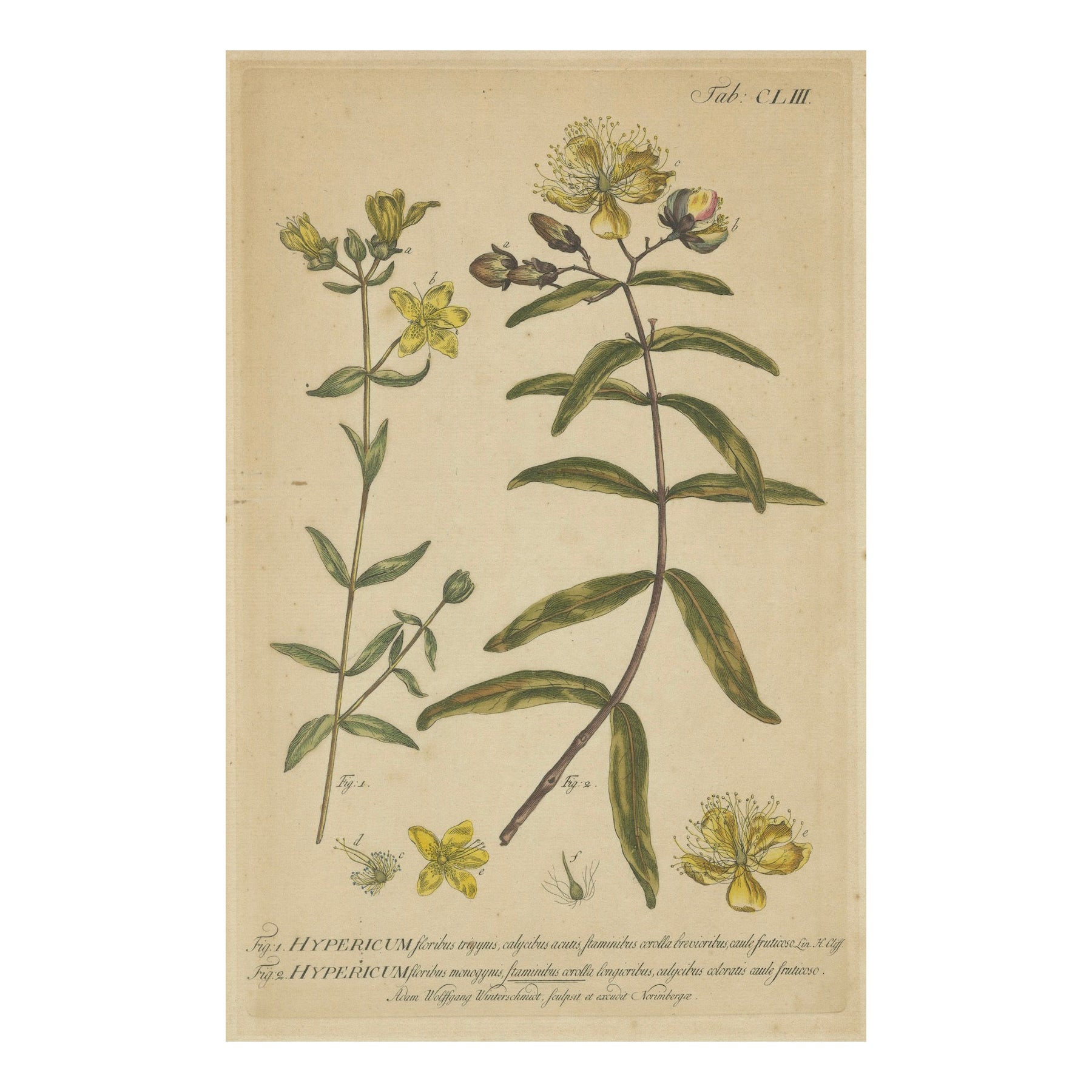
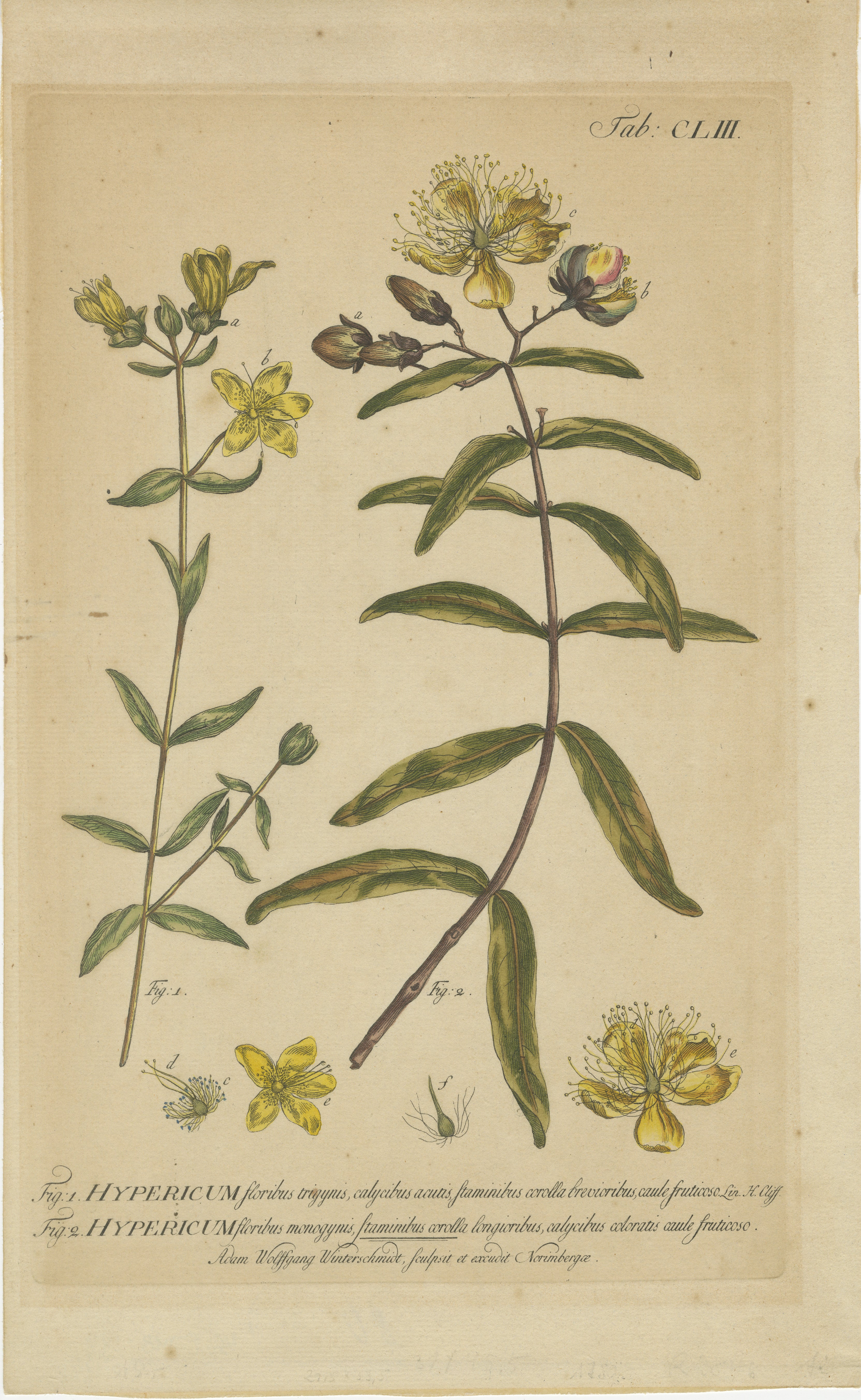
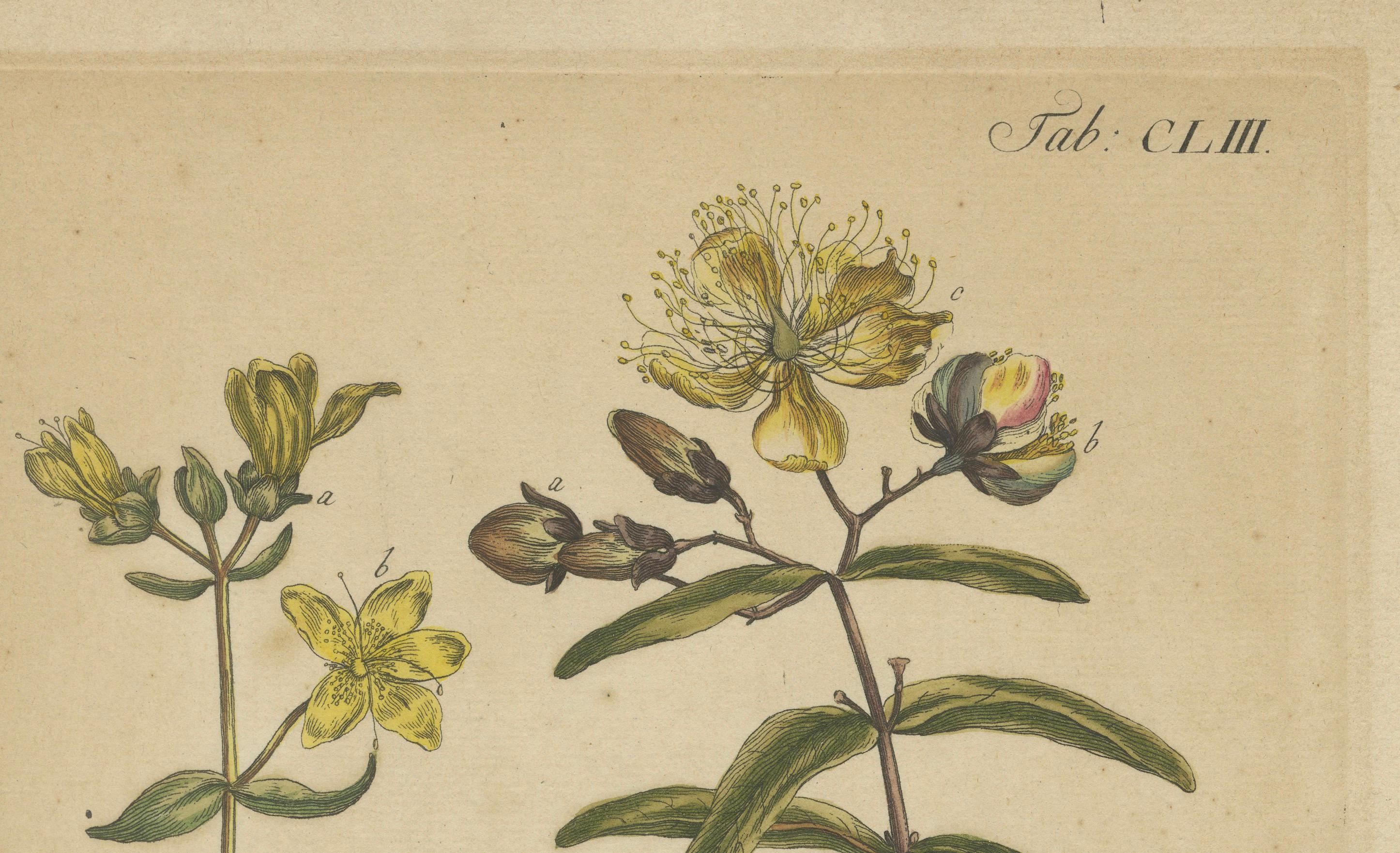
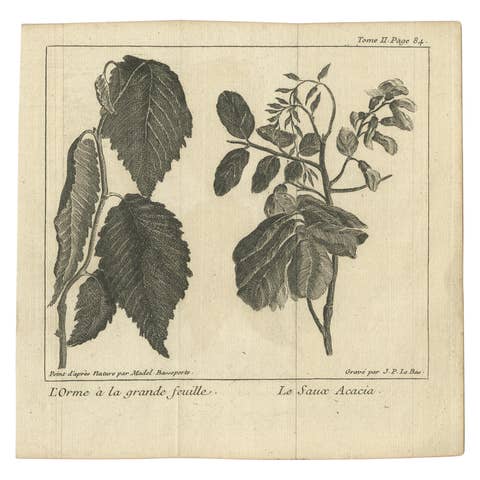
Exquisite 1755 St. John's Wort Botanical Engraving by Philip Miller
€ 220
One of a kind: this is the sheet in the photographs. Ships from Langweer, the Netherlands.
Date
1755
Sheet size
38 × 23.5 cm (15.0 × 9.3 in)
Reference
BG-13748-147
Condition
good, given age. Overall light foxing. Patina rich strong paper with short left margin. Borders are supported on reverse. General age-related toning and/or occasional minor defects from handling. Please study scan carefully.
About this sheet
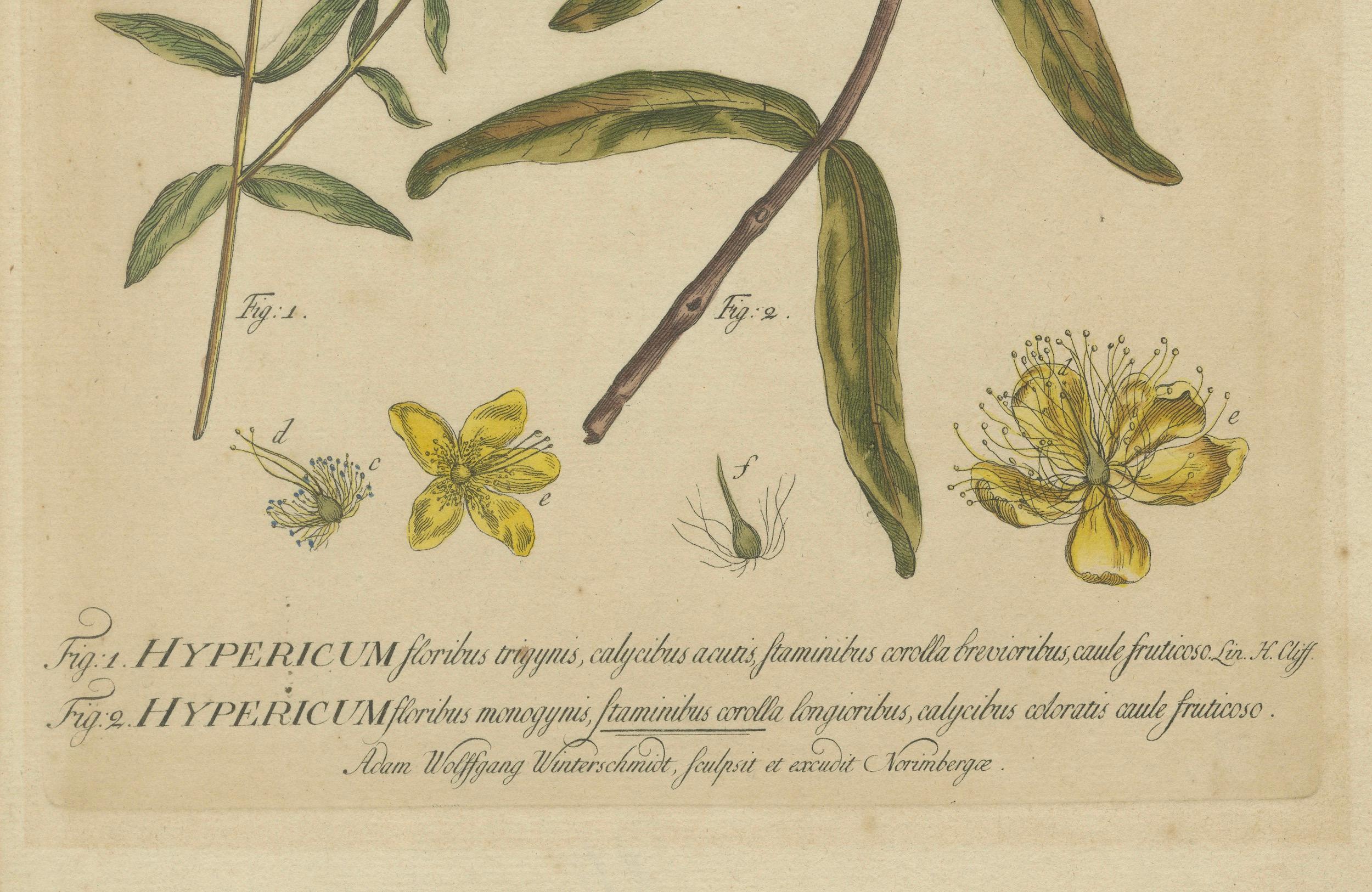
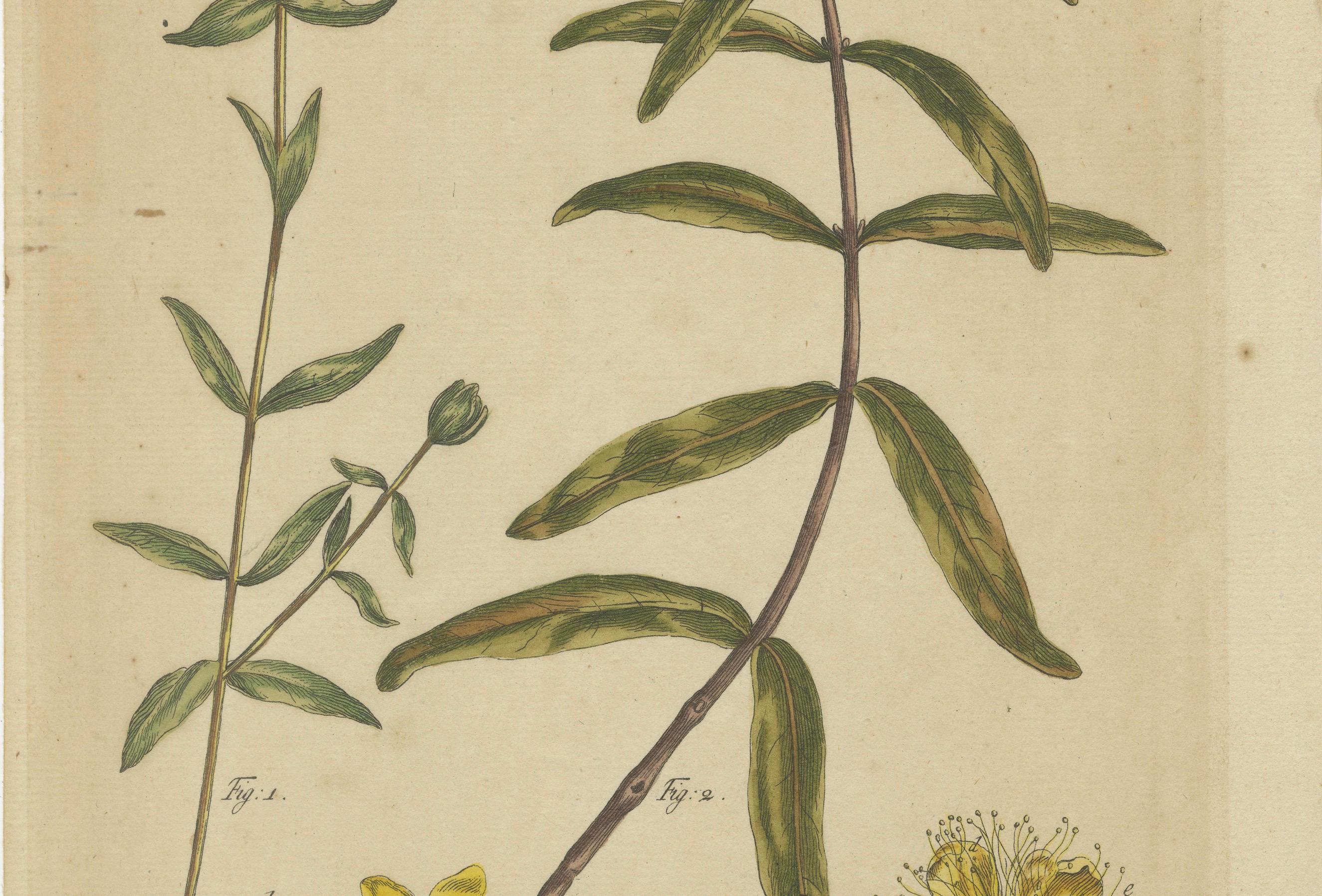
A copper engraving of Hypericum plants, commonly known as St. John's Wort, from Philip Miller's influential work, *Figures of the Most Beautiful, Useful and Uncommon Plants Described in the Gardener's Dictionary*.
Published in 1755, this detailed illustration showcases various species of Hypericum, highlighting their distinctive bright yellow flowers and leaf structures.
Details about the Print:
- Plate Title: "Hypericum floribus trijngus, calybus acutis, foliis oblongis, apice revolutis, caule fruticoso" and other varieties. - Artist: T. Jeffreys, the engraver who meticulously captured the fine details of these plants. - Publication: Philip Miller's *Figures of the Most Beautiful, Useful and Uncommon Plants Described in the Gardener's Dictionary*, which is a notable work for its contribution to botanical sciences and horticulture in the 18th century.
About Philip Miller:
Philip Miller (1691-1771) was an esteemed British botanist and horticulturist who served as the chief gardener at the Chelsea Physic Garden. His profound knowledge and contributions to the field of botany were recognized when he was elected a Fellow of the Royal Society. Miller's works were highly influential, helping to spread knowledge about plant cultivation and properties, and his Gardener’s Dictionary was particularly significant for its comprehensive coverage of known plant species during his time, richly illustrated with such engravings.
This print not only serves as a botanical illustration but also as a historical artifact, reflecting the Enlightenment era's emphasis on scientific understanding and categorization of the natural world.