About this sheet
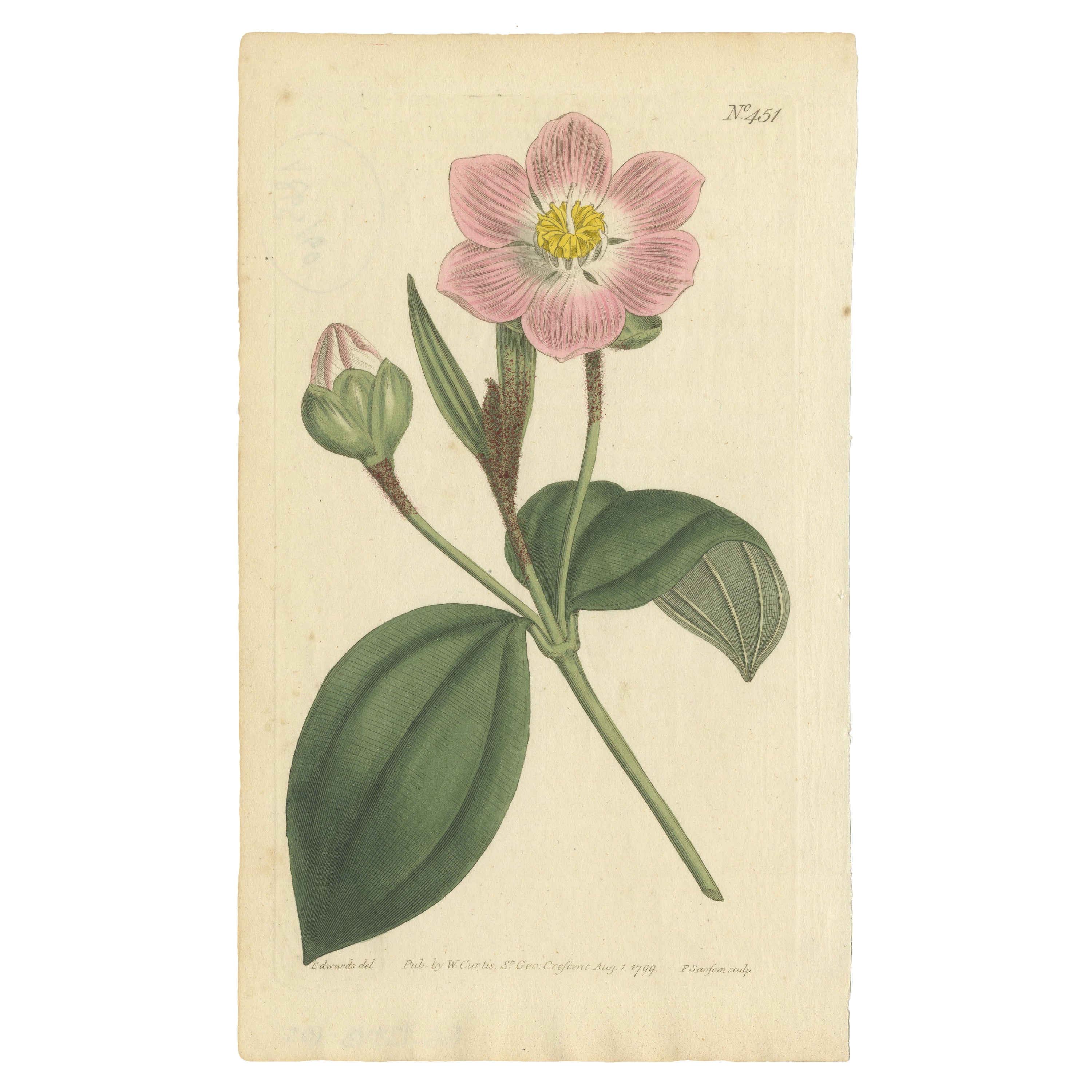
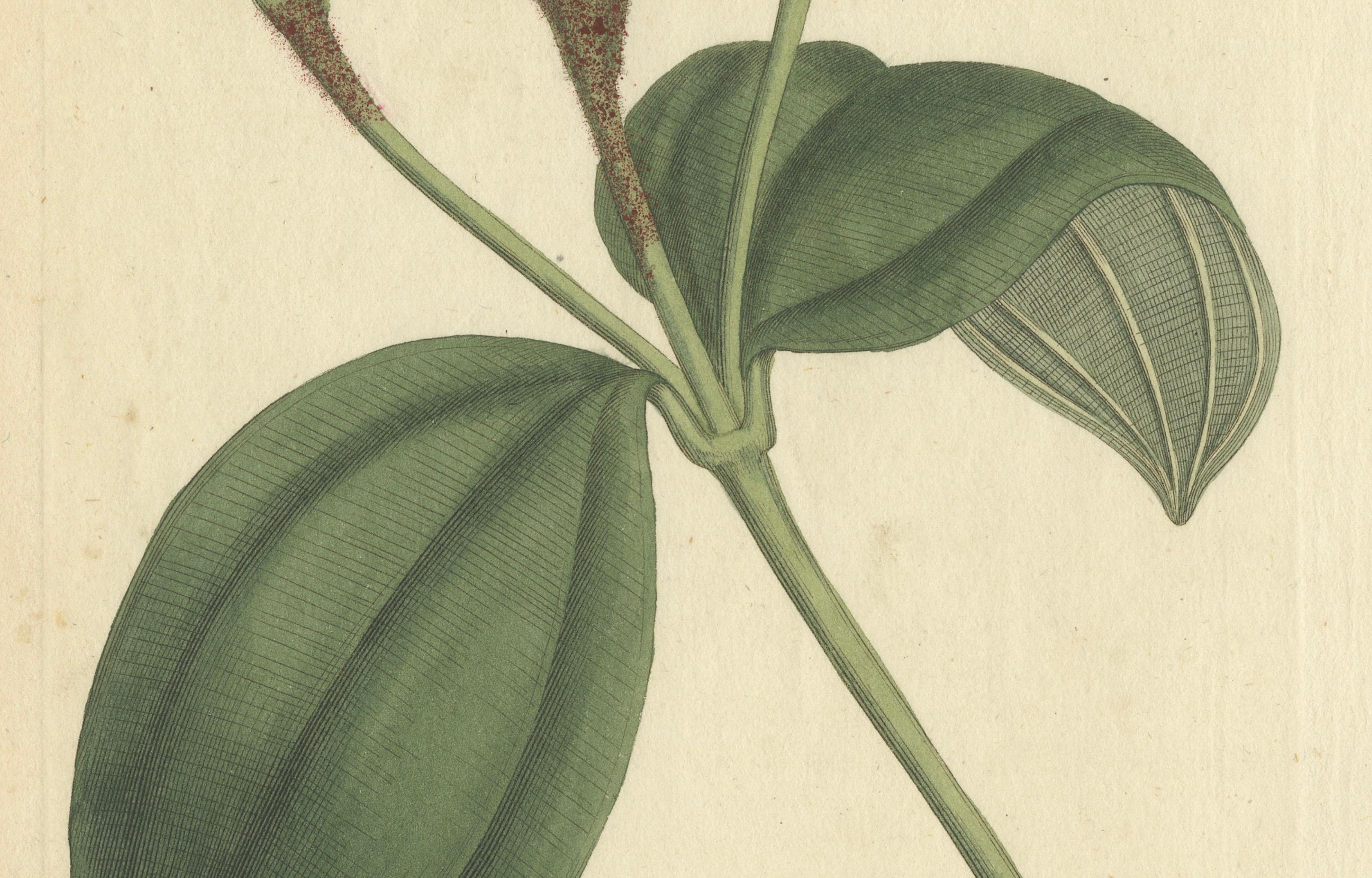
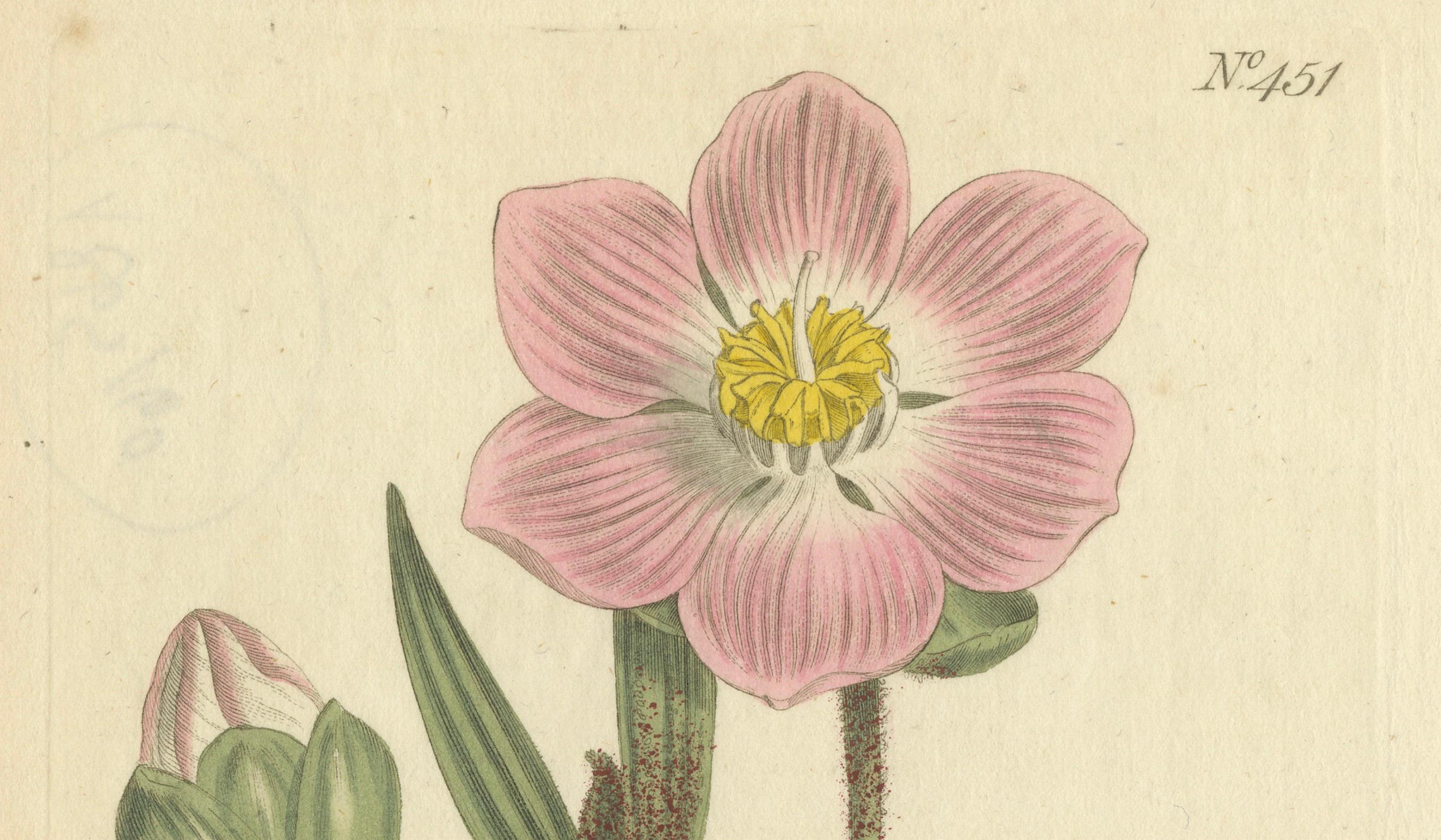
This is a delicate botanical illustration of a Pink Quill, also known as Tillandsia cyanea. The flower is depicted in its typical form with a soft pink hue, prominently displaying its stamen and petals. The image is meticulously detailed, highlighting the intricate venation of the broad leaves and the graceful curve of the flower stem.
Significance and Details:
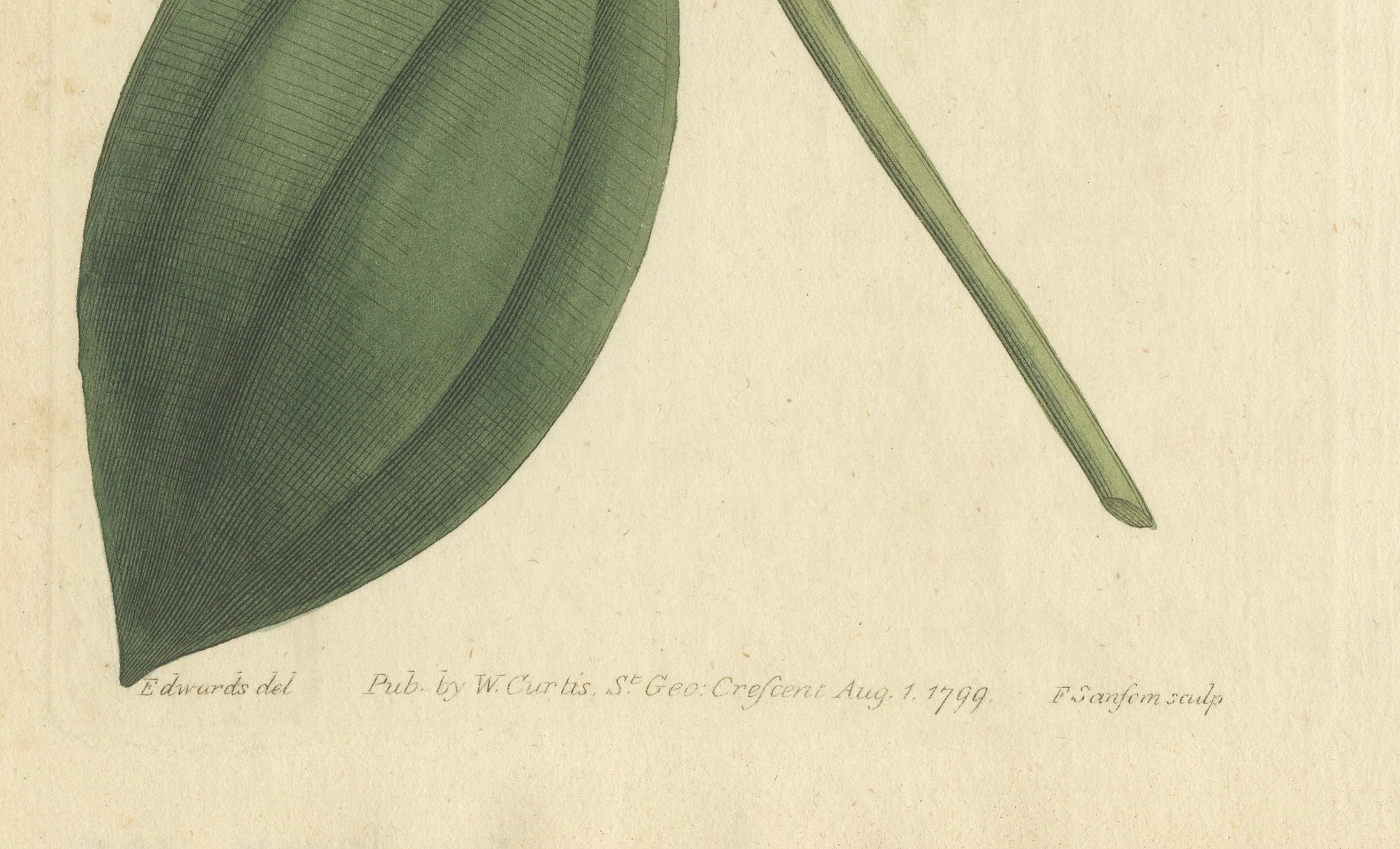
- Artist: Sydenham Edwards
- Publisher: William Curtis
- Published in: "Curtis's Botanical Magazine" around 1799.
- Special Characteristics: The pink quill is particularly known for its striking bract that resembles a quill and its bright, tubular flowers. It's a member of the bromeliad family and is admired for its unique inflorescence and vibrant color, which contrast beautifully against its green foliage. This plant is often grown as an ornamental plant due to its minimal soil requirements and striking appearance.
This illustration serves not only as a beautiful artistic work but also as an educational tool, providing detailed visual information about the morphology of the pink quill, making it a valuable piece for both botanical enthusiasts and collectors of historical botanical art.
The Pink Quill (Tillandsia cyanea) is special for several reasons that make it a fascinating subject in both botanical science and horticulture:
1. **Striking Appearance**: Its most distinctive feature is the bright pink bract, or quill, from which it derives its common name. This bract is vividly colored and visually striking, contrasting beautifully against the plant’s green foliage and the vibrant blue-purple flowers that emerge from the quill.
2. **Air Plant Characteristics**: As a member of the bromeliad family and specifically an epiphyte within the Tillandsia genus, the Pink Quill doesn’t require soil to grow. It absorbs moisture and nutrients through its leaves from the air, which makes it particularly adaptable and an excellent plant for indoor environments and modern decor.
3. **Ease of Care**: It is known for being low-maintenance, needing only moderate light and occasional watering, making it ideal for indoor settings and suitable for those new to gardening or who prefer less demanding plants.
4. **Flowering Longevity**: The pink bract remains vivid and attractive for several months, and the actual flowers last for a few days each, which can extend the visual appeal of the plant across a substantial period.
5. **Propagation**: After the main plant flowers, it will gradually die back, but not before producing offsets, or "pups," which can be separated and grown as new plants. This cycle of life adds an educational and engaging element to its cultivation.
These unique attributes contribute to its popularity and special status among plant enthusiasts and collectors.