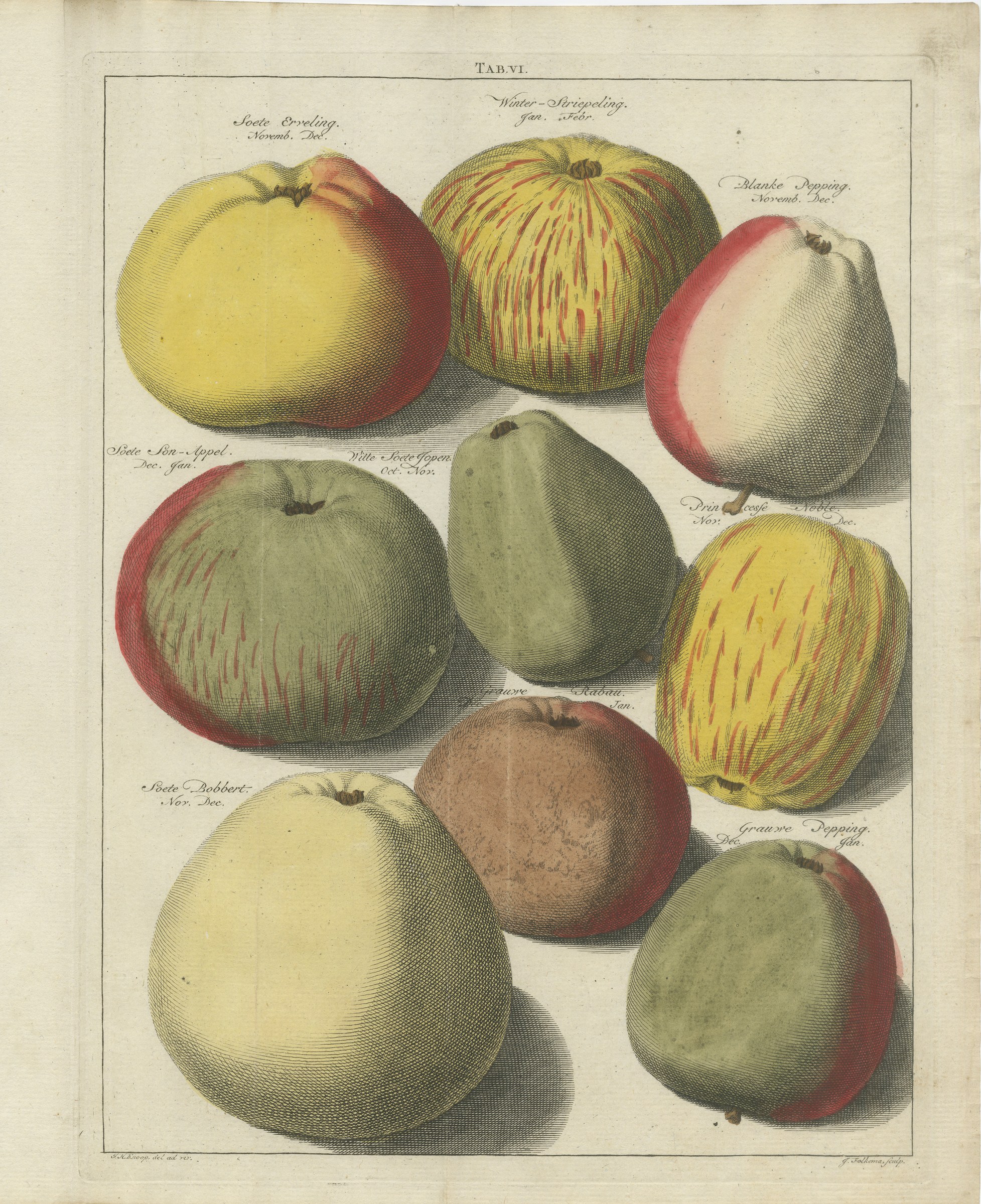
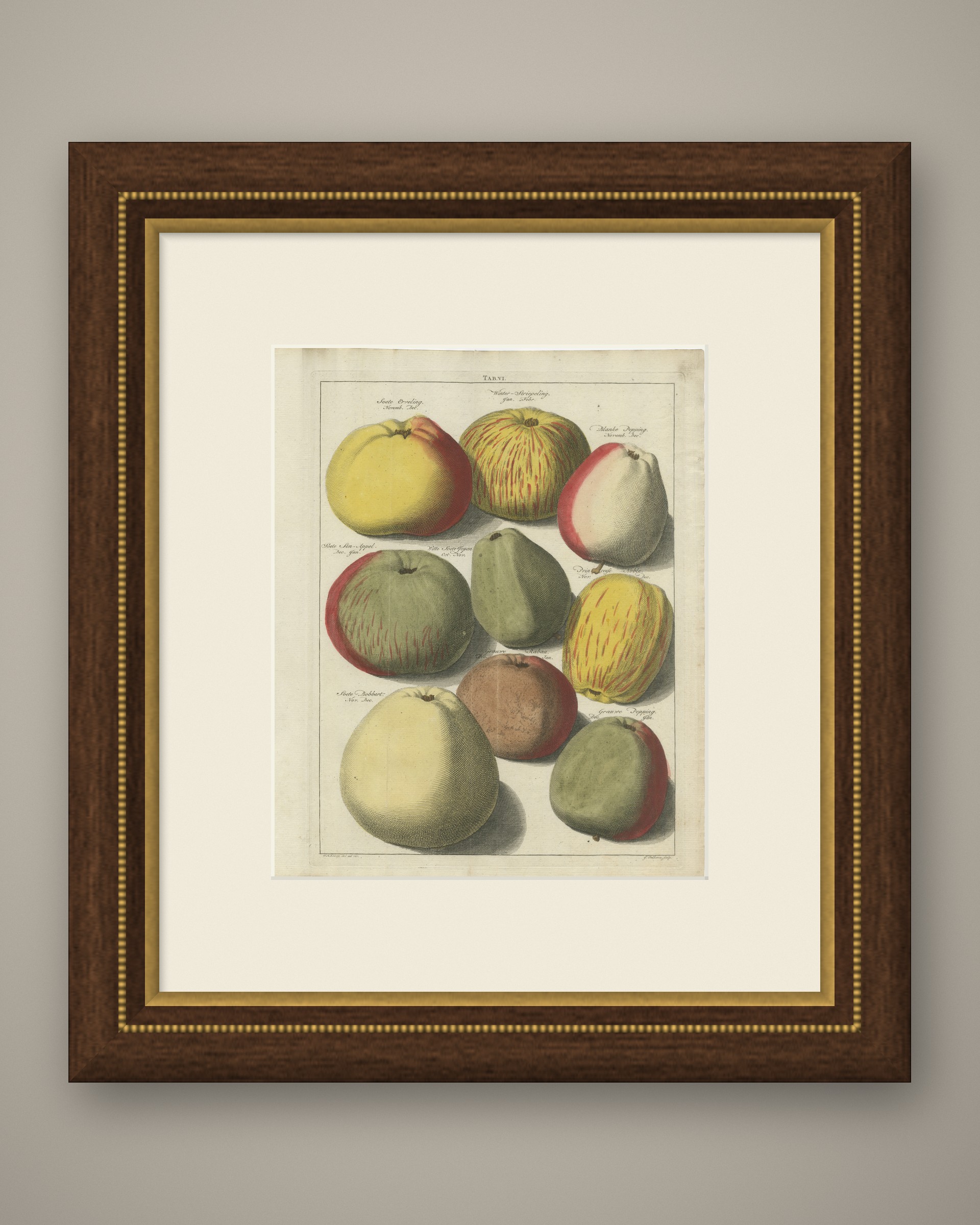
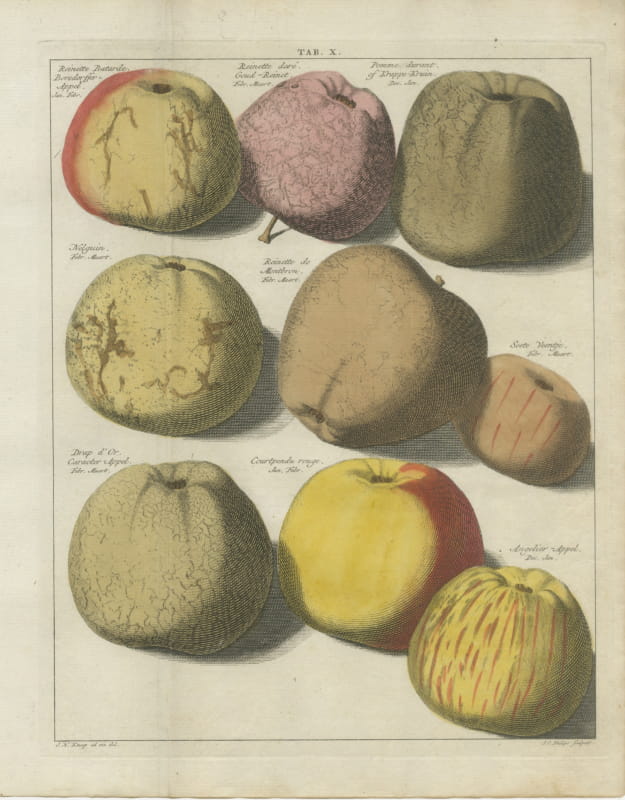
Dutch Pepping Apples, Grauwe Rabau and Princesse Noble, Knoop, 1790
€ 295
Original antique · The actual sheet photographed · Certificate of authenticity on request · Sold unframed · Worldwide shipping from € 15 (rates)
Date
1790
Mapmaker / artist
Johann Hermann Knoop, drawn from life, lettered "J. H. Knoop. del. ad viv."; engraved by Jacob Folkema, lettered "J. Folkema sculp."
Publisher
Allart, Holtrop, de Leeuw en Krap, Amsterdam and Dordrecht
Technique
Copper Engraving
Coloring
Original hand color
Sheet size
32 × 24 cm (12.6 × 9.4 in)
Condition
Good
Reference
BG-05122-6
What the condition grades mean
Excellent
Bright and clean, with no faults worth mentioning.
Very good
Only light signs of age, such as faint toning.
Good
Normal signs of age for a sheet of this period: toning, some foxing, small marks or neat old repairs.
Fair
Clear faults such as staining, tears or repairs, priced to match.
Every fault we see is written in the condition note, and the whole sheet is shown uncropped in the photos.
Condition
Light uneven toning, browner towards the edges. Handling soiling along the bottom and top edges. Scattered light foxing in the margin. All four corners complete.
About this sheet
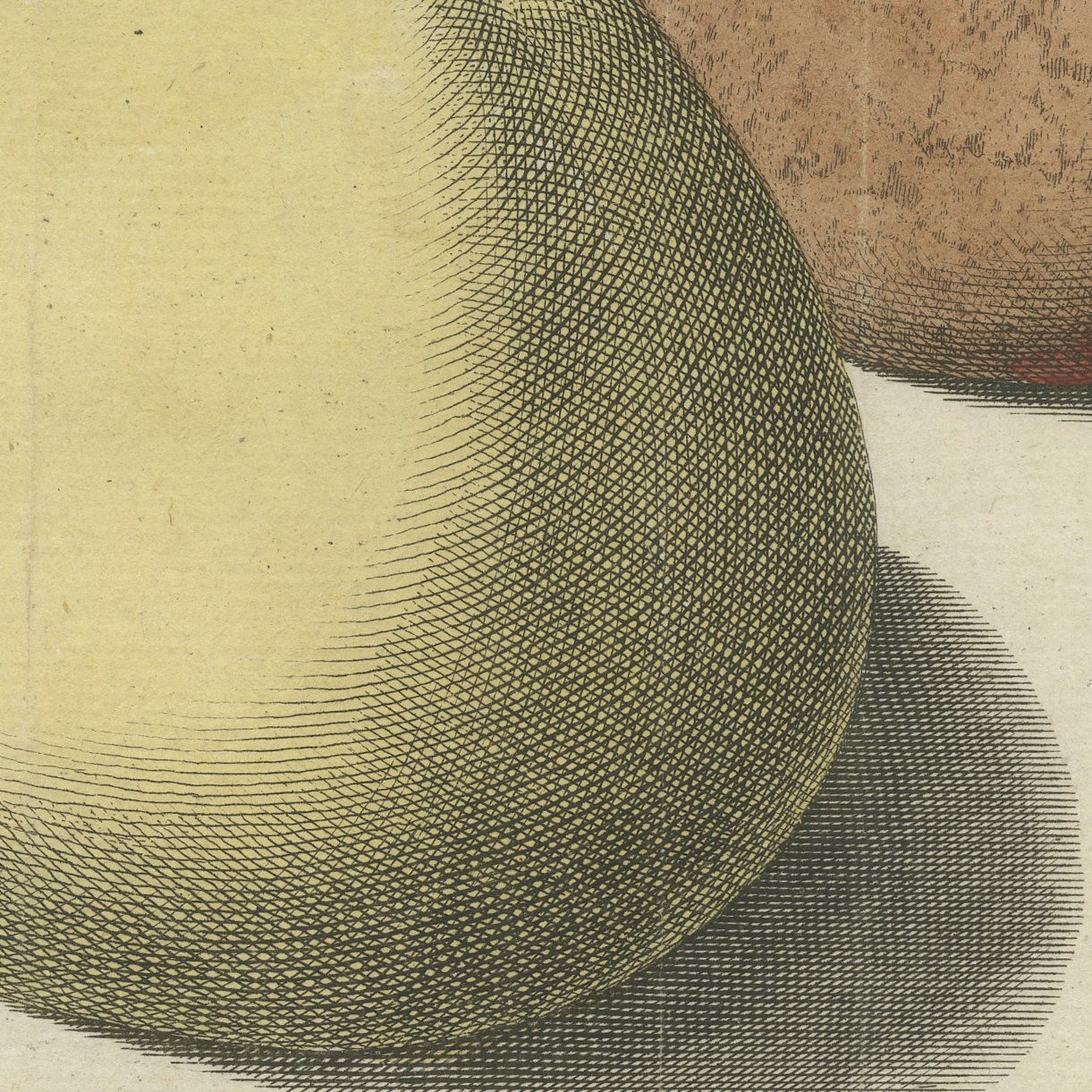
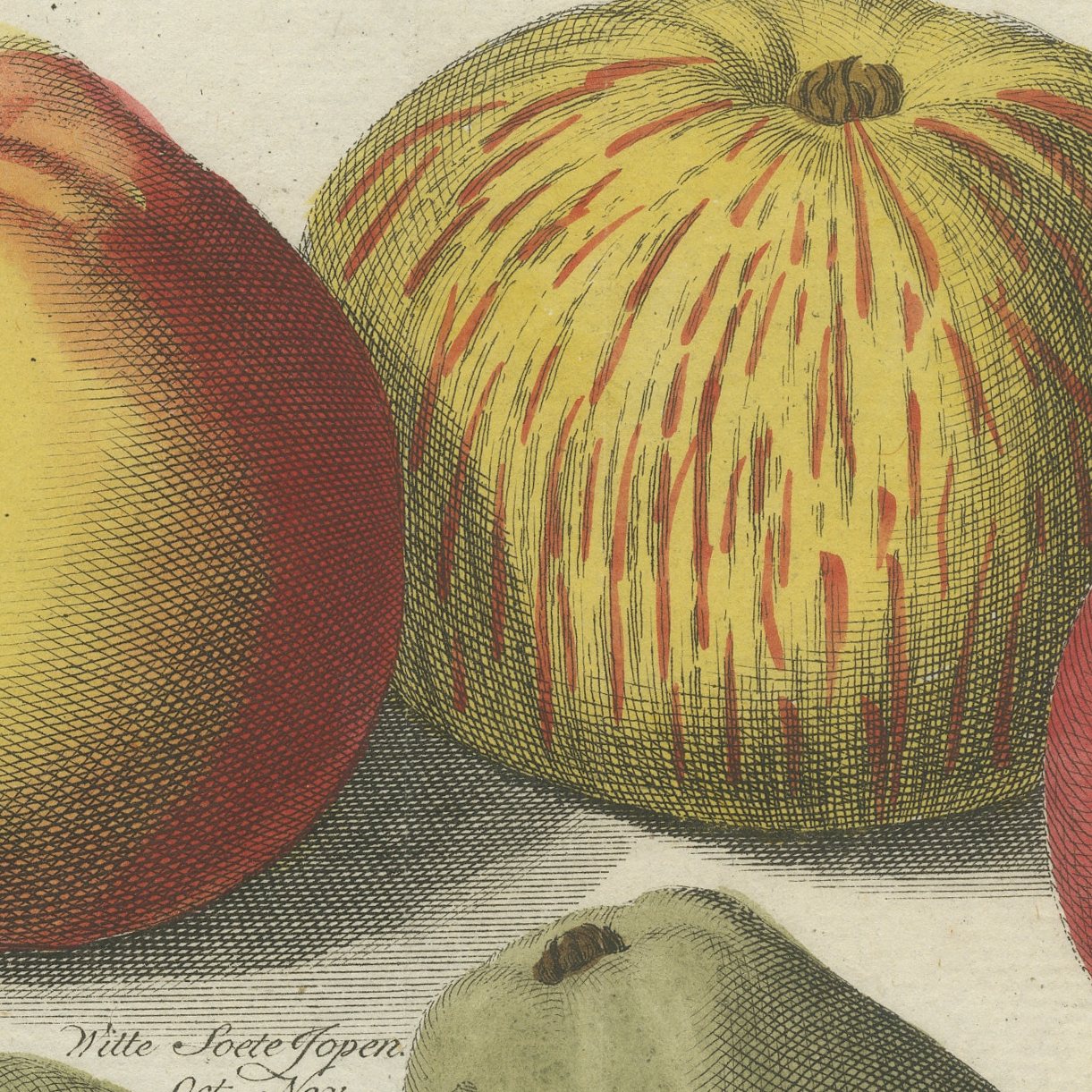
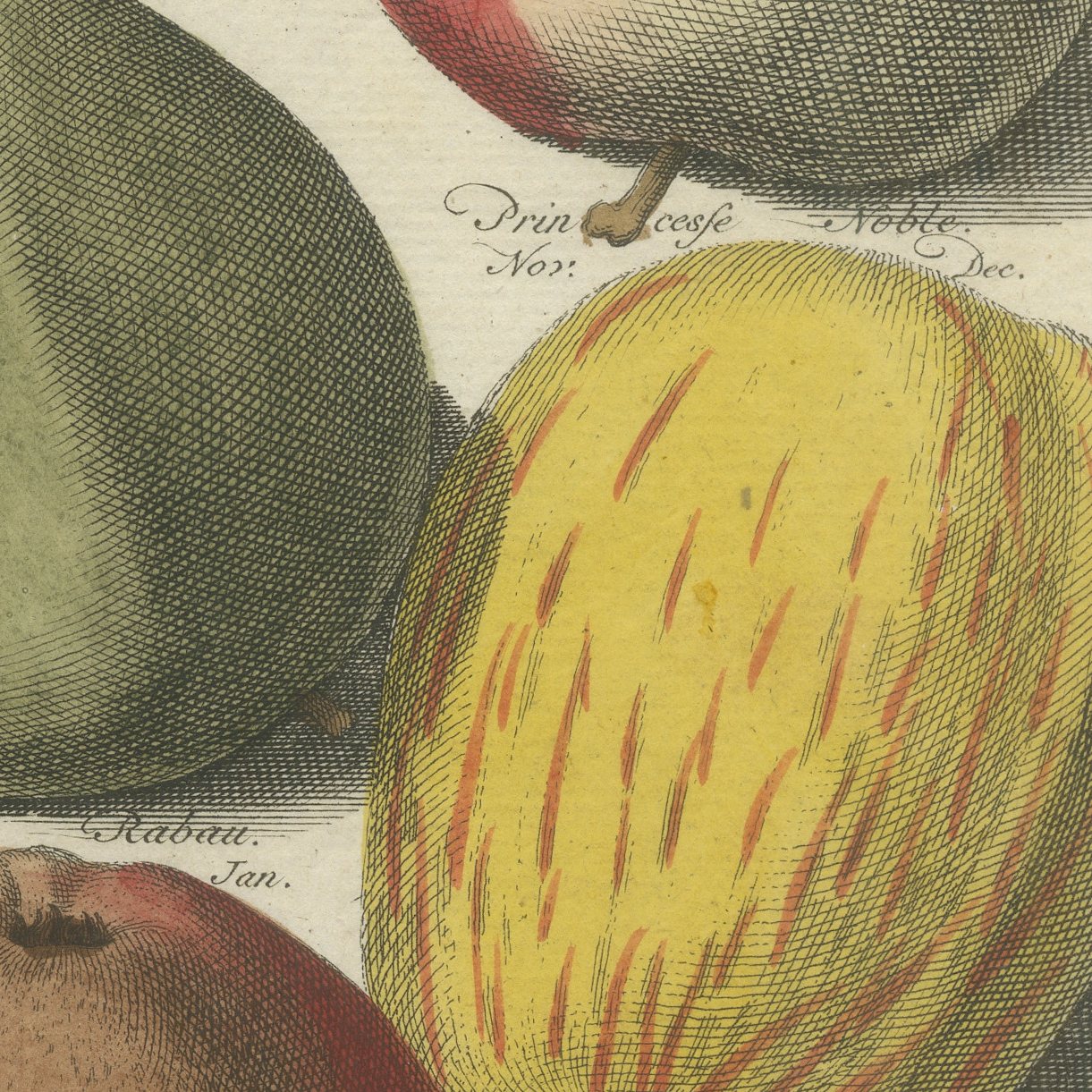
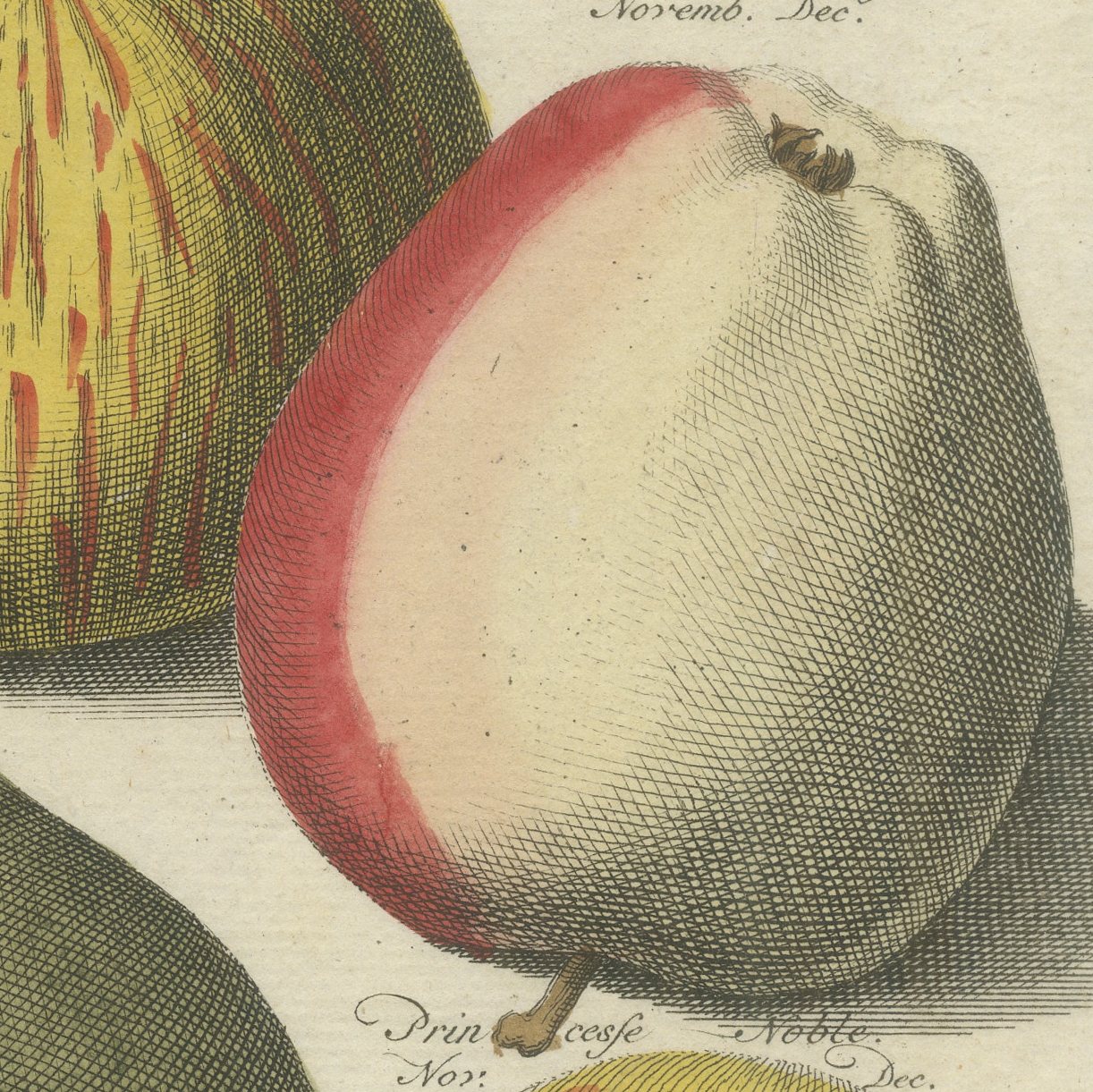
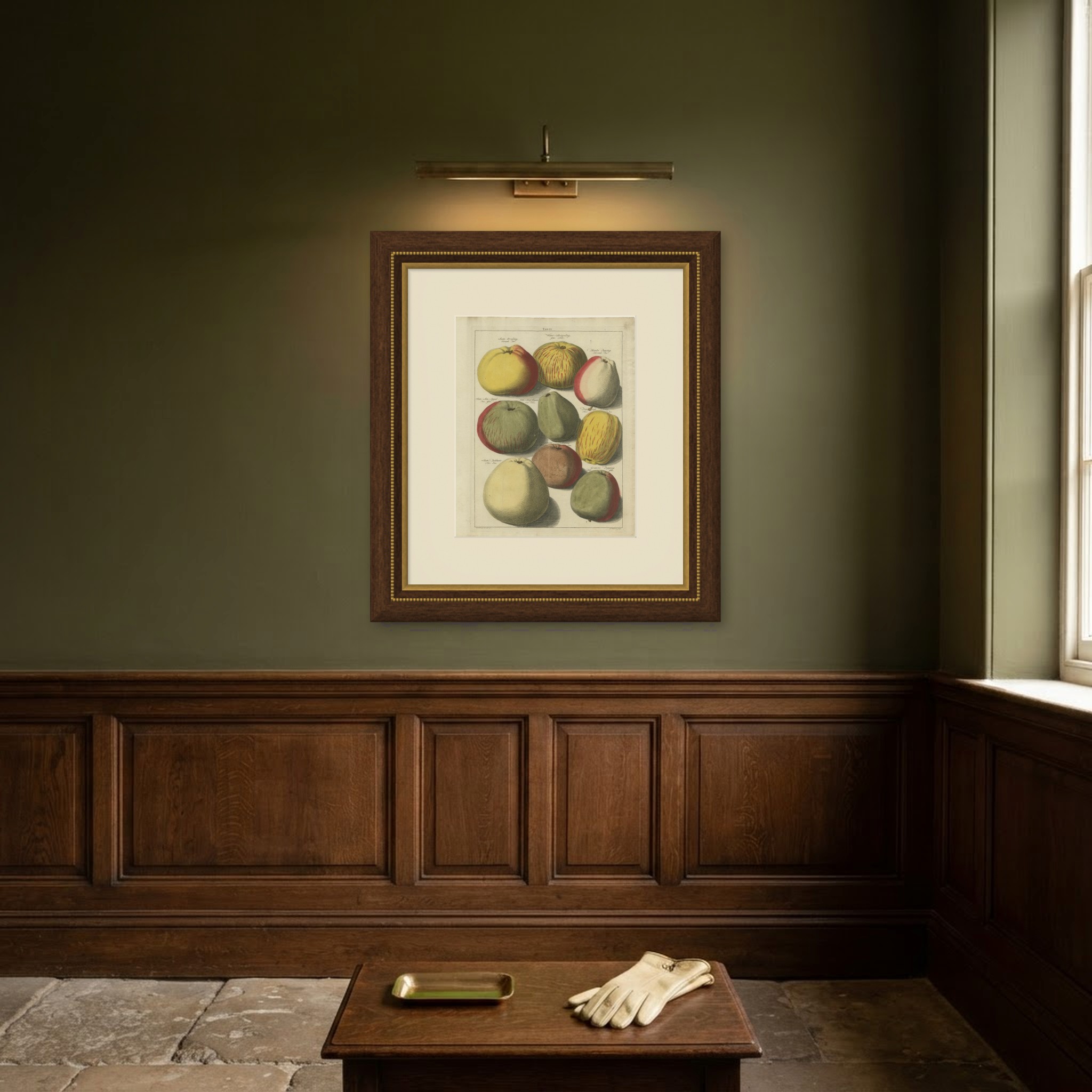
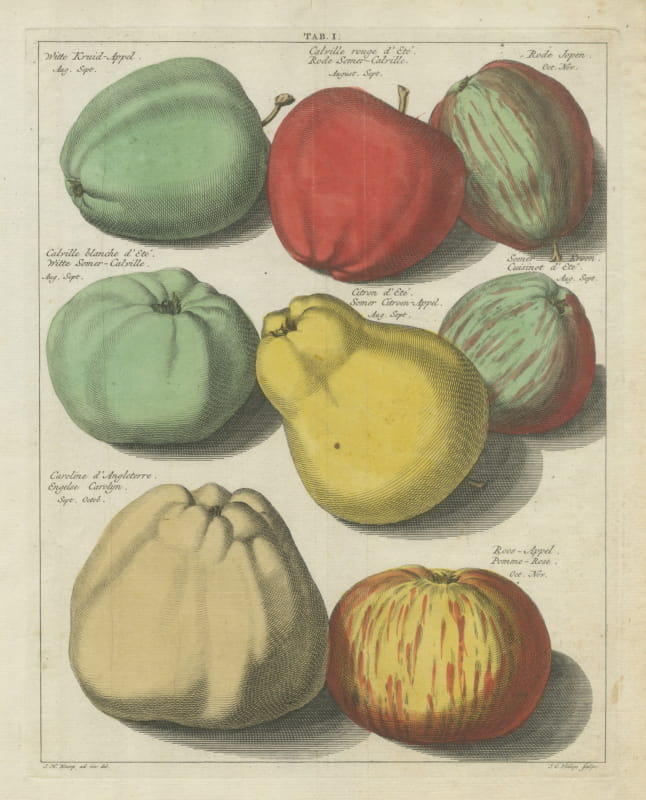
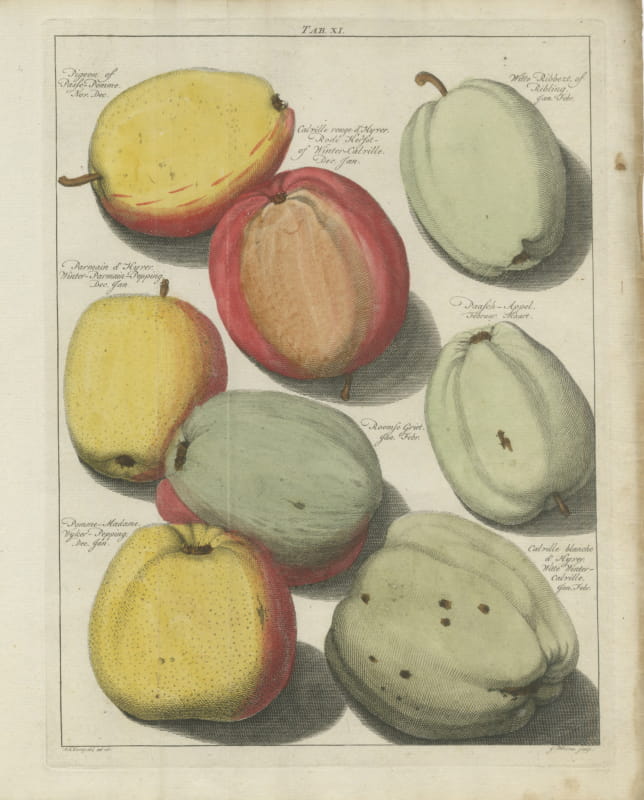
An original hand-colored copper engraving of nine named apple varieties, lettered with their names and the months in which they ripen. This is a plate of keepers and russets: Soete Erveling, Winter-Striepeling, Blanke Pepping, Soete Son-Appel, Witte Soete Jopen, Princesse Noble, Grauwe Rabau, Soete Bobbert and Grauwe Pepping. Almost every fruit here comes in between November and February, which tells you these were the apples a Dutch household stored for winter eating. Jacob Folkema cut the plate from Knoop's drawings, and his engraved hatching carries the dull netted skin of the two Peppings and the rough gray cheek of the Rabau convincingly. Over that hatching the color is brushed on by hand, russet browns and olive greens pooling unevenly in a way no printing process reproduces.
Knoop's pomology appeared at Amsterdam and Dordrecht in 1790 from the presses of Allart, Holtrop, de Leeuw and Krap, carrying a preface by Johannes Florentius Martinet. The plates had first been cut for the Leeuwarden editions of 1758 and 1763 and were printed again here from the same coppers. Johann Hermann Knoop drew the fruit from life in the stadtholder's garden at Leeuwarden. The technique is copper engraving with original hand coloring, and the brushwork crosses the engraved outline in places, which is the plain evidence that the color was laid on by hand and not printed.
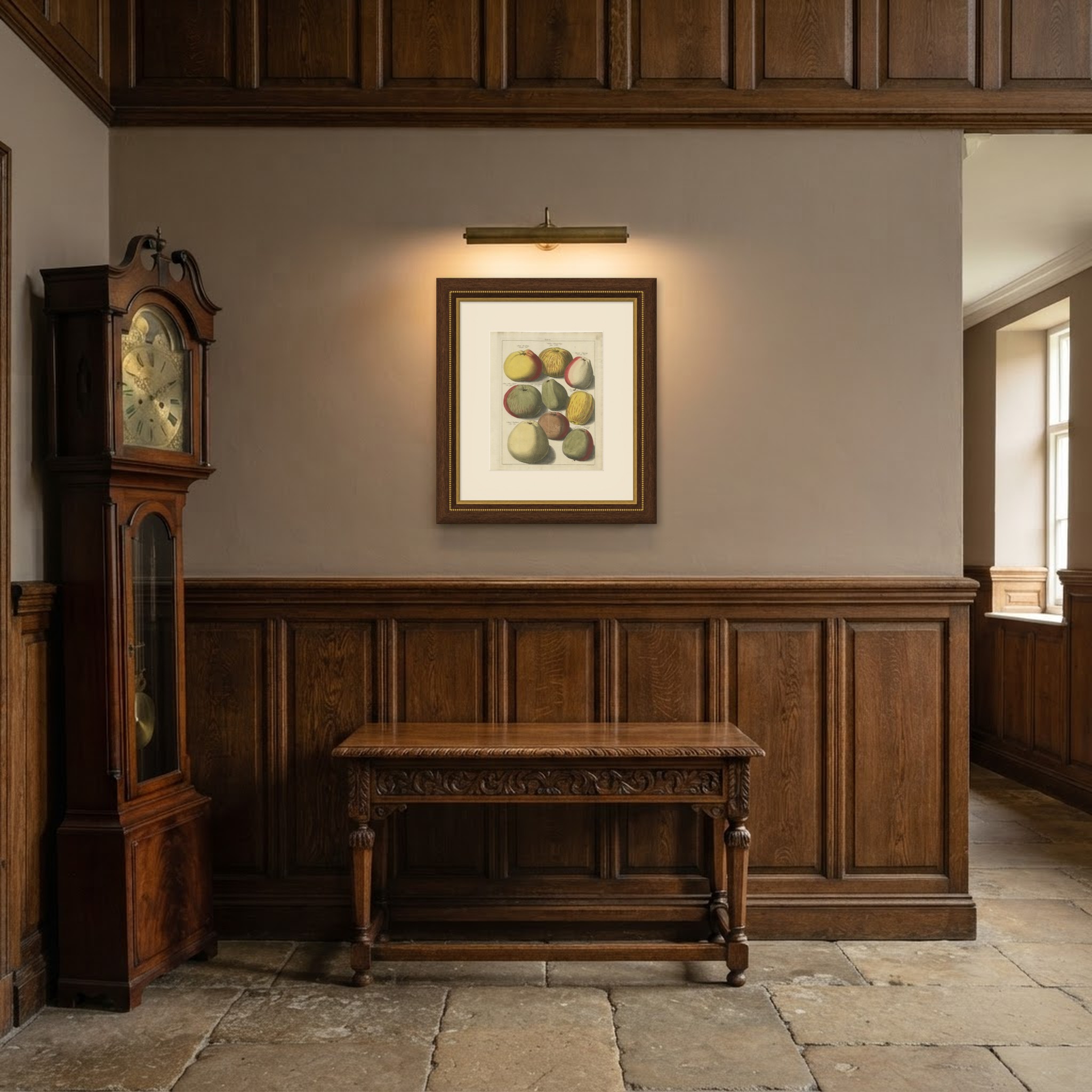
Winter apples made the difference between a well-stocked and a hungry house, and a plate like this one was a buyer's guide: nine varieties, each with the month it came into eating. Knoop, gardener to the household of the Frisian stadtholder's widow, knew the storage behavior of every sort he drew. Modern heritage orchards still work from his descriptions when they try to name an old tree, which gives the sheet genuine scholarly weight alongside its charm. The muted palette of brown, olive and dusty red is unusually easy to live with, and the plate looks particularly well in a study or a paneled dining room among older furniture.
Light uneven toning, browner towards the edges. Handling soiling along the bottom and top edges. Scattered light foxing in the margin. All four corners complete.
This is an original antique plate, not a modern reproduction. This item is sold unframed. Any framed or interior images are shown for presentation and inspiration only, unless the listing explicitly states that the item is sold framed.