About this sheet
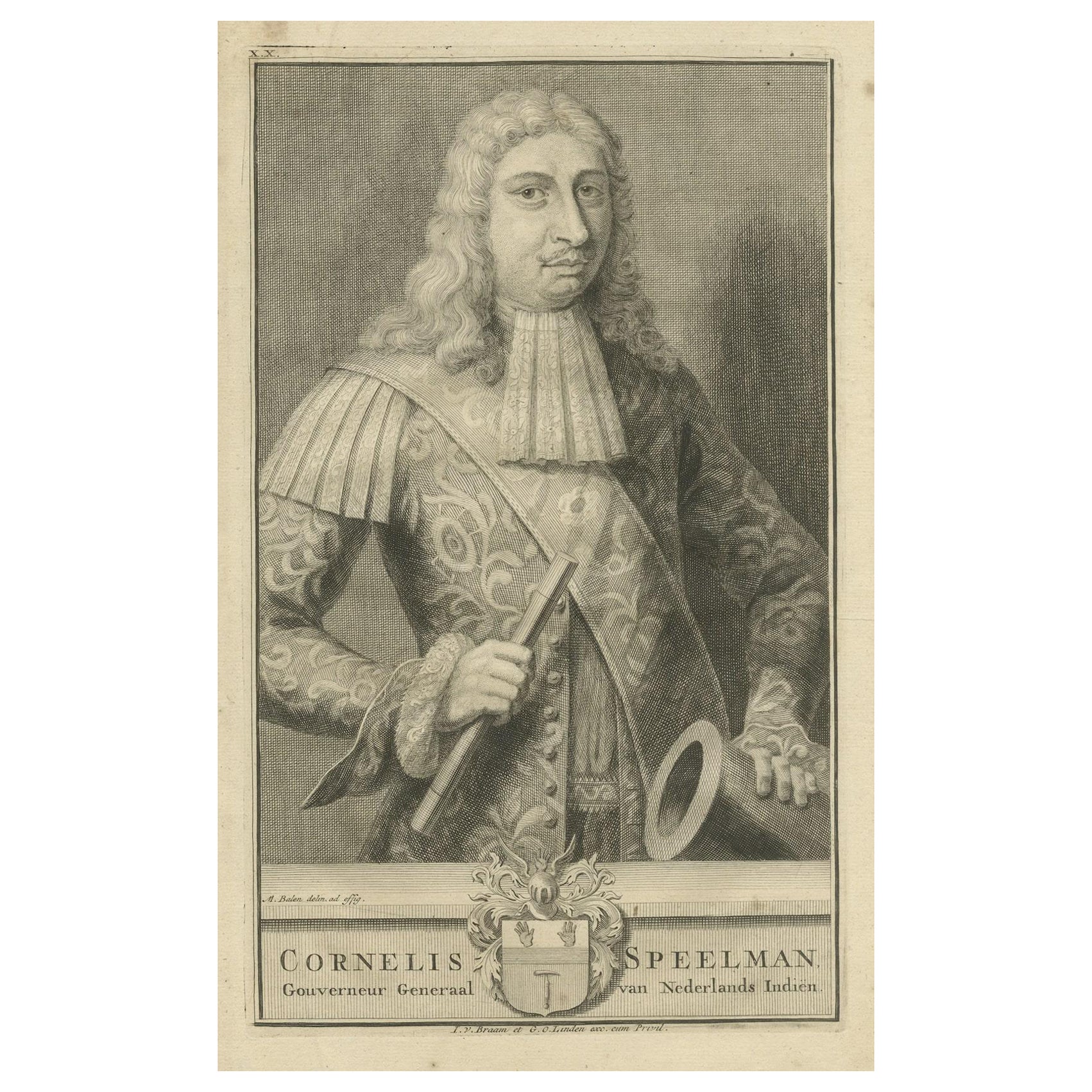
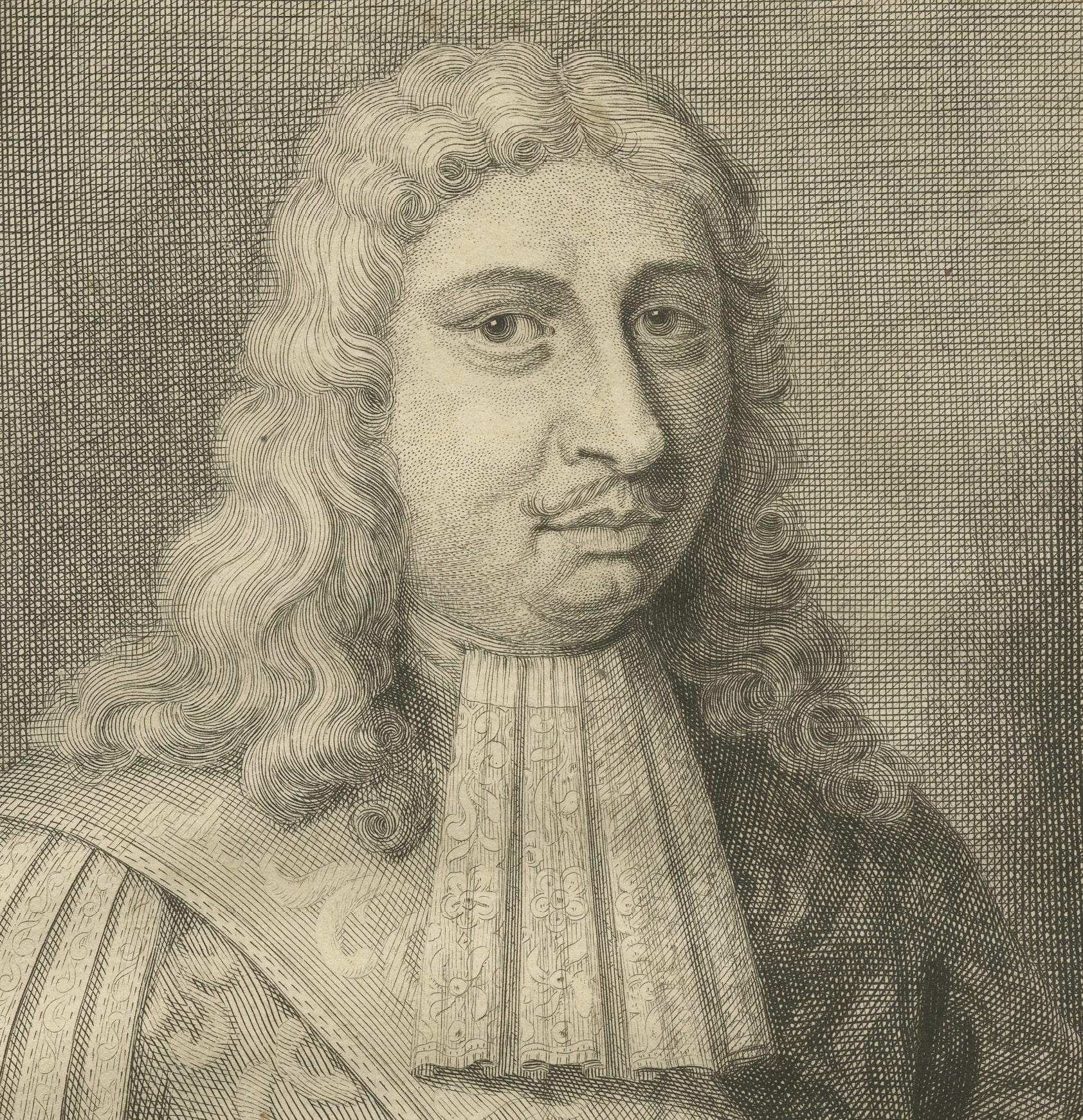
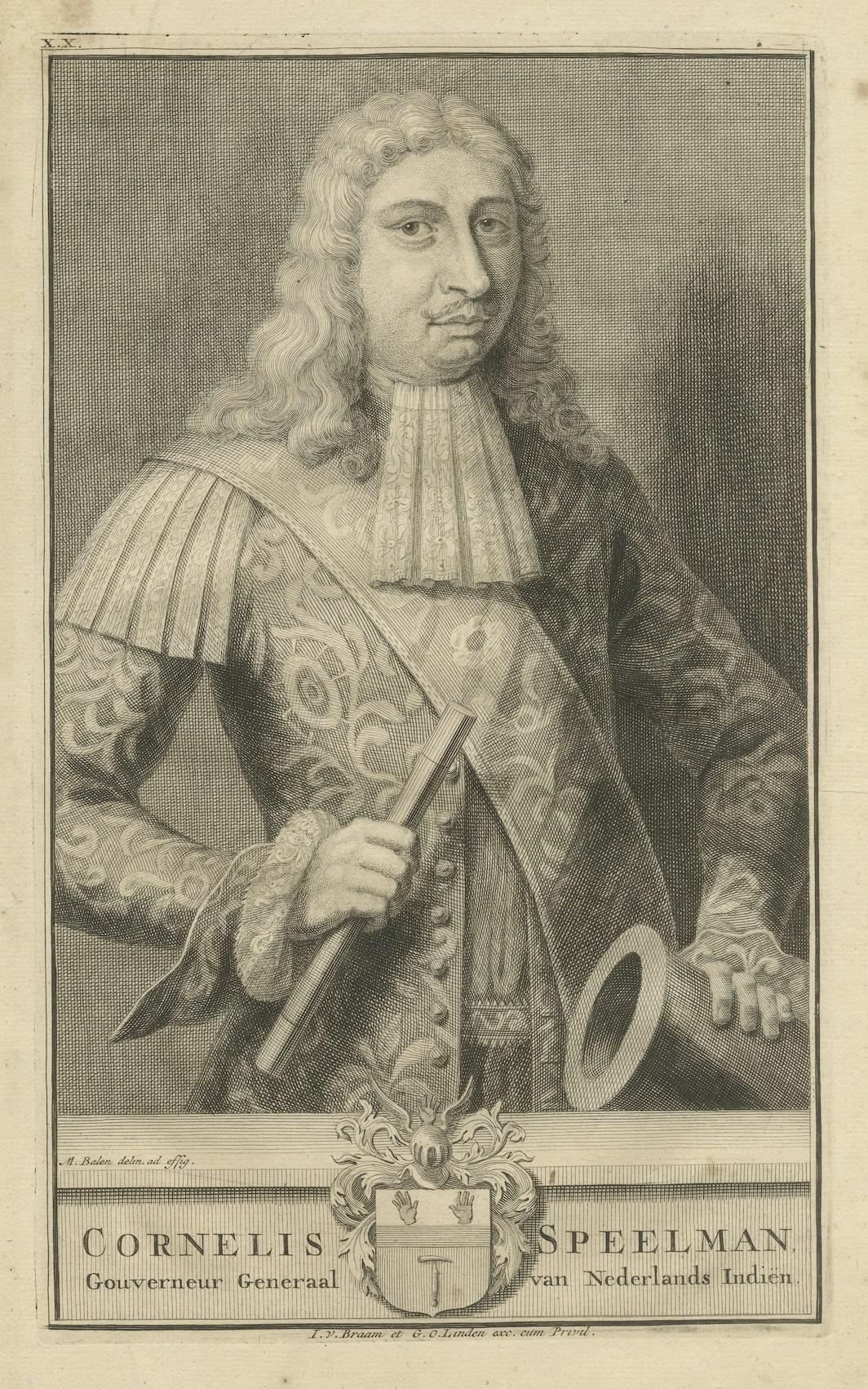
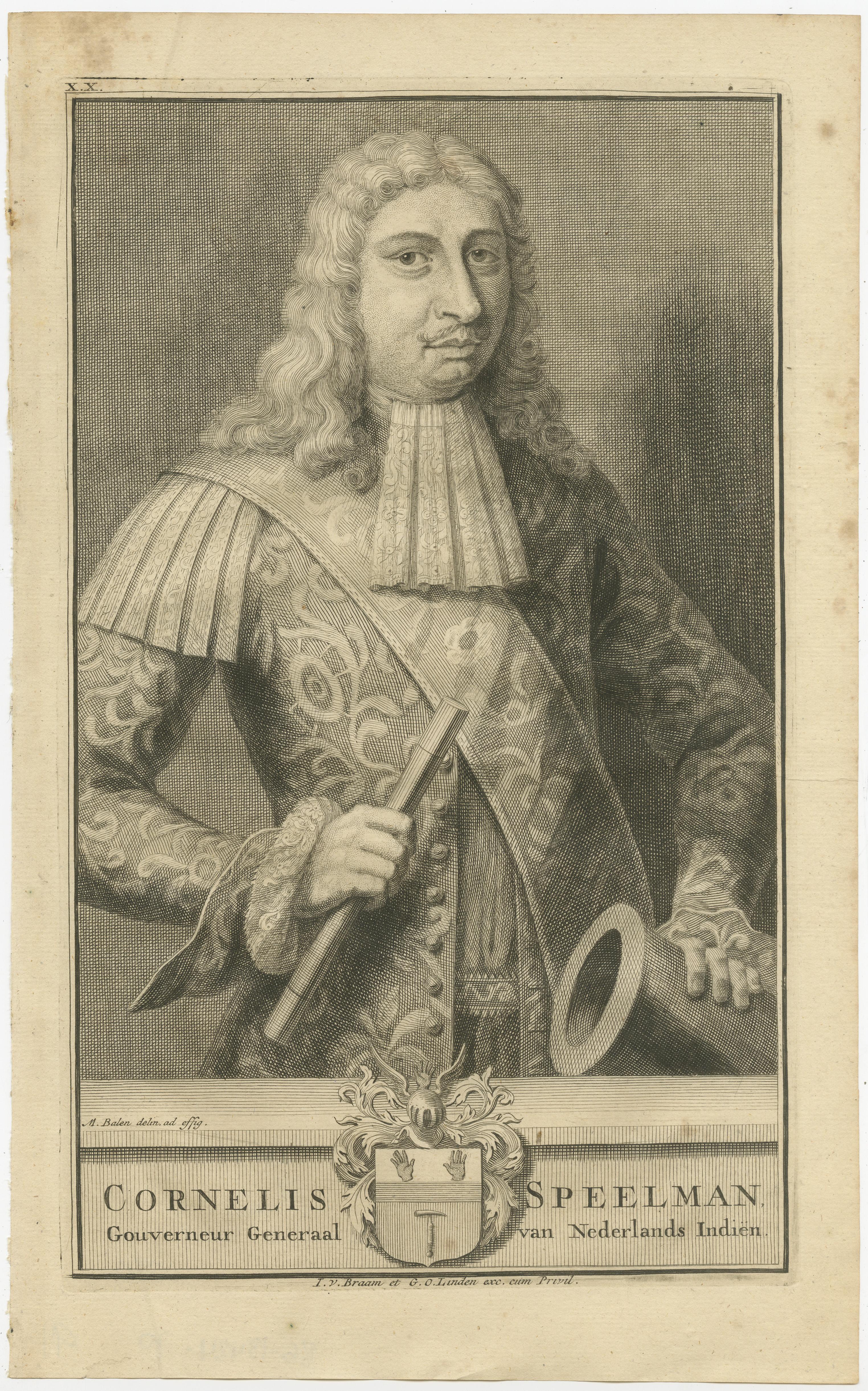
Cornelis Speelman was a significant figure in the Dutch East India Company (VOC), and his tenure as Governor-General of the Dutch East Indies was from 1681 to 1684. Here's an overview of his life:
1. **Early Life**: Cornelis Speelman was born on March 3, 1628, in Rotterdam, Netherlands. He came from a family with connections to the VOC, which paved the way for his future career.
2. **Career with the VOC**: Speelman joined the VOC at a young age and initially served as a junior merchant. His early years with the company were marked by rapid advancement due to his abilities and the influence of his family.
3. **Service in the Dutch East Indies**: Speelman was sent to the Dutch East Indies (modern-day Indonesia), where he continued to rise through the ranks. He held various positions within the VOC, showcasing his skills in both administration and military matters.
4. **Governor-General of the Dutch East Indies**: Speelman was appointed as Governor-General in 1681. His tenure was notable for several military campaigns aimed at expanding and consolidating Dutch control in the region. He is particularly known for his role in subduing revolts and expanding Dutch influence in places like Sulawesi and the Maluku Islands.
5. **Policies and Administration**: As Governor-General, Speelman focused on strengthening the VOC’s trade monopoly, especially in the spice trade, which was highly lucrative. His administration dealt with local resistance, inter-European trade rivalries, and the complexities of managing the vast and diverse territories under Dutch control.
6. **Later Years and Death**: After his term as Governor-General, Speelman remained in the Dutch East Indies. He passed away on January 1, 1684, in Jakarta (then Batavia), and was buried there.
7. **Legacy**: Cornelis Speelman’s legacy is tied to the expansion of Dutch colonialism in Southeast Asia. His tenure is often marked by military conquests and efforts to reinforce VOC authority in the region. His actions and policies significantly impacted the history and development of the areas under Dutch control.
Speelman's life and career should be understood in the context of the 17th-century Dutch colonial enterprise, characterized by aggressive expansion, trade monopolies, and complex interactions with local populations and European competitors.
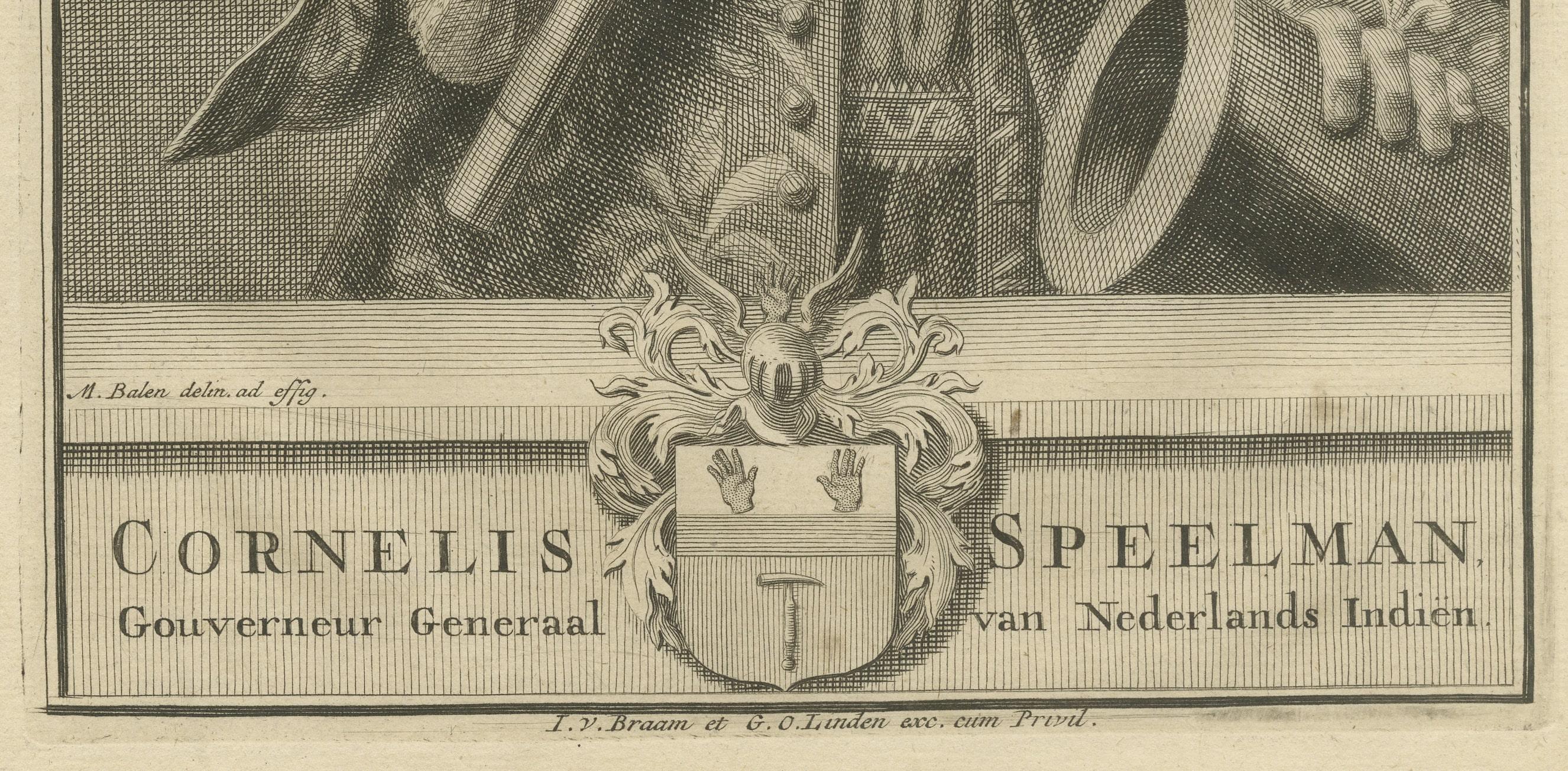
From the monumental work by François Valentyn: “Oud en nieuw Oost-Indiën, vervattende een naaukeurige en uitvoerige verhandelinge van Nederlands mogentheyd in die gewesten”. Dordrecht/Amsterdam: J. van Braam en G. onder de Linden, 1724/1726. (Transl.: Old and new East-Indies, including an accurate and extensive description of Dutch / VOC controlled territories.)
Made by an anonymous engraver after Valentijn.