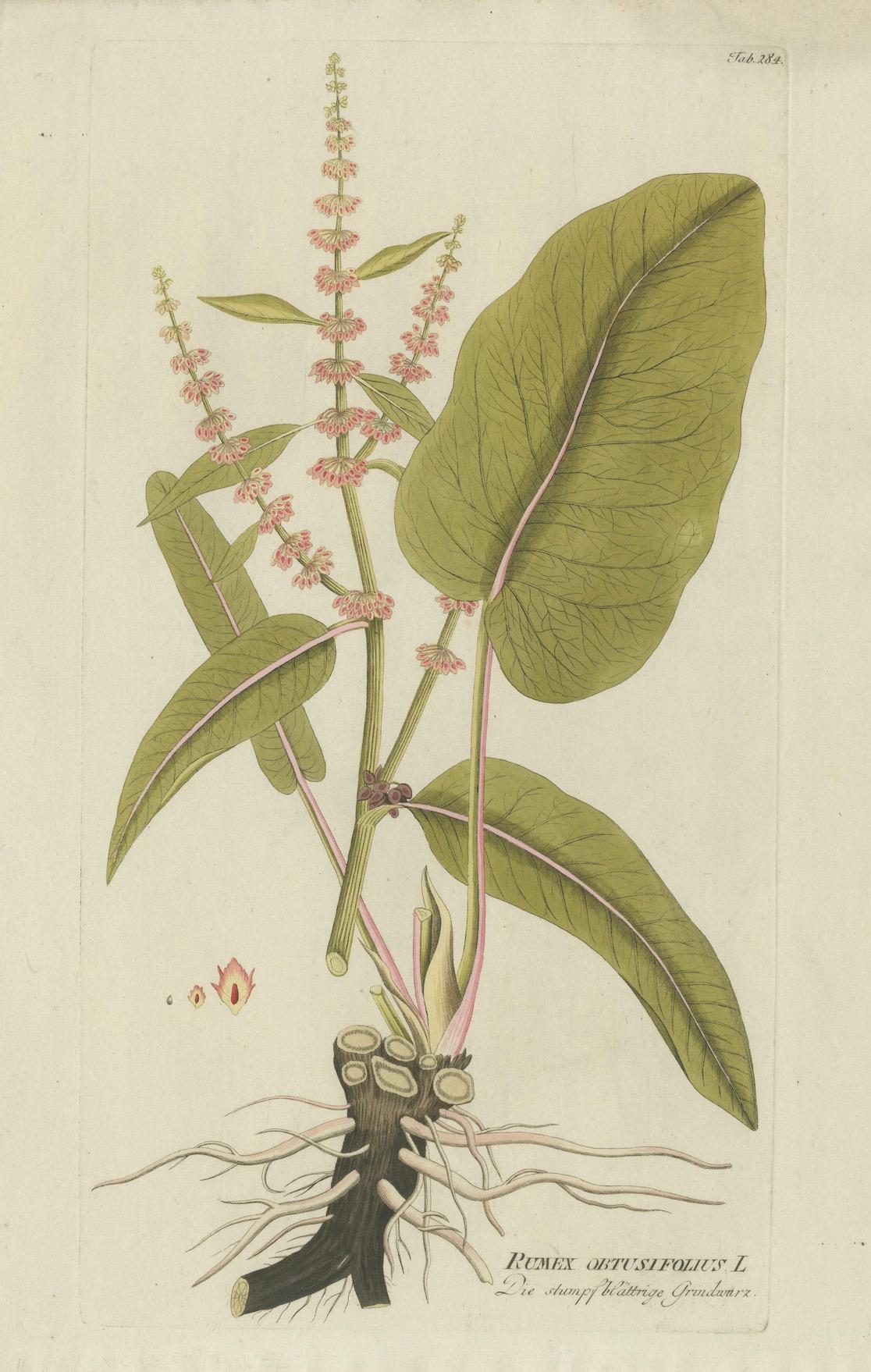
Broad-Leaved Dock – Medicinal Plant Engraving from Plenck, Vienna c.1788
€ 390
One of a kind: this is the sheet in the photographs. Ships from Langweer, the Netherlands.
Date
1788
Sheet size
48 × 34 cm (18.9 × 13.4 in)
Condition
Good
Reference
BG-13747-2
Condition
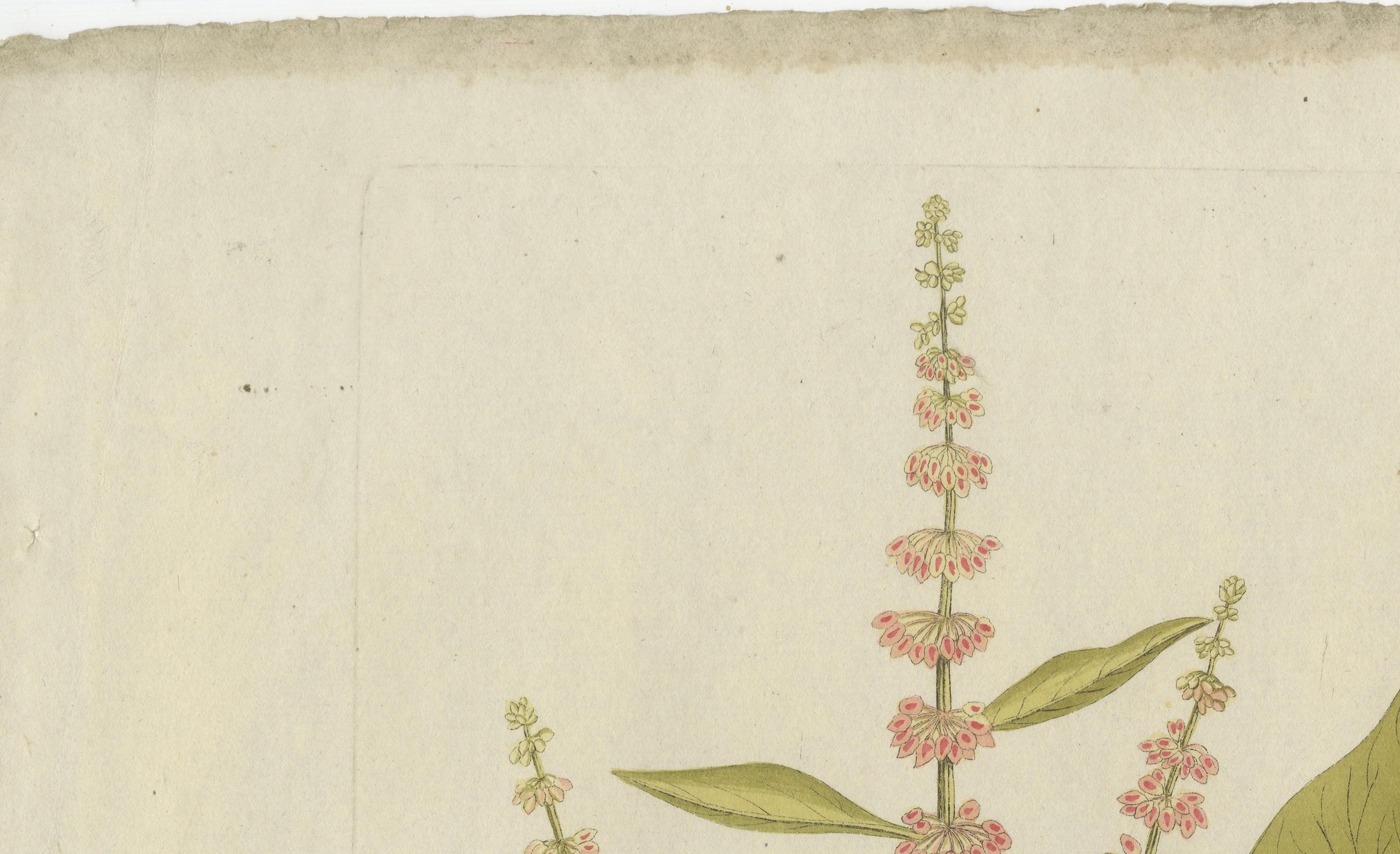
Good condition with slight signs of aging. The paper exhibits a mild patina and some edge wear indicative of its historical age. The colors remain vibrant. Browning on the top edge but not touching the plate-mark or image. Study the images carefully.
About this sheet
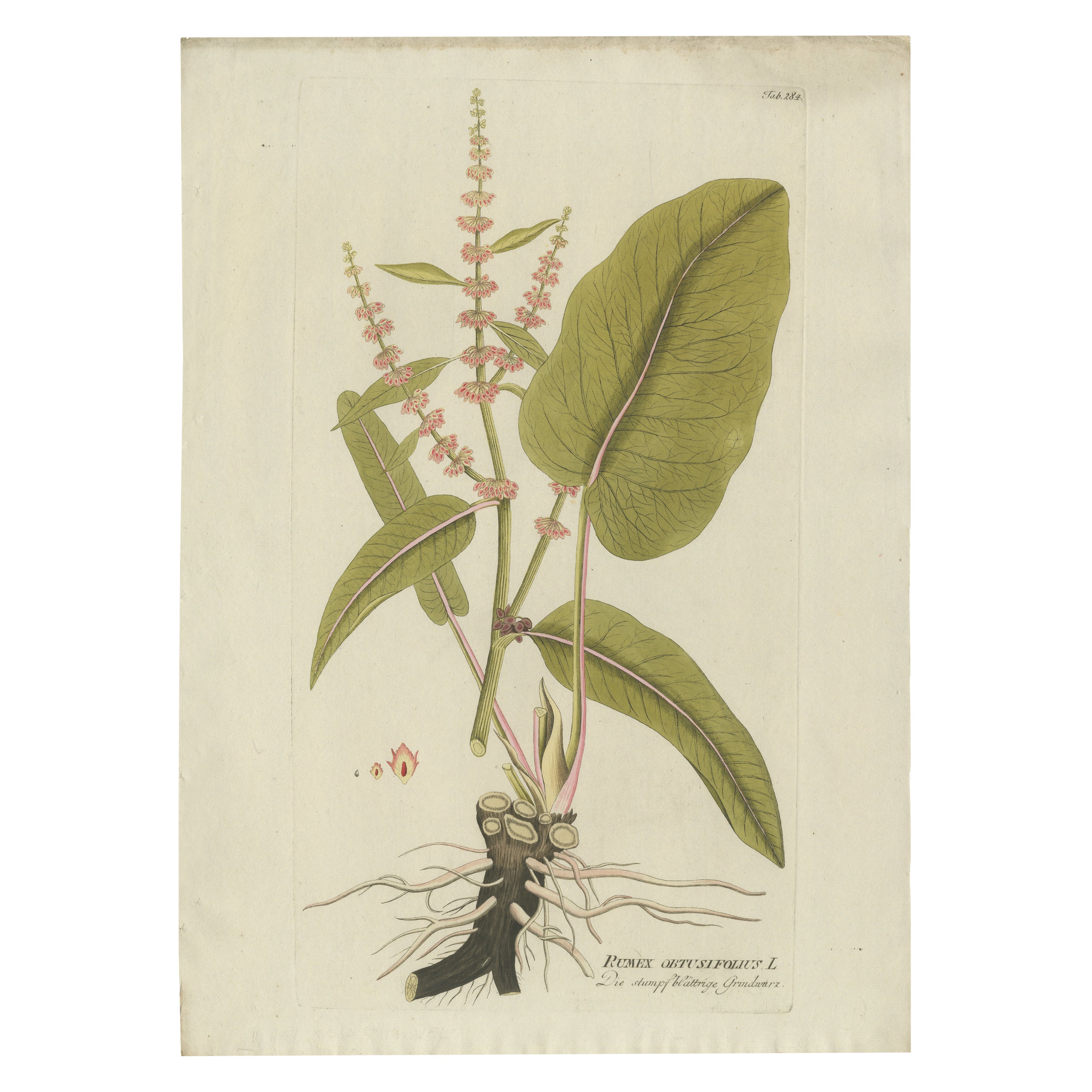
Broad-Leaved Dock – Medicinal Plant Engraving from Plenck, Vienna c.1788
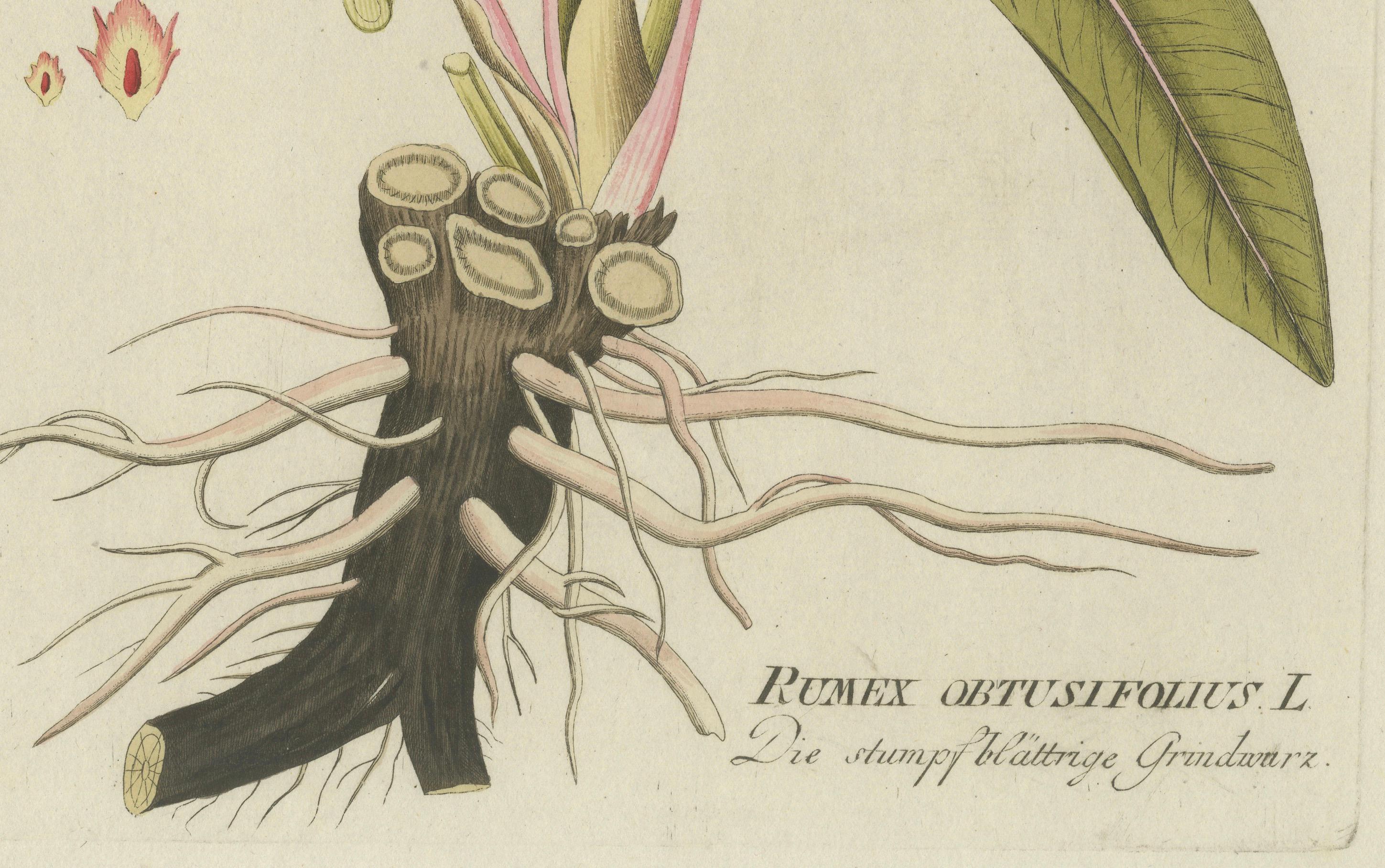
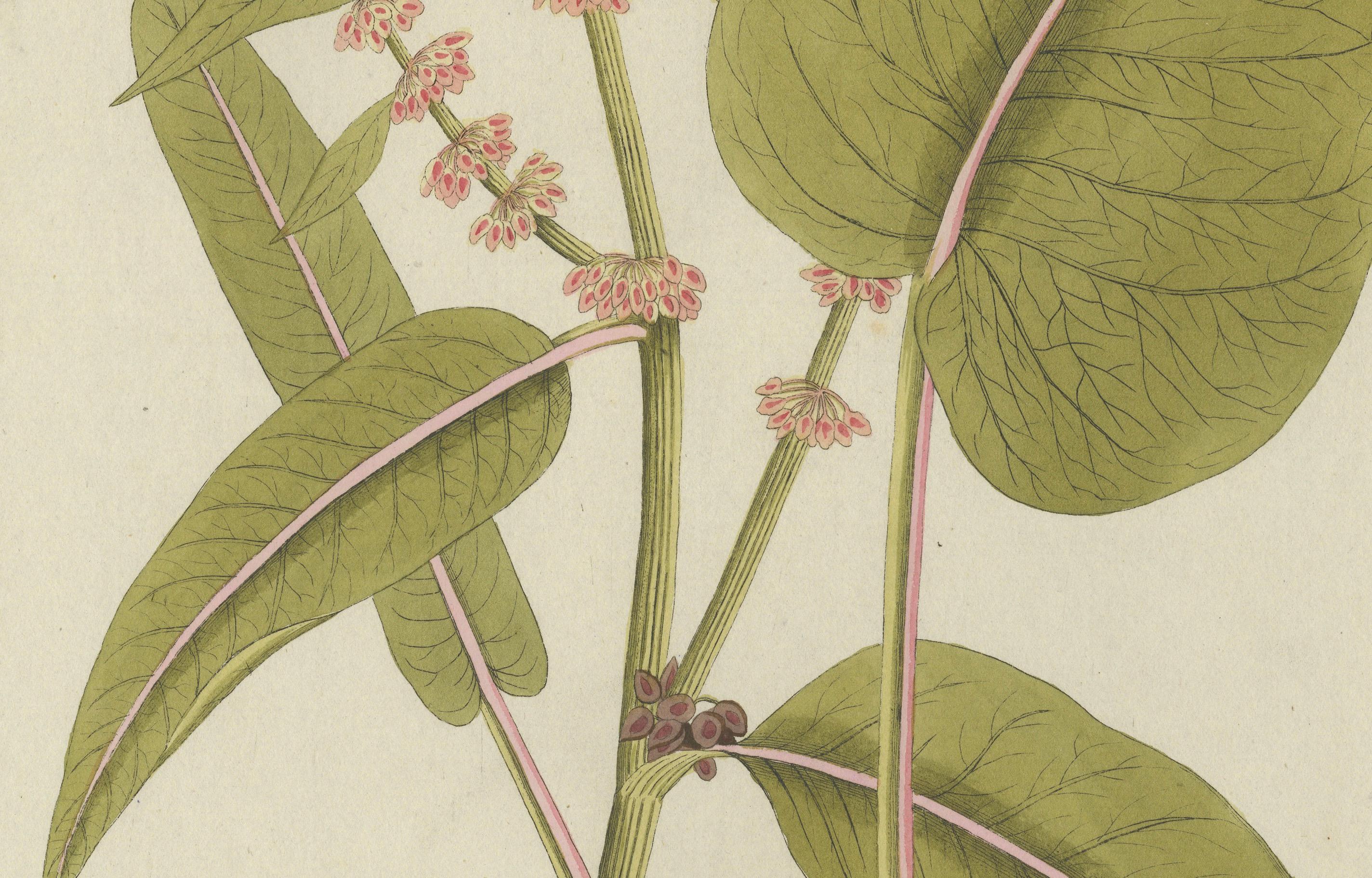
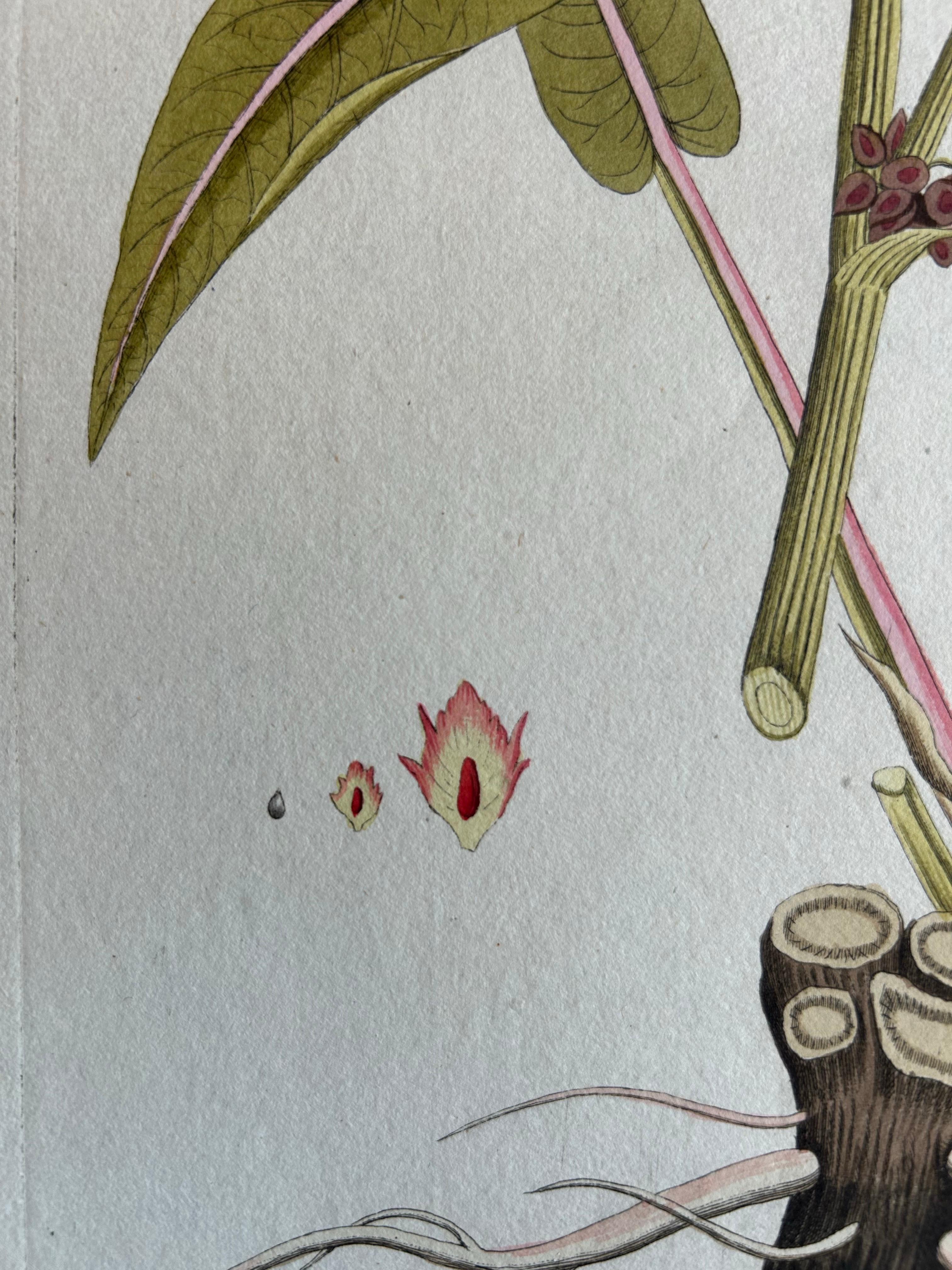
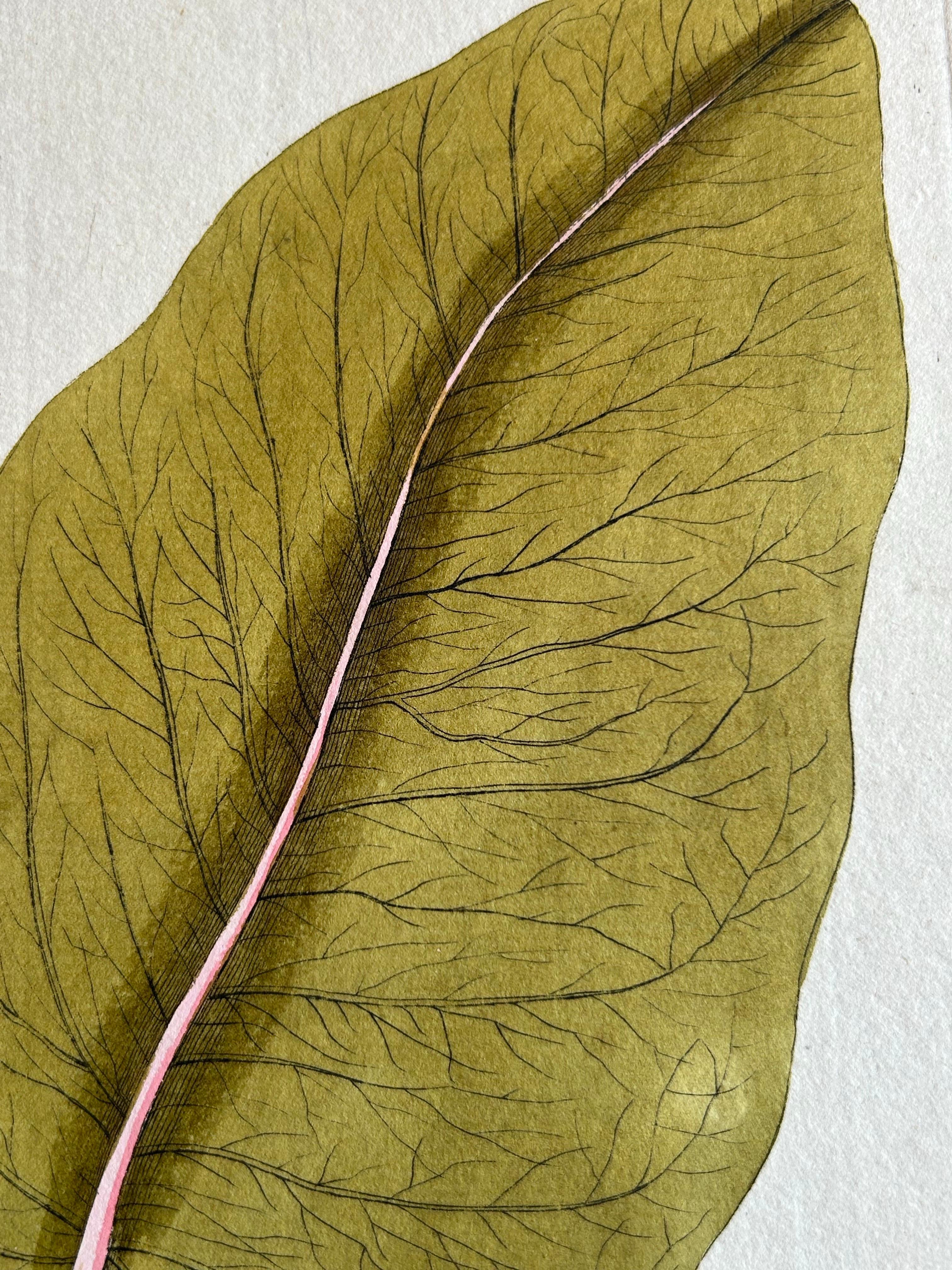
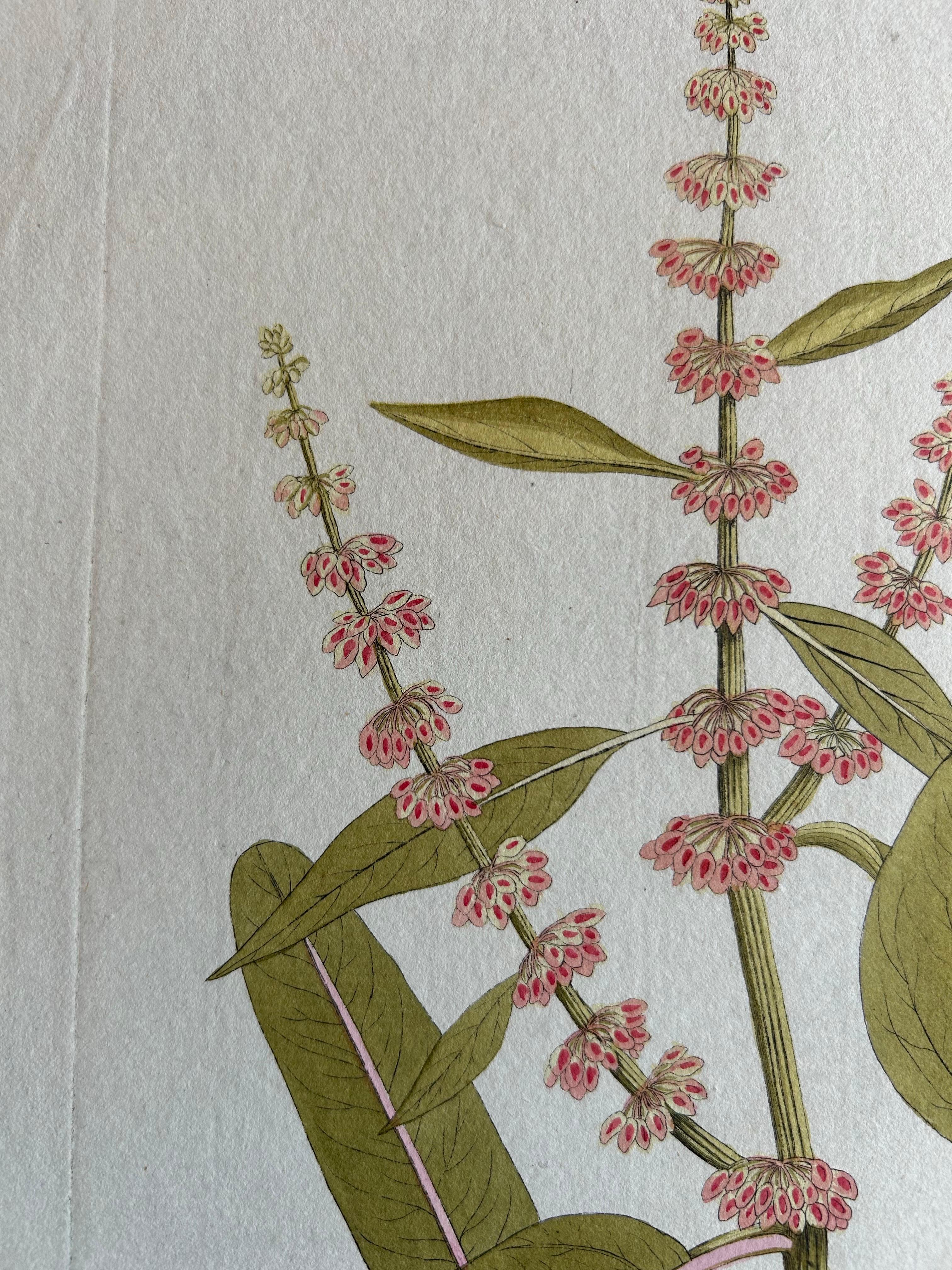
This hand-coloured botanical engraving features Rumex obtusifolius, commonly known as Broad-leaved Dock. The plant is illustrated in full detail, showing its large oval leaves with pronounced veining, tall flowering spikes with delicate pink blossoms, and a thick taproot system. At the base, the branching roots are carefully rendered, while a close-up of a flower and seed capsule appears beside the main specimen for botanical reference.
This print originates from Icones Plantarum Medicinalium, an important 18th-century medicinal botany work by Joseph Jakob Plenck, published in Vienna in 1788. Plenck was a noted Austrian physician and botanist whose work aimed to aid the accurate identification of plants used in medicine. His illustrations were both scientifically informative and visually elegant, combining careful line engraving with refined hand-colouring. The series reflects Enlightenment-era advances in medicine, natural history, and printing.
The technique used is copperplate engraving with original hand-colouring. Each plate was engraved with precise botanical detail and then coloured by hand, highlighting key structures such as flowers, stems, and roots. These prints served not only as reference tools for medical practitioners but also as collectible works of botanical art.
Condition Report The engraving is well-preserved, with slight signs of age-related wear. The paper shows a subtle patina that adds to its antique charm. The colors remain vibrant, highlighting the care taken in preserving this piece over the centuries. The overall condition suggests that the engraving has been maintained with an eye toward longevity and historical preservation.
Framing tips: A warm cream or pale sage mount will highlight the green tones and pink accents. For framing, consider dark oak, walnut, or black wood with a narrow gold inner edge for an elegant 18th-century look. UV-protective glass is recommended to preserve the hand-colouring.