About this sheet
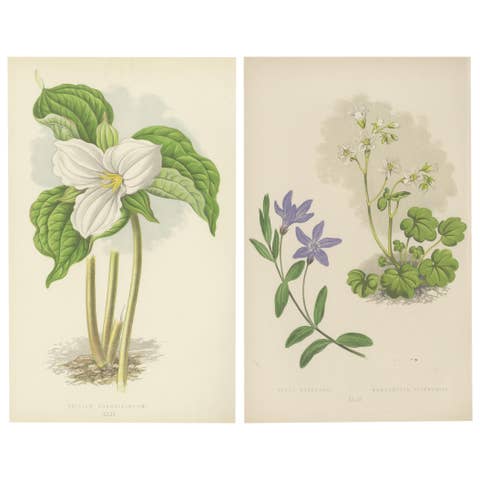
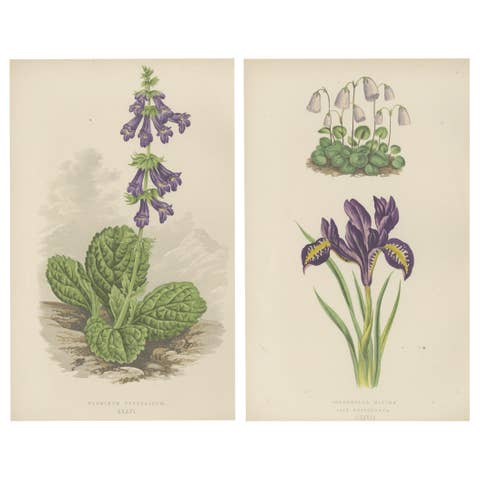
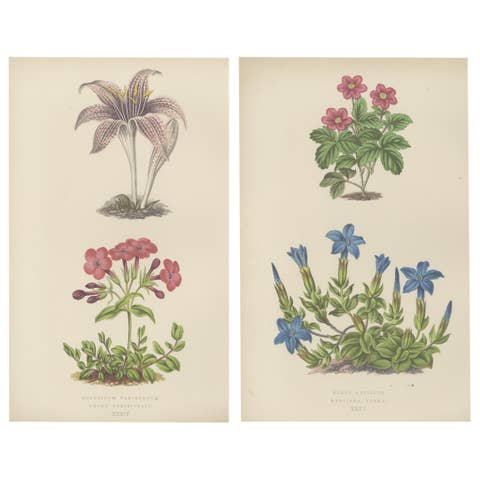
Blue Bellflower and Moroccan Sage, hand-coloured botanical print, 1874
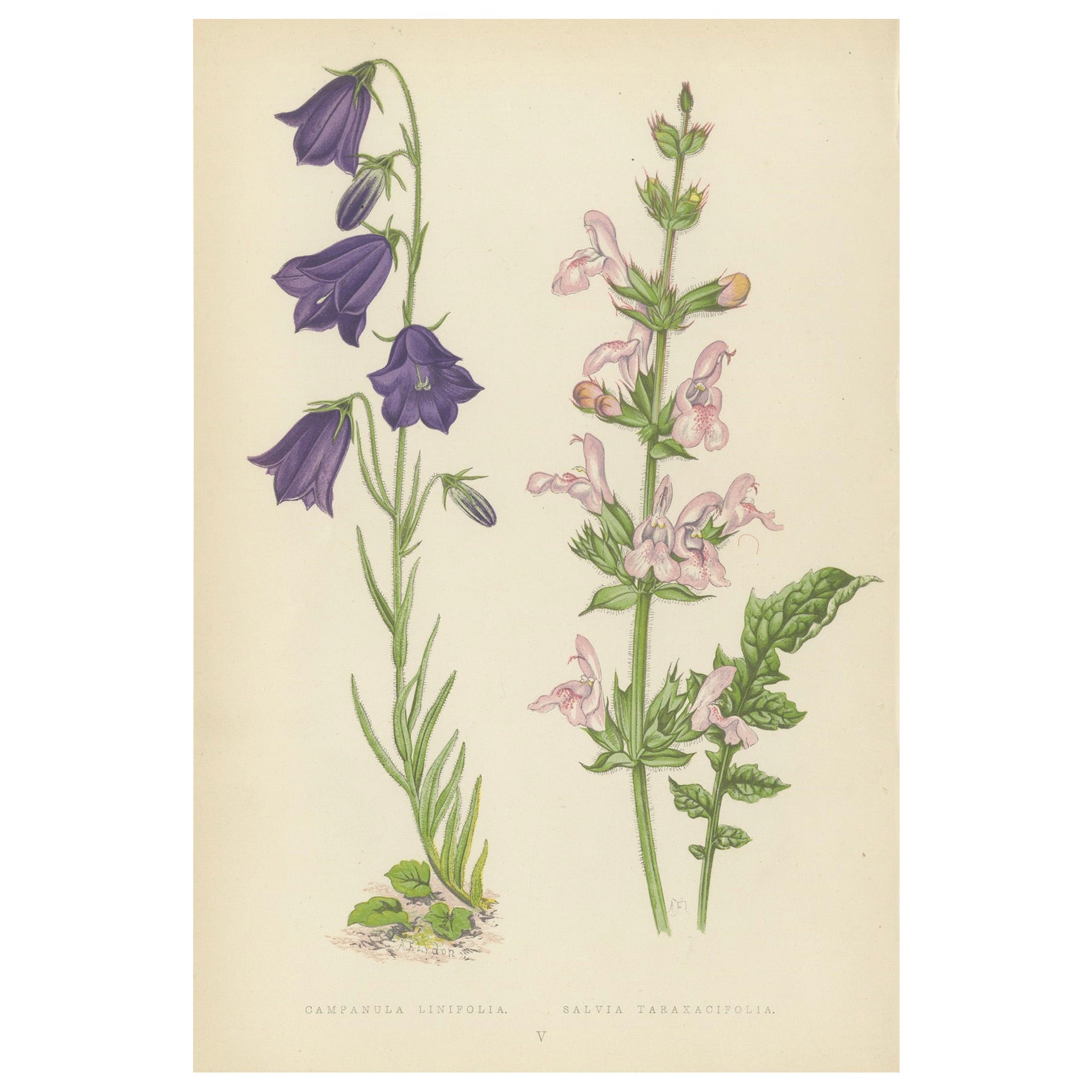
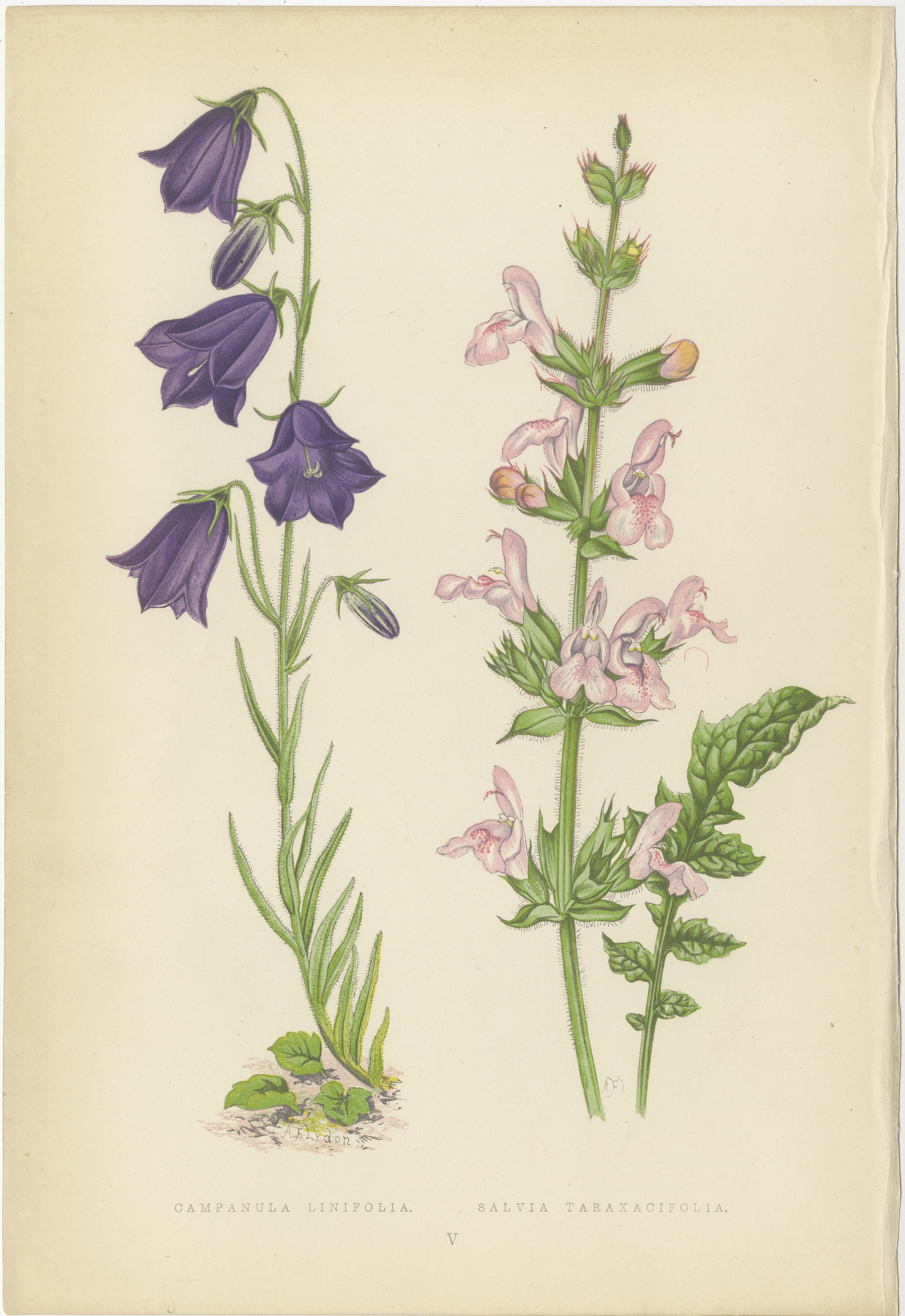
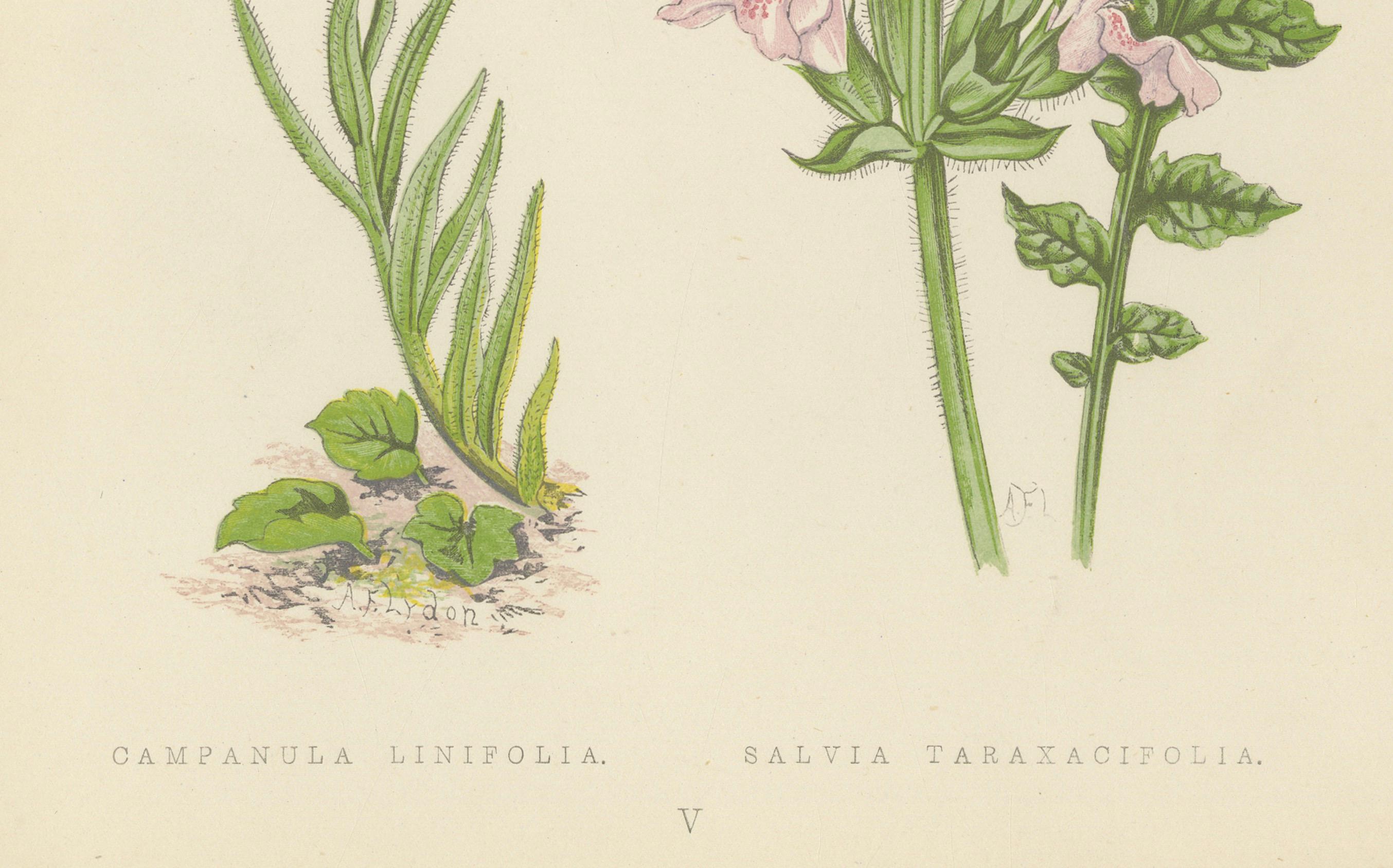
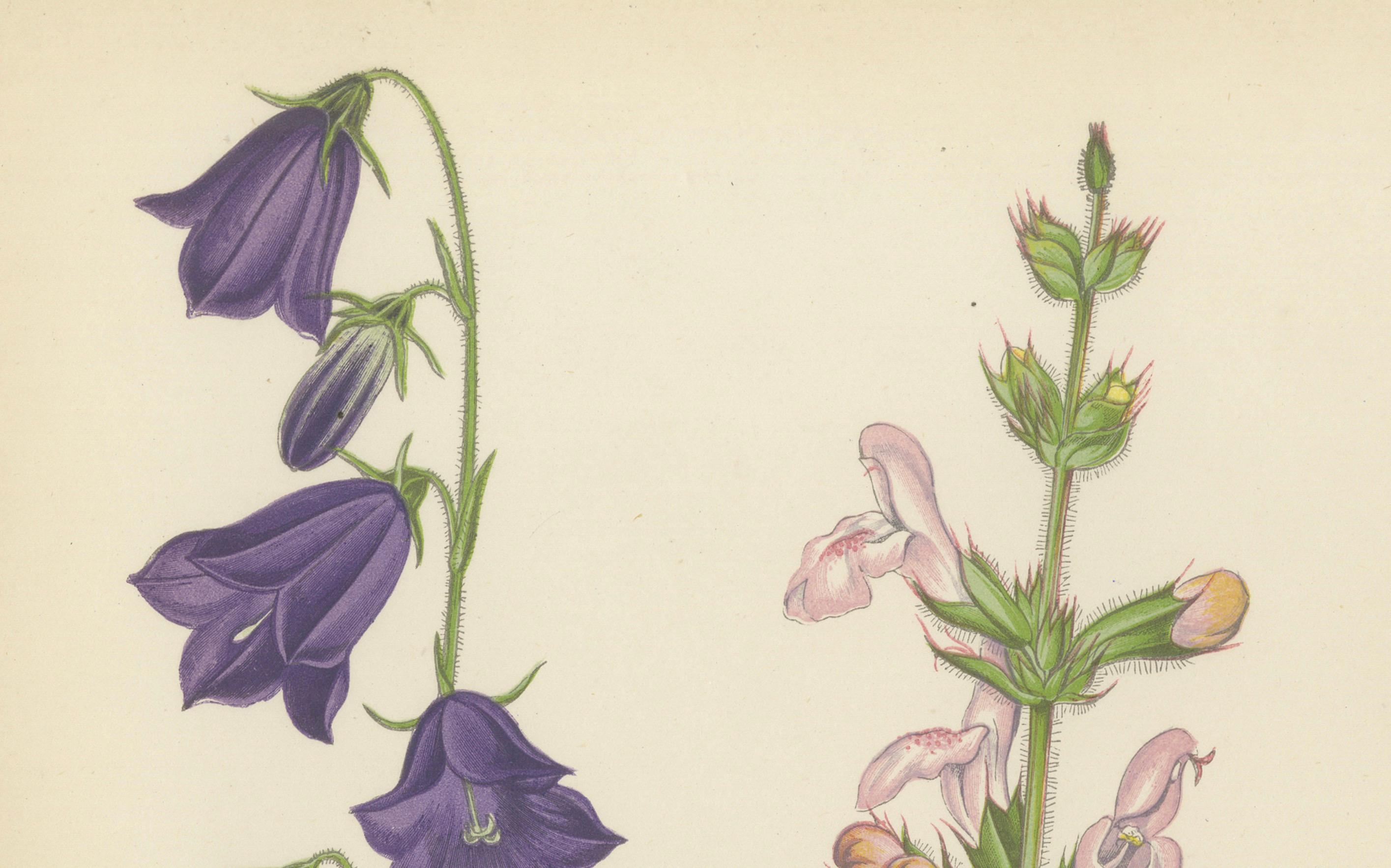
This striking hand-coloured lithograph from 1874 features two beautifully illustrated alpine species: Campanula linifolia (Blue Bellflower) and Salvia taraxacifolia (Moroccan Sage). It was published in London by George Bell & Sons as part of the second series of Alpine Plants, a celebrated Victorian-era botanical work known for its scientific precision and artistic elegance.
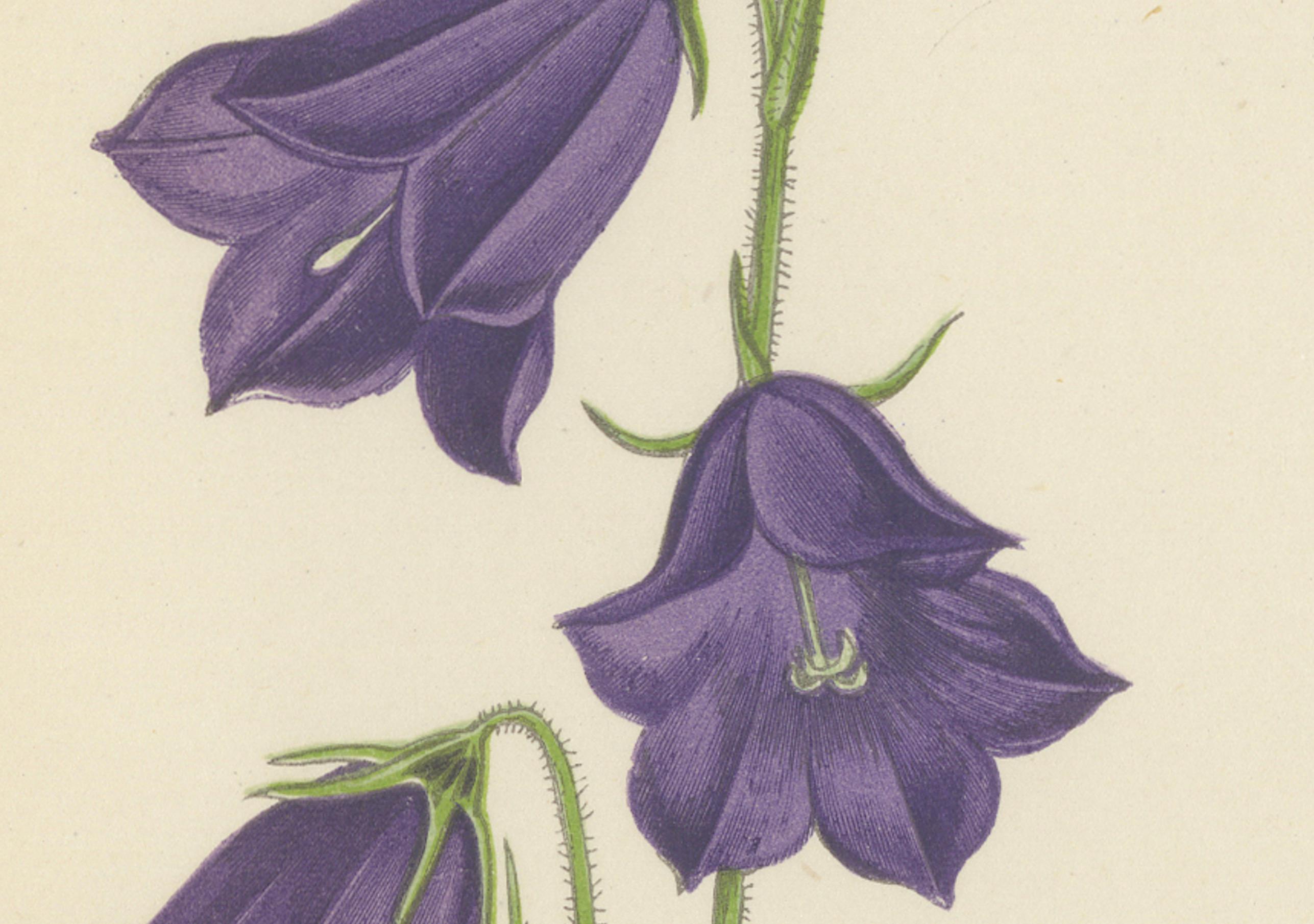
On the left, Campanula linifolia, commonly known as Blue Bellflower or Flax-leaved Bellflower, displays its nodding, deep violet-blue blooms along a slender, upright stem. Native to mountainous regions of Southern Europe, it is valued for its delicate bell-shaped flowers and fine, linear leaves that resemble flax, hence the name. The lithograph captures the graceful arc of the flower stems with remarkable detail and subtle shading.
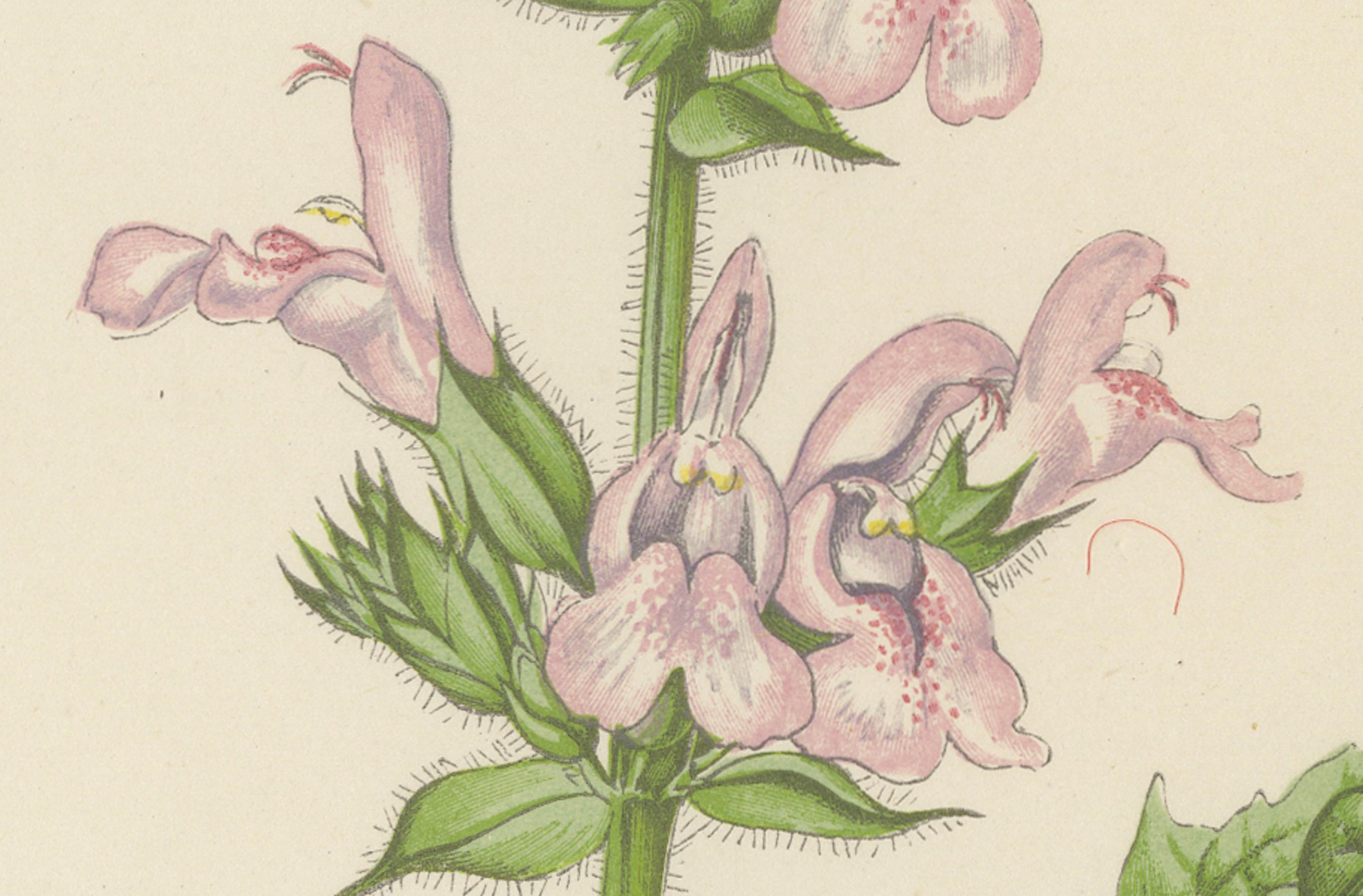
On the right, Salvia taraxacifolia, or Moroccan Sage, is a rare and aromatic species native to the Atlas Mountains. Its soft pink, hooded flowers grow in whorls along a square stem, typical of the mint family, and the foliage is deeply veined and slightly woolly—an adaptation to its dry, alpine habitat. The illustrator has rendered both structure and texture with clarity, and the hand-colouring highlights the soft contrast between flower and leaf.
Each print in this series was lithographed and then coloured by hand, making every copy a unique work of art. The paper is thick and creamy with ample margins, and the colours have remained fresh and vibrant. This print is both decorative and informative—ideal for display in a natural history-themed interior or among a collection of antique botanical works.
Condition summary and framing tips:
Excellent condition with bright colours and clean edges. Slight toning near margins. Best displayed with a pale mauve or soft grey mat and a dark green or gold frame to accentuate the rich floral tones and fine detail.