Original antique · The actual sheet photographed · Certificate of authenticity on request · Sold unframed · Worldwide shipping from € 15 (rates)
Date
1852
Mapmaker / artist
Carl Gustav Calwer, Stuttgart, 1852
Technique
Hand-colored lithograph
Sheet size
26.5 × 21 cm (10.4 × 8.3 in)
Condition
Good
Reference
BG-14178-44, -45
What the condition grades mean
Excellent
Bright and clean, with no faults worth mentioning.
Very good
Only light signs of age, such as faint toning.
Good
Normal signs of age for a sheet of this period: toning, some foxing, small marks or neat old repairs.
Fair
Clear faults such as staining, tears or repairs, priced to match.
Every fault we see is written in the condition note, and the whole sheet is shown uncropped in the photos.
Condition
Wear consistent with age and use. Condition report: Moderate age toning with some scattered foxing, more pronounced in margins. Hand coloring remains strong. From a bound volume.
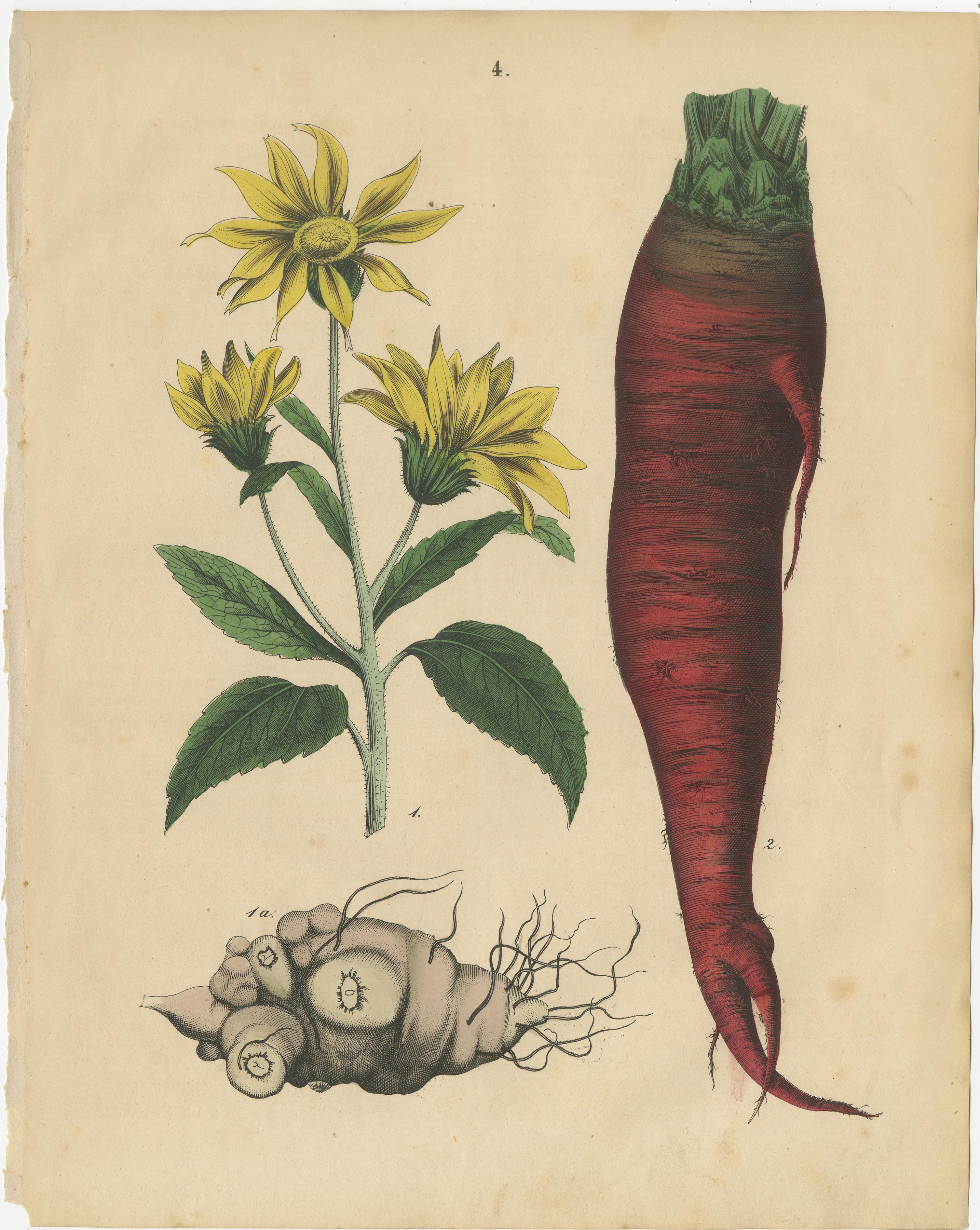
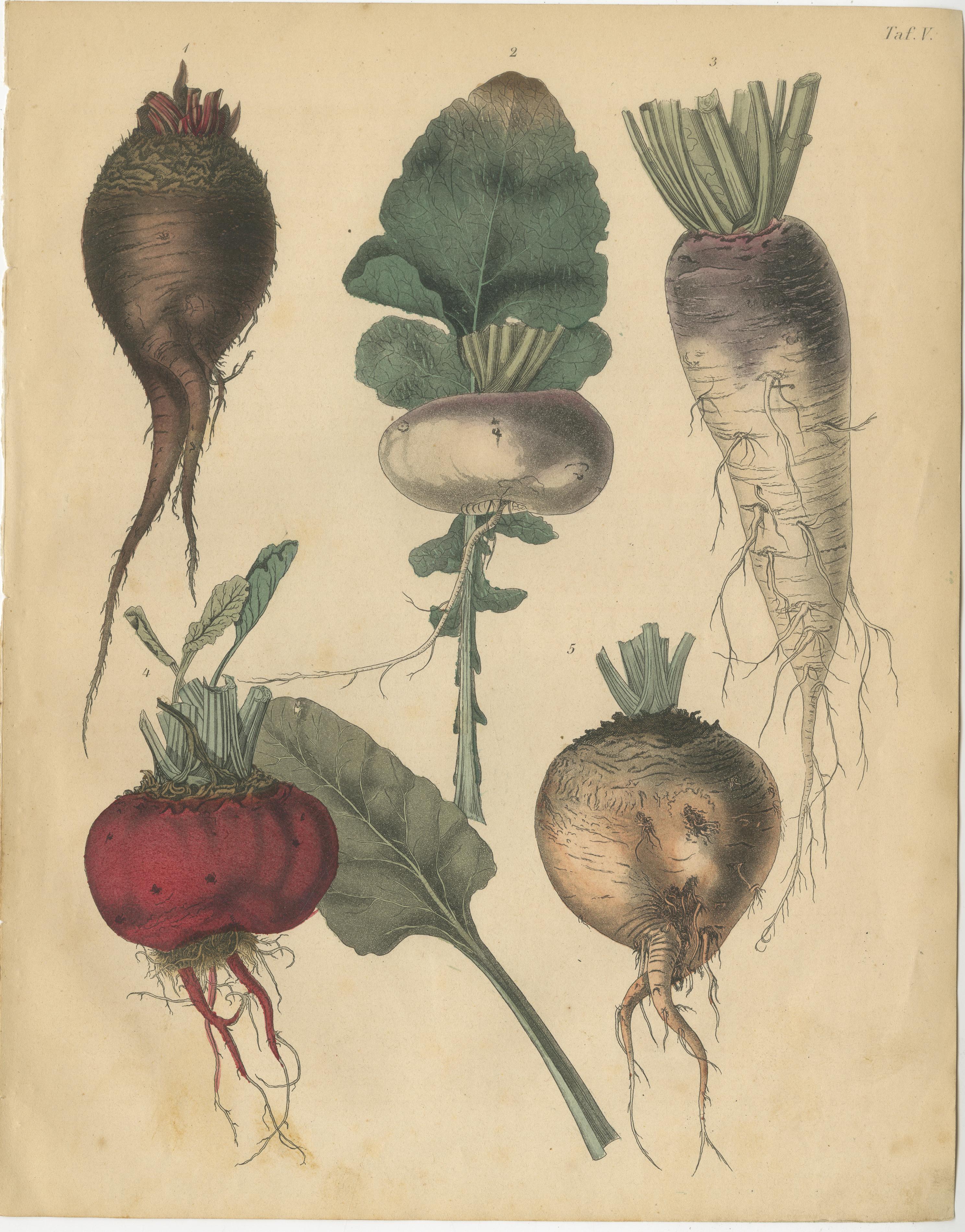
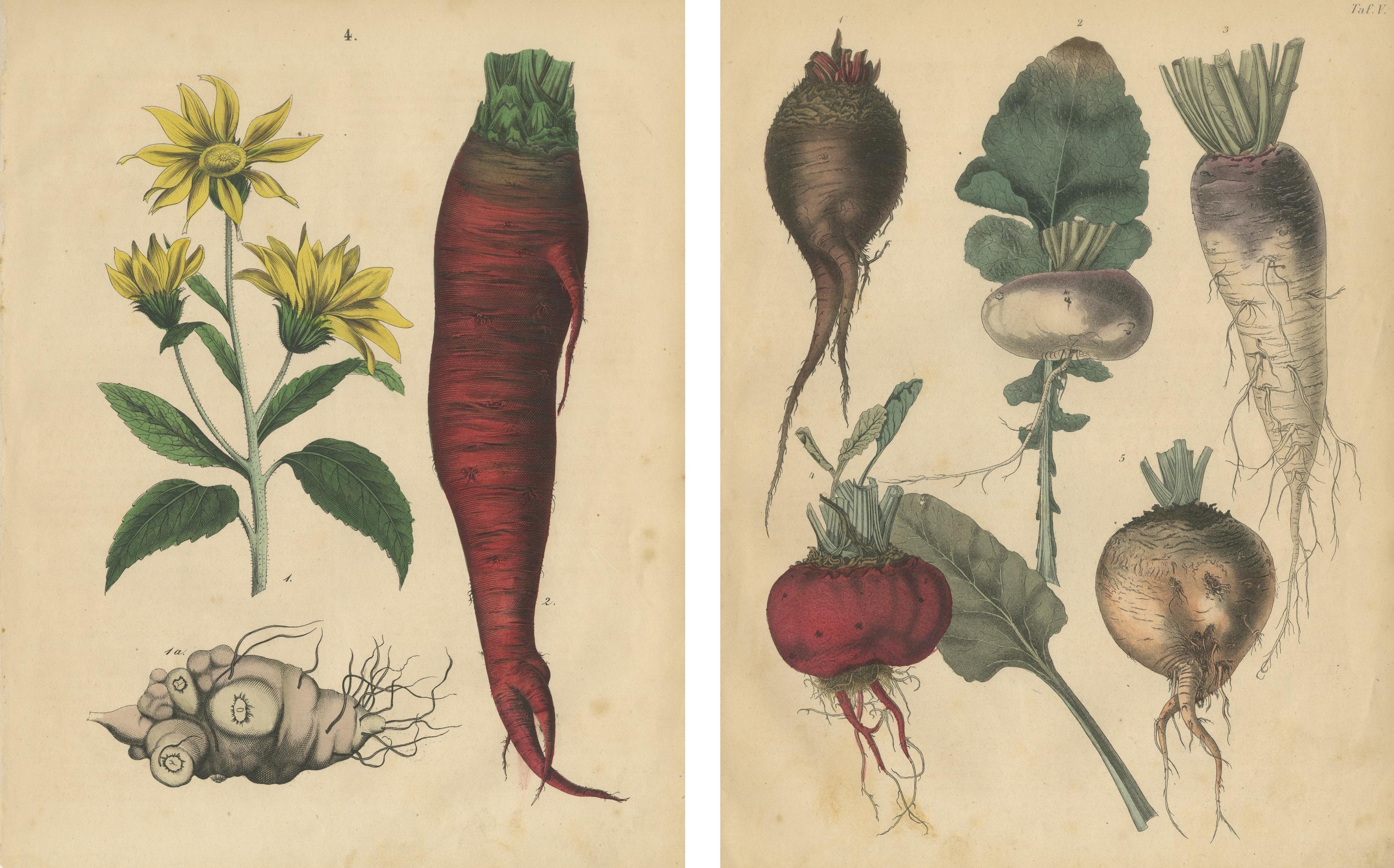
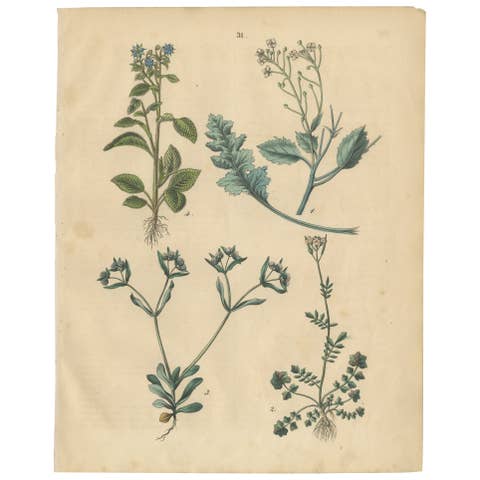
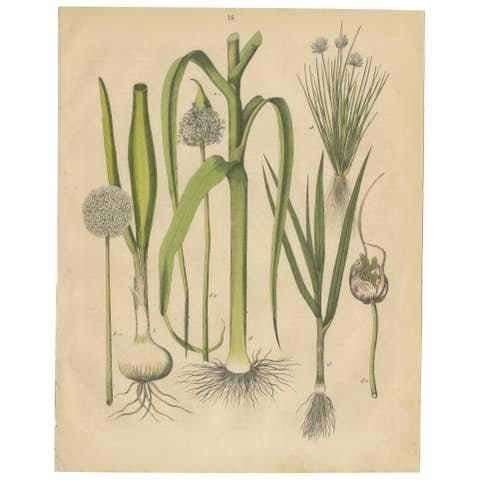
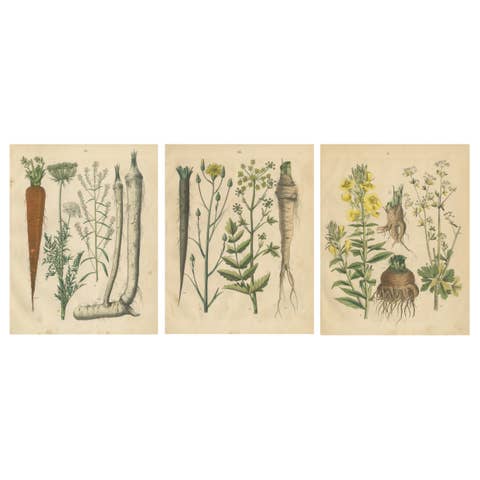
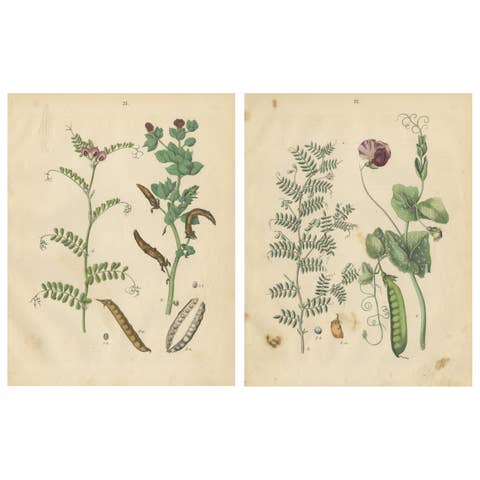
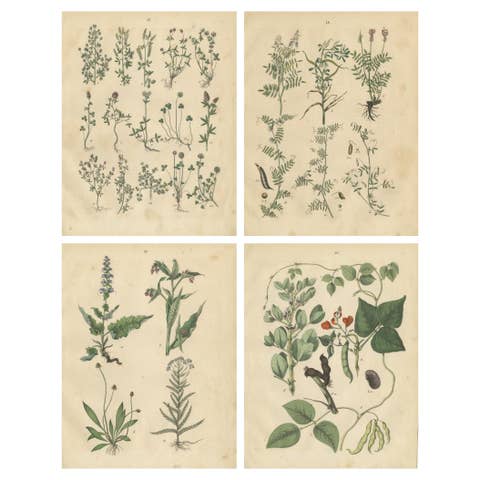
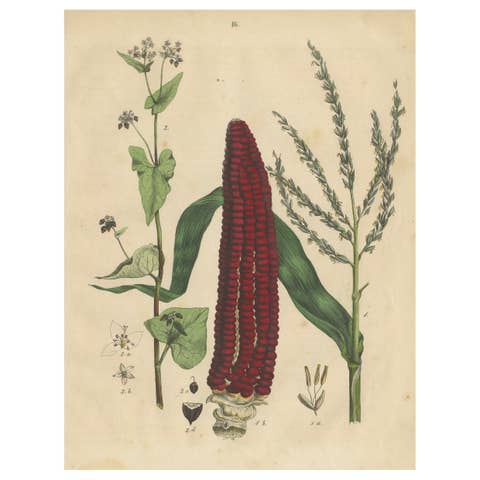
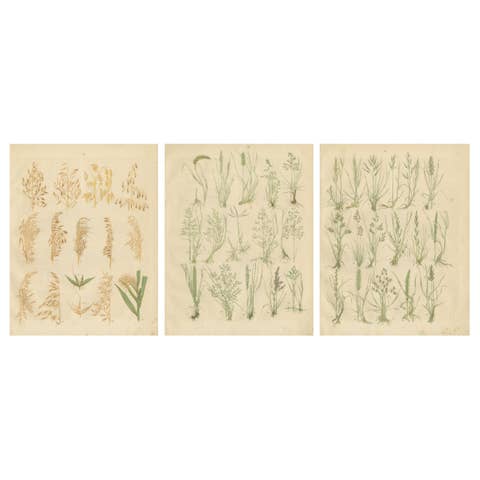
This attractive two-plate set features cultivated root vegetables illustrated in Carl Gustav Calwer’s Landwirthschaftliche und technische Pflanzenkunde, published in Stuttgart in 1852. The plates depict beets, carrots, radishes, and related garden crops, shown with roots, leaves, and structural detail.
Produced during a period of agricultural modernization in Germany, these images were intended to document economically important food plants with clarity and accuracy. Calwer’s plates succeed not only scientifically, but also aesthetically, combining clean outlines with subtle hand coloring that gives each vegetable a sculptural presence.
The compositions are bold and graphic, making them ideal for kitchens, dining rooms, restaurants, or farm-to-table interiors. They also appeal to collectors interested in food history, horticulture, or 19th-century educational prints.
Together, the two plates form a cohesive and visually satisfying pair that highlights the diversity and importance of root vegetables in European agriculture.
Condition report: Moderate age toning with some scattered foxing, more pronounced in margins. Hand coloring remains strong. From a bound volume.
Framing tips: Display as a vertical pair or side-by-side. Dark green or charcoal mats work well, paired with simple black or dark wood frames.