About this sheet
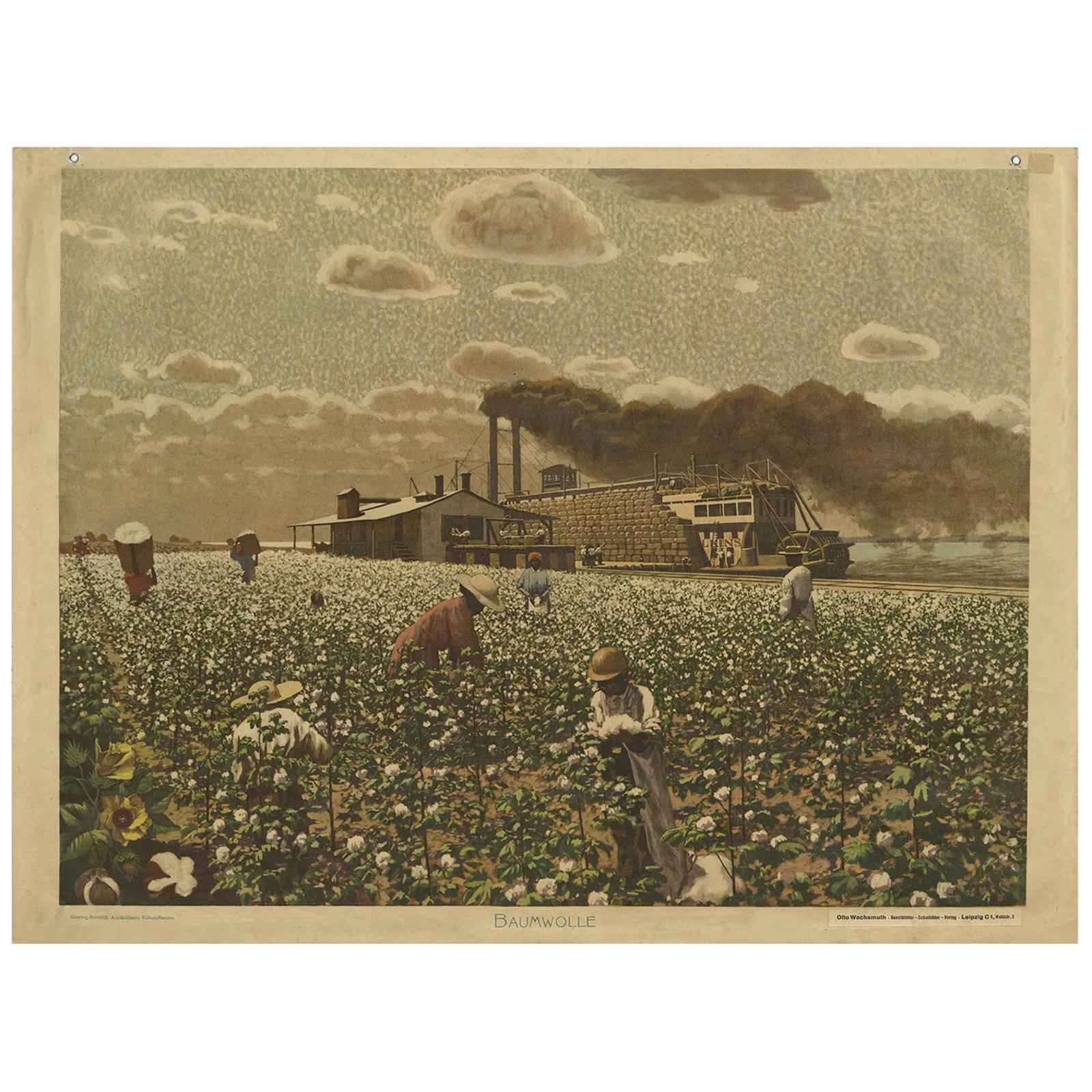
No. 4 of the German schoolplates for illustrating the lessons about spices, colonies and tropical products. Printed on cardboard.
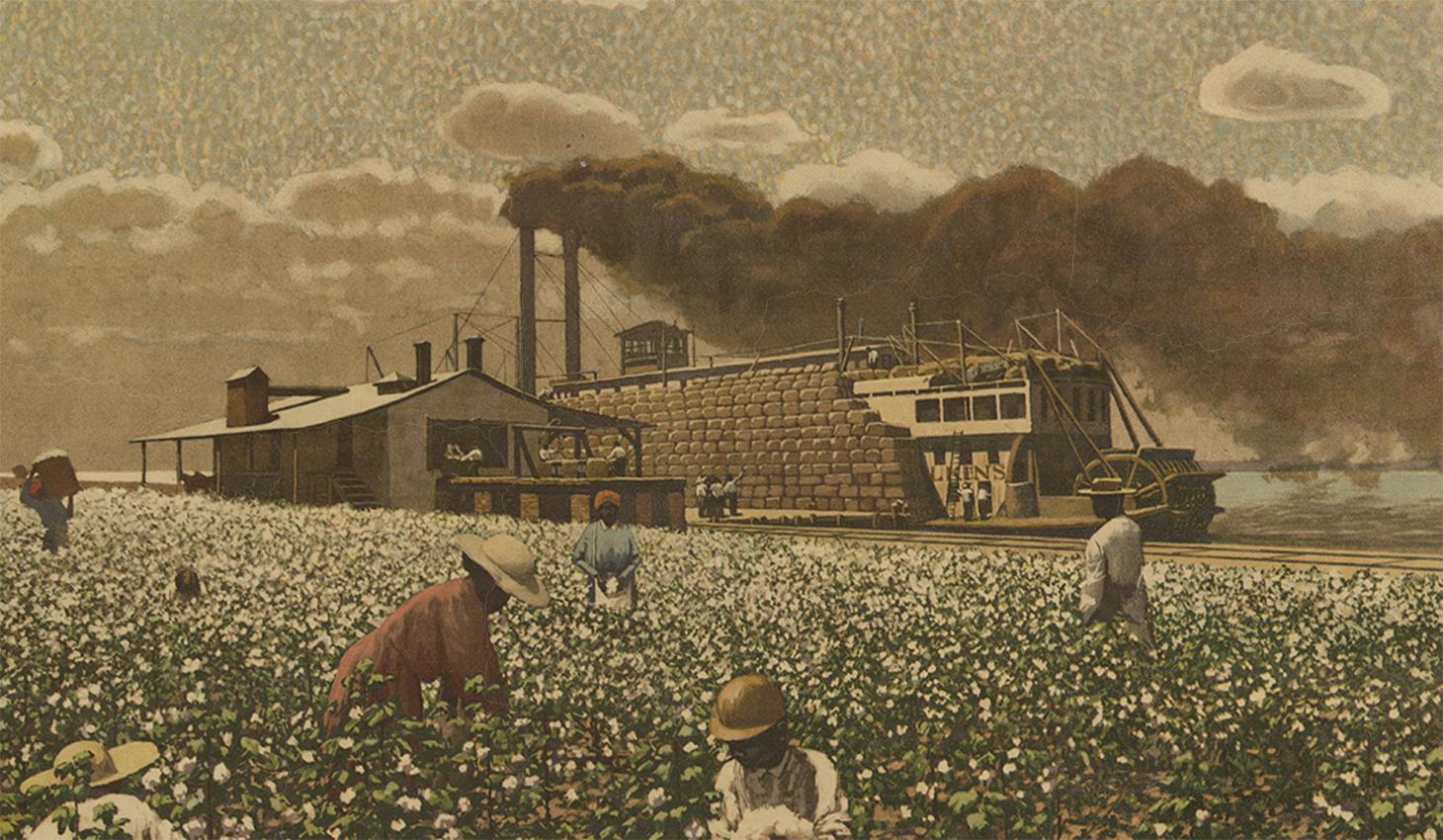
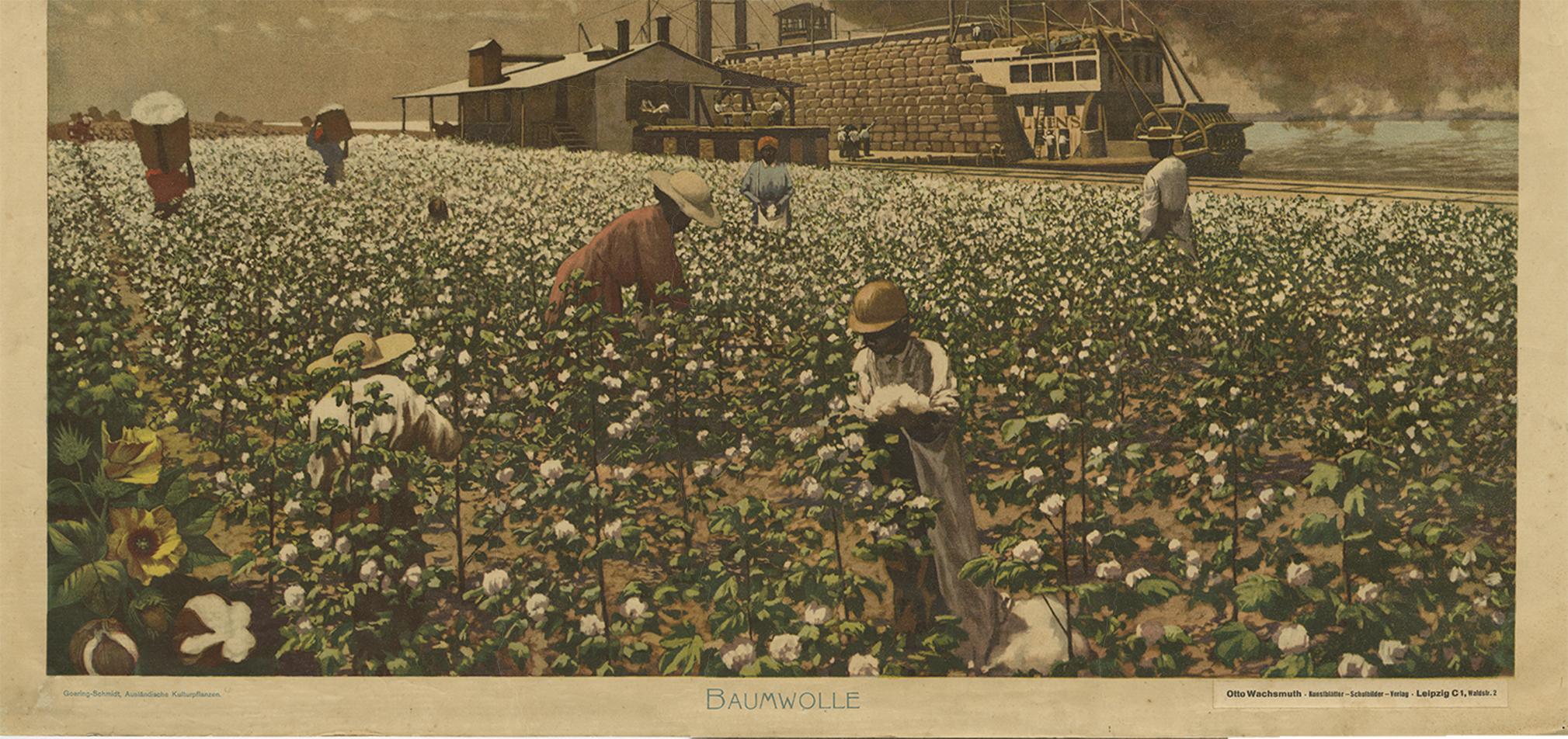
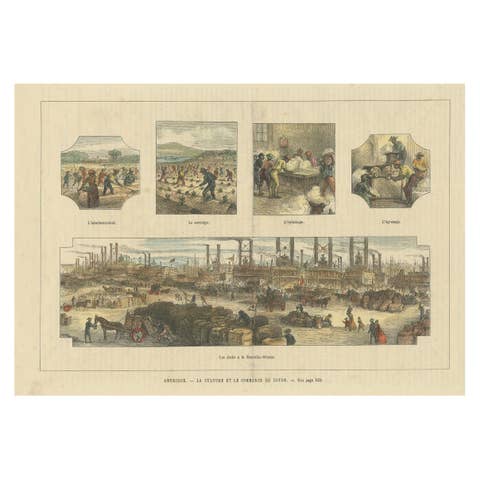
This antique print, a 'Schoolplate' envisioned by F.E. Wachsmuth around 1900, offers a captivating depiction of a cotton field. This educational illustration aims to acquaint learners with the visual details of a cotton plantation, serving as a teaching tool in classrooms of the era.
The artwork portrays the intricacies of a cotton field, showcasing the growth stages of the cotton plants, their arrangement within the field, and possibly the surrounding landscape. The artist's attention to detail provides a vivid and informative representation, allowing students to observe the characteristics of a cotton crop.
Wachsmuth's schoolplate likely intended to educate students about the cultivation and production of cotton, a vital aspect of agricultural knowledge during that period. It might feature not only the cotton plants but also supplemental details or descriptions to aid in understanding the cotton-growing process.
As an antique 'Schoolplate,' this print serves as a historical testament to educational methodologies, offering a glimpse into how visual aids were used to impart agricultural knowledge in early 20th-century classrooms.