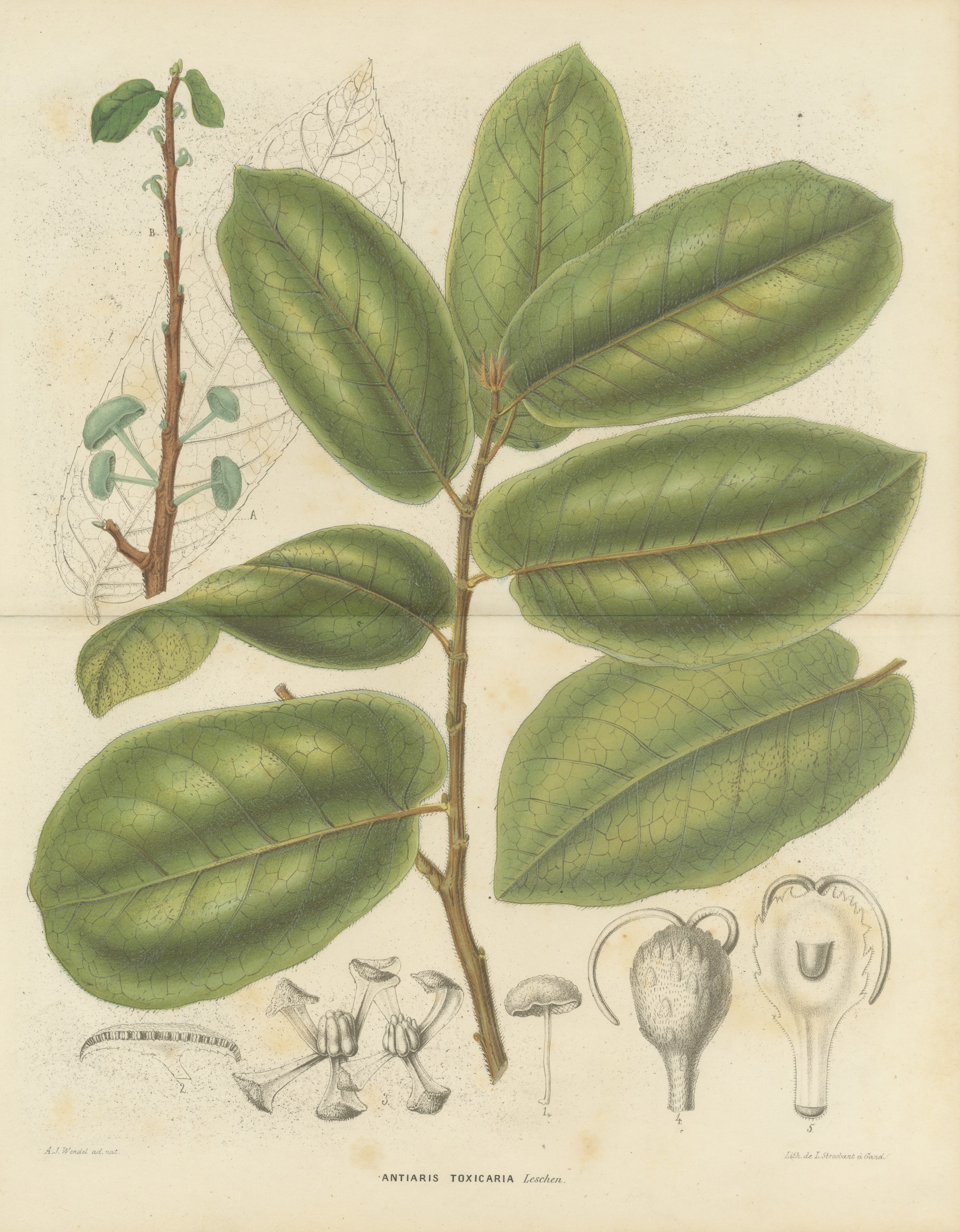
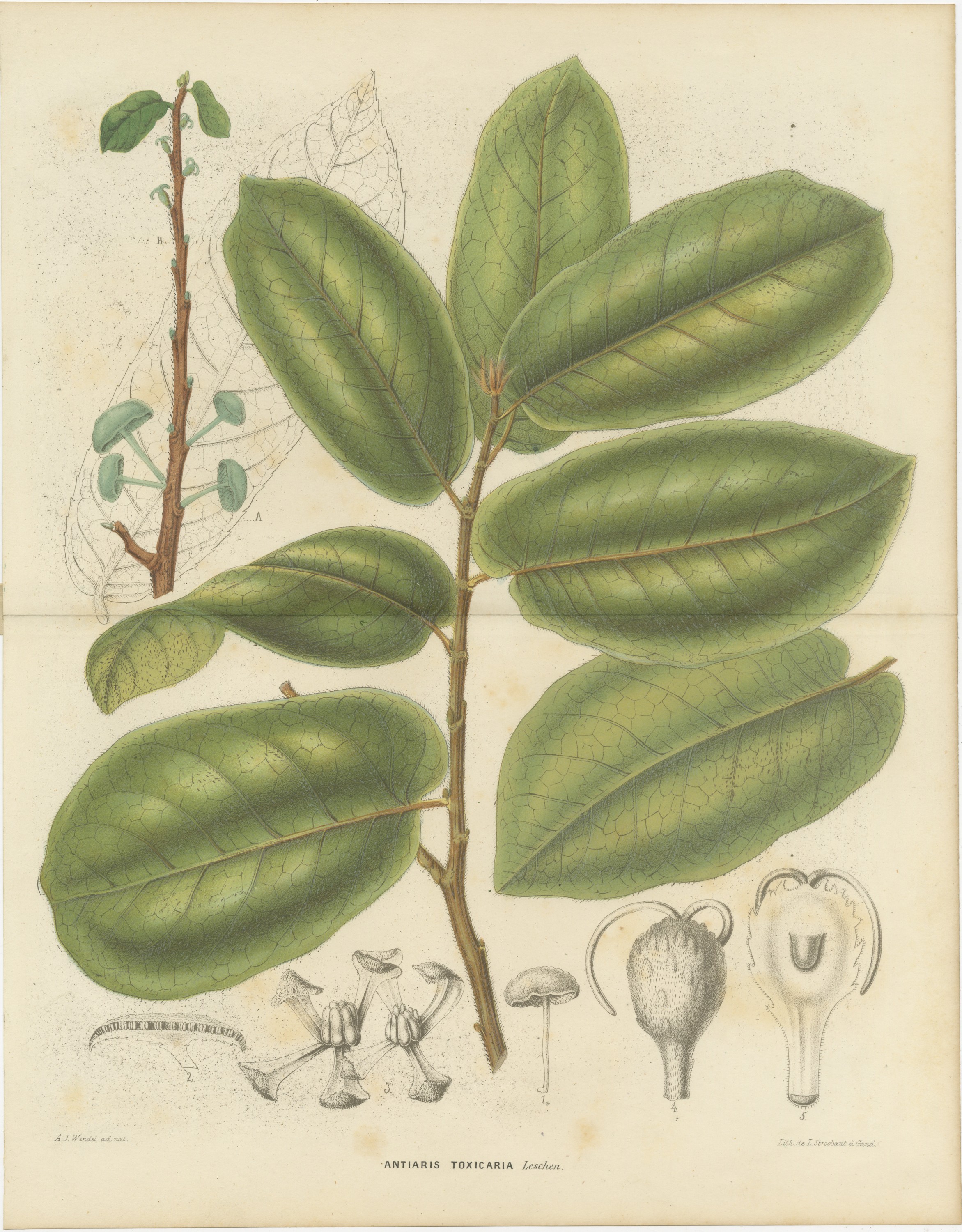
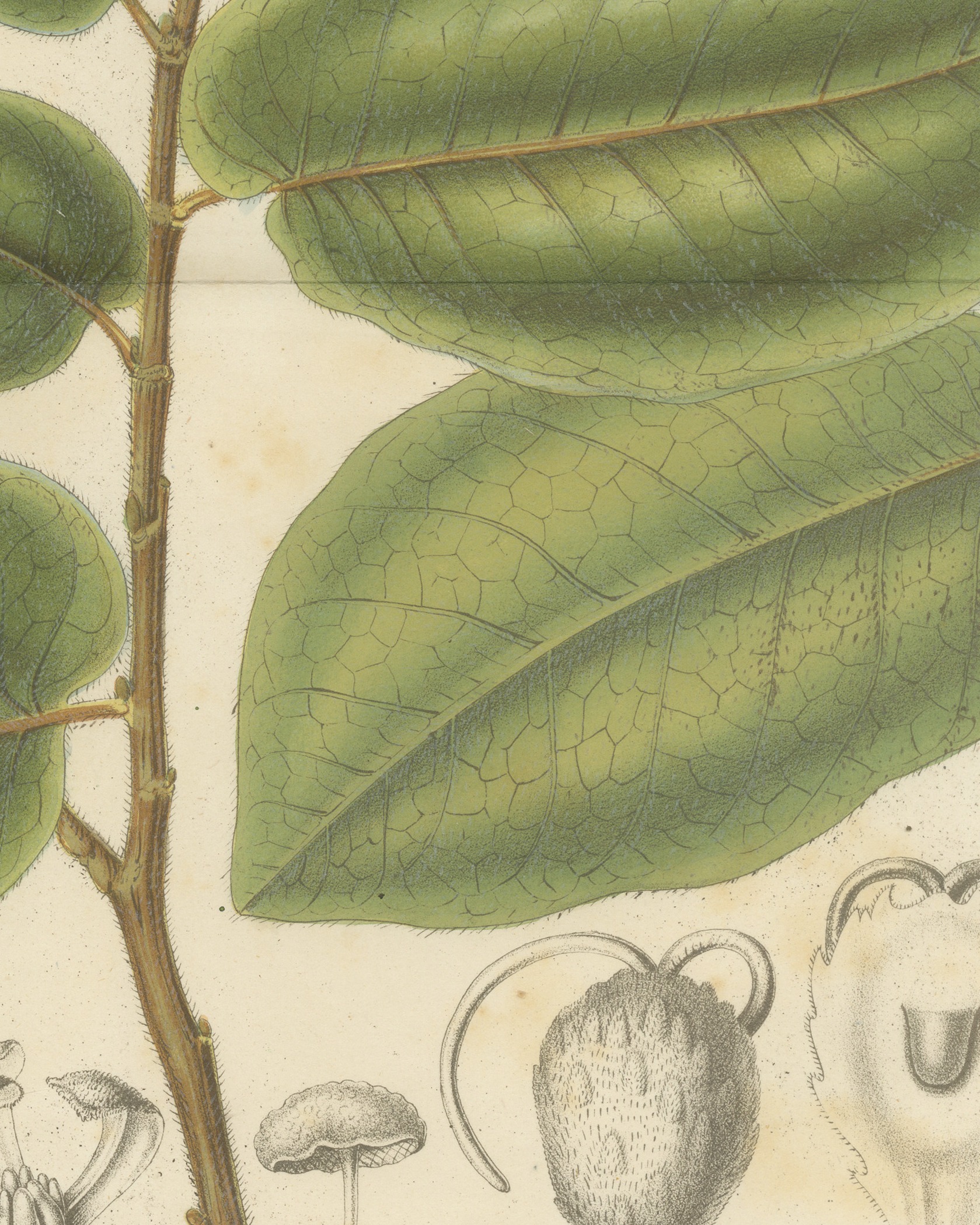
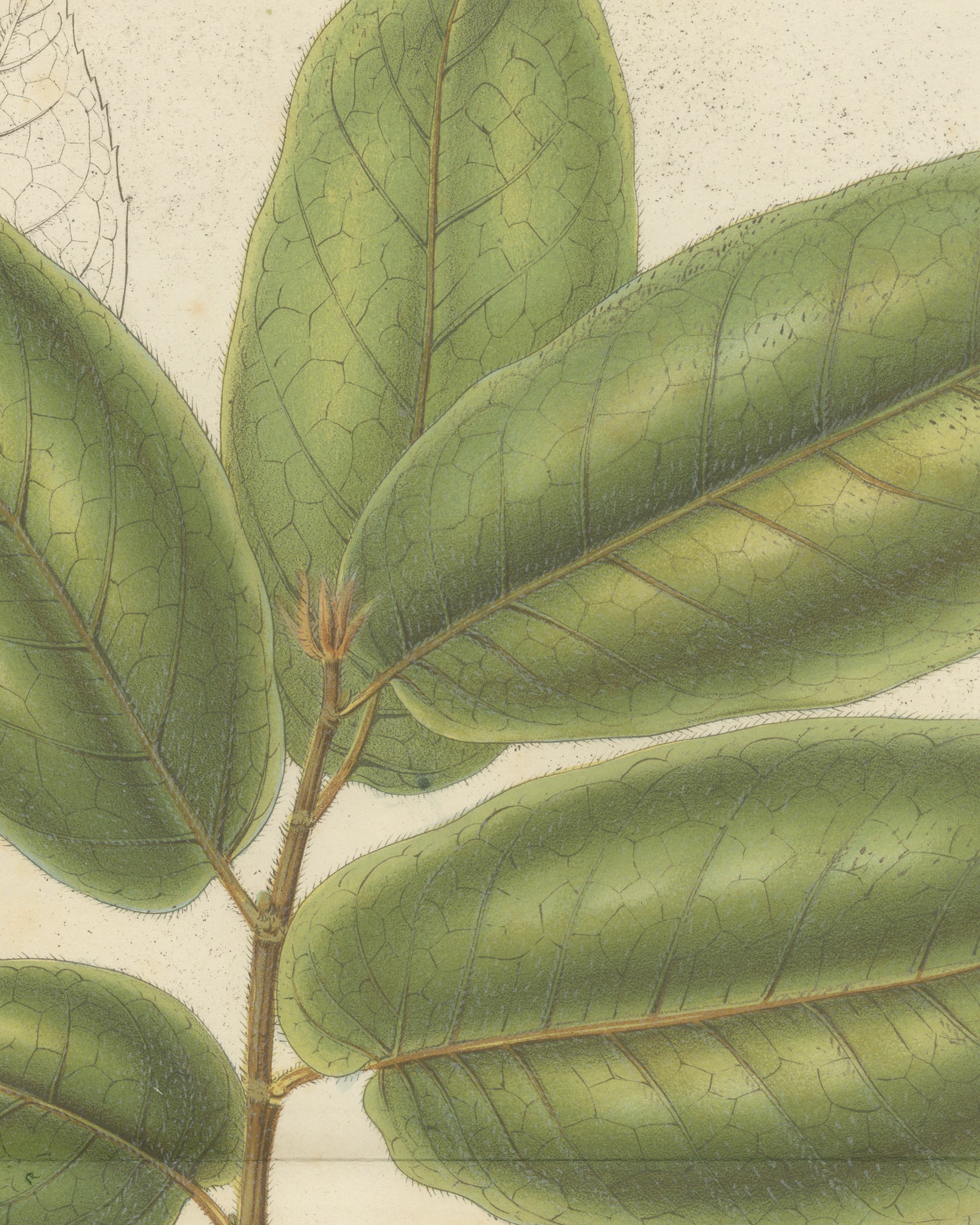
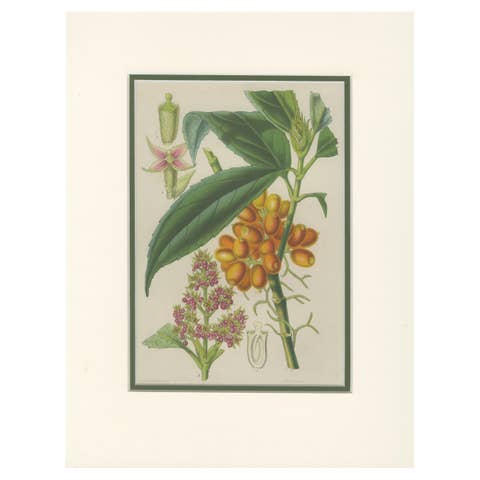
Antiaris Toxicaria, the Upas Tree, Branch with Details, 1859
€ 445
Original antique · The actual sheet photographed · Certificate of authenticity on request · Sold unframed · Worldwide shipping from € 15 (rates)
Date
1859
Mapmaker / artist
Drawn by A. J. Wendel; lithographed by L. Stroobant, Ghent
Publisher
A. W. Sythoff, Leiden
Technique
Chromolithograph
Coloring
Printed in color
Condition
Good
Reference
BG-12376-2-6
What the condition grades mean
Excellent
Bright and clean, with no faults worth mentioning.
Very good
Only light signs of age, such as faint toning.
Good
Normal signs of age for a sheet of this period: toning, some foxing, small marks or neat old repairs.
Fair
Clear faults such as staining, tears or repairs, priced to match.
Every fault we see is written in the condition note, and the whole sheet is shown uncropped in the photos.
Condition
Light wear to the top right corner. Light age toning; light handling soiling along the edges and a few small spots in the margins. A horizontal center fold, as issued. Printed image clean.
About this sheet
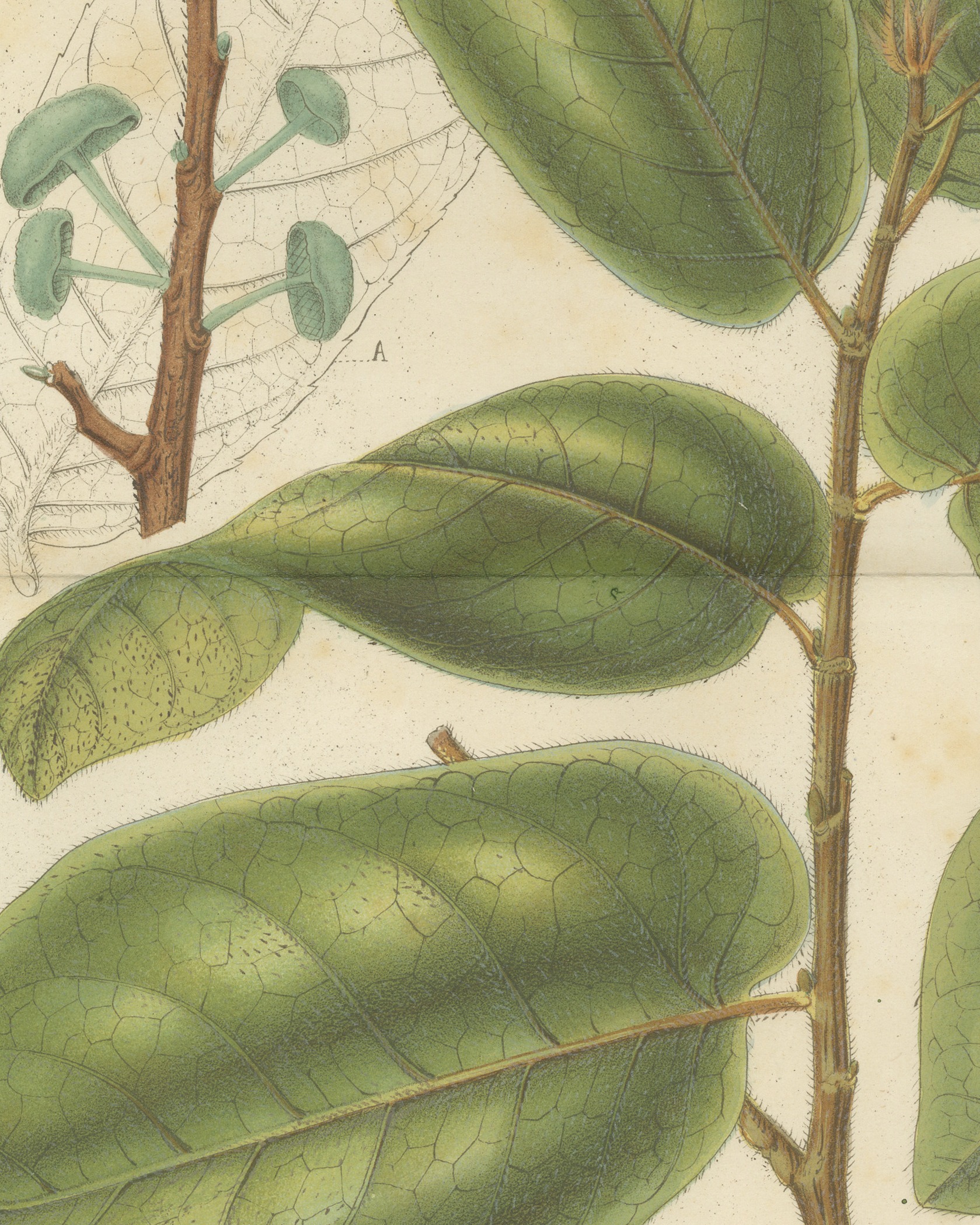
This is an original antique botanical print, a chromolithograph printed in color, lettered "ANTIARIS TOXICARIA Leschen." A large branch of the upas tree fills the sheet, with broad oval leaves in shades of green and yellow green along a reddish brown stem. At the upper left a slender twig bears small blue green flower heads on stalks, marked A and B, beside the outline of a leaf drawn in fine line only. Five numbered details along the foot, printed without color, show the flowers and the fruit whole and in section.
The name is lettered in capitals with the authority "Leschen." (Leschenault). At lower left the artist's line reads "A. J. Wendel ad. nat." (drawn from nature by A. J. Wendel), and at lower right "Lith. de L. Stroobant à Gand." (lithograph by L. Stroobant in Ghent). No plate number is printed on this plate. The upas tree is known for the poisonous latex once used on arrows.
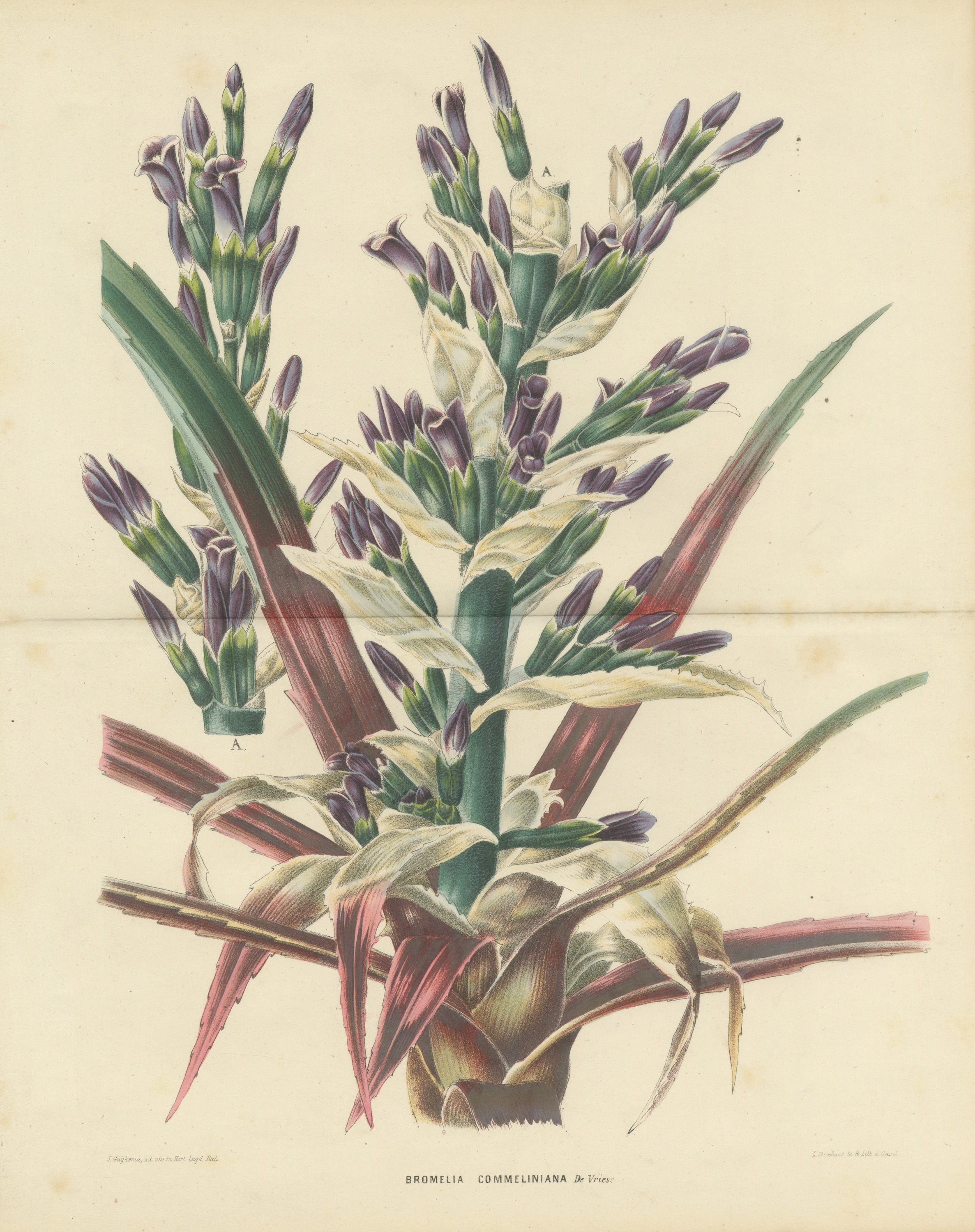
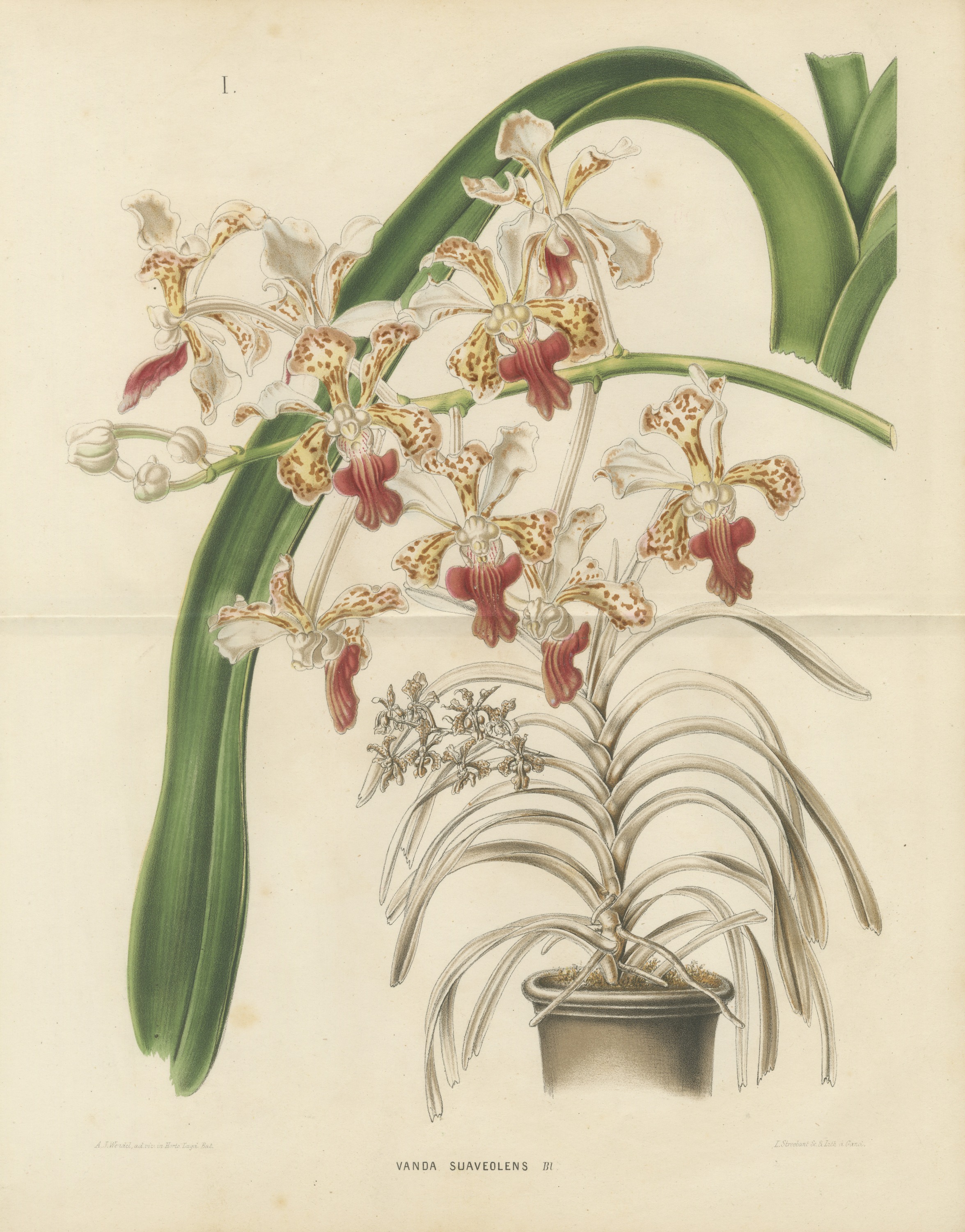
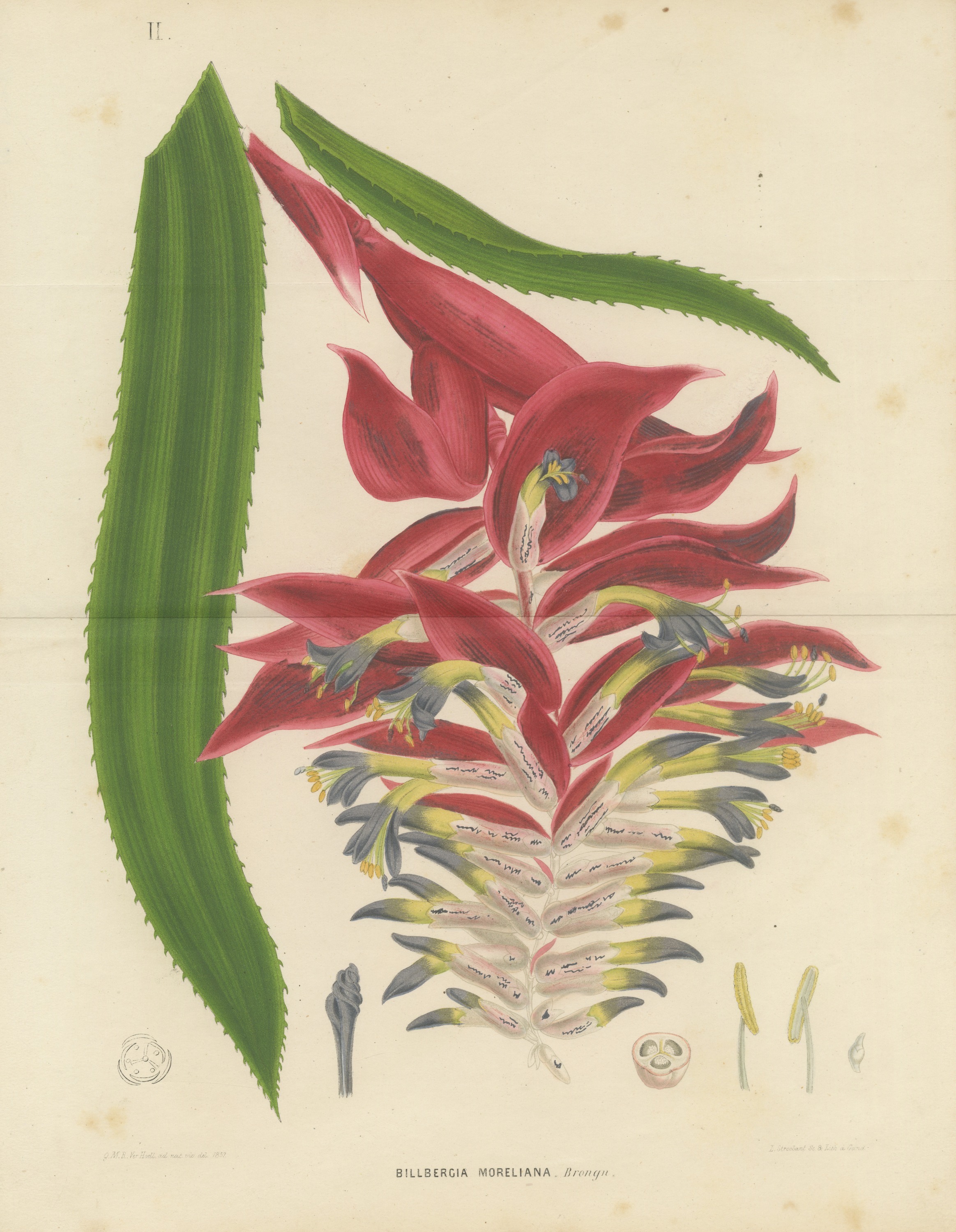
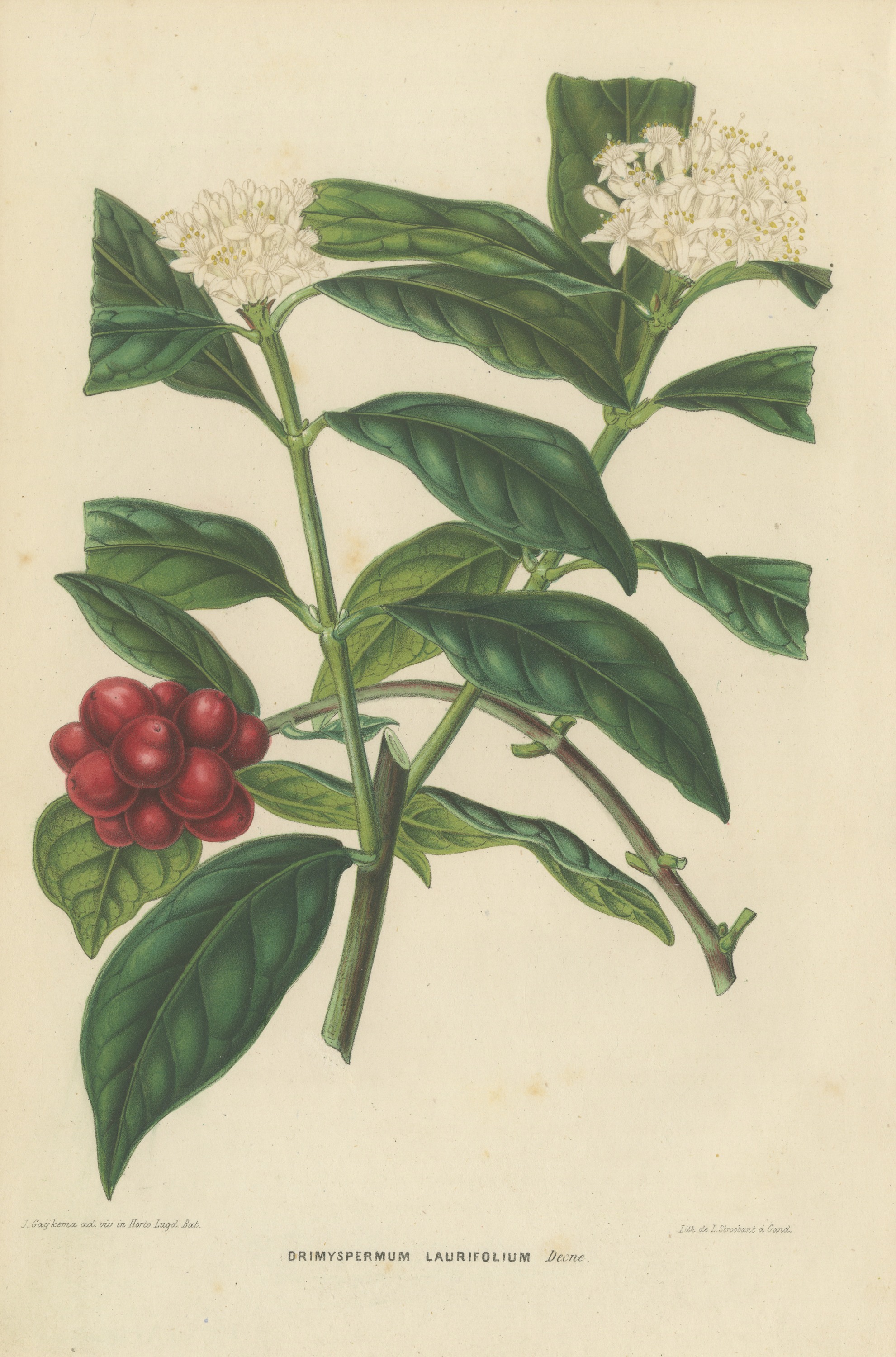
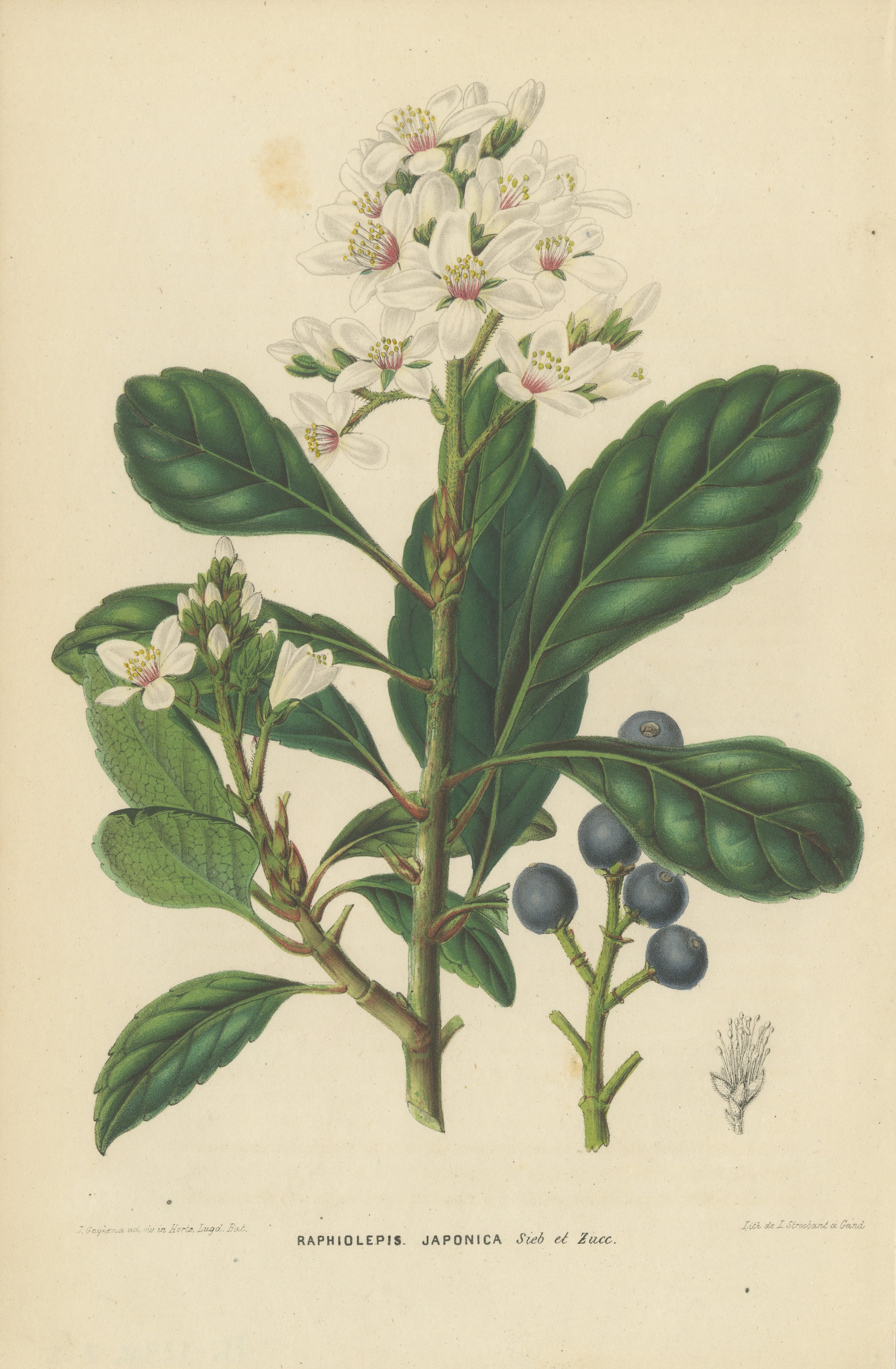
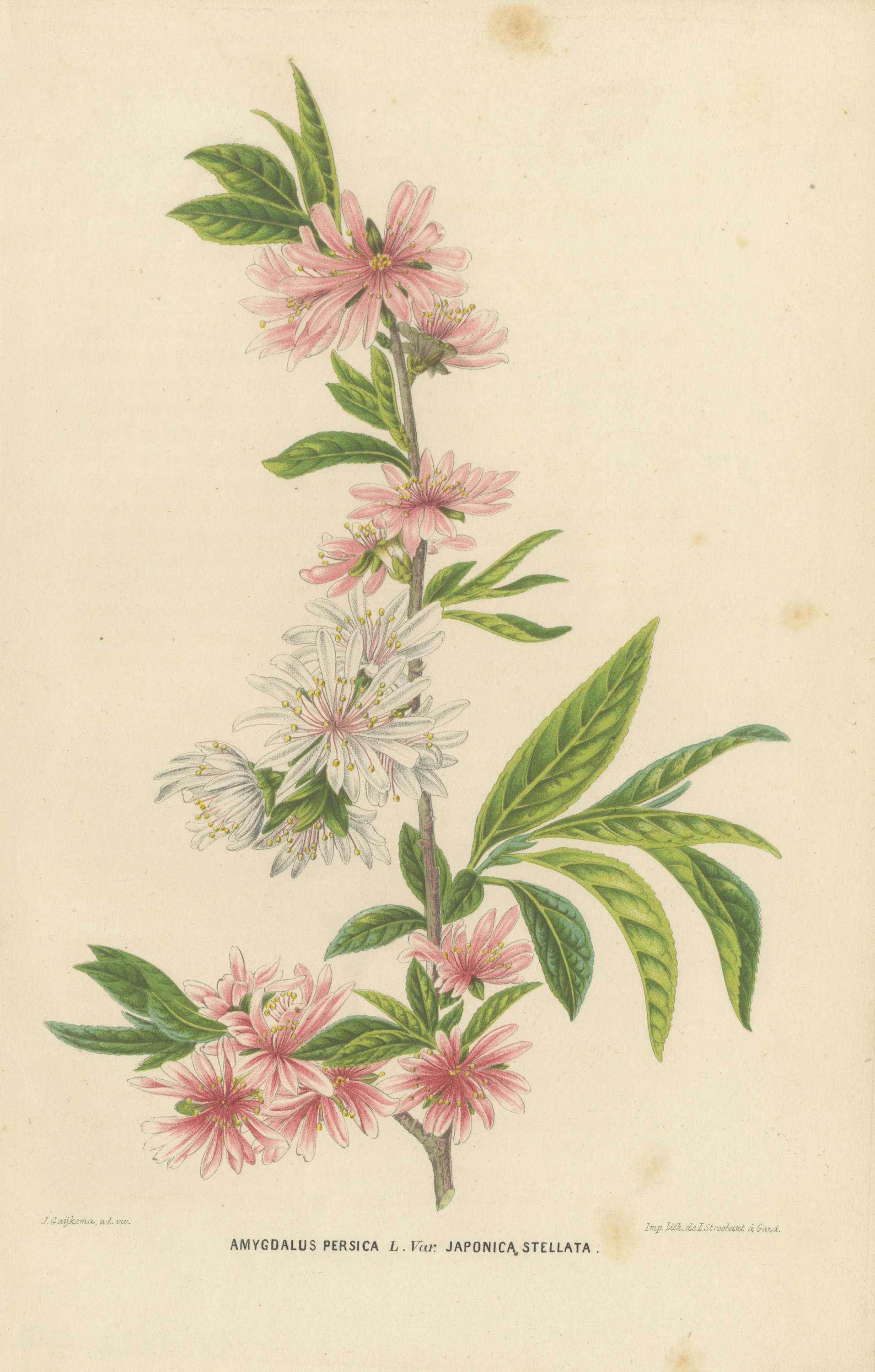
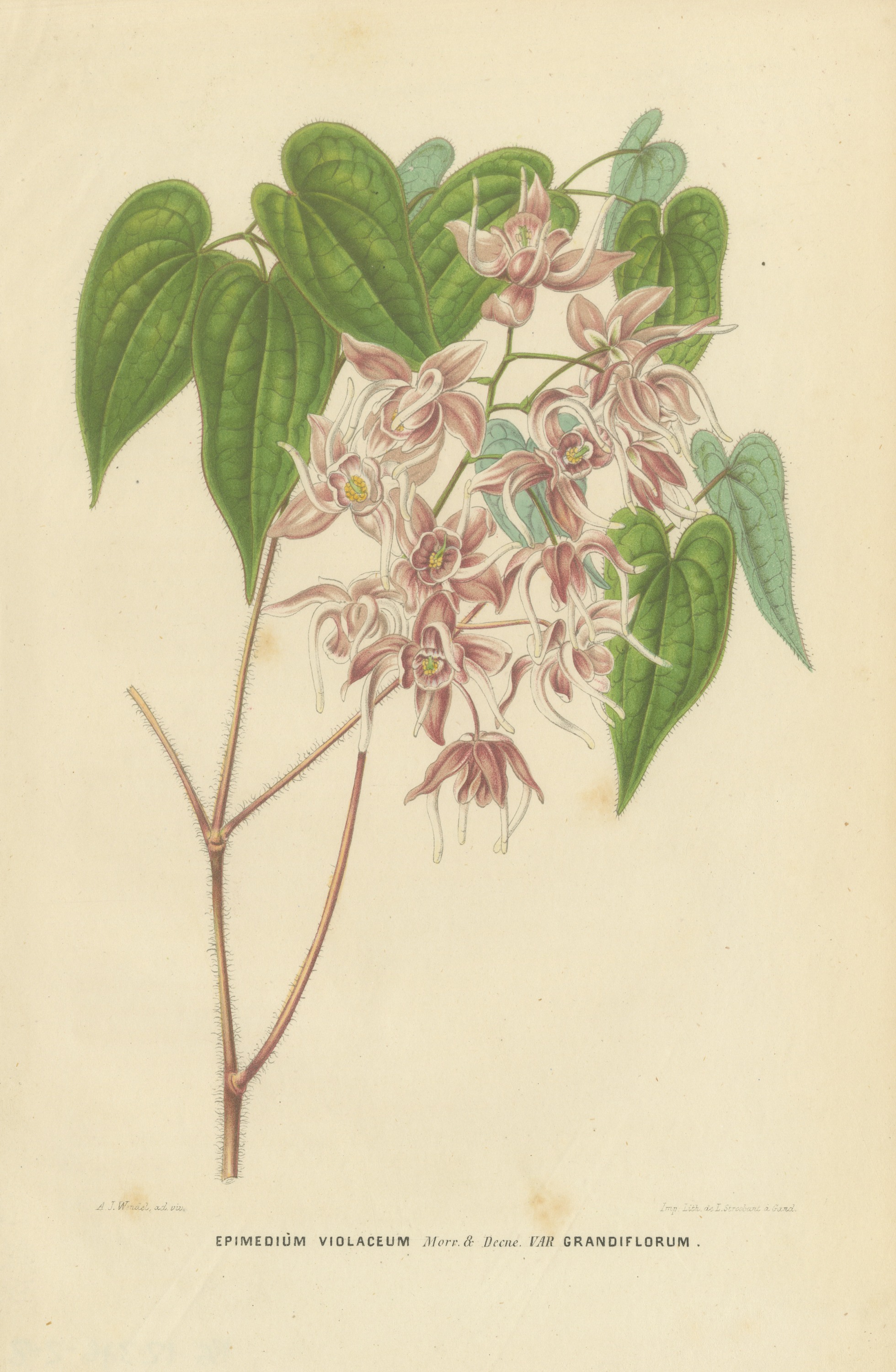
The plate comes from the second volume of the Annales d'horticulture et de botanique, ou Flore des jardins du royaume des Pays-Bas, published at Leiden by A. W. Sythoff in 1859 for the Société royale d'horticulture des Pays-Bas under the patronage of King William III. The journal recorded cultivated and ornamental plants grown in the Netherlands and introduced from the Dutch possessions in the East Indies, from America and from Japan. L. Stroobant was a lithographer working in Ghent (Gand in French).
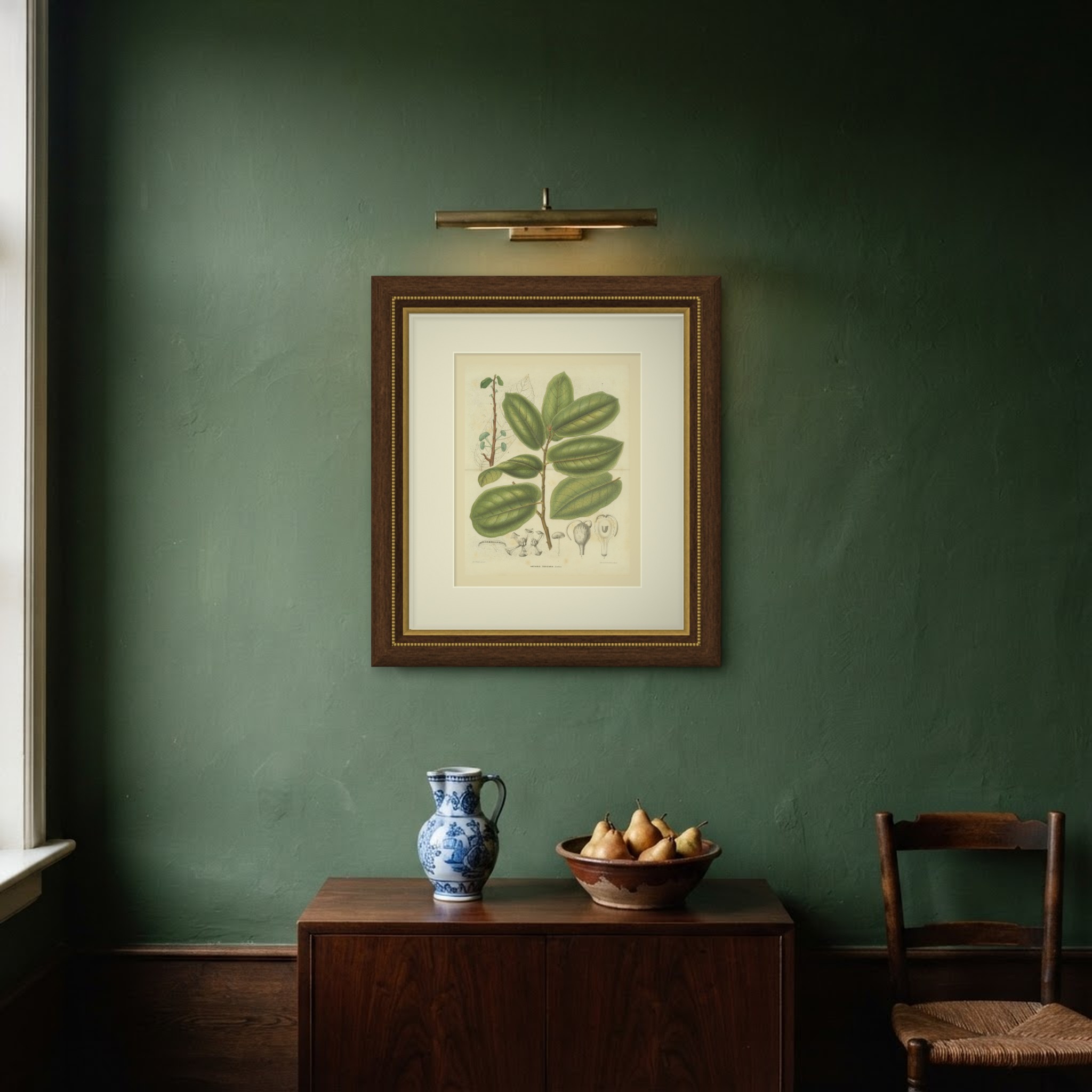
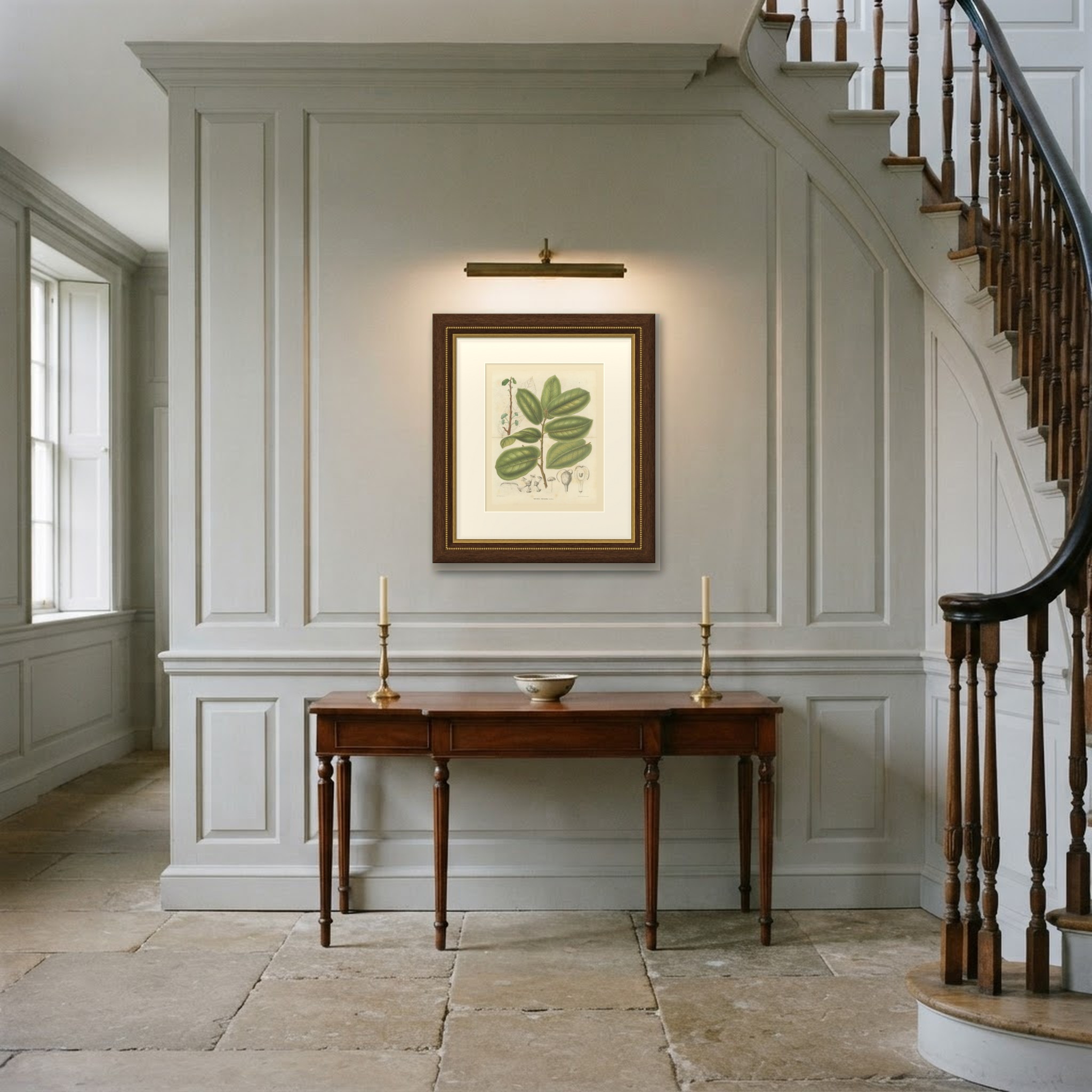
The strong color and clear drawing make it a good choice for a study, a garden room or a hallway, framed singly or in a group of plates from the same work.
Condition: Light wear to the top right corner. Light age toning; light handling soiling along the edges and a few small spots in the margins. A horizontal center fold, as issued. Printed image clean.
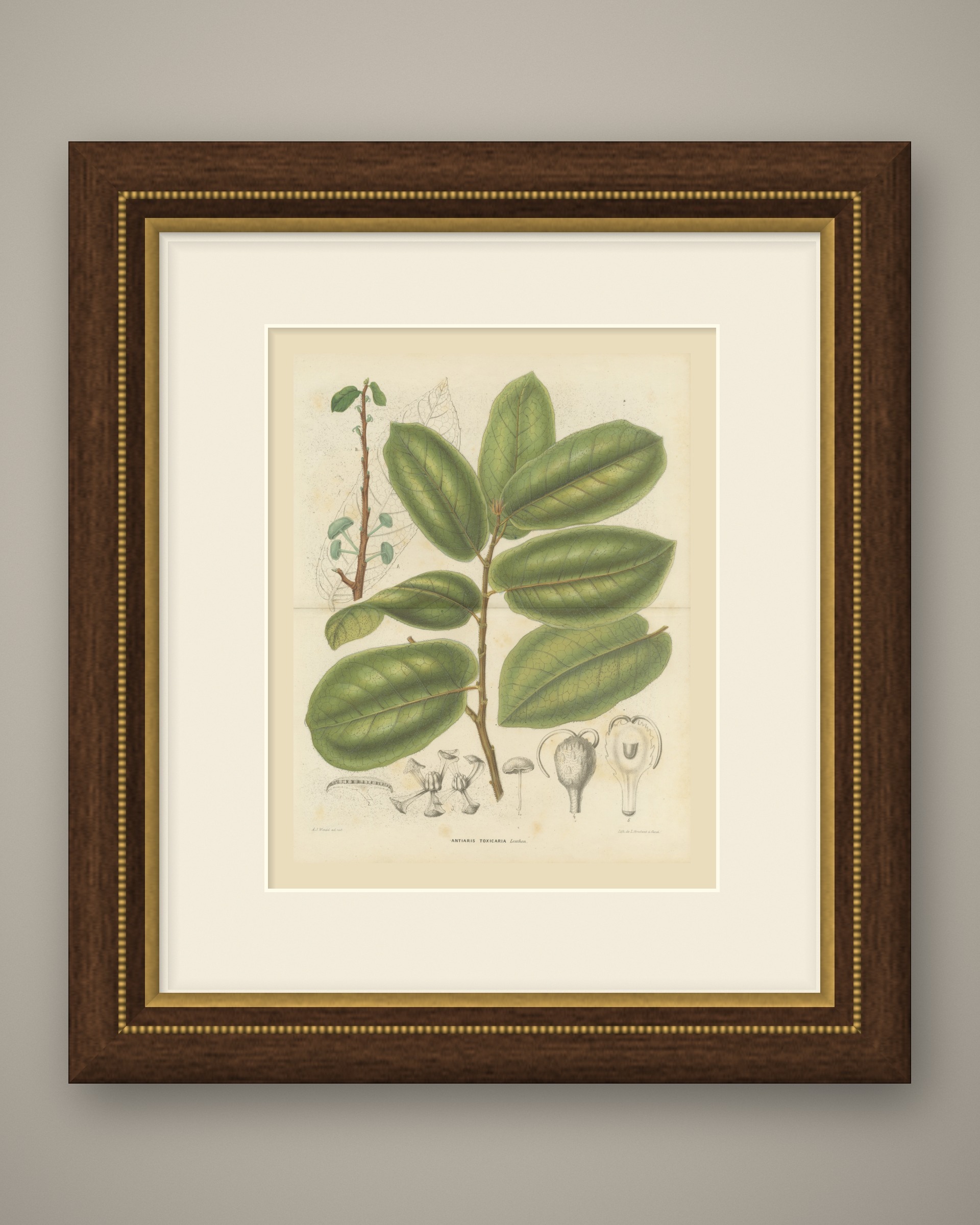
This is an original antique print, not a modern reproduction. This item is sold unframed. Any framed or interior images are shown for presentation and inspiration only, unless the listing explicitly states that the item is sold framed.