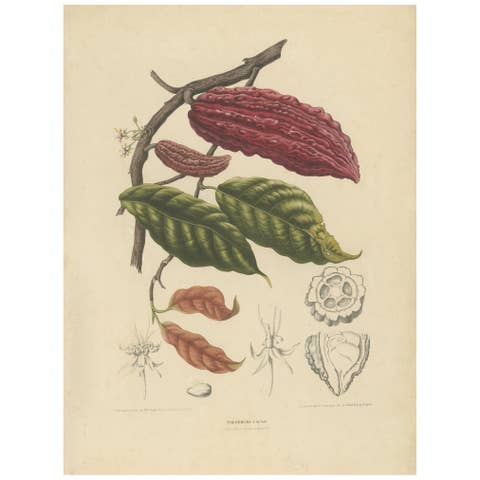
Annona Reticulata – Custard Apple Botanical Lithograph c.1864
€ 800
Original antique · The actual sheet photographed · Certificate of authenticity on request · Sold unframed · Worldwide shipping from € 15 (rates)
Date
1864
Sheet size
55.5 × 43 cm (21.9 × 16.9 in)
Condition
Good
Reference
BG-12582
What the condition grades mean
Excellent
Bright and clean, with no faults worth mentioning.
Very good
Only light signs of age, such as faint toning.
Good
Normal signs of age for a sheet of this period: toning, some foxing, small marks or neat old repairs.
Fair
Clear faults such as staining, tears or repairs, priced to match.
Every fault we see is written in the condition note, and the whole sheet is shown uncropped in the photos.
Condition
Good condition with strong color and clean paper. Minor age-toning and a few tears on the edge of the paper, but no repairs. The paper is firm, and the impression remains sharp.
About this sheet
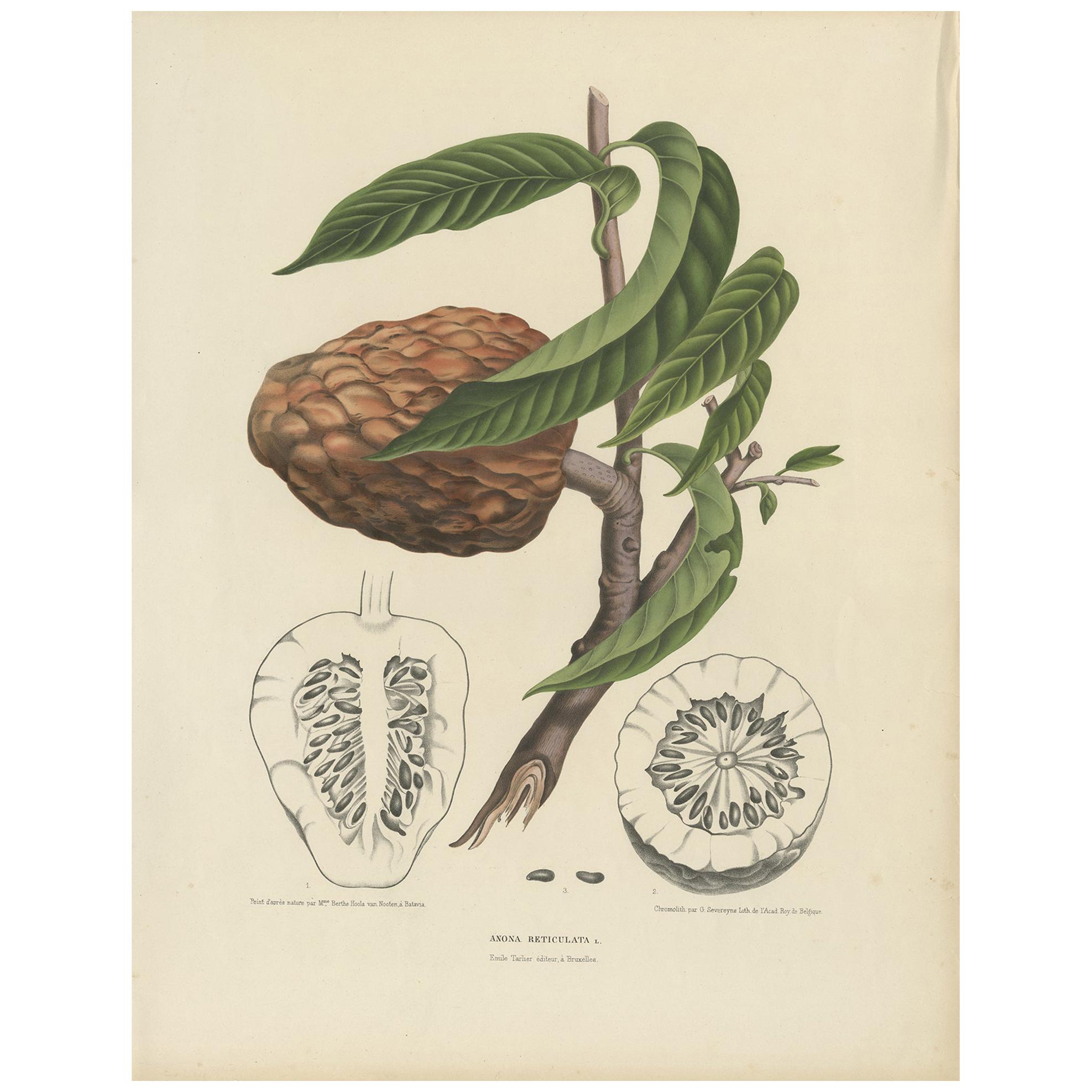
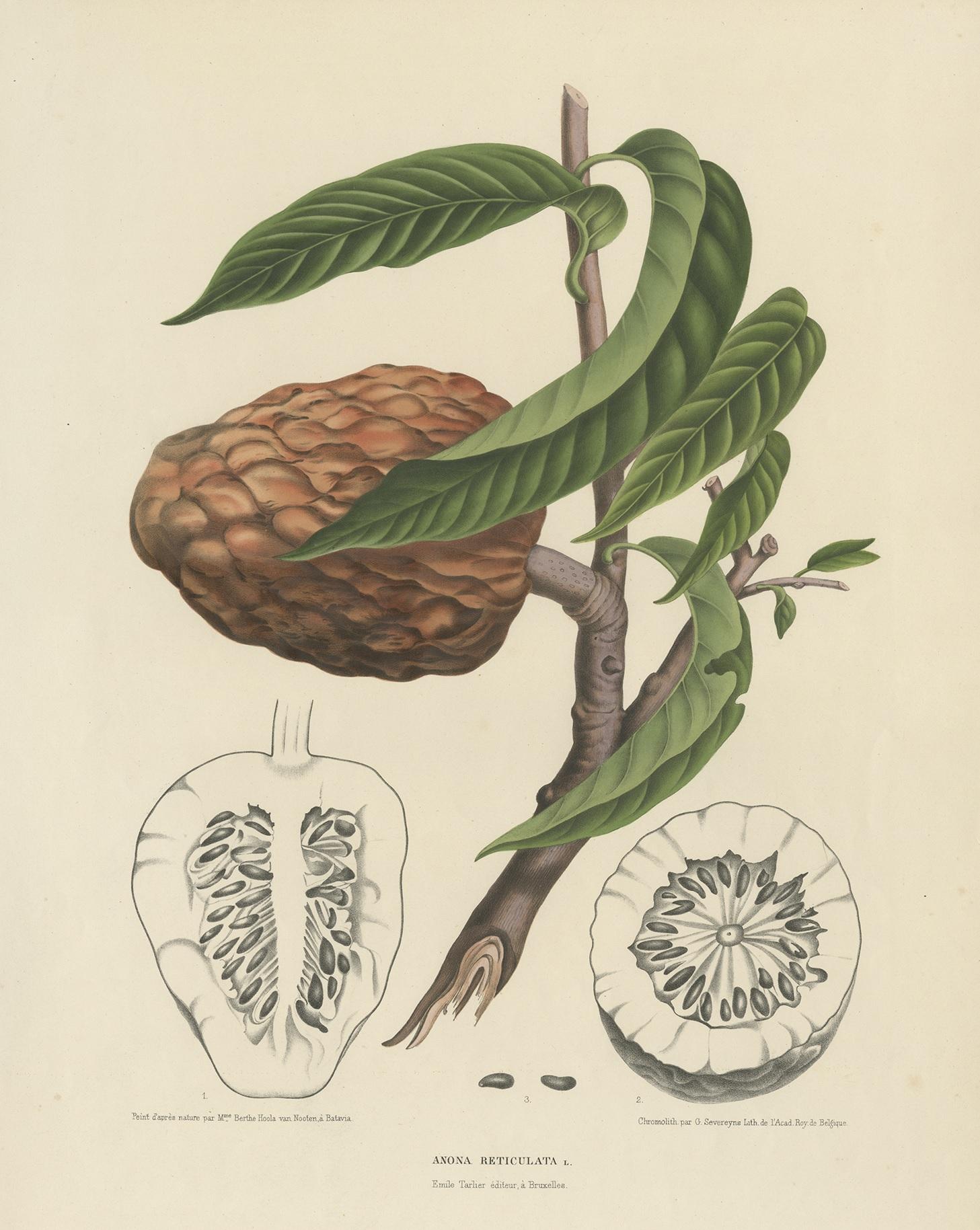
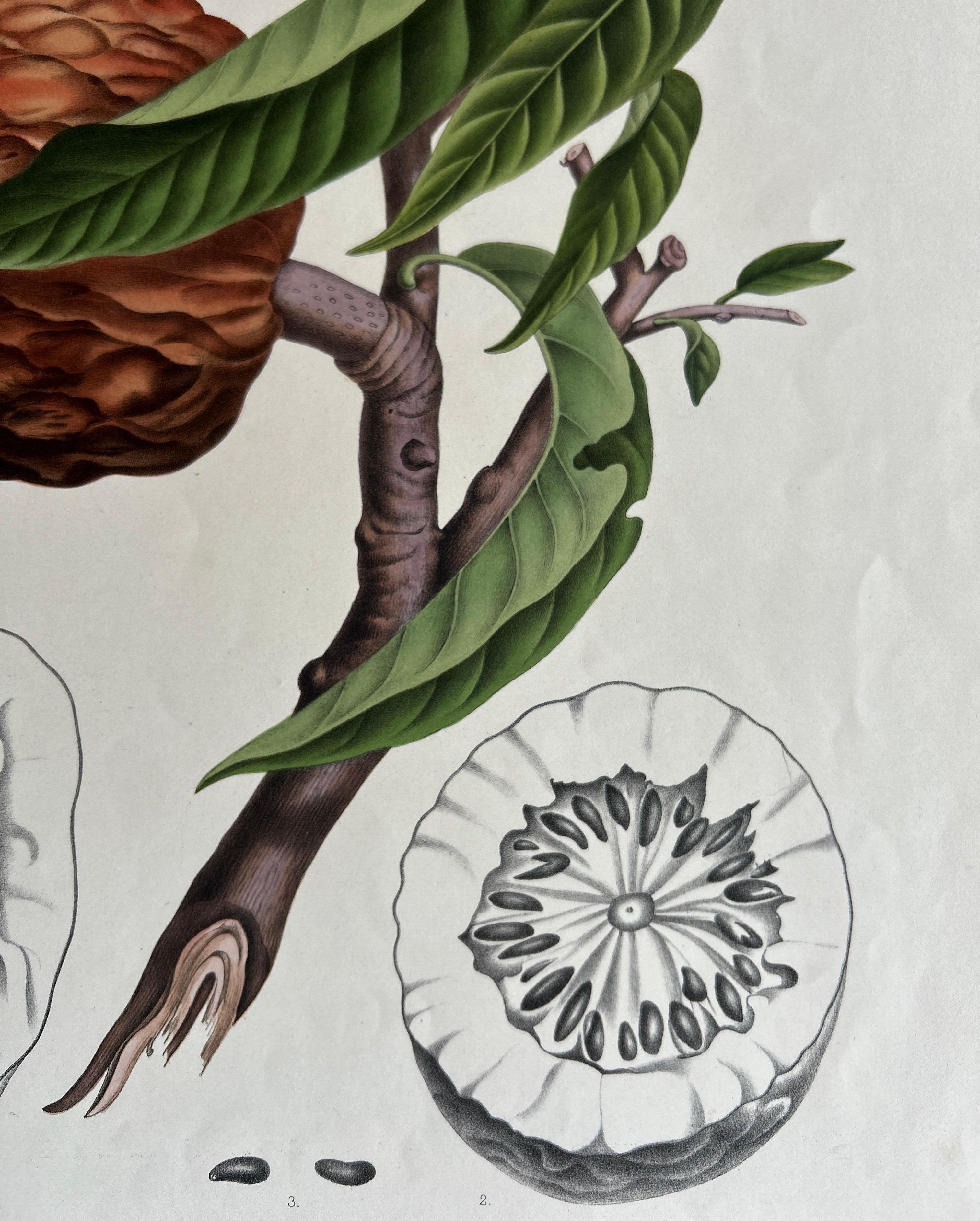
Annona Reticulata – Custard Apple Botanical Lithograph c.1864
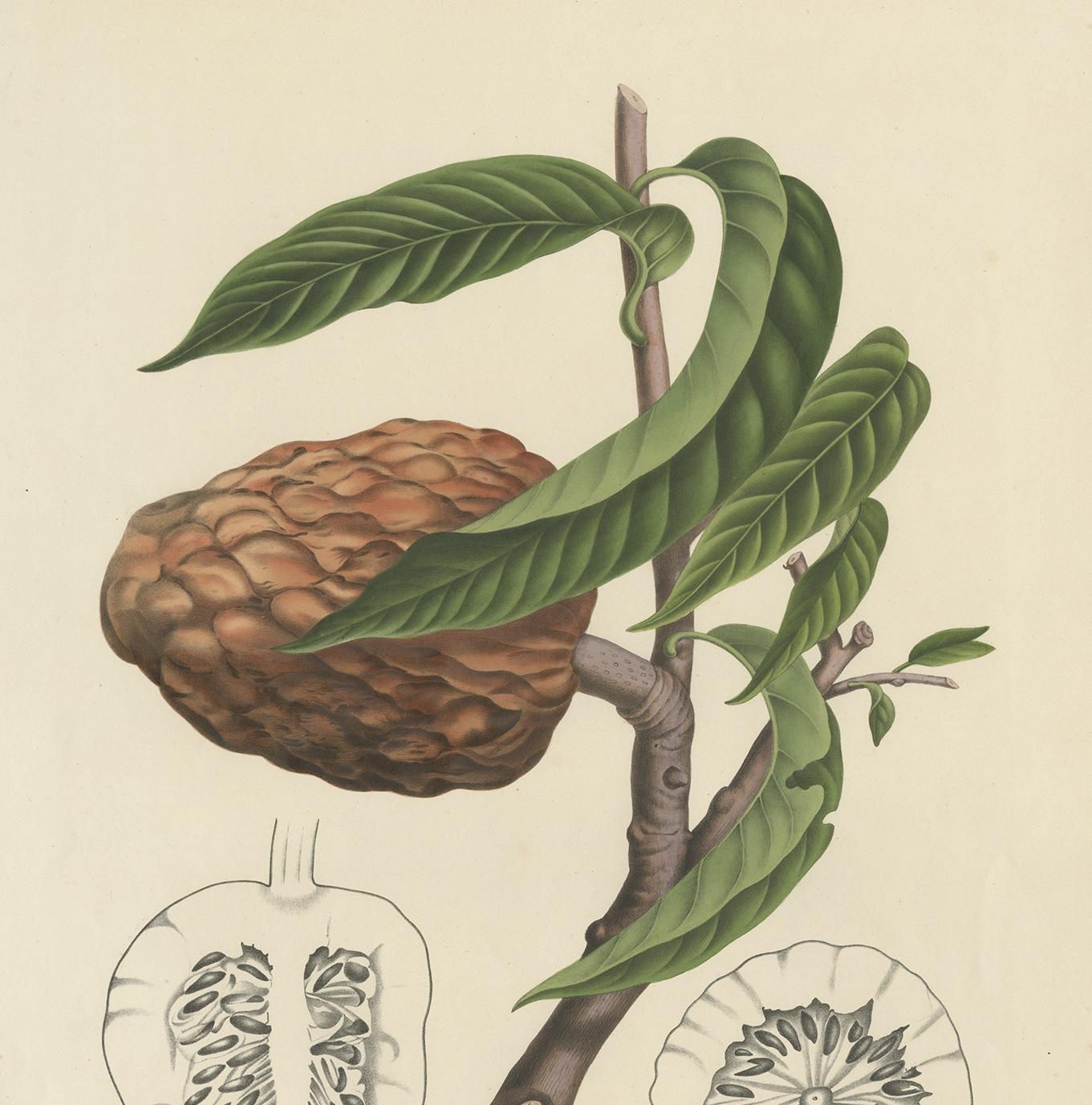
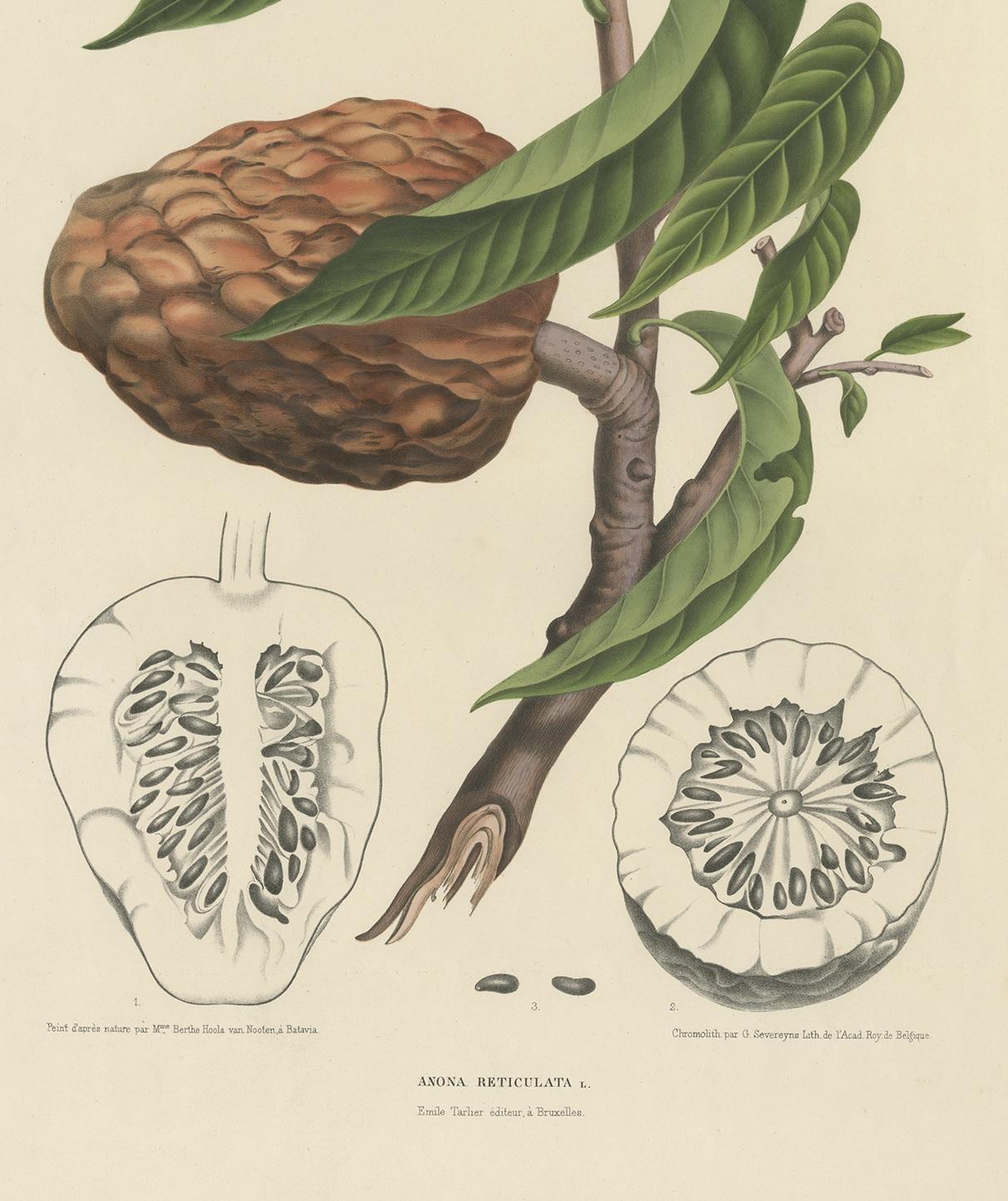
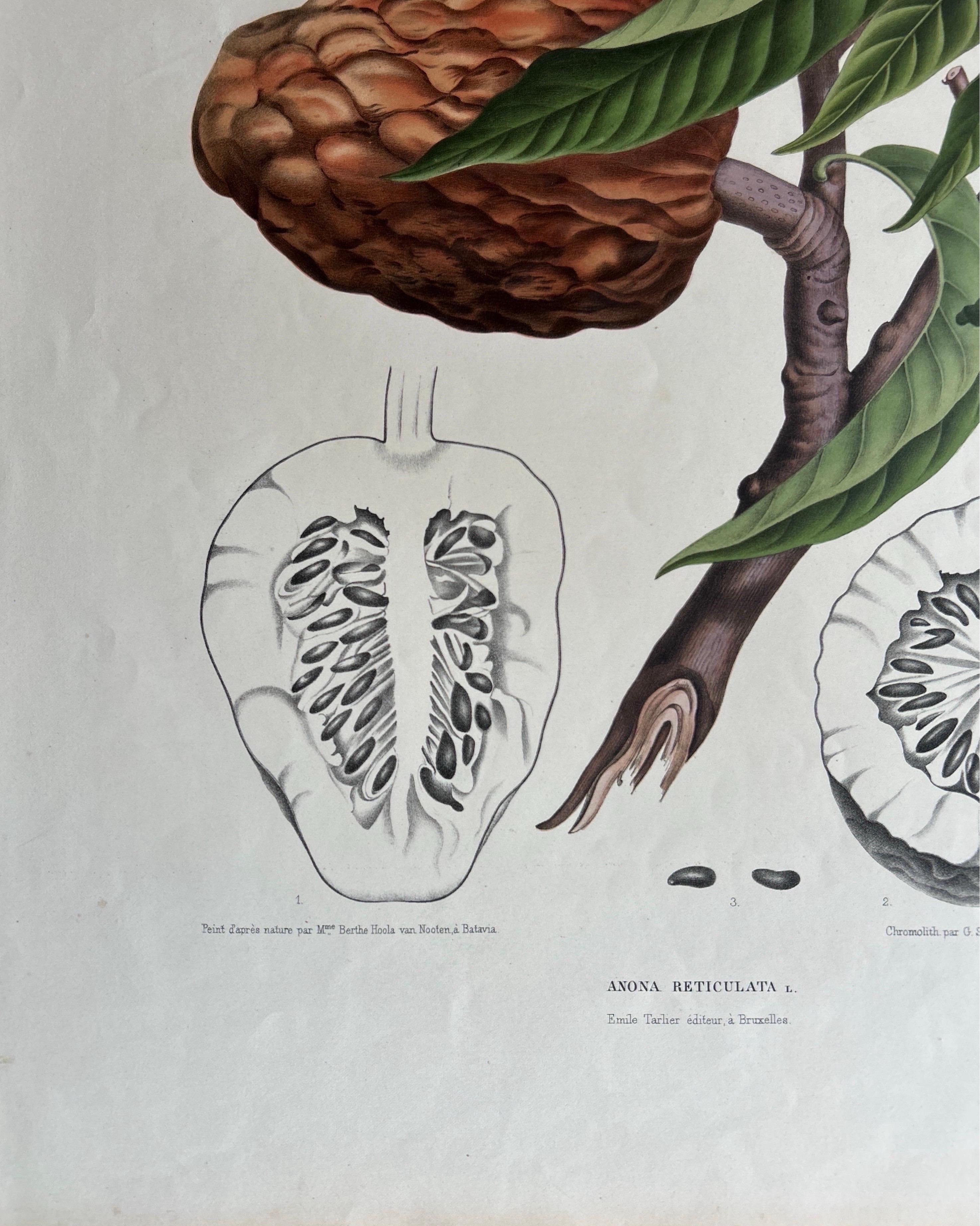
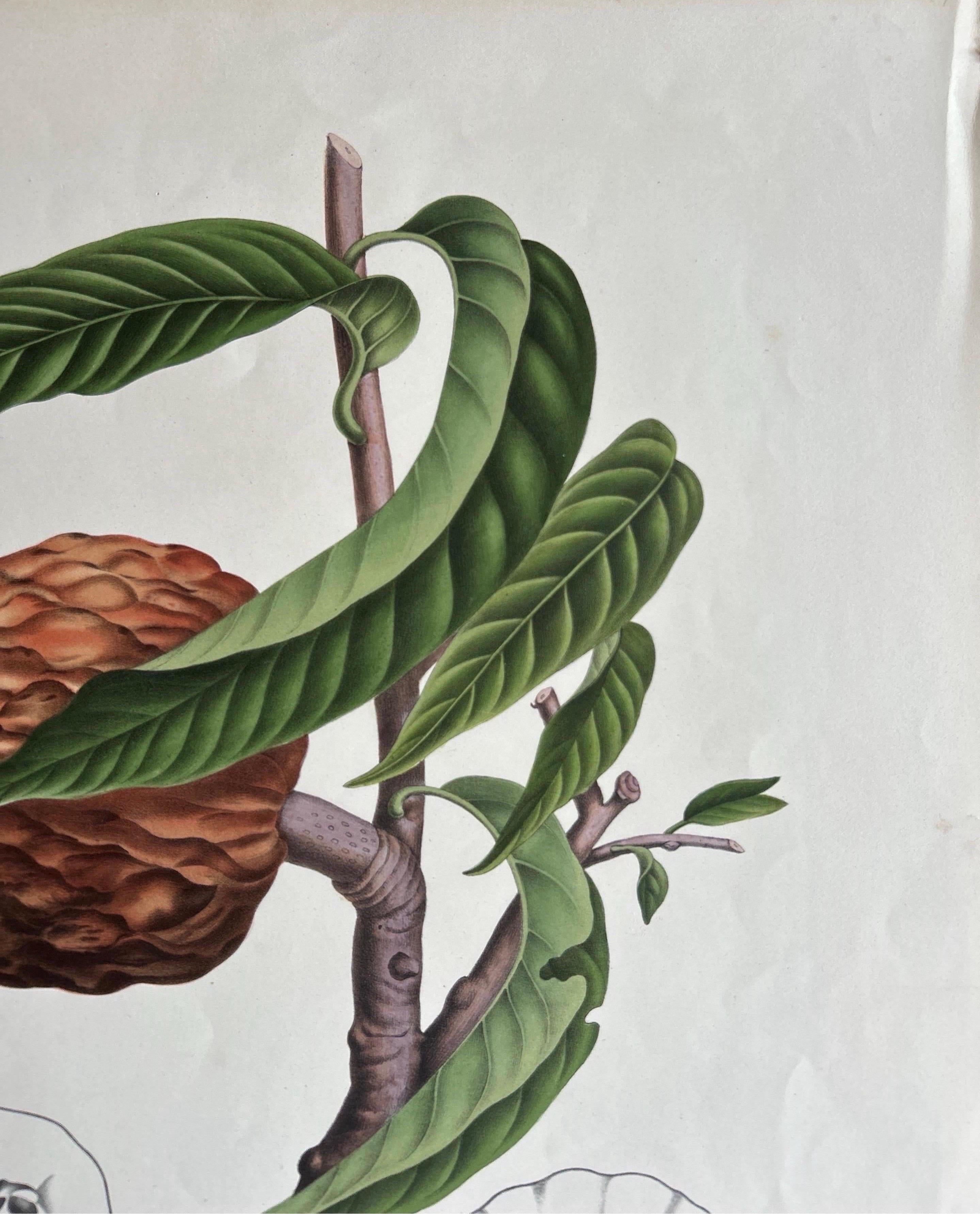
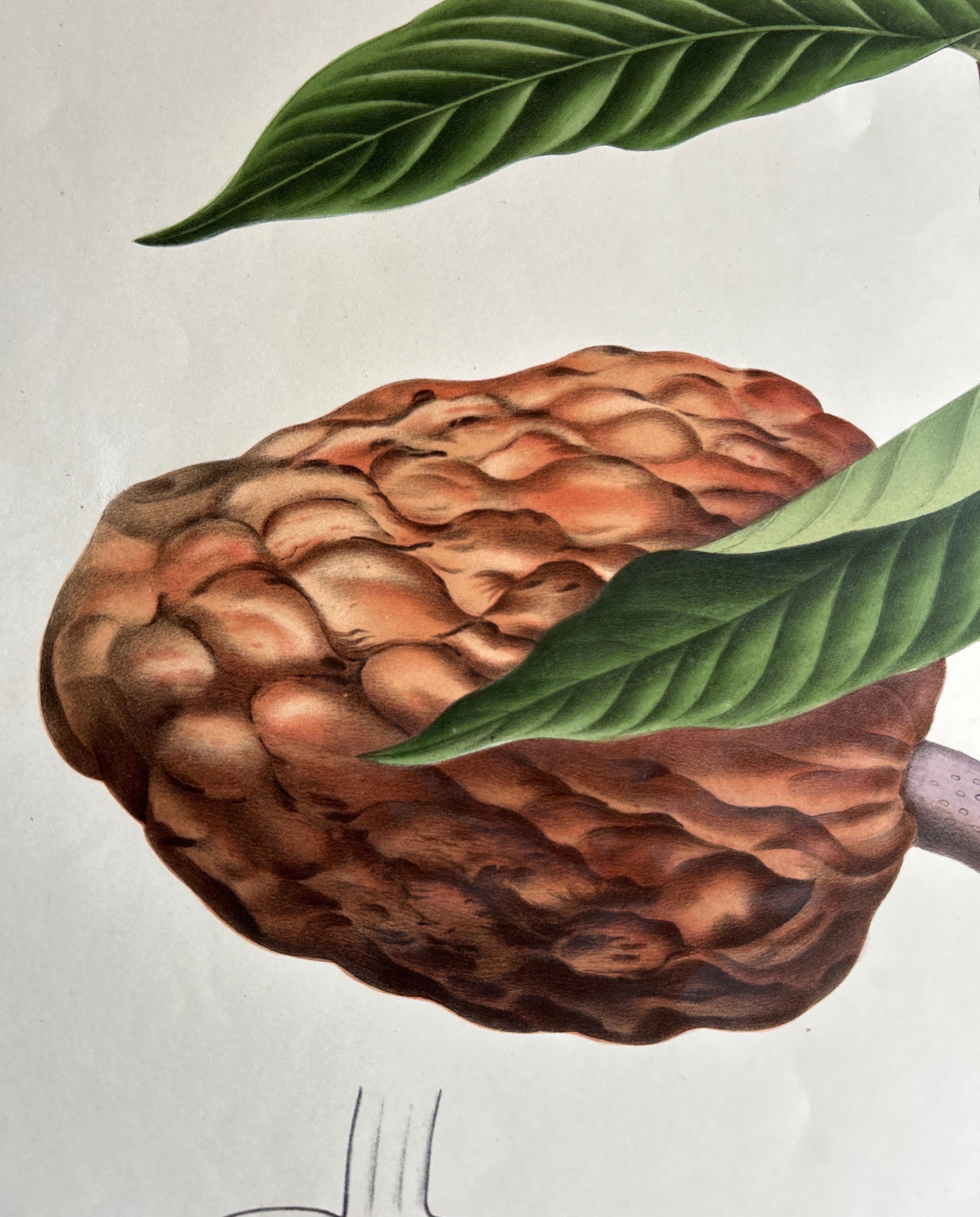
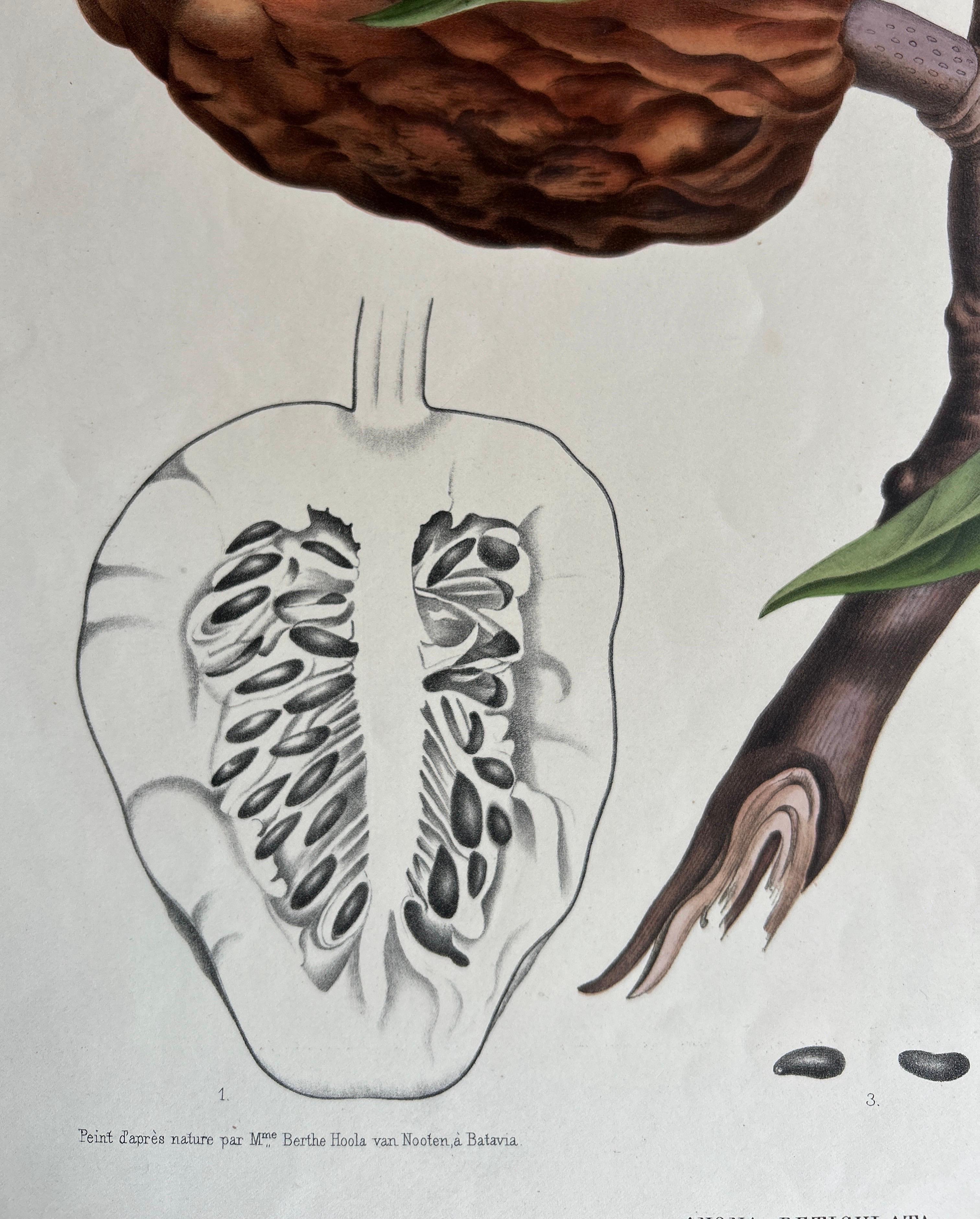
This antique botanical print features Annona reticulata, commonly known as the custard apple, a tropical fruit tree prized for its sweet, creamy fruit. The illustration shows a thick branch with long, tapering leaves and a large brownish fruit with a scaly, net-like surface texture. Below the main illustration are two detailed scientific cross-sections of the fruit, revealing its segmented pulp filled with black seeds. One view displays a vertical slice showing seed cavities, while the other presents a top-down cross-section resembling a rosette of fruit cells – offering a striking visual insight into the fruit’s inner anatomy.
This print is from Fleurs, fruits et feuillages choisis de la flore et de la Pomone de l' Ile de Java peints d'après nature by Berthe Hoola Van Nooten, published between 1863 and 1864. A Dutch botanical artist living in Java (now Indonesia), Hoola Van Nooten created this celebrated series to document the rich and colorful plant life of the island. Her original watercolors were turned into highly detailed chromolithographs by the atelier of Severeyns in Paris, a renowned workshop specializing in botanical and scientific illustration.
The technique used is chromolithography, a multi-stone printing process that allowed for rich, precise color reproduction and fine detail, making it ideal for botanical publications in the 19th century. Each print in the series combined scientific accuracy with refined artistry, intended to appeal to both scholars and collectors.
Condition summary: Very good condition with strong color and clean paper. Minor age-toning and faint foxing in the outer margins, but no tears or repairs. The paper is firm, and the impression remains sharp.
Framing tips: A soft cream or pale stone mount will complement the warm browns and greens of the fruit and foliage. Pair with a classic gold frame or dark tropical wood such as teak or mahogany to emphasize its botanical and colonial-era character. UV-protective glass is recommended to maintain the vibrancy of the chromolithographic color.