About this sheet
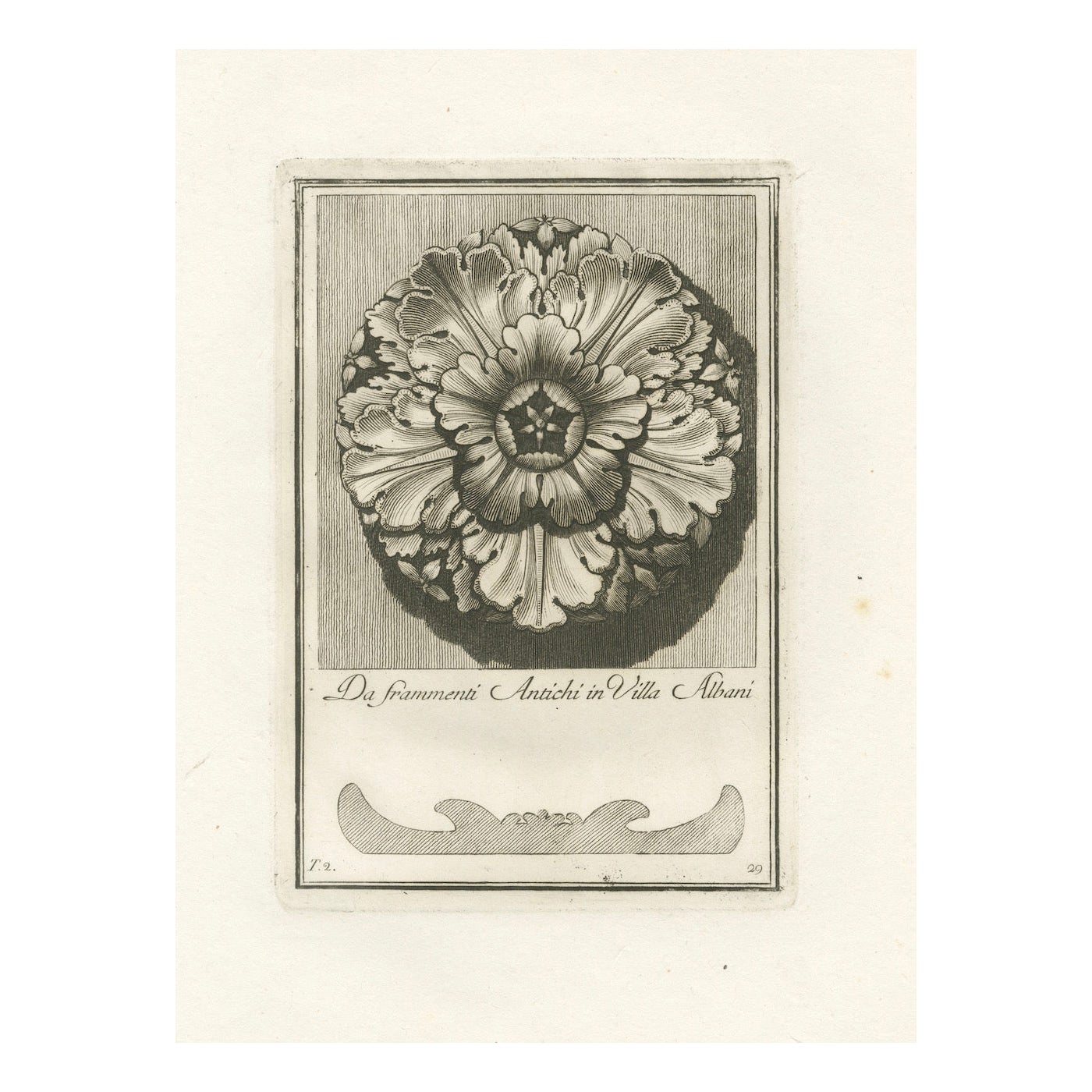
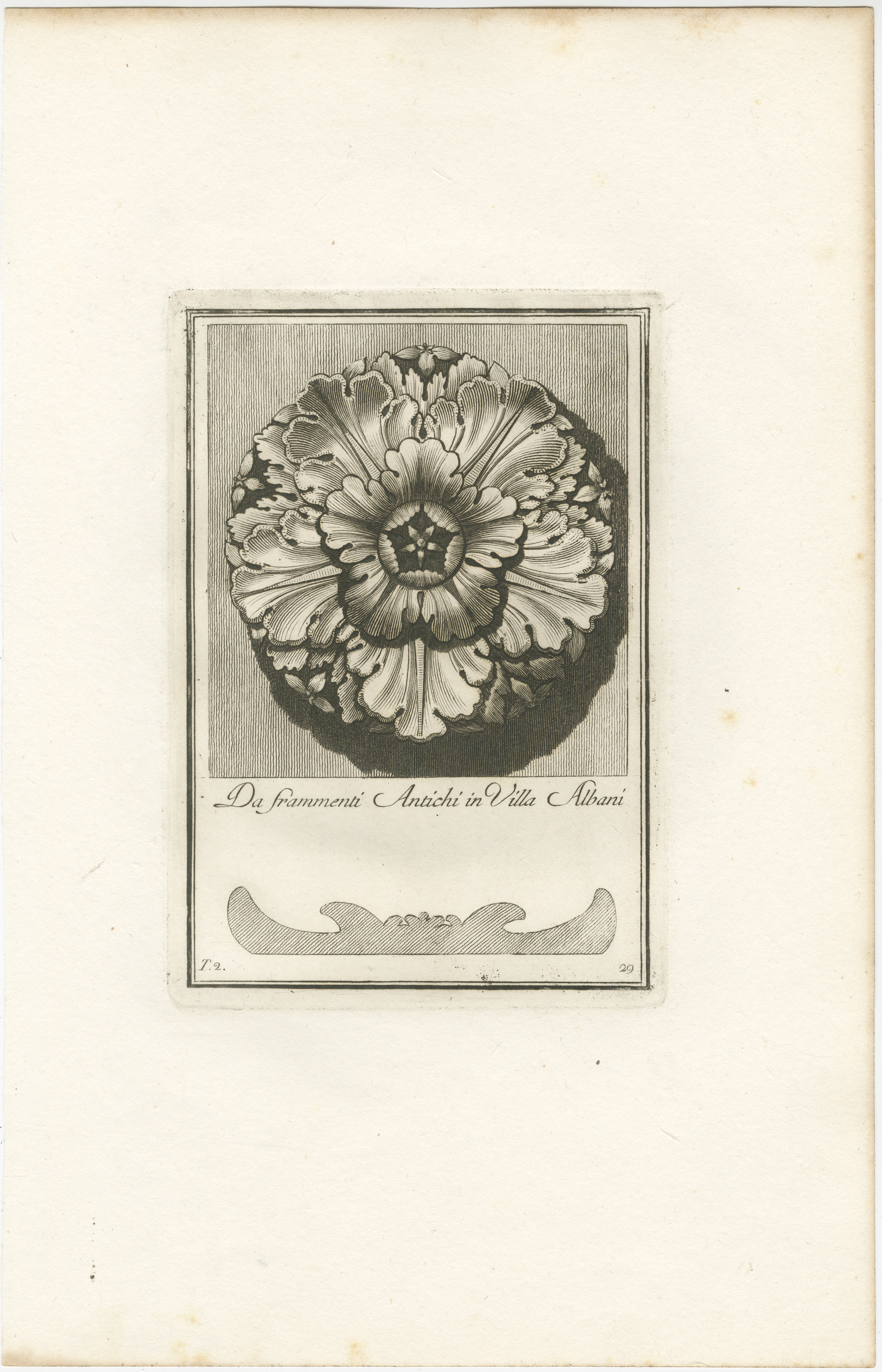
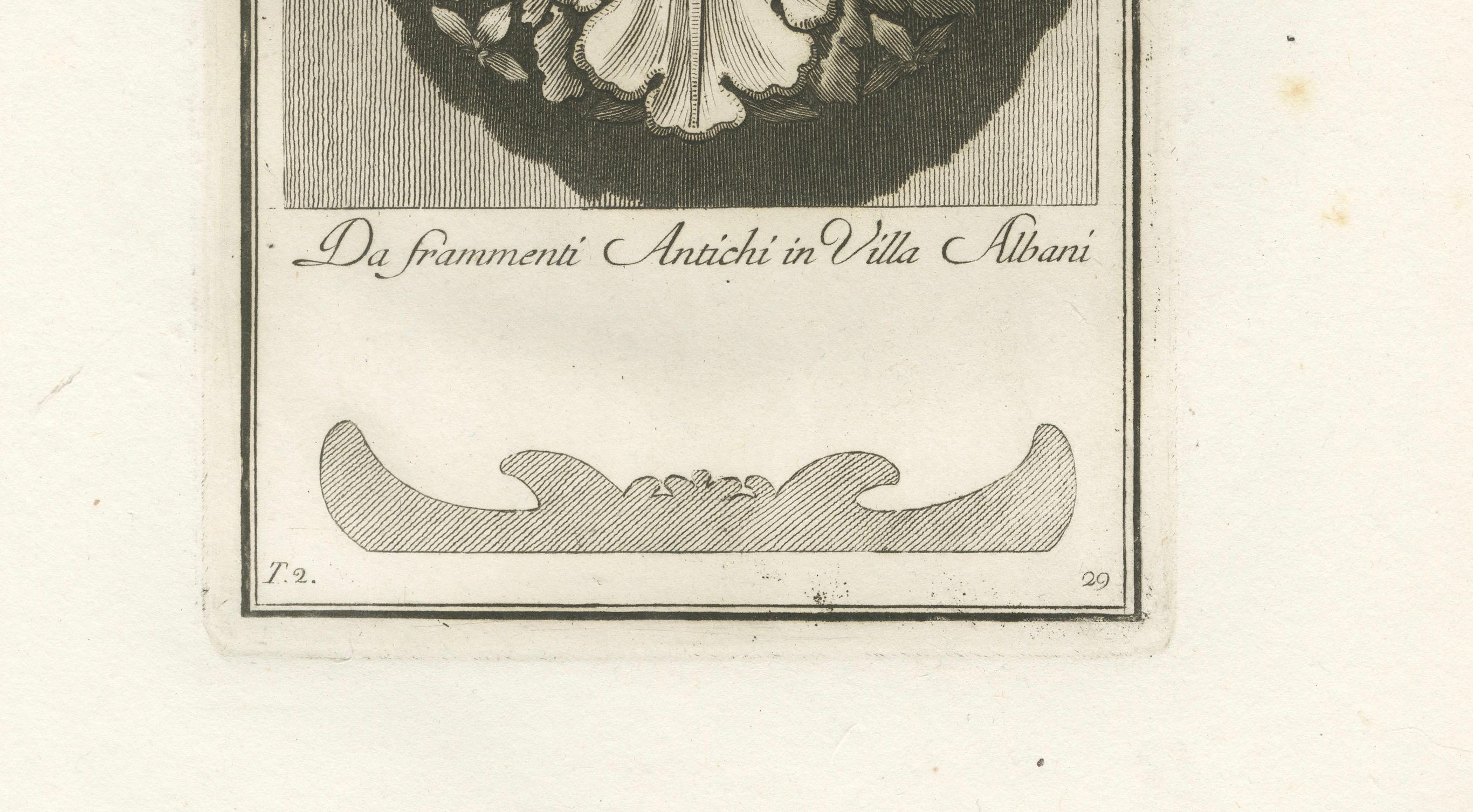
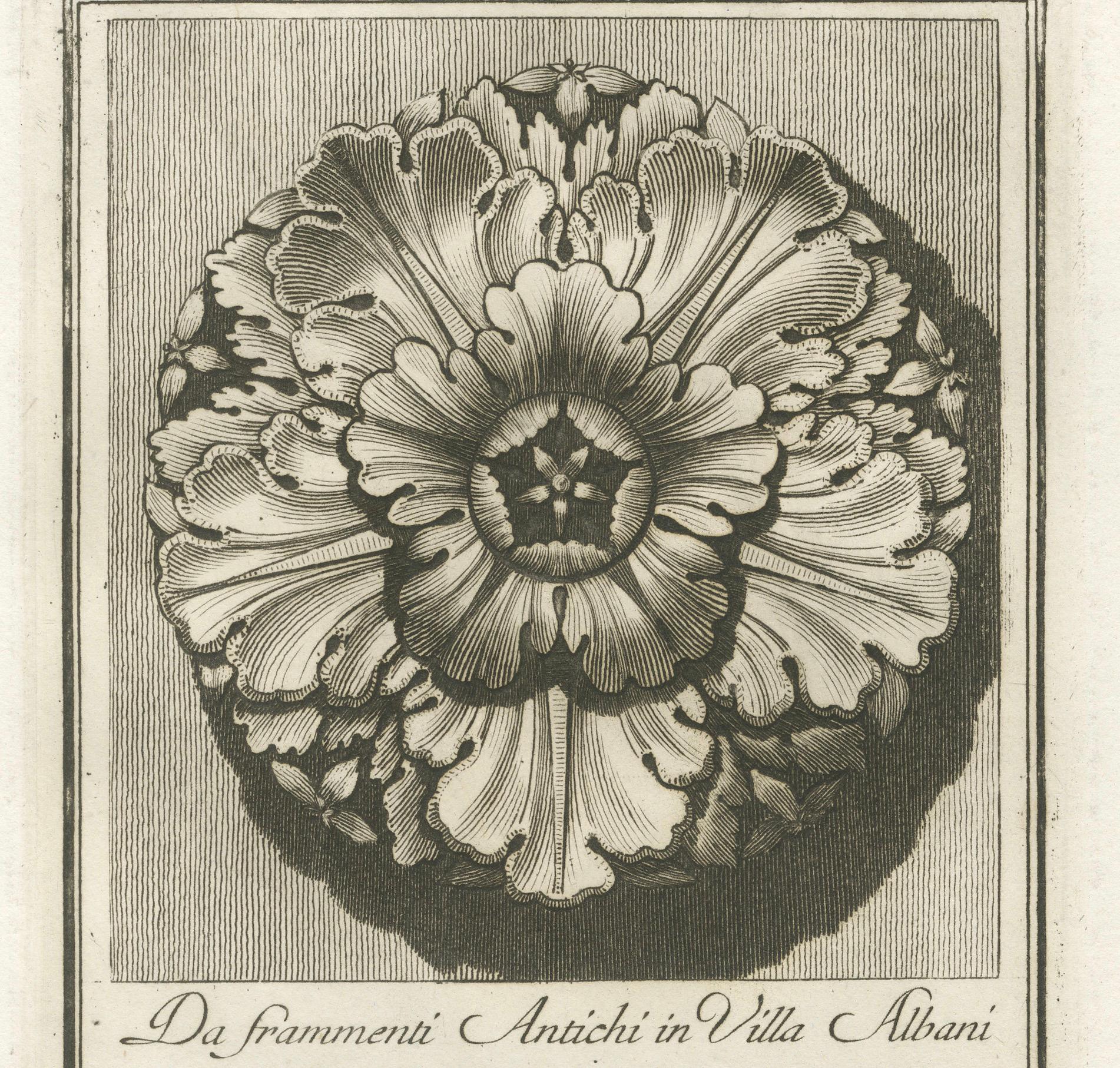
This exquisite engraving, dating back to around 1780, presents a masterfully crafted rosette, a decorative motif that captures the elegance and refined aesthetic of the neoclassical period. The piece, titled "Da frammenti Antichi in Villa Albani," suggests that the design was inspired by ancient fragments found in Villa Albani, a residence in Rome renowned for its art collection and classical antiquities.
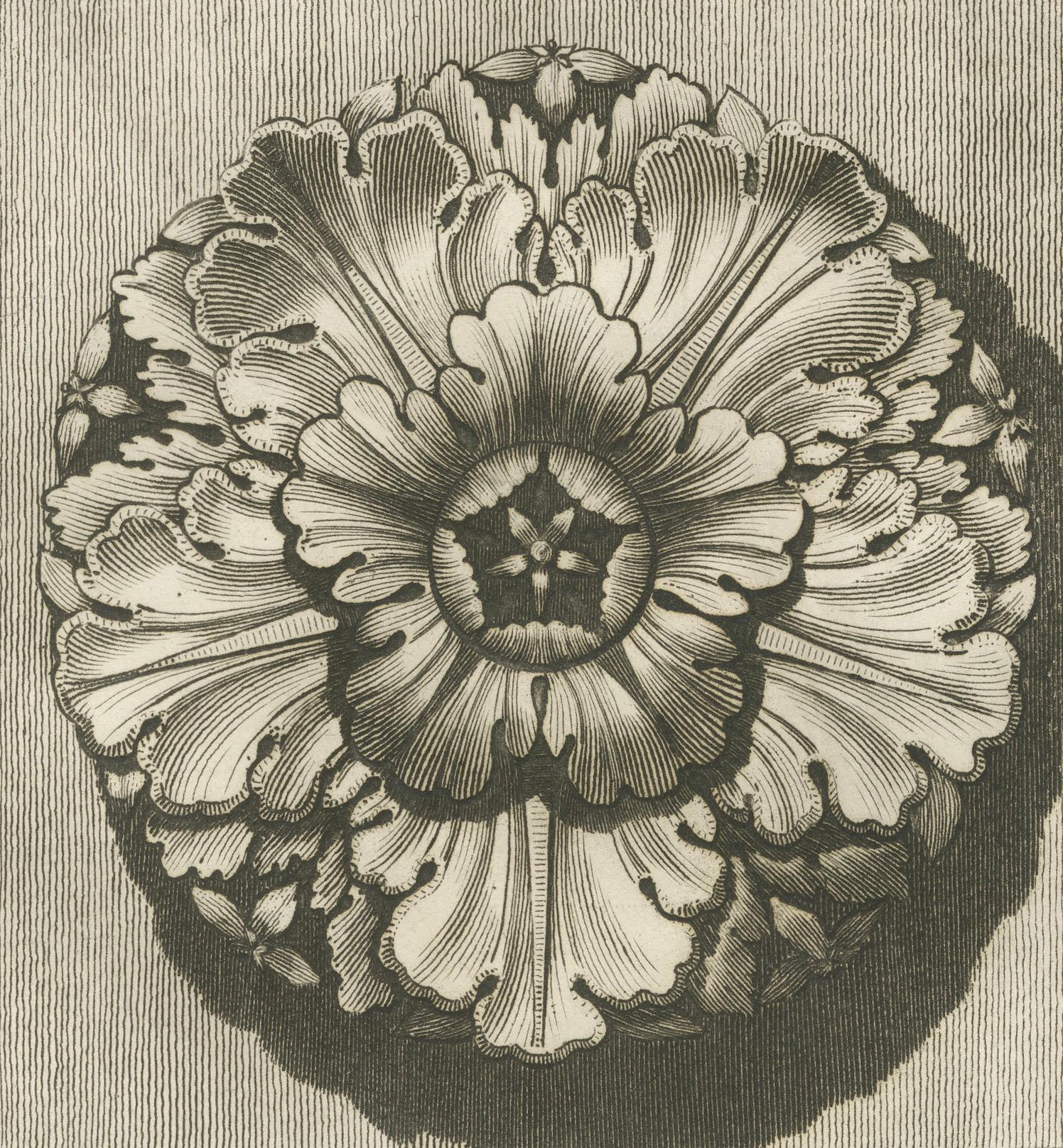
The engraving showcases a circular rosette with layers of petals radiating symmetrically from the center, where a smaller, detailed floral pattern provides a focal point. The petals are shaded with exceptional skill to give depth and dimension, conveying the delicate curvature and texture characteristic of living blooms. The contrast between the darkened background and the intricate light strokes of the rosette emphasizes its geometry and the artist's deftness in capturing the interplay of light and shadow.
In the lower portion, the artist has included a stylized scroll, adding to the overall classical theme, which complements the floral design and frames the piece with a sense of balance and harmony. Each line in this work is deliberate and precise, reflecting the meticulous techniques of engraving of the era and the dedication to classical beauty that was the hallmark of the time.
This piece is not only a decorative element but also a testament to the artistic dedication to reviving and cherishing the motifs of antiquity, serving as a bridge between the past and the present during the neoclassical movement. It is a fine representation of the era's artistic endeavors to capture the timeless beauty of classical designs and integrate them into the modern aesthetic of the late 18th century.
More about the artist:
The maker of the print is Carlo Antonini. He was active in the late 18th century, a period known for its interest in classical antiquity and the neoclassical style in art and architecture. Antonini produced works that were reflective of this interest, creating prints that could serve as references for artisans, architects, and designers who sought to incorporate classical motifs into their work.
His book of architectural ornaments, as suggested by the title of the print, would have been a collection of designs that were intended to be used as guides for creating decorative elements in the neoclassical style, often inspired by ancient Roman and Greek art and architecture. These resources were invaluable for the dissemination of the neoclassical aesthetic across Europe, influencing the decorative arts, architecture, and even furniture design.