About this sheet
The Regal Silver Polish Chicken A Rare 19th Century Poultry Lithograph
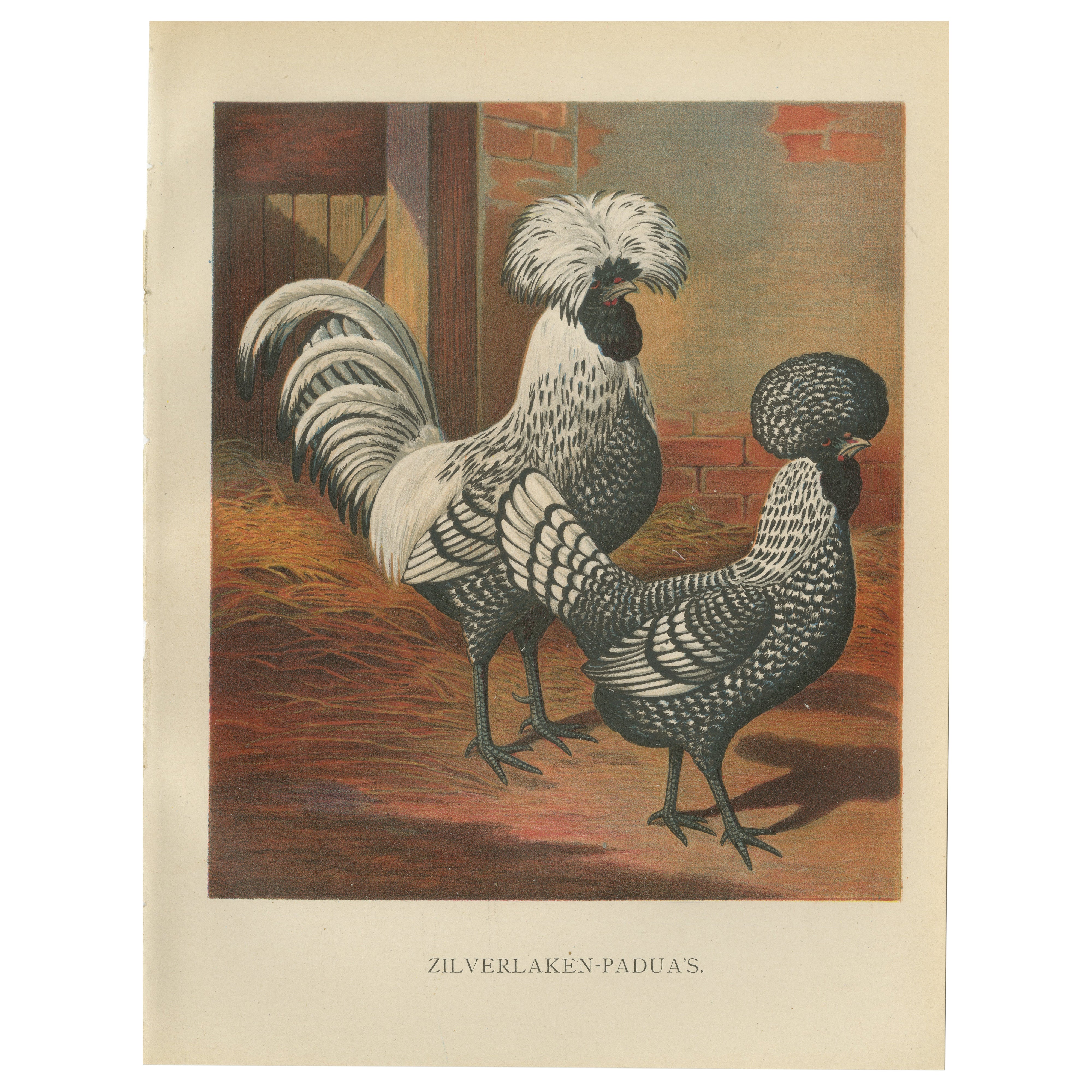
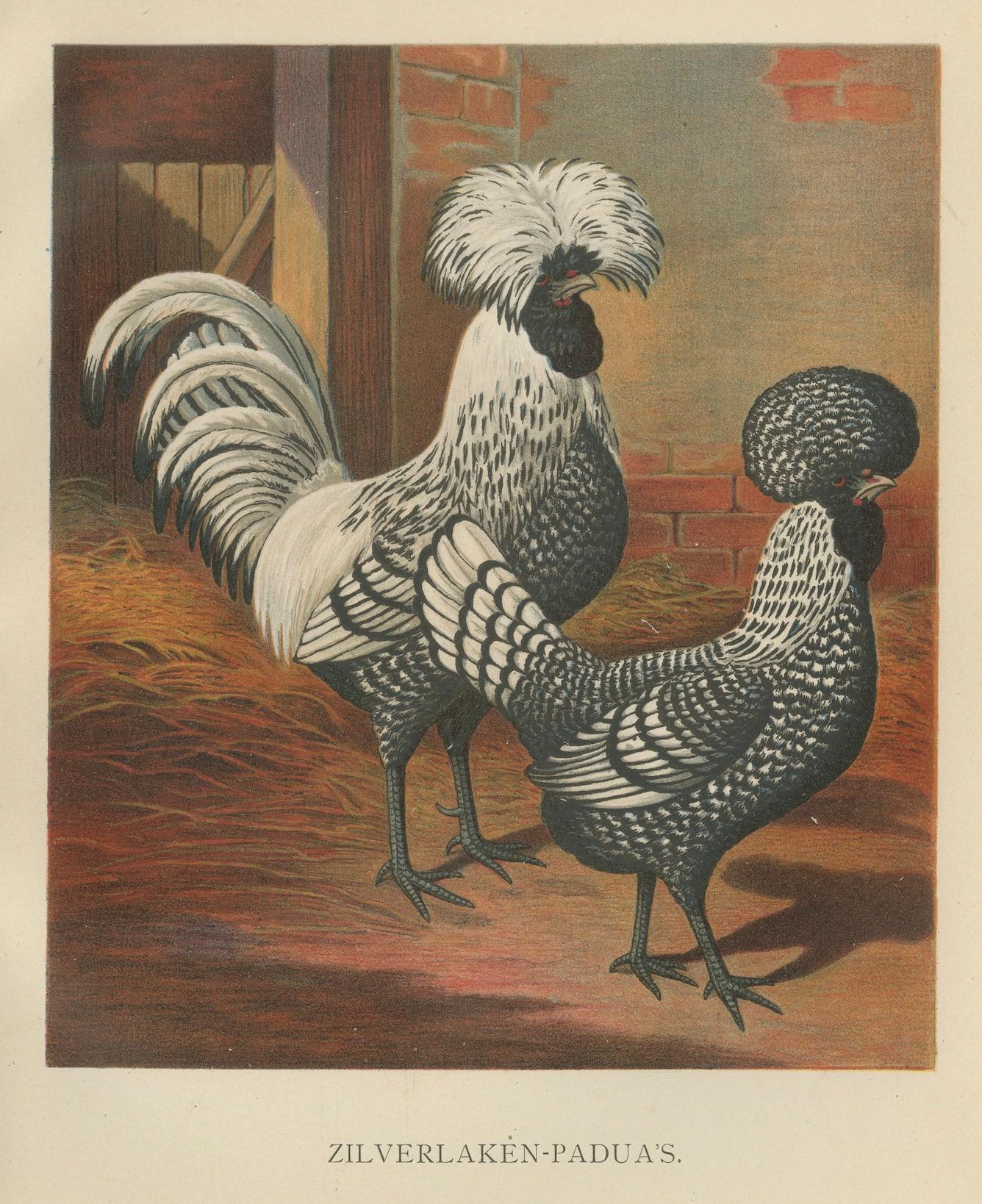
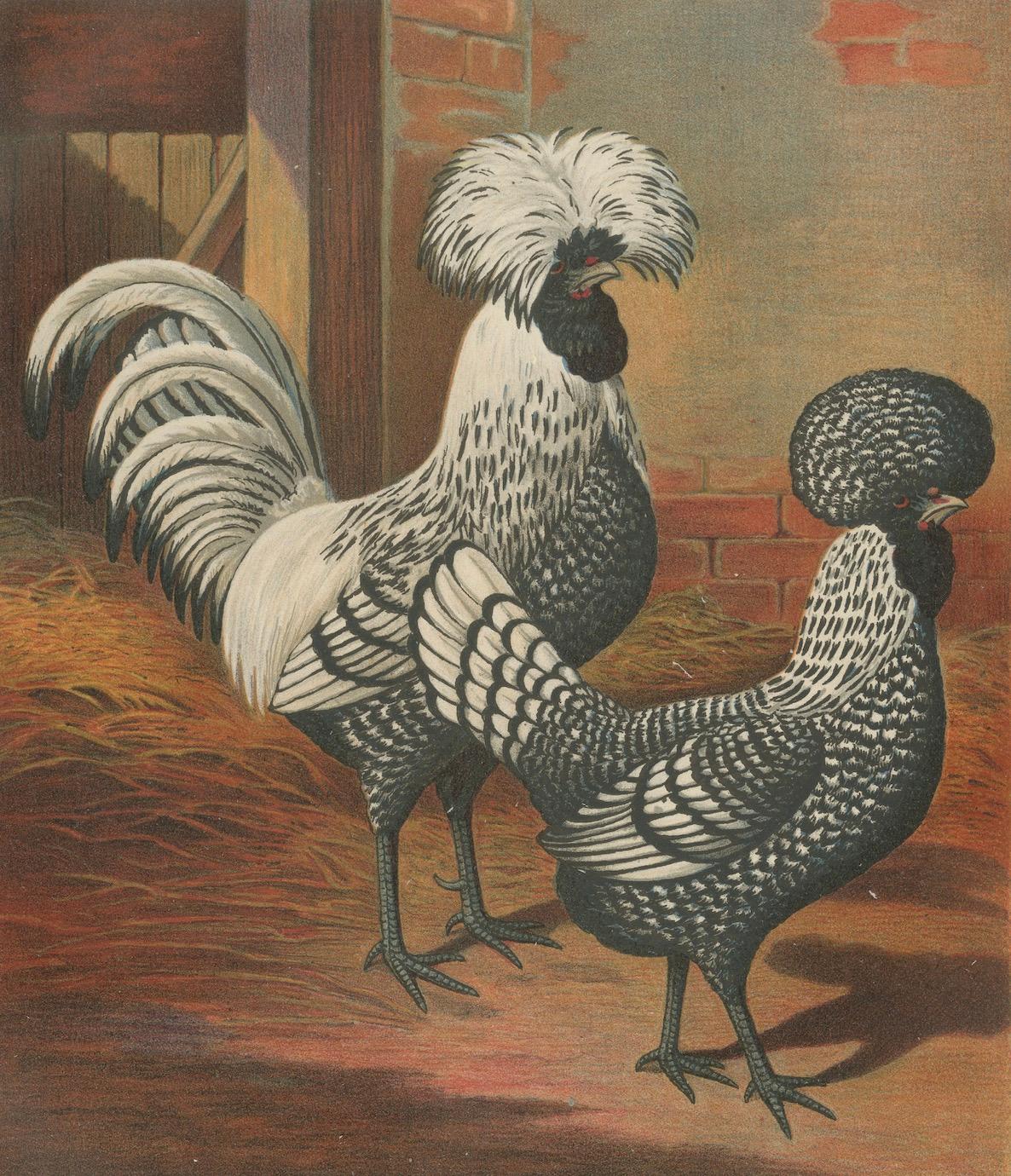
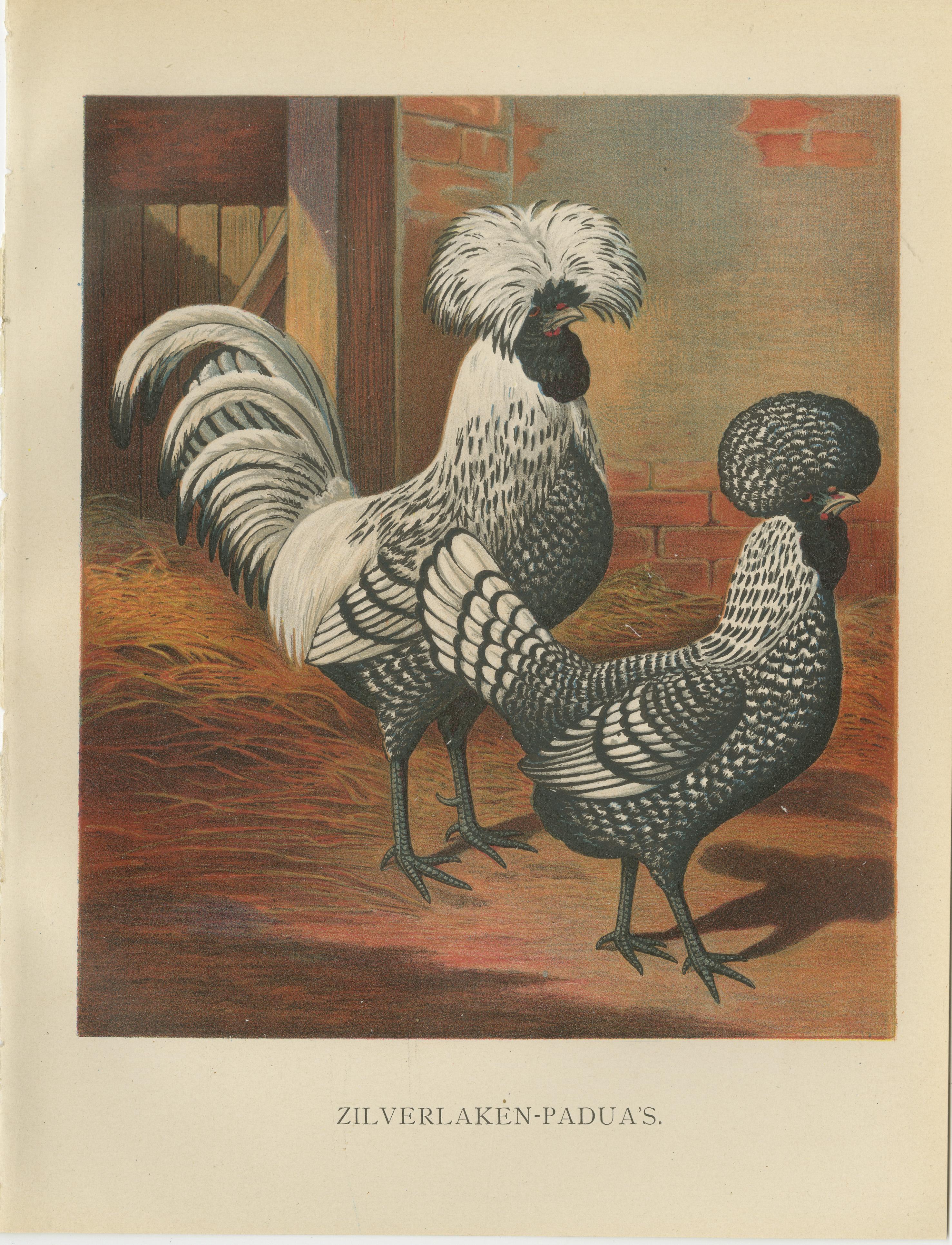
This exquisite 19th century chromolithograph features a pair of Silver Polish chickens, an ornamental breed renowned for its striking feather crest, elegant silver laced plumage, and noble appearance. The print, titled Zilverlaken-Padua’s, originates from Geïllustreerd Hoenderboek, an Illustrated Poultry Book published in 1888 by Elsevier. Compiled by Julius Volschau and adapted for Dutch readers by Dr. A. C. Oudemans Jzn., this book provided a comprehensive study of poultry breeding, highlighting both practical and decorative breeds that were highly valued in the 19th century.
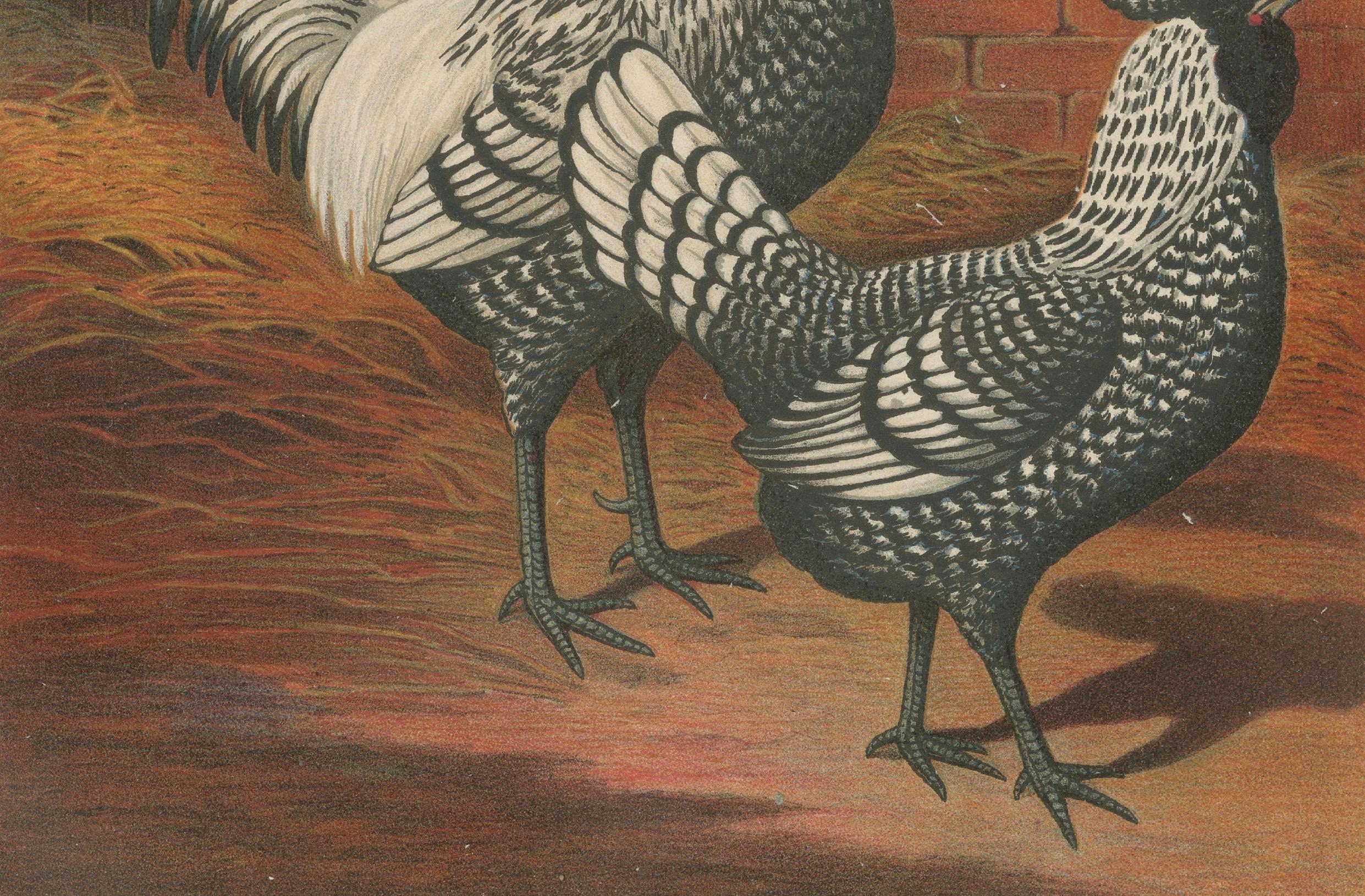
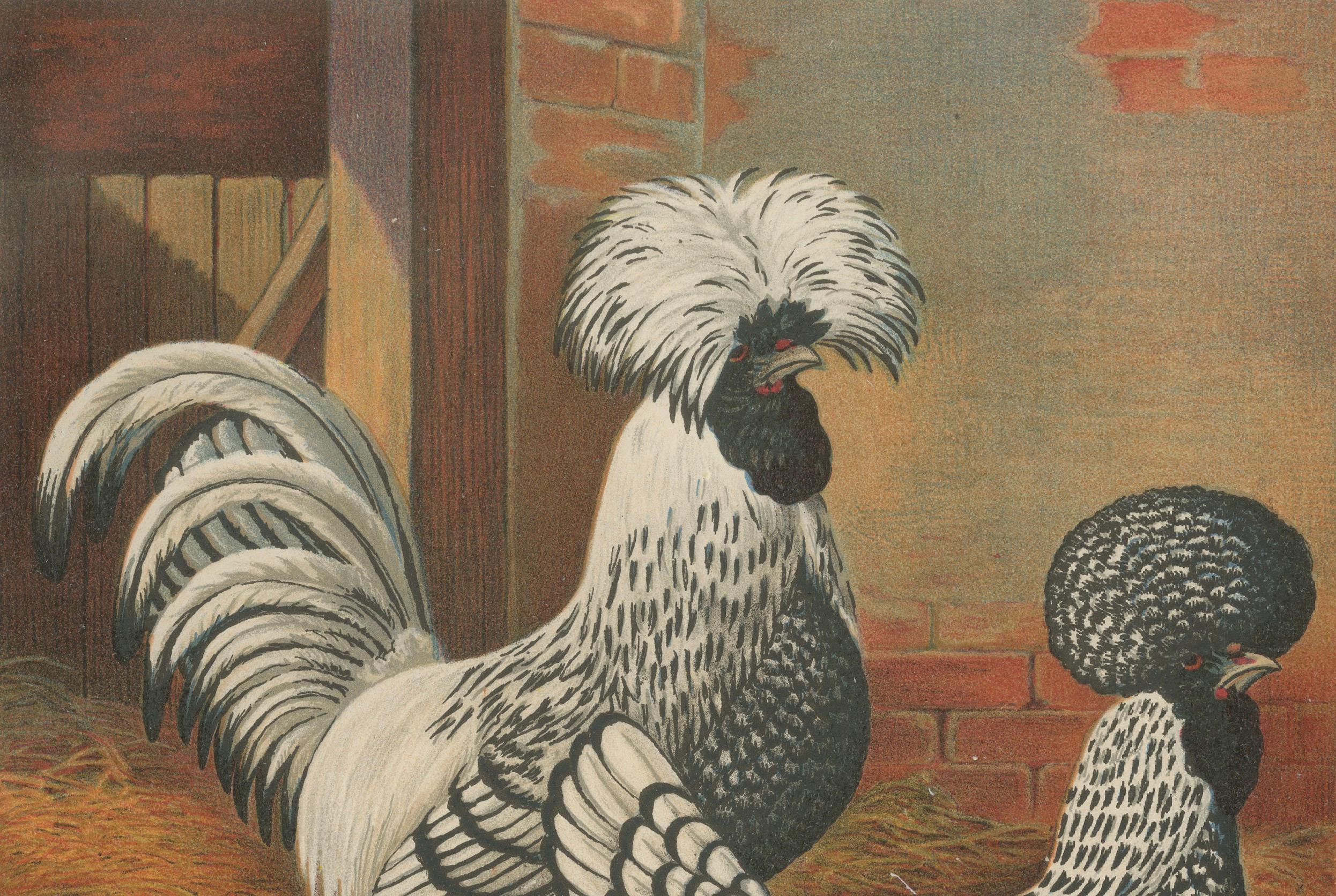
The Polish, also known as Padua, is an ancient European breed that likely originated in the Netherlands or Poland before becoming popular across Europe. It is best known for its large feathered crest, which completely covers its eyes, giving it a dramatic and almost mysterious appearance. The Silver Polish variety, as seen in this lithograph, showcases a striking contrast of bright white and deep black feathers arranged in a lace-like pattern. Although primarily kept as an ornamental breed, Polish chickens are also good layers of white eggs and were historically favored in noble estates and poultry exhibitions.
This lithograph was created using chromolithography, a highly detailed 19th century printing technique that allowed for vibrant and realistic illustrations. The artwork is based on an original drawing by Christian Förster, a skilled animal illustrator of the period. Chromolithographs were produced by layering multiple colors, each applied with a separate stone plate, ensuring depth and precision in the final print. The delicate feather lacing and elegant shading in this print demonstrate the high level of craftsmanship involved in this technique.
Condition Summary
The print remains in very good condition, with well preserved colors and sharp details. Some minor age related toning and light foxing spots are visible along the edges, which is common in lithographs of this period. The paper remains stable, with minimal signs of wear, making this an excellent piece for collectors of antique poultry illustrations or those interested in historical agricultural prints.
### Framing Tips
To best preserve and display this lithograph, consider the following framing techniques
- Use acid free matting to prevent long term deterioration. A soft gray or warm ivory mat will complement the intricate silver lacing of the Polish chicken’s plumage
- Choose UV protective glass to safeguard the colors from fading due to light exposure
- A wooden frame in deep walnut, dark mahogany, or black lacquer will enhance the striking contrast between the silver laced pattern and the dark feather markings
- Float mounting can be used if the original paper edges are to be highlighted, adding a historical and museum quality presentation
This lithograph is an outstanding example of 19th century poultry illustration, capturing the beauty and refinement of one of the most visually striking chicken breeds. Whether displayed in a farmhouse, study, or antique print collection, it remains a timeless and historically significant piece of agricultural art.