The Long-tailed African Finch and Blue Butterfly Original Old Handcoloring, 1749
€ 490
Original antique · The actual sheet photographed · Certificate of authenticity on request · Sold unframed · Worldwide shipping from € 15 (rates)
Date
1749
Sheet size
37 × 25 cm (14.6 × 9.8 in)
Condition
Good
Reference
BG-13674-6
What the condition grades mean
Excellent
Bright and clean, with no faults worth mentioning.
Very good
Only light signs of age, such as faint toning.
Good
Normal signs of age for a sheet of this period: toning, some foxing, small marks or neat old repairs.
Fair
Clear faults such as staining, tears or repairs, priced to match.
Every fault we see is written in the condition note, and the whole sheet is shown uncropped in the photos.
Condition
Good to almost excellent condition with the original hand coloring still very vivid and vibrant. Unclear text, possibly Russian, above the title. General age related toning.
About this sheet
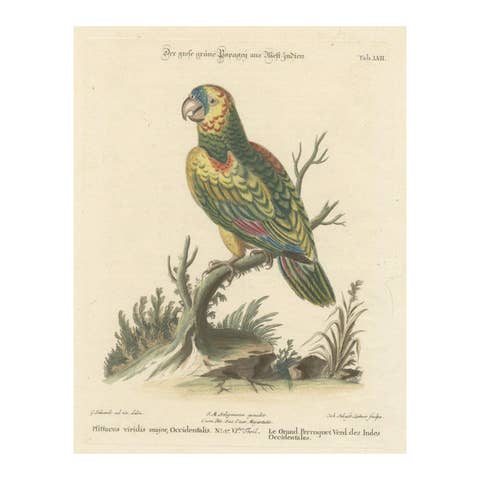
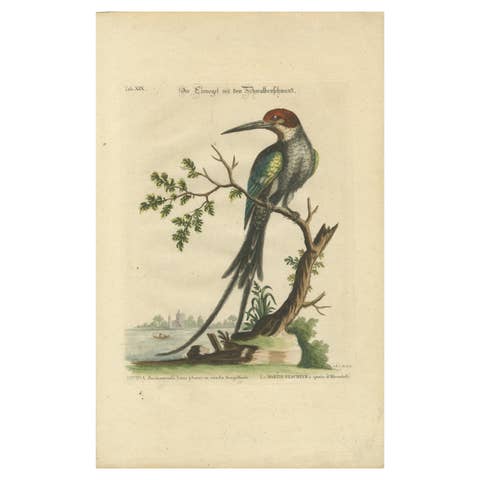
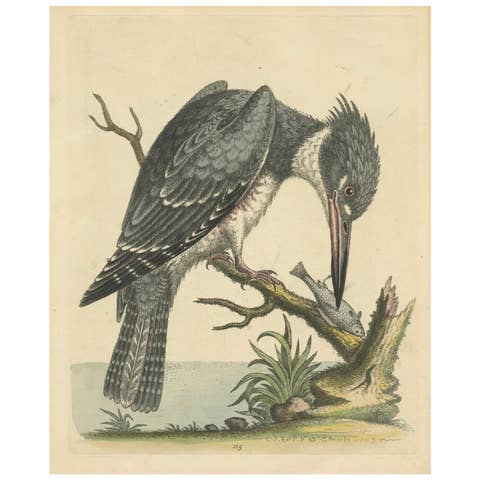
This hand-colored engraving, part of Johann Michael Seligmann's collection, is a precise and vibrant representation of wildlife, based on the works of George Edwards. It showcases an African finch with a notably long tail, and its poised elegance is a testament to the intricate artistry of the period.
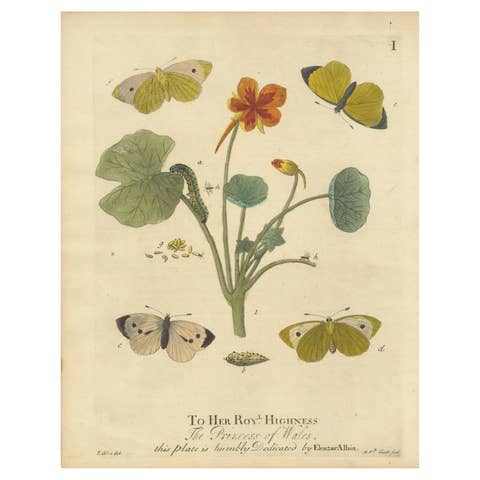
The bird, perched on a slender branch, is depicted with an intricate pattern of speckles and warm hues on its body, with a distinct reddish-orange throat, indicative of the species' vibrant natural coloring. The finch's tail feathers are particularly elongated, adding to its distinguished appearance. Above the finch, a butterfly with deep blue wings edged in black provides a striking contrast, both in color and in the fluttering lightness it brings to the composition.
The German text "Der rothbrüstige, langschwänzige Fink." translates to "The red-breasted, long-tailed finch," while the French "Le Rouge-gorge à longue queue." offers a similar description, meaning "The Red-throat with a long tail." The scientific designation "Fringilla Africana, macroura" is Latin, referring to an African finch species with a long tail. "Tab. LXVII." indicates this is the 67th plate in the series.
The engraving is meticulously detailed, reflecting Seligmann's skill in capturing the beauty and specificity of Edwards' earlier naturalistic studies. It is an elegant fusion of art and ornithology, intended for the education and enjoyment of its 18th-century audience, and continues to be appreciated for its historical and artistic value.