About this sheet
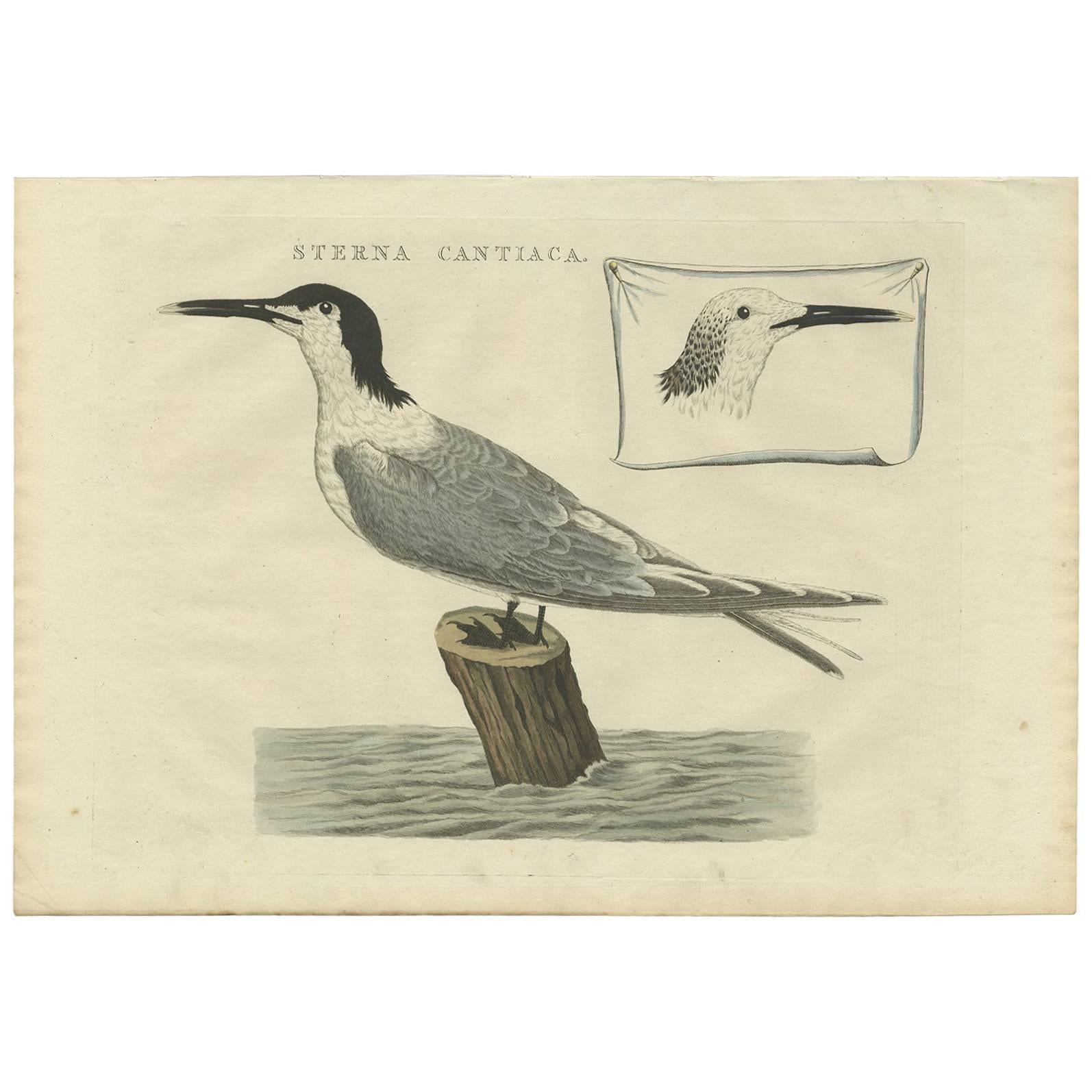
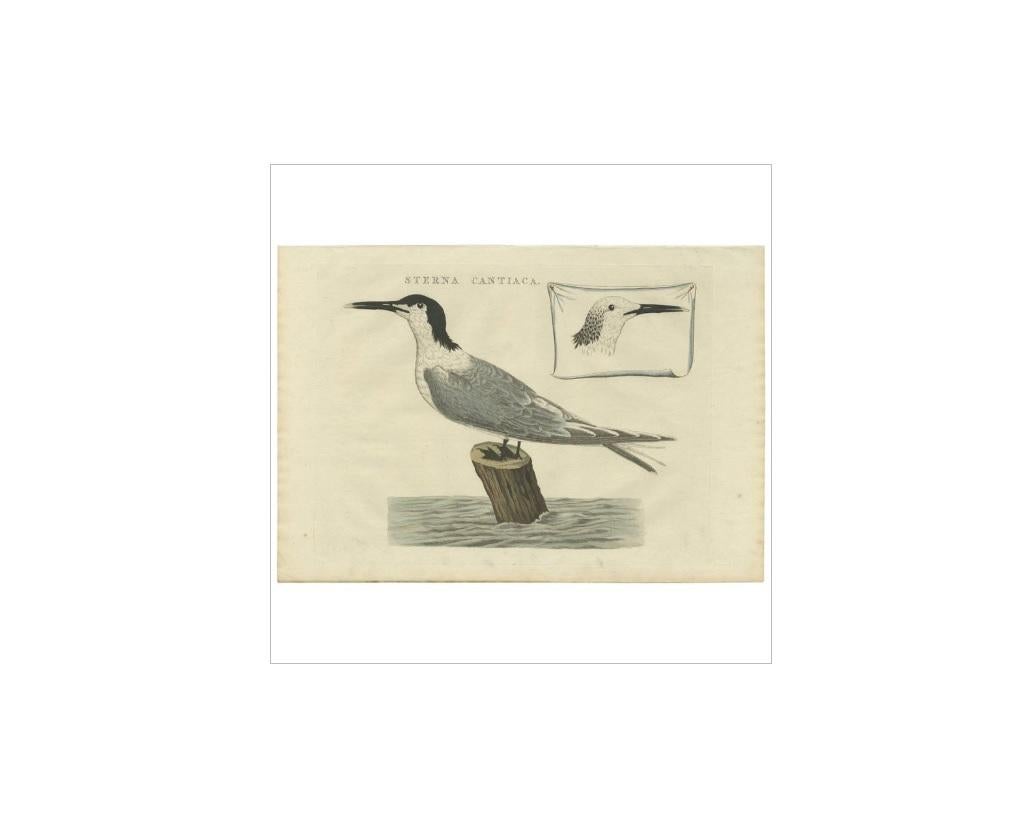
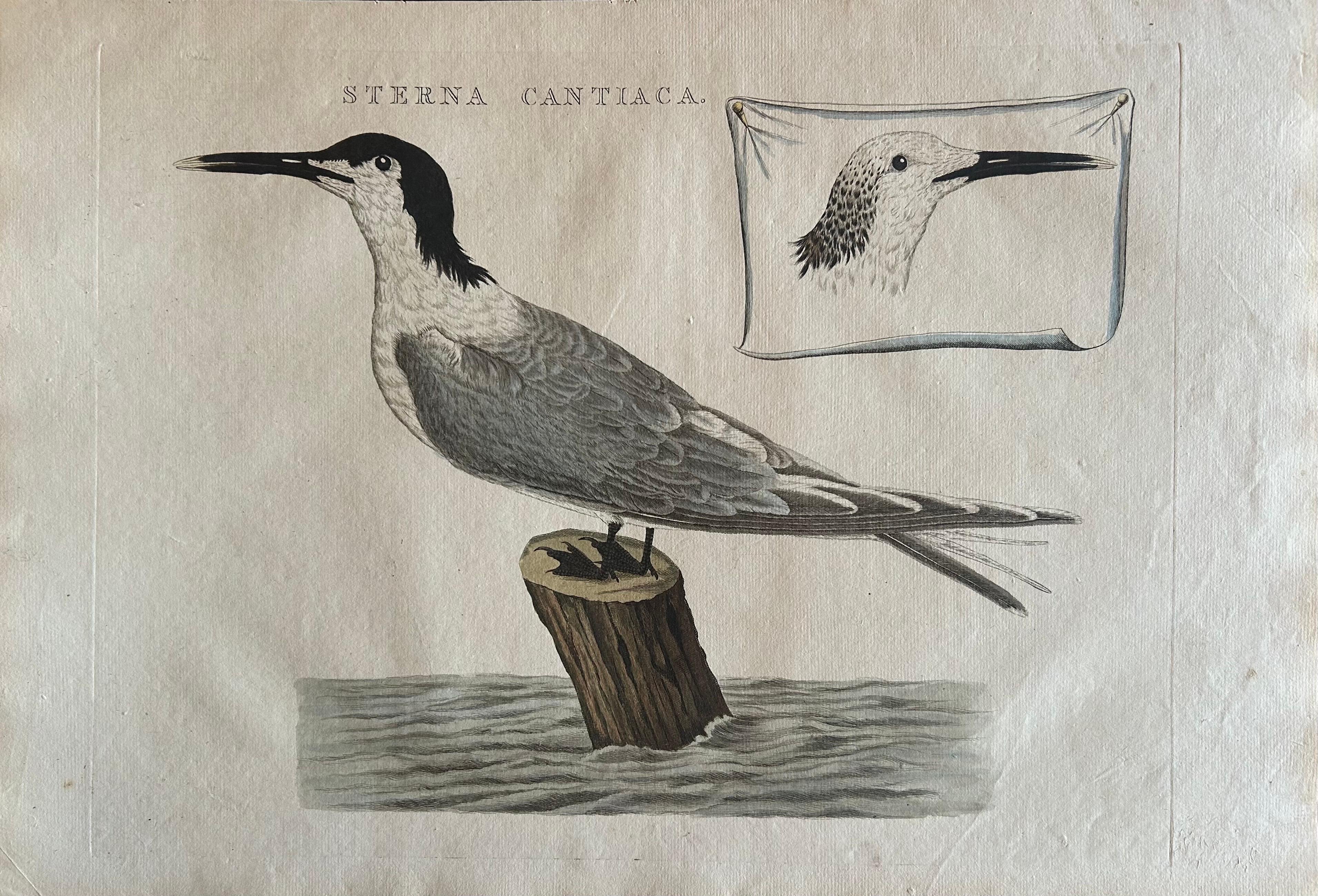
Sandwich Tern – Sterna Cantiaca – Antique Hand-Coloured Bird Print, c.1829
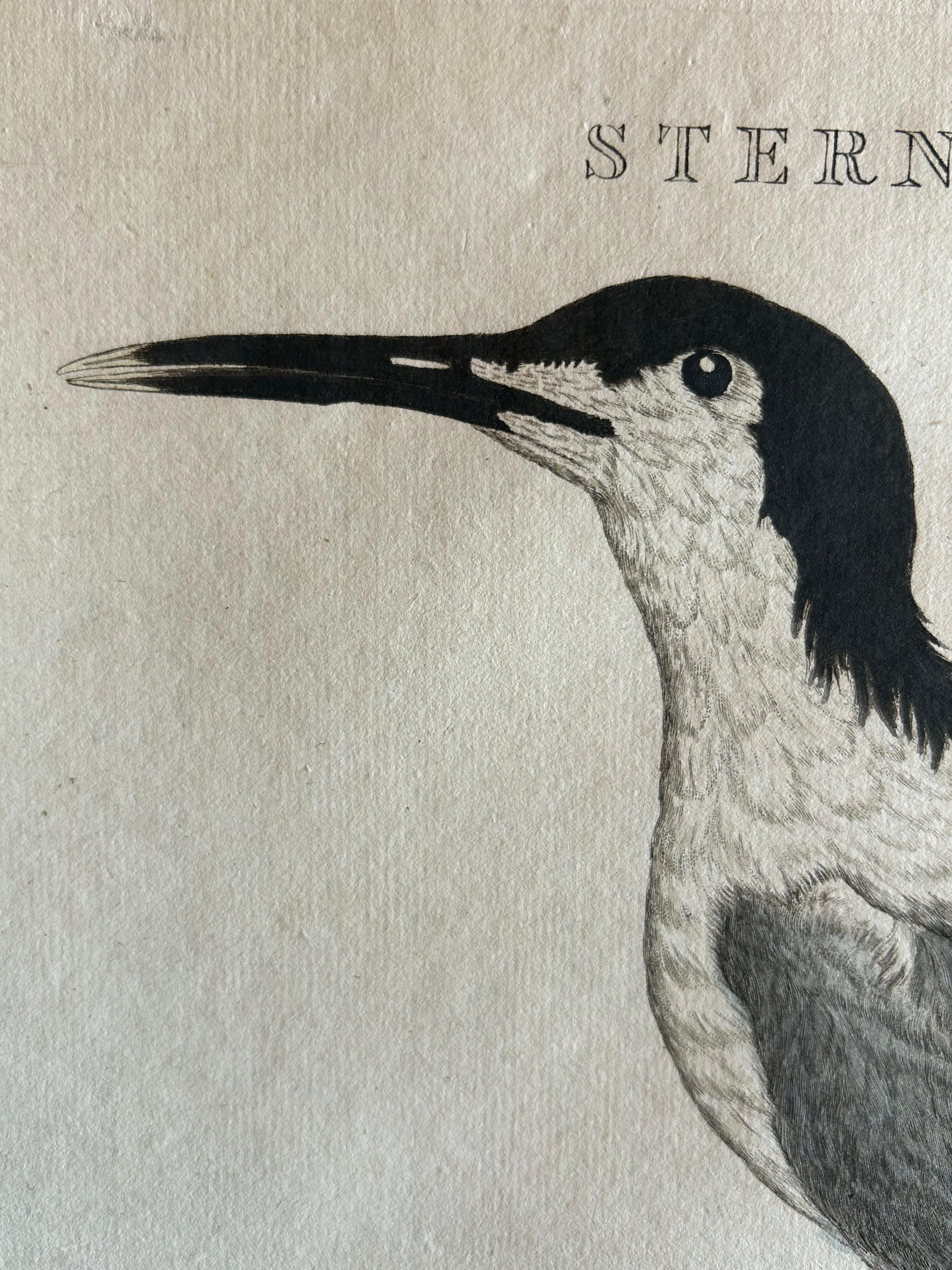
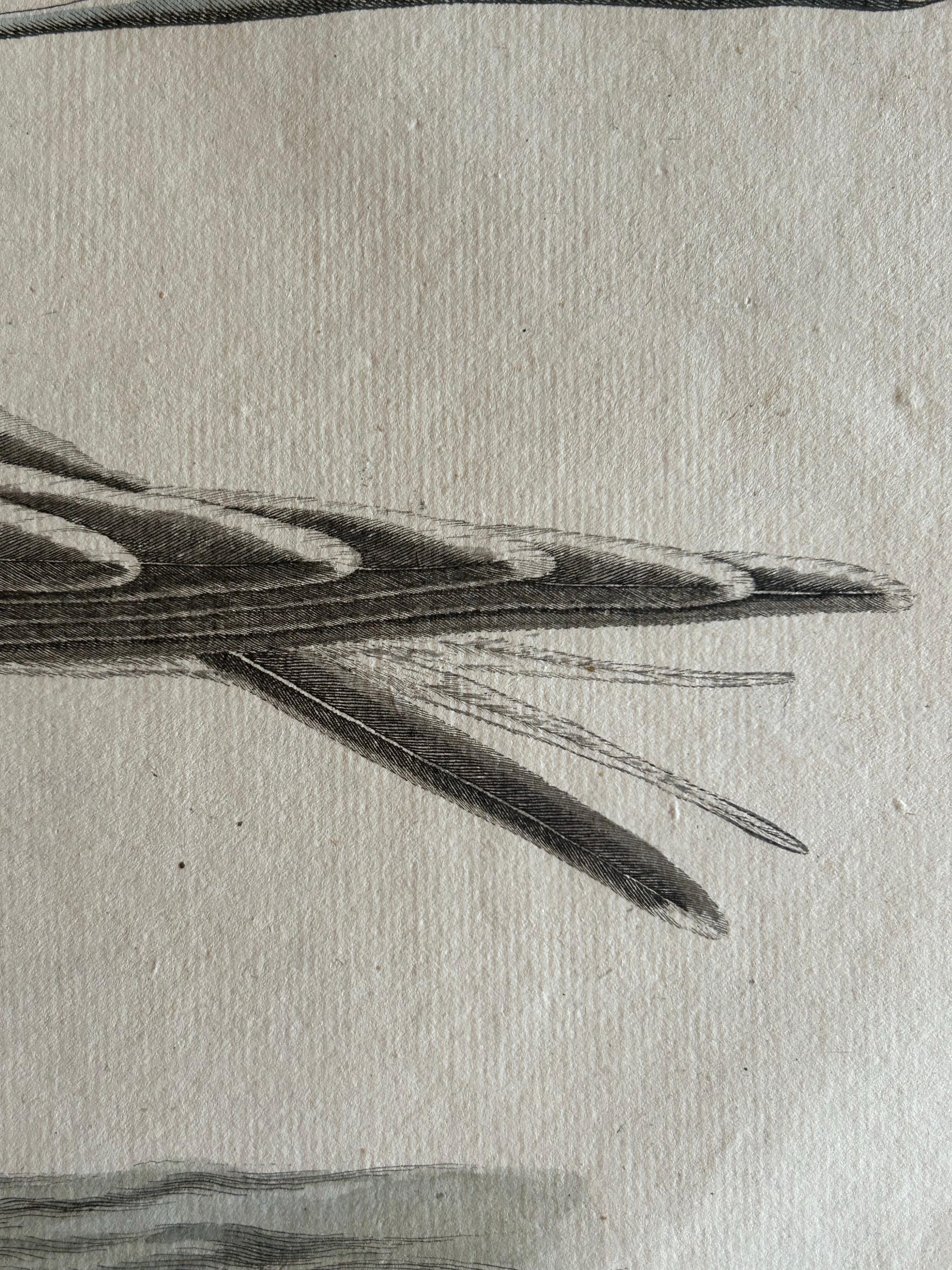
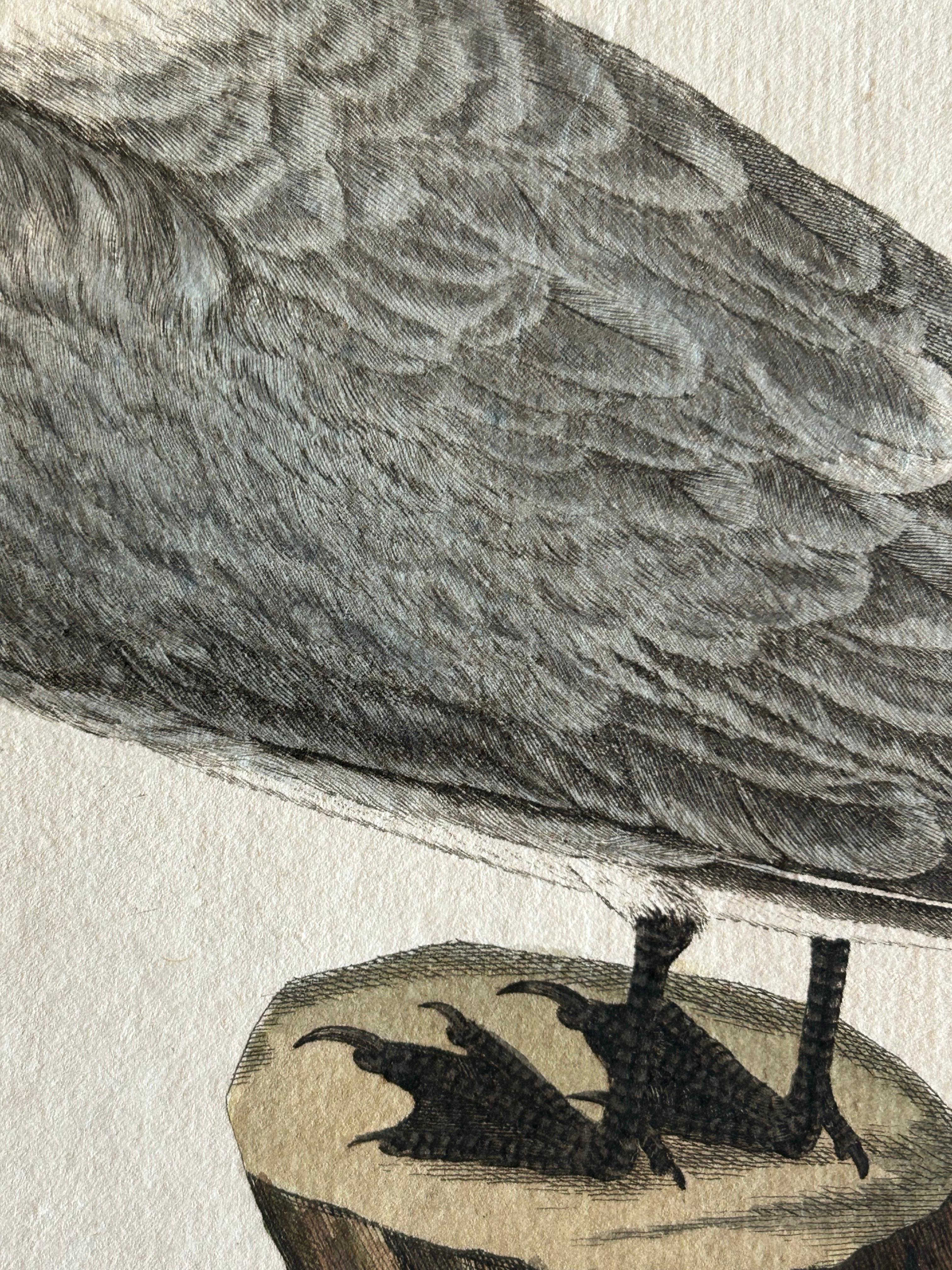
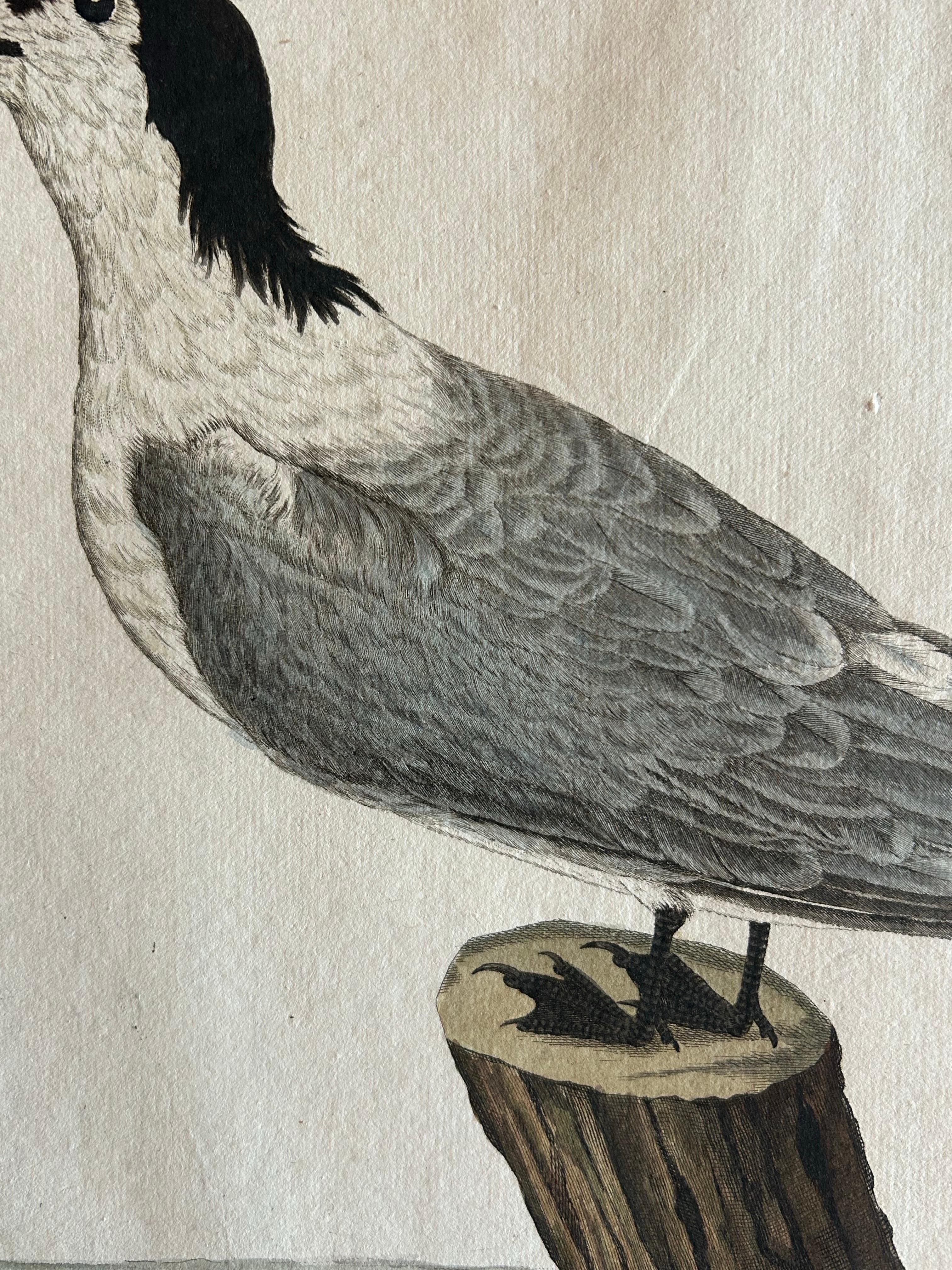
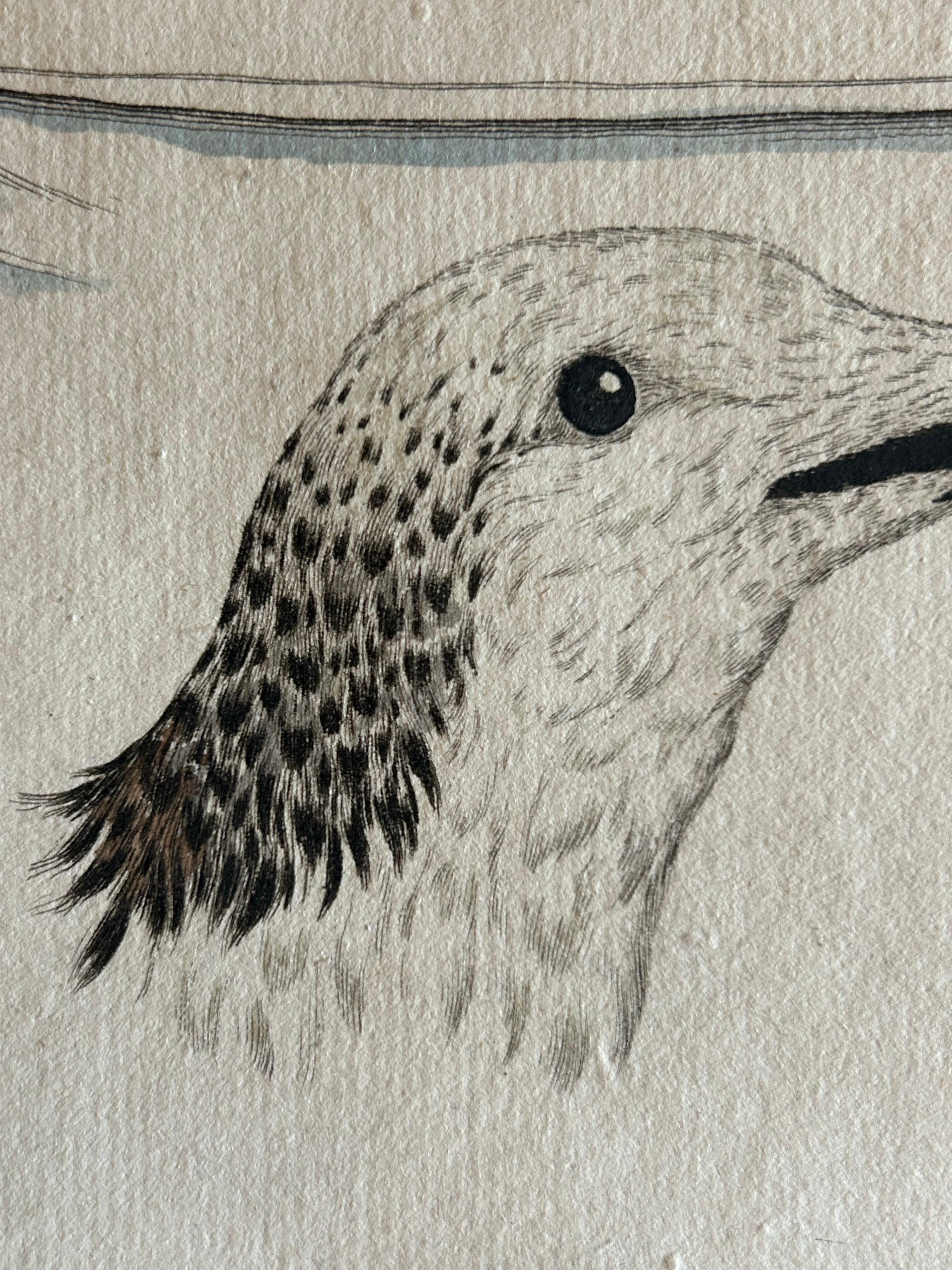
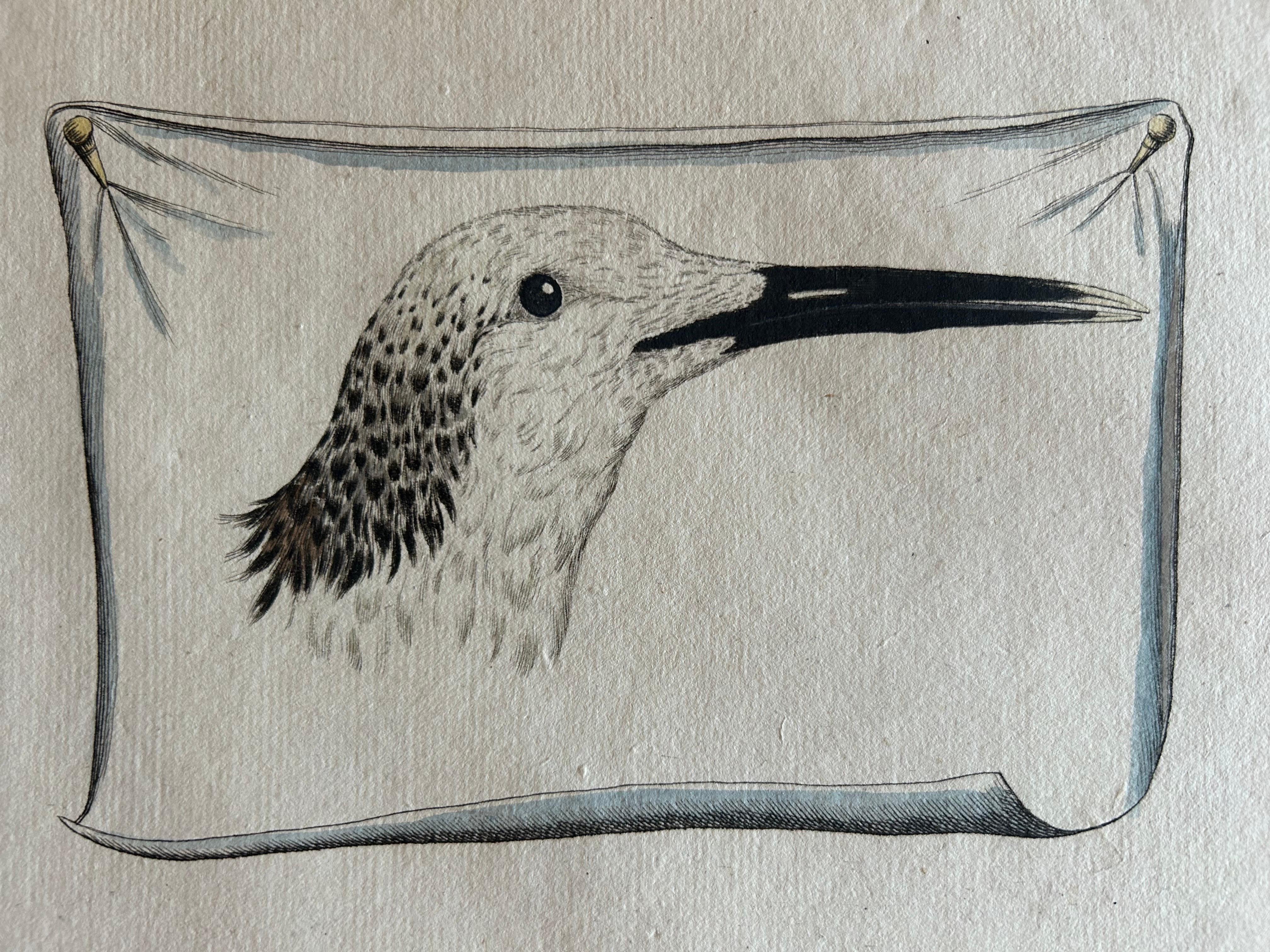
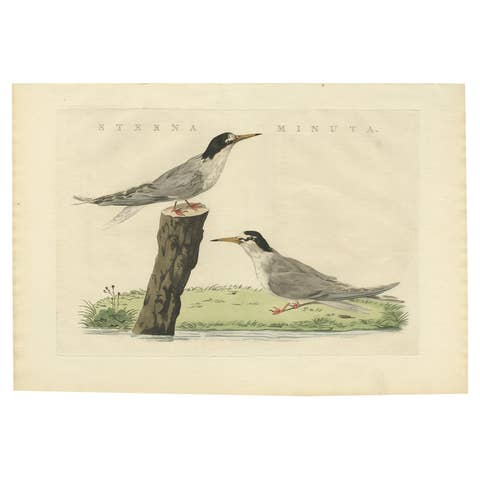
This fine hand-coloured engraving depicts the Sandwich tern (Thalasseus sandvicensis), a graceful seabird from the family Laridae. The main image shows the tern perched on a wooden post above calm water, highlighting its slender body, long pointed wings, and sharply forked tail. Its elegant plumage features pale grey upperparts, white underparts, and a black cap extending over the eyes. The inset head study reveals fine detail in the bird’s sharp black bill with a distinct yellow tip, an identifying feature of the species.
The Sandwich tern is widely distributed along the coasts of Europe, Africa, and parts of the Americas, favouring sandy islands and coastal lagoons for breeding. It is renowned for its agility in flight and its skill at plunge-diving for small fish, particularly sand eels. In the late 18th and early 19th centuries, this species was a subject of growing interest to European naturalists, both for its striking appearance and its importance to coastal ecosystems.
This print originates from the monumental work Nederlandsche Vogelen; volgens hunne huisdouding, aert, en eigenschappen beschreeven, published in Amsterdam between 1770 and 1829 by Cornelius Nozeman, Martinus Houttuyn, and J.C. Sepp. It was the first comprehensive study of Dutch ornithology, combining detailed descriptions with life-like illustrations. The plates were engraved and hand-coloured with great skill, aiming to show each species close to life size and in its natural setting.
The accompanying original Dutch text page provides rich historical and scientific observations on the species, its behaviour, nesting habits, and physical characteristics, as understood in the late 18th and early 19th centuries.
Condition summary: Very good condition with clean paper and strong, unfaded colours. Both papers have minor age-related toning in the margins and light handling marks, not affecting the image. Plate mark visible. Text paper has one tiny hole in margin.
Framing tips: A light ivory or soft grey mount will highlight the bird’s delicate colouring, while a slim black or dark oak frame will give it a refined, timeless presentation. UV-protective glass is recommended to preserve the hand-colouring.