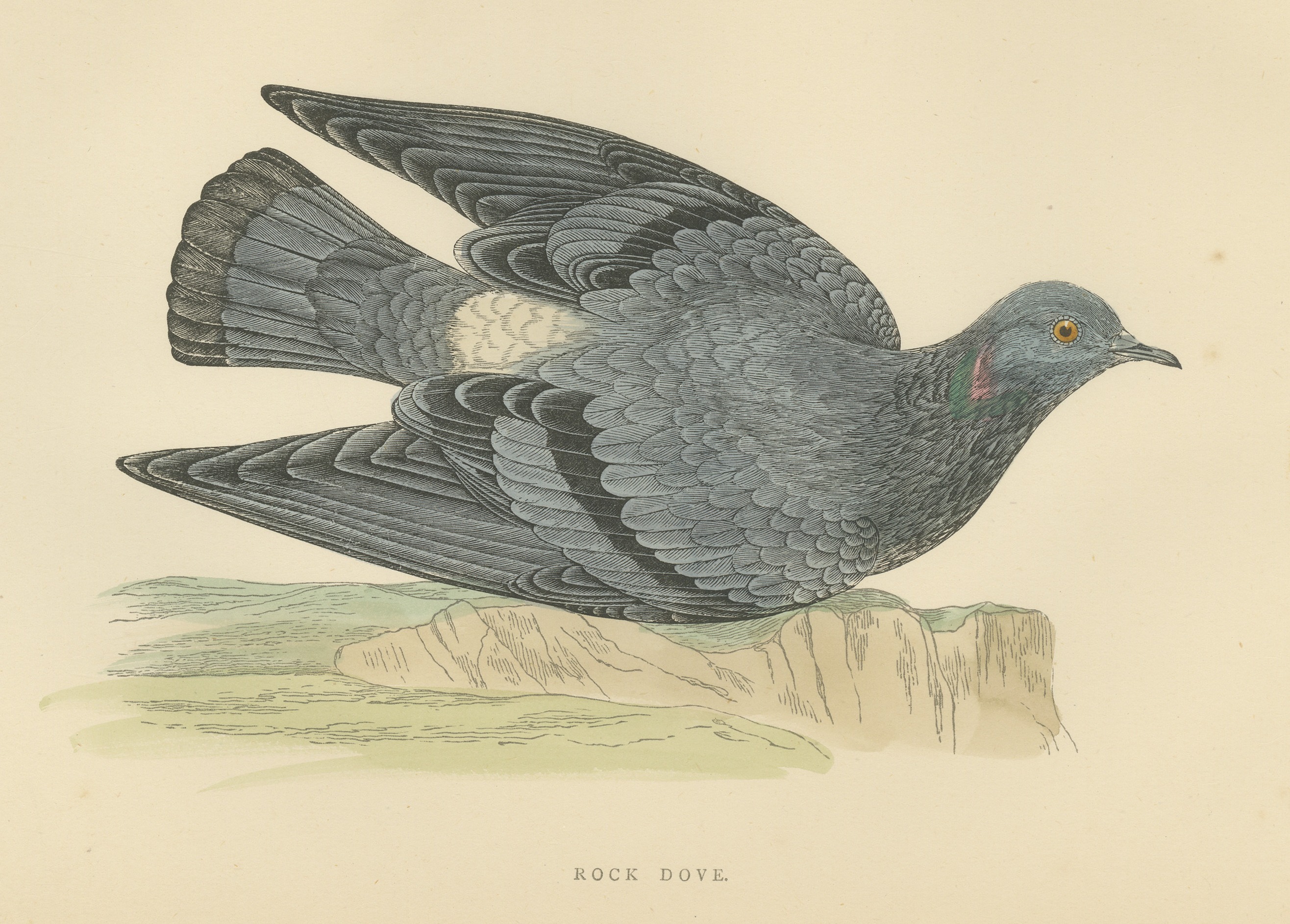
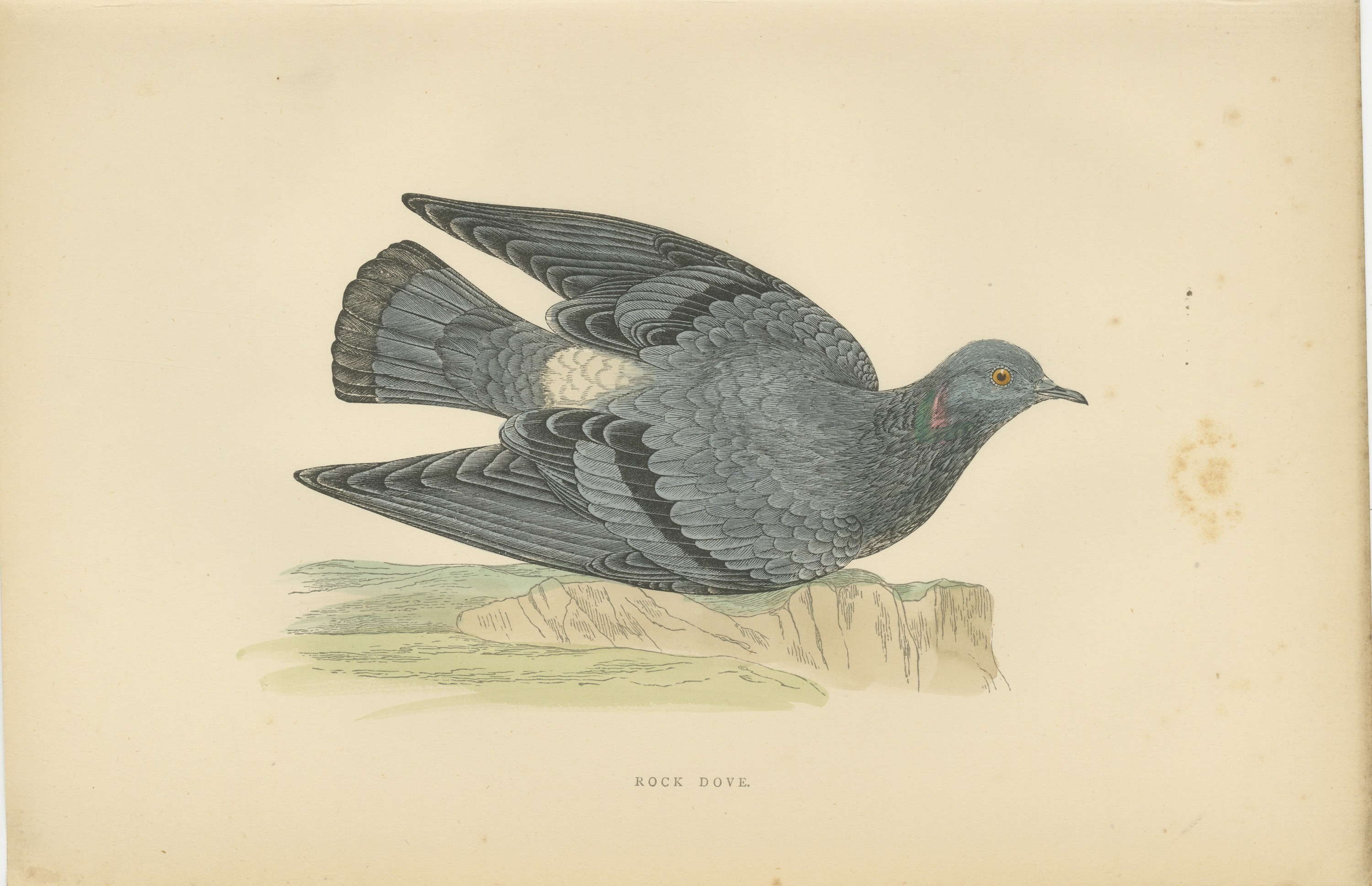
Rock Dove Crouching on a Rocky Ledge, Hand Colored Pigeon Print, Morris, 1896
€ 95
Original antique · The actual sheet photographed · Certificate of authenticity on request · Sold unframed · Worldwide shipping from € 15 (rates)
Date
1896
Mapmaker / artist
Not named on the sheet
Publisher
John C. Nimmo, London
Technique
Wood Engraving
Coloring
Hand colored
Condition
Good
Reference
BG-11586-59
What the condition grades mean
Excellent
Bright and clean, with no faults worth mentioning.
Very good
Only light signs of age, such as faint toning.
Good
Normal signs of age for a sheet of this period: toning, some foxing, small marks or neat old repairs.
Fair
Clear faults such as staining, tears or repairs, priced to match.
Every fault we see is written in the condition note, and the whole sheet is shown uncropped in the photos.
Condition
Even age toning. Marked handling soiling along the bottom, left and right edges. A few small foxing spots in the margin. Slight wear at the top right corner. Minor edge wear, shallow nicks along the right. One larger brown mark.
About this sheet
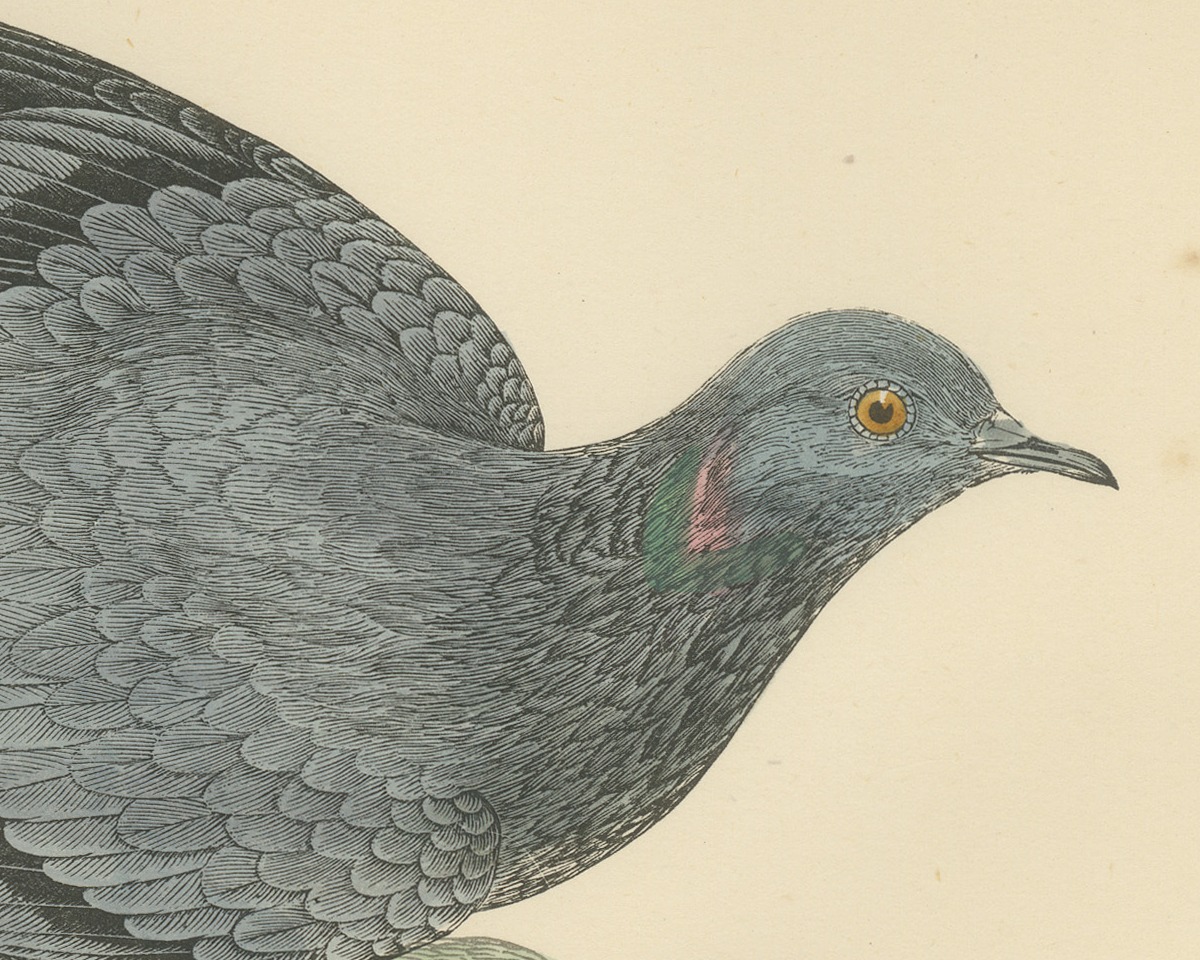
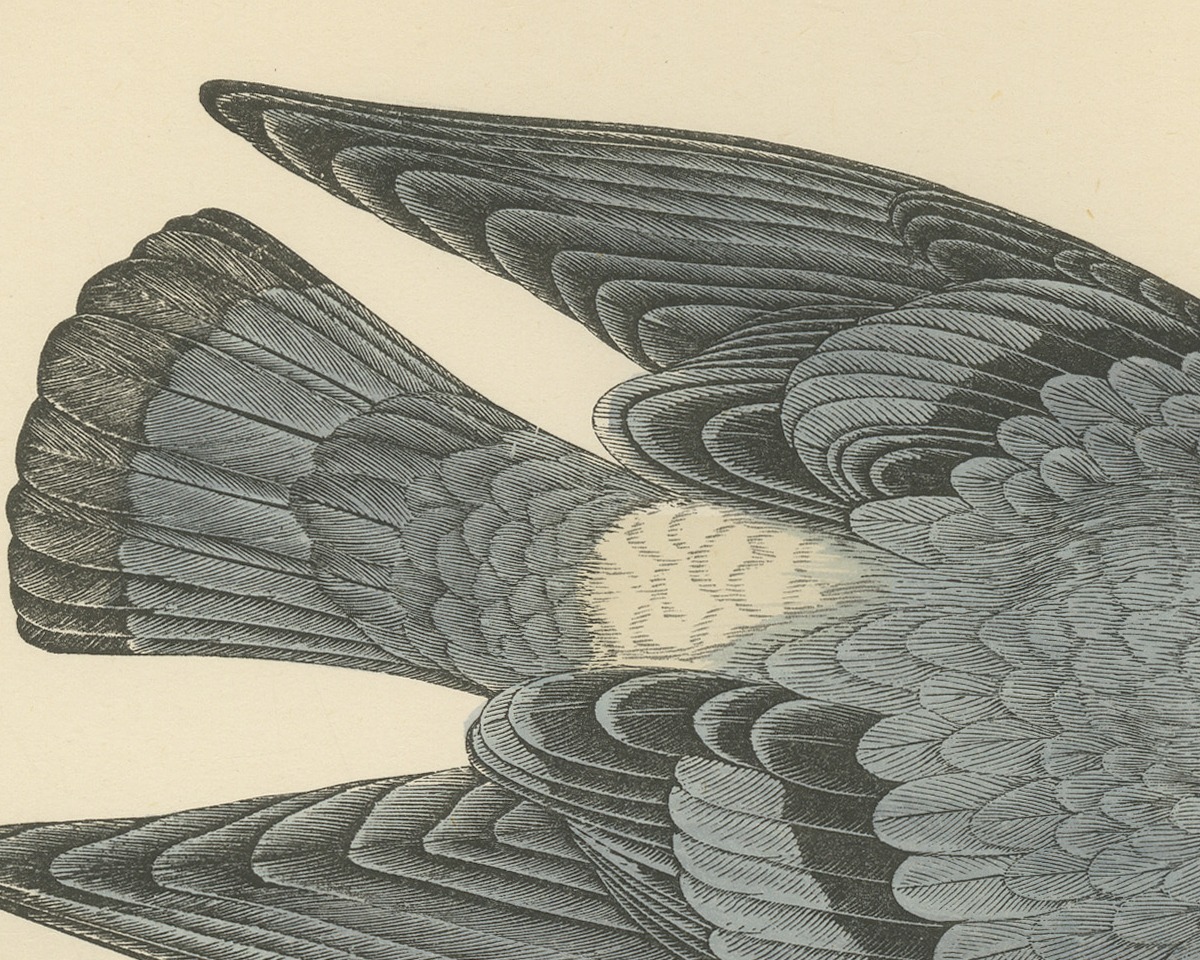
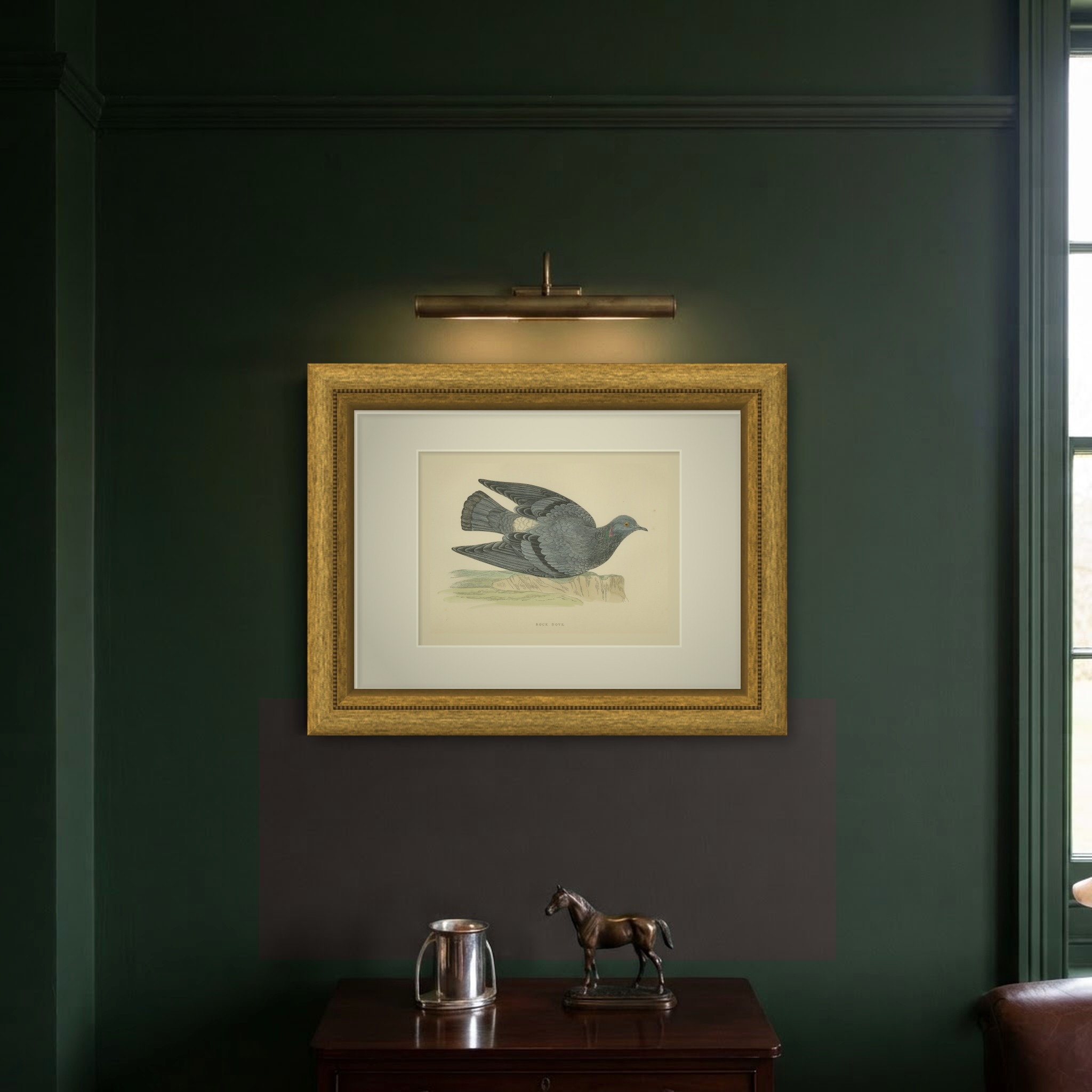
This is an original wood engraved bird plate, colored by hand, captioned "ROCK DOVE." A single pigeon crouches low on a buff rock ledge, facing right, with both wings raised and spread back from the body and the tail fanned behind. The plumage is blue gray, with two bold black bars across the wing and a broad dark band at the end of the tail. A cream white rump shows between the wings. The neck carries an iridescent patch of green and rose pink, and the eye is orange. Short green turf runs along the ground to the left of the rock.
The engraved caption below the picture reads "ROCK DOVE." with a full stop. There is no plate number above the picture and no engraver's credit on the sheet. The rock dove is Columba livia, and the white rump and two black wing bars shown here are marks of the species.
A History of British Birds was written by the Reverend Francis Orpen Morris (1810 to 1893), rector of Nunburnholme in Yorkshire. The wood blocks for the plates of the work were engraved by Benjamin Fawcett (1808 to 1893) of Driffield in Yorkshire. This fourth edition was issued in six volumes by John C. Nimmo, London, and this plate comes from the third volume, whose title page is dated 1896 and states that the plates are colored by hand. Each plate combines an engraved black key block with a printed gray tint, finished by hand in watercolor.
Condition: Even age toning. Marked handling soiling along the bottom, left and right edges. A few small foxing spots in the margin. Slight wear at the top right corner. Minor edge wear, shallow nicks along the right. One larger brown mark.
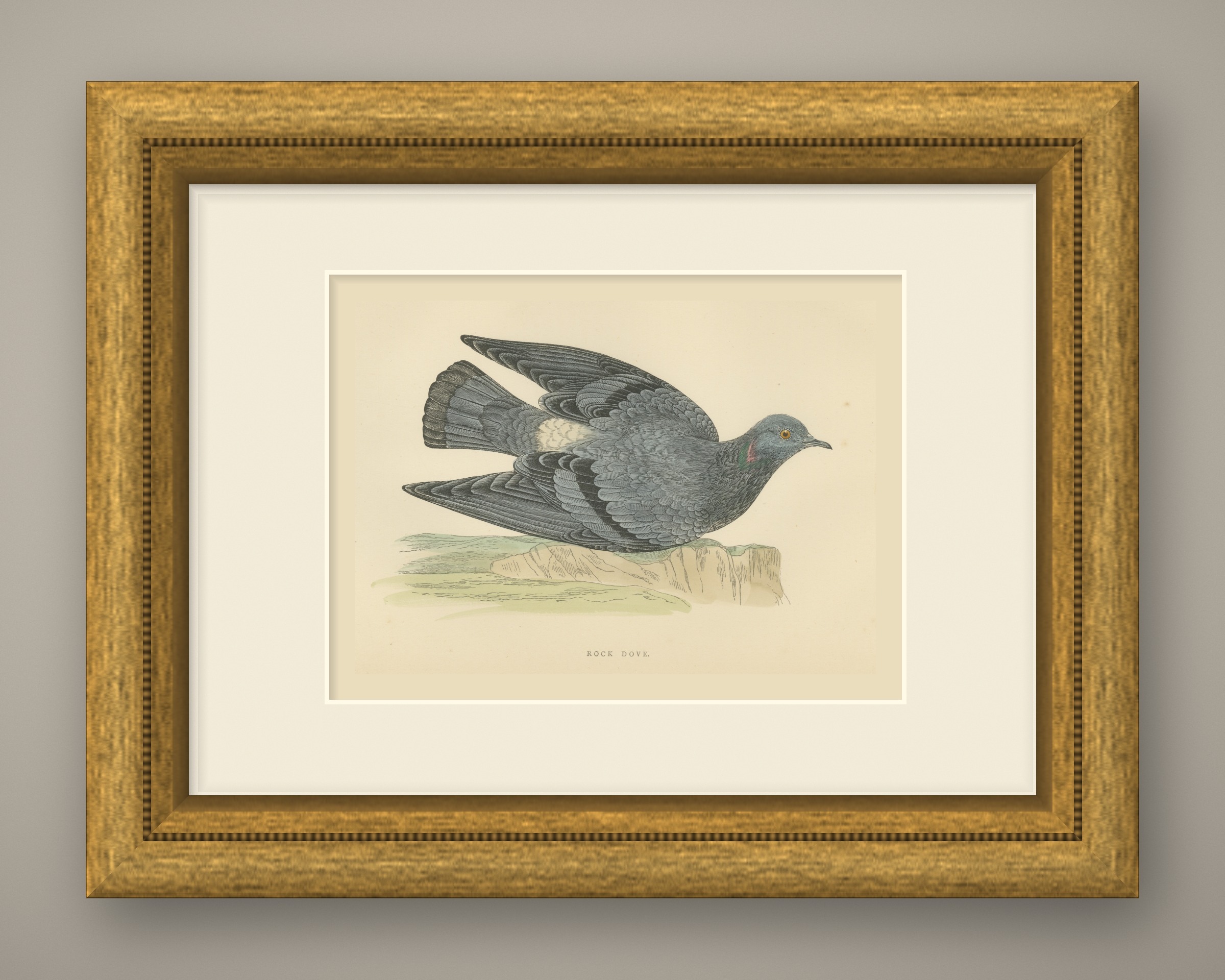
This is an original antique print, not a modern reproduction. This item is sold unframed. Any framed or interior images are shown for presentation and inspiration only, unless the listing explicitly states that the item is sold framed.