About this sheet
Pair of Worcester Porcelain Vase Designs, Pheasant & Panels, Gold Decorated, 1910
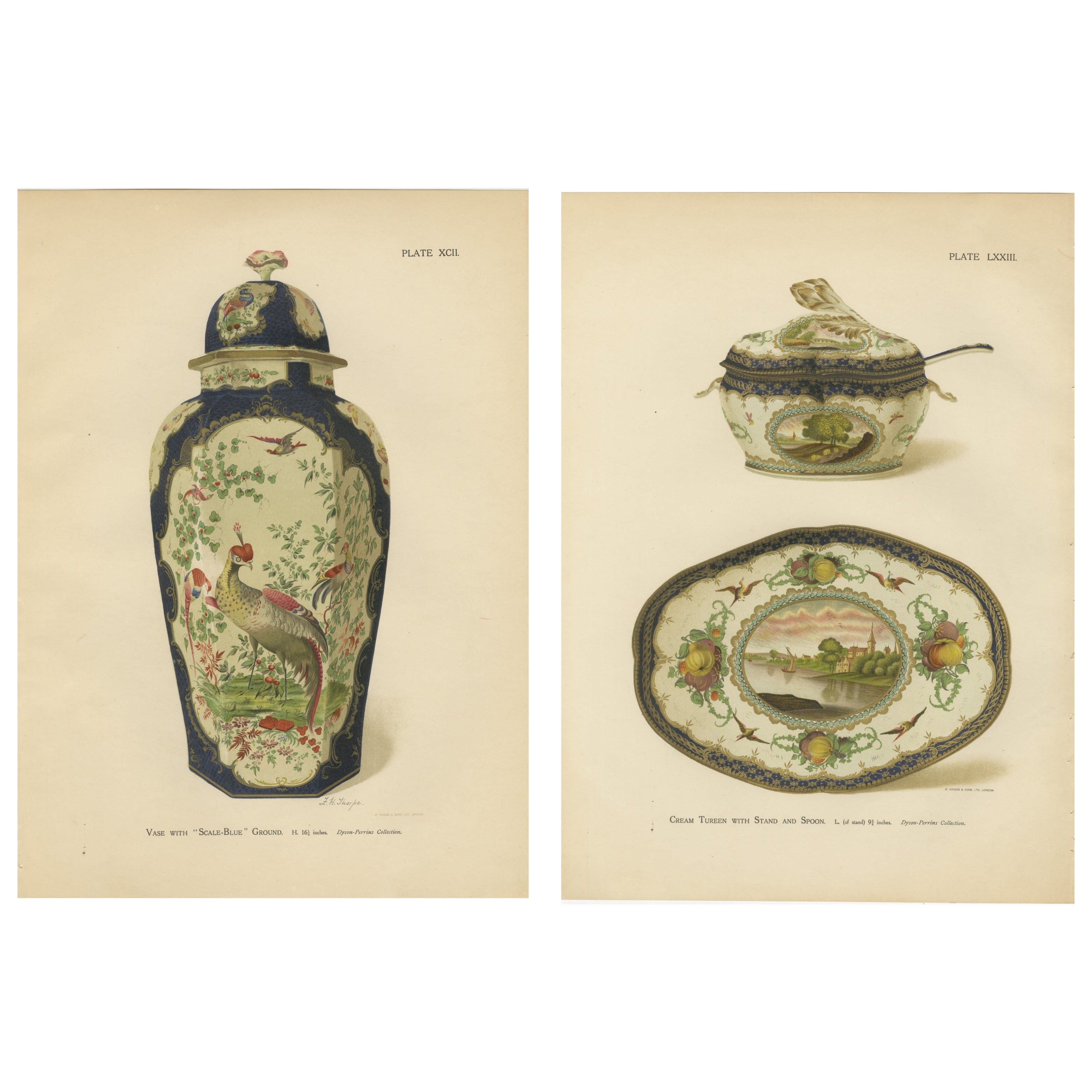
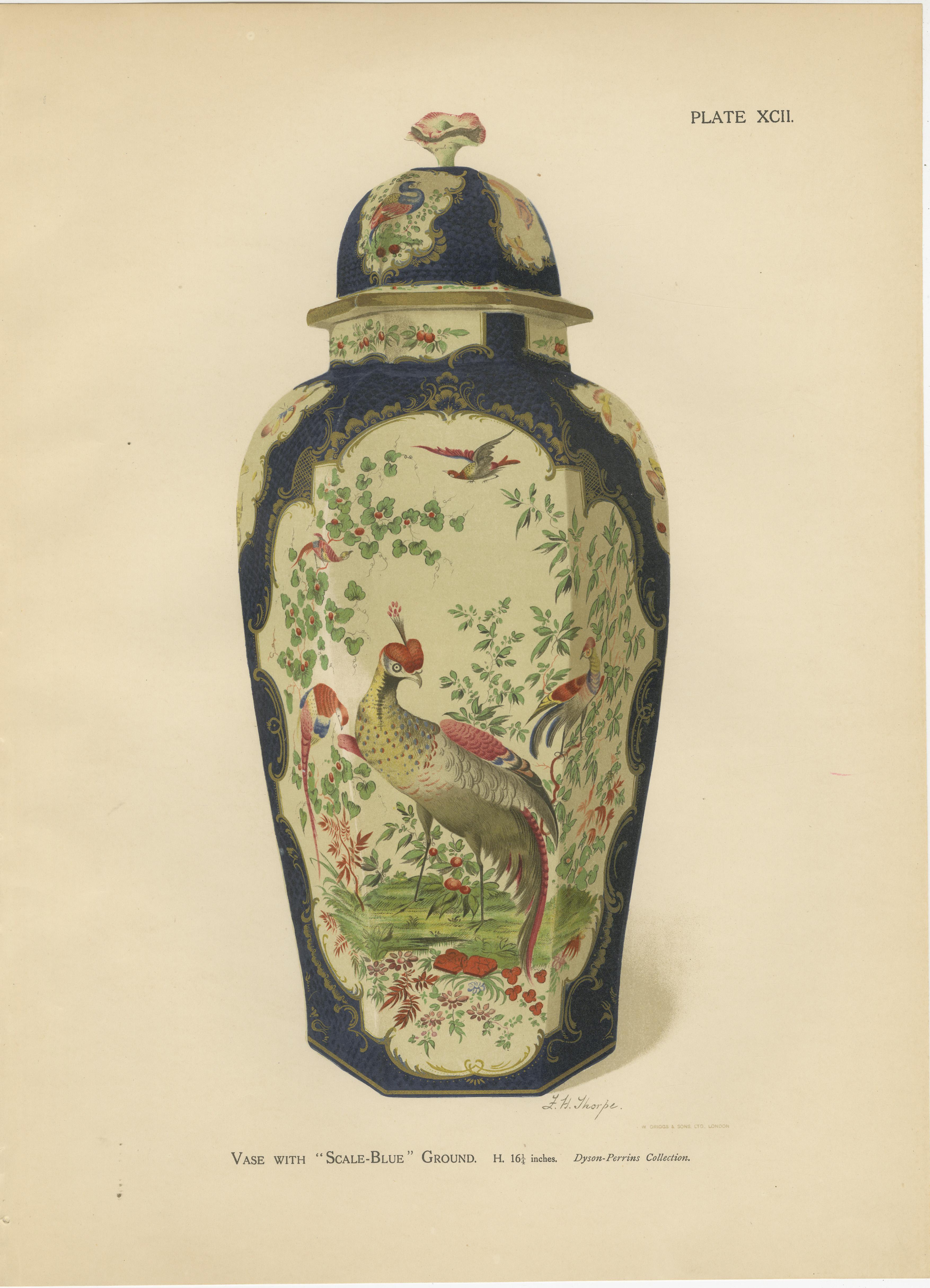
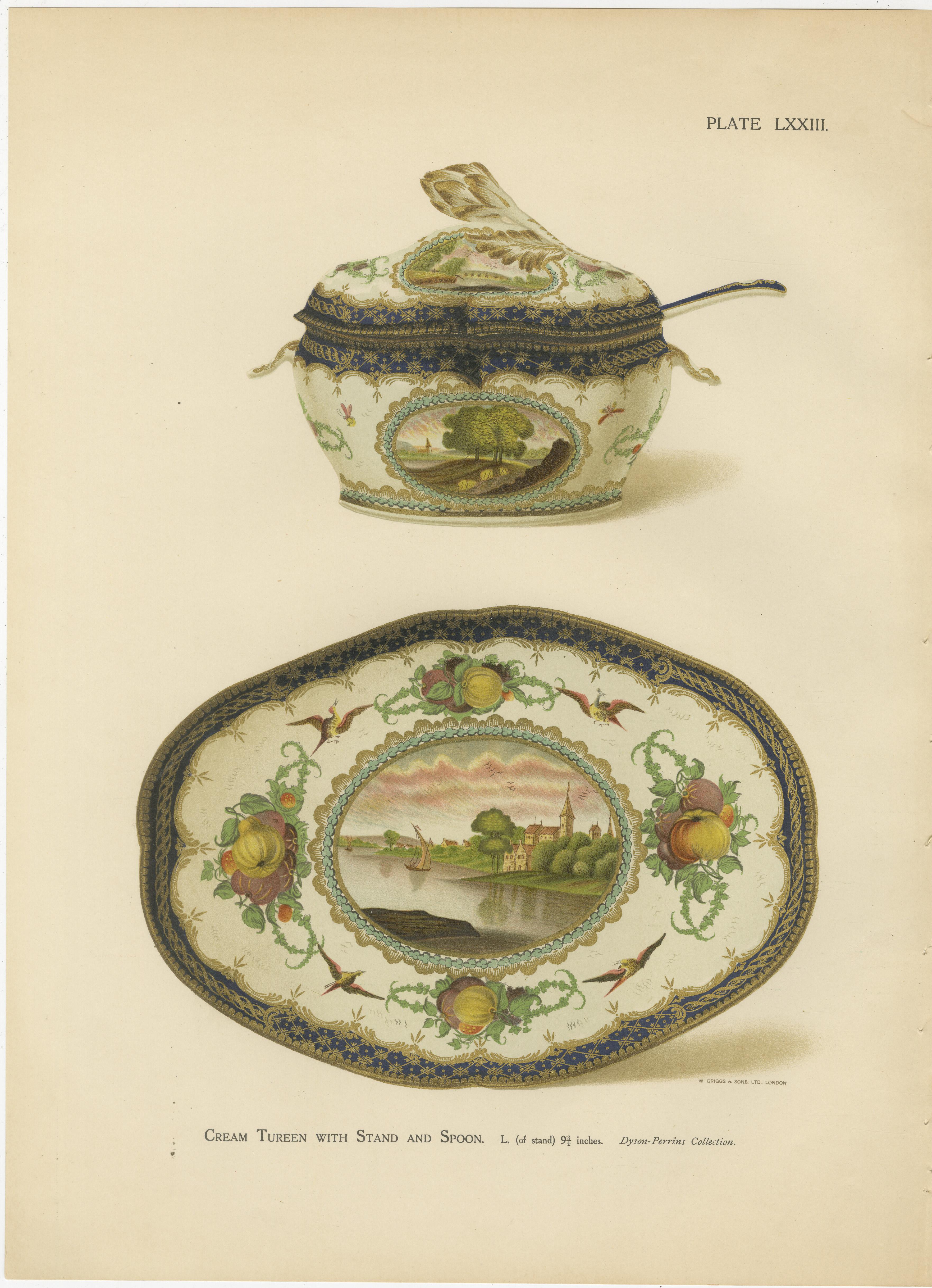
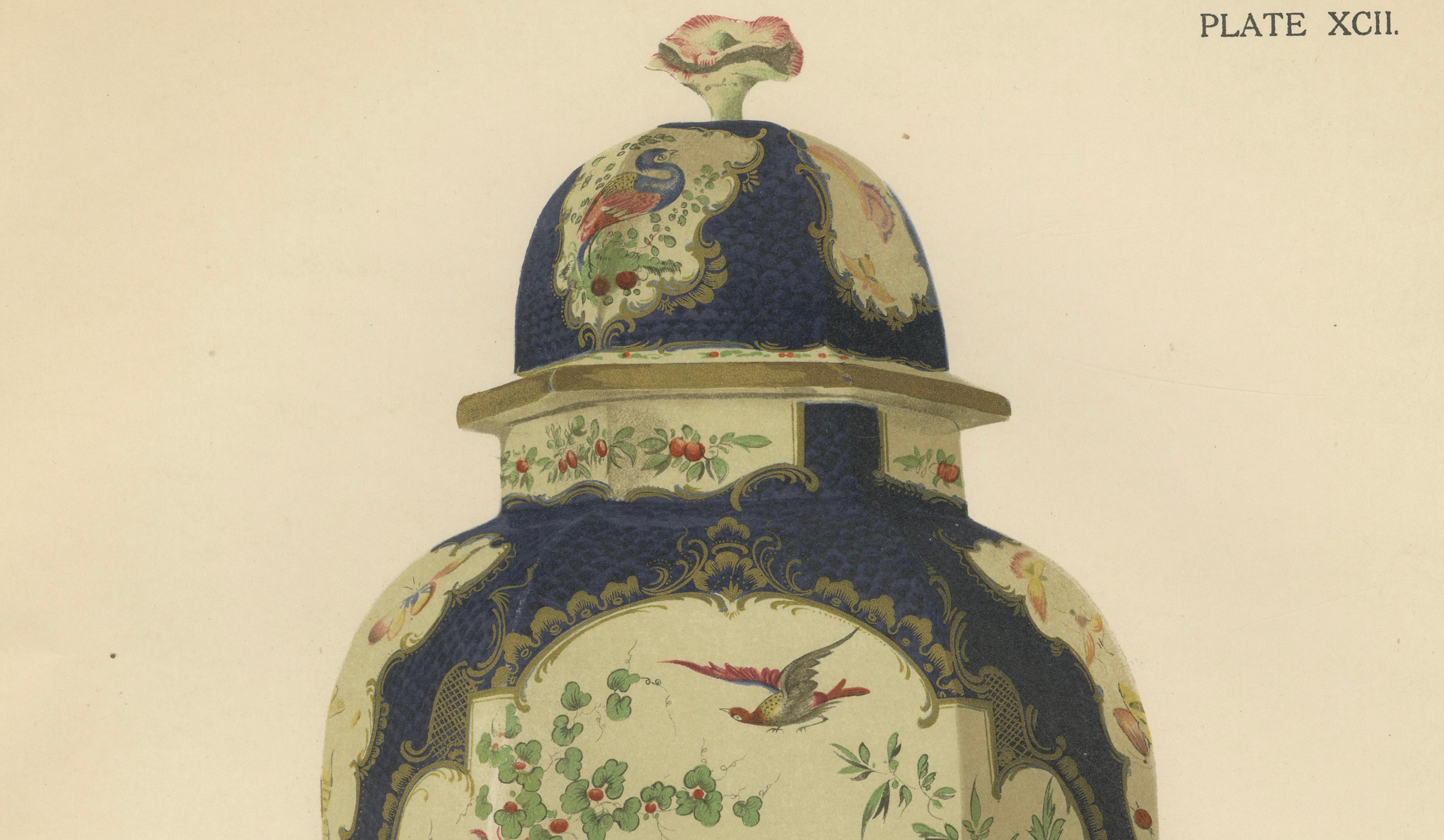
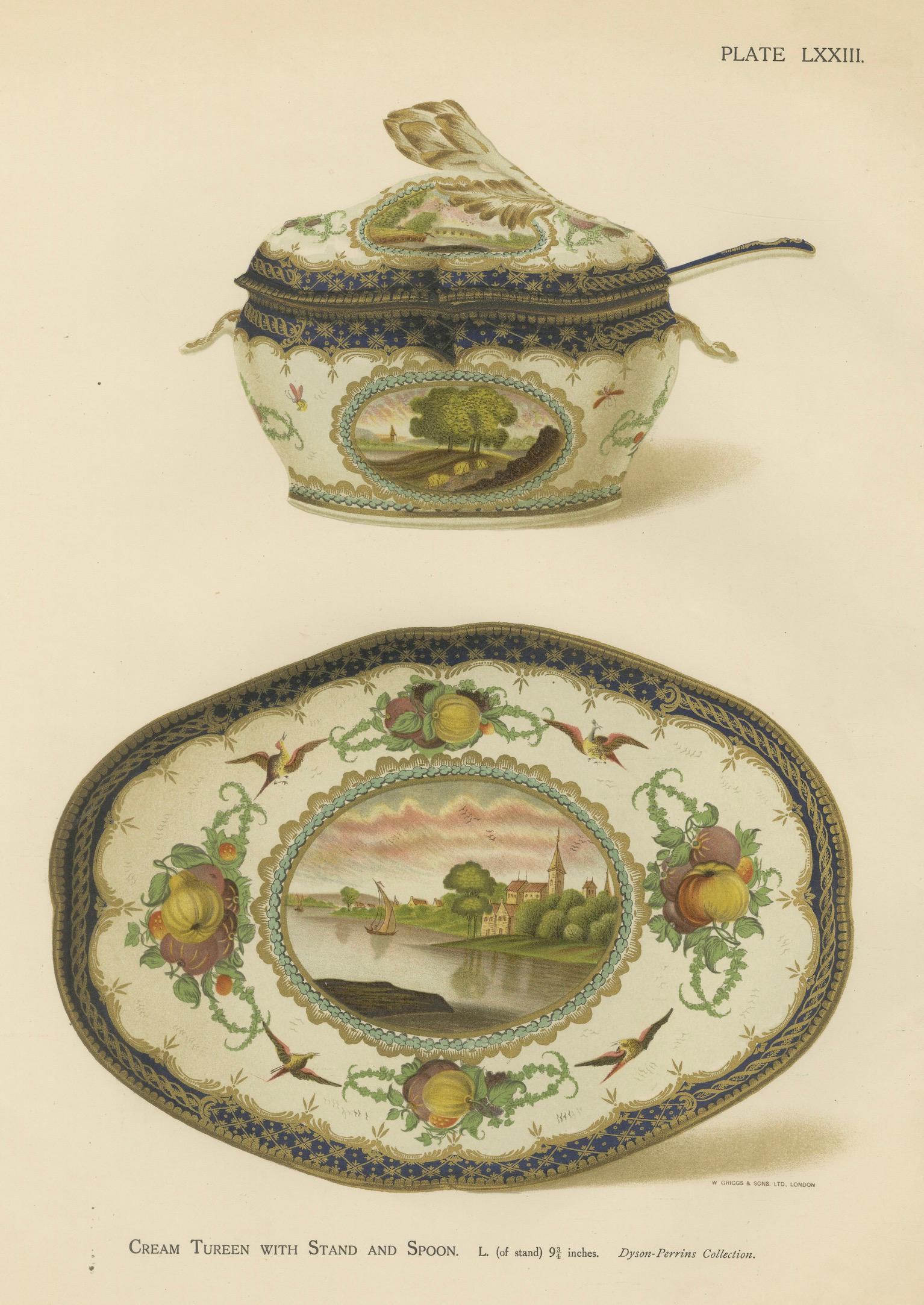
This decorative pair of chromolithographic plates from 1910 illustrates two refined English porcelain vase designs associated with the Worcester tradition. Both prints are unified by deep blue grounds, carefully structured ornament, and richly rendered gold decoration, making them an elegant and visually coherent pairing for interior display.
NOTE: The prints are offered unframed, giving flexibility to select a frame that best suits the intended interior. The attached image of the prints in a frame is an impression only.
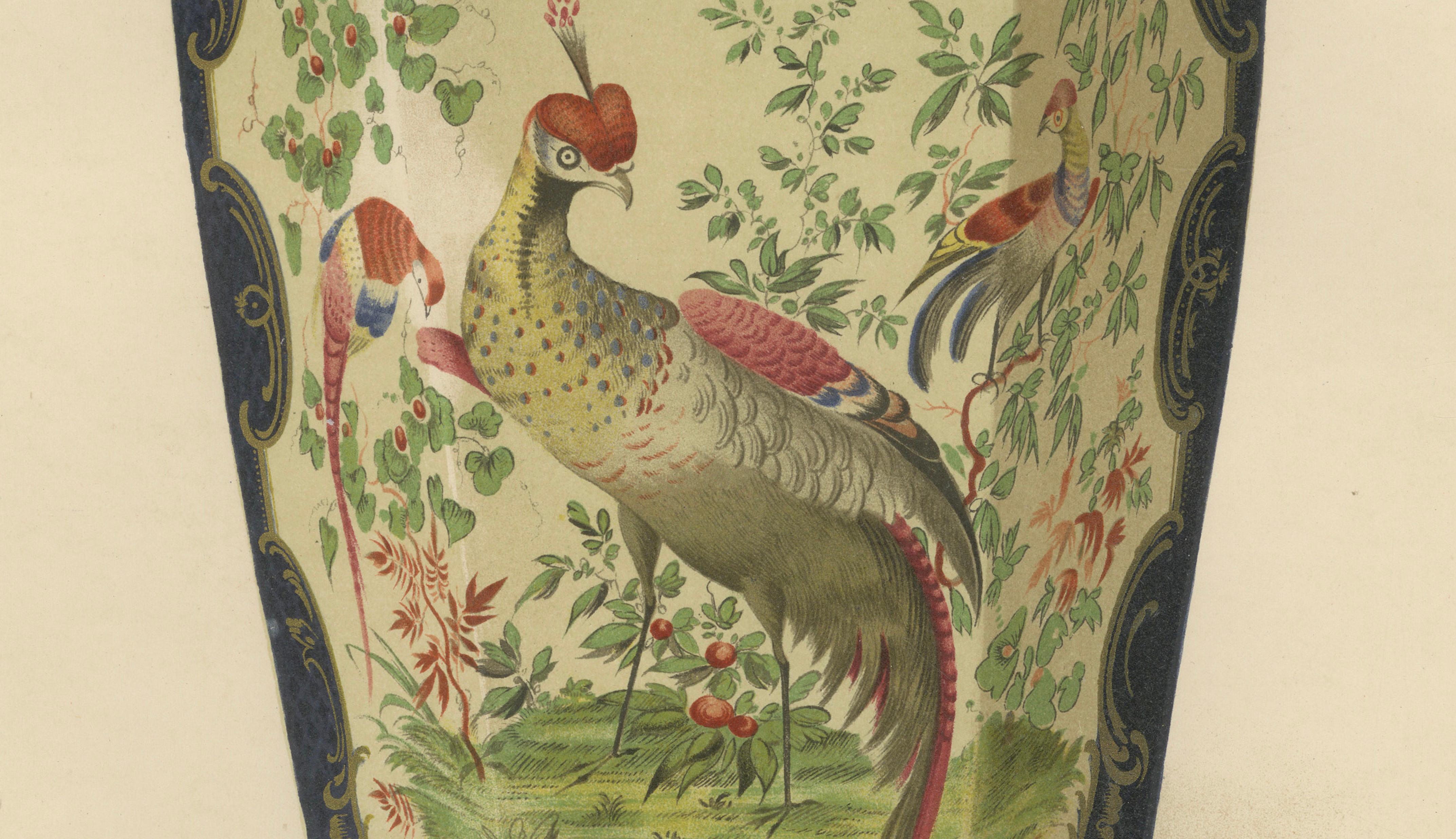
One plate depicts a vase decorated with a pheasant set within shaped reserves against a scale-blue ground. The bird is rendered with naturalistic detail, while the surrounding ornament is enriched with gilded borders that articulate the form and lend the design a sense of depth and luxury. The second plate shows a vase with two painted panels after designs by Donaldson, framed by elaborate gilt scrollwork and set against a rich blue ground. The contrast between figural and ornamental decoration is balanced and deliberate, reflecting the high level of design refinement characteristic of late 19th-century Worcester porcelain.
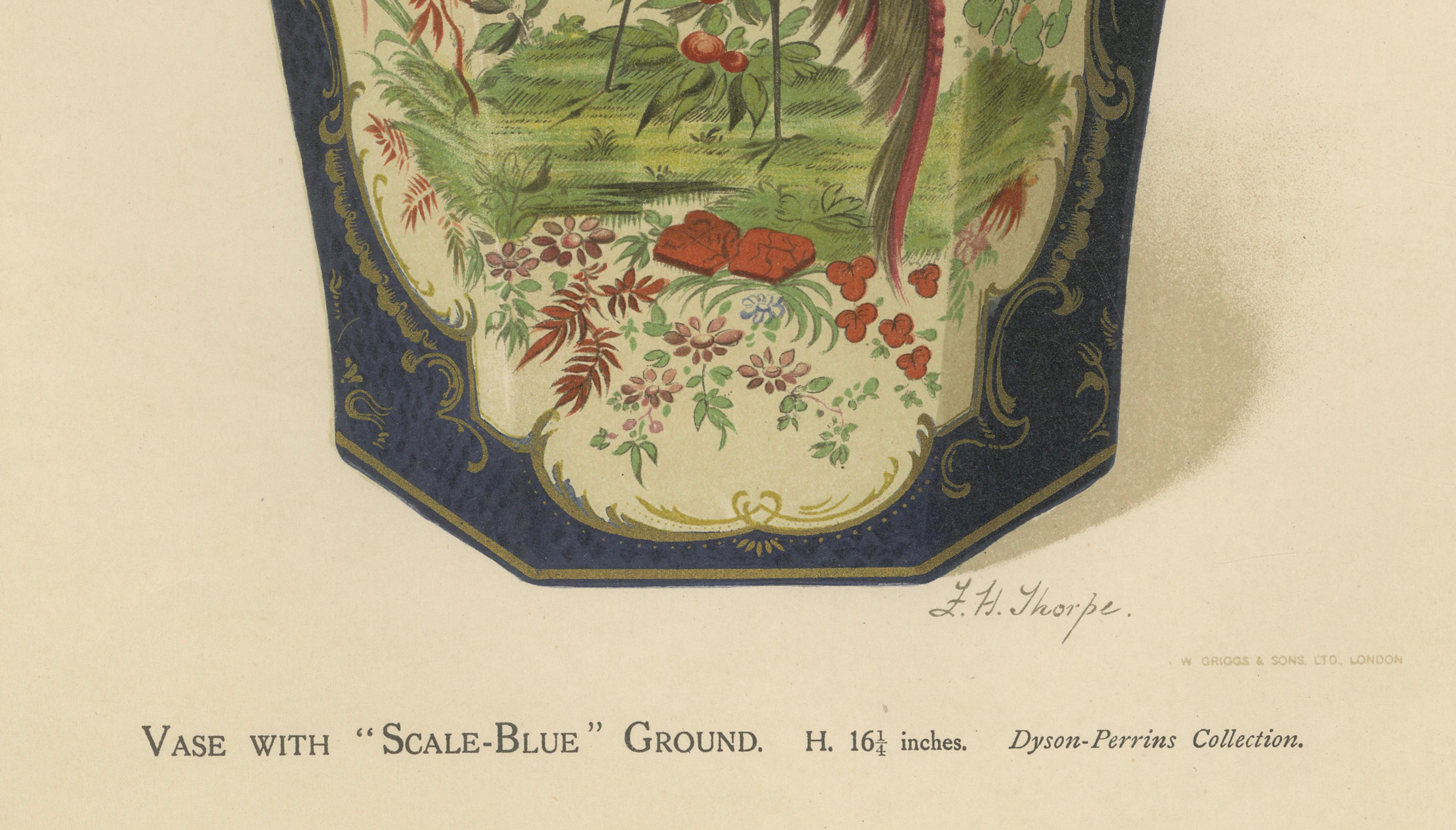
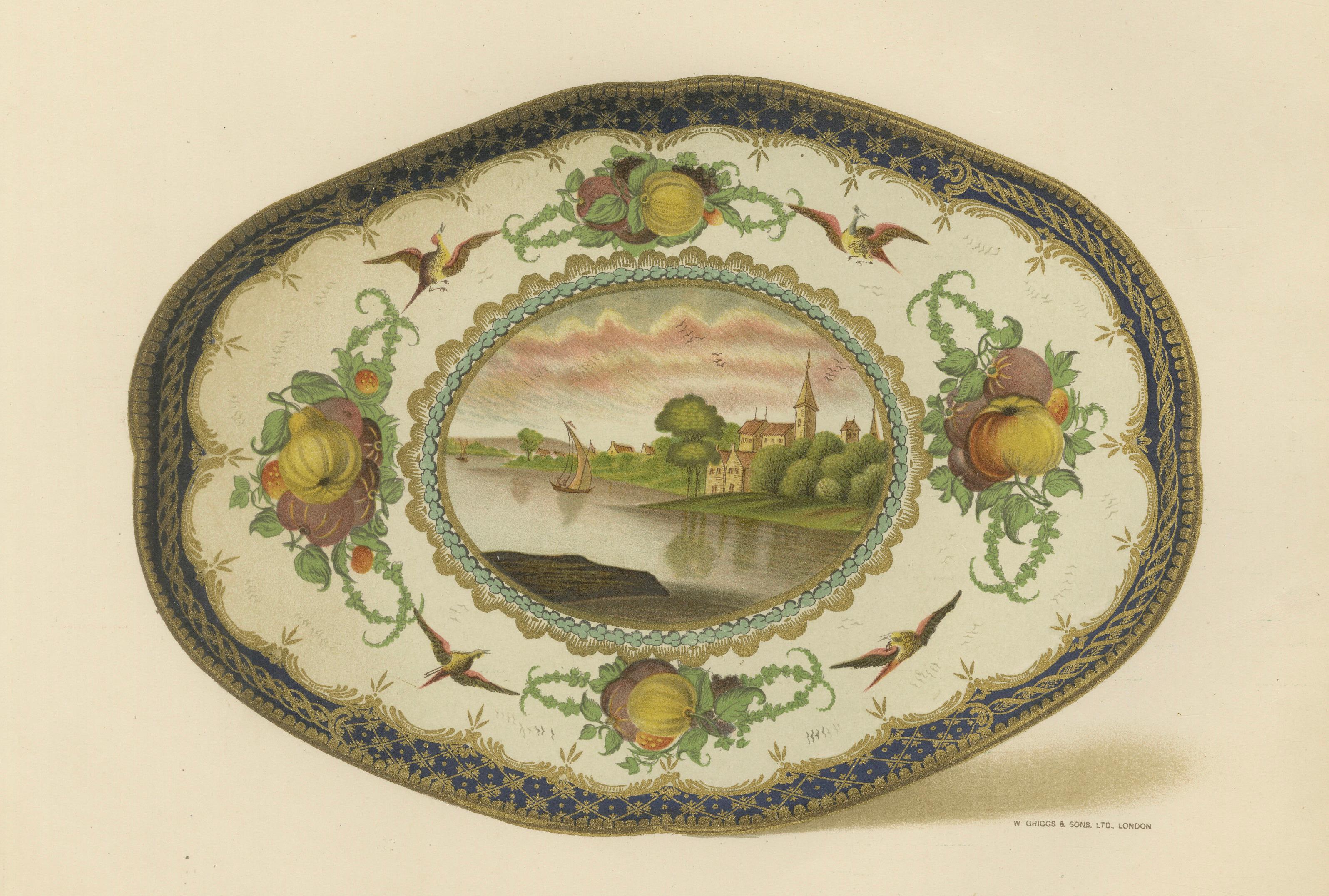
Gold detailing is a defining feature of both prints. The chromolithographic technique captures the warmth and subtle sheen of gilded decoration, highlighting rims, reserves, and ornamental borders without overpowering the underlying colour. When framed, these gold accents respond beautifully to ambient light, enhancing the decorative presence of the pair.
The prints originate from Worcester Porcelain: A Description of the Ware from the Wall Period to the Present Day by R. L. Hobson, published in London by Bernard Quaritch in 1910. The plates were drawn by Joseph H. Thorpe and printed by W. Griggs & Sons, one of the foremost British firms specialising in high-quality colour printing for scholarly and museum publications.
This pair is well suited for a dining room, library, or study, where the combination of avian imagery and structured ornament provides both visual interest and stylistic harmony.
Condition:
Both prints are in very good condition, with light, even age toning consistent with the period. Colours remain strong and well preserved.
Framing tips:
Frame as a matching pair in dark walnut or ebonised frames with generous ivory mats. Subtle adjustment of mat margins can be used to visually align the image fields, resulting in a calm and balanced presentation.
Technique: Chromolithography
Maker: Joseph H. Thorpe, London, 1910