About this sheet
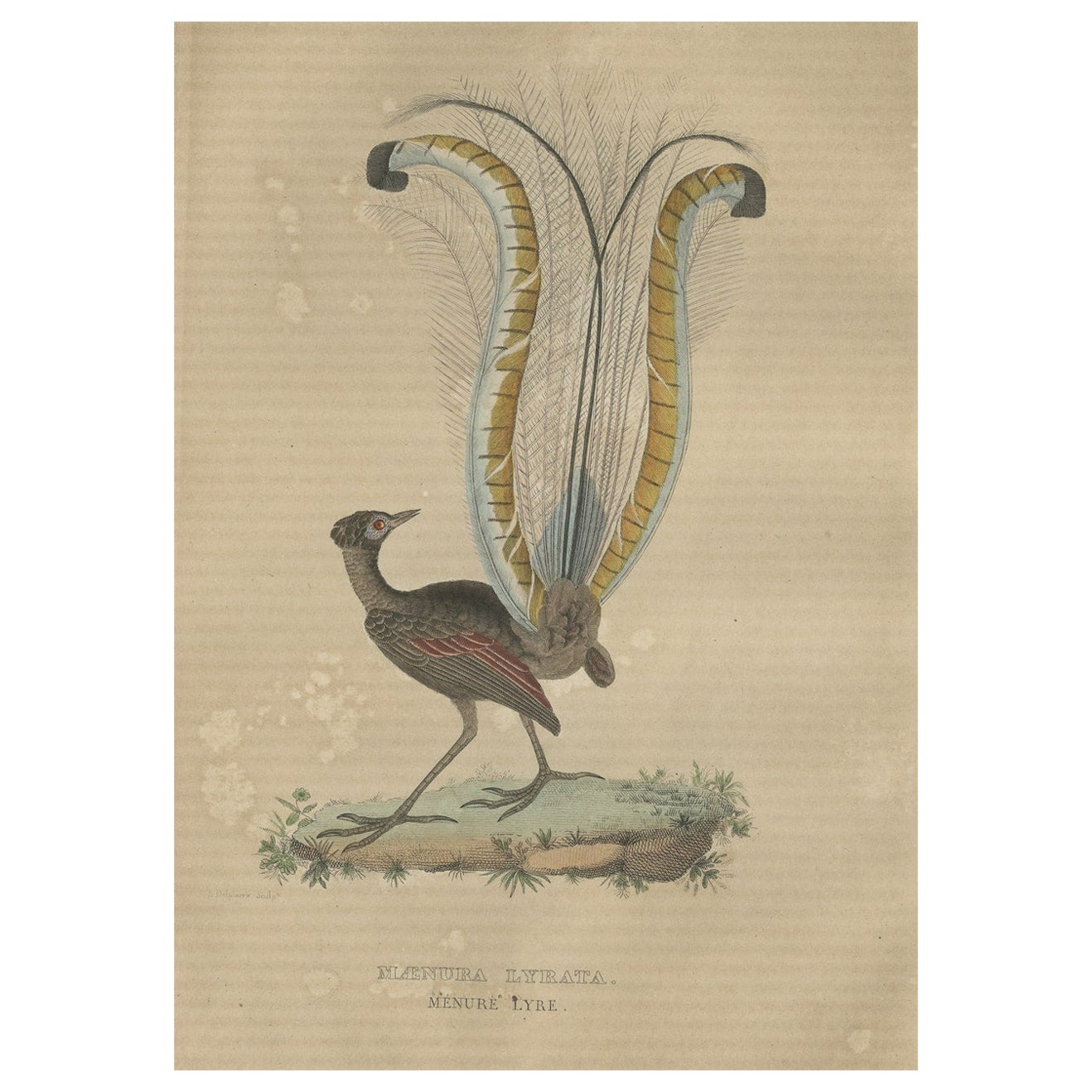
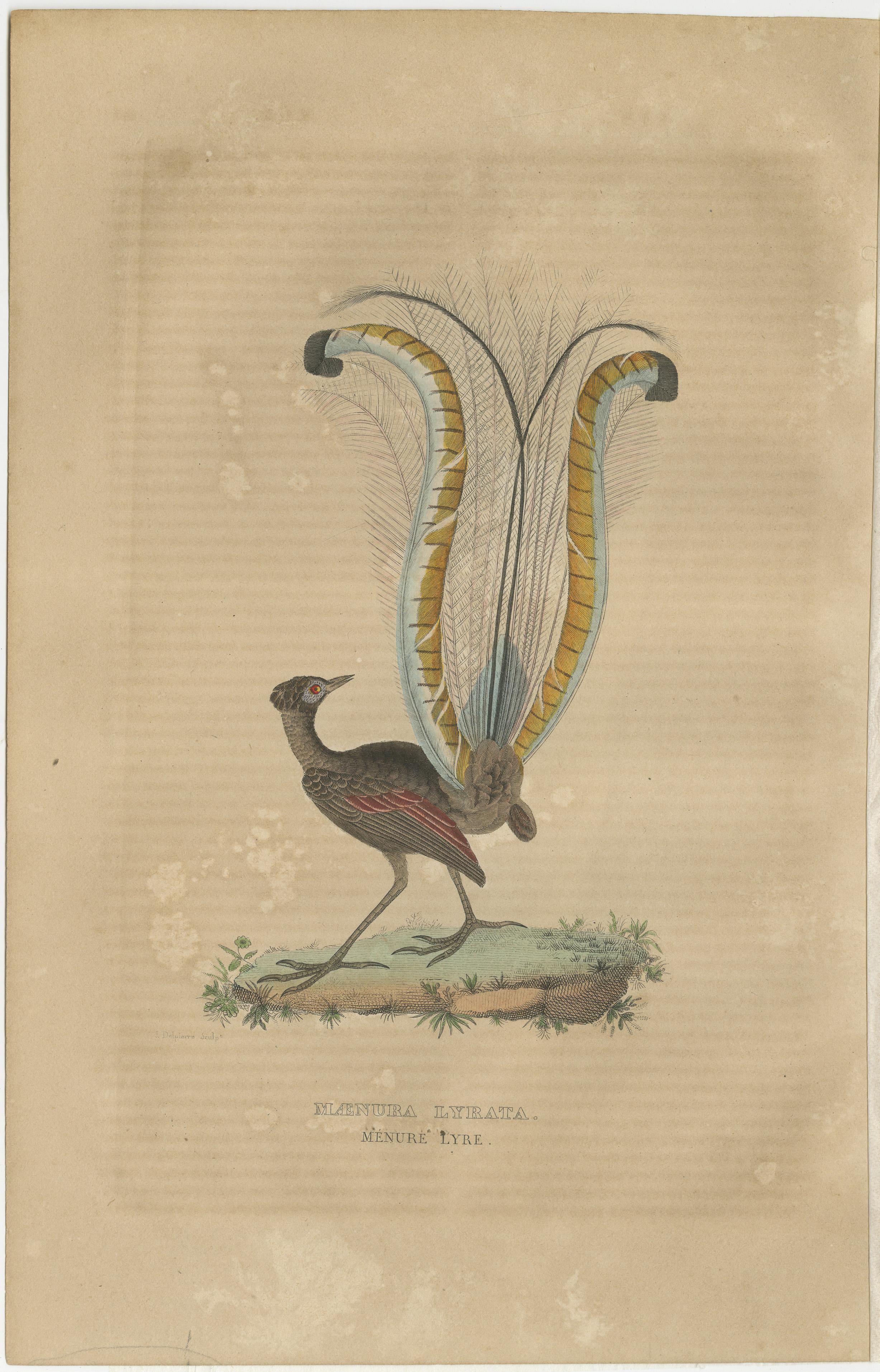
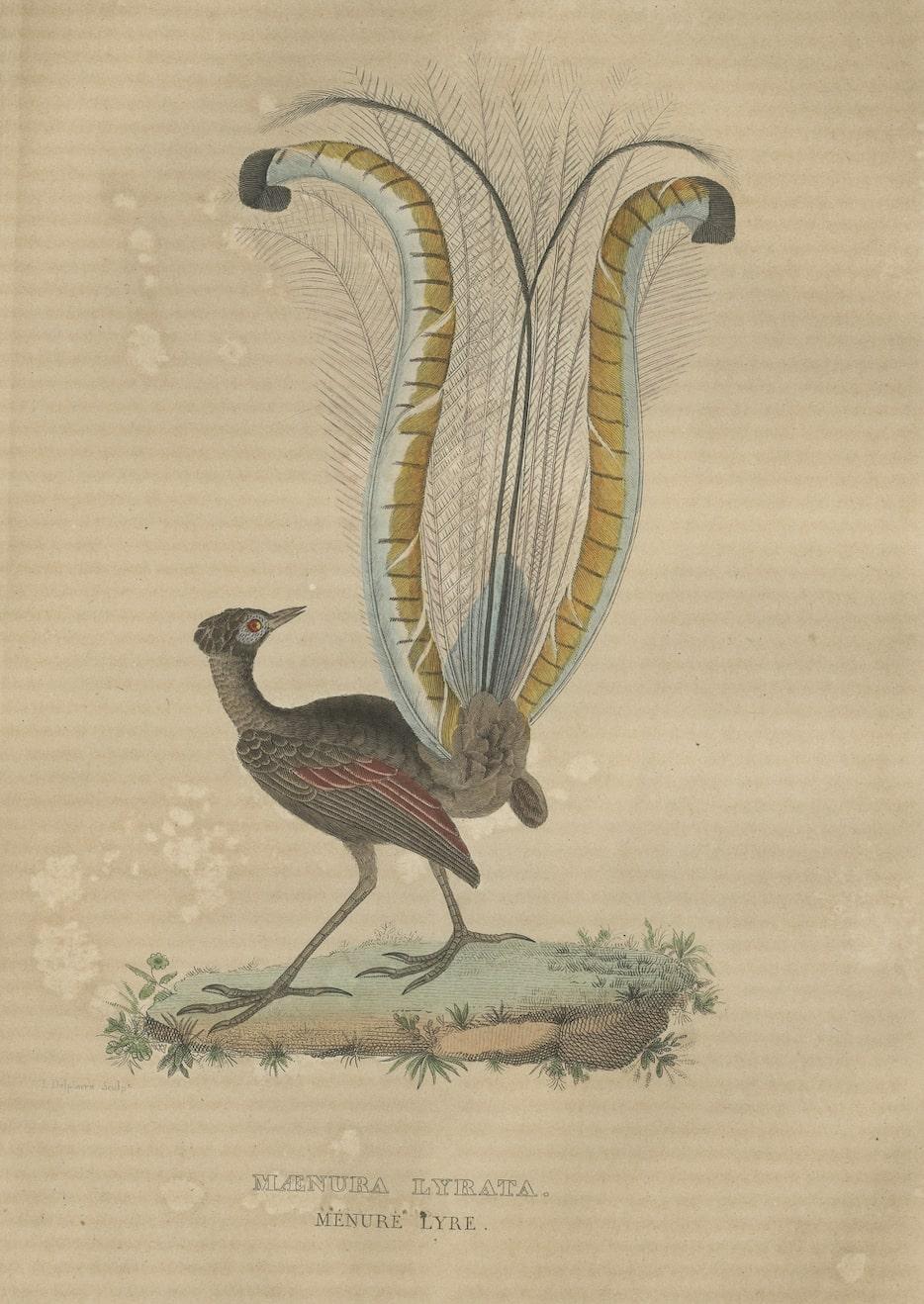
This bird's name stems from its unique tail feathers, which, in the male, resemble a lyre or harp shape. These intricate plumes, combined with the bird's impressive vocal mimicry skills, contribute to its captivating presence in the wild. The male Superb Lyrebird utilizes its elaborate tail display during courtship rituals to attract mates.
Apart from its striking appearance, the Superb Lyrebird is famous for its exceptional mimicry. It can replicate a diverse array of sounds, including other bird calls, animals, machinery, and even human-made noises. This remarkable ability makes it one of the world's most proficient mimics in the avian kingdom.
The Superb Lyrebird plays a crucial role in its forest ecosystem and is a symbol of Australia's unique biodiversity. Its impressive vocal talents and distinctive appearance have made it a subject of fascination among wildlife enthusiasts and researchers alike.
More info on the book in which it was published:
The 'Dictionnaire Classique des Sciences Naturelles' by Pierre Auguste Joseph Drapiez stands as a remarkable testament to 19th-century natural sciences. Published in Brussels in 1845, this work represents an expansive collation of knowledge, building upon the pioneering works of Buffon, Daubenton, Lacepede, Cuvier, de Jussieu, and other influential naturalists.
The prints within this compendium likely showcase a rich amalgamation of artistic precision and scientific accuracy. Drapiez, himself a Belgian naturalist, would have aimed for detailed representations of flora, fauna, and scientific phenomena, mirroring the illustrative styles prevalent during his time. Given the era's emphasis on illustration, these prints were likely engraved meticulously, possibly portraying intricate anatomical details or lifelike depictions of the natural world.
With Drapiez's background in natural history, the prints might bear testament to his commitment to scientific authenticity, aiming to educate and inspire scholars and enthusiasts alike. These engravings would have complemented the text, offering visual aids that elucidate the concepts and specimens discussed in the volume.
Overall, the prints of 'Dictionnaire Classique des Sciences Naturelles' likely serve as both artistic representations and invaluable scientific resources, encapsulating the essence of 19th-century natural history exploration and documentation.