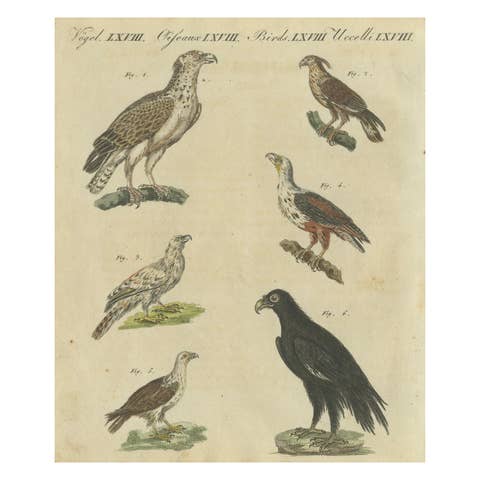
Majestic Scavengers: Hand-Colored Engraving of Vultures and Birds of Prey, 1805
€ 140
One of a kind: this is the sheet in the photographs. Ships from Langweer, the Netherlands.
Date
1805
Sheet size
23 × 19 cm (9.1 × 7.5 in)
Condition
Good
Reference
BG-14000-46
Condition
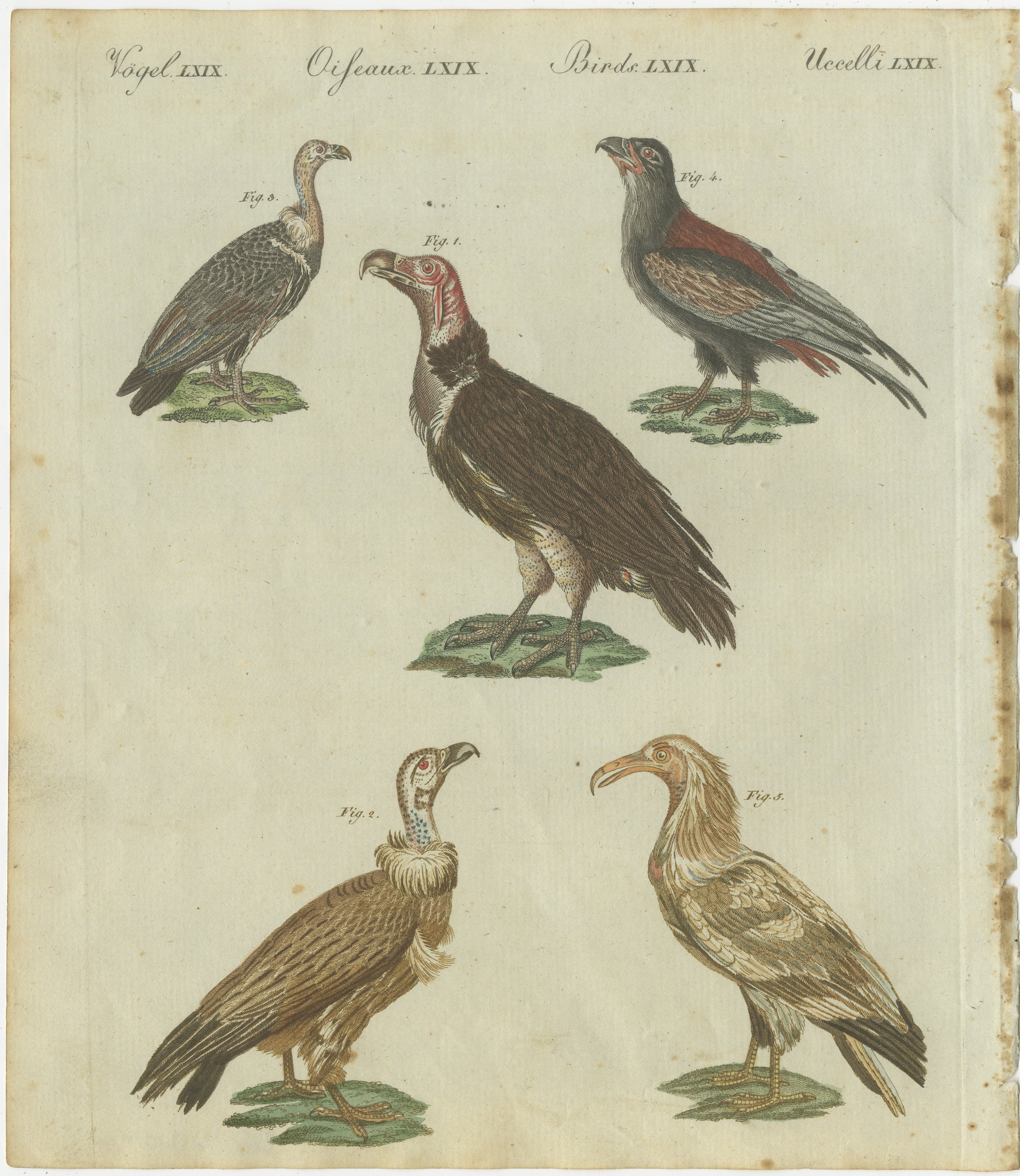
The engraving is in good condition with minor foxing along the edges and slight age-related discoloration. The hand-applied colors remain vibrant, bringing each bird to life.
About this sheet
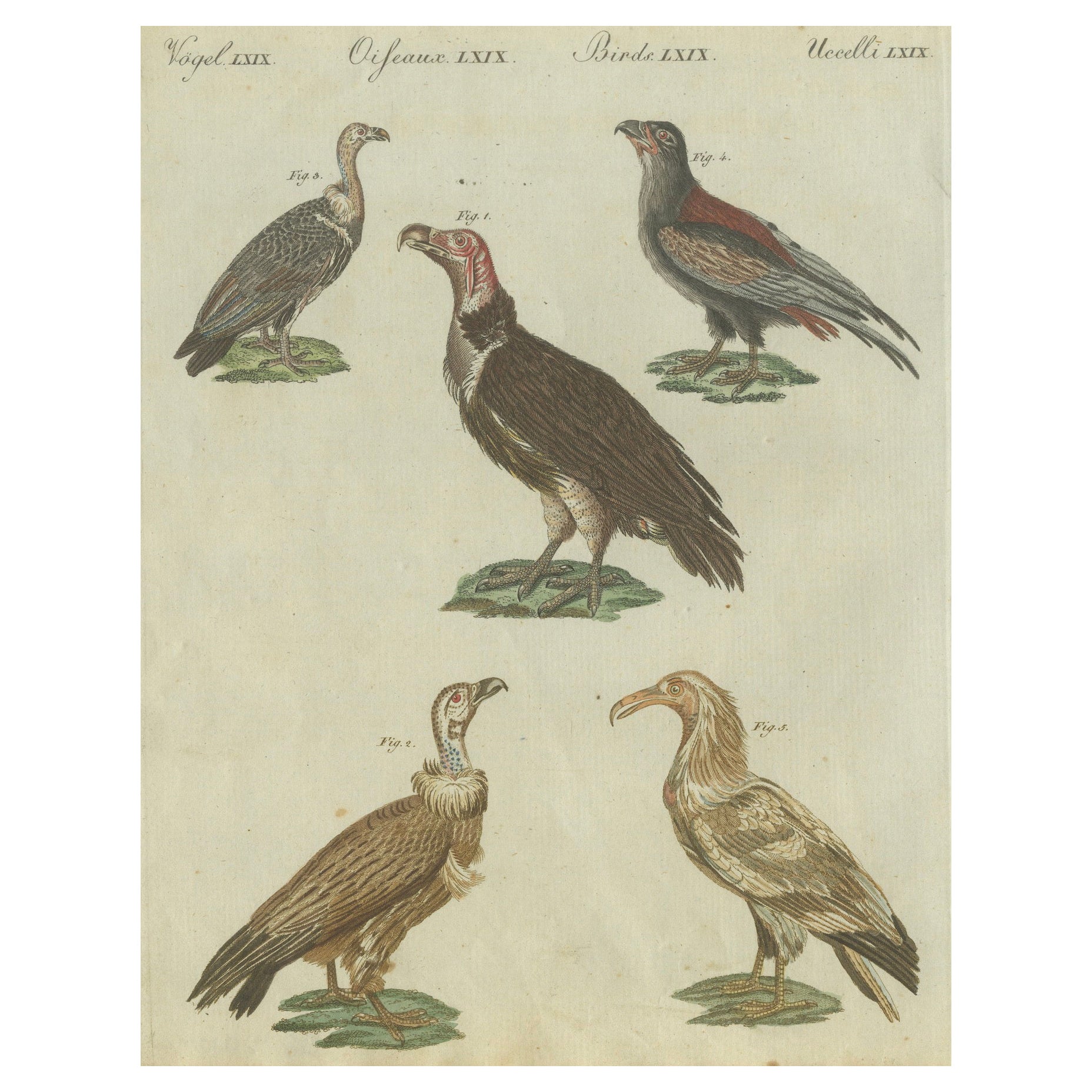
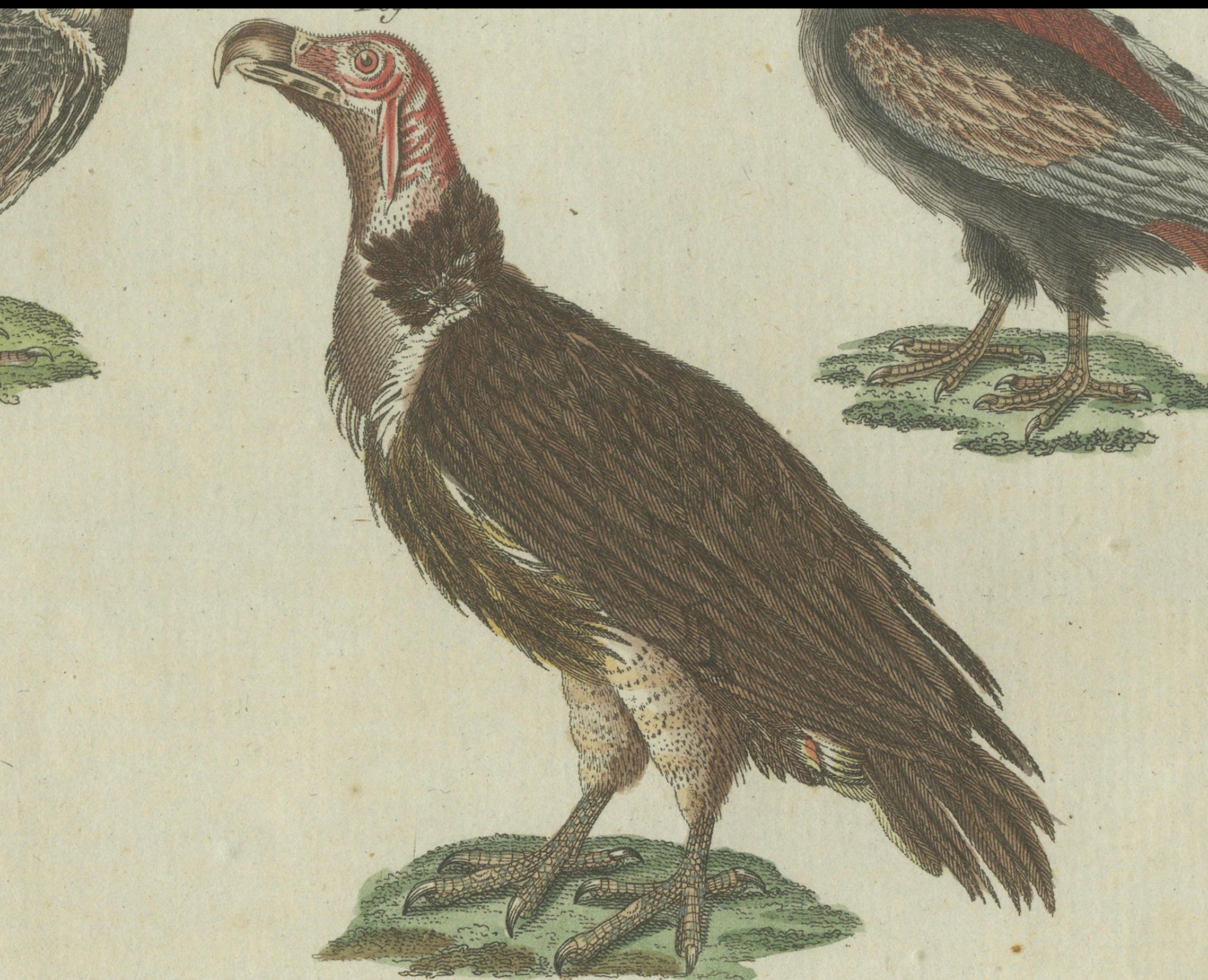
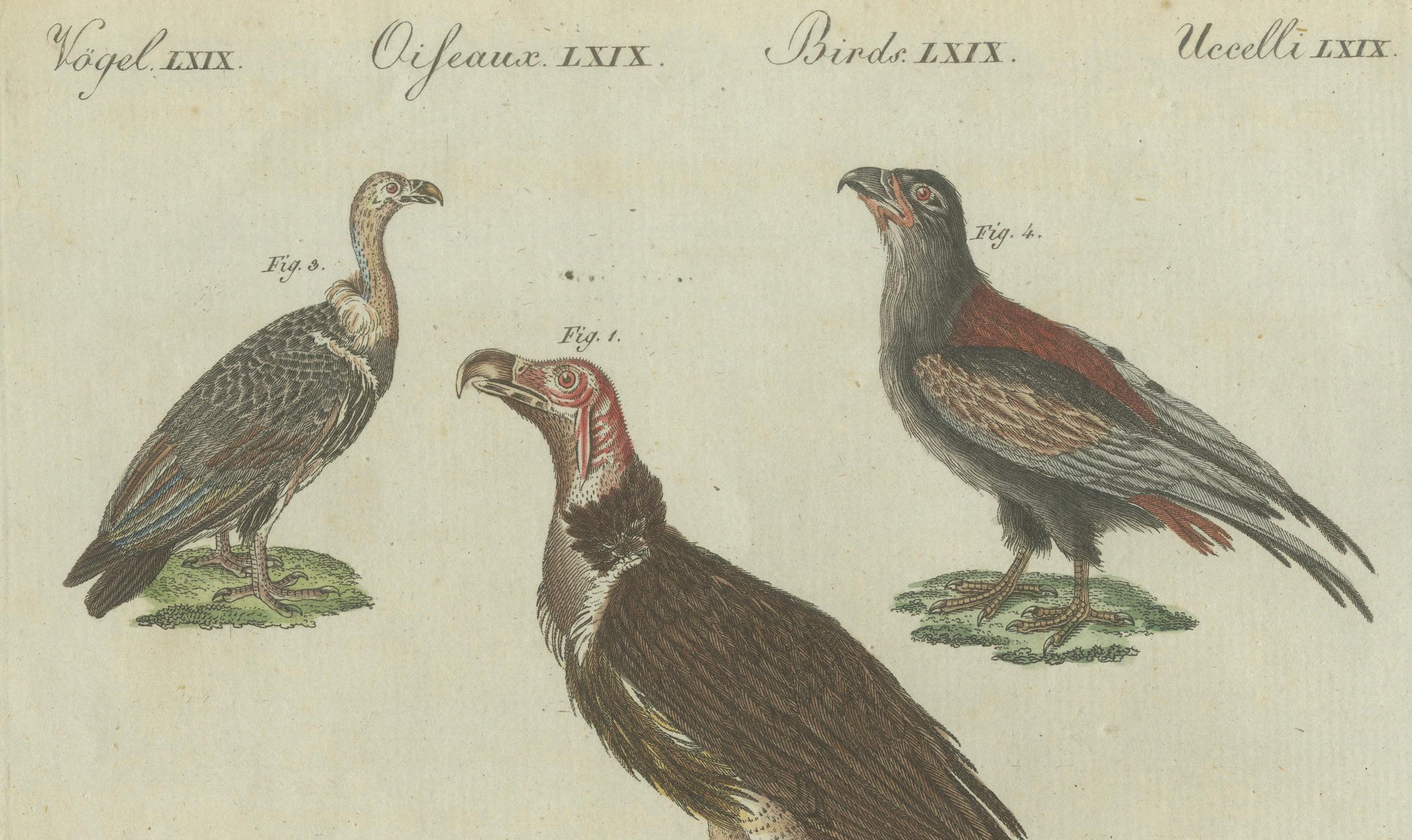
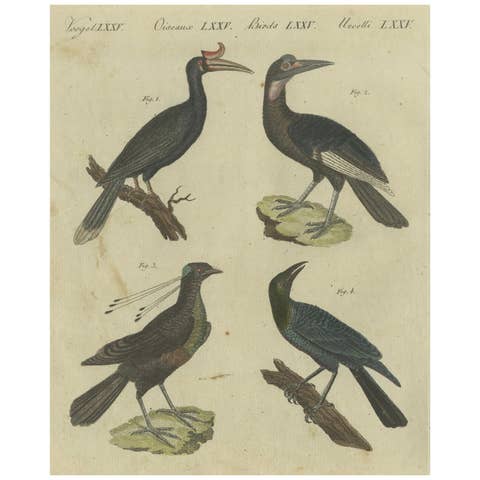
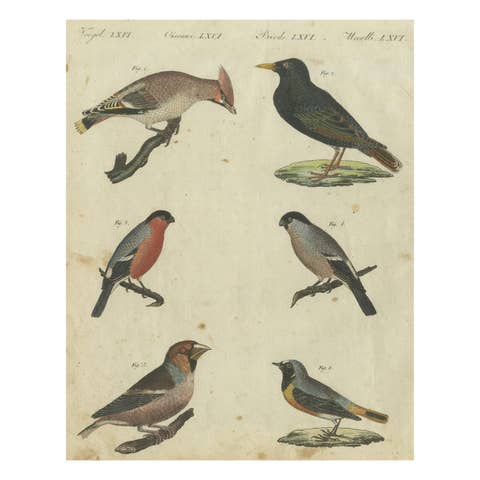
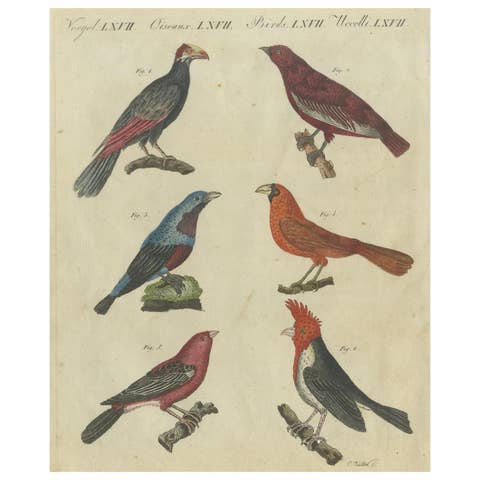
This intricate 19th-century engraving features a striking collection of vultures and scavenging birds, highlighting their unique adaptations and elegant profiles. Each bird is depicted with meticulous hand-colored detailing, emphasizing the natural beauty and diversity of these vital creatures of the ecosystem.
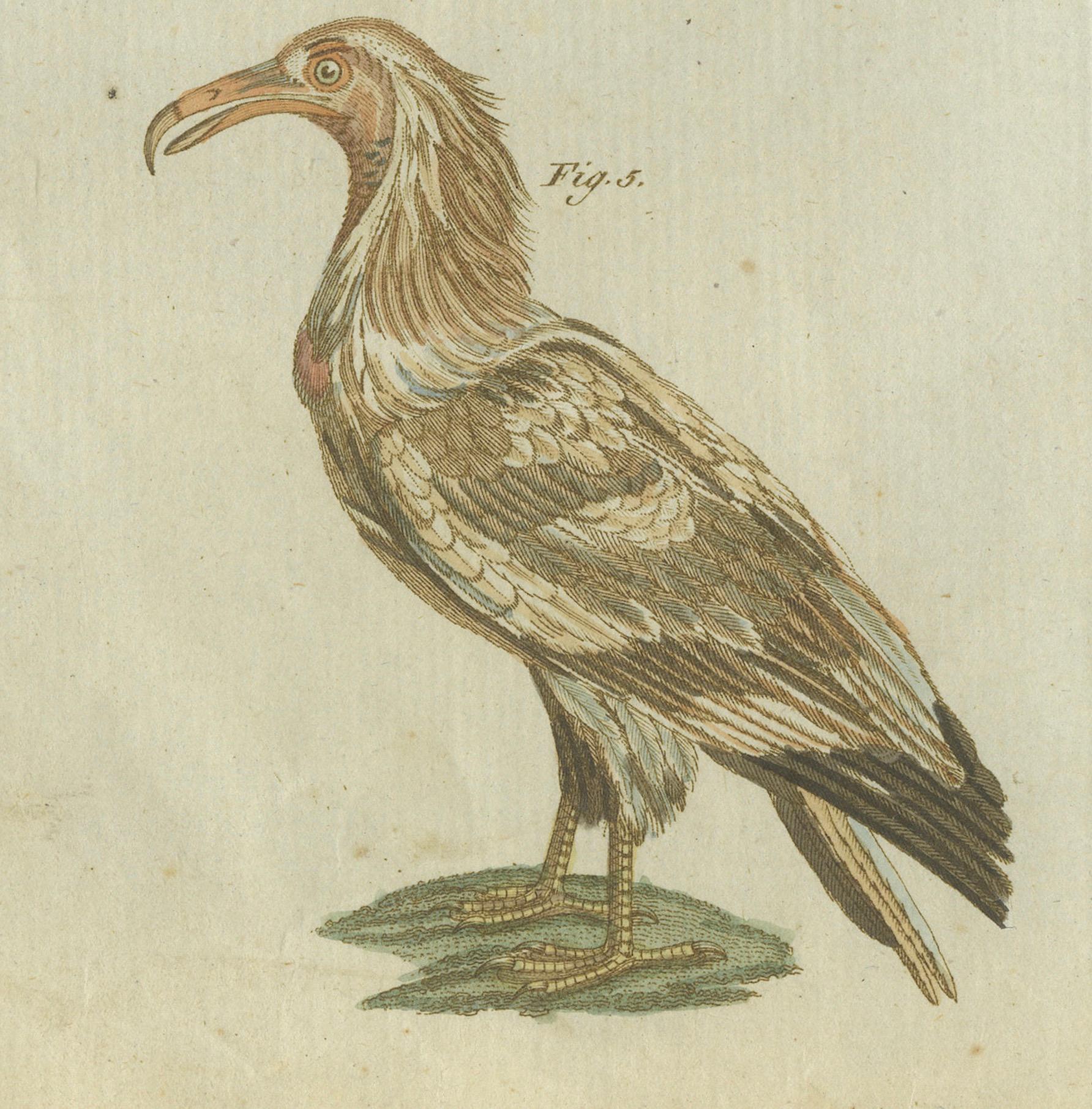
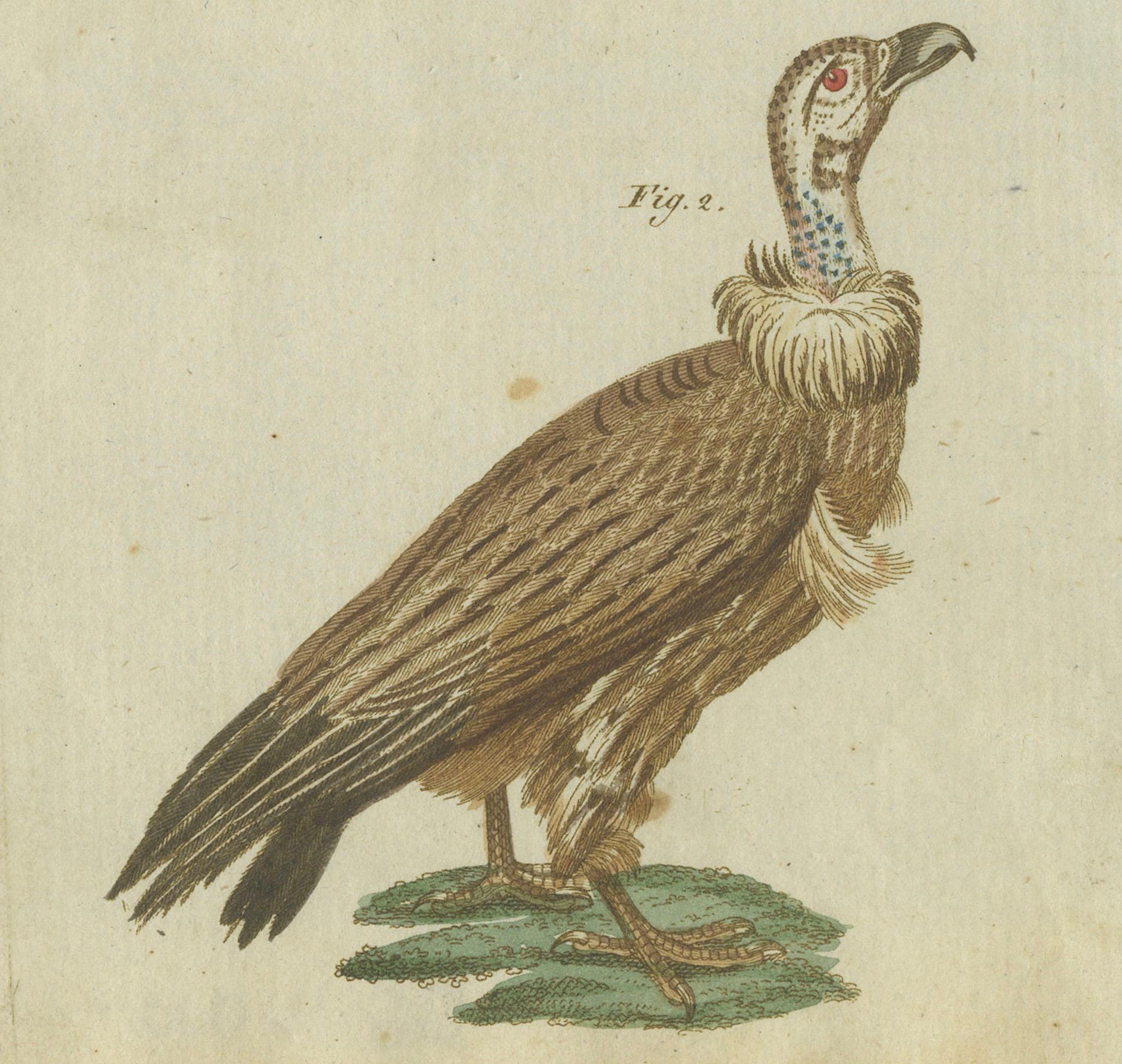
Figures include: 1. **Figure 1:** A hooded vulture with a starkly featherless head and strong curved beak, suited for its role as a scavenger. 2. **Figure 2:** A white-rumped vulture with distinct spotted patterns, showcasing its robust build and sharp talons. 3. **Figure 3:** An Egyptian vulture with its pale feathers and yellow face, an iconic symbol of intelligence and adaptability. 4. **Figure 4:** A cinereous vulture with striking dark plumage and a powerful, intimidating presence. 5. **Figure 5:** A red-headed vulture, vibrant with a dramatic red crown, blending strength and beauty in its form.
Published as part of Friedrich Johann Bertuch’s *Bilderbuch für Kinder* (*Picture Book for Children*), this engraving reflects the Enlightenment-era goal of educating through art and natural history. Bertuch’s work, released between 1790 and 1830, remains a masterpiece of both scientific documentation and artistic excellence.
Condition: The engraving is in good condition with minor foxing along the edges and slight age-related discoloration. The hand-applied colors remain vibrant, bringing each bird to life.
Advice on presentation: 1. Frame the engraving in a dark wood or black frame to complement the dramatic tones of the birds. Use an acid-free mat in ivory or pale gray to protect and accentuate the artwork. 2. Display in a library, study, or gallery focusing on ornithology or natural history themes. 3. Include a descriptive label or plaque to highlight the historical and scientific importance of the engraving. 4. Store in an archival-quality portfolio for conservation purposes if not displayed.
This engraving is ideal for collectors, ornithology enthusiasts, or as a centerpiece in an educational or decorative setting.