About this sheet
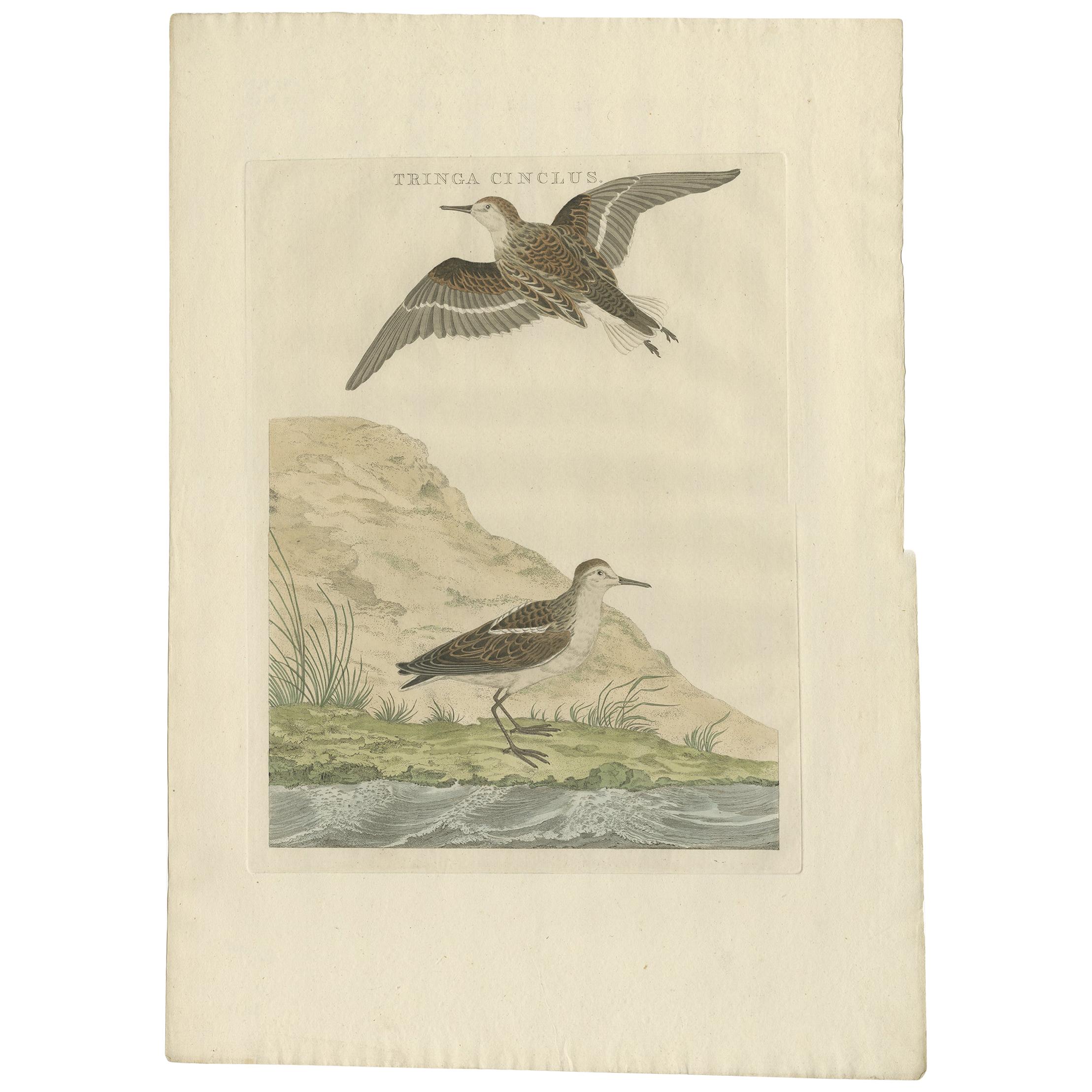
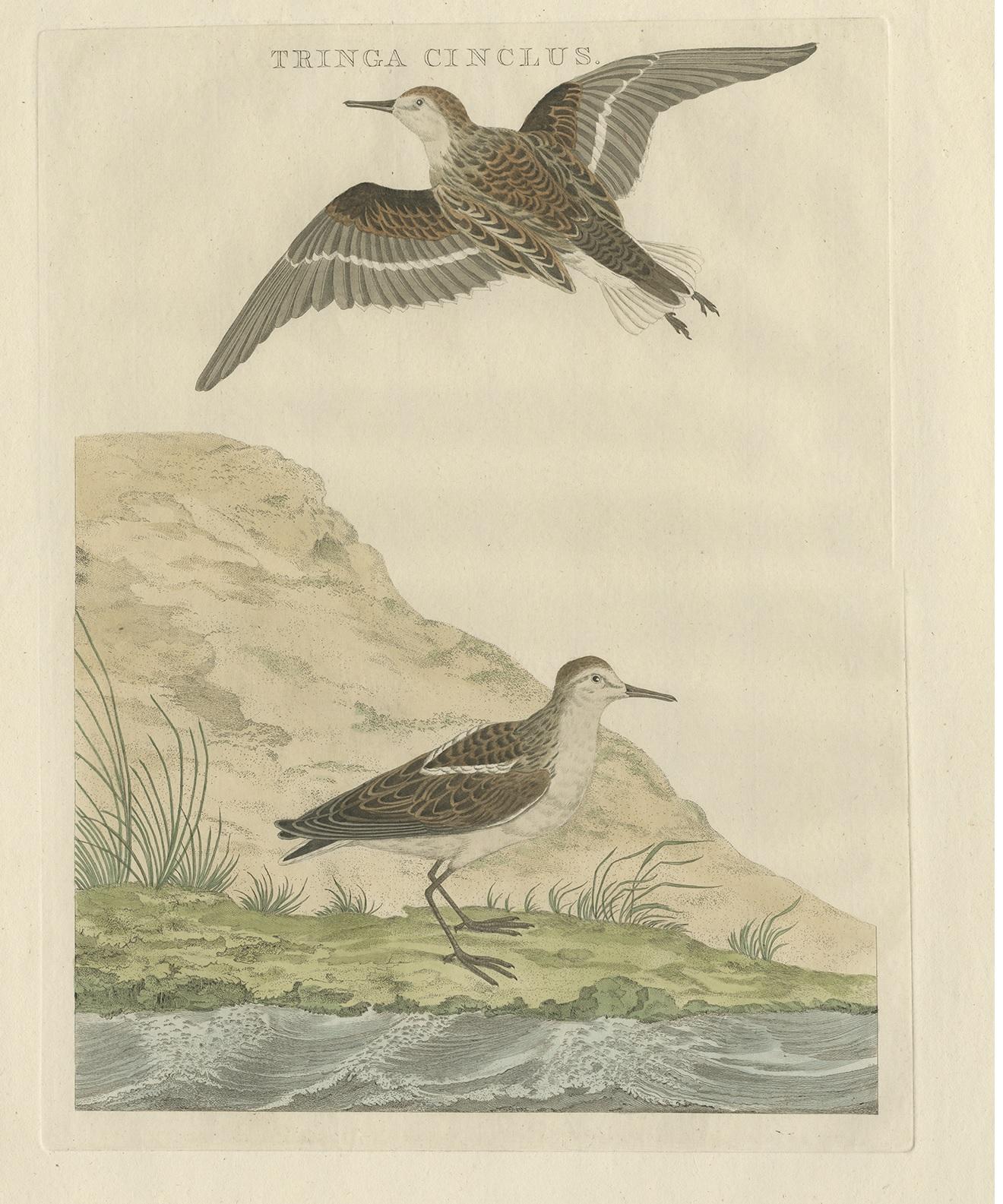
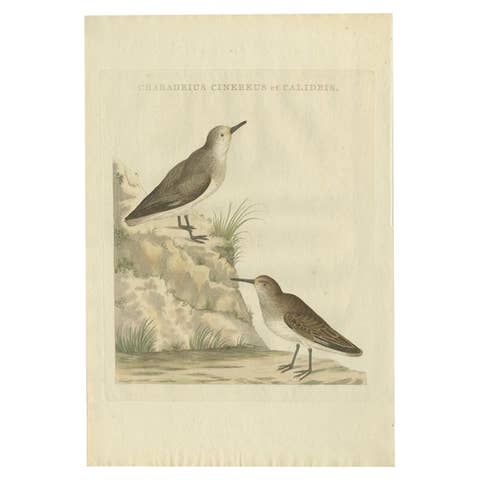
Little Stint Antique Dutch Bird Print by Sepp and Nozeman, circa 1770
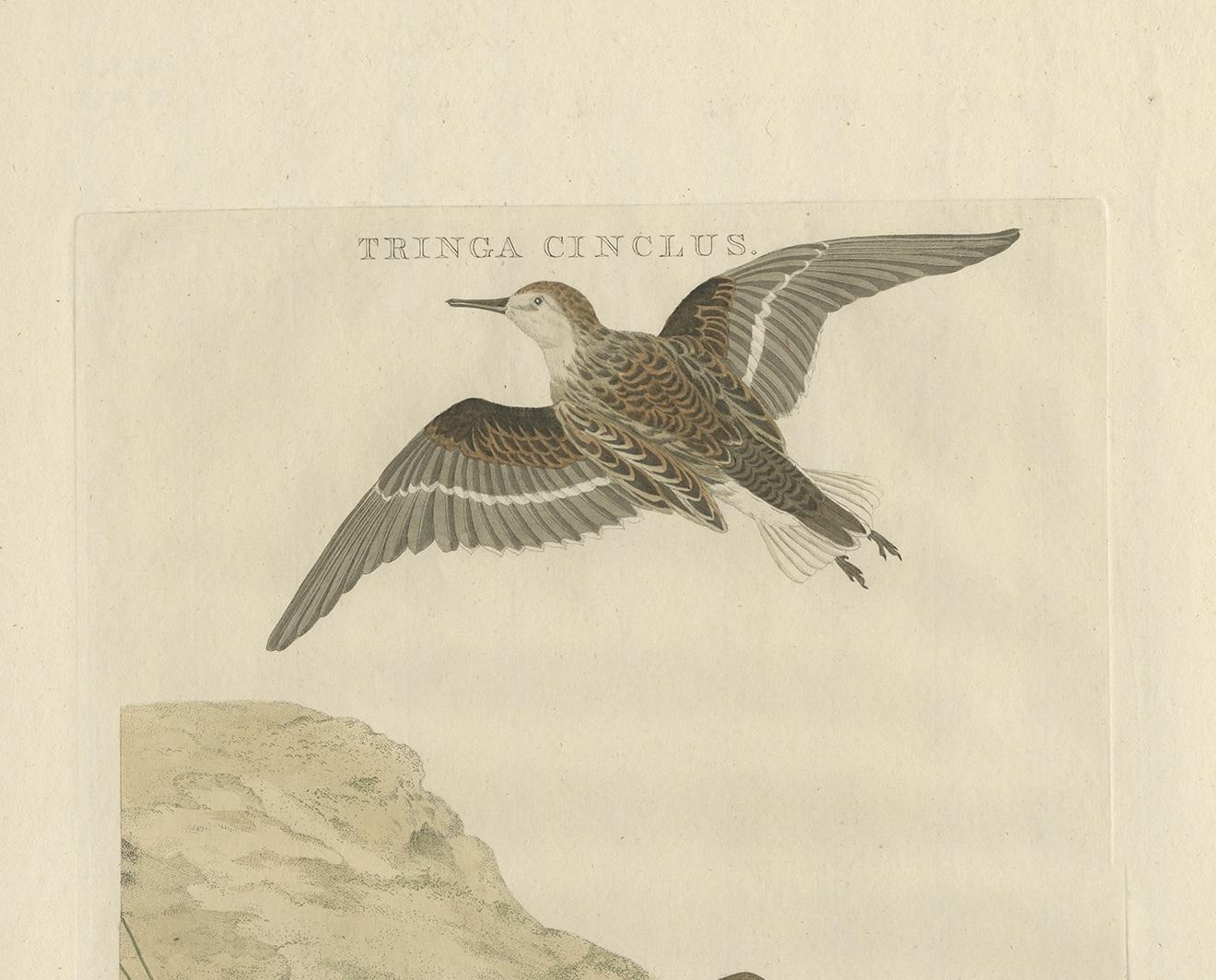
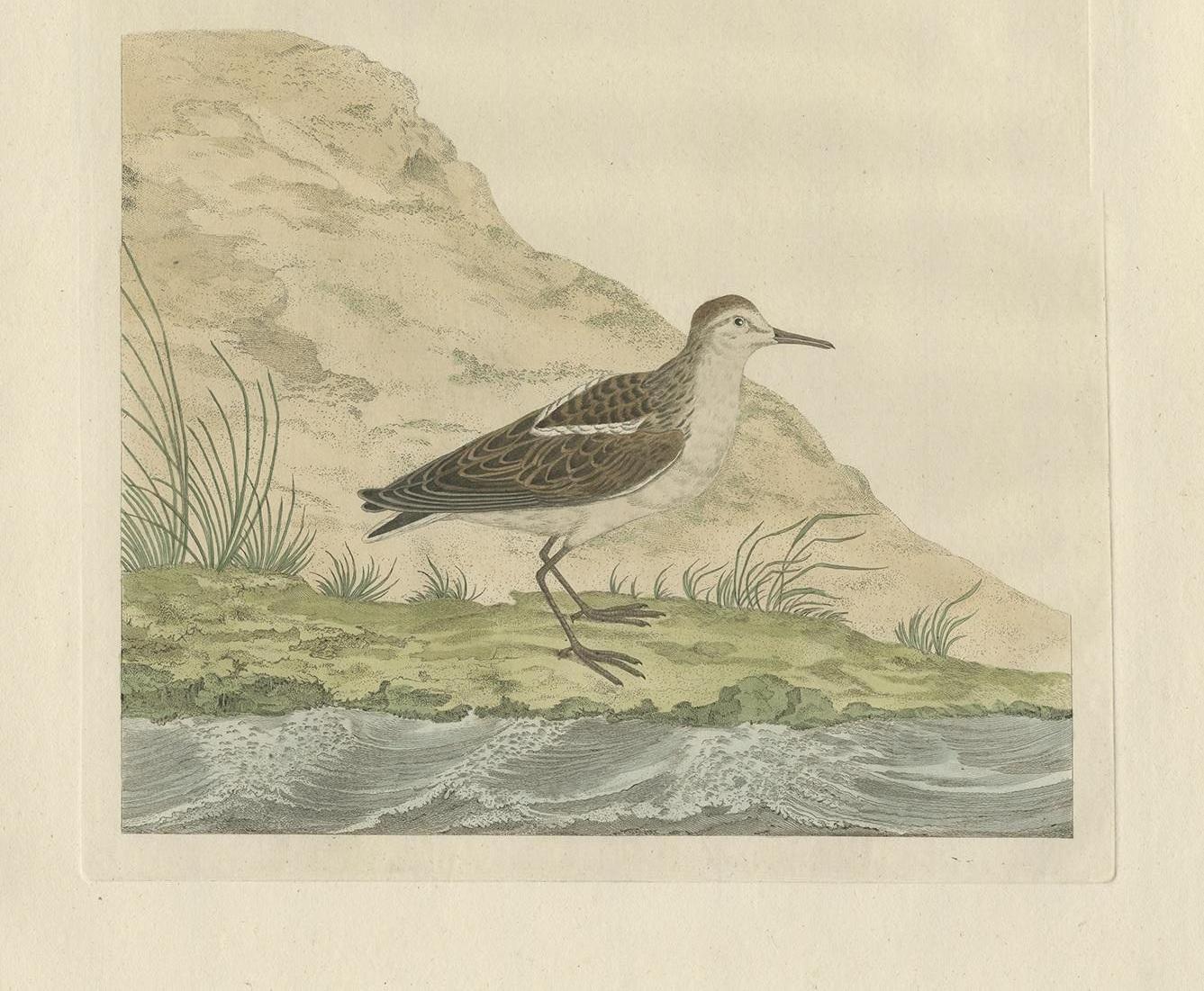
This elegant hand-coloured engraving, titled Tringa Cinclus, depicts the little stint (Calidris minuta), a small and agile wader commonly found along shorelines and wetlands. Known in Dutch as de kleine zandloper, the species is shown here in two poses—one bird wading on a rocky shoreline and another depicted mid-flight with wings outstretched. The detailed plumage features warm brown tones with dark scalloping on the back and pale underparts, while the landscape background includes a windswept outcrop and rippling water, evoking the bird’s natural coastal habitat.
This print originates from *Nederlandsche Vogelen*, the groundbreaking ornithological series published in Amsterdam between 1770 and 1829. As the first systematic study of Dutch birds, the work combined the scientific observations of naturalists Cornelis Nozeman and Martinus Houttuyn with the artistic and technical skill of the Sepp family, particularly Christiaan Andreas Sepp and Jan Christiaan Sepp. Each plate was engraved with precision and hand-coloured to bring lifelike detail to the birds and their environments, aiming to represent each species at or near life size.
The little stint breeds in the Arctic tundra of Europe and Asia, migrating southward in winter to Africa, South Asia, and occasionally as far as Australasia. Despite its small size, it undertakes remarkable long-distance journeys. Its delicate proportions and rapid movements make it a favourite among birdwatchers. The print captures both its compact build and graceful flight, rendered with subtle layering and controlled detailing typical of the Sepp studio’s work.
Collectors of natural history, early ornithology, and Dutch Enlightenment illustration will find this plate a particularly appealing example of 18th-century scientific artistry. It offers both decorative charm and historical value, making it a fine addition to any collection.
Condition report
Very good condition. Strong plate impression and full margins. Light age toning consistent with the paper’s age and a few unobtrusive creases near the edges. Colouration remains clear and softly vibrant. No foxing or restoration.
Framing suggestion
To enhance the pale browns and greys of the bird and background, mount with a warm cream or soft taupe mat. A light wood or natural maple frame will give the print a bright and clean presentation, ideal for both classic and contemporary interiors. Use museum-quality materials and UV-filtering glass to protect and preserve this finely detailed example of early ornithological art.