About this sheet
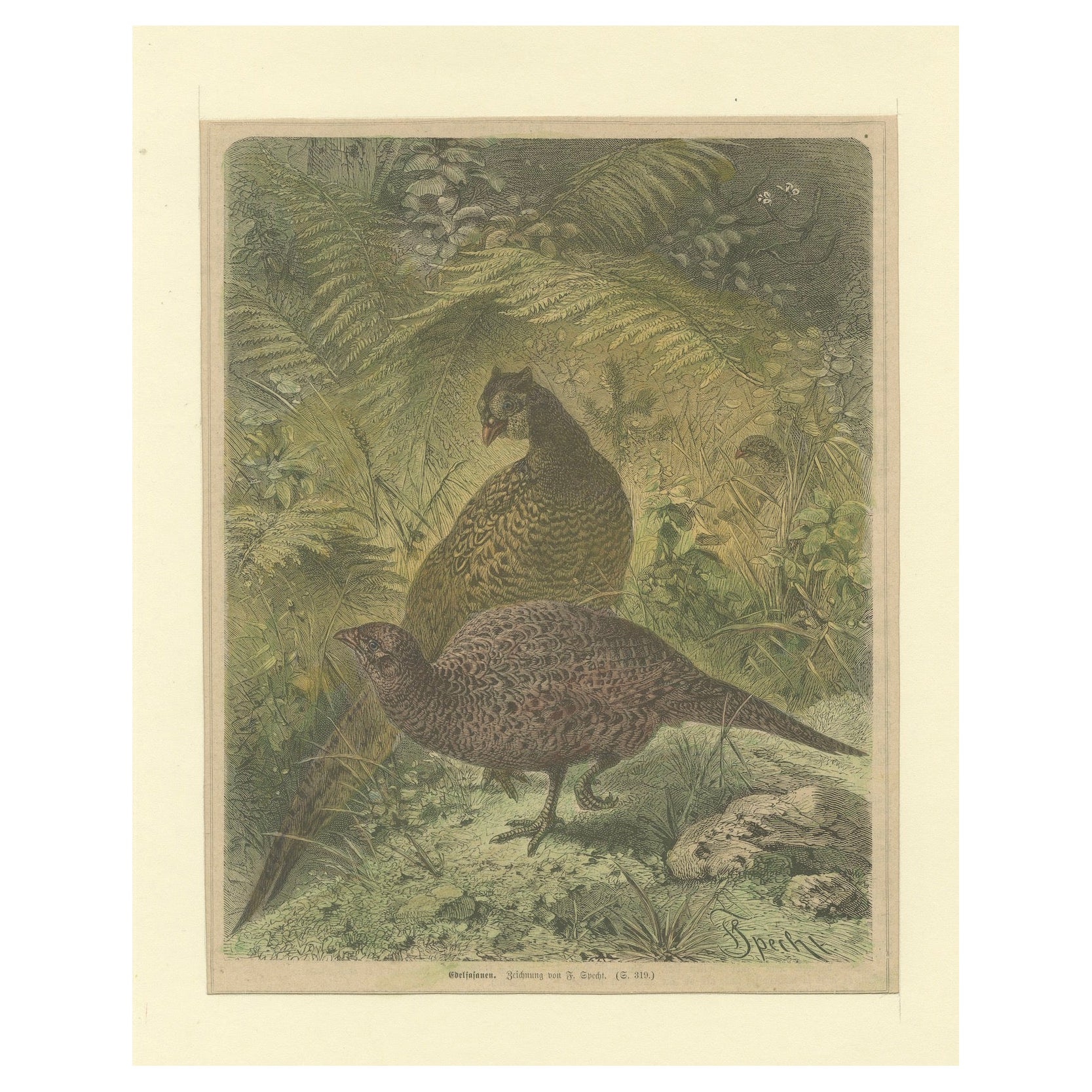
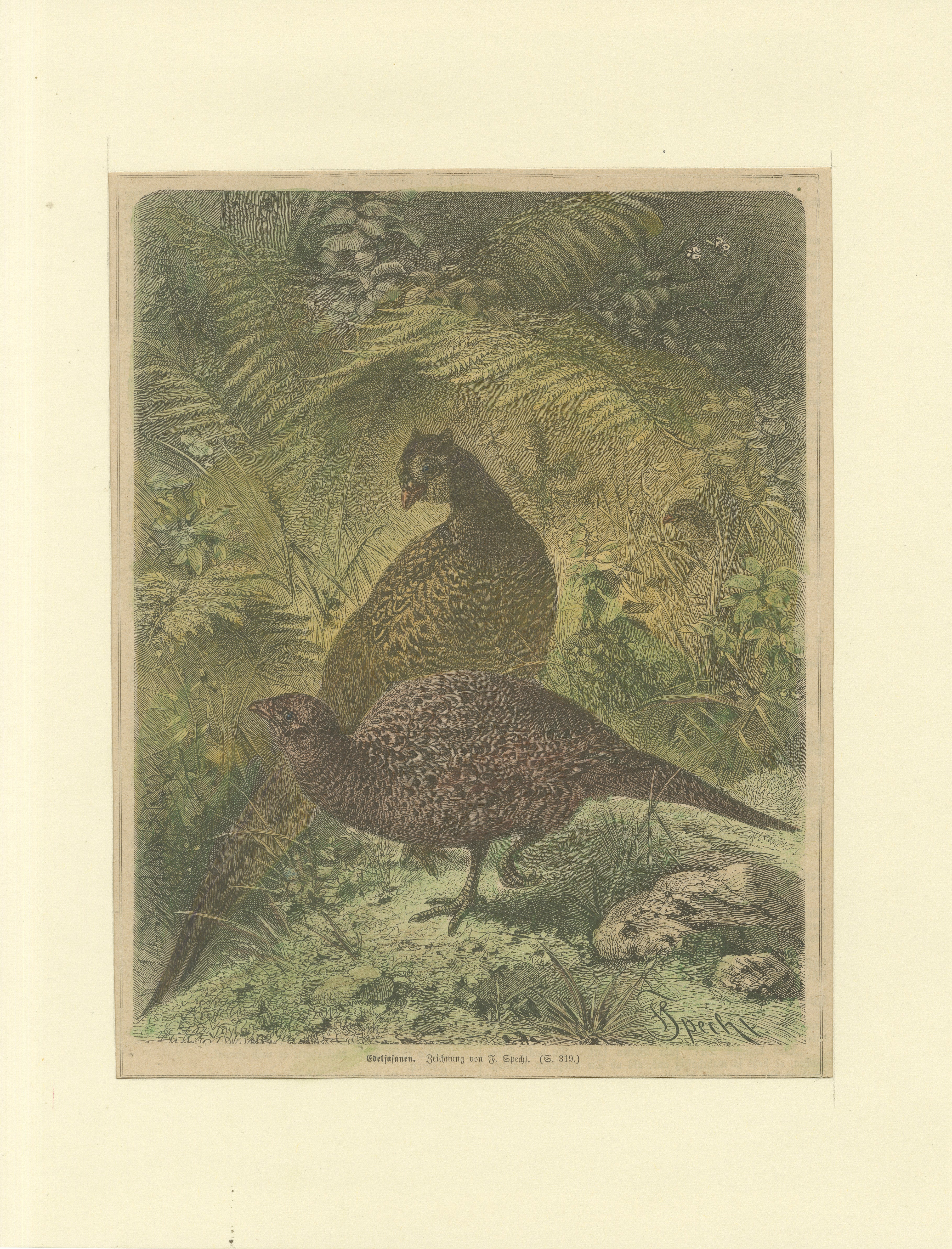
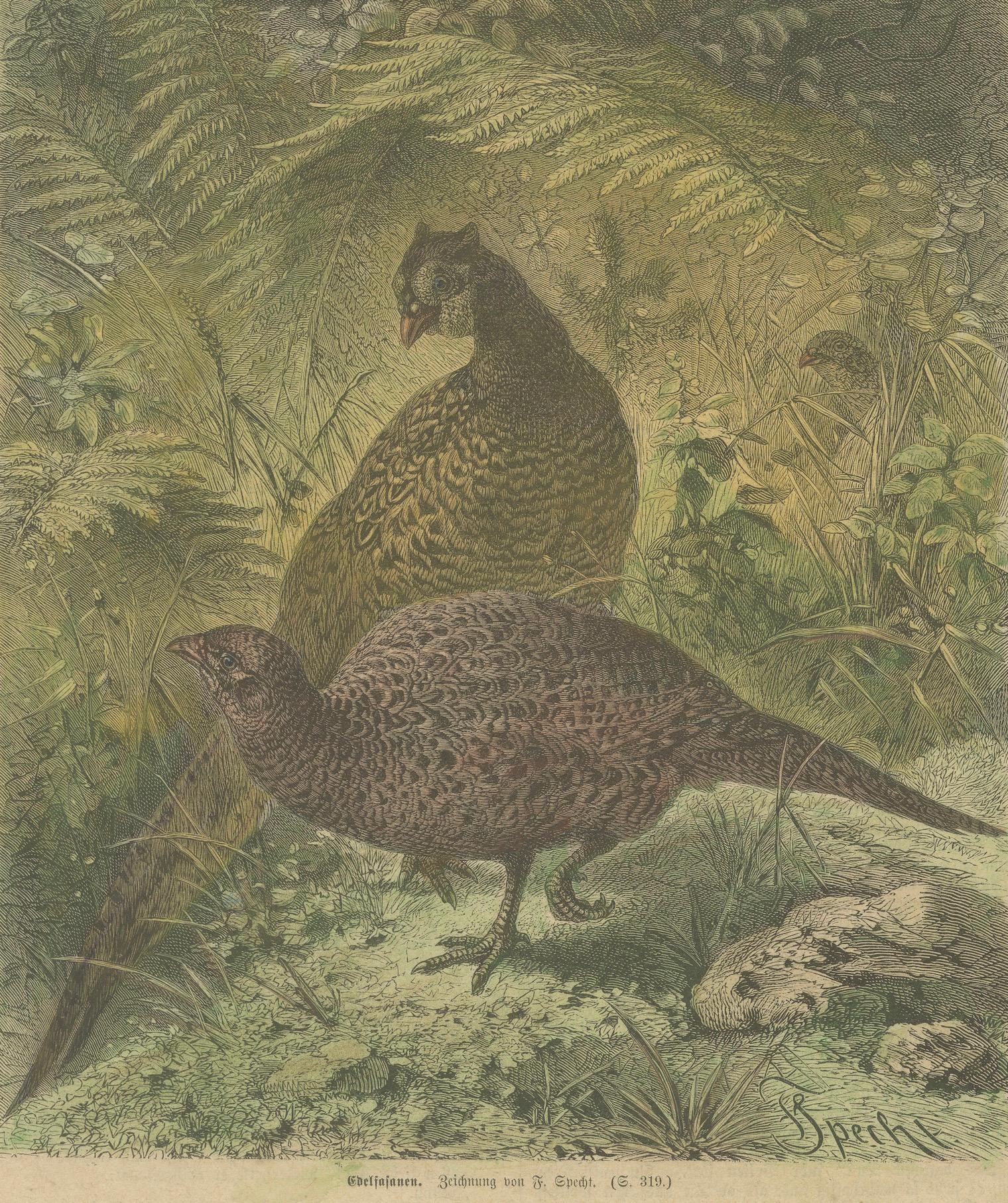
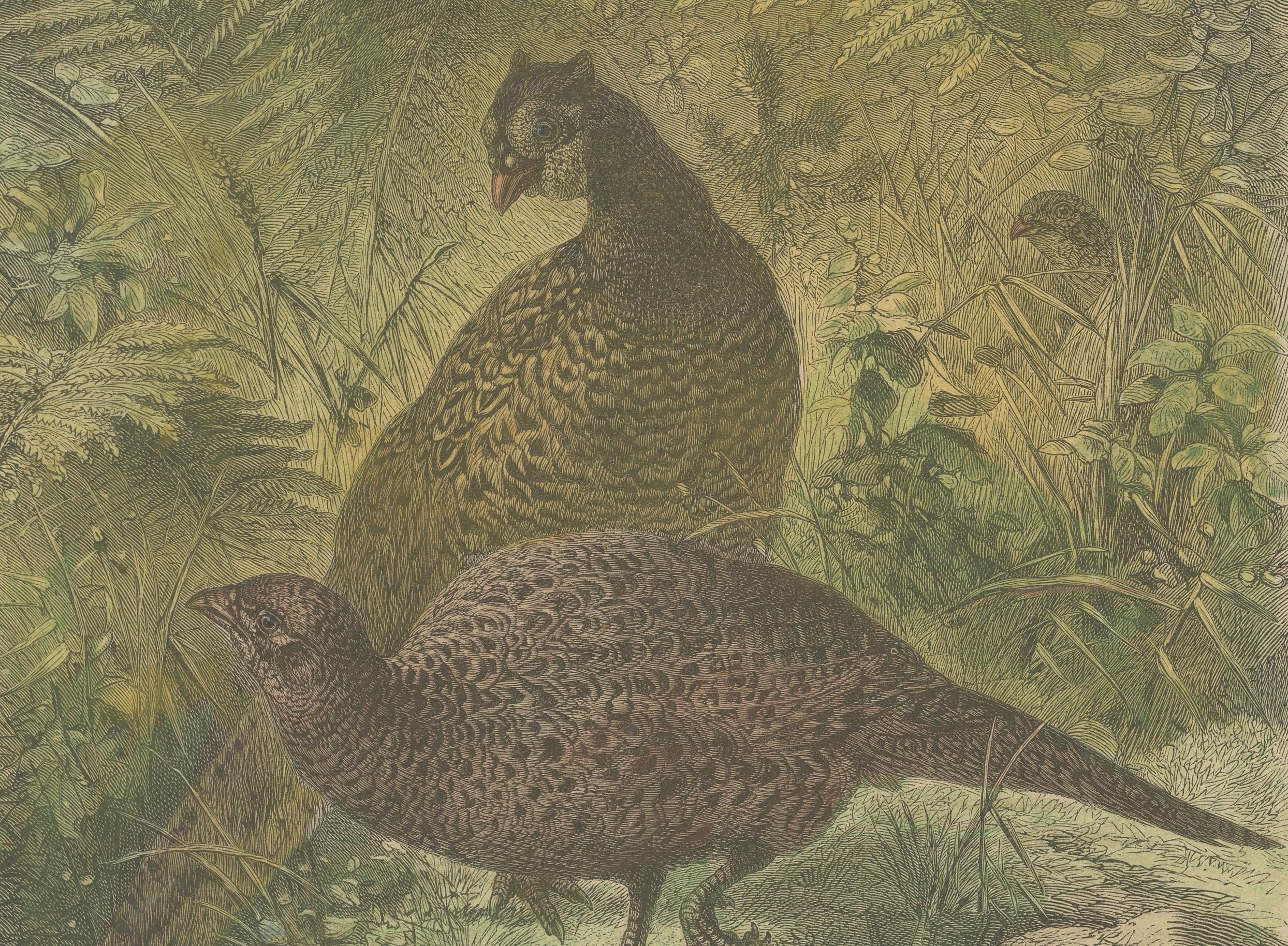
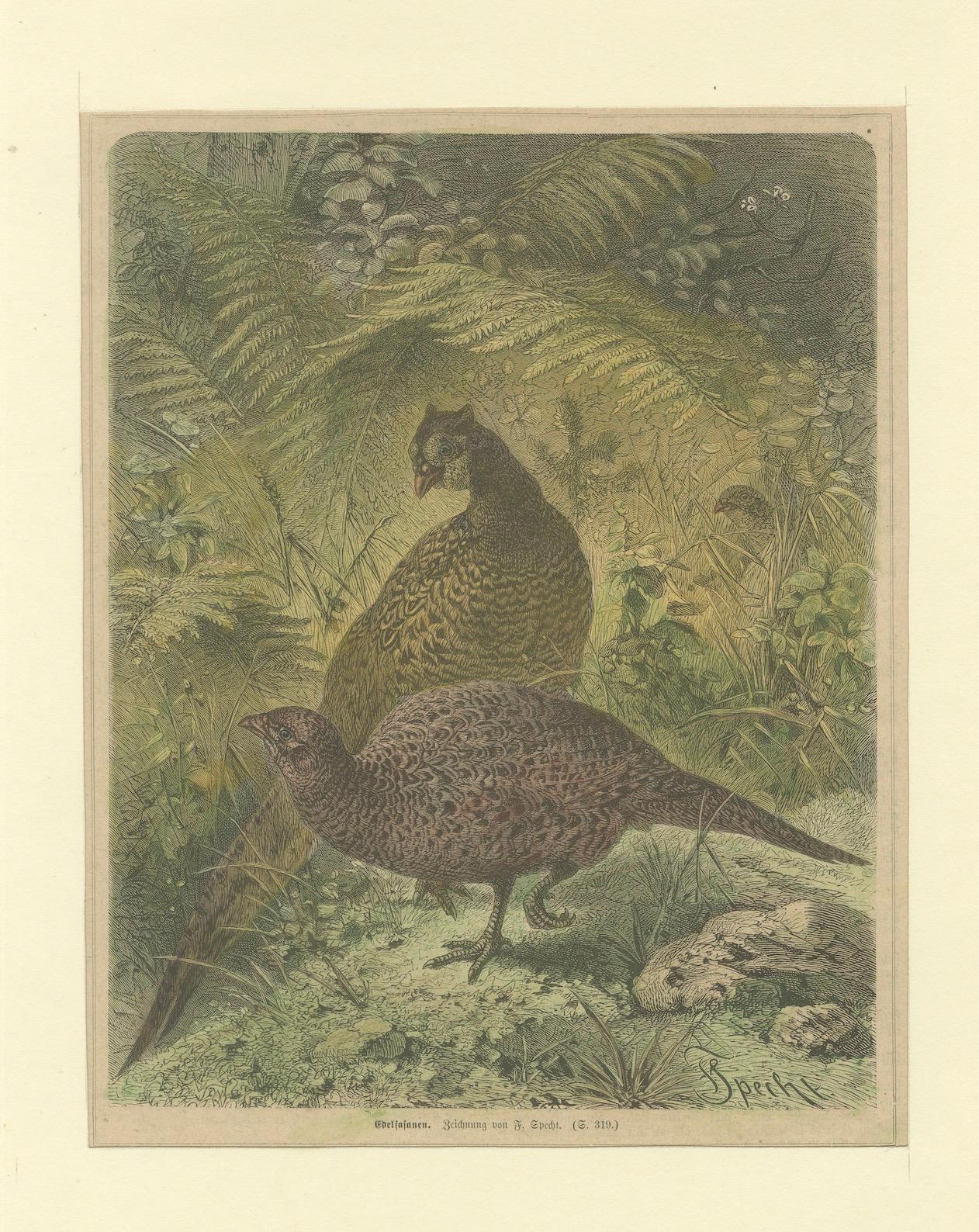
This print is an illustration from the German "Illustrirte Chronik der Zeit" (Illustrated Chronicle of the Time). The specific illustration seems to depict two birds identified as "Edelfafanen" or "Edelfasanen," which refers to a type of pheasant.
Here are some key details about the print:
1. Birds: The illustration features two pheasants in a natural, lush setting. The birds are detailed with intricate patterns on their feathers, showcasing the artistry of the illustrator.
2. Background: The background includes ferns and other dense vegetation, creating a realistic and detailed natural habitat for the birds.
3. Illustrator: The signature at the bottom right reads "Specht," indicating that the artist is associated with this name.
The artist referred to as "Specht" is likely Friedrich Specht (1839-1909), a renowned German painter and natural history illustrator. Friedrich Specht was known for his detailed and realistic depictions of animals and nature. He often collaborated with his brother, Carl Gottlieb Specht, who was a wood engraver, and another brother, August Specht (1849-1923), who was also a natural history artist.
Friedrich Specht's work was widely published in various natural history books and periodicals, such as "Brehms Tierleben" and "Die Gartenlaube," which were well-regarded for their high-quality illustrations. His illustrations were praised for their scientific accuracy and artistic detail, making significant contributions to the documentation and appreciation of wildlife in the 19th century.
4. Text: Below the illustration, there is German text identifying the subject as "Edelfafanen." This may be a typographical variation of "Edelfasanen," which translates to "noble pheasants" in English.
5. Style: The style of the illustration suggests it is from a period when detailed, naturalistic depictions of wildlife were common in printed works, possibly the 19th century.
The "Illustrirte Chronik der Zeit" was a periodical known for its detailed illustrations and coverage of various contemporary events, including natural history subjects. The detailed depiction of the pheasants in their natural habitat reflects the publication's commitment to high-quality, informative artwork.
The "Illustrirte Zeitung," the periodical in which this illustration likely appeared, was published from 1843 to 1944. This specific illustration would have been part of that publication period, but most likey published in 1870.