About this sheet
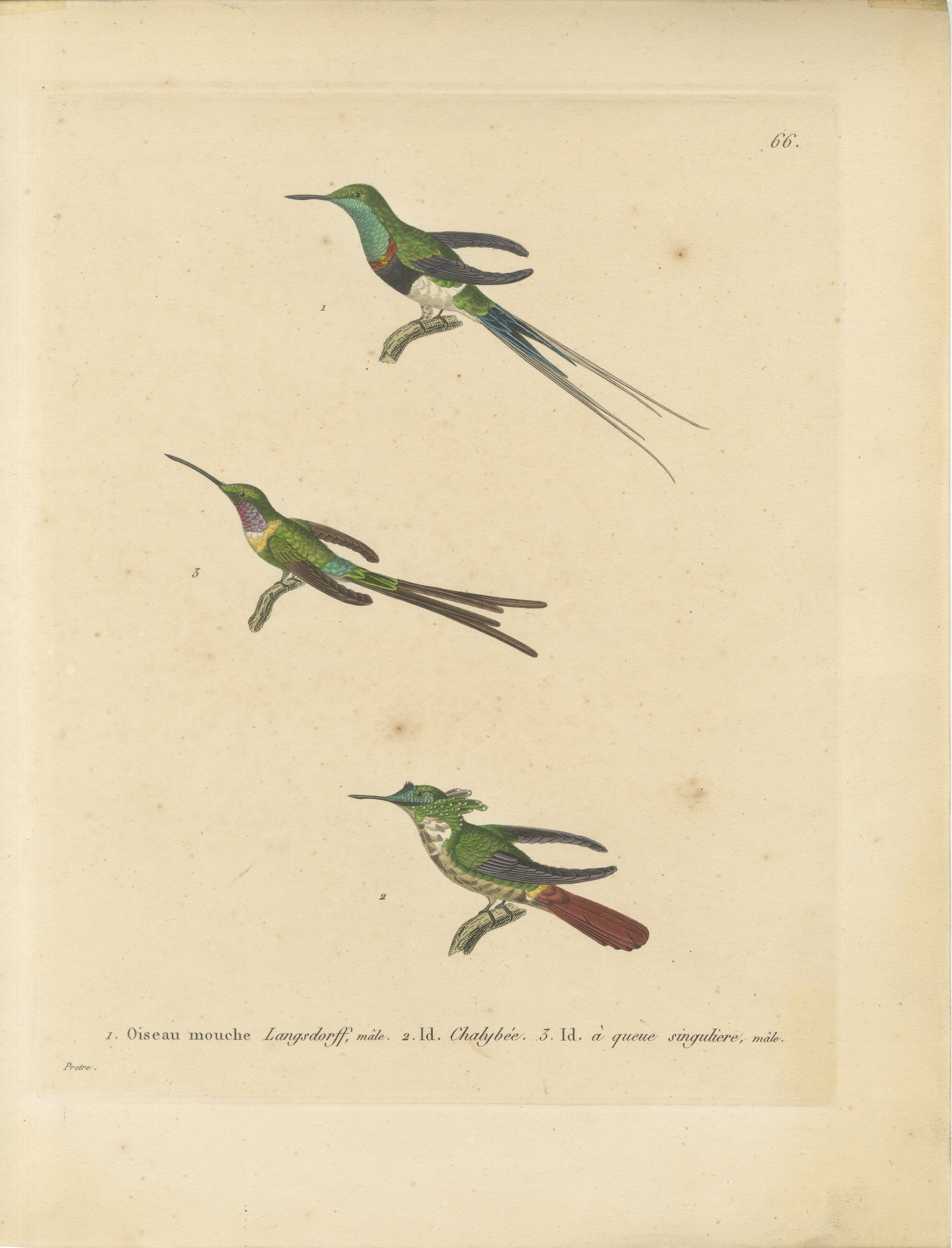
This illustration features three different hummingbirds, each labeled with its respective name.
Description of the Print:
- The illustration showcases three hummingbirds:
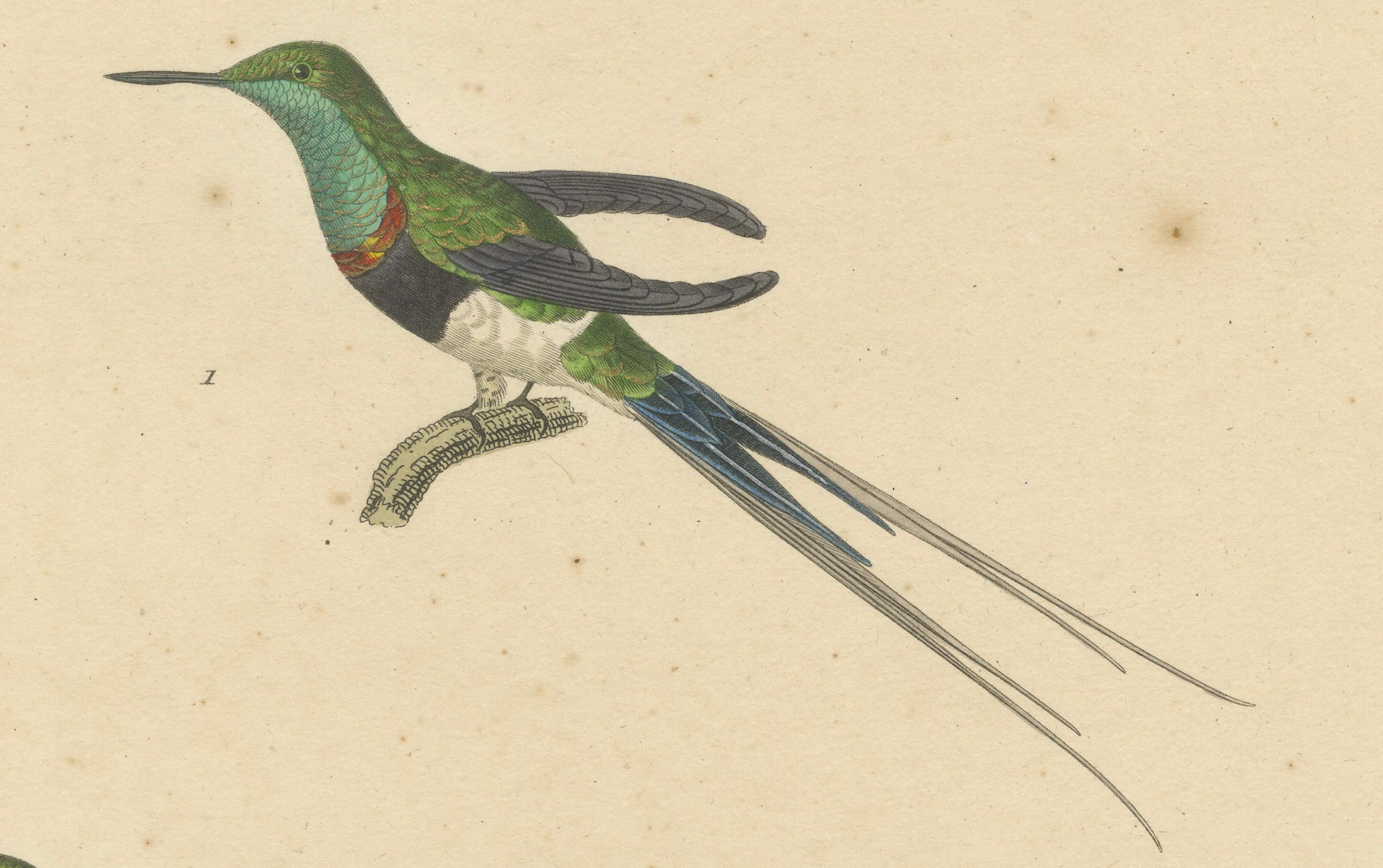
1. **Oiseau mouche Langsdorff, mâle** (Langsdorff's Hummingbird, male) is depicted at the top. It has a strikingly long tail with iridescent green and blue plumage.
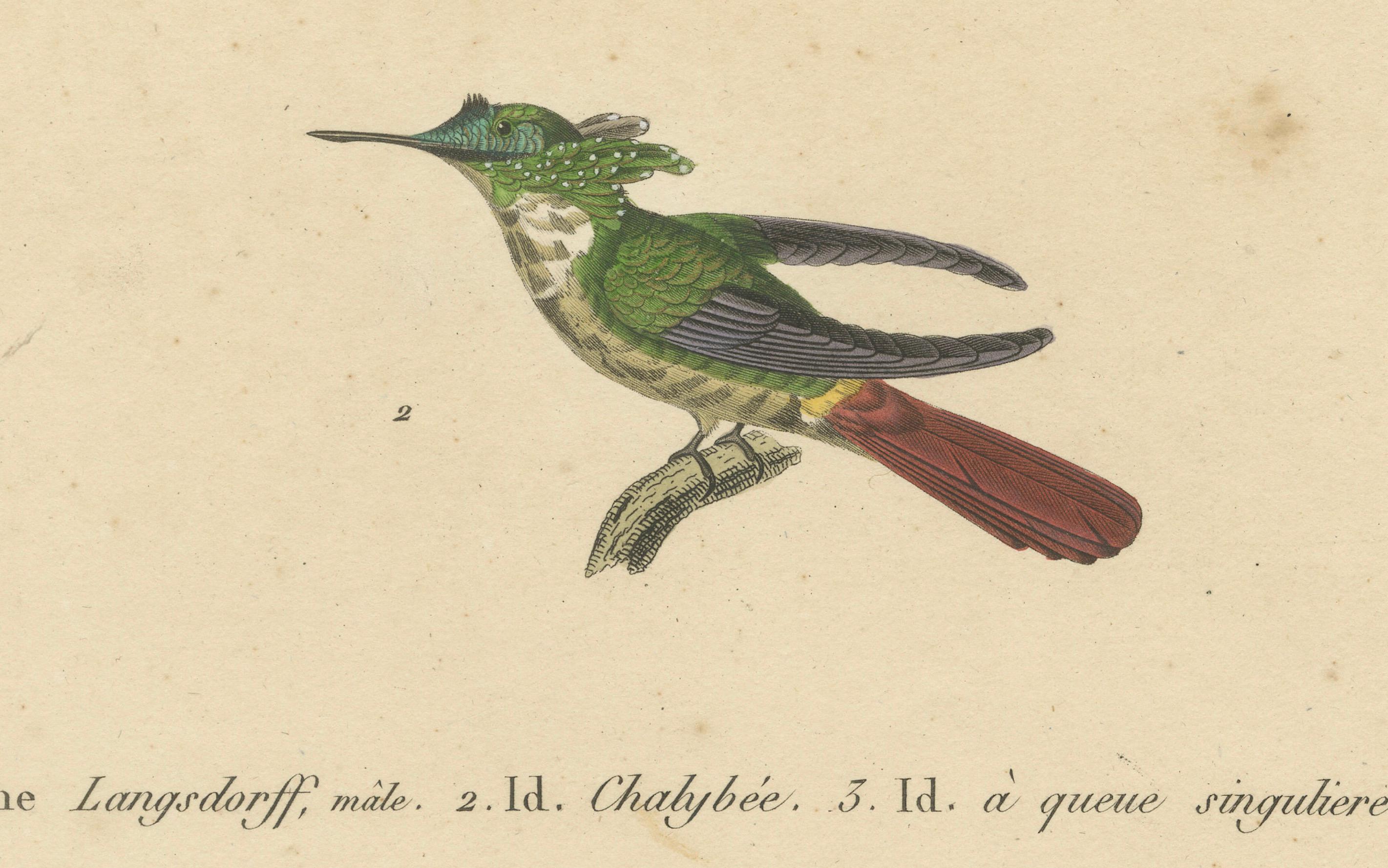
2. **Oiseau mouche Chalybée** (Chalybeate Hummingbird) in the middle. This bird features vibrant green feathers with a unique crest on its head and a reddish tail.
3. **Oiseau mouche à queue singulière, mâle** (Male Hummingbird with a Singular Tail) at the bottom. This bird is distinguished by its unique tail feathers, green body, and red tail.
Each bird is illustrated perched delicately on small branches, highlighting their vivid and intricate plumage.
About the Artists:
**Nicolas Huet (1770–1830)**:
- A prominent French natural history illustrator.
- Known for his precise and lifelike depictions of birds and other animals.
- Contributed significantly to various ornithological publications of his time.
**Jean Gabriel Prêtre (1768–1849)**:
- A Swiss-born natural history painter who worked primarily in France.
- Recognized for his detailed and accurate representations of zoological and botanical subjects.
- Collaborated with many leading naturalists and illustrated numerous scientific works.
Habitat of the Depicted Hummingbirds:
- Hummingbirds, such as those depicted, are typically found in the Americas. They inhabit a range of environments, including tropical and subtropical forests, gardens, and woodlands.
- Langsdorff's Hummingbird, Chalybeate Hummingbird, and other uniquely tailed species are commonly found in Central and South America, where they thrive in regions with abundant flowering plants.
- These birds are adapted to habitats that provide ample nectar sources, their primary food, and are often seen in the canopy and mid-story layers of forests.
This print, part of the "Nouveau recueil de planches coloriées d'oiseaux" published in 1838, is another fine example of the detailed and scientifically accurate work produced by Huet and Prêtre, reflecting the high standards of ornithological illustration in the 19th century.