About this sheet
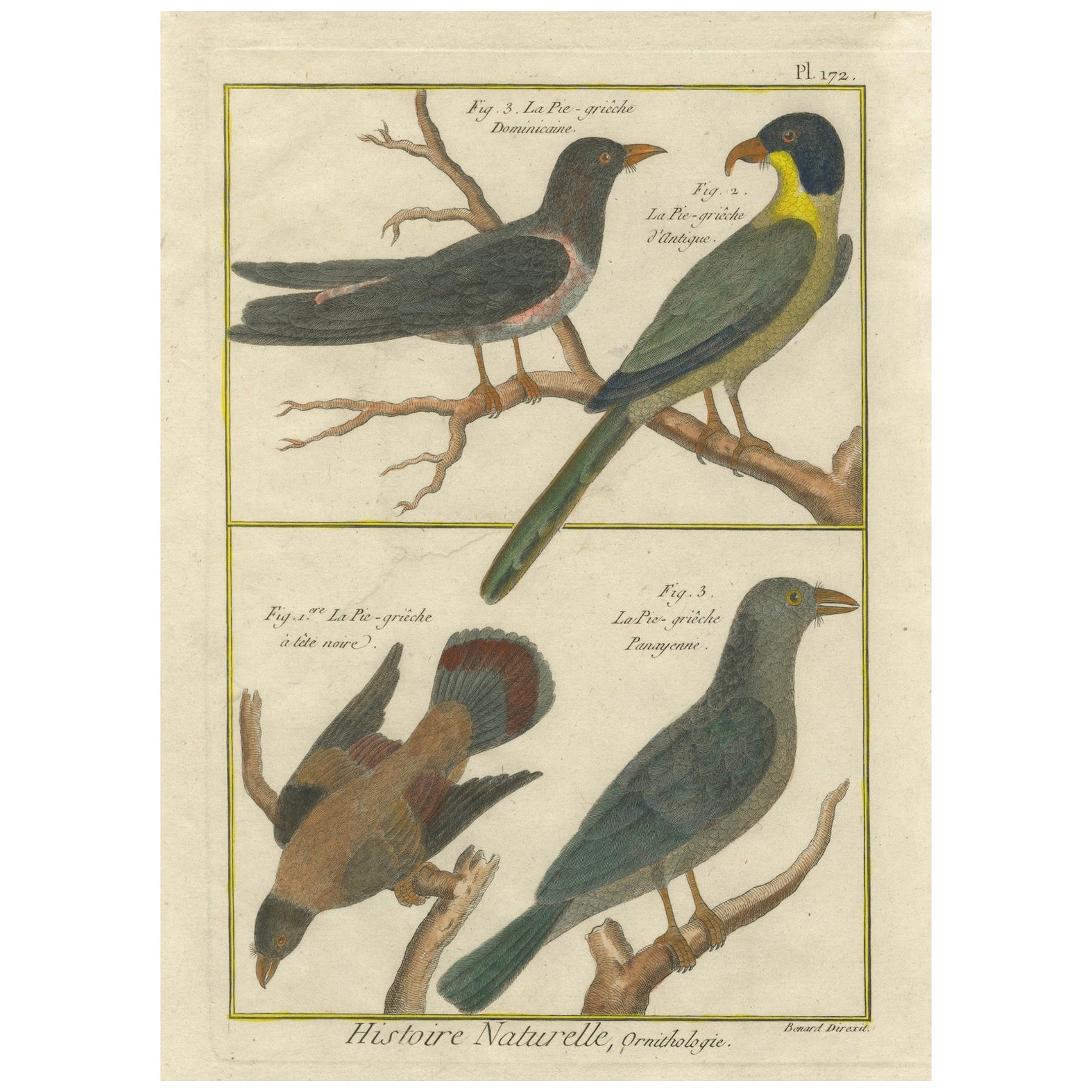
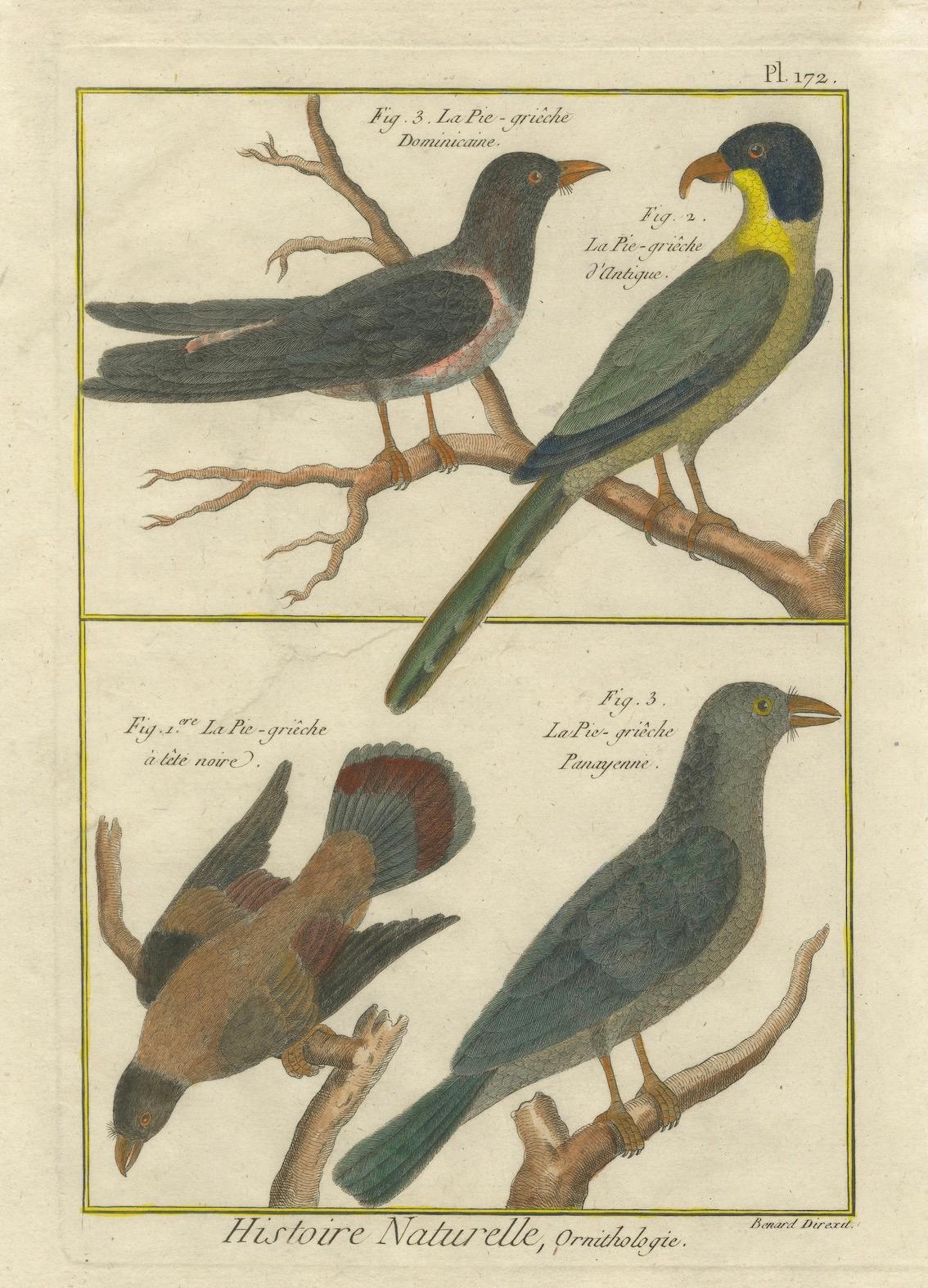
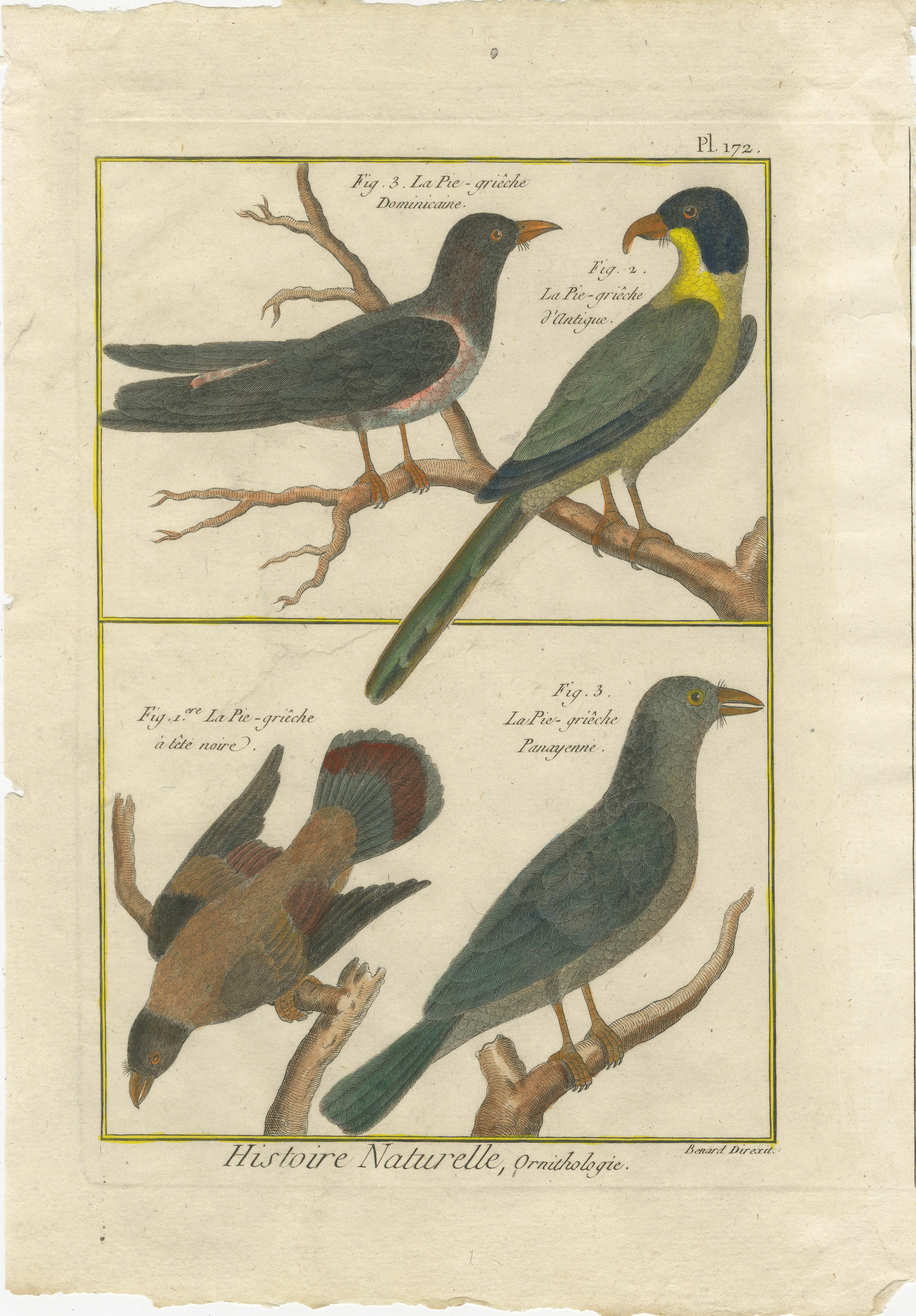
This hand-colored copperplate engraving by Robert Benard, part of the *Histoire Naturelle* from the *Encyclopédie Méthodique*, circa 1790, depicts four distinct species of birds labeled as shrikes (*Pie-grieche*), characterized by their hooked beaks and predatory behavior, typical of the shrike family. The species shown here come from various regions, reflecting the global diversity of the bird family.
Birds Depicted (Translation and Descriptions):
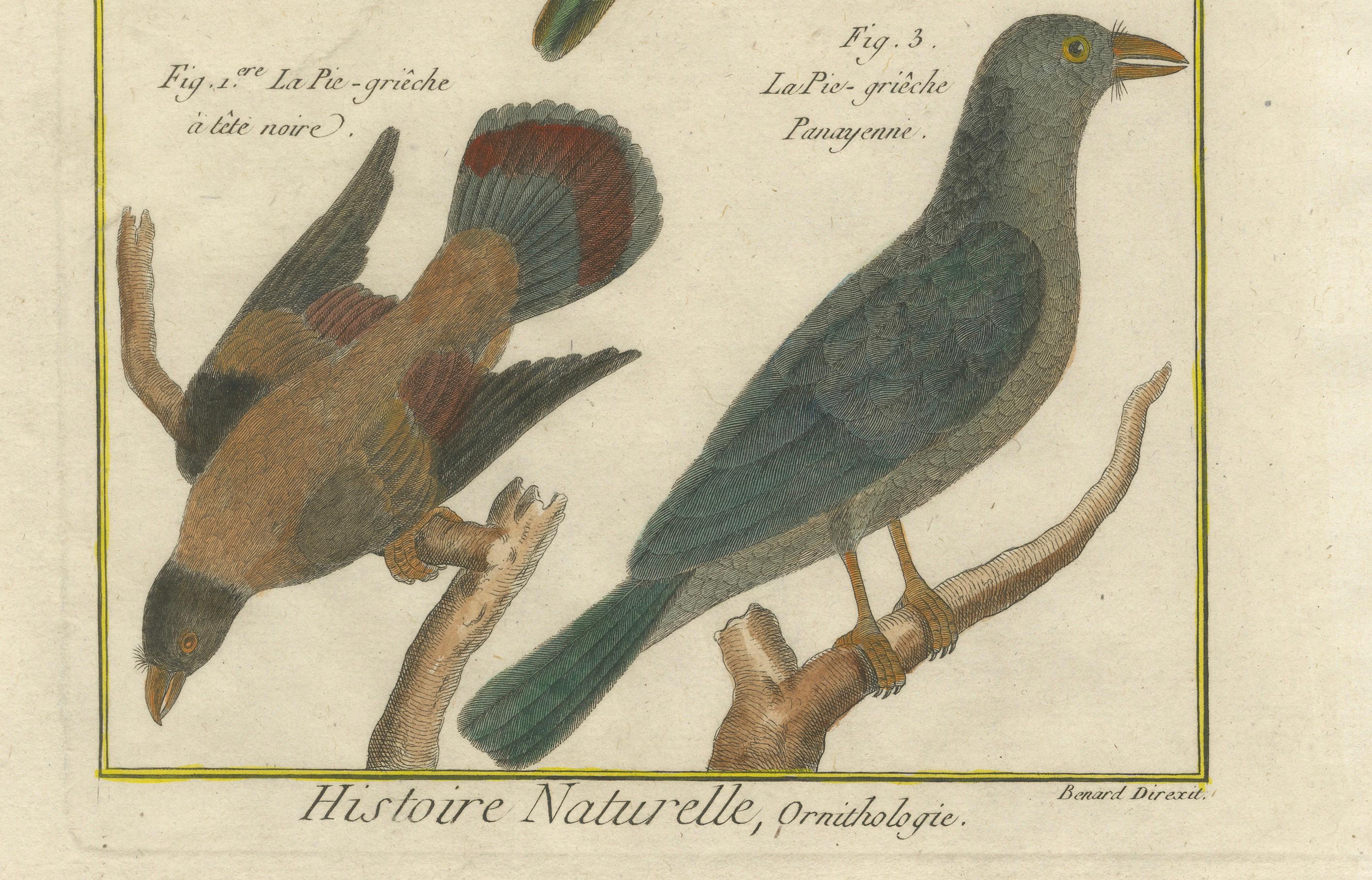
1. Fig. 1: La Pie-grieche à tête noire (Black-headed Shrike):
- This bird represents a black-headed shrike species, possibly similar to the *Red-backed Shrike* (*Lanius collurio*), known for its striking black markings on the head and brownish body. Shrikes are known for their predatory habits, using their sharp beaks to catch insects and small animals. The engraving shows the bird in a dynamic pose, perhaps indicating its readiness to strike.
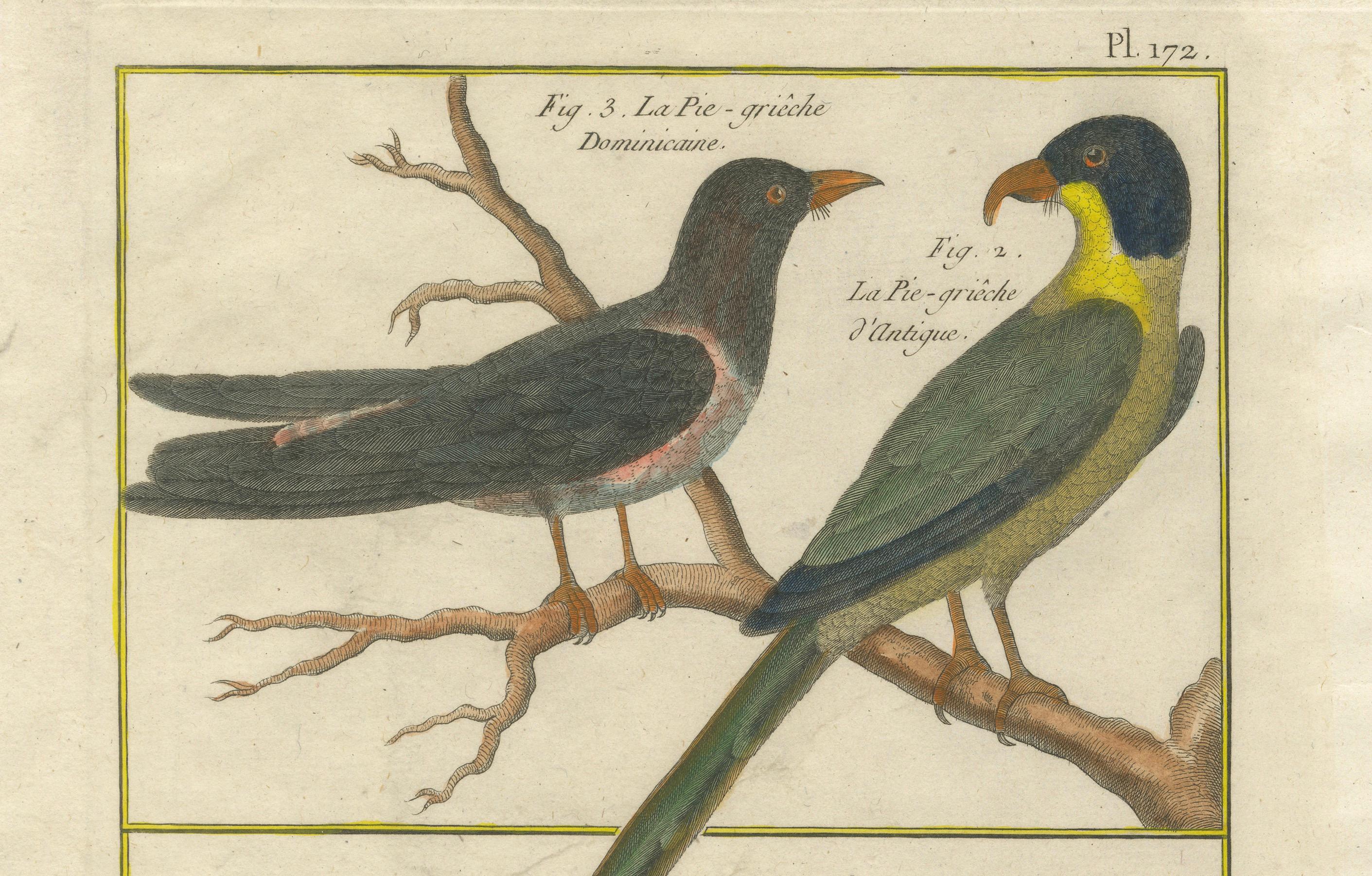
2. Fig. 2: La Pie-grieche d'Antigue (Antiguan Shrike):
- This bird may represent a shrike species native to Antigua or the Caribbean region. Shrikes in this area are known for their vibrant plumage and territorial behavior. The bird is shown with green and yellow feathers, which suggests a tropical habitat. While specific species may not be widely documented, this bird reflects the exoticism that fascinated European naturalists during the 18th century.
3. Fig. 3: La Pie-grieche Dominicaine (Dominican Shrike):
- The Dominican Shrike likely refers to a species found in the Dominican Republic or the Caribbean. The bird's dark plumage and bright beak are characteristic of shrikes, which typically live in open woodlands or scrublands. The illustration shows the bird perched on a branch, displaying its hooked beak and predator-like demeanor.
4. Fig. 4: La Pie-grieche Panayenne (Panayan Shrike):
- This bird likely refers to a shrike species from the island of Panay in the Philippines. The shrike's greenish plumage and sturdy body reflect the diversity of shrikes in Southeast Asia. Like others in its family, it would inhabit open forests or grasslands, preying on small insects and animals.
Current Habitat and Conservation Status:
- Black-headed Shrike: Shrikes, particularly the Red-backed Shrike, are found across Europe, Asia, and parts of Africa, often inhabiting open woodlands, grasslands, or farmlands. Many species are considered of least concern, but some face habitat loss.
- Antiguan Shrike: Likely an endemic species or subspecies, shrikes in the Caribbean are adapted to the tropical climates of islands, though some populations face threats from habitat destruction.
- Dominican Shrike: Shrikes in the Dominican Republic may not be well-documented today, but like other Caribbean species, they likely inhabit scrublands and open forests.
- Panayan Shrike: Shrikes in the Philippines face pressures from deforestation, though many species remain common in grasslands and agricultural areas.
Printmaking Technique:
The copperplate engraving technique used here captures the fine details of the birds' feathers, beaks, and postures. The hand-coloring adds depth and realism to the illustrations, especially in the contrast between darker and lighter plumage. These engravings were created to educate and fascinate European audiences, who were eager to learn about exotic species from distant lands.
This particular plate showcases the global diversity of shrikes, from the Caribbean to the Philippines, offering a glimpse into the rich variety of bird species that naturalists were beginning to document in the late 18th century.