About this sheet
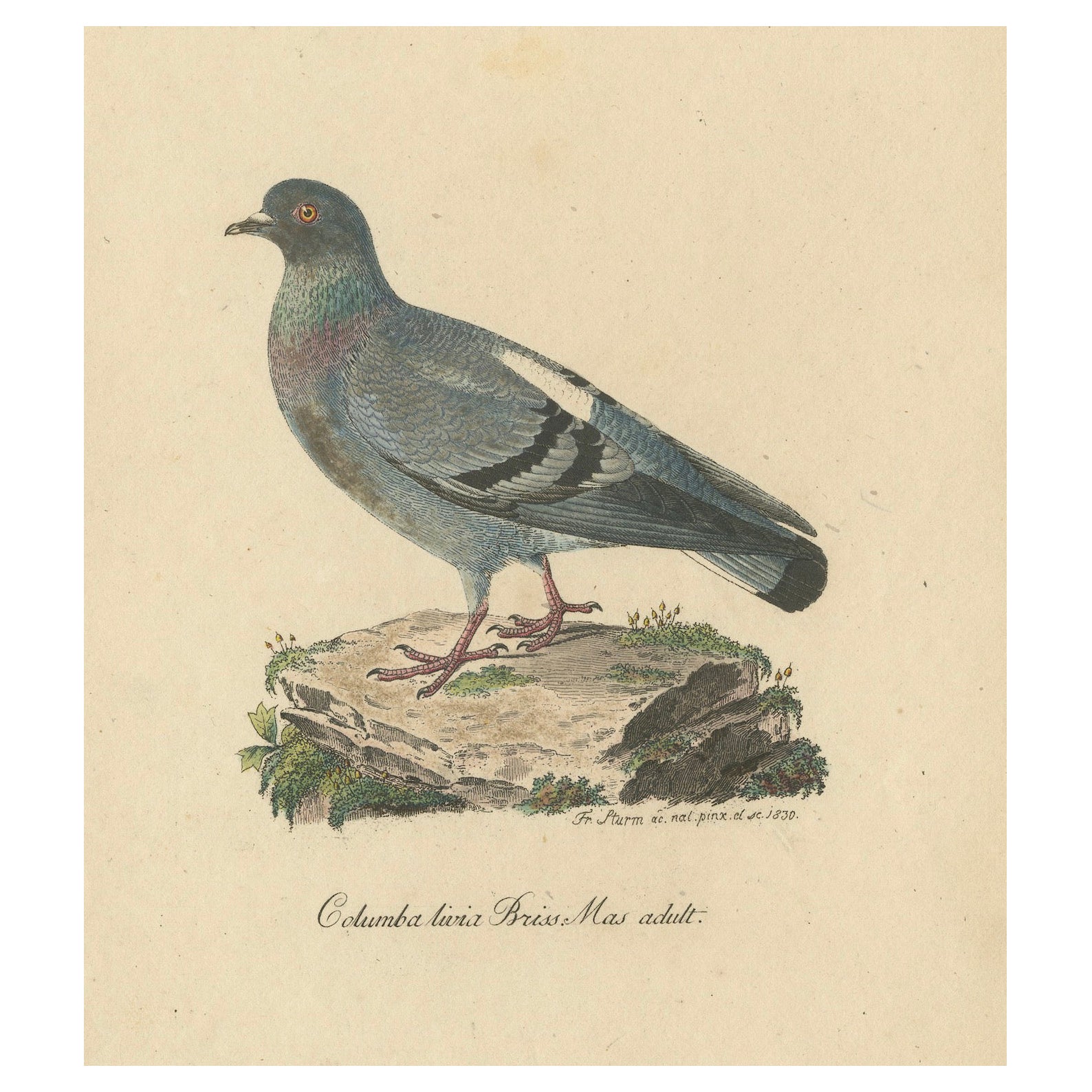
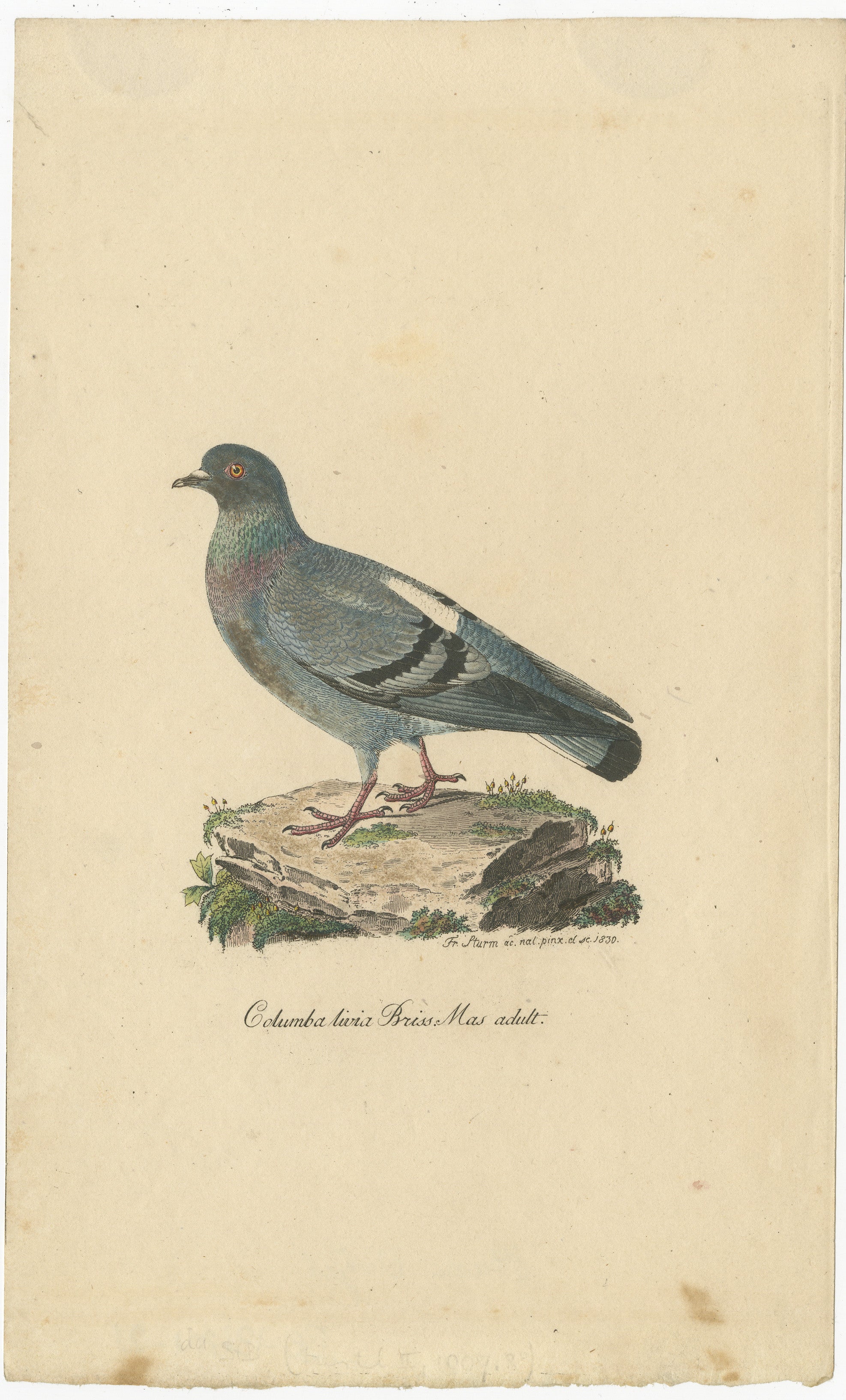
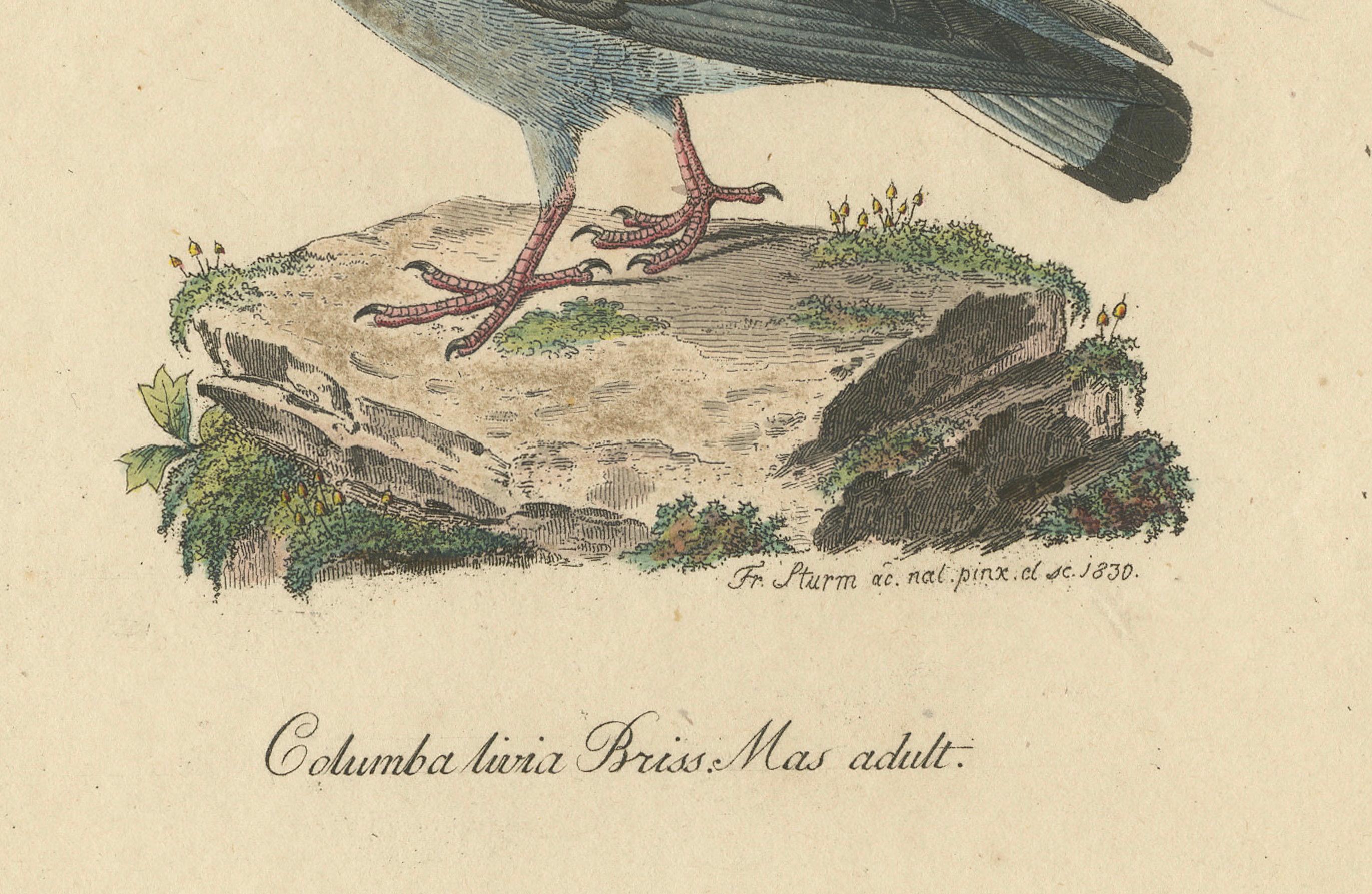
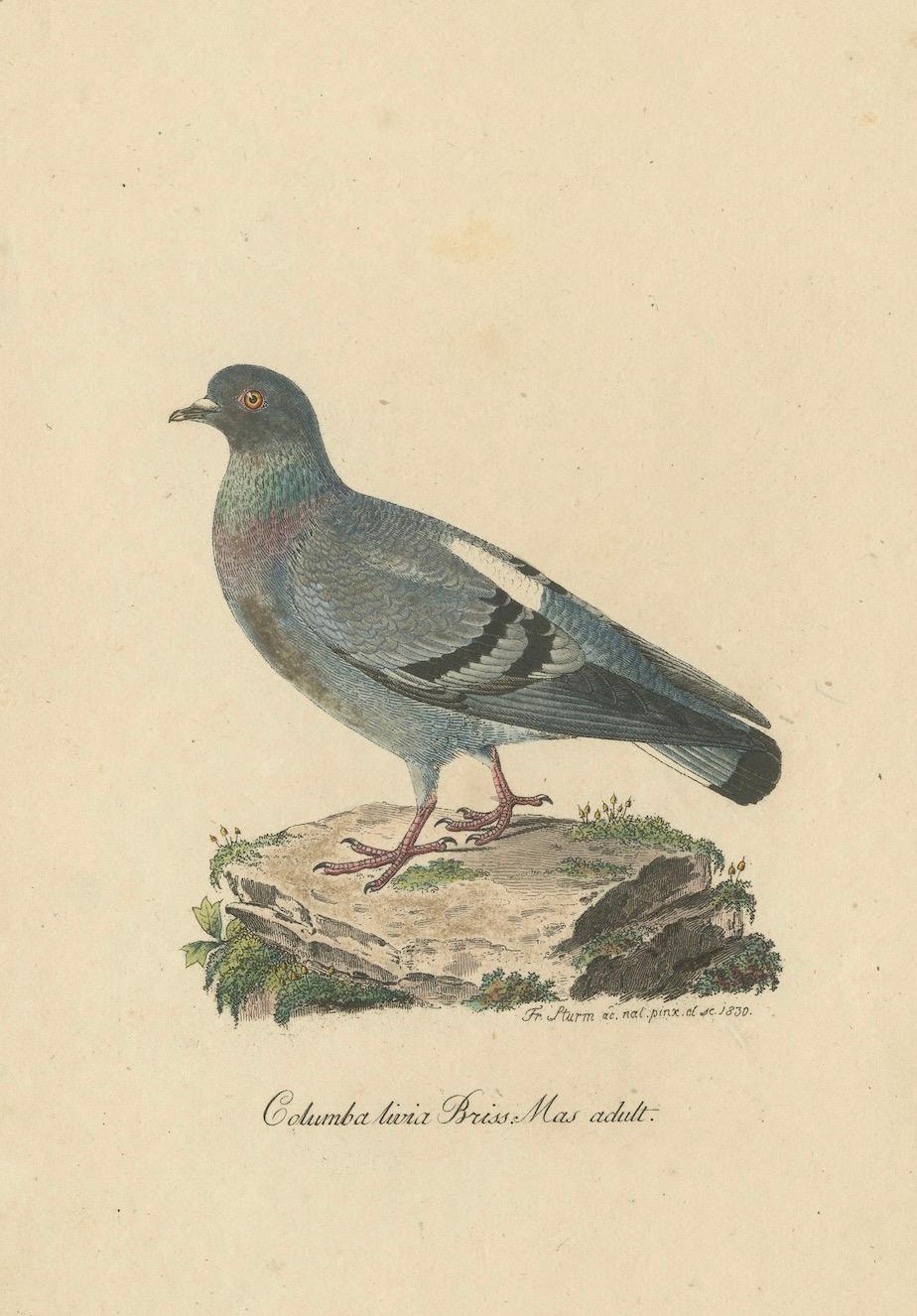
This illustration depicts a pigeon (Columba livia), titled "Columba livia Briss. Mas adult" in Latin, which refers to the adult male rock dove or common pigeon. The artist's signature below reads, "Fr. Sturm ex nat. pinx. et sc. 1830." This translates to "Franz Sturm painted and engraved from nature in 1830," indicating that the artist created the work based on a real-life observation of the bird.
Franz Sturm (also known as Friedrich Sturm) was a German natural history artist known for his detailed and precise illustrations of birds and other animals during the early 19th century.
This hand-colored engraving is a fine example of his naturalistic style, contributing to the study of ornithology during the period. The date of 1830 gives a clear indication of when this particular print was created.
The bird in the illustration, *Columba livia*, commonly known as the rock dove or rock pigeon, is a species native to Europe, North Africa, and parts of Asia. It is the wild ancestor of the domestic pigeon, and today, feral populations of rock pigeons are found in cities worldwide, often referred to simply as "pigeons."
Here are some additional details about the bird:
### Physical Characteristics:
- Size: Rock pigeons are medium-sized birds, typically 29–37 cm (11–15 inches) long with a wingspan of about 62–72 cm (24–28 inches).
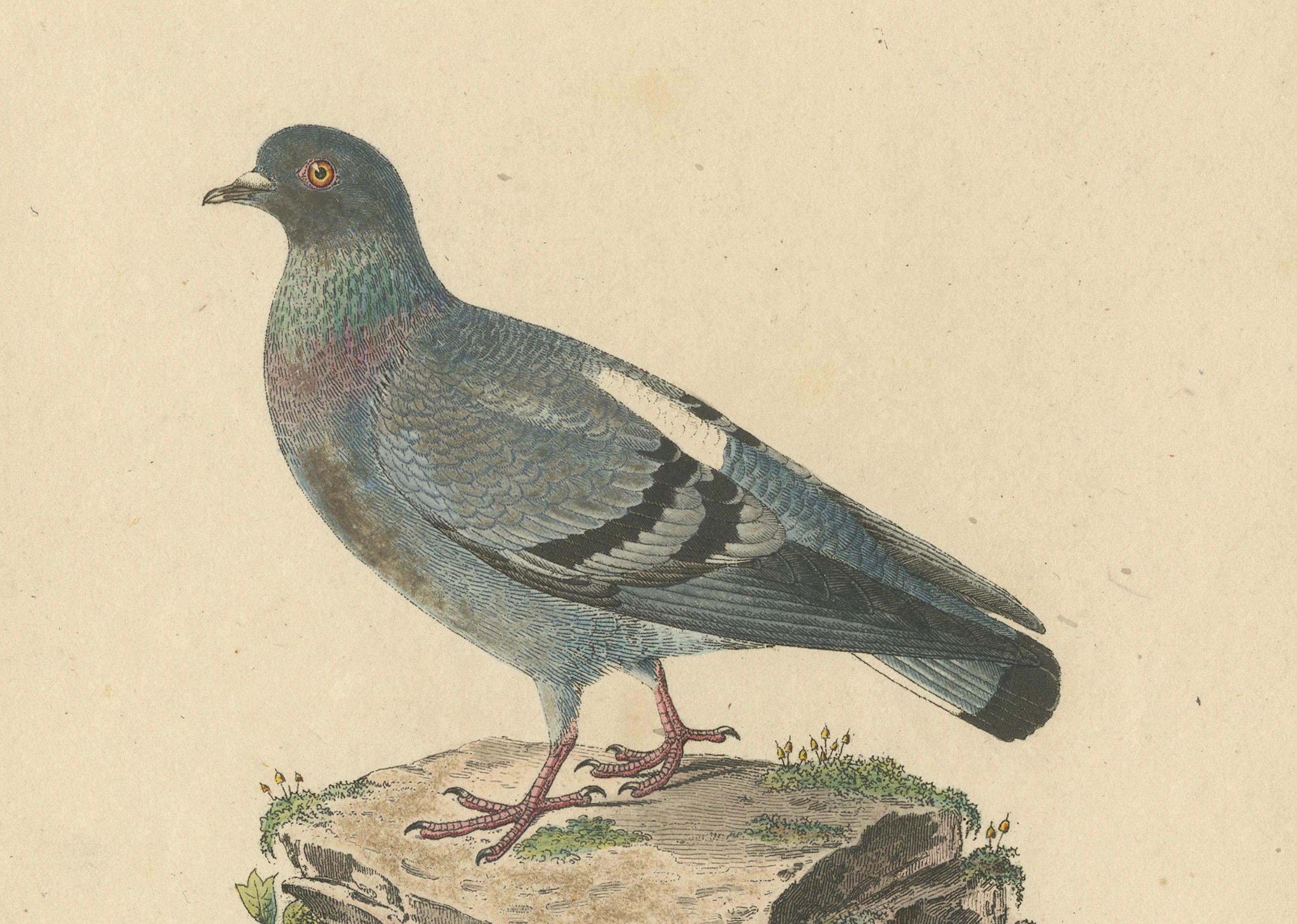
- Plumage: The typical wild rock pigeon has bluish-gray plumage, with iridescent shades of green and purple on the neck. They also have two black bands across their wings and a black-tipped tail.
- Variations: Because of domestication and breeding, feral pigeons can show a wide range of color variations, from all white to all black or speckled.
Behavior and Habitat:
- Habitat: In the wild, rock doves prefer cliffs and rocky coastlines as nesting sites, which is why they adapted so easily to urban environments, using buildings as a substitute for natural cliffs.
- Diet: They are primarily granivores, feeding on seeds and grains, but urban populations are opportunistic feeders, eating human scraps.
- Nesting: Pigeons build simple nests from twigs and debris, usually in sheltered locations like cliffs or ledges in cities.
- Flight: They are strong fliers, often seen in flocks, especially in urban areas.
Historical Significance:
- Domestication: Rock doves were among the first bird species to be domesticated. They have been bred for various purposes, including as food, messengers, and pets (like homing pigeons and fancy breeds).
- Homing Instinct: Rock pigeons, especially those domesticated and bred for it, have a remarkable homing instinct, which humans have harnessed for thousands of years. They were used in ancient civilizations for delivering messages, and during both World Wars, pigeons were employed to carry military messages.
Cultural and Symbolic Roles:
- Symbolism: Pigeons, including the rock dove, are often associated with peace, love, and freedom. This is particularly the case for the white dove, a domesticated variety of the rock pigeon, often used as a symbol of peace.
- Religious References: In various religious traditions, pigeons and doves are seen as sacred birds. For example, in Christianity, the dove represents the Holy Spirit.
Conservation Status:
The wild rock dove populations are considered to be under some pressure in their native habitats, but the widespread feral pigeon populations are abundant and not at risk.
This particular species has adapted to urban life like few others, thriving in cities around the world where they have become an everyday sight.