About this sheet
European Turtle Dove with Nest – Antique Bird Engraving, Nozeman & Sepp 1770
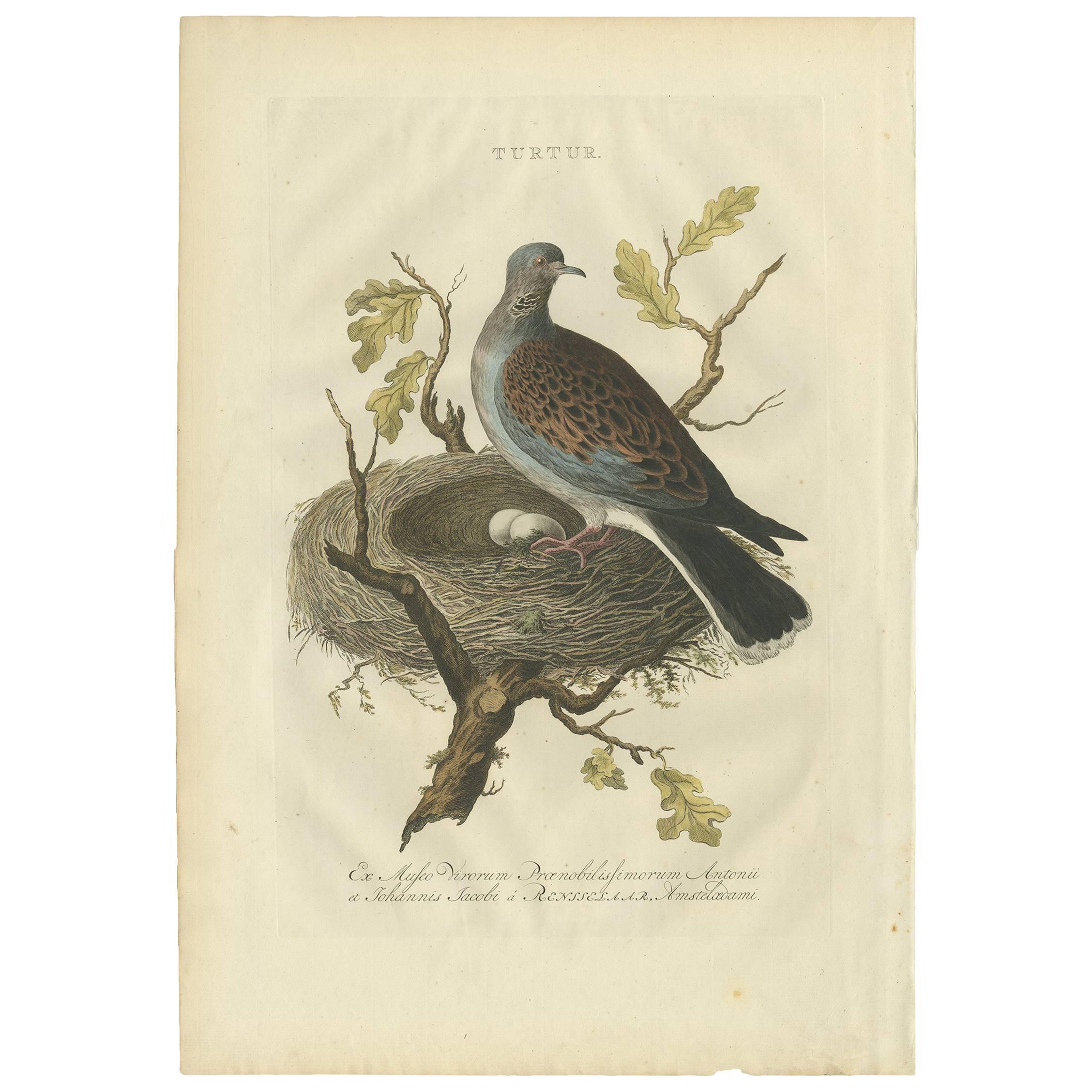
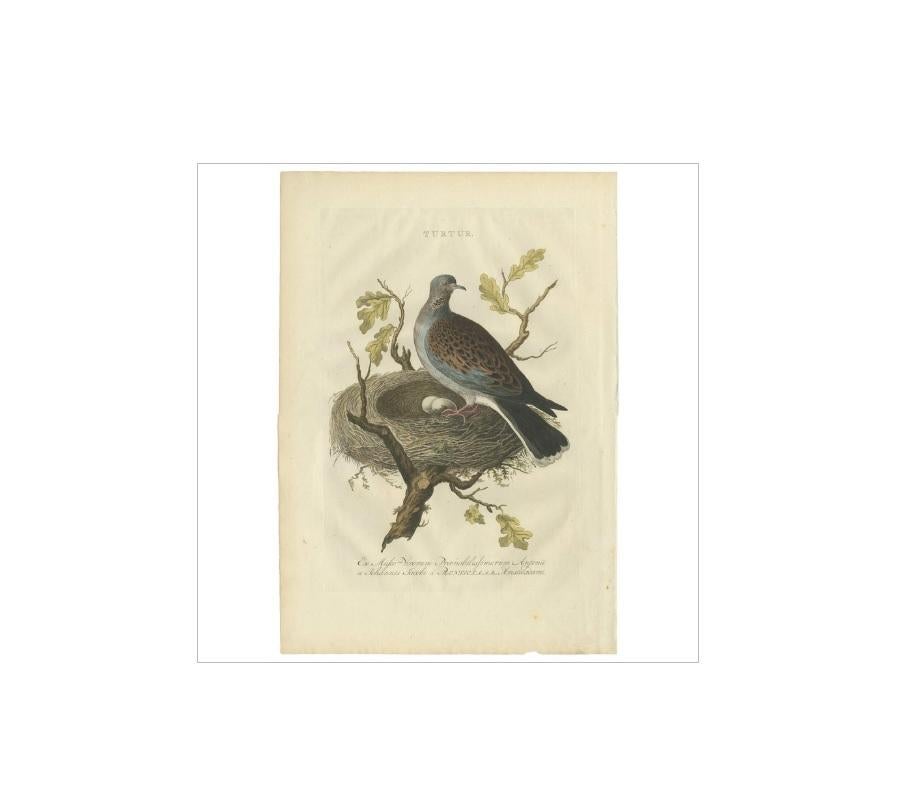
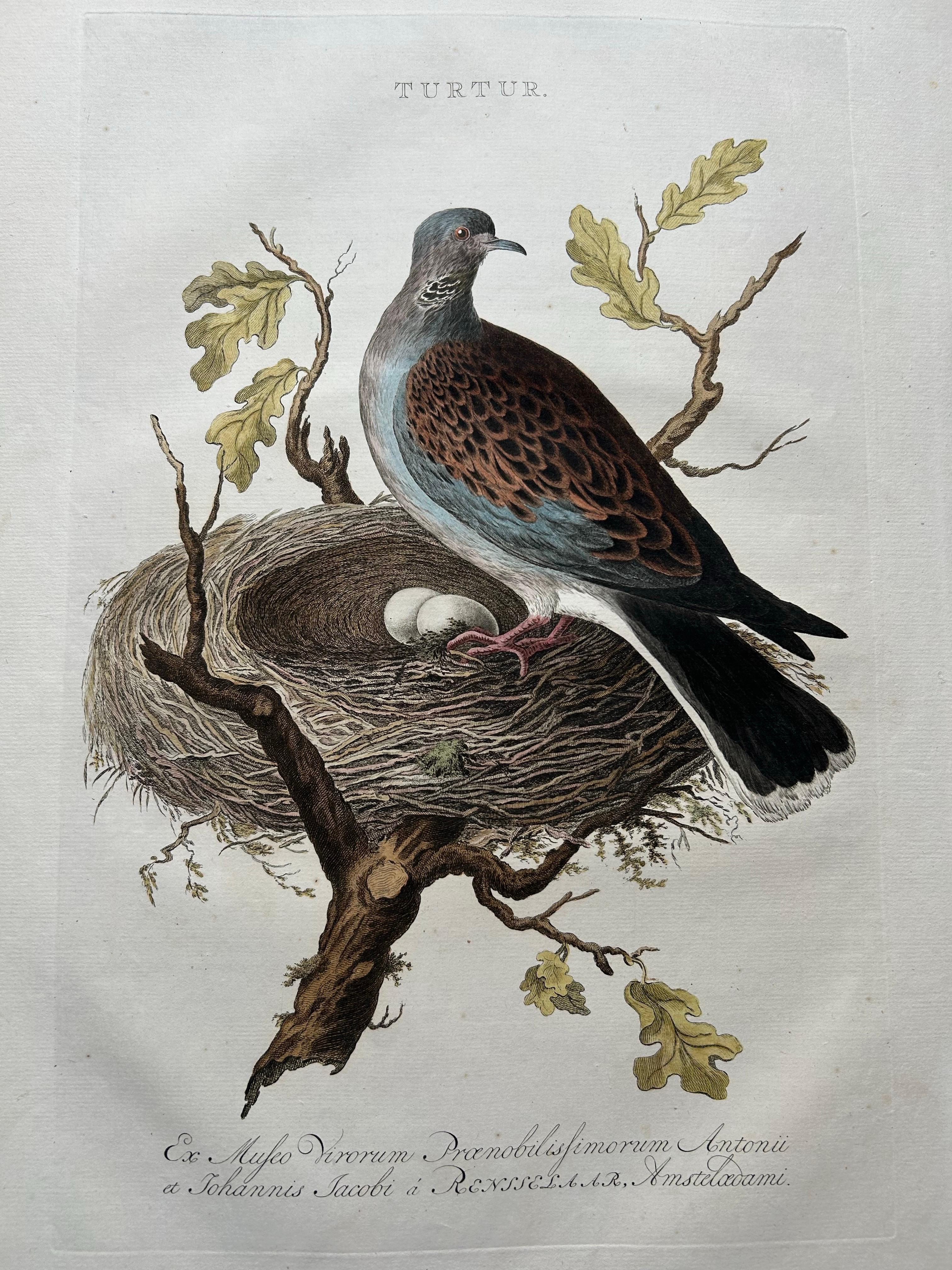
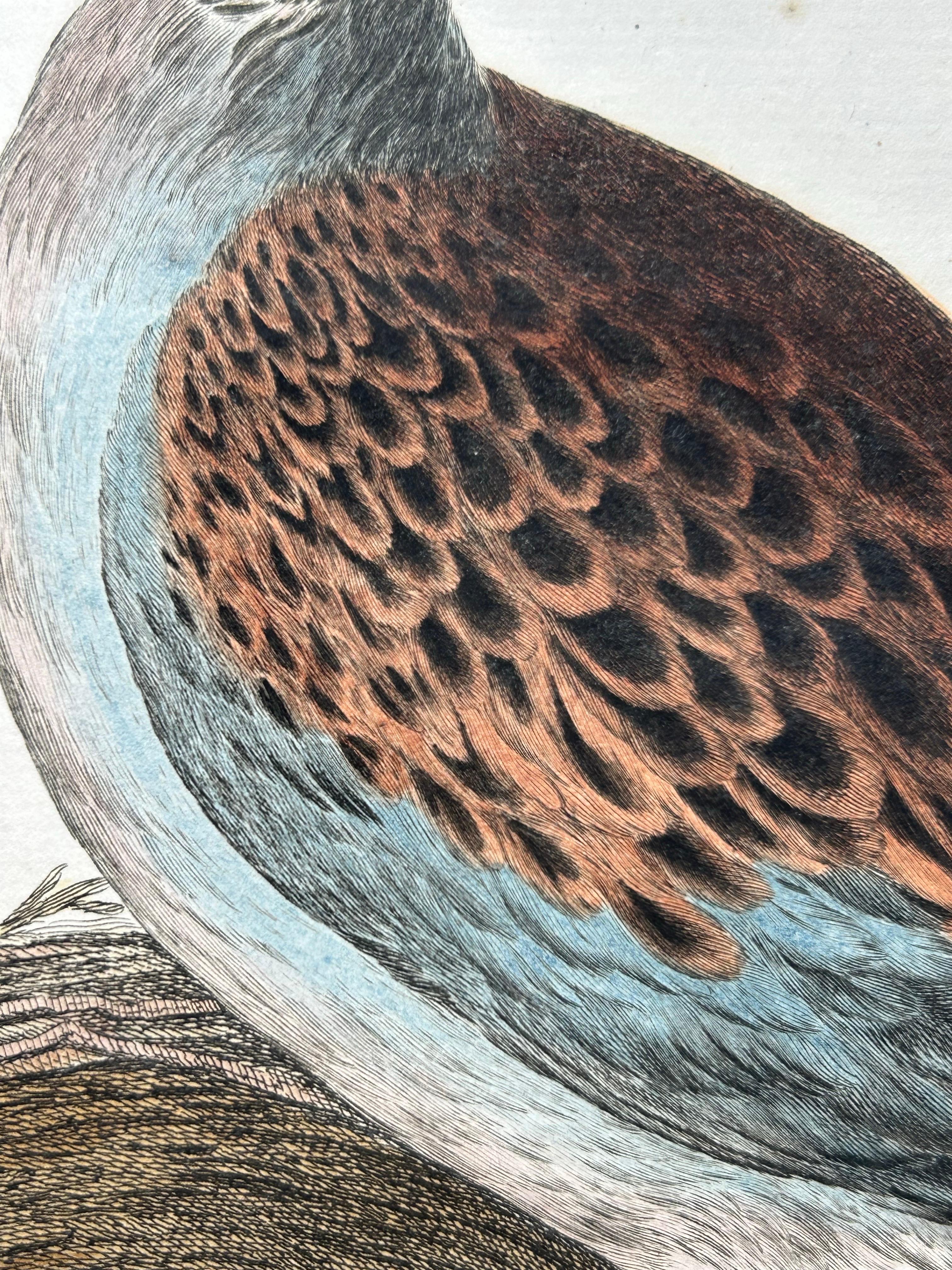
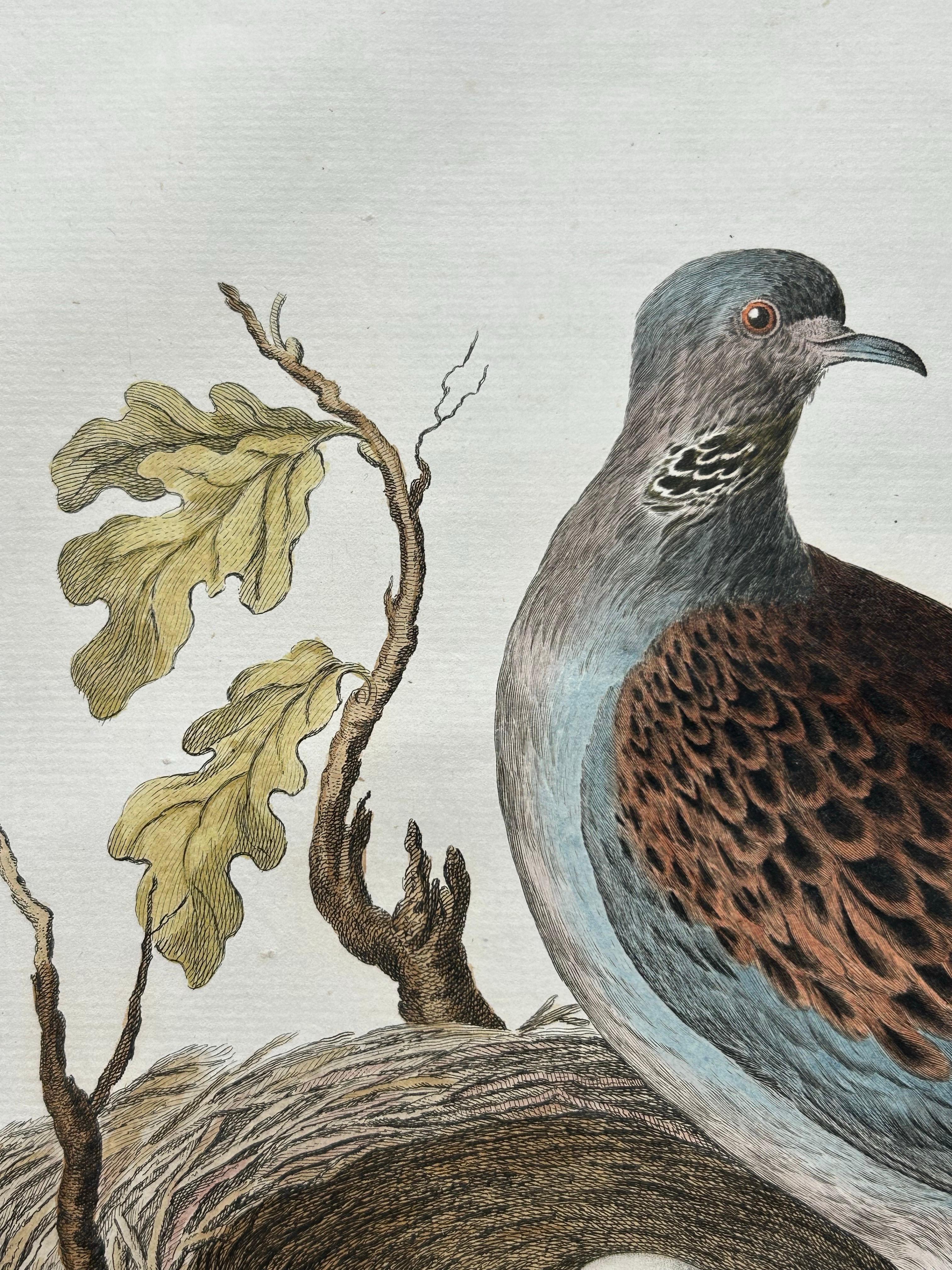
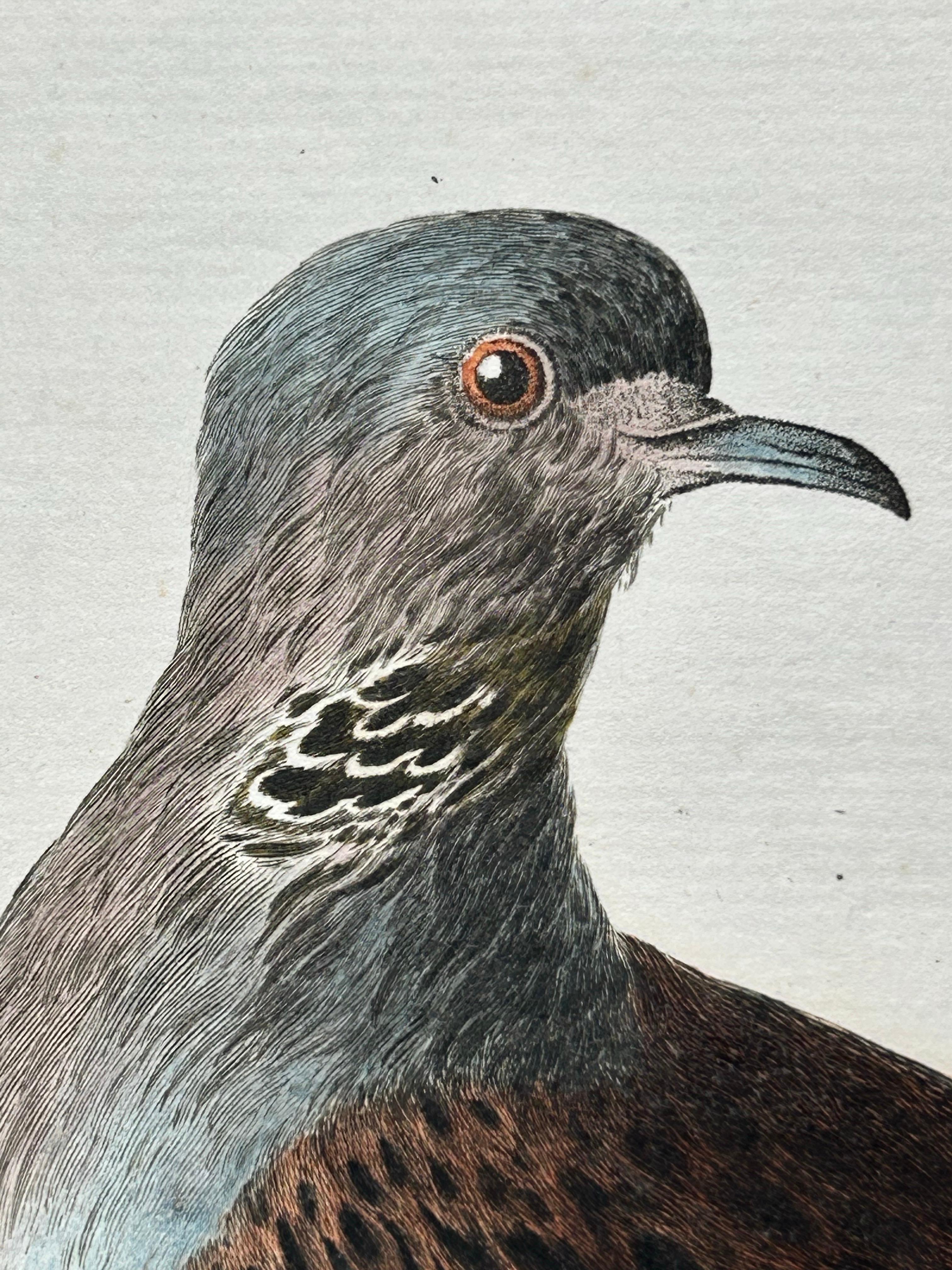
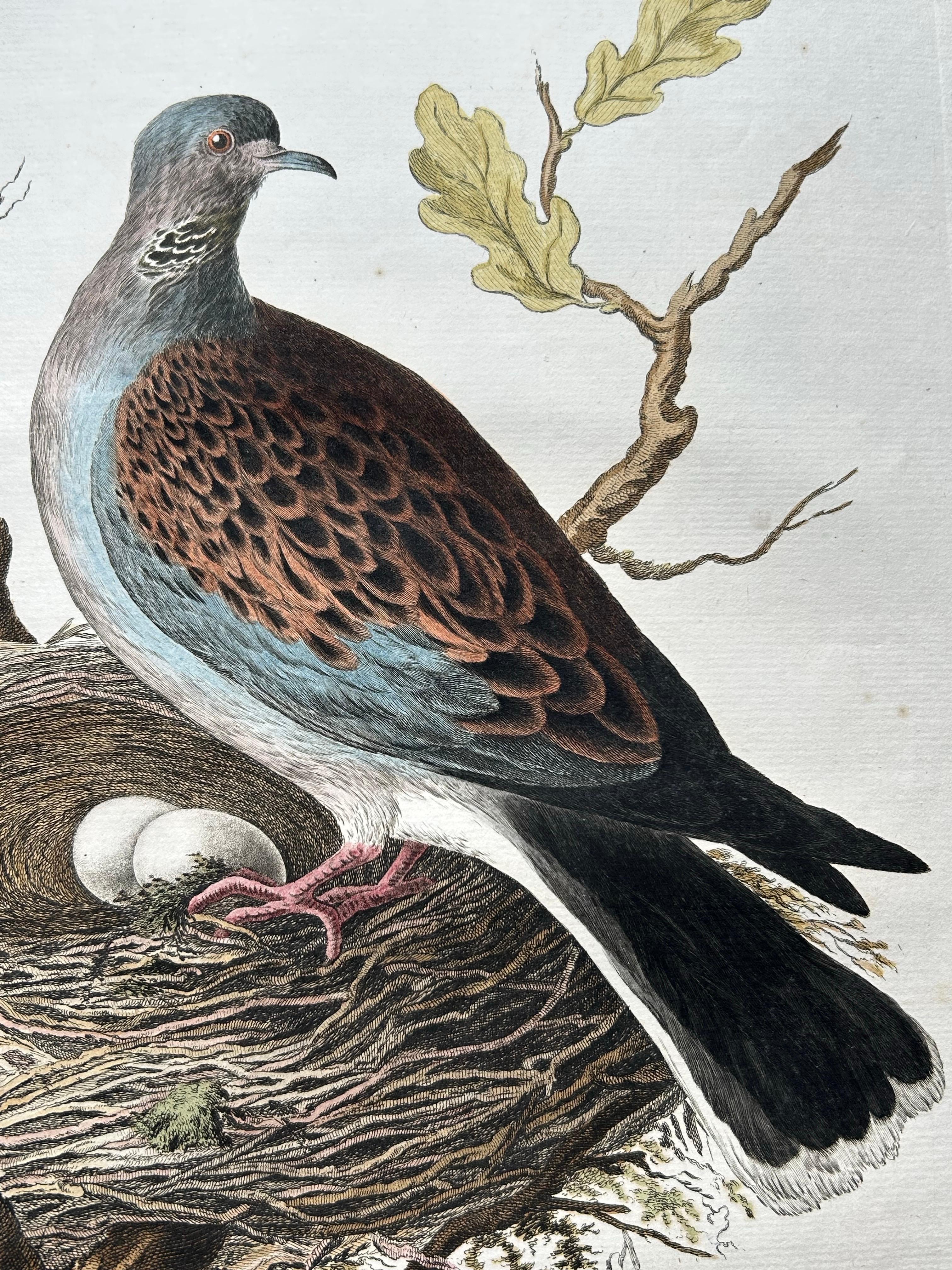
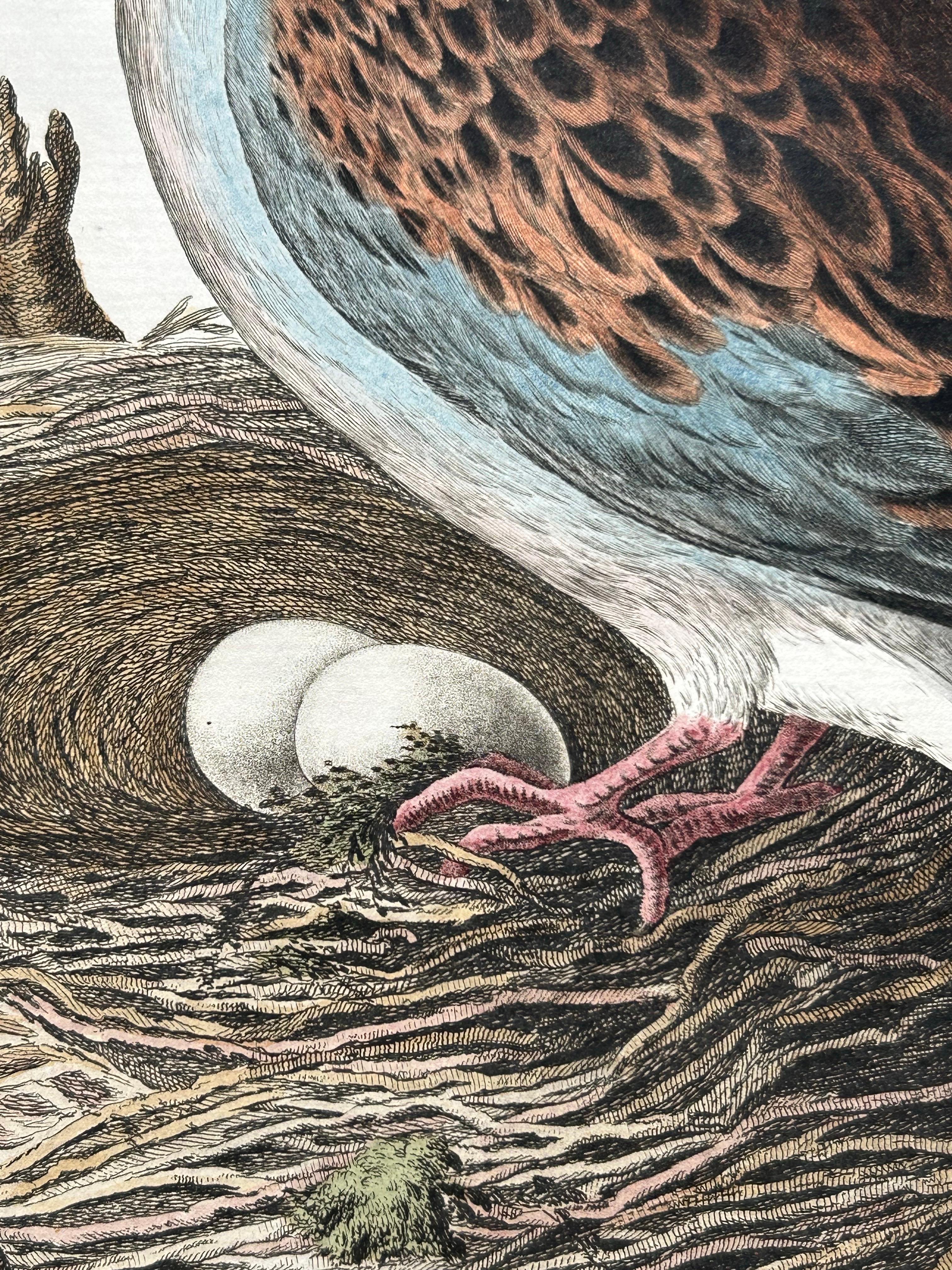
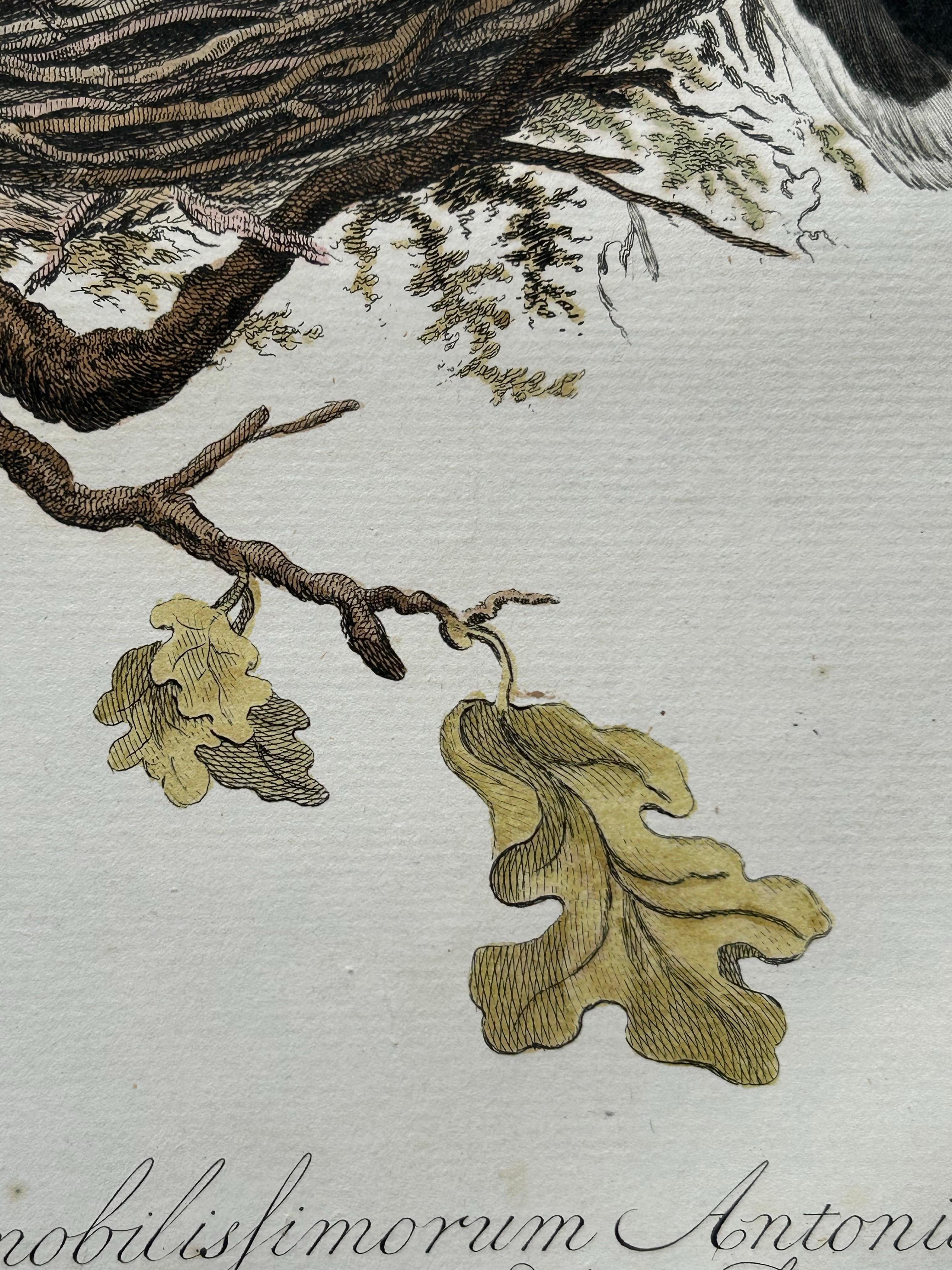
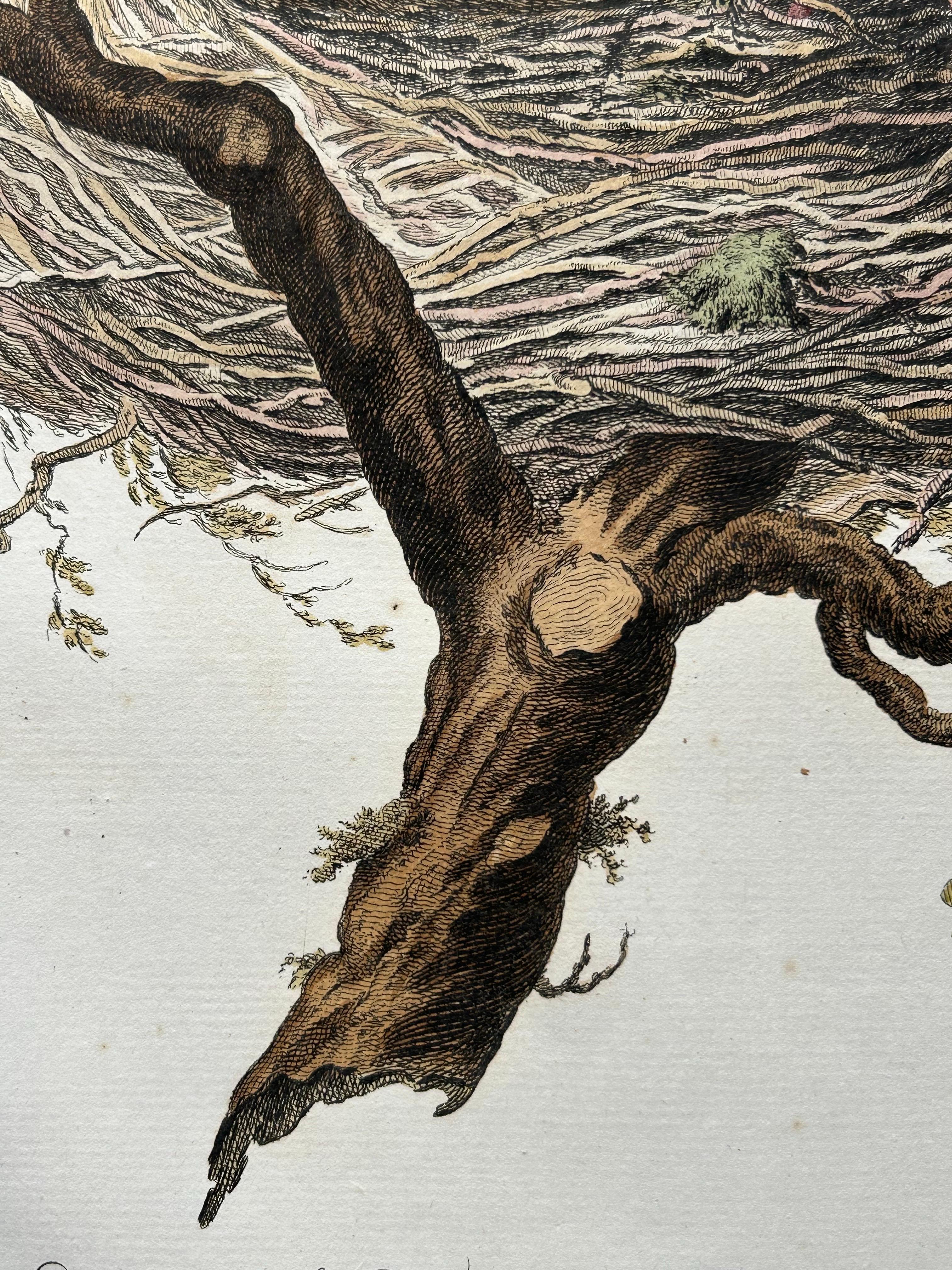
This fine hand-coloured engraving, titled Turtur, depicts the European turtle dove (Streptopelia turtur) perched elegantly on the edge of its nest, with two eggs delicately placed inside. The bird’s soft brown plumage, with its distinctive mottled wings and elegant posture, is rendered with remarkable detail, while the surrounding oak branches and finely woven nest add a naturalistic setting. The plate demonstrates both scientific accuracy and artistic charm, hallmarks of the great Dutch ornithological tradition.
The European turtle dove, known in Dutch as zomertortel, is a migratory species that breeds across much of Europe, the Middle East, Turkey, and North Africa, before wintering in sub-Saharan Africa. Long celebrated for its gentle call, the turtle dove has held deep symbolic meaning in European culture, often associated with peace, fidelity, and devotion. Today, it is also notable for its declining populations due to habitat loss, making historical representations like this all the more poignant.
This engraving originates from Nederlandsche Vogelen; volgens hunne huishouding, aert en eigenschappen beschreeven (Amsterdam, 1770–1829), the monumental first study devoted to Dutch birdlife. Initiated by Cornelis Nozeman and continued by Martinus Houttuyn, with illustrations produced by Christiaan Andreas Sepp and later his son Jan Christiaan Sepp, the series remains a landmark in European natural history publishing. Each plate was printed on laid paper and meticulously hand-coloured, often showing the birds in life-sized or nearly life-sized form, in their characteristic habitats.
Collectors value this engraving for its balance of natural history and decorative quality, capturing not only the species but also the nesting scene, which adds rarity and charm. Its careful hand-colouring and historical context make it an exceptional example for ornithology enthusiasts and collectors of fine natural history prints.
Condition: Very good. Light, age-related toning and faint spotting in margins, image clean and strong. Margins intact. plate mark visible. Accompanied by the original descriptive text sheet.
Framing tips: This engraving would display beautifully in a soft cream or ivory mount with a natural oak or dark walnut frame to complement the bird’s warm brown and grey tones. For a more elegant presentation, a gold or gilt-lined frame would highlight its historical character.