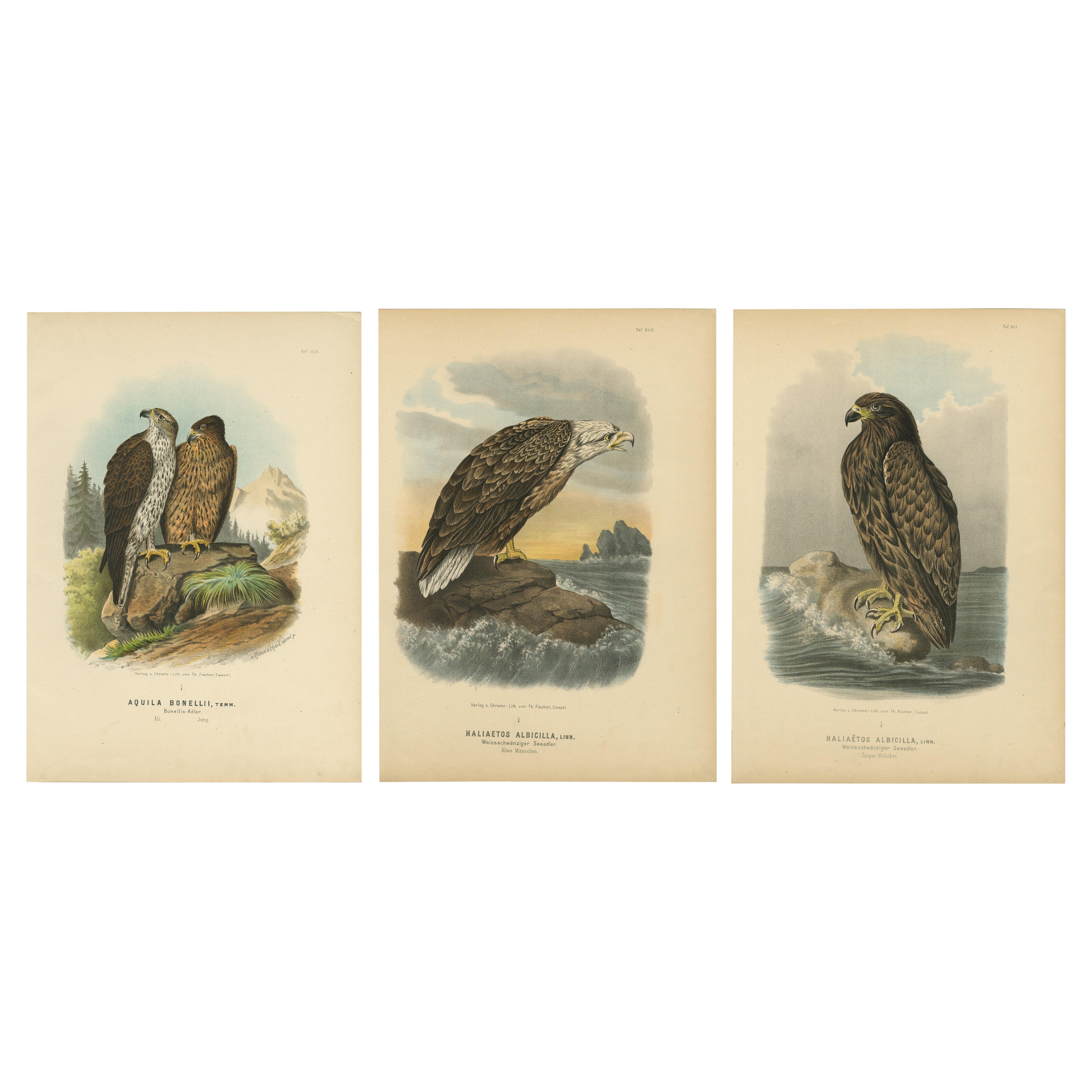
Eagles Prints – Antique Set of Three, Raptors & Ornithology Wall Art, 1894
€ 590
One of a kind: this is the sheet in the photographs. Ships from Langweer, the Netherlands.
Date
1894
Sheet size
39.5 × 28.7 cm (15.6 × 11.3 in)
Reference
PCT-61971, -72, -73
Condition
Very good impressions with deep, rich coloring. Some mild toning and light age-related wear to the margins, but overall well-preserved with strong plate marks visible.
About this sheet
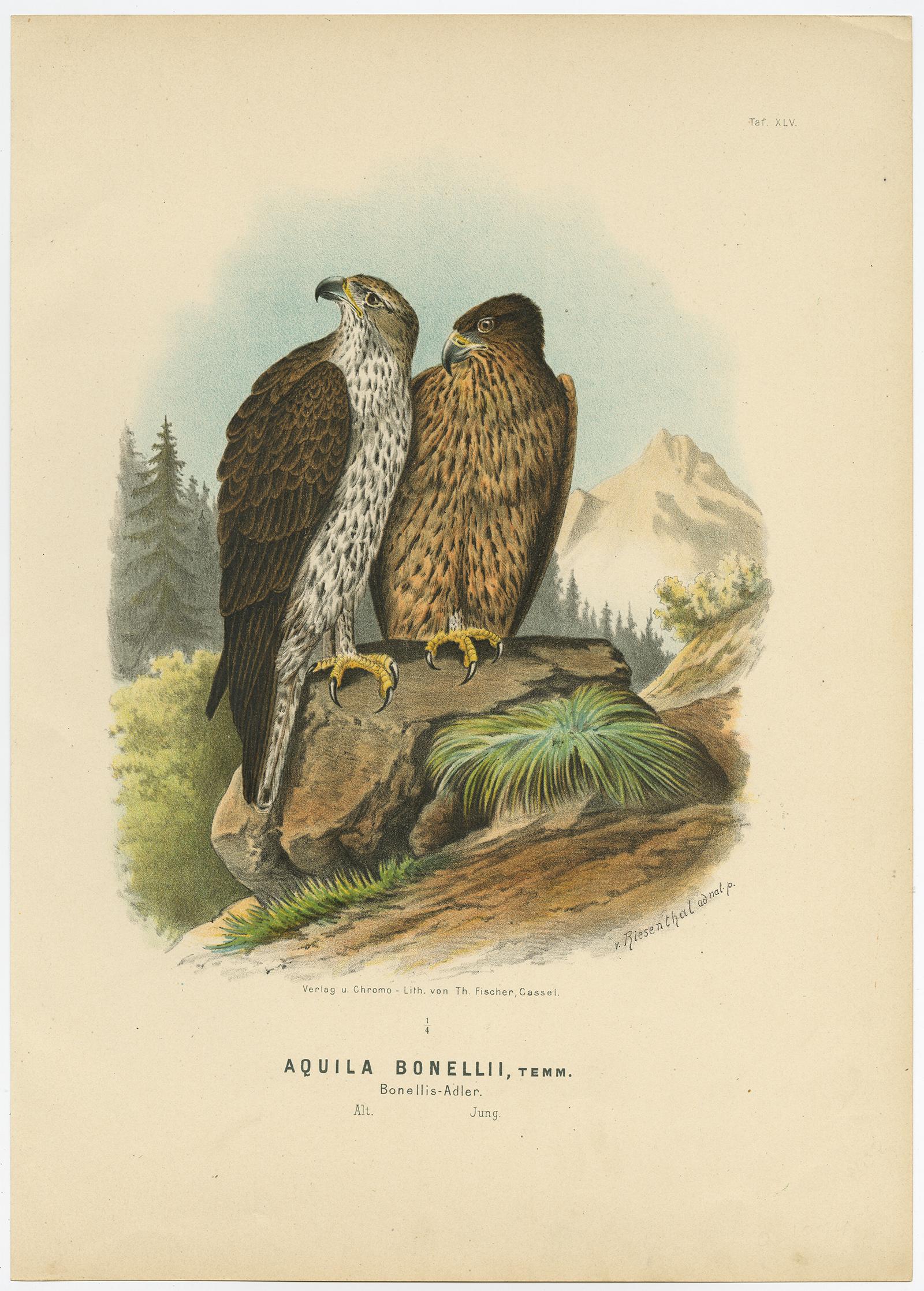
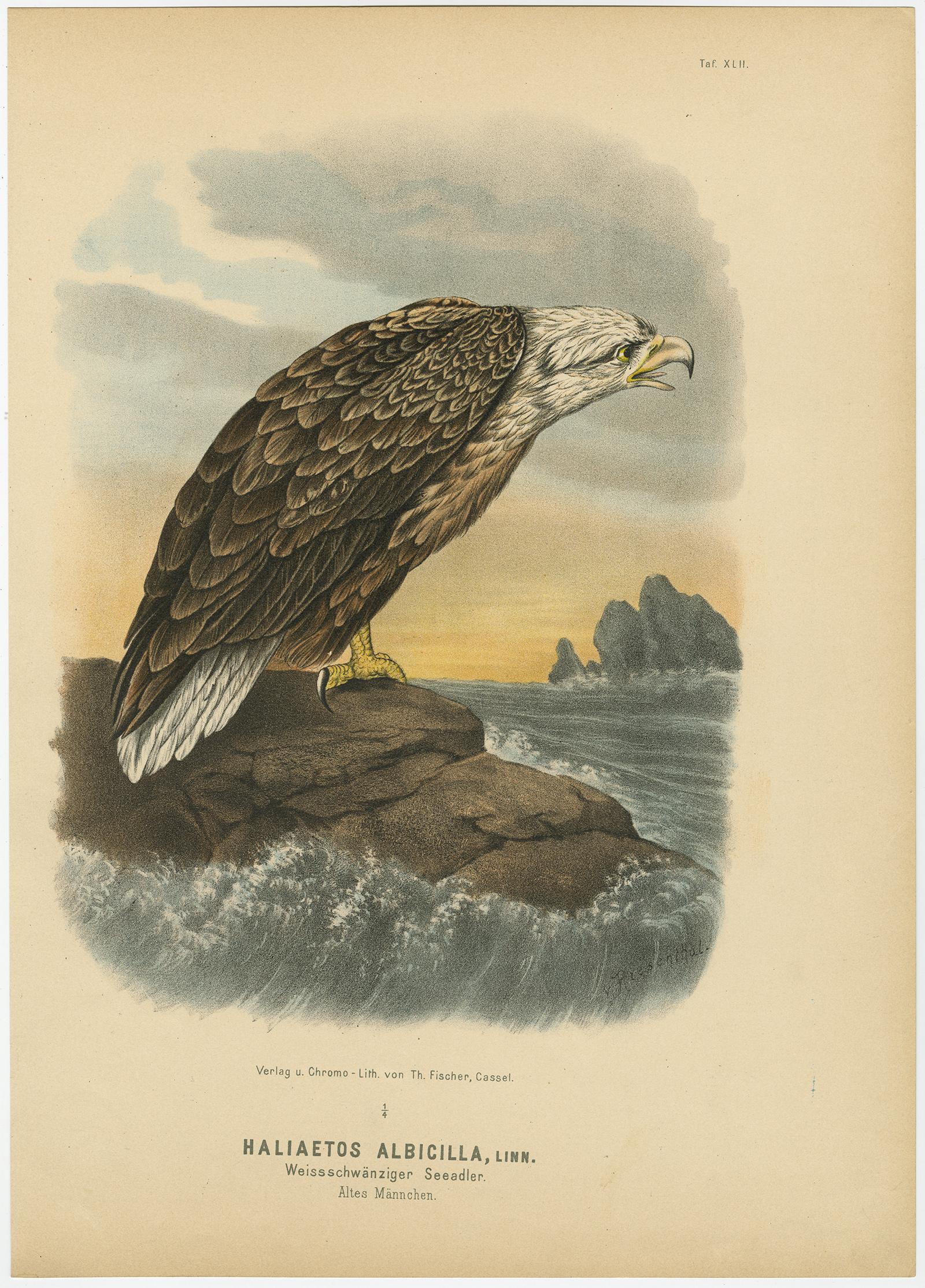
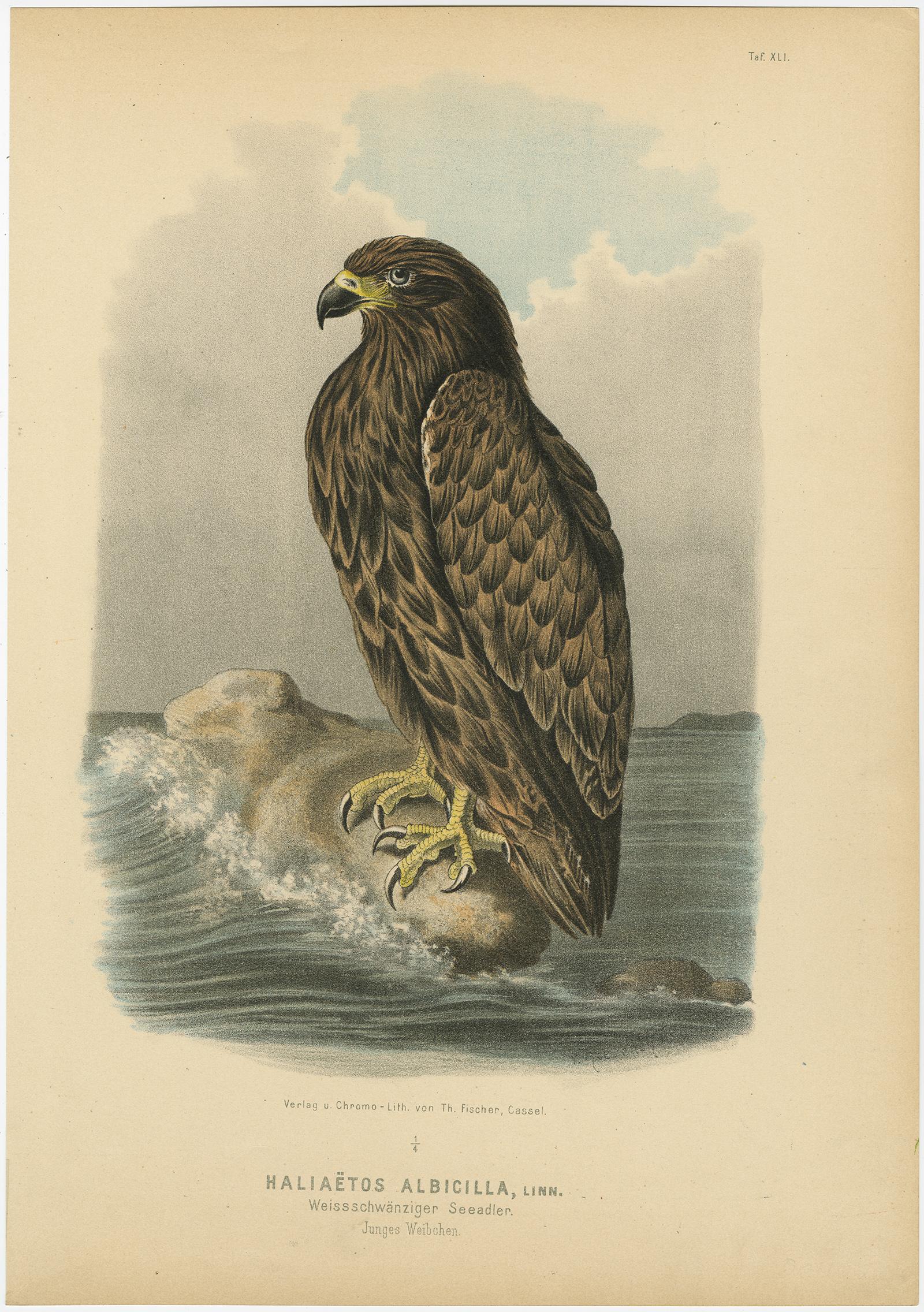
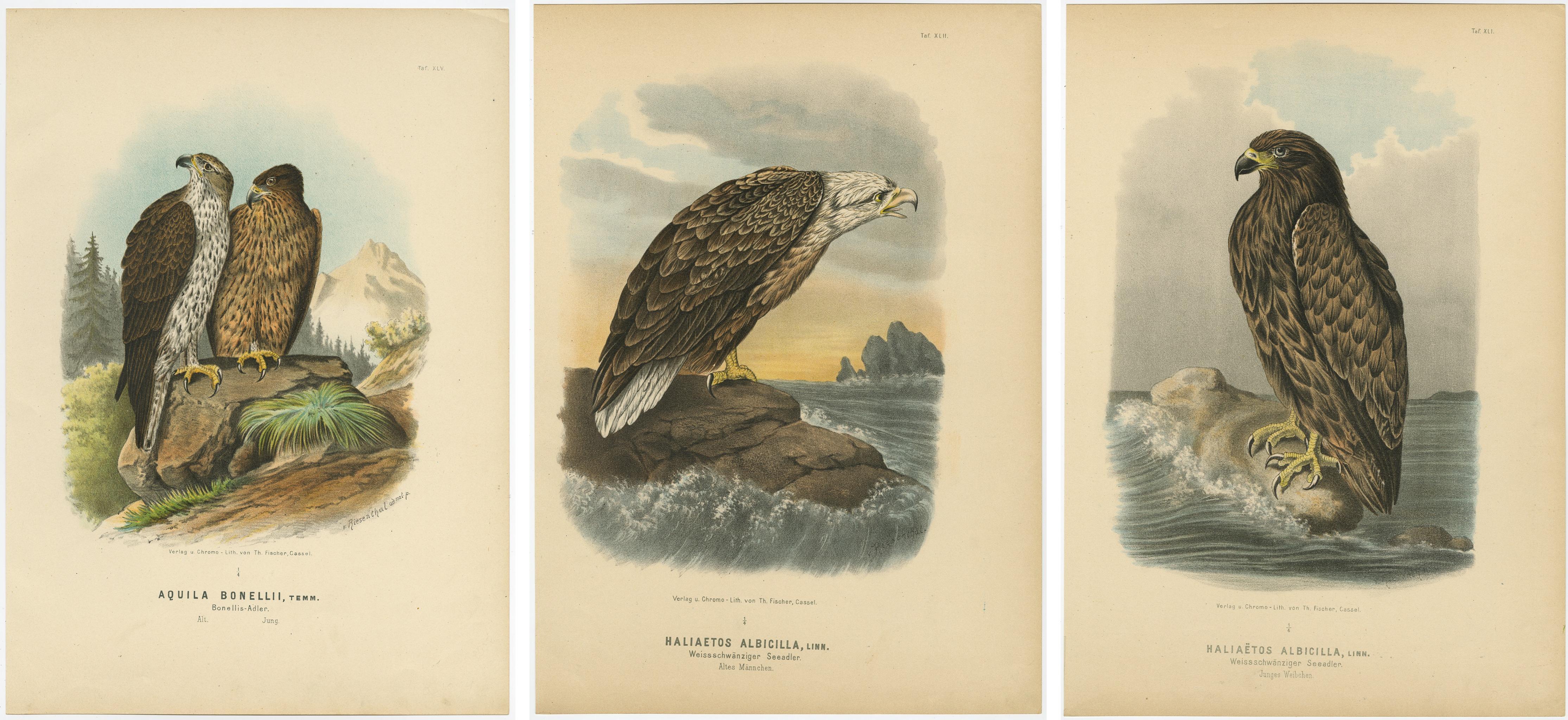
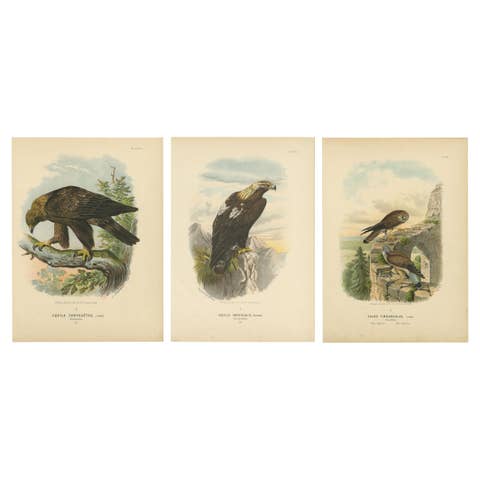
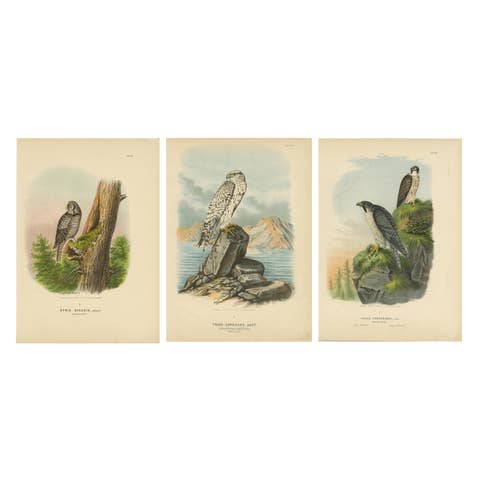
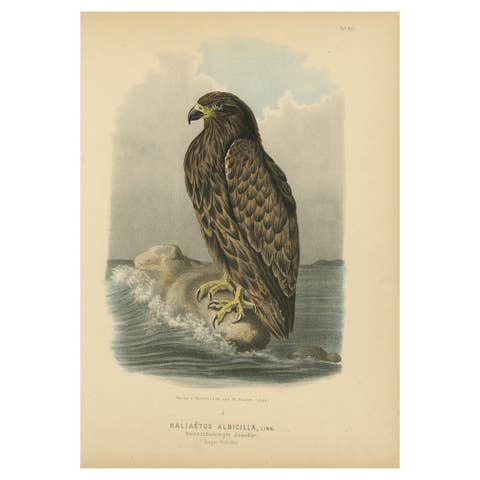
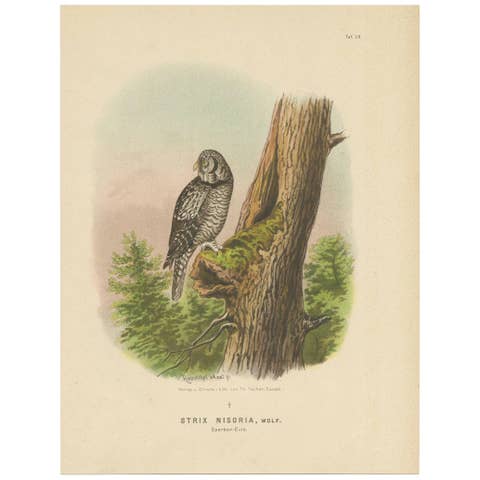
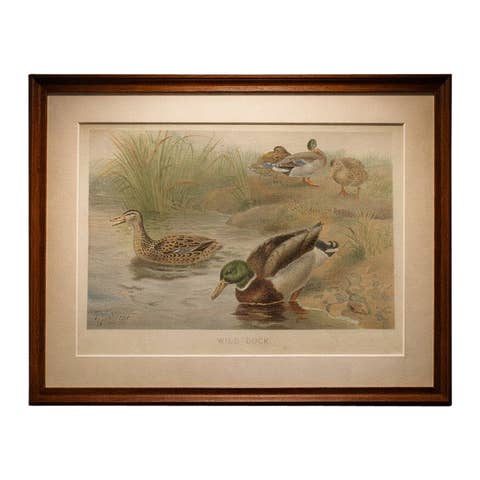
Set of Three Antique Prints of Eagles by Oskar von Riesenthal, 1894 A striking trio of chromolithographs (unframed!) from Oskar von Riesenthal’s Die Raubvögel Deutschlands und des angrenzenden Mitteleuropas, published in Gera by S. B. Griesbach in 1894. This important ornithological work, first issued in 1876–78, remains a cornerstone for collectors of bird of prey illustrations, admired for its lifelike accuracy and dramatic compositions.
The set includes: – Taf. XLV: *Aquila bonellii* (Bonelli’s Eagle), showing both adult and juvenile birds perched on rocks in a mountainous setting. – Taf. XLII: *Haliaeetos albicilla* (White-tailed Eagle), an old male depicted dramatically on a coastal rock against crashing waves. – Taf. XLI: *Haliaeetos albicilla* (White-tailed Eagle), a young female illustrated on a shoreline perch, emphasizing the darker plumage of immature birds.
The plates capture the majesty and variation within these raptors, combining scientific accuracy with artistic naturalism. Reference: Nissen IVB 782. OCLC 302340448. Cf. Harting 127.
Artists and Engravers: Julius Adolf Oskar von Riesenthal (1830–1898), German forester, ornithologist, hunter, and writer, after an anonymous artist. His expertise lent authority and precision to this landmark series.
Condition: Very good impressions with deep, rich coloring. Some mild toning and light age-related wear to the margins, but overall well-preserved with strong plate marks visible. We sell the prints NOT framed.
Framing tips: These three prints create a powerful statement when grouped. Double matting in ivory or light cream tones softens the dramatic imagery, while wide dark wooden frames enhance their strength. A triptych display brings out their scientific and decorative value.
Technique: Chromolithograph Maker: Oskar von Riesenthal, Gera, 1894