Ducks in Breeding Plumage – Antique 19th Century Chromolithograph Print
€ 140
One of a kind: this is the sheet in the photographs. Ships from Langweer, the Netherlands.
Sheet size
29 × 40 cm (11.4 × 15.7 in)
Condition
Good
Reference
BG-12677-102
Condition
Good condition with strong original coloring and wide margins. Slight age-related toning in the outer border but no tears or blemishes in the image itself. Clean and well-preserved impression.
About this sheet
Ducks in Breeding Plumage – Antique 19th Century Chromolithograph Print
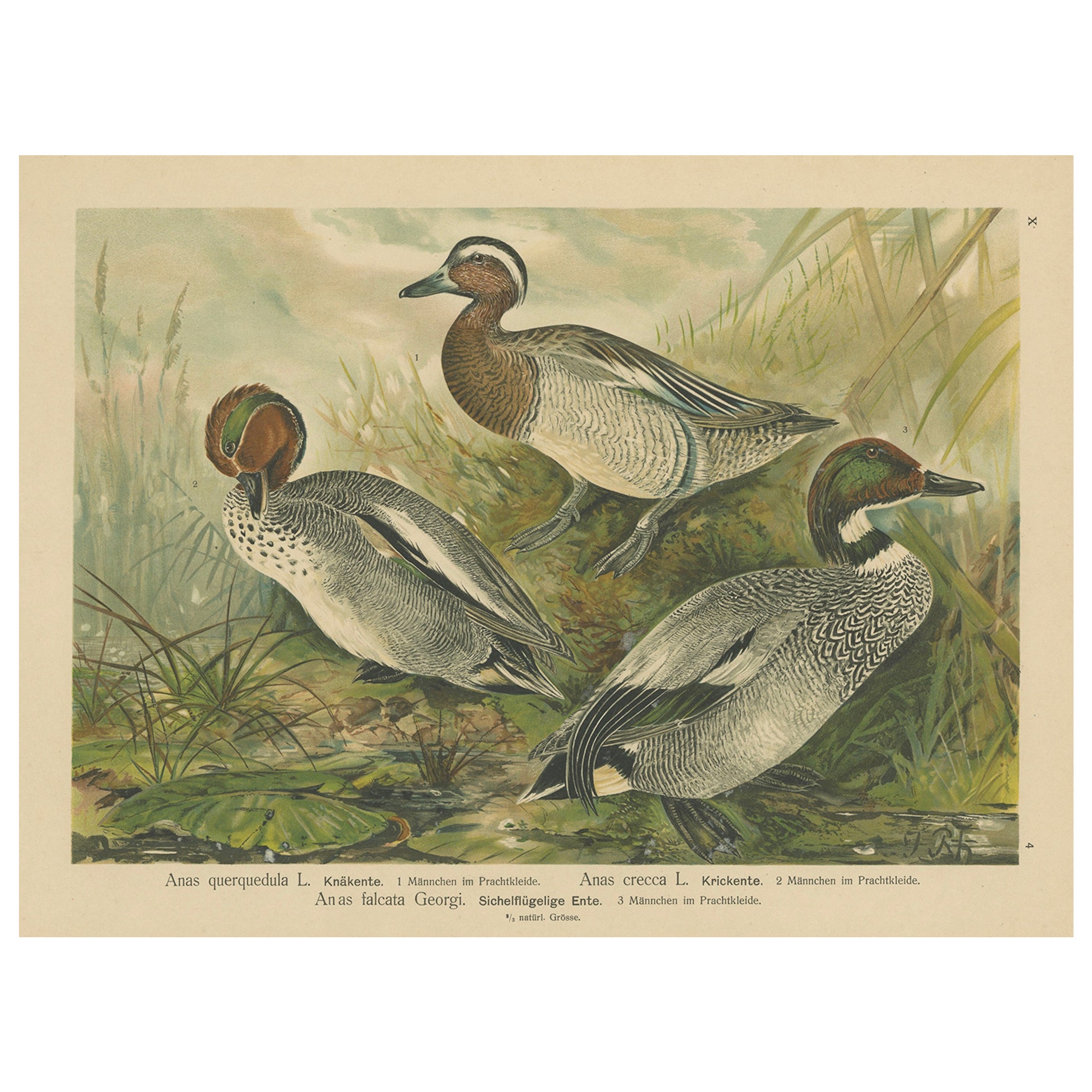
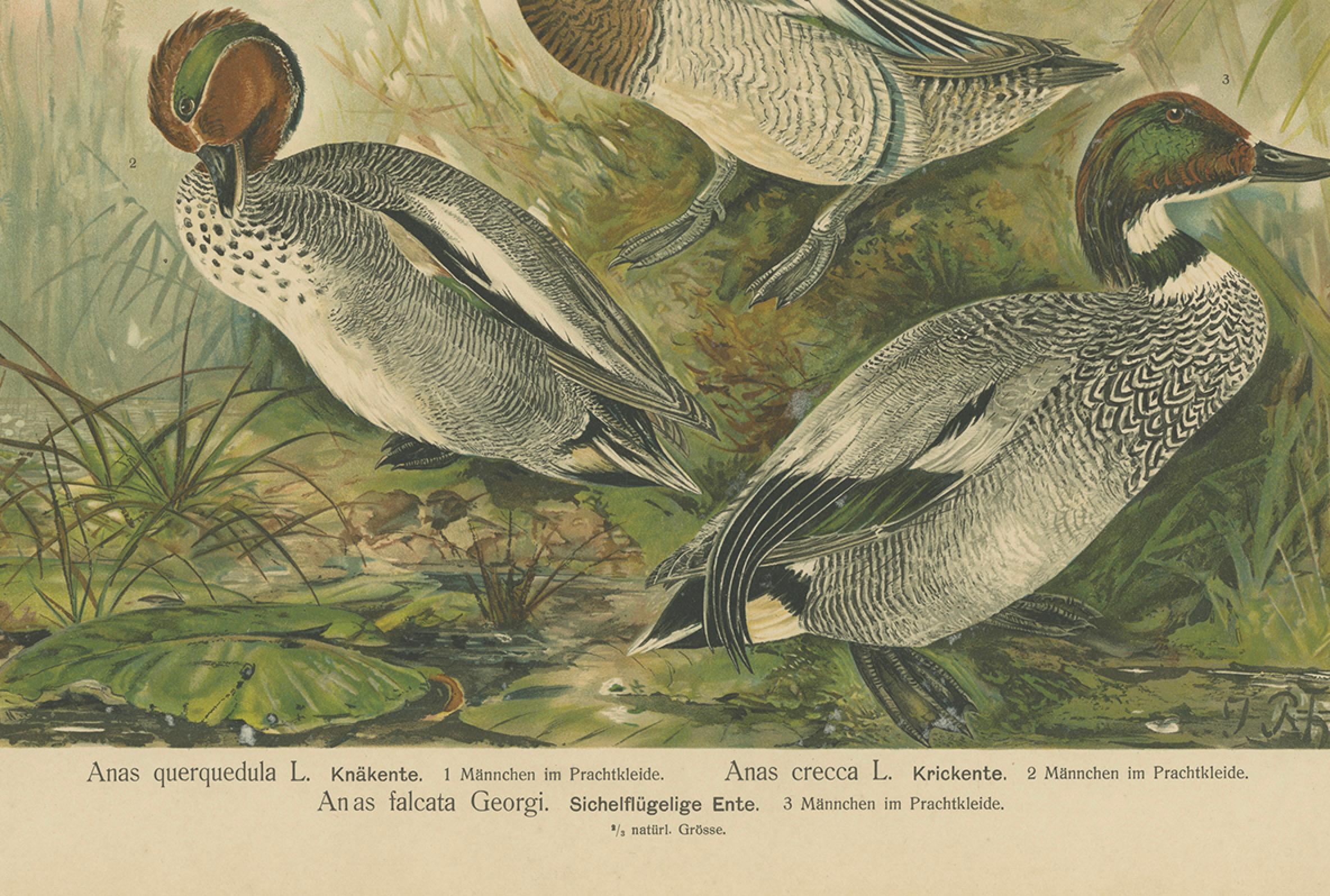
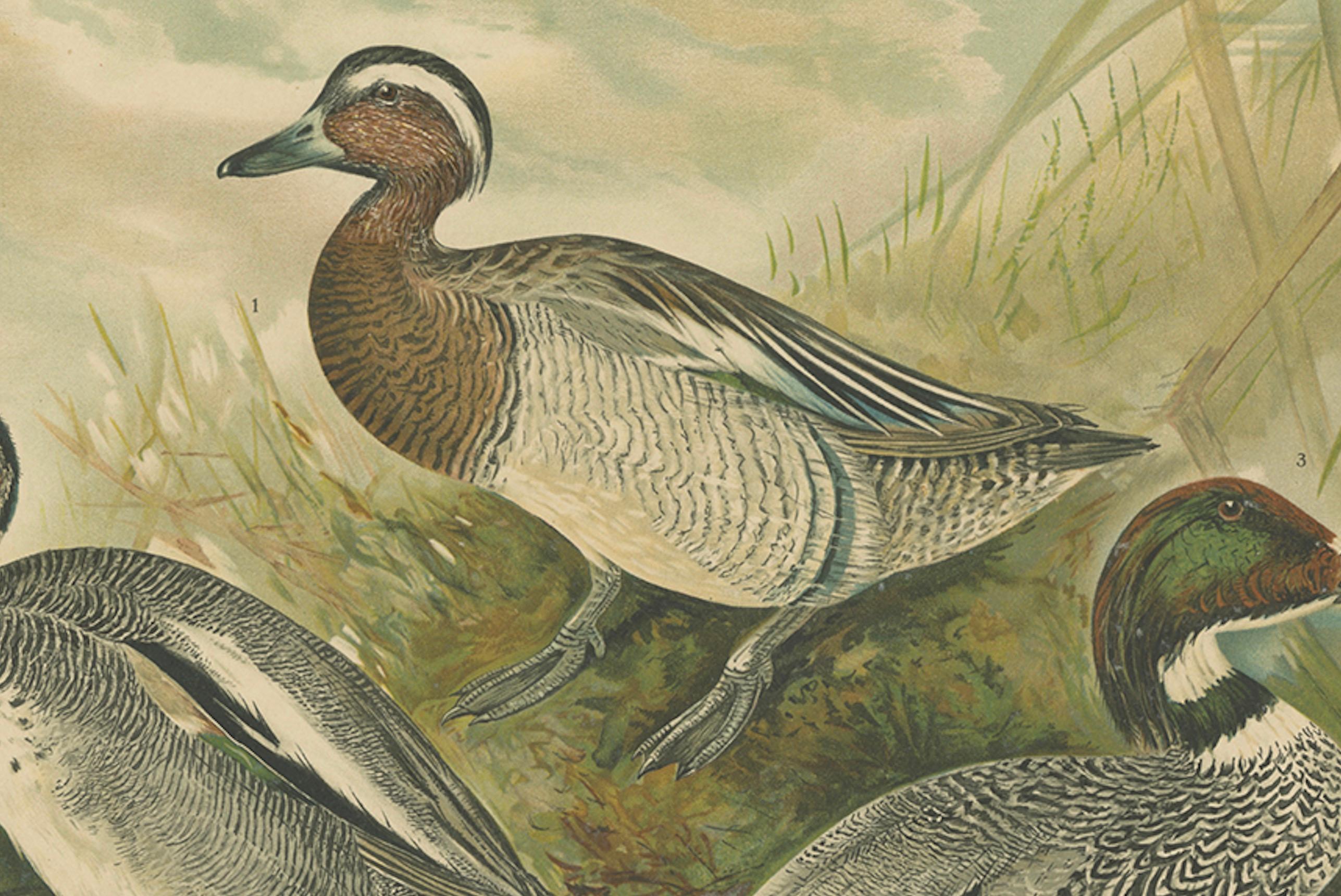
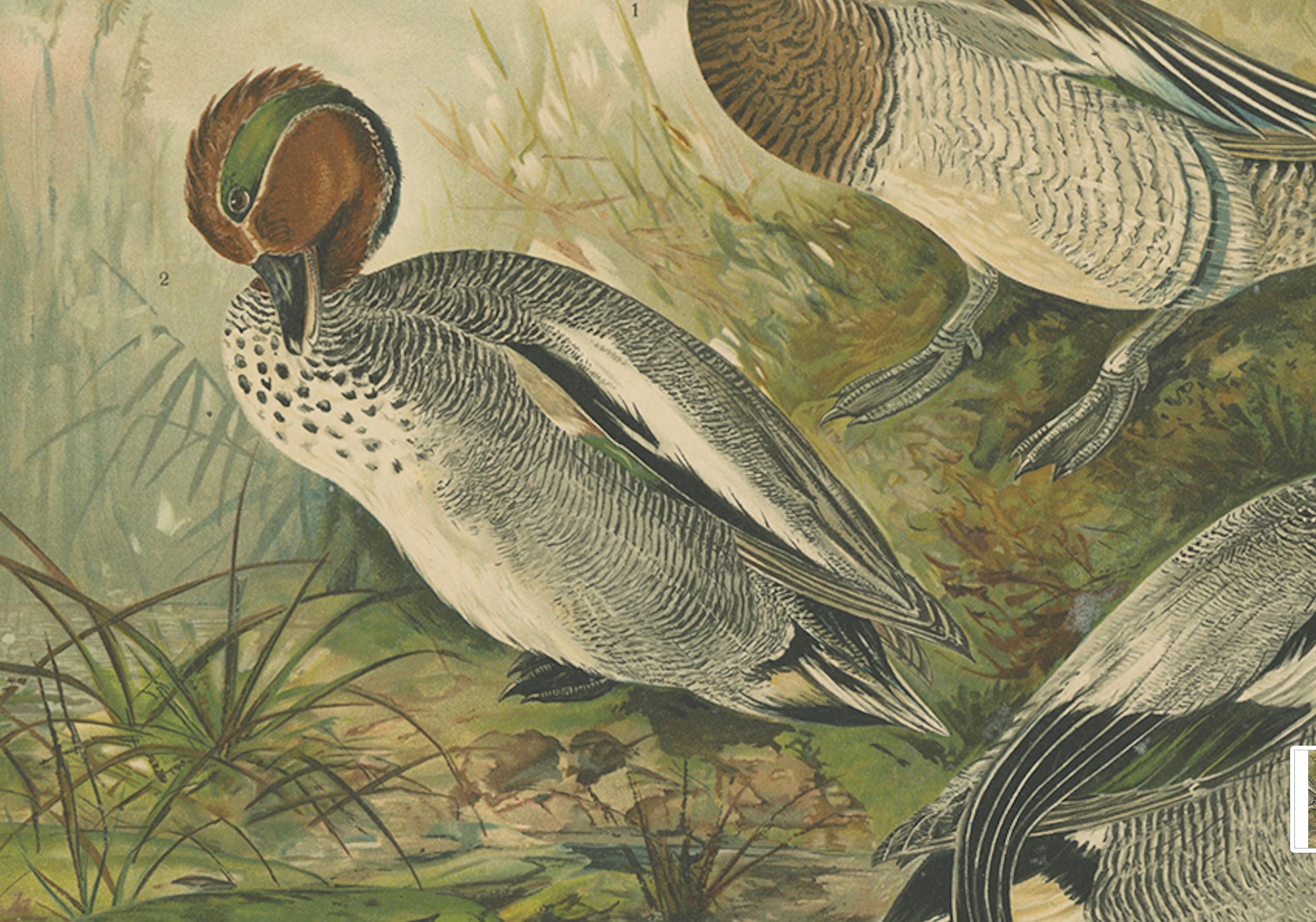
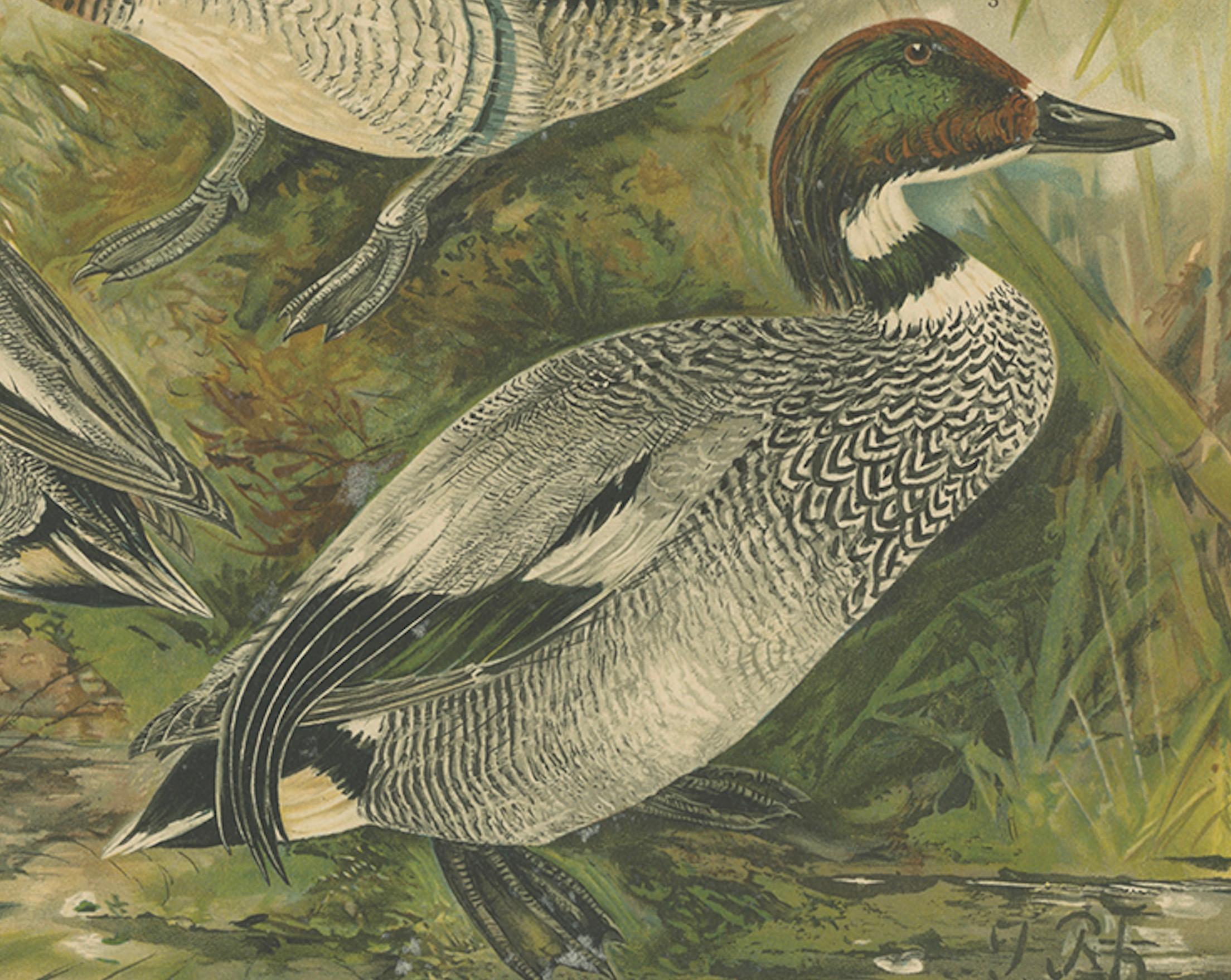
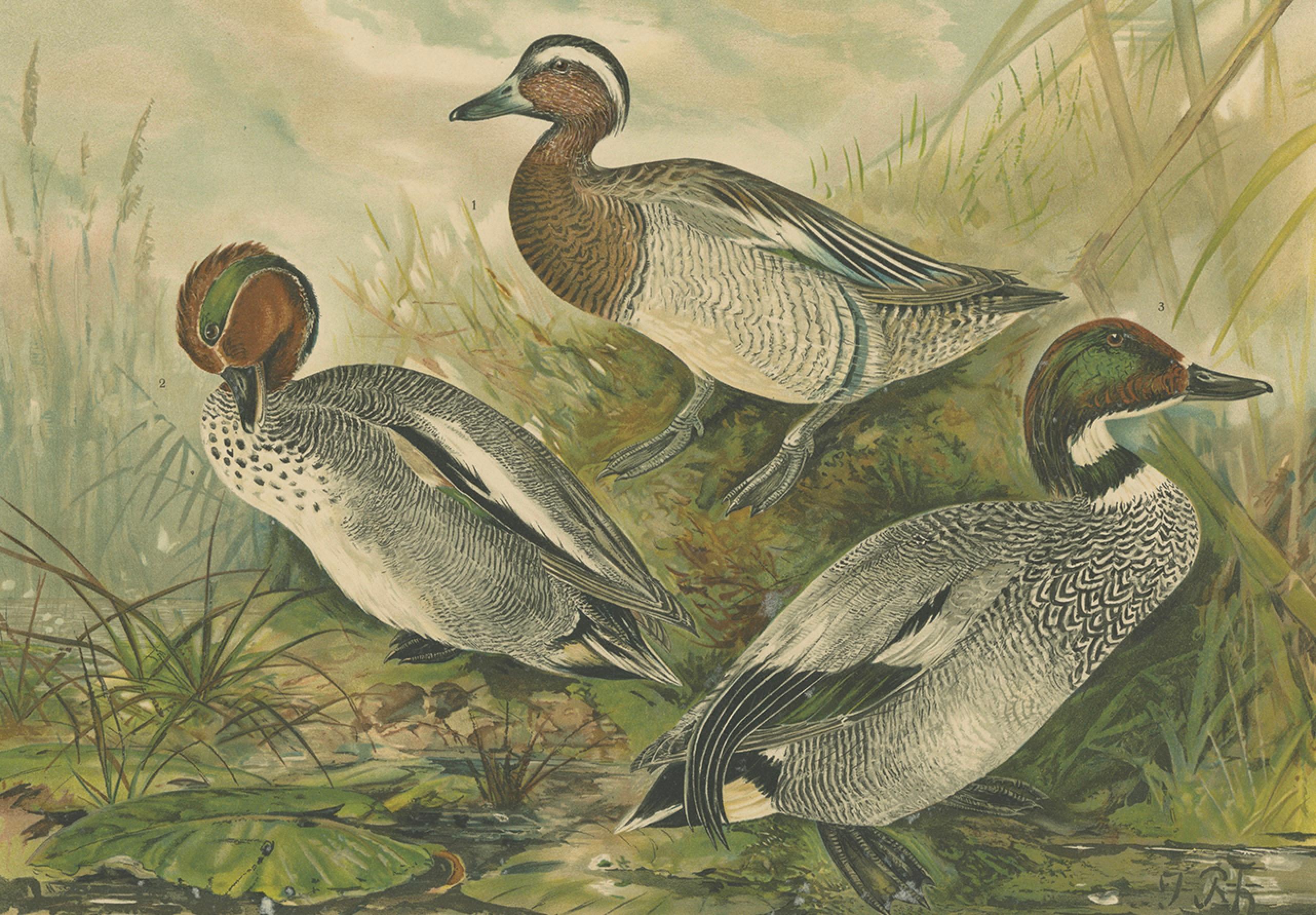
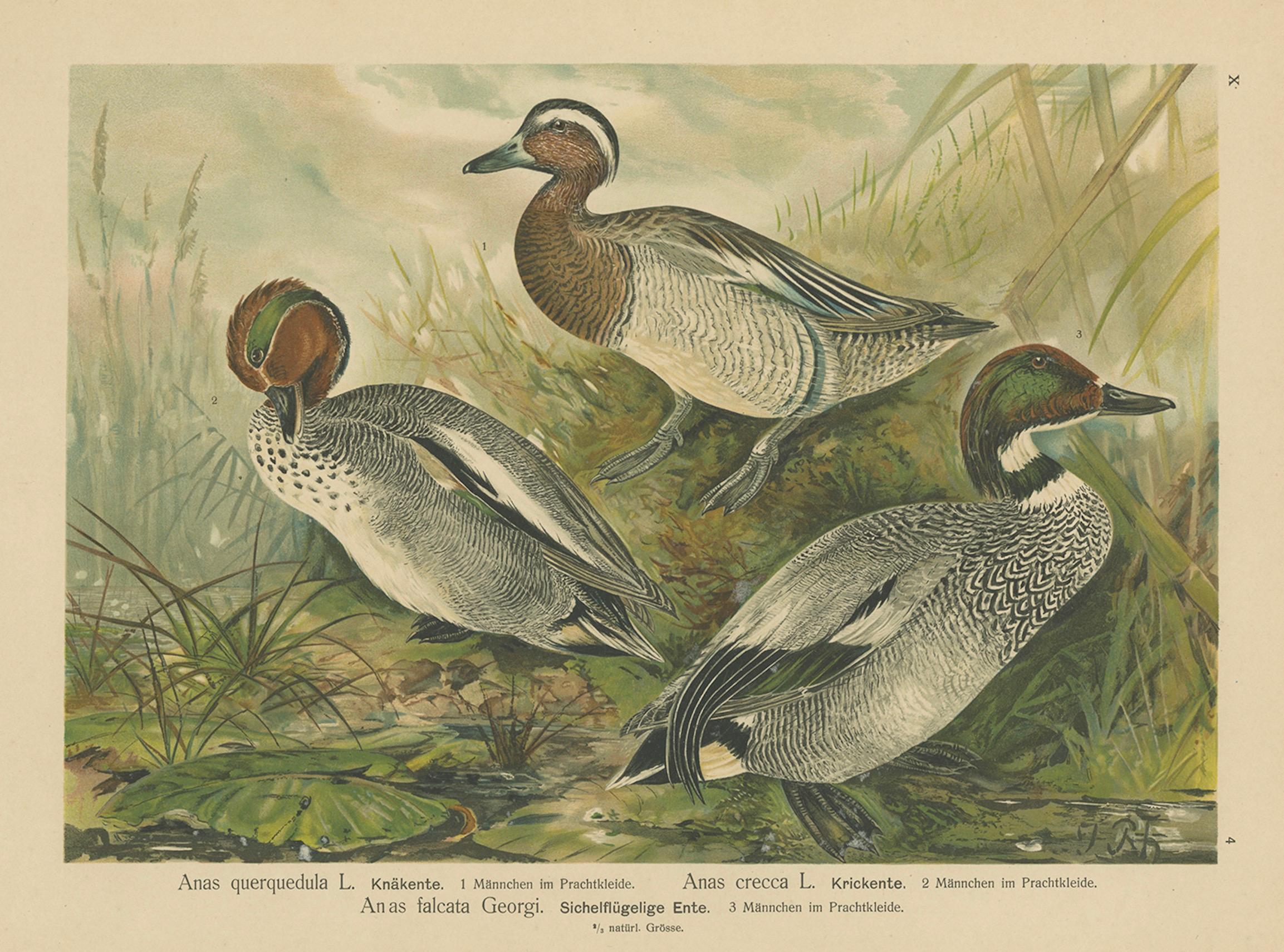
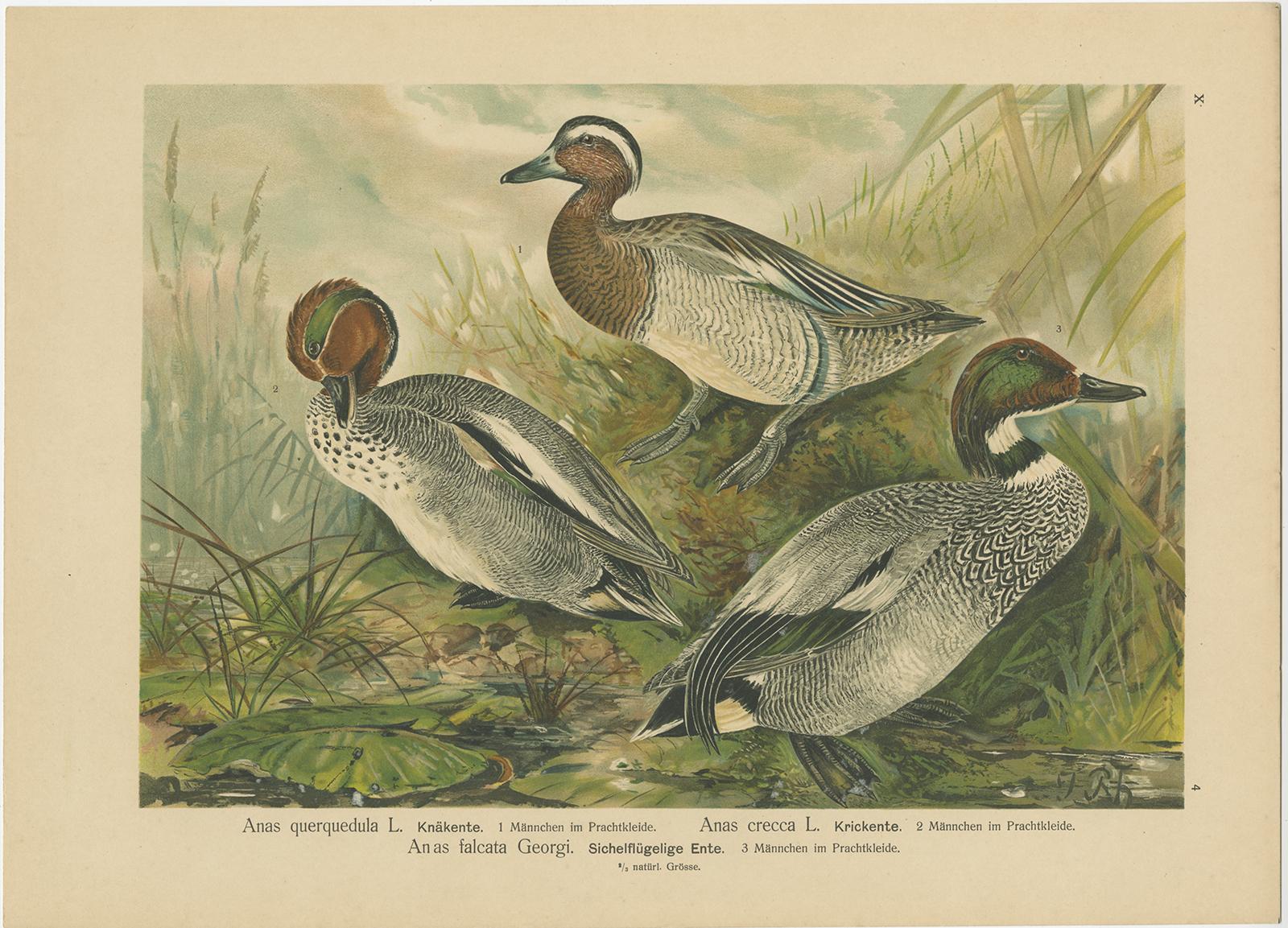
This beautifully detailed 19th-century chromolithograph depicts three species of ducks in full breeding plumage: the Garganey (Anas querquedula), the Eurasian Teal (Anas crecca), and the striking Falcated Duck (Anas falcata). All three male birds are rendered in exquisite anatomical accuracy, their iridescent and richly patterned feathers standing out against a lush background of reeds, water lilies, and marshland textures.
The foreground is dominated by the falcated duck, with its shimmering green head and sweeping sickle-shaped tertials, while the Eurasian teal presents its iconic chestnut head with a bold green stripe. To the rear, the garganey stands alert, its more muted brown and grey coloring highlighted by its prominent white eyebrow stripe. The artist's use of chromolithography brings out the subtle tones and dramatic contrast in their plumage, with beautifully layered colors that reflect the refinement of this printing process.
This plate is part of a German ornithological series from the late 19th century, likely produced under the influence of Johann Friedrich Naumann’s groundbreaking ornithological work. It reflects the era’s dual interest in scientific documentation and aesthetic appeal, combining naturalistic composition with a decorative sensibility. The presence of the initials "A.G." suggests it may have been illustrated by Anton Goering or another skilled artist active in natural history publishing during that time.
Such prints were originally intended to educate naturalists and enthusiasts while also serving as elegant wall décor. Today, it is a valuable collector’s piece for those interested in ducks, waterfowl, and antique bird illustrations.
Condition: Good condition with strong original coloring and wide margins. Slight age-related toning in the outer border but no tears or blemishes in the image itself. Clean and well-preserved impression.
Framing tips: Best presented in a dark green or chestnut wood frame with a cream or soft beige mat to highlight the earthy tones and vivid plumage. Museum glass is ideal to protect the fine surface and maintain clarity.