About this sheet
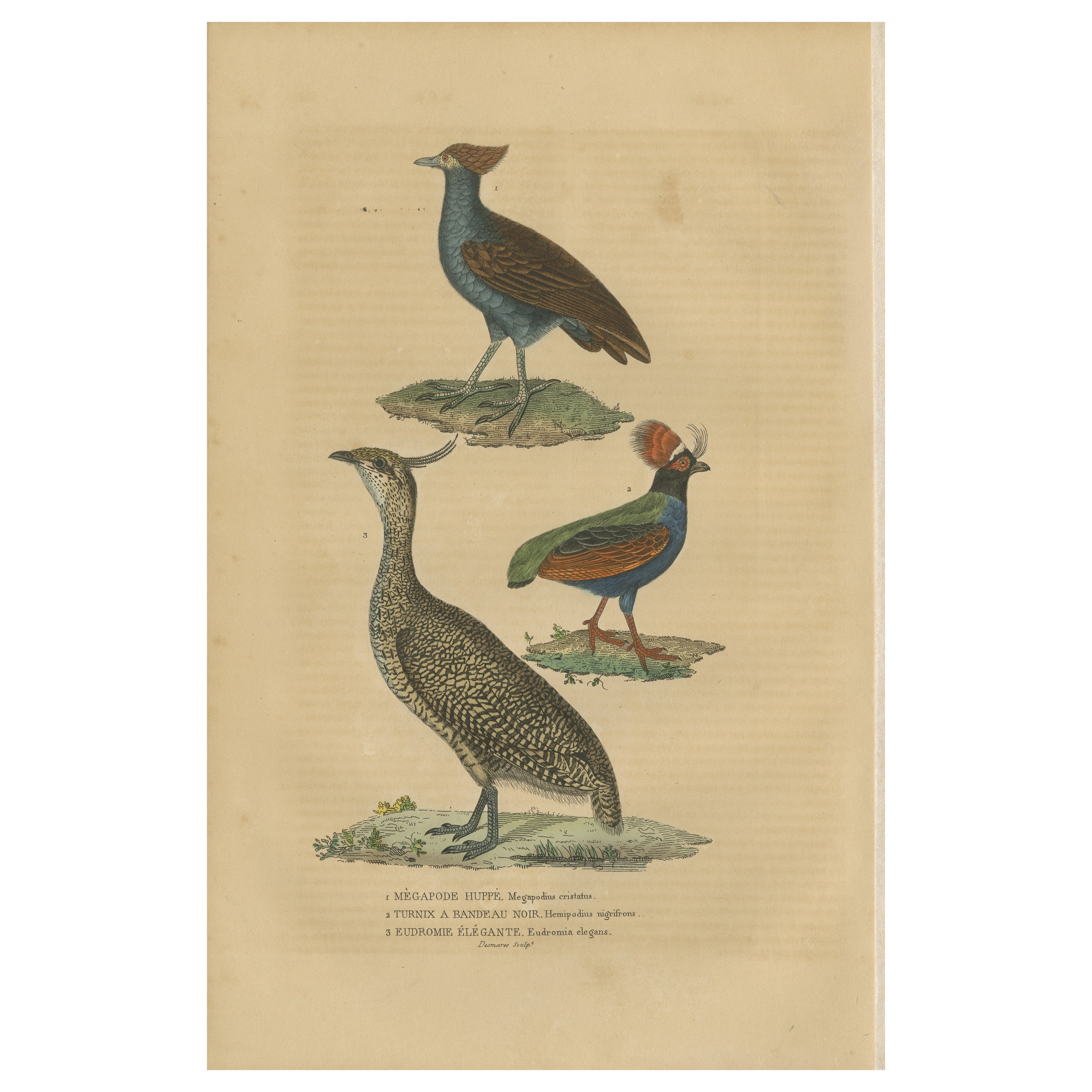
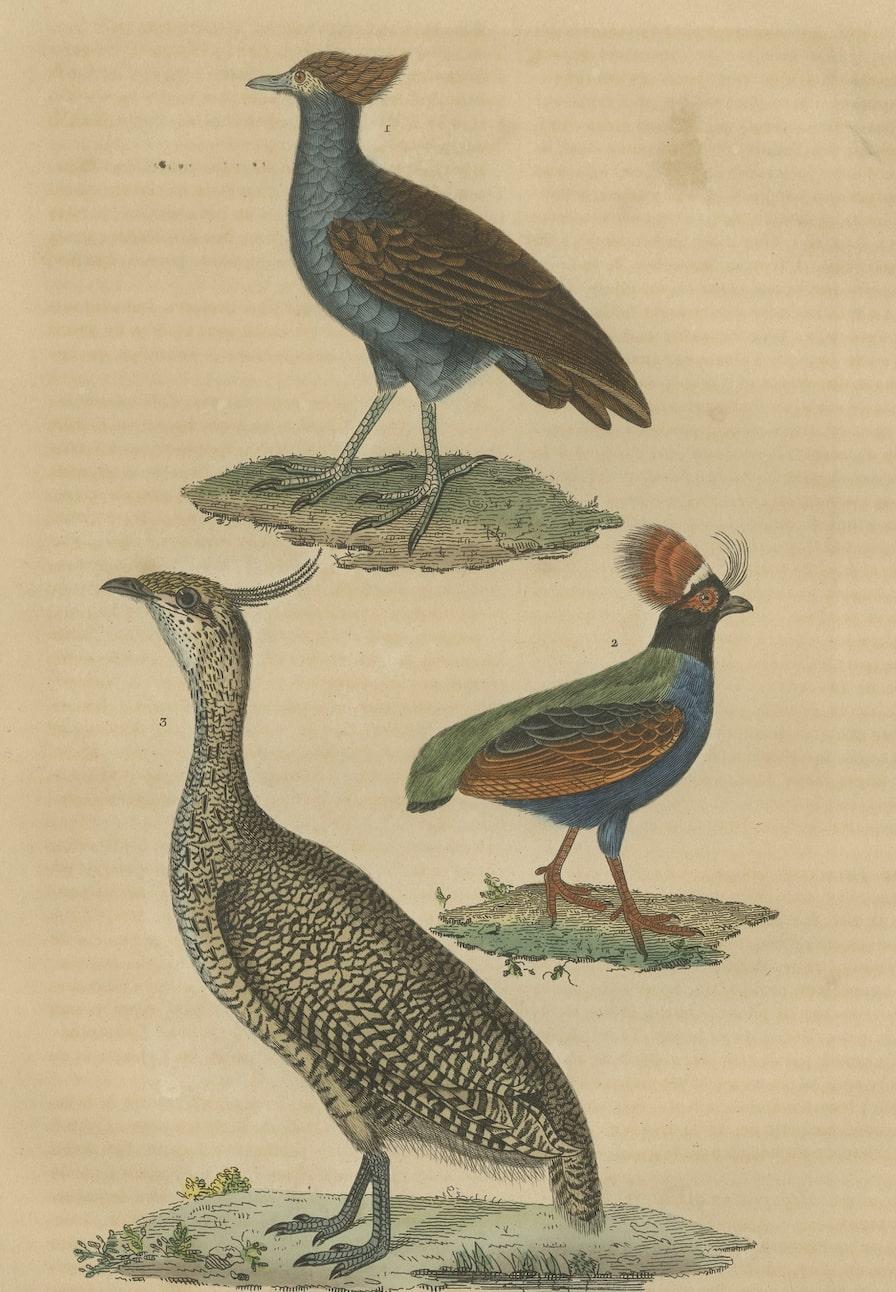
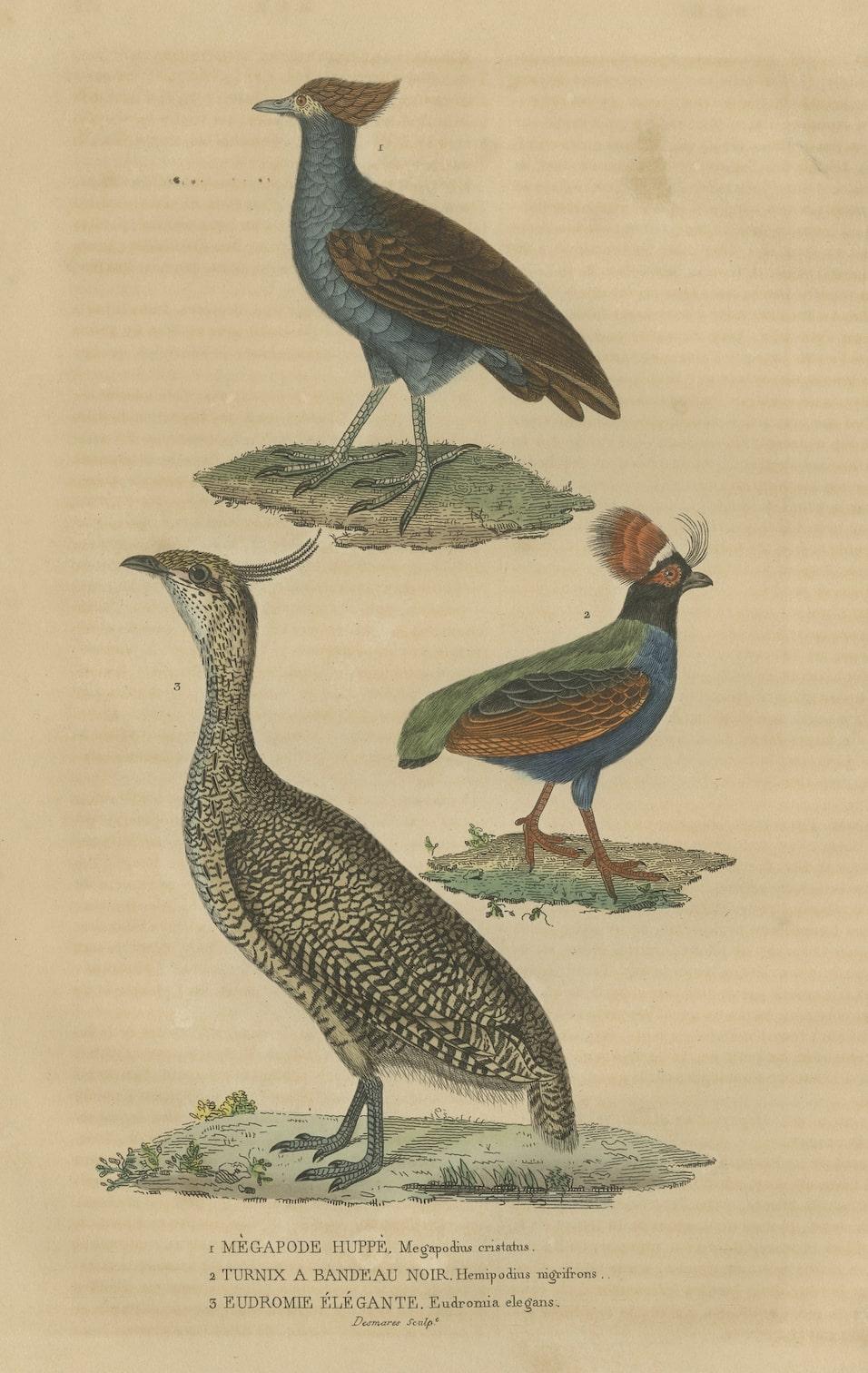
The megapose huppe, Turnix a Bandeau Noir and the Eudrome Elegante
The "Megapodius cristatus" refers to the Malay Scrubfowl, also known as the Crested Megapode or Tabon Scrubfowl. This bird species is known for its unique nesting behavior and is found in various parts of Southeast Asia and the Pacific.
The Malay Scrubfowl typically builds large nesting mounds made of soil, leaves, and vegetation, where they bury their eggs for incubation. Unlike most birds, they rely on the heat generated by the decomposition of organic material within these mounds to incubate their eggs, instead of sitting on them. The name "megapode" translates to "large foot," referencing the bird's relatively large and powerful feet, which it uses for digging and arranging its nesting material.
An antique illustration or print featuring the Megapodius cristatus showcases its distinctive appearance, including its crested head, mottled plumage, and robust build.
"Turnix à bandeau noir" translates to "Black-rumped Buttonquail" in English. This small ground-dwelling bird is known for its cryptic plumage and secretive nature, often found in grasslands, scrub, and agricultural fields across various regions.
"Eudrome élégante" refers to the Elegant Trogon (Trogon elegans), a stunning bird species found in certain parts of Central America. Renowned for its vibrant plumage, particularly the iridescent green and red colors of the male, this bird is considered a symbol of beauty in its habitat.
An antique illustration featuring the Turnix à bandeau noir and the Eudrome élégante might showcase the distinct characteristics of these birds. It could depict the Buttonquail's subtle yet intricate plumage and the Trogon's striking colors and elegant features, offering a visual representation of their unique appearances and perhaps illustrating their natural habitats or characteristic behaviors.
More info on the book in which it was published:
The 'Dictionnaire Classique des Sciences Naturelles' by Pierre Auguste Joseph Drapiez stands as a remarkable testament to 19th-century natural sciences. Published in Brussels in 1845, this work represents an expansive collation of knowledge, building upon the pioneering works of Buffon, Daubenton, Lacepede, Cuvier, de Jussieu, and other influential naturalists.
The prints within this compendium likely showcase a rich amalgamation of artistic precision and scientific accuracy. Drapiez, himself a Belgian naturalist, would have aimed for detailed representations of flora, fauna, and scientific phenomena, mirroring the illustrative styles prevalent during his time. Given the era's emphasis on illustration, these prints were likely engraved meticulously, possibly portraying intricate anatomical details or lifelike depictions of the natural world.
With Drapiez's background in natural history, the prints might bear testament to his commitment to scientific authenticity, aiming to educate and inspire scholars and enthusiasts alike. These engravings would have complemented the text, offering visual aids that elucidate the concepts and specimens discussed in the volume.
Overall, the prints of 'Dictionnaire Classique des Sciences Naturelles' likely serve as both artistic representations and invaluable scientific resources, encapsulating the essence of 19th-century natural history exploration and documentation.