About this sheet
Antique Rhinoceros Horn Anatomy Engravings, Buffon Scientific Pair 1769
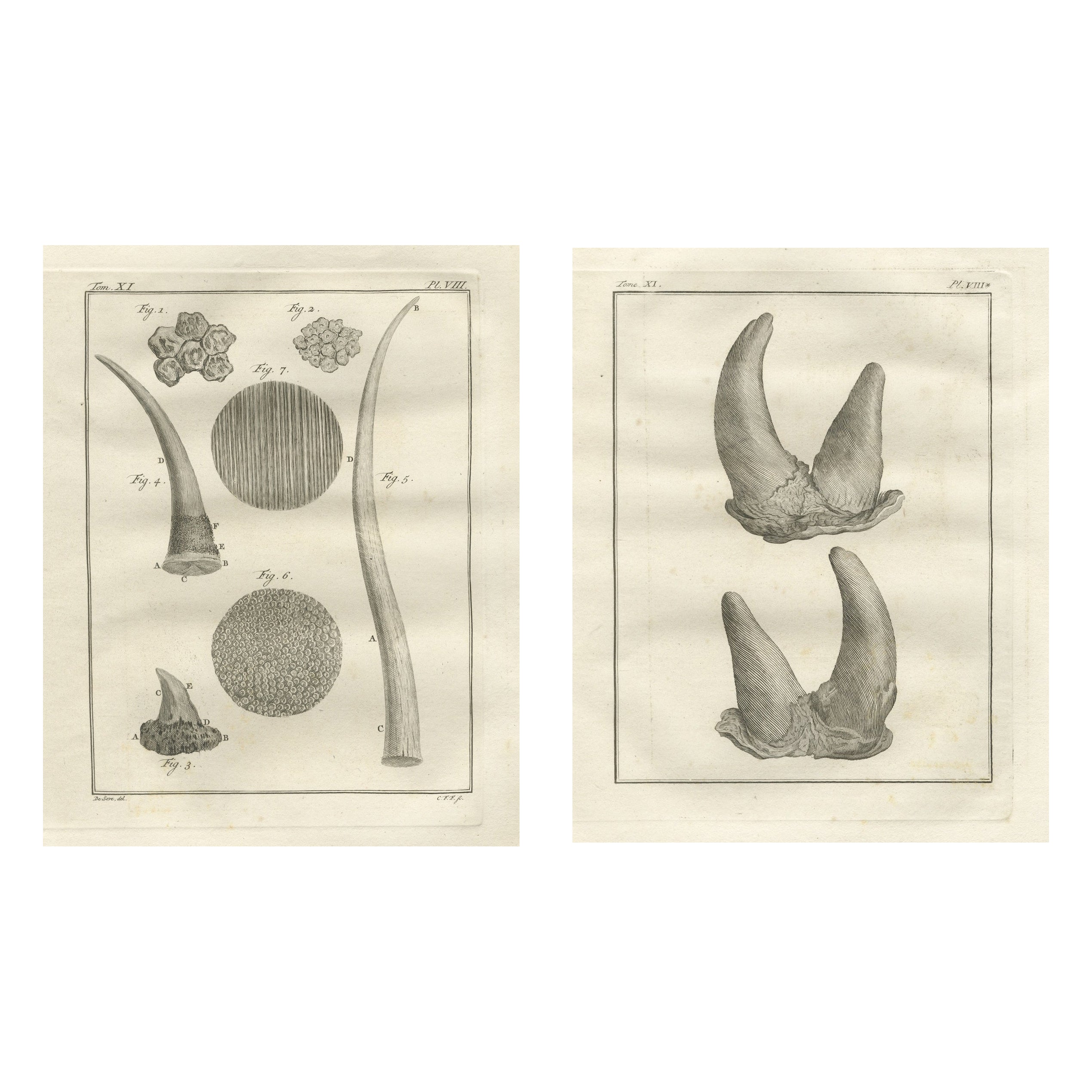
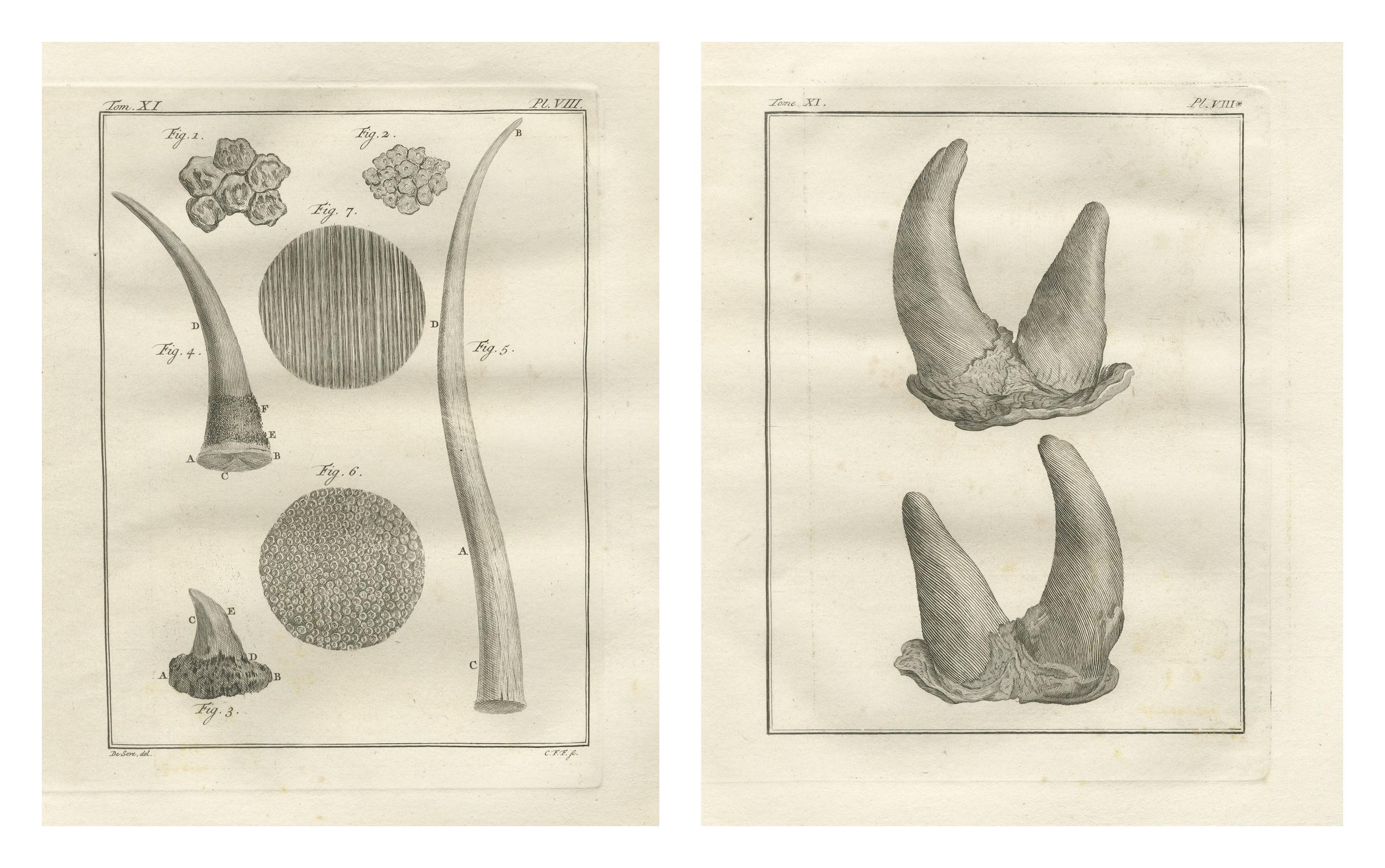
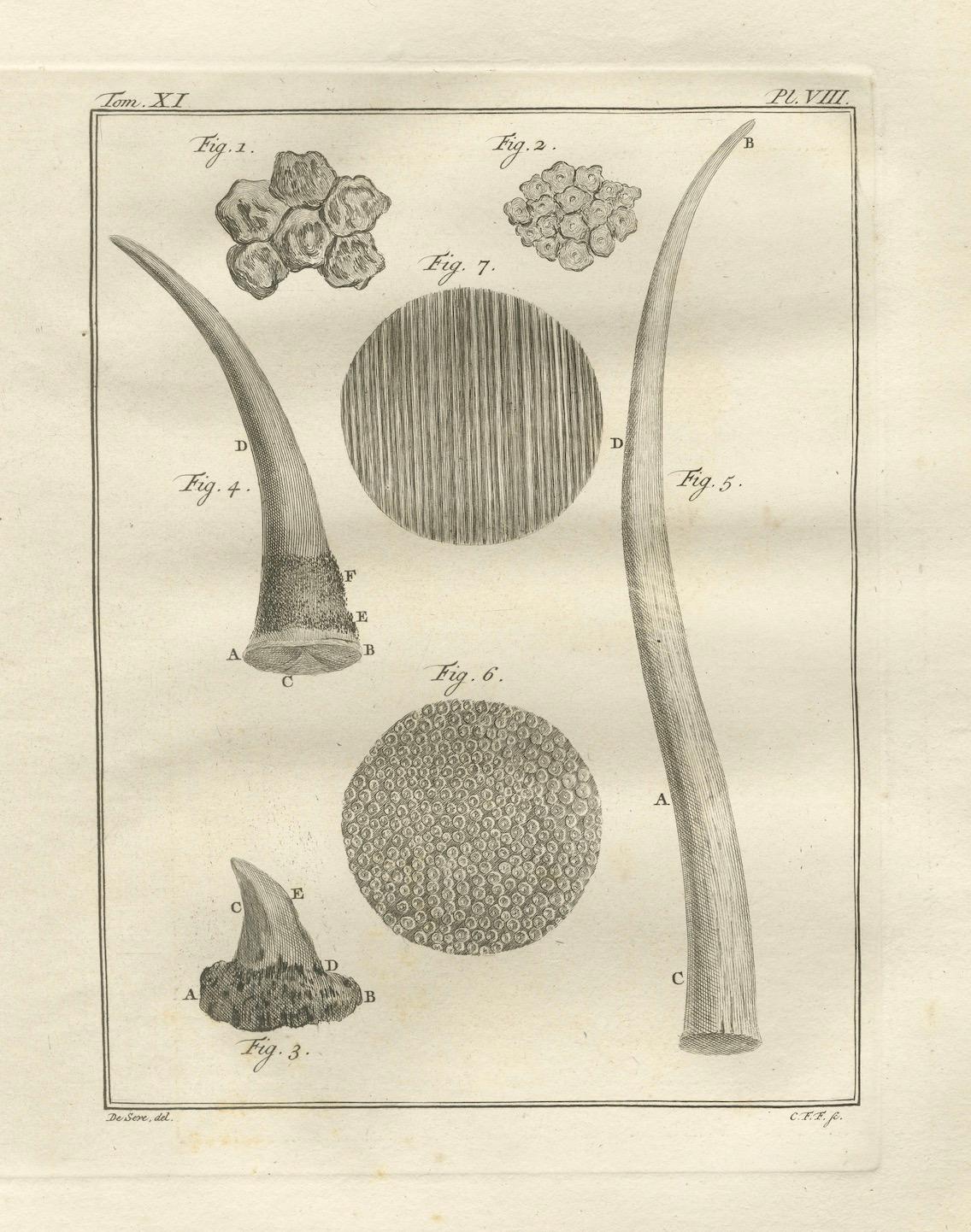
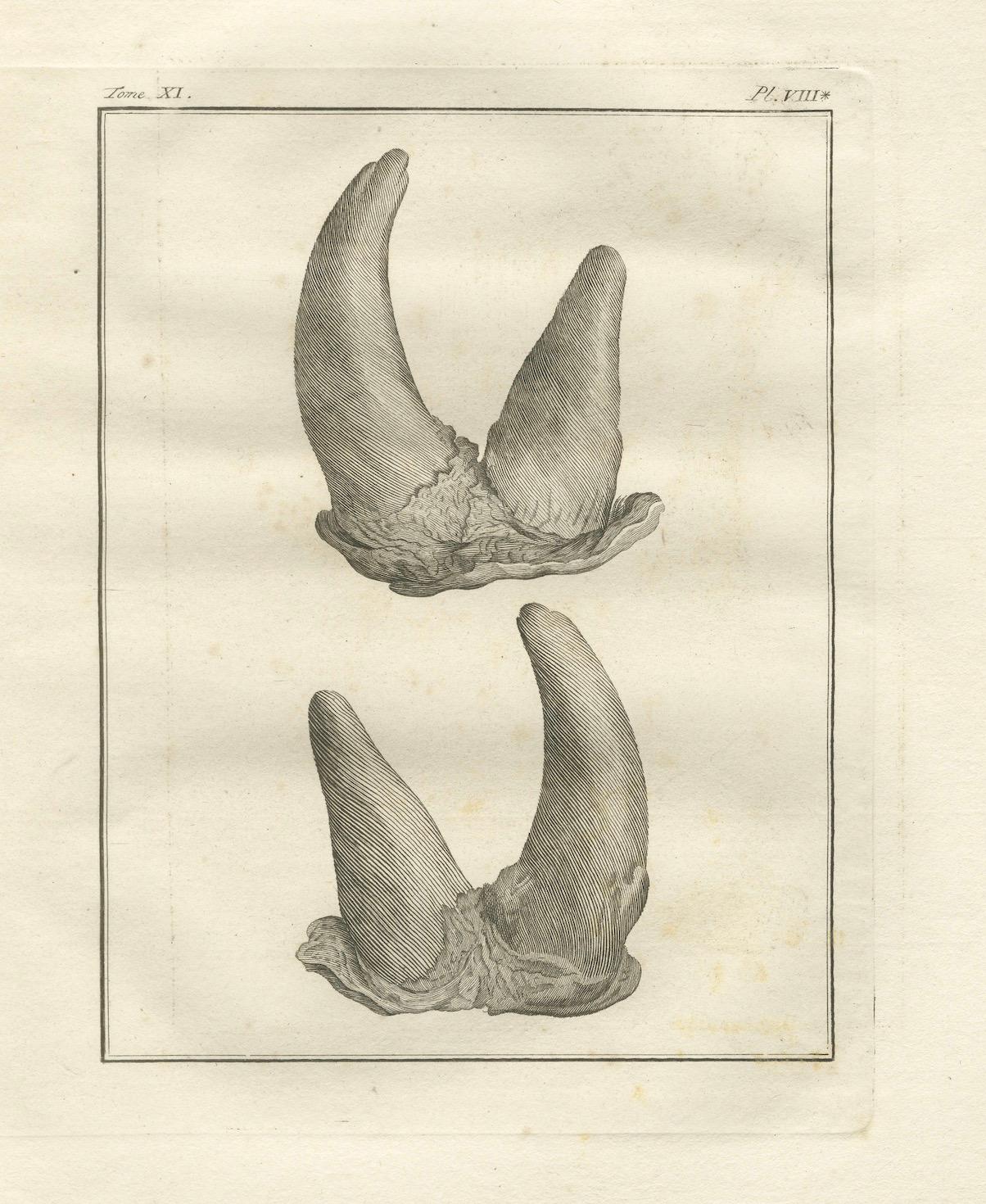
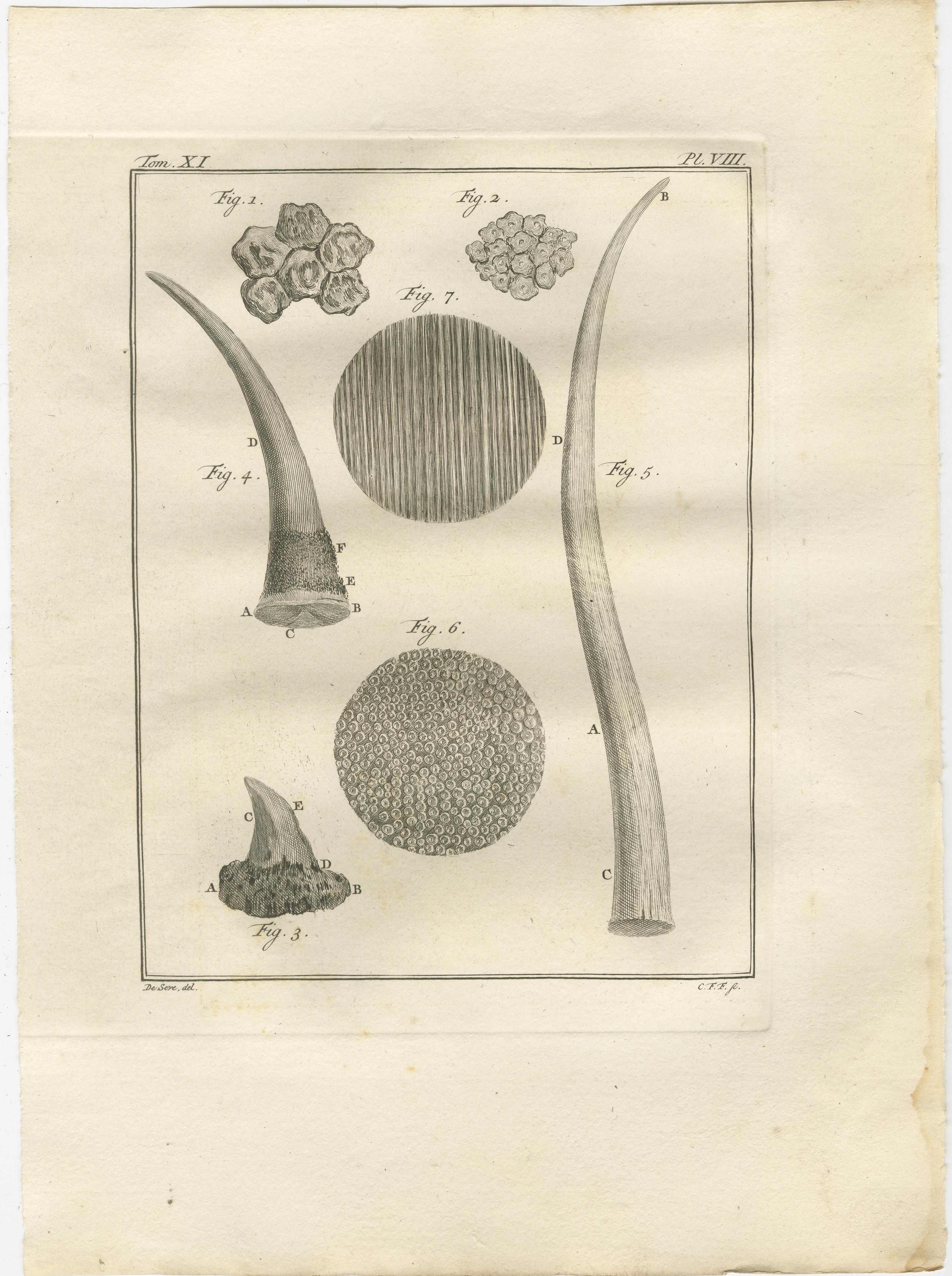
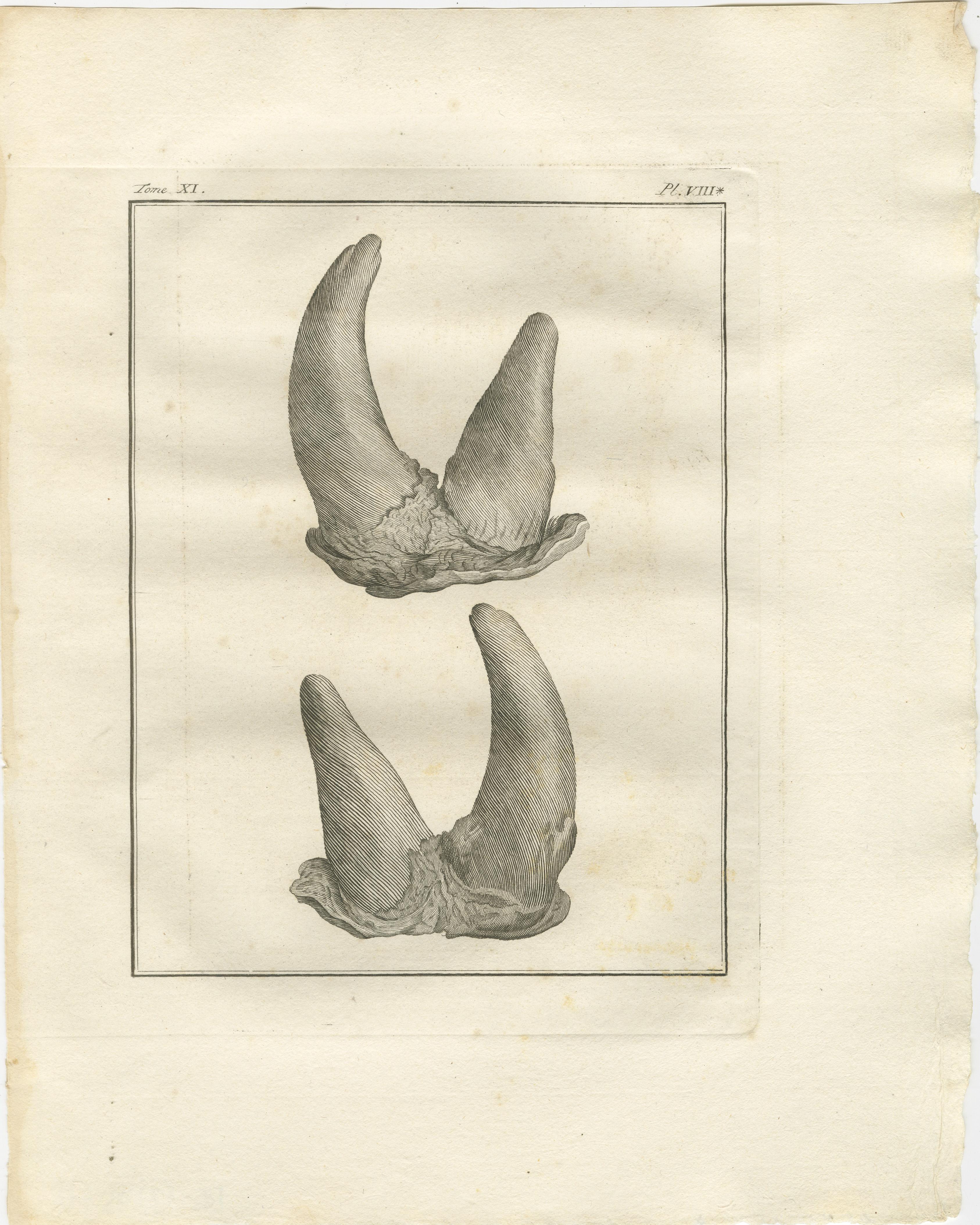
This elegant pair of 18th-century anatomical engravings illustrates the horn structure and related details of the rhinoceros, taken from the Dutch edition of Buffon’s celebrated natural history, published in Amsterdam by J.H. Schneider in 1769. These two plates, appearing as Pl. VIII and Pl. XXIV in Tome XI (rhinoceros section), form a visually balanced and scientifically rich duo. Drawn by Jacques de Sève, Buffon’s principal illustrator, and engraved with remarkable precision, the plates present detailed studies of the forms, textures, and cross-sections of rhinoceros horns. Such anatomical sheets are significantly rarer than the standard animal portraits and are highly prized for their clarity and decorative appeal.
The first plate offers a complete analytical breakdown of the horn: full-length views, cross-sectional circles, clusters of fibrous material, and the base structure where horn joins bone. Each figure is meticulously labelled, reflecting the Enlightenment’s fascination with classification and empirical observation. The finely engraved lines reveal the fibrous, layered nature of the horn, giving insight into its biological composition—something Buffon and Daubenton were among the first to study systematically.
The second plate focuses on large, naturalistic renderings of the horn forms as they appear in situ, drawn with subtle shading that highlights their curvature, density, and surface texture. The engraver’s delicate cross-hatching captures both weight and organic growth, while the spacious composition gives the sheet an almost sculptural feel. Together, the two plates move effortlessly between scientific study and artistic expression, making them suitable for collectors of natural history as well as for designers seeking refined, understated wall art.
This rhinoceros horn pair is especially attractive as a decorative diptych. The symmetrical presentation—analytic study on one sheet, naturalistic forms on the other—creates a harmonious and sophisticated wall arrangement. As original copperplate engravings printed more than 250 years ago, these works demonstrate the enduring beauty of Enlightenment-era scientific illustration and the high quality of the Dutch Schneider edition, renowned for its crisp impressions and generous margins.
Condition report:
Very good for age. Light toning and small foxing spots mainly in the margins, with minor handling marks typical of 18th-century paper. Strong impressions with clear plate marks. Paper crisp and well preserved. No tears or repairs observed.
Framing tips:
These two plates look exceptional when framed as a matching pair, using ivory or soft cream mats with thin ink lines to echo the engraved border. A simple black, dark walnut, or antique silver frame enhances the refined scientific look. For a modern aesthetic, float the sheets in natural oak with wide spacing. Maintain identical framing for maximum visual harmony.
Keywords:
rhinoceros horn anatomy
Buffon natural history
18th century scientific engraving
Amsterdam 1769
Jacques de Sève
Daubenton
copperplate engraving
antique zoology plates
Enlightenment illustration
rhinoceros biology
natural history decor
rare Buffon plates
museum quality prints