About this sheet
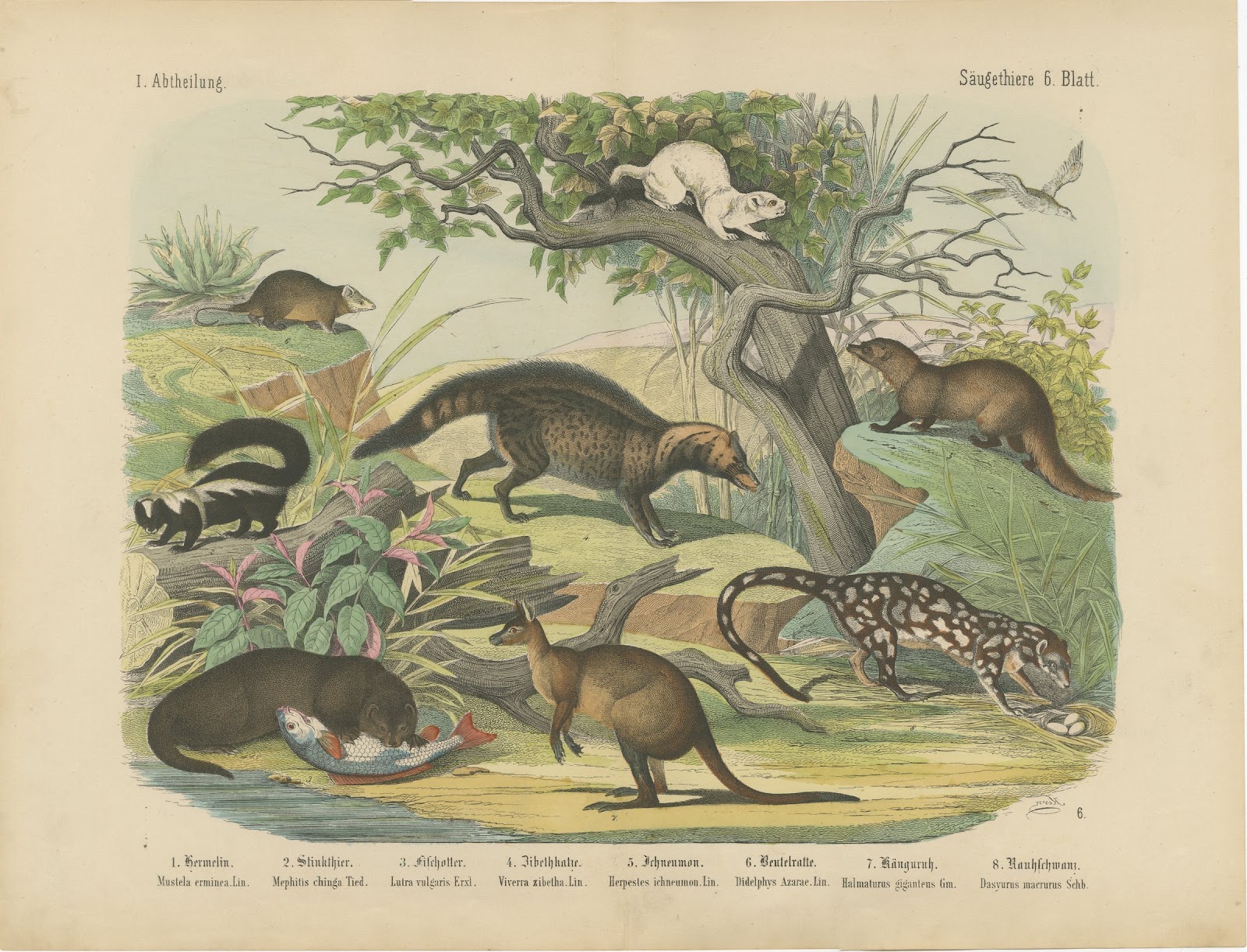
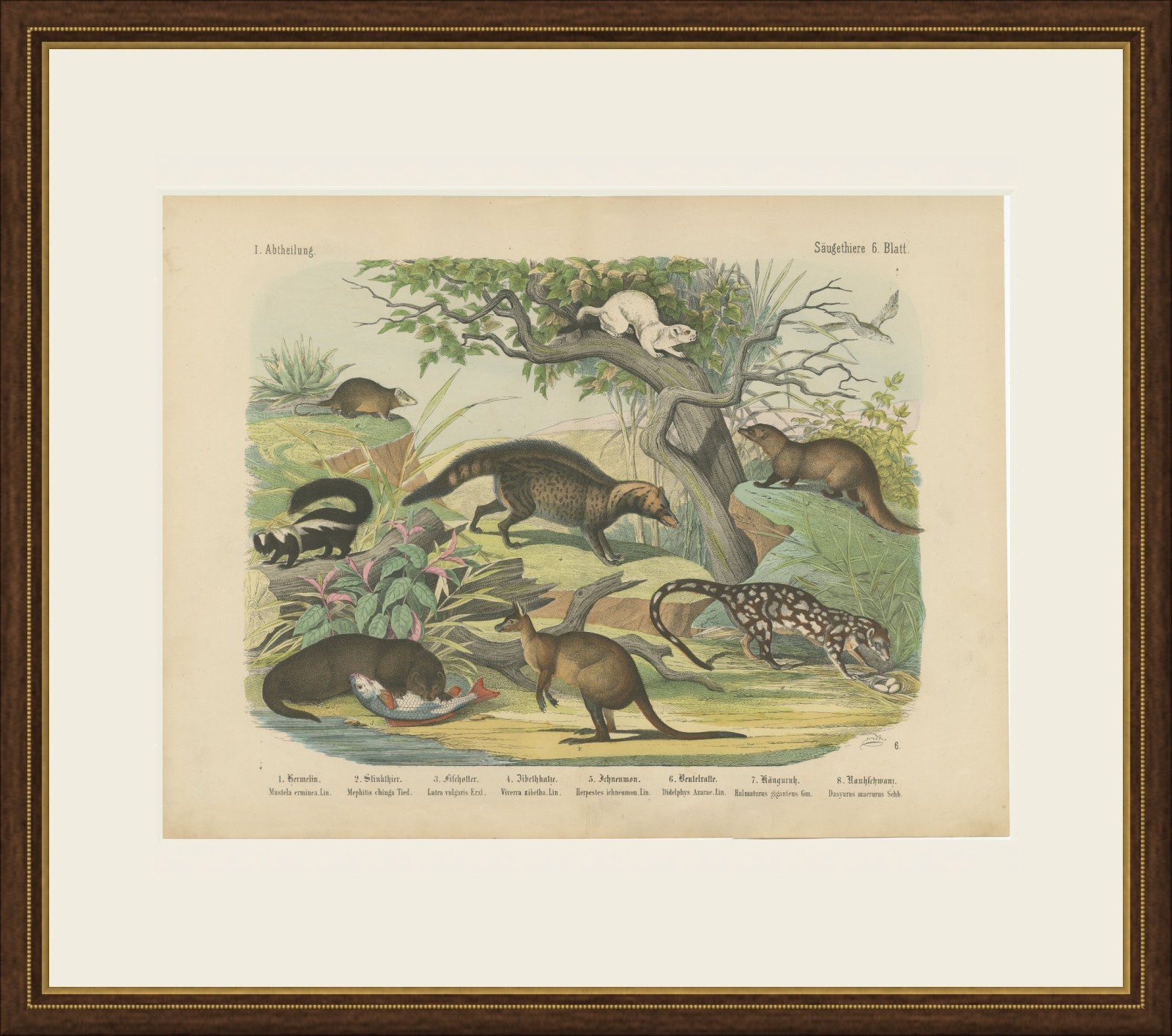
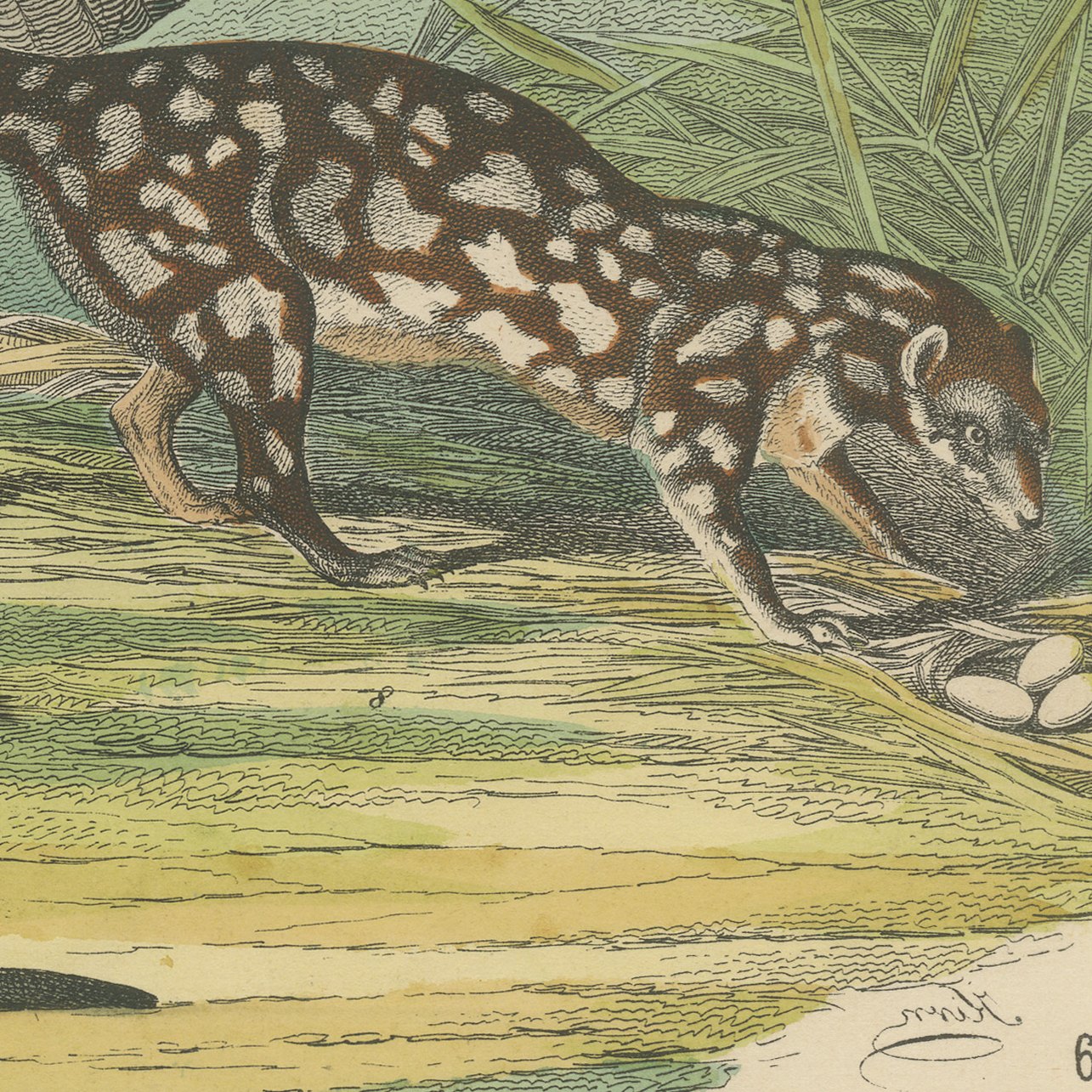
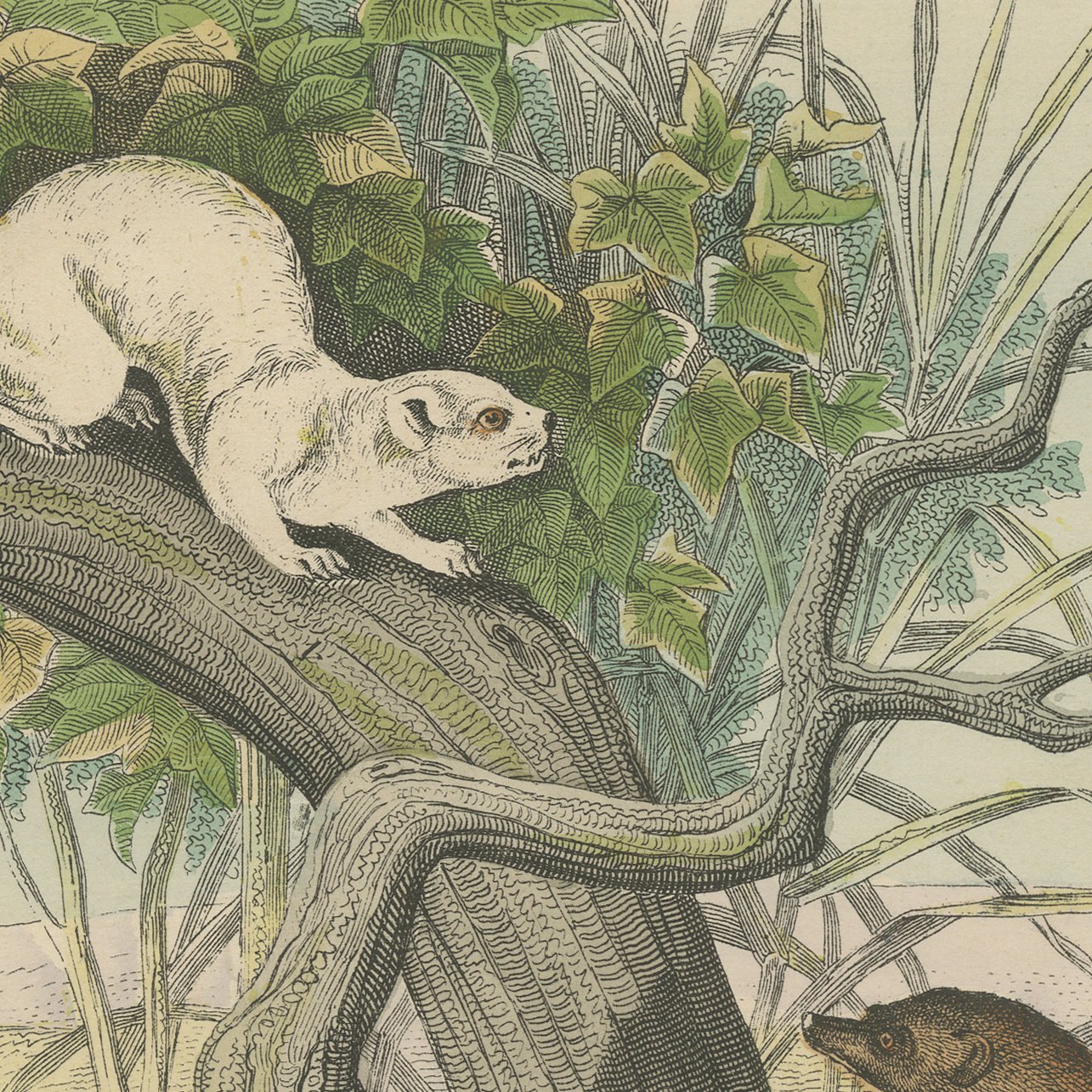
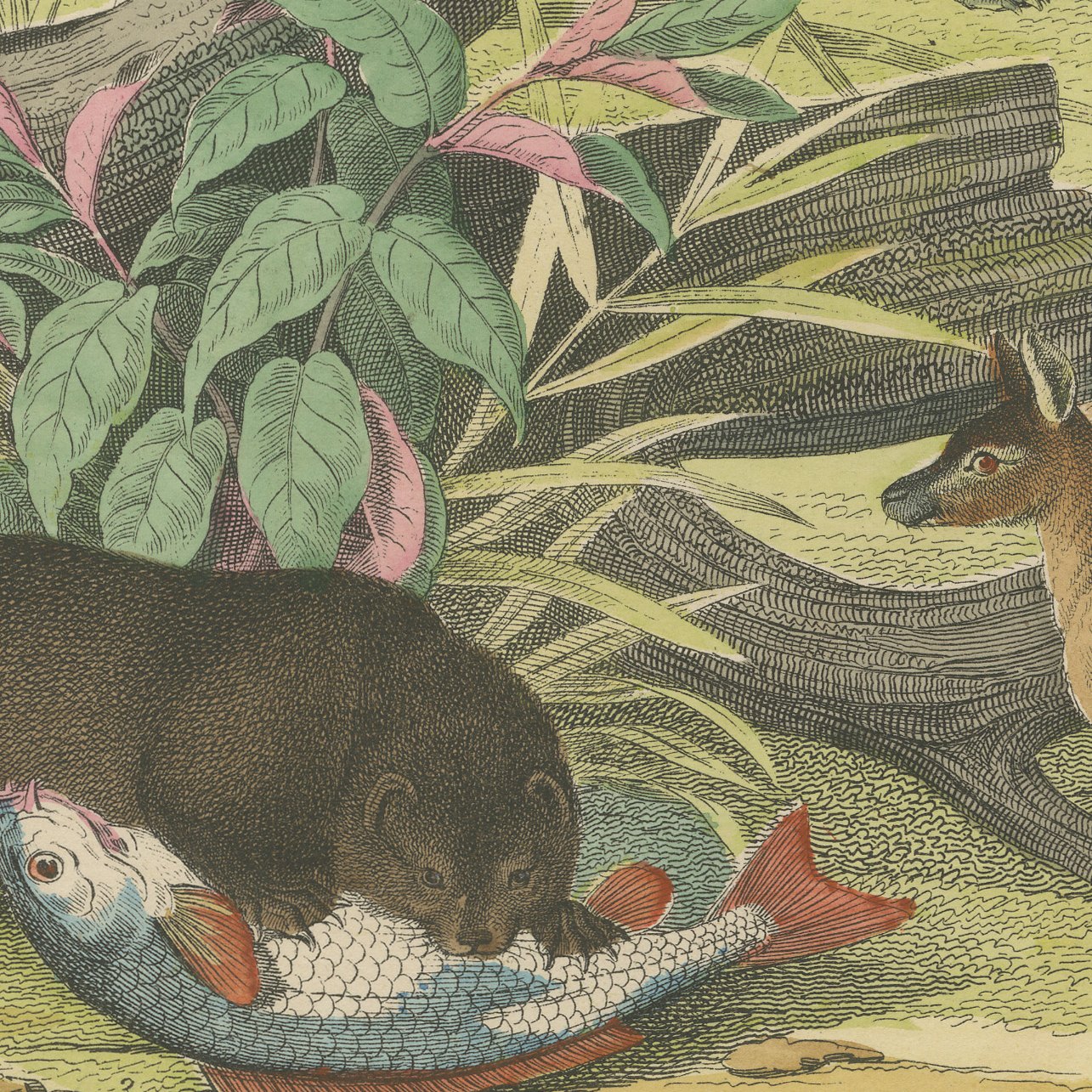
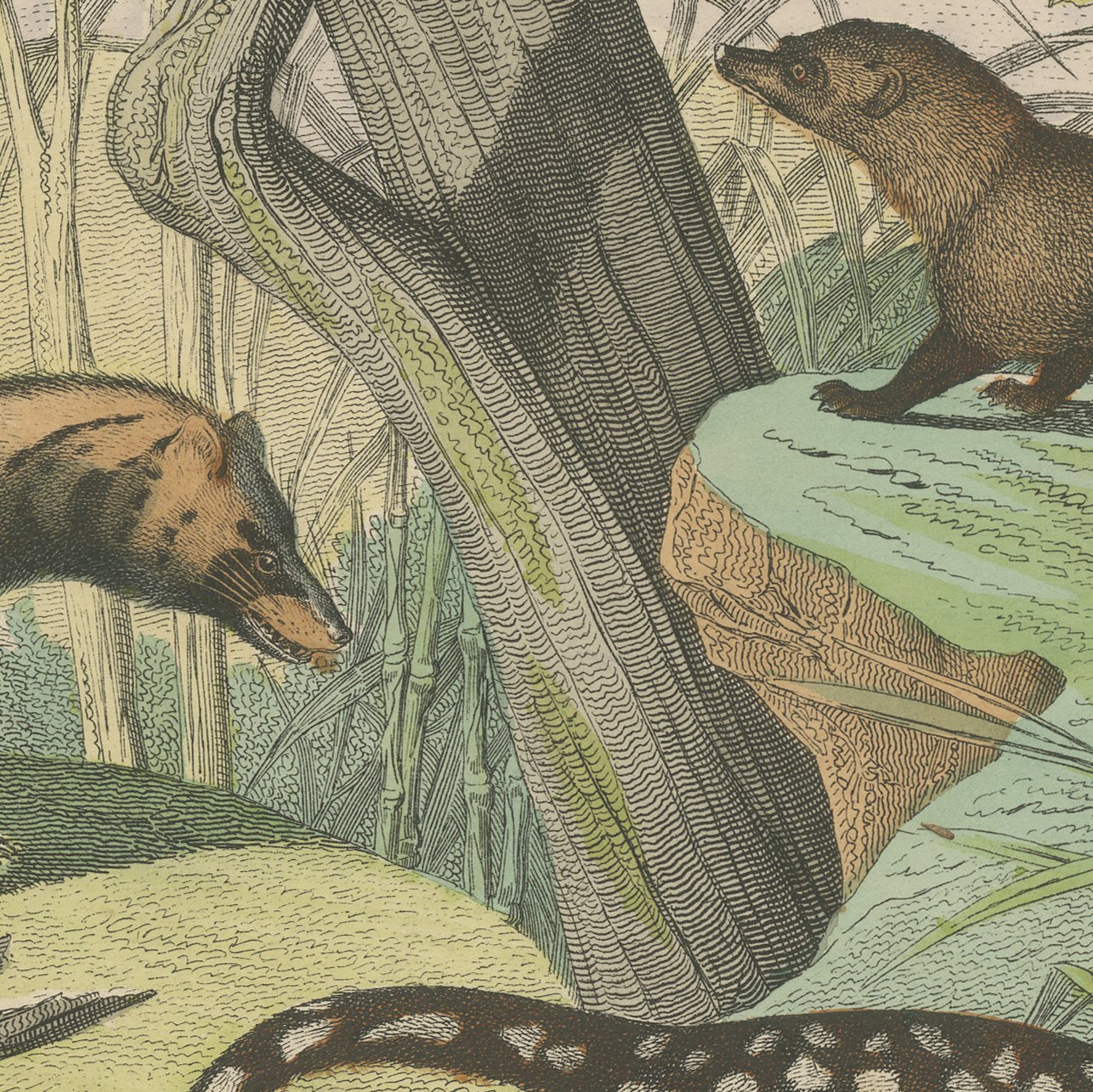
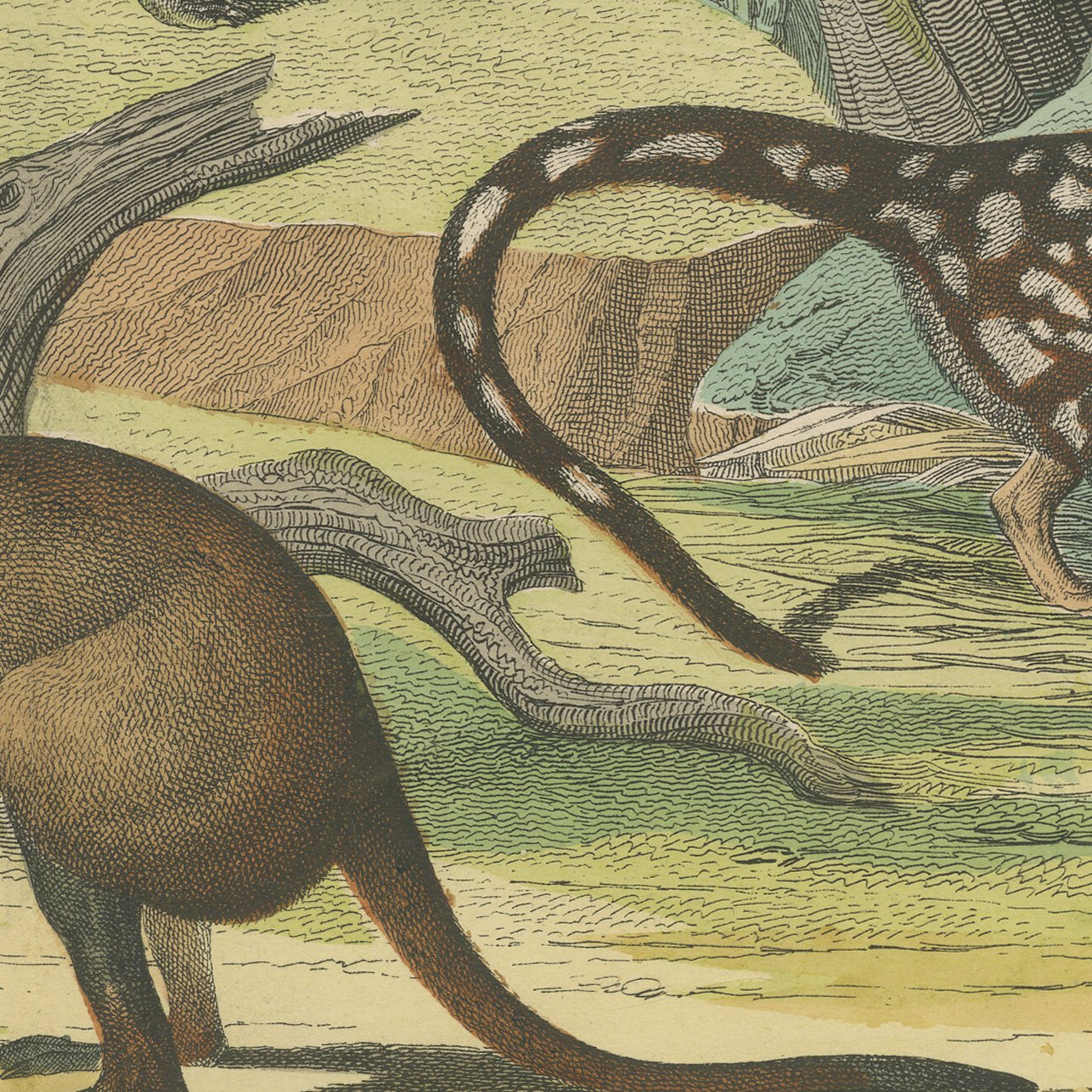
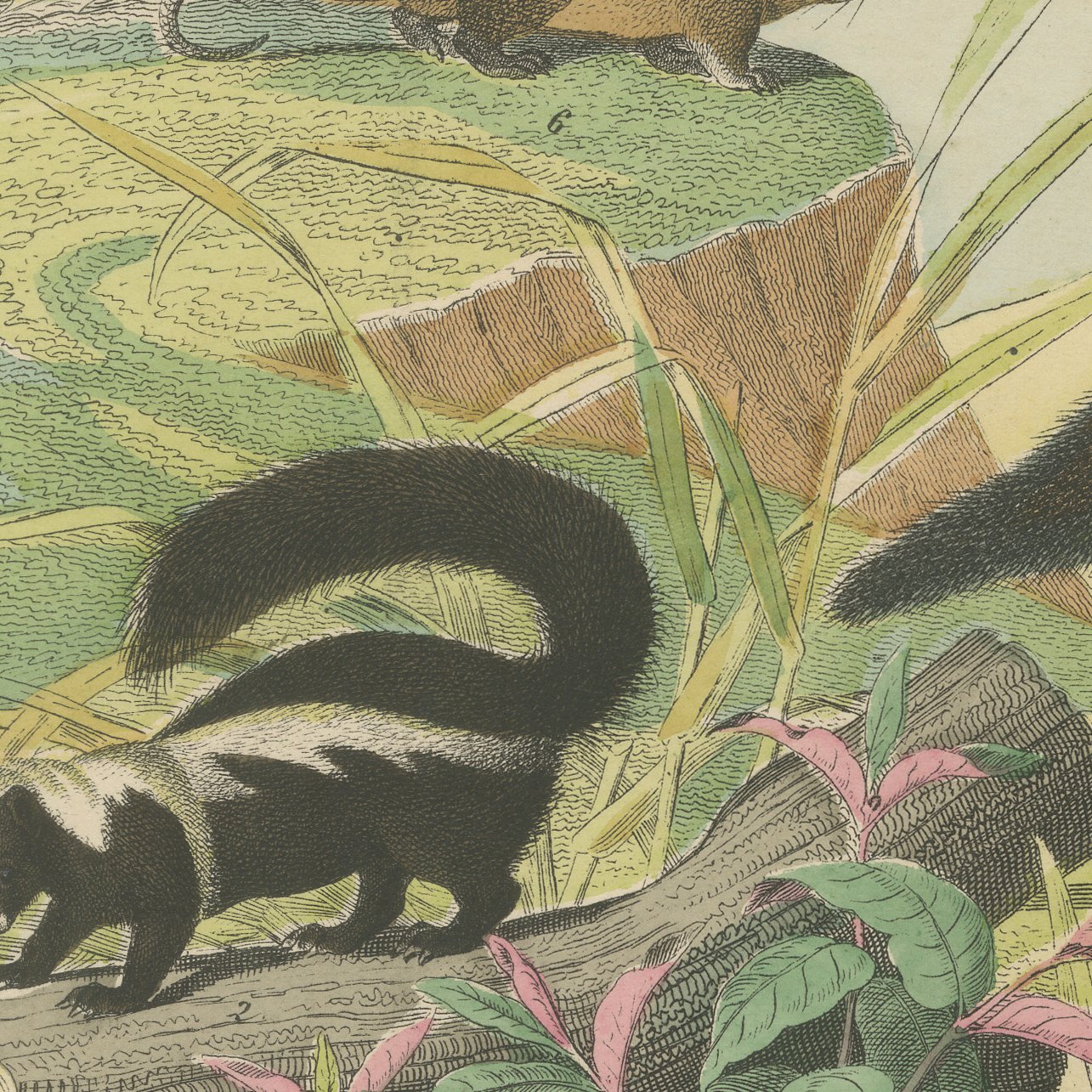
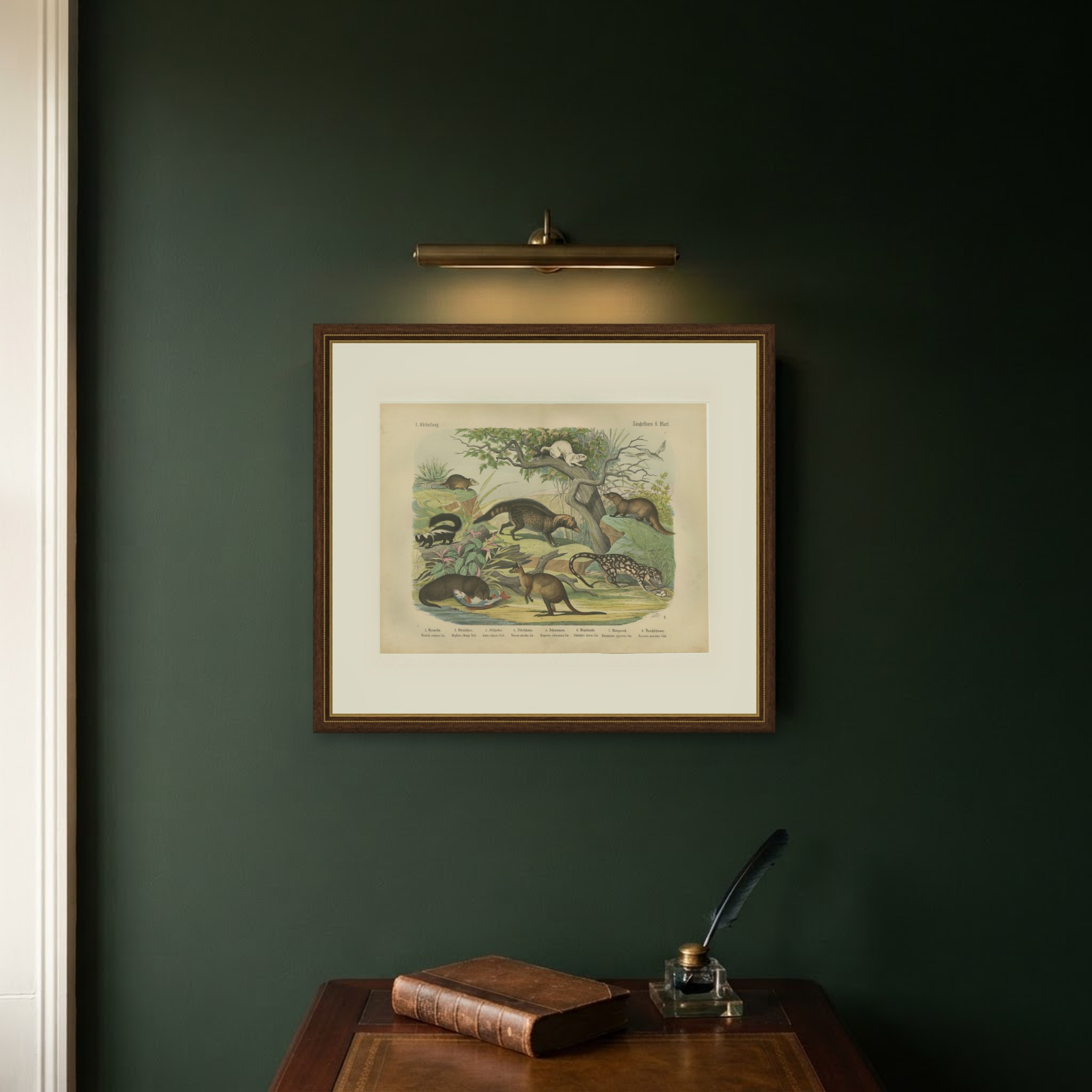
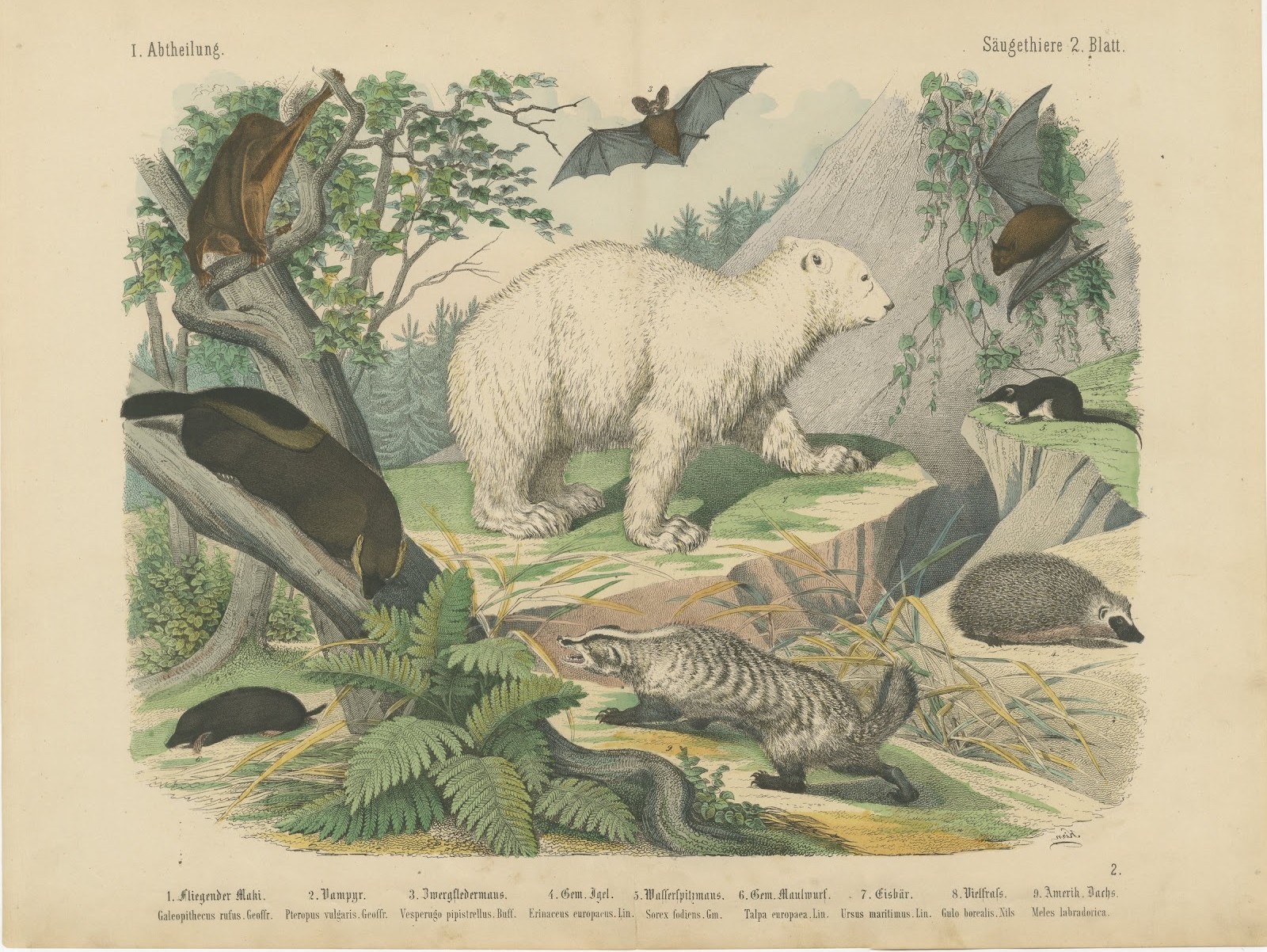
This antique natural history print shows a kangaroo, a spotted tailed quoll, an opossum, a stoat in winter ermine, a skunk, an otter with a fish, a civet and a mongoose, an original plate from C. F. A. Kolb's Naturgeschichte der Säugethiere, published in Stuttgart by Hoffmann circa 1890. A white ermine sits in the branches, an otter holds a fish on the riverbank, and a kangaroo, a spotted quoll and an opossum represent the marsupials of Australia and the Americas.
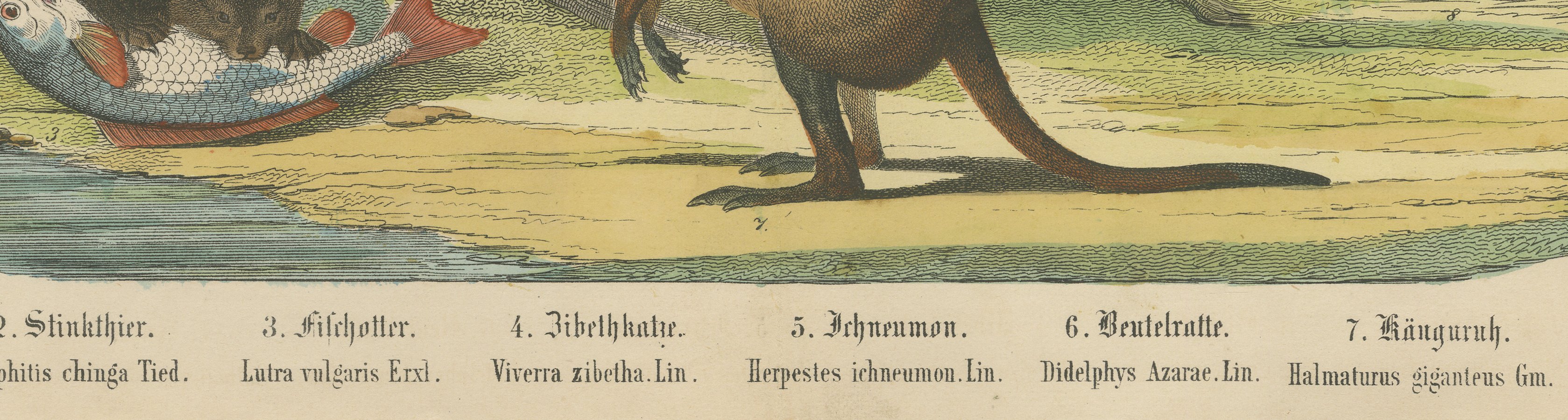
The sheet is lettered 1. Abtheilung and Säugethiere 6. Blatt at the head, and every animal is numbered and named beneath the image in German Fraktur with its Latin name, here Hermelin, Stinkthier, Fischotter, Zibethkatze, Ichneumon, Beutelratte, Känguruh and Rauhschwanz. The kangaroo is labelled Känguruh with the Latin Halmaturus giganteus, and the spotted quoll, Dasyurus macrurus, is an unusual animal to find on a popular teaching plate.
Carl Friedrich August Kolb designed his Naturgeschichte der Säugethiere as an Anschauungs Unterricht für Schule und Haus, an object lesson for school and home, and the title page of this second edition announces 123 coloured figures on 18 double folio plates together with 63 woodcuts in the text. The publisher was the Hoffmann'sche Verlagsbuchhandlung of Wilhelm Nübling in Stuttgart, and the plates were printed by colour lithography, a process that allowed German publishers of the later nineteenth century to issue large, bright teaching images at a price schools and families could afford. Kolb arranged the mammals in systematic order across the series, so each sheet brings together related animals from several continents in a single imagined landscape. The inclusion of marsupials alongside weasels and civets shows how Kolb's arrangement followed the classification of his day.
With its broad double page format and lively colour, this chromolithograph suits a study, a library, a child's room or a natural history wall, and it can be grouped with other plates from the same series to build a set.
The sheet is in good condition for its age, with light toning, a faint centre fold as issued and a few small brown spots in the lower margin; the image is clean.
This is an original antique print, not a modern reproduction. This item is sold unframed. Any framed or interior images are shown for presentation and inspiration only, unless the listing explicitly states that the item is sold framed.