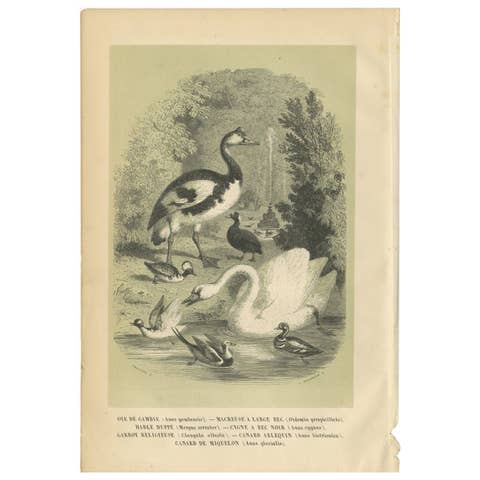
Antique Hand-Colored Bird Engravings from Goldsmith’s Animated Nature, ca.1852
€ 230
Original antique · The actual sheet photographed · Certificate of authenticity on request · Sold unframed · Worldwide shipping from € 15 (rates)
Date
1852
Mapmaker / artist
Published by A. Fullarton & Co. after Oliver Goldsmith, c.1852
Technique
Engraved
Sheet size
37 × 27.5 cm (14.6 × 10.8 in)
Reference
BG-12060-2
What the condition grades mean
Excellent
Bright and clean, with no faults worth mentioning.
Very good
Only light signs of age, such as faint toning.
Good
Normal signs of age for a sheet of this period: toning, some foxing, small marks or neat old repairs.
Fair
Clear faults such as staining, tears or repairs, priced to match.
Every fault we see is written in the condition note, and the whole sheet is shown uncropped in the photos.
Condition
Very good for age. Light toning to the paper, occasional faint fox marks, and strong plate impression. Colors remain bright and fresh. Comes with matting board.
About this sheet
Various Bird Species – Hand-Colored Engraving from Goldsmith’s Animated Nature, c.1852
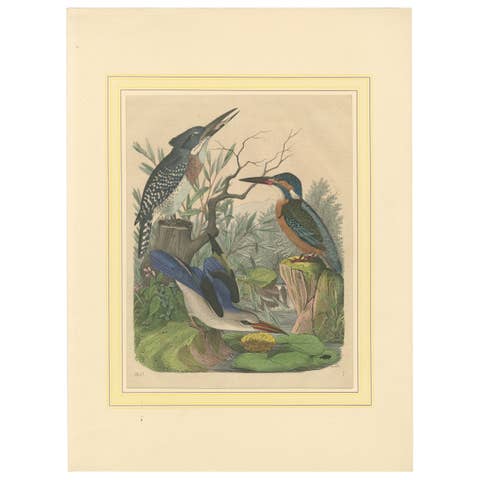
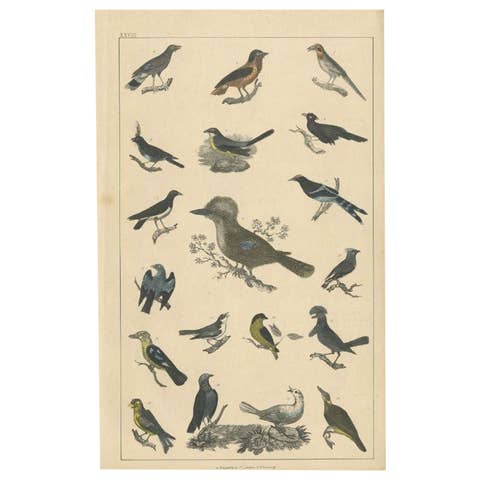
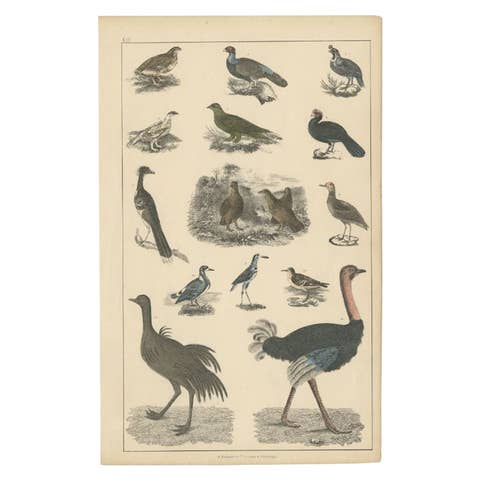
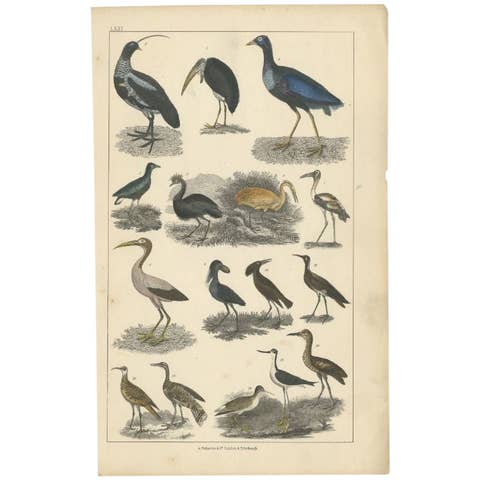
This finely detailed and delicately hand-colored engraving depicts a lively grouping of bird species, presented with the naturalistic charm typical of mid-19th-century ornithological illustration. The composition features several distinctive species, including a resplendent peacock with its iridescent train partially displayed, a scarlet ibis with its unmistakable curved bill, a cockatoo with an expressive yellow crest, and a pair of exotic pheasants. Also present are smaller passerine birds, including a kingfisher with brilliant blue plumage and a goldfinch perched lightly on a branch.
The print originates from A History of the Earth and Animated Nature by Oliver Goldsmith (1728–1774), a monumental work first published in 1774 and reissued in numerous illustrated editions well into the Victorian era. This particular example was published by A. Fullarton & Co., Glasgow and London, circa 1852, during a period when the fascination with natural history reached a broad audience. Fullarton’s editions are notable for their richly hand-colored engravings, produced to both educate and delight readers.
The engraver has captured each bird’s form and plumage with precision, while the colorist has applied vivid yet natural tones that bring the scene to life. The variety of species shown reflects the Victorian appetite for the exotic, with subjects drawn from Europe, Asia, Africa, and the Americas. These images not only documented nature for an audience eager to learn but also celebrated the decorative potential of the natural world.
Framing tips: A warm ivory mount with a gilt or dark wood frame will complement the hand-coloring, while a slightly wider mat will give each bird space to be appreciated individually.