About this sheet
Antique Greater Rhea & Black Swan Engraving – Bertuch, 1798
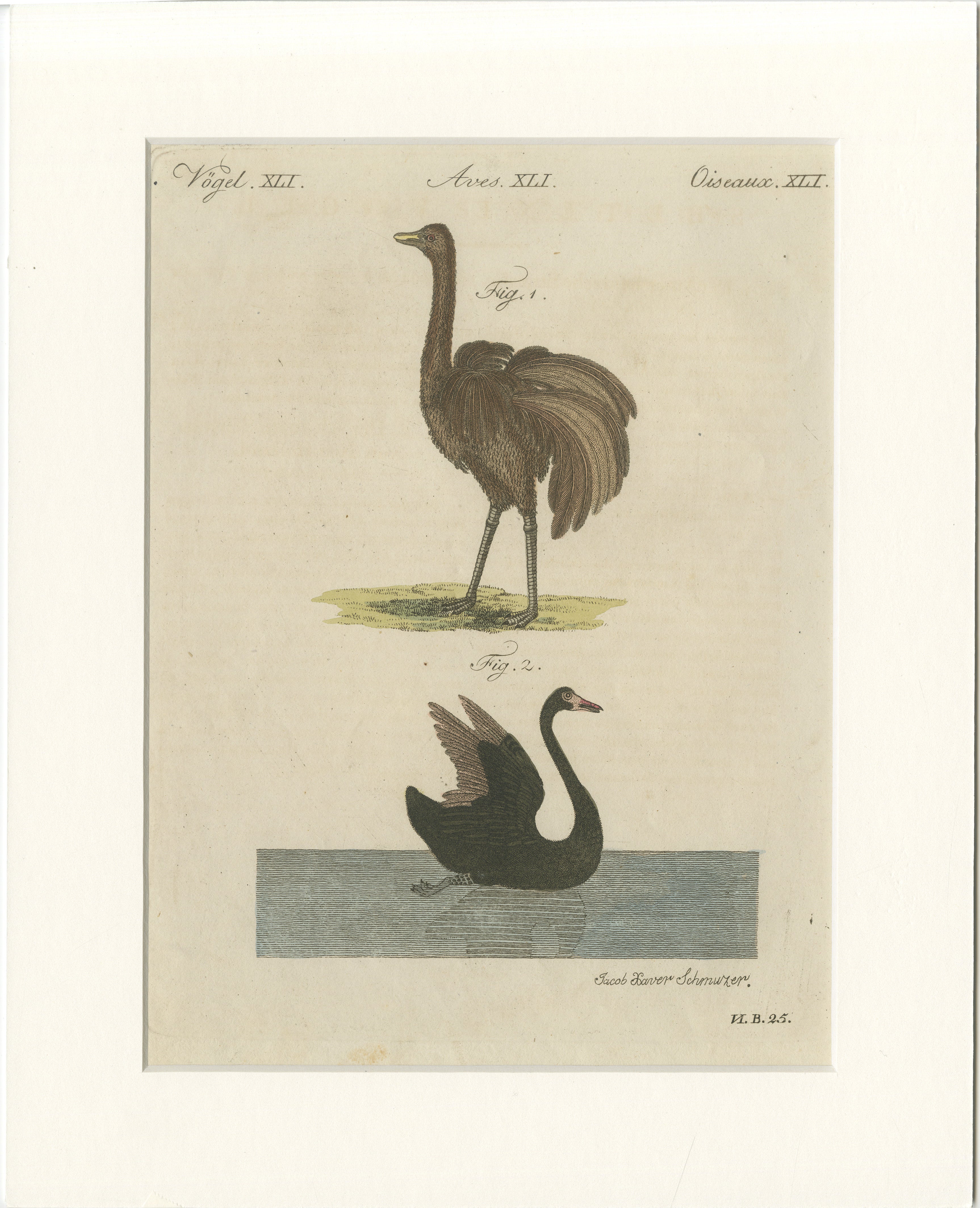
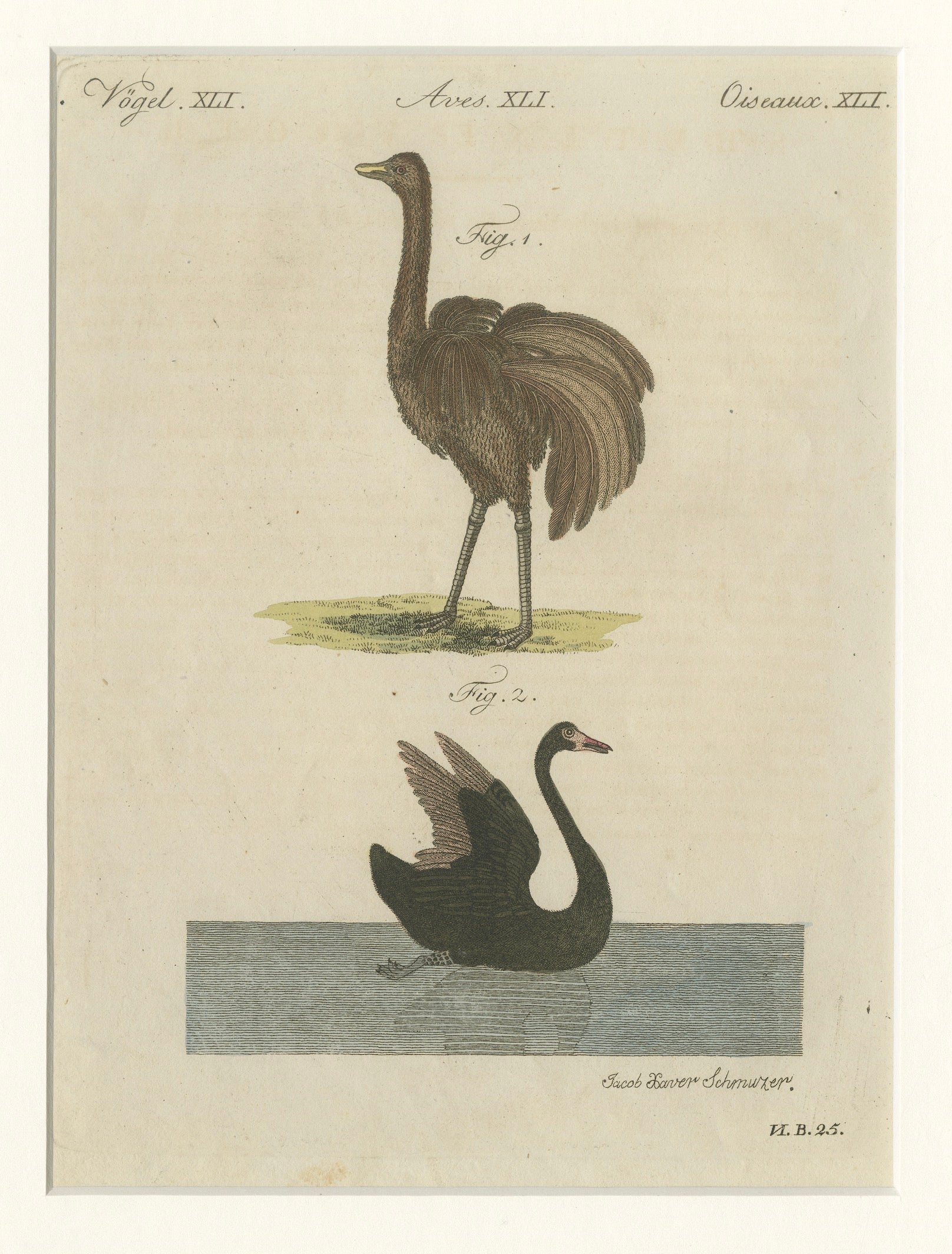
Original antique hand-colored copper engraving depicting the Greater Rhea of South America and the Black Swan of Australia, published in Friedrich Justin Bertuch’s celebrated “Bilderbuch für Kinder” in Weimar in 1798.
The plate is headed “Vögel XLI / Aves XLI / Oiseaux XLI” and belongs to Bertuch’s series devoted to rare and remarkable birds.
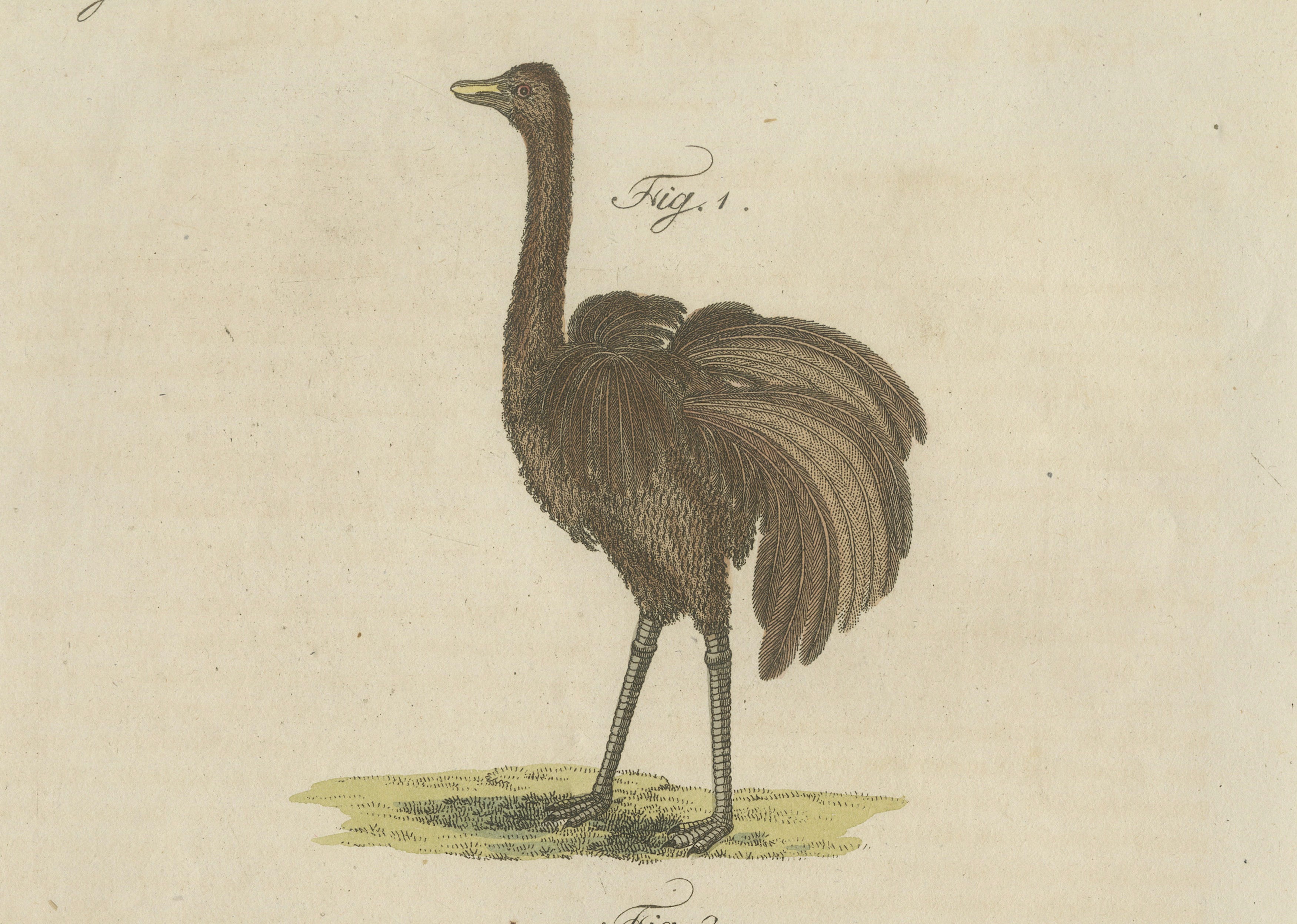
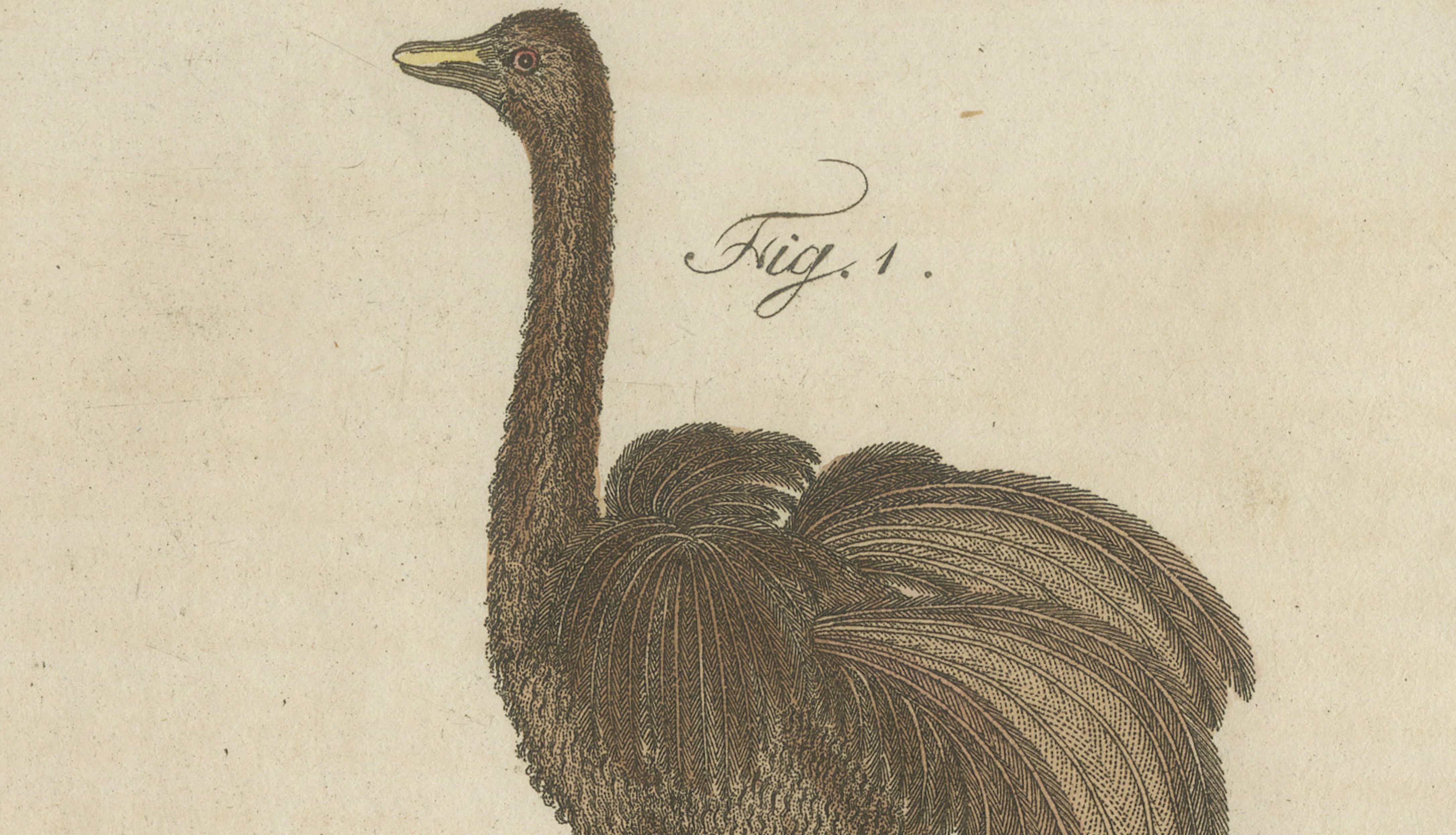
Fig. 1 – Greater Rhea / American Ostrich (Rhea americana)
Bertuch describes this bird as “Der Amerikanische Strauß” – the American Ostrich – and gives its contemporary scientific name as Struthio Rhea.
Today known as the Greater Rhea (Rhea americana), this impressive flightless bird is native to South America. Resembling an ostrich at first glance, the rhea belongs to a distinctly South American group of large flightless birds. Bertuch’s engraving emphasizes its long neck and legs and its characteristic loose, flowing plumage.
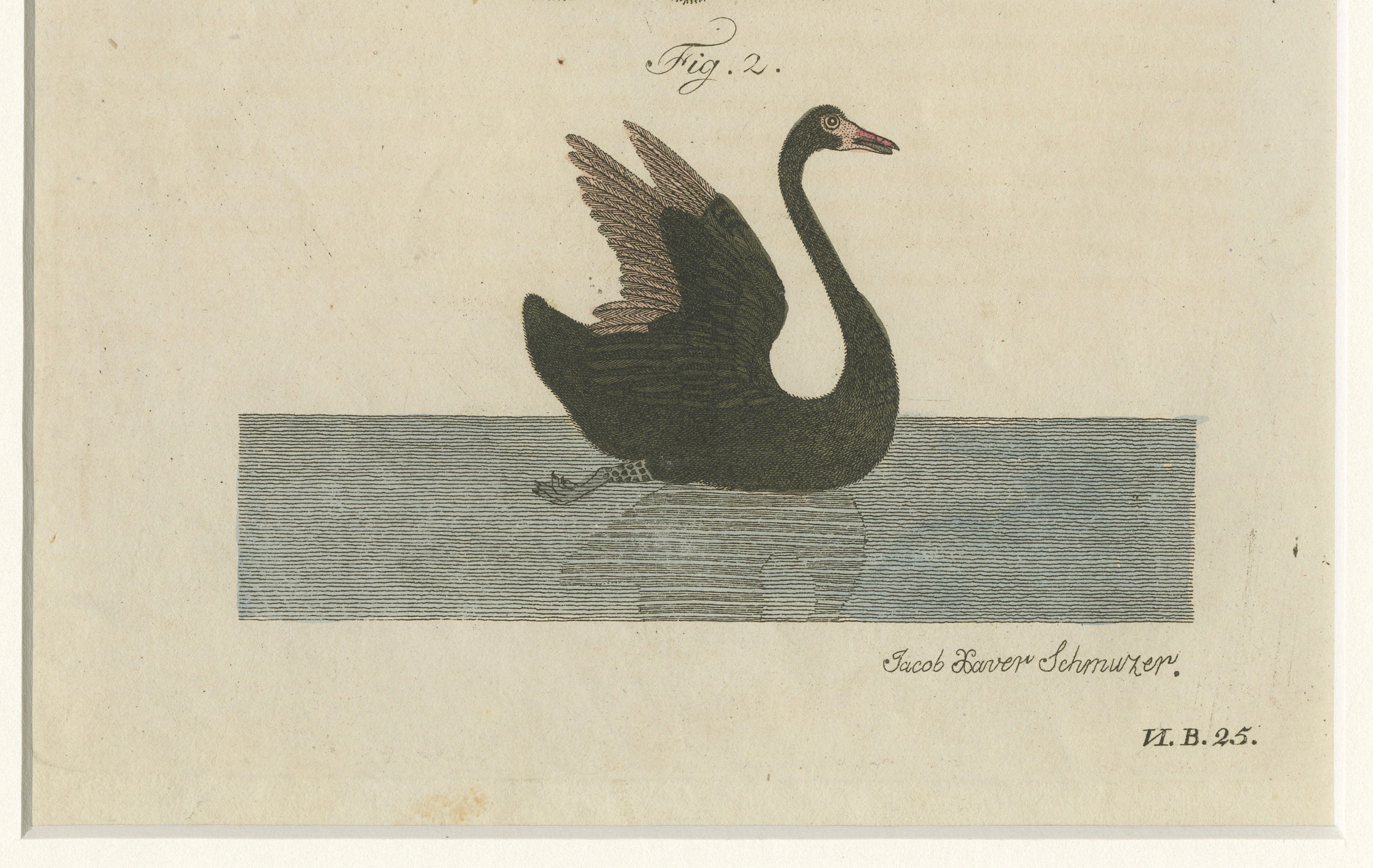
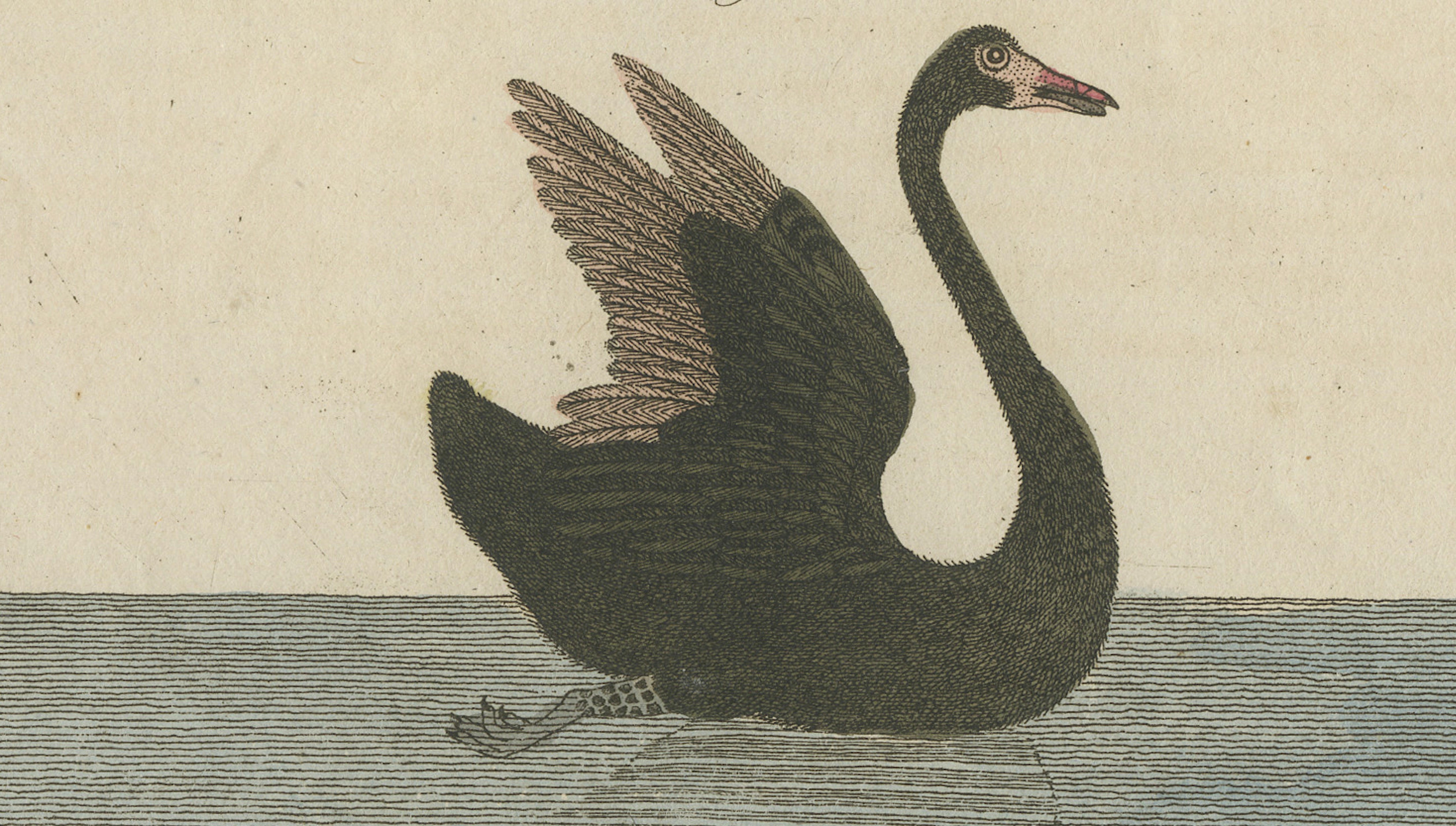
Fig. 2 – Black Swan of New Holland / Australian Black Swan (Cygnus atratus)
Bertuch calls this remarkable bird “Der schwarze Schwan von Neuholland” – the Black Swan of New Holland – and gives the historical scientific name Anas plutonia. Today it is known as the Black Swan (Cygnus atratus), native to Australia.
At the end of the 18th century the black swan was still an extraordinary and exotic bird to European audiences. Bertuch even comments that its discovery challenged the traditional European expression comparing something exceptionally white to a swan: here was a swan with brilliantly black plumage.
The Black Swan and Empress Joséphine
The history of the Australian black swan in Europe has a particularly fascinating connection with Napoleon Bonaparte’s era and Empress Joséphine.
Only a few years after this engraving was published, living black swans collected during Nicolas Baudin’s famous French expedition to Australia were transported to France. In 1803 they were brought to Joséphine’s estate at Château de Malmaison, near Paris.
Joséphine had an exceptional interest in botany, zoology and exotic natural history and created an extraordinary collection of plants and animals at Malmaison. The Australian black swans became among the most celebrated inhabitants of her estate. Malmaison records that Joséphine successfully acclimatized black swans there in 1803, the first successful acclimatization of the species in Europe.
The association became so strong that the black swan remains closely connected with the visual world of Joséphine and the Napoleonic period.
This makes Bertuch’s 1798 engraving especially interesting: it was published several years before the famous black swans arrived at Malmaison, at a moment when the species was still an exotic natural-history curiosity for most Europeans.
Friedrich Justin Bertuch (1747–1822) was a German publisher, writer and patron of the arts. His monumental “Bilderbuch für Kinder” (Picture Book for Children), first published in Weimar in 1790, became one of the great illustrated educational encyclopedias of the late 18th and early 19th centuries.
Its hundreds of engraved and hand-colored plates introduced European readers to animals, plants, geography, science, technology, antiquity and cultures from around the world.
This attractive plate brings together two of the most distinctive birds of the Southern Hemisphere: the Greater Rhea of South America and the Black Swan of Australia.
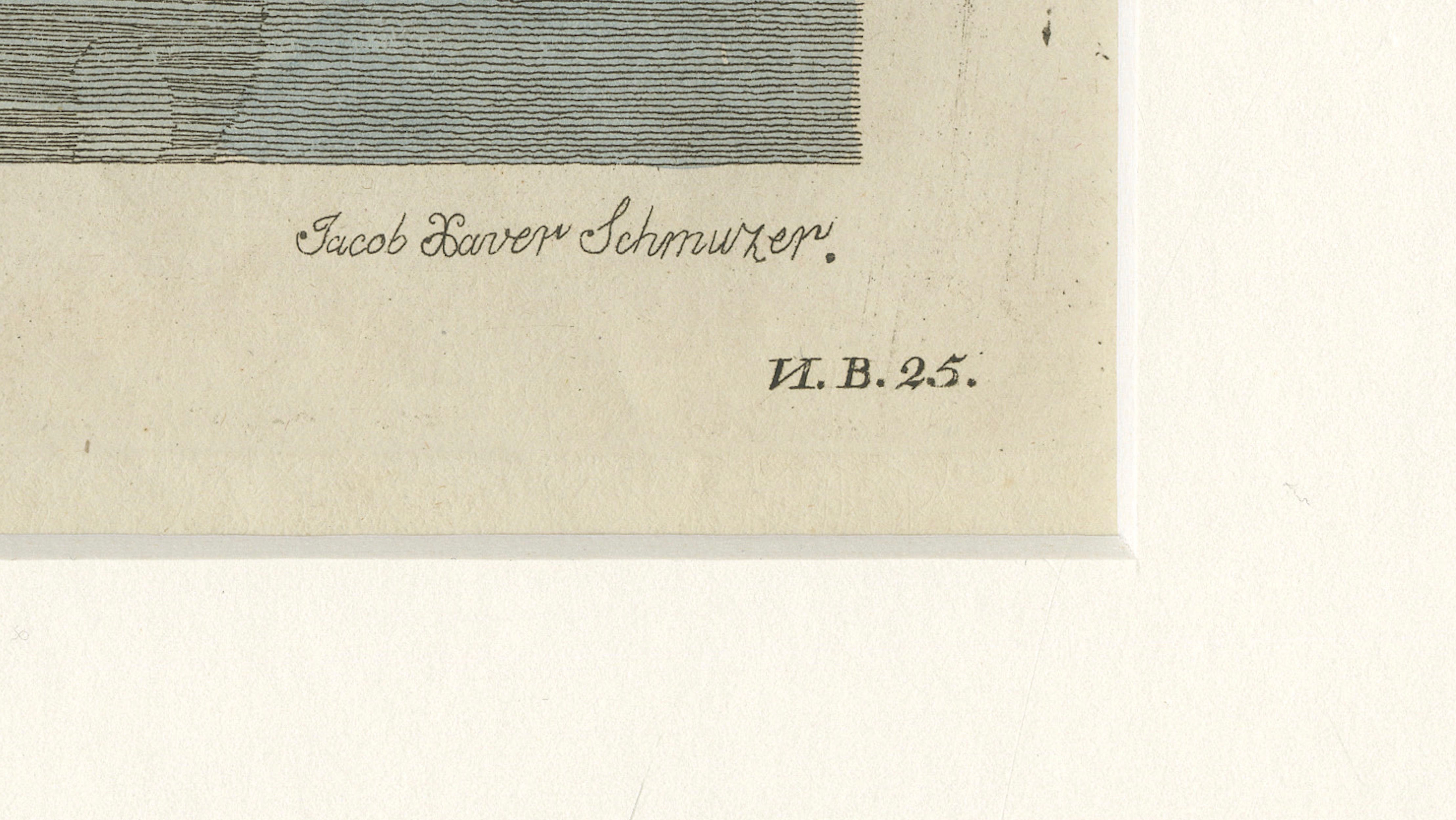
The engraving is signed in the plate by Jacob Xaver Schmuzer.
Technique: Original hand-colored copper engraving
Publisher: Friedrich Justin Bertuch / Industrie-Comptoir
Publication: Bilderbuch für Kinder
Place: Weimar, Germany
Date: 1798
Plate: Vögel XLI / Aves XLI / Oiseaux XLI
Engraver: Jacob Xaver Schmuzer
Subjects: Greater Rhea and Australian Black Swan
Historical names:
American Ostrich – Struthio Rhea
Black Swan of New Holland – Anas plutonia
Modern names:
Greater Rhea – Rhea americana
Black Swan – Cygnus atratus
Condition:
Good antique condition with overall age-related toning, scattered small spots and foxing and minor marks and imperfections consistent with its age. The original hand coloring remains attractive. Please study the photographs carefully as they form part of the condition description.
The engraving is loosely inserted in an acid-free matting board.
Please note: This is an original antique hand-colored copper engraving from 1798, not a modern reproduction. The print is sold unframed. Framed images or interior views, if shown, are for presentation and inspiration only.
Other companion bird and natural-history plates from Bertuch’s “Bilderbuch für Kinder” are also available separately.
Keywords: Friedrich Justin Bertuch, Bilderbuch für Kinder, Greater Rhea, American Ostrich, Rhea americana, Struthio Rhea, Black Swan, Australian Black Swan, Black Swan of New Holland, Cygnus atratus, Anas plutonia, Australia, New Holland, South America, Empress Joséphine, Josephine Bonaparte, Napoleon Bonaparte, Napoleon era...