About this sheet
Antique Botanical Lithographs – Caladium, Arum Lily & Flamingo Flower – c.1890
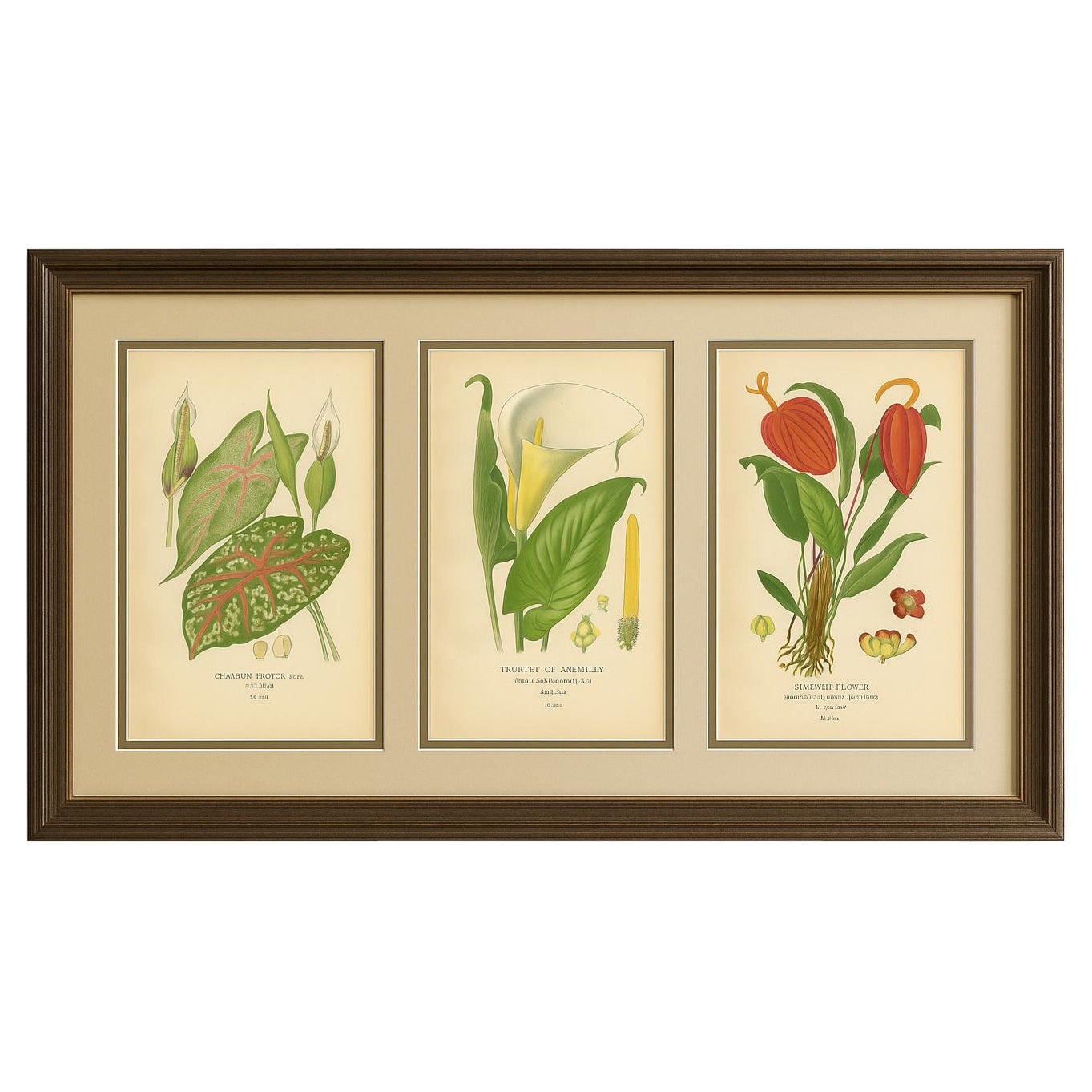
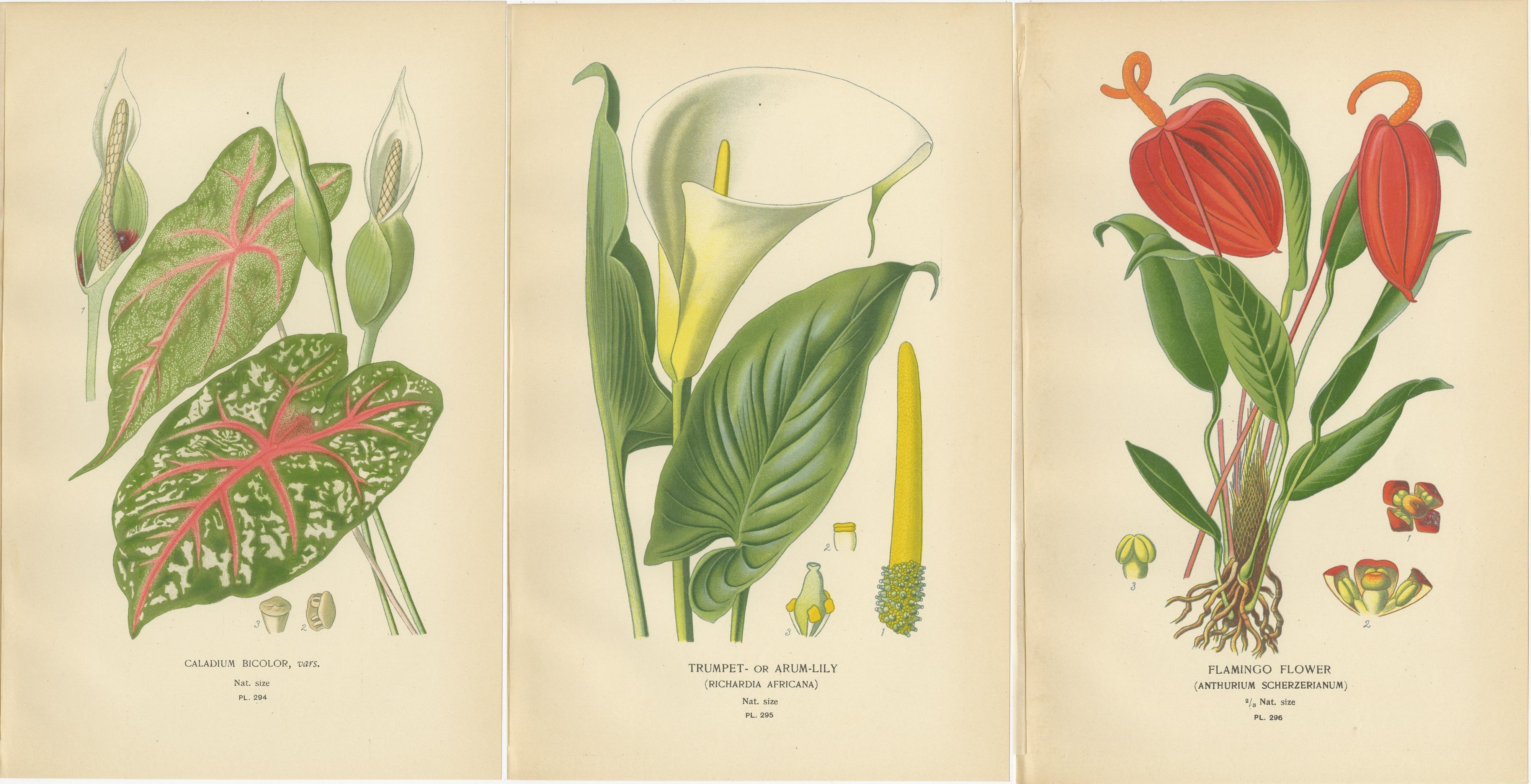
This striking set of three antique botanical lithographs showcases the diversity and elegance of tropical foliage and flowering plants, dating to the late 19th century. Each plate is finely detailed, hand-colored in soft yet vibrant tones, and highlights the unique form and structure of exotic species highly prized for both gardens and interiors.
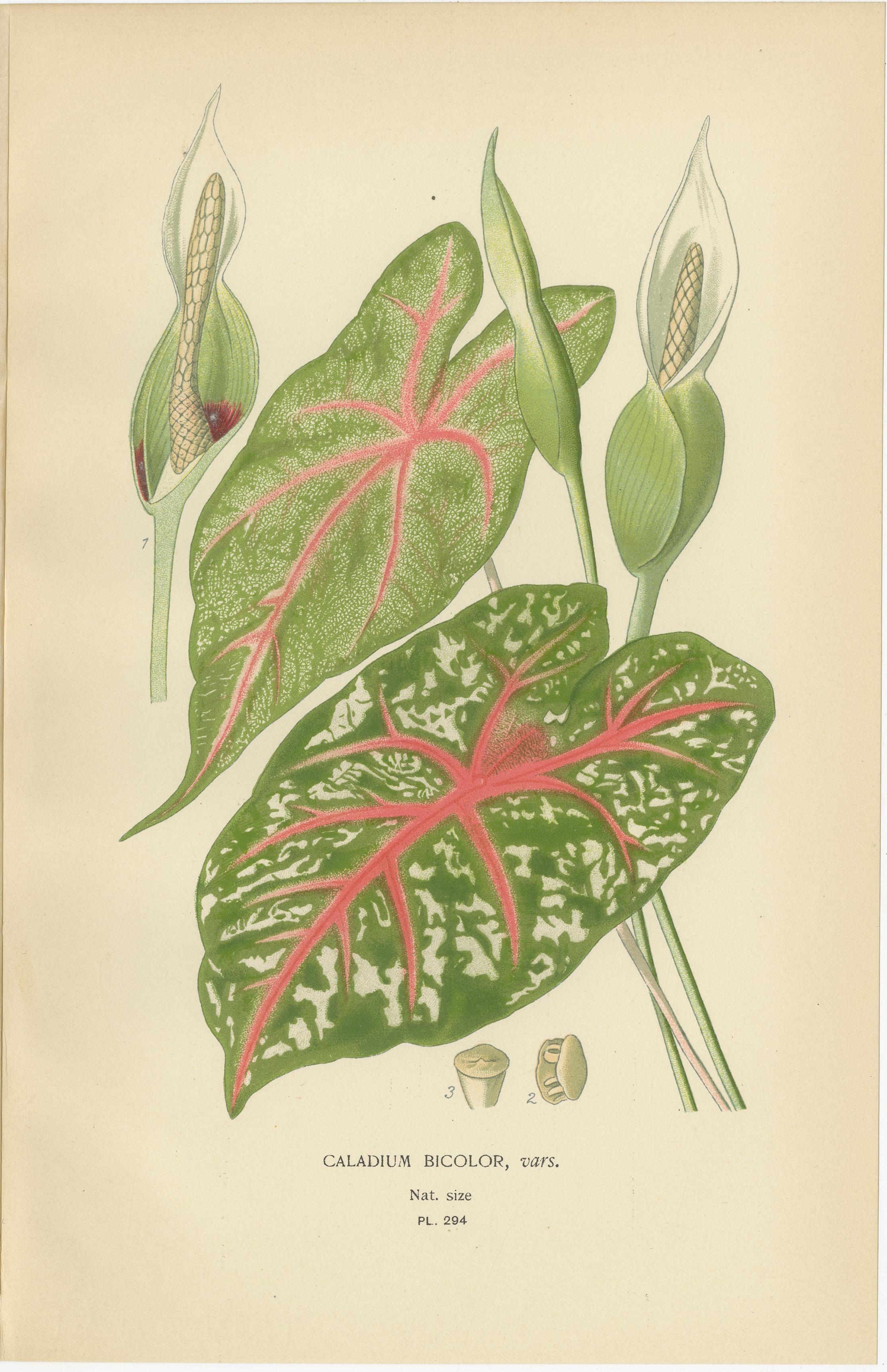
The first plate features Caladium bicolor, with its heart-shaped leaves painted in striking green, white, and crimson veins. Known as "Angel’s Wings" or "Elephant Ears," Caladiums were widely cultivated for their ornamental foliage, brought from South America into European conservatories and gardens.
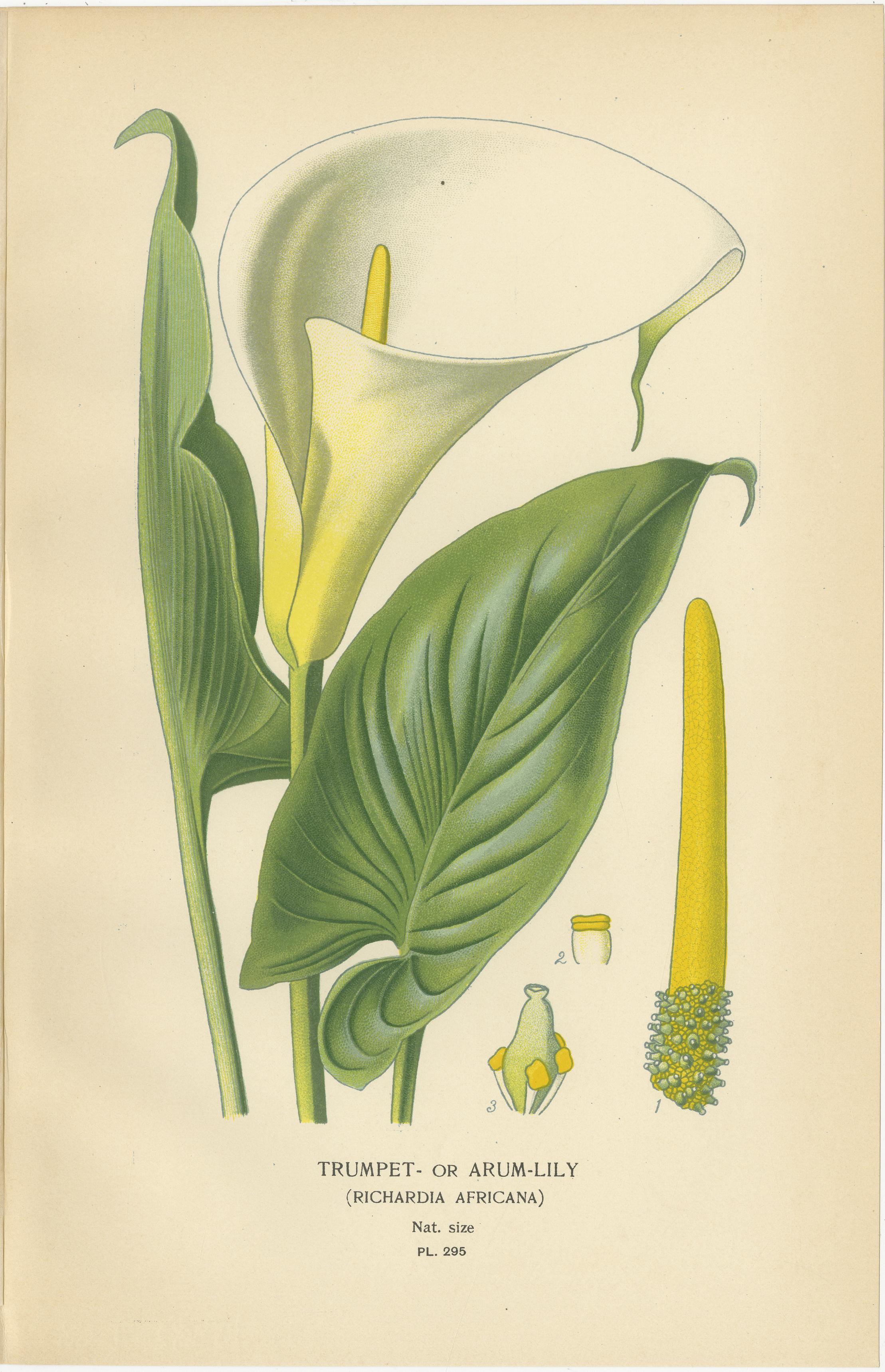
The second plate presents the Trumpet or Arum Lily (Richardia africana), admired for its graceful white spathe encircling a golden-yellow spadix. Indigenous to southern Africa, the Arum Lily became a symbol of purity and elegance, popular in Victorian floral design and often grown in water gardens or glasshouse collections.
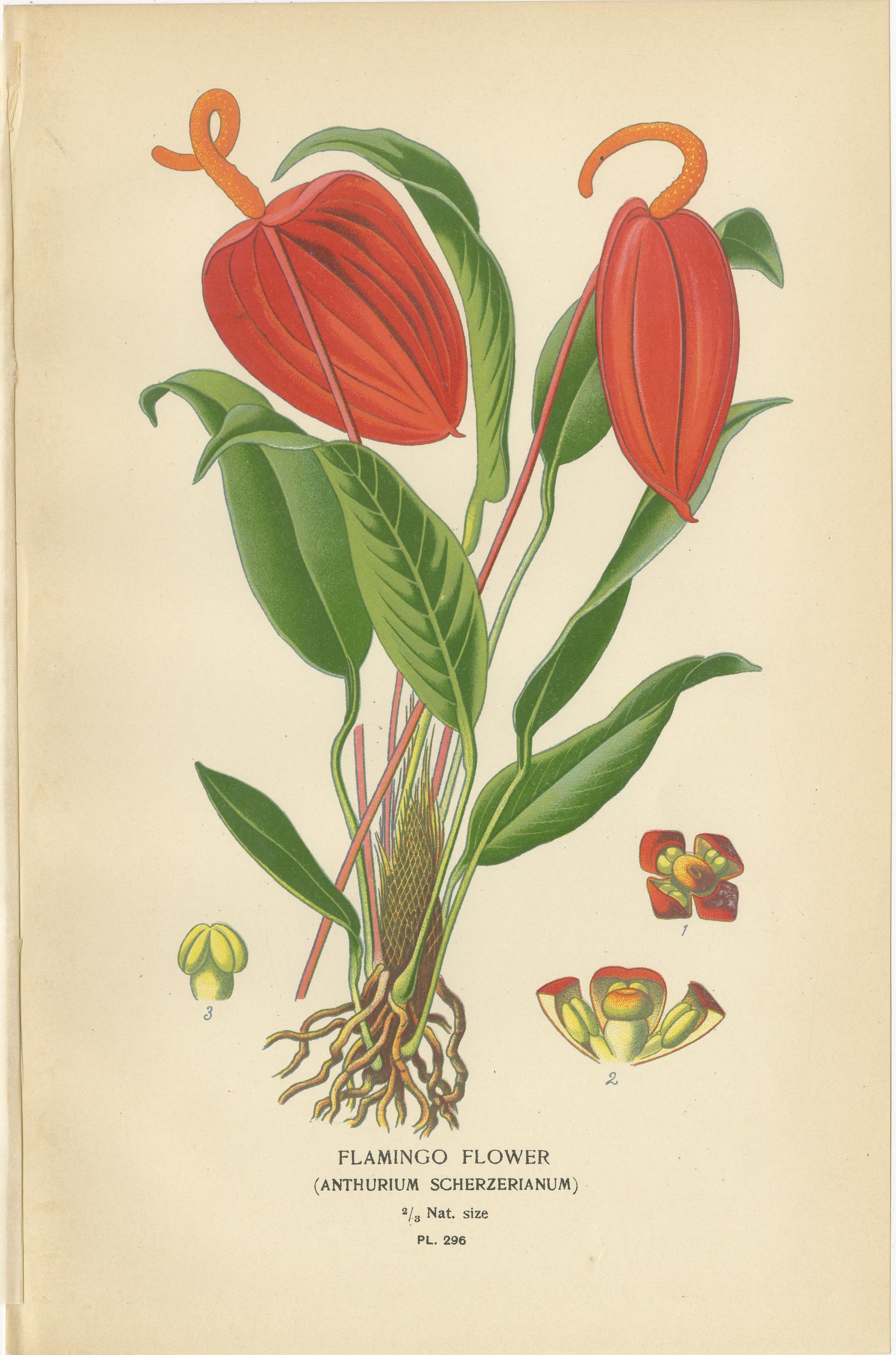
The third plate depicts the vibrant Flamingo Flower (Anthurium scherzerianum), a tropical plant from Central and South America, characterized by its bright red, waxy spathes and twisting orange spadix. This plant was considered exotic and rare in Europe during the 19th century and remains a striking decorative favorite.
Together, these prints demonstrate the fascination with exotic species during the age of botanical exploration and the rise of horticultural collecting in Europe. Their precise linework and rich coloration capture not only the botanical accuracy but also the aesthetic allure of these plants, making them ideal for display in a botanical-themed interior or as part of a larger collection of antique natural history prints.
Condition: Very good, with light age toning consistent with age, and minimal handling marks at the margins. Colors remain fresh and well-preserved. Plate marks are clearly visible, adding to their authenticity. Frame is not included.
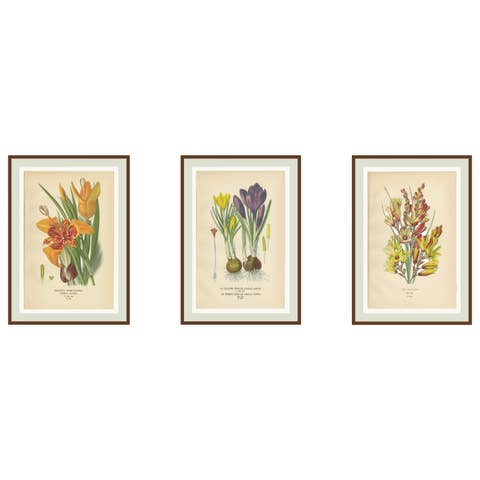
Framing tips: These three prints would display beautifully together in a vertical arrangement or side-by-side. A crisp white or cream mat with a thin gold or dark wood frame would highlight the vibrant colors of the foliage and flowers, creating a sophisticated botanical display.
Technique: Chromolithograph
Maker: Unknown, European, circa 1890