About this sheet
Antique Bird Prints – Finches, Waxbills, Starlings & Fieldfare – Cassell’s c.1880
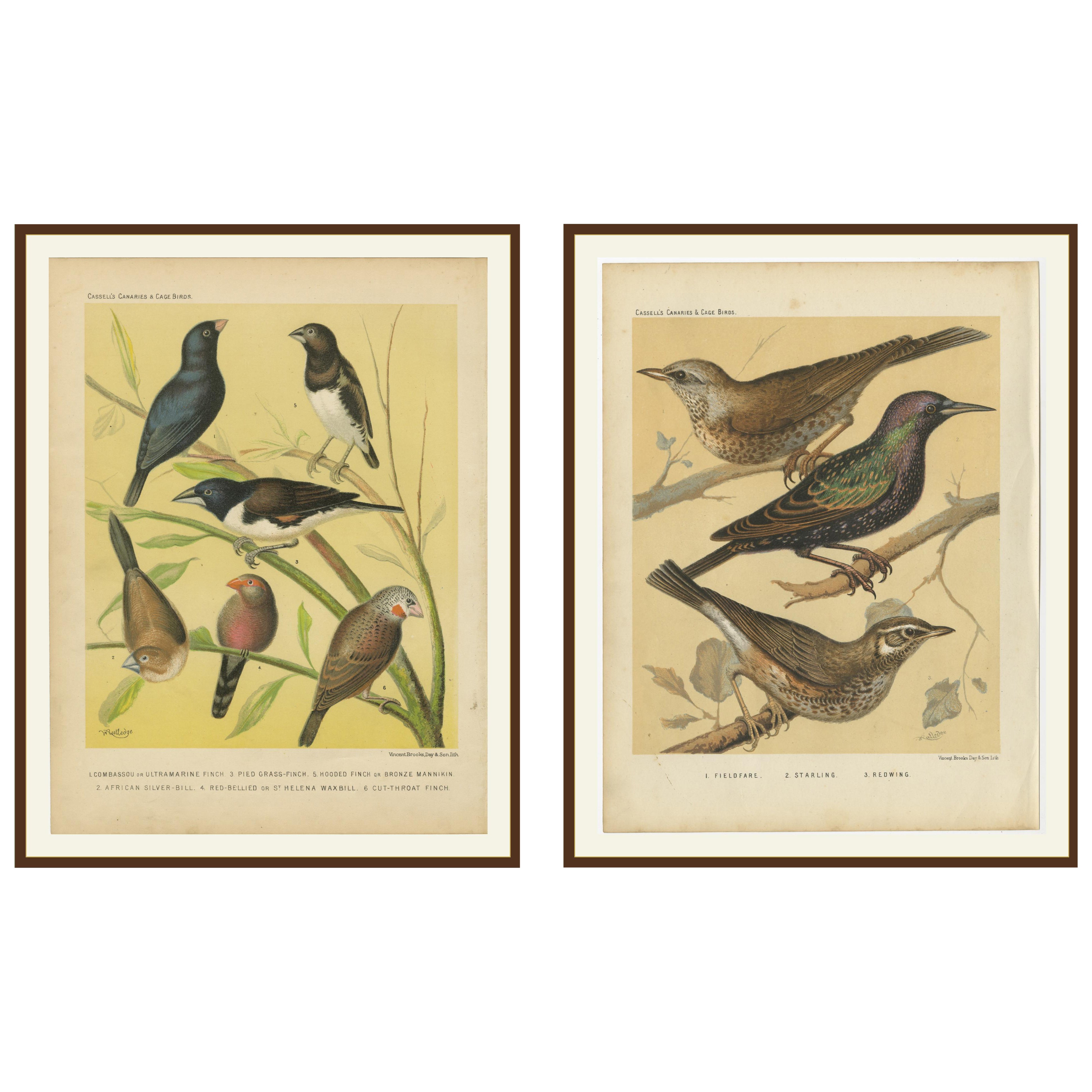
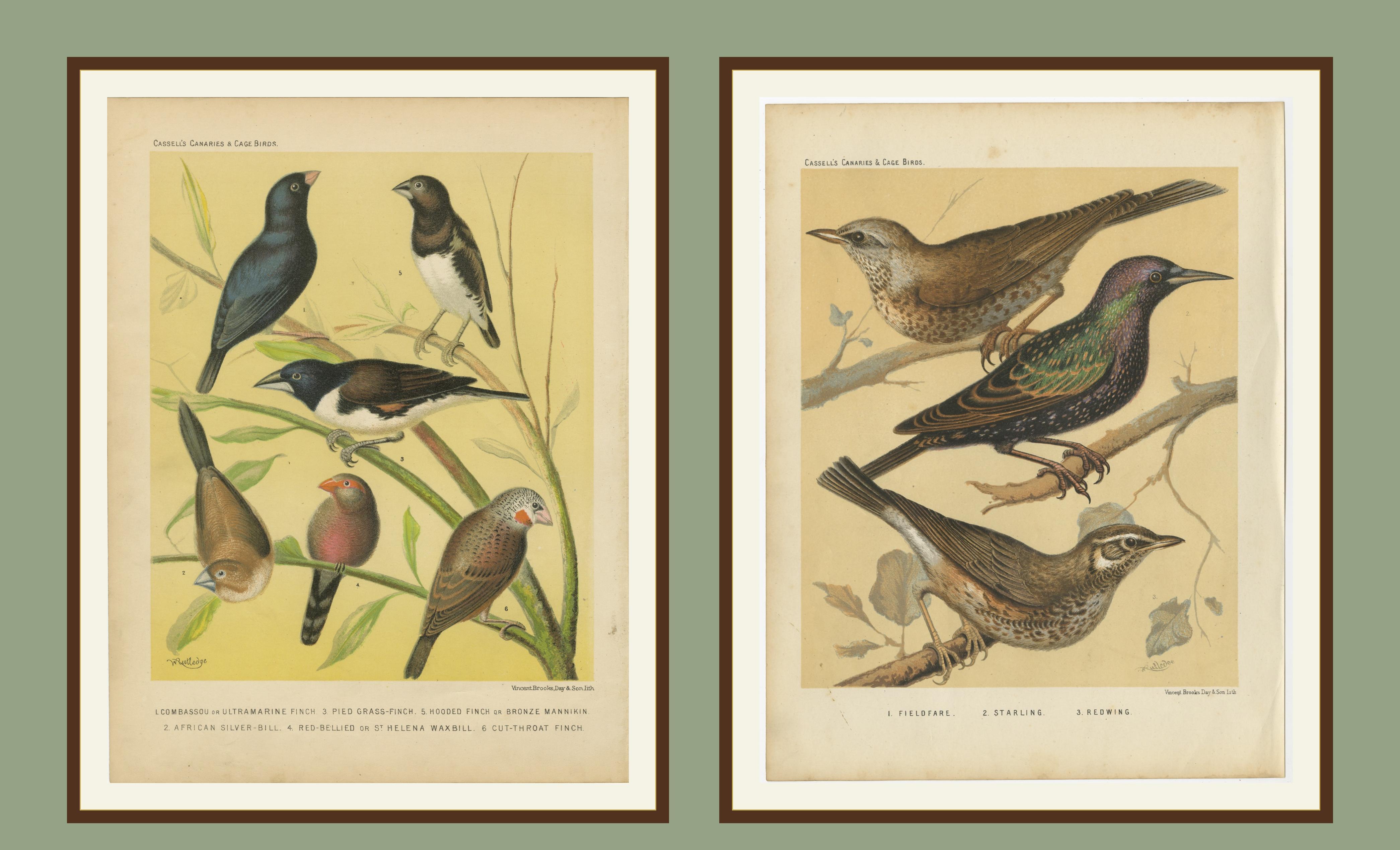
This fine pair of antique chromolithographs originates from Cassell’s Canaries and Cage Birds, published in London in the late 19th century (c.1880). These richly colored plates depict some of the most popular and visually striking songbirds and cage birds known to Victorian collectors.
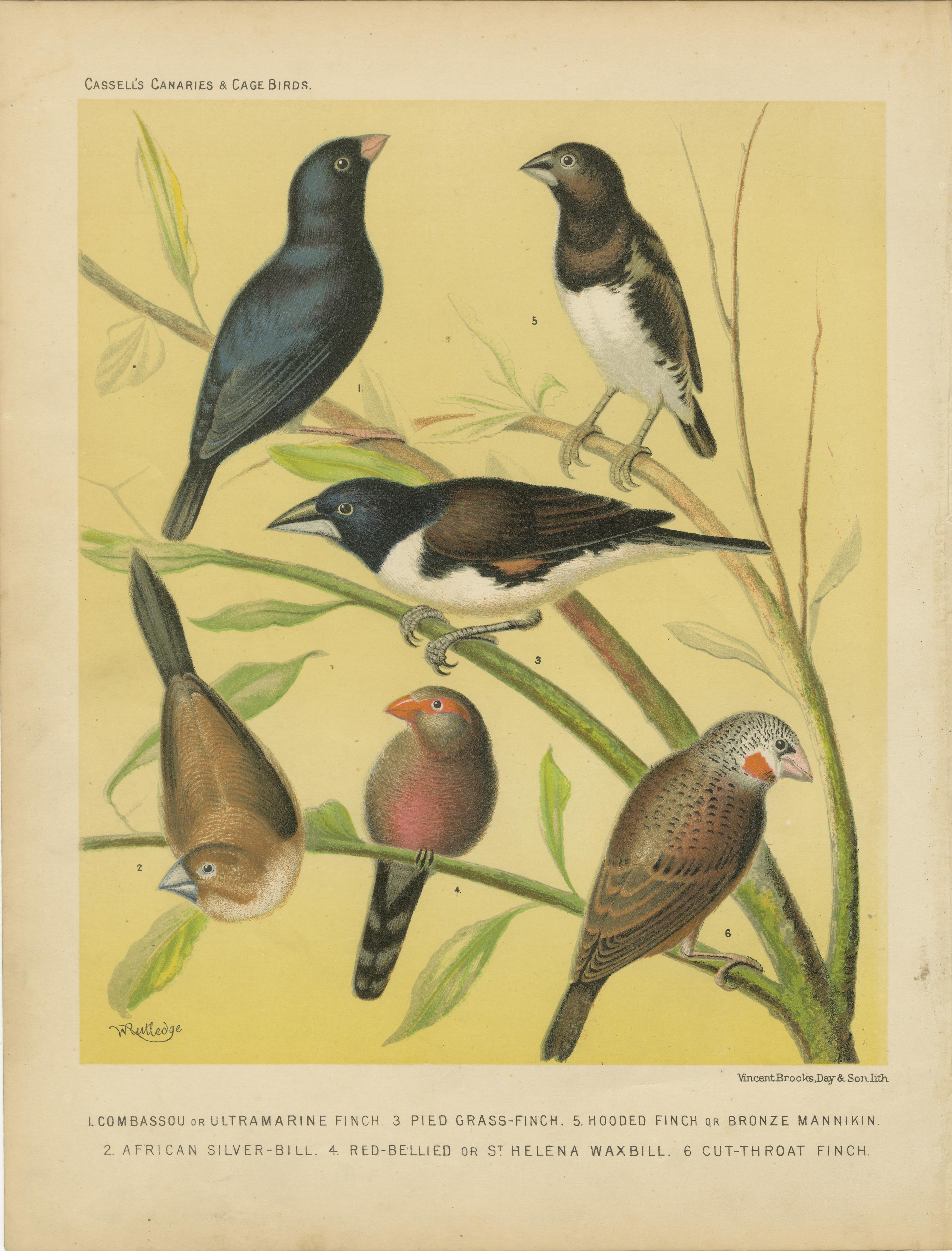
The first plate shows six finch species in careful detail:
1. Combassou or Ultramarine Finch
2. African Silverbill
3. Pied Grass-Finch
4. Red-Bellied or St. Helena Waxbill
5. Hooded Finch or Bronze Mannikin
6. Cut-Throat Finch
Perched on leafy branches, the birds are displayed in naturalistic poses, their plumage rendered with meticulous color gradation typical of high-quality chromolithography. From the deep ultramarine of the Combassou Finch to the striking red throat of the Cut-Throat Finch, the variety demonstrates both ornithological accuracy and decorative appeal.
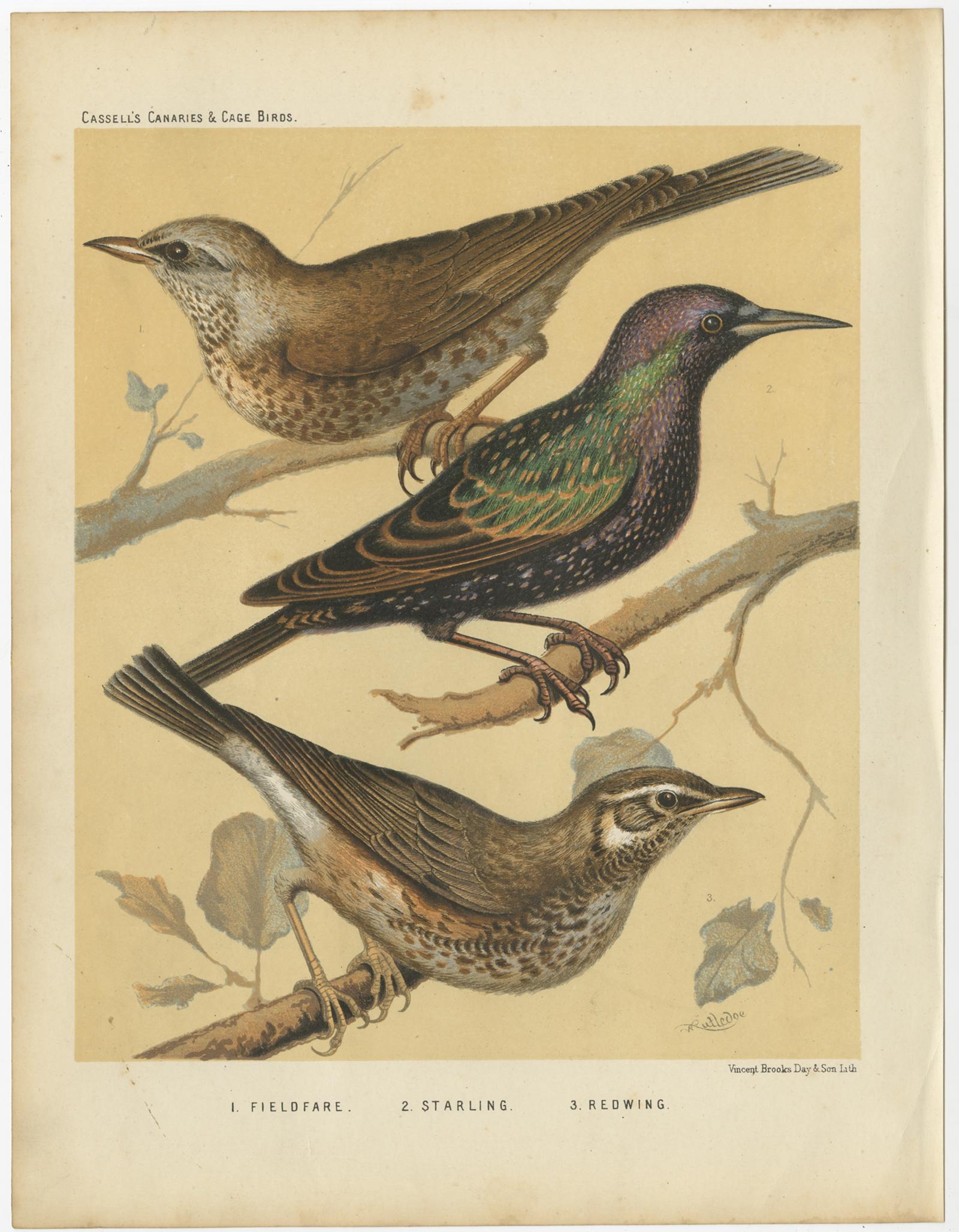
The second plate presents three larger European species:
1. Fieldfare
2. Starling
3. Redwing
The starling is especially striking, its iridescent green and purple feathers captured with shimmering precision. The fieldfare and redwing, both members of the thrush family, are portrayed with their speckled plumage, perched in a natural woodland setting. Together, these birds represent species admired for both their song and migratory habits.
These prints were produced using the chromolithographic process, a technique that allowed for brilliant, layered coloring and made ornithological publications highly sought after in Victorian England. Cassell’s volumes combined scientific knowledge with decorative artistry, appealing both to bird enthusiasts and to households seeking elegant wall art.
Condition summary: Both plates are in good condition with vibrant, well-preserved coloring. Light toning and faint spotting appear in the margins, consistent with age. No major tears or repairs; strong impressions remain.
Framing tips: As a complementary pair, these prints are best displayed together. Light cream or ivory mounts will enhance the freshness of the colors, while dark wood or gilt frames can provide contrast. Their decorative quality makes them ideal for libraries, studies, or living spaces with a naturalist or Victorian theme.
Technique: Chromolithograph
Maker: Cassell, Petter, Galpin & Co., London, c.1880