Very good. Fine, strong impression with clean colouring. Some minor age-related toning in the margins, some wrinkles along the bottom edge and one small marginal tear. Accompanied by the original descriptive text sheet.
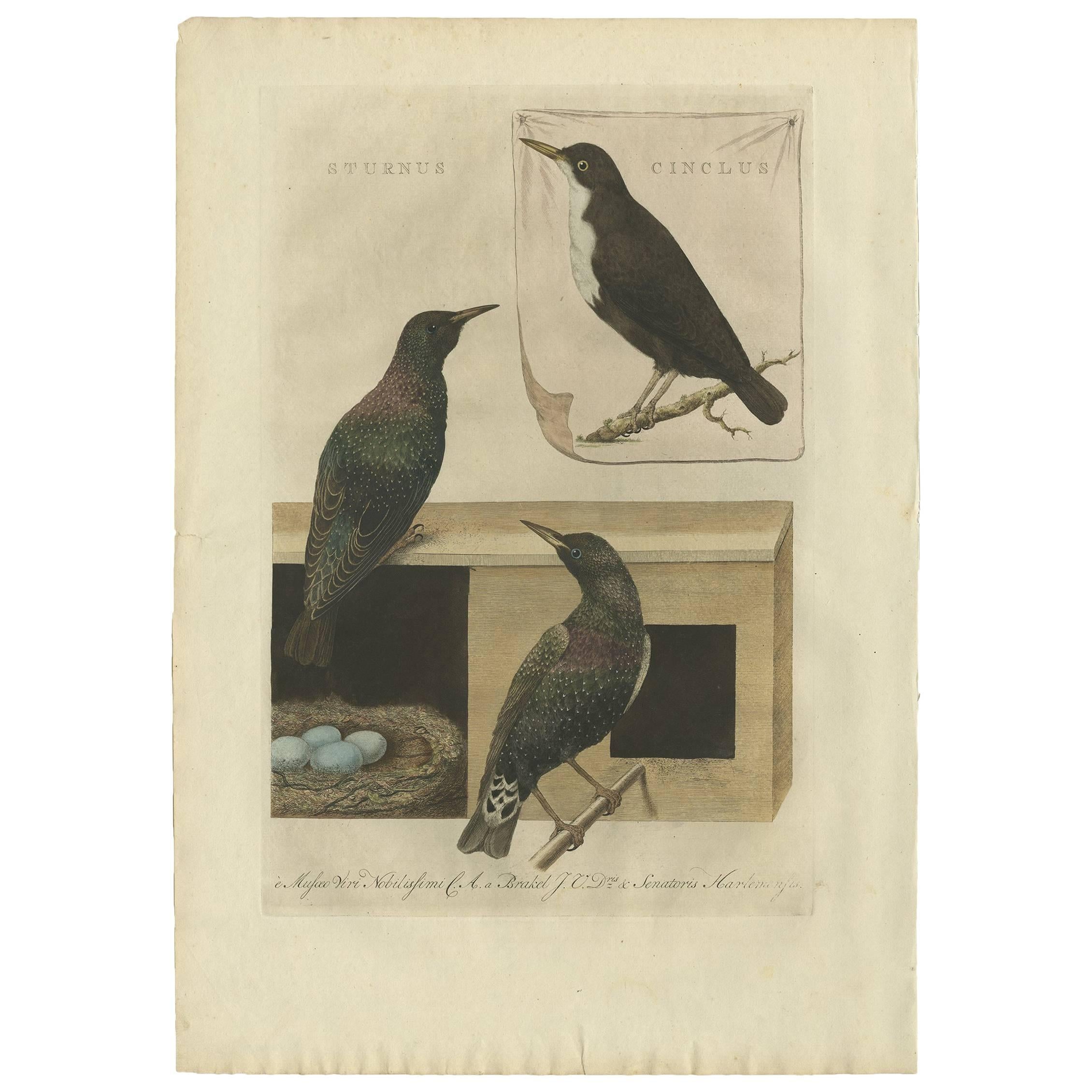
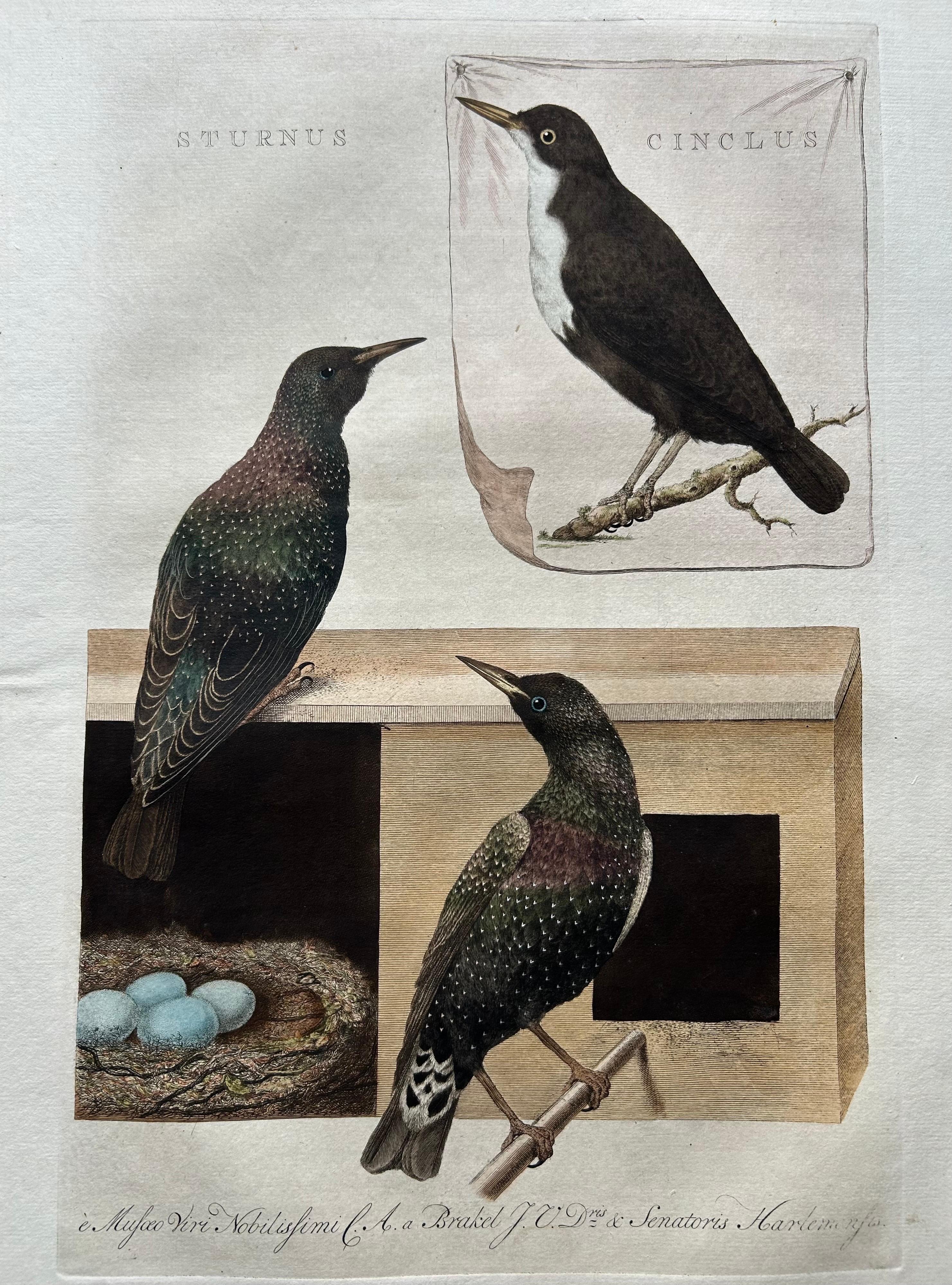
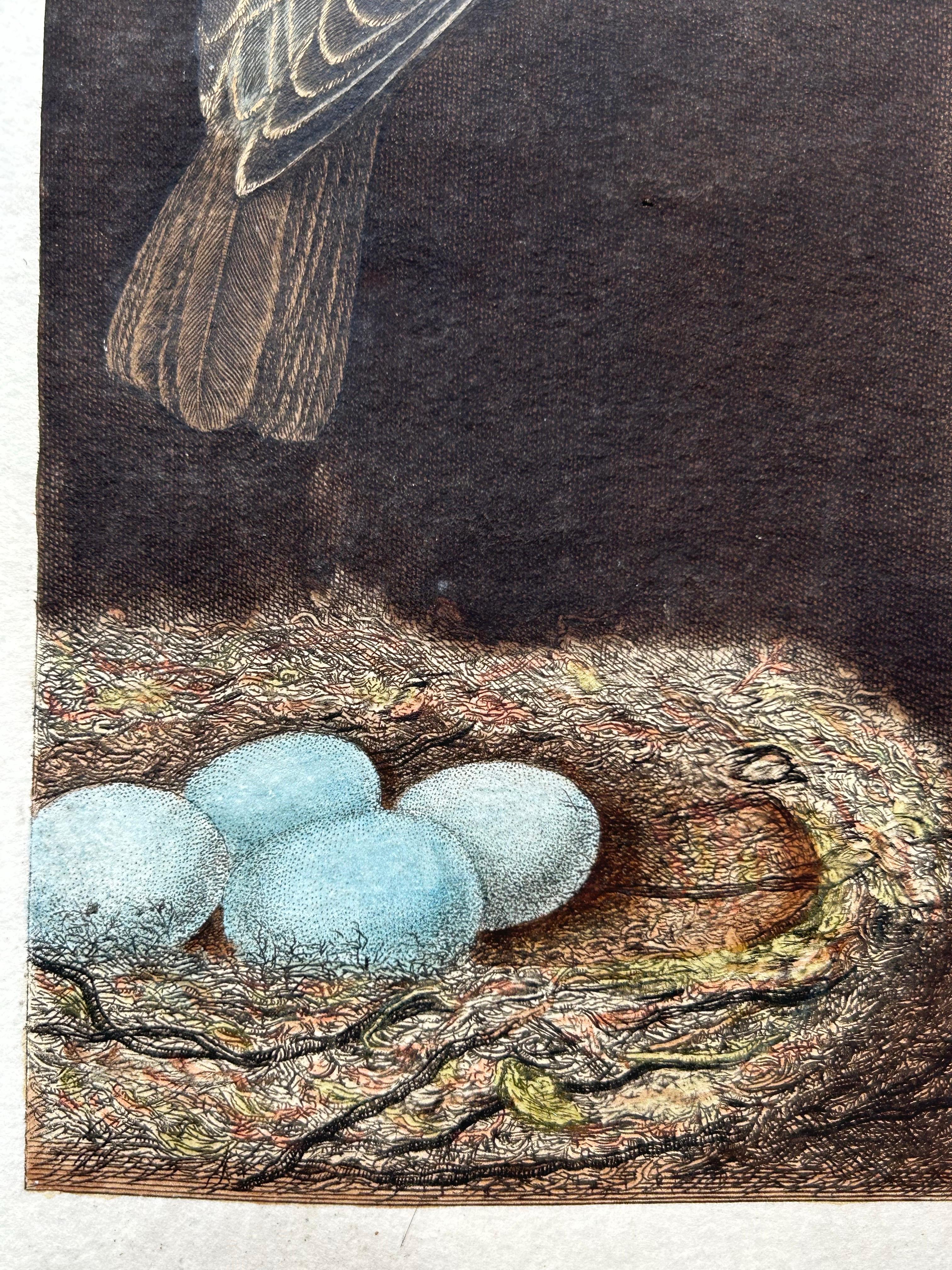
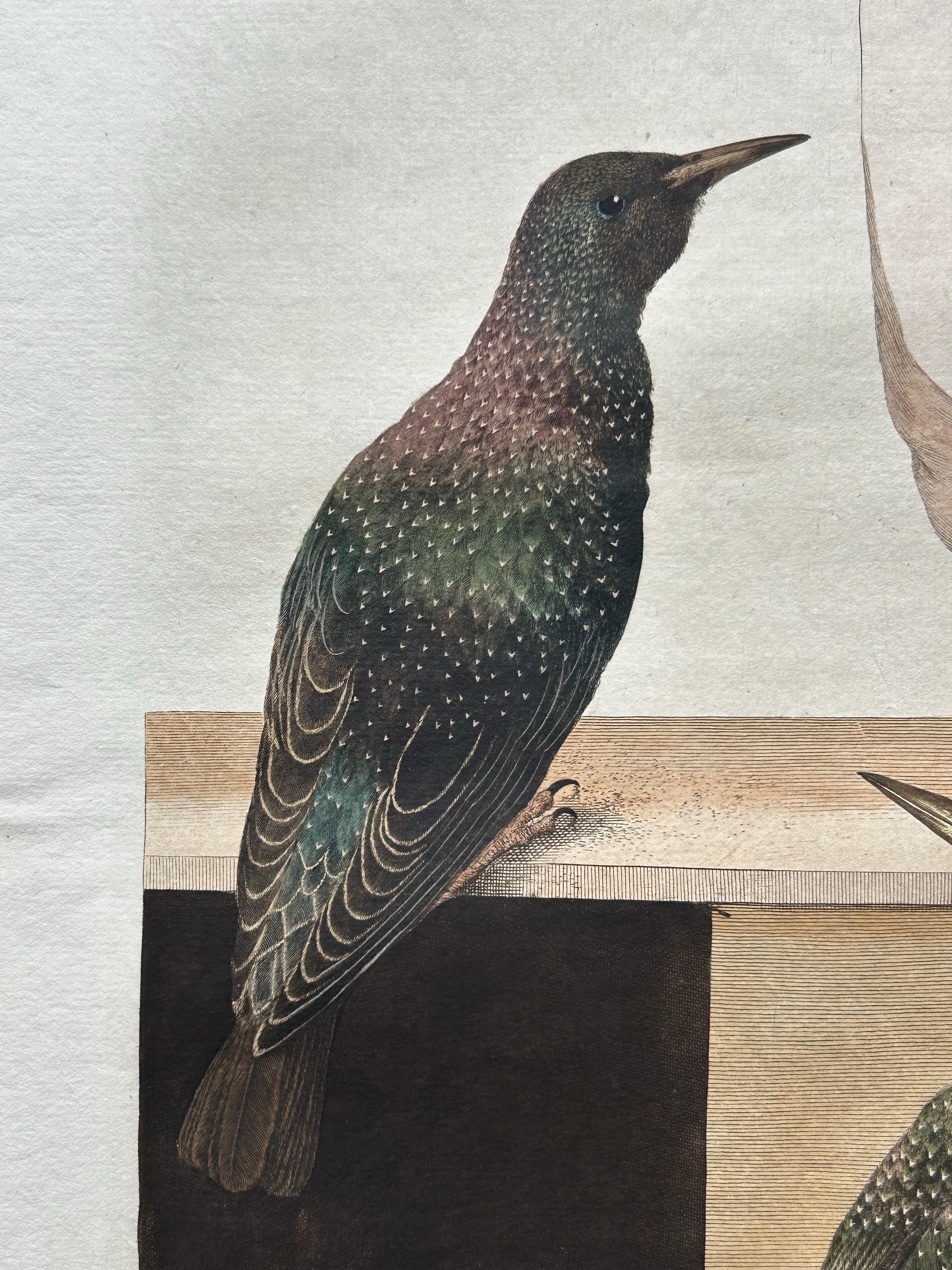
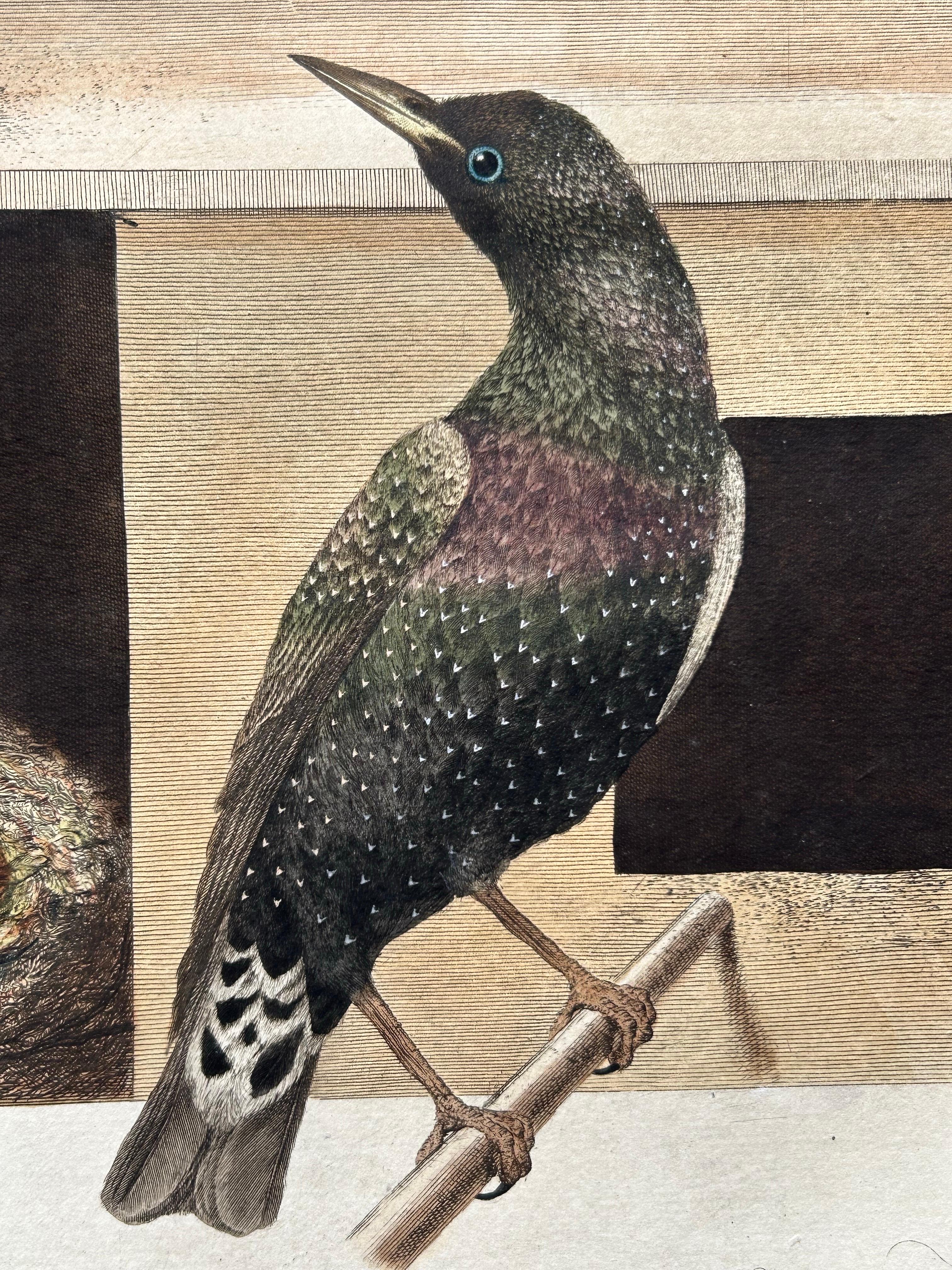
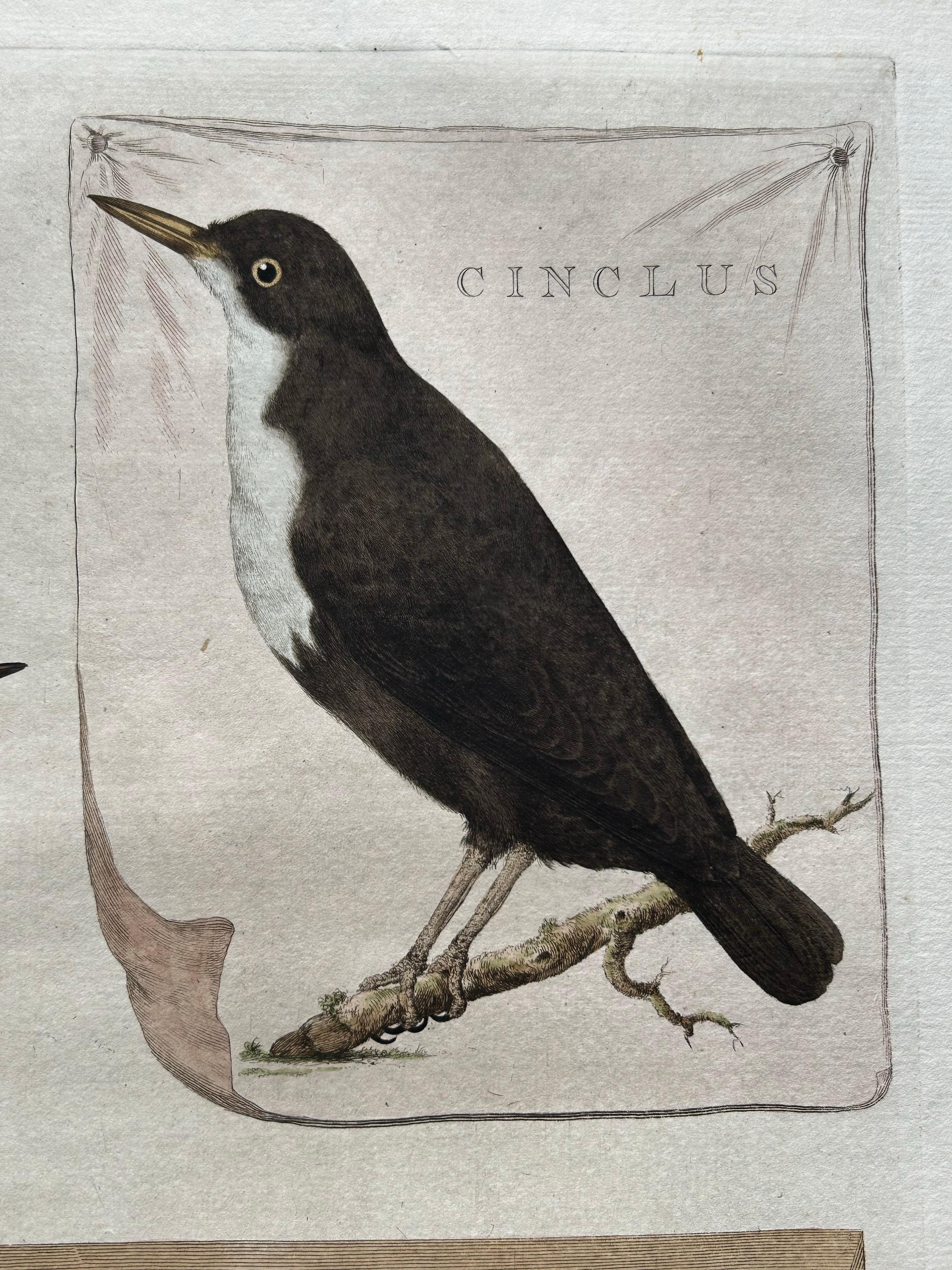
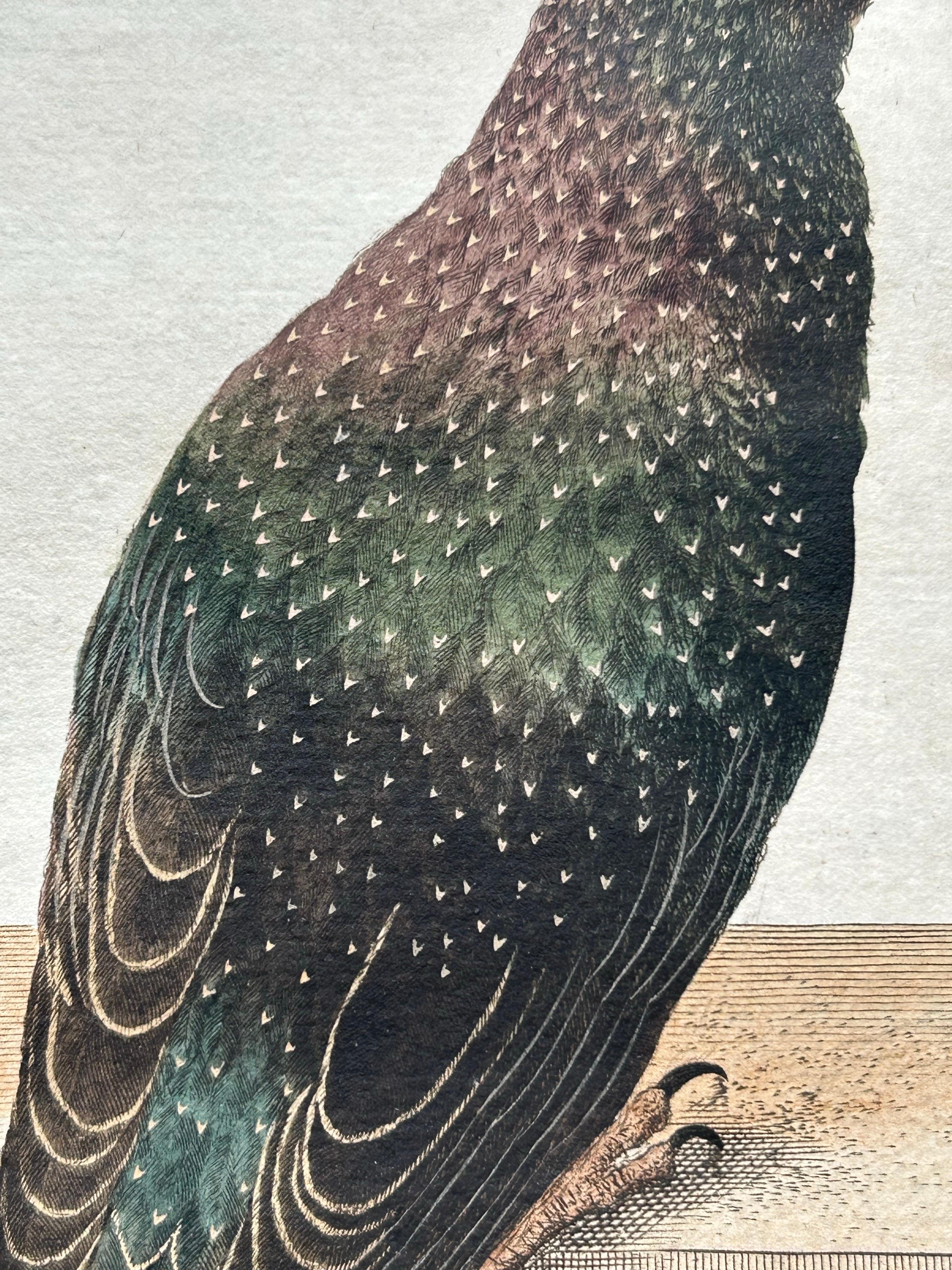
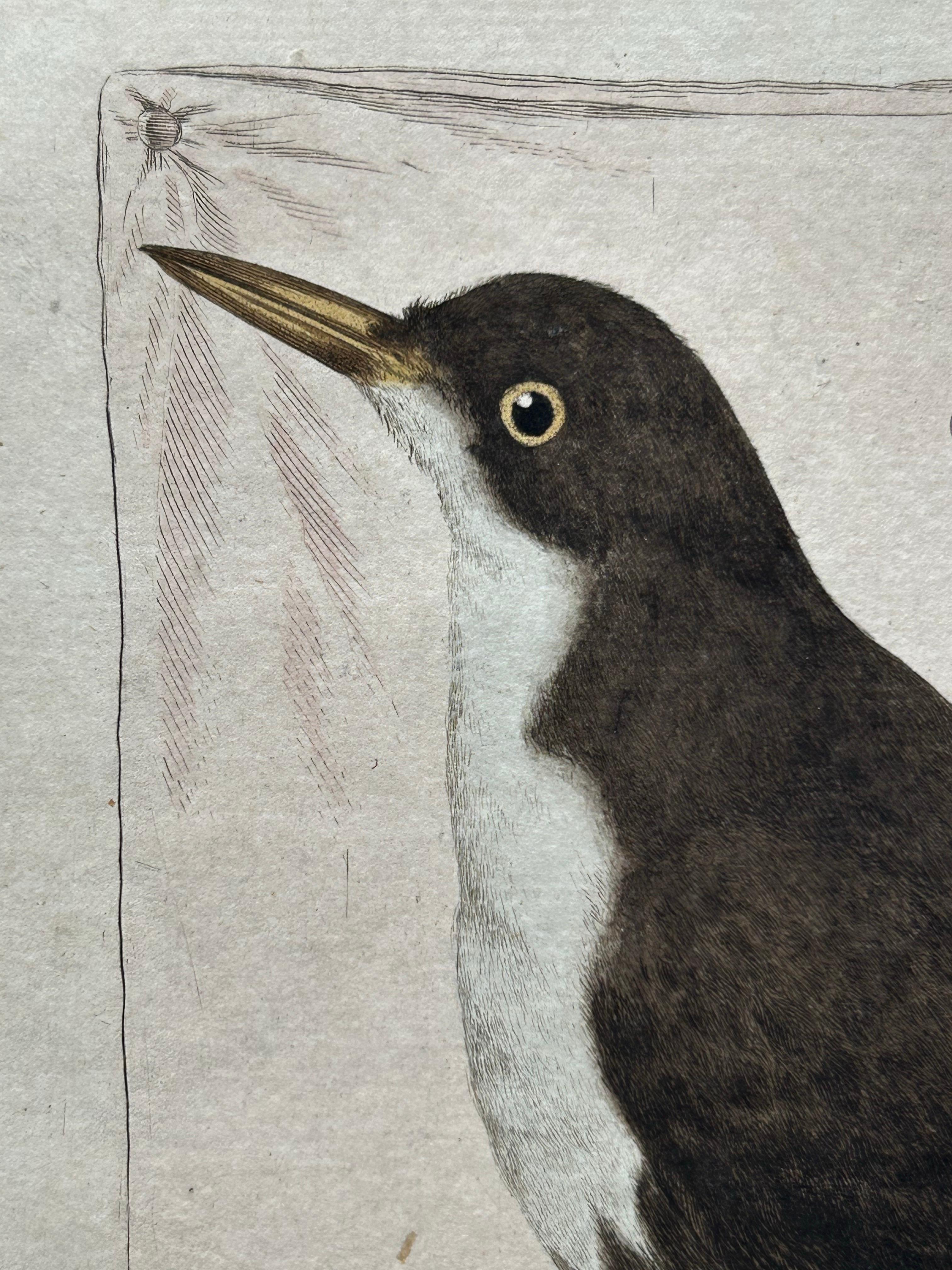
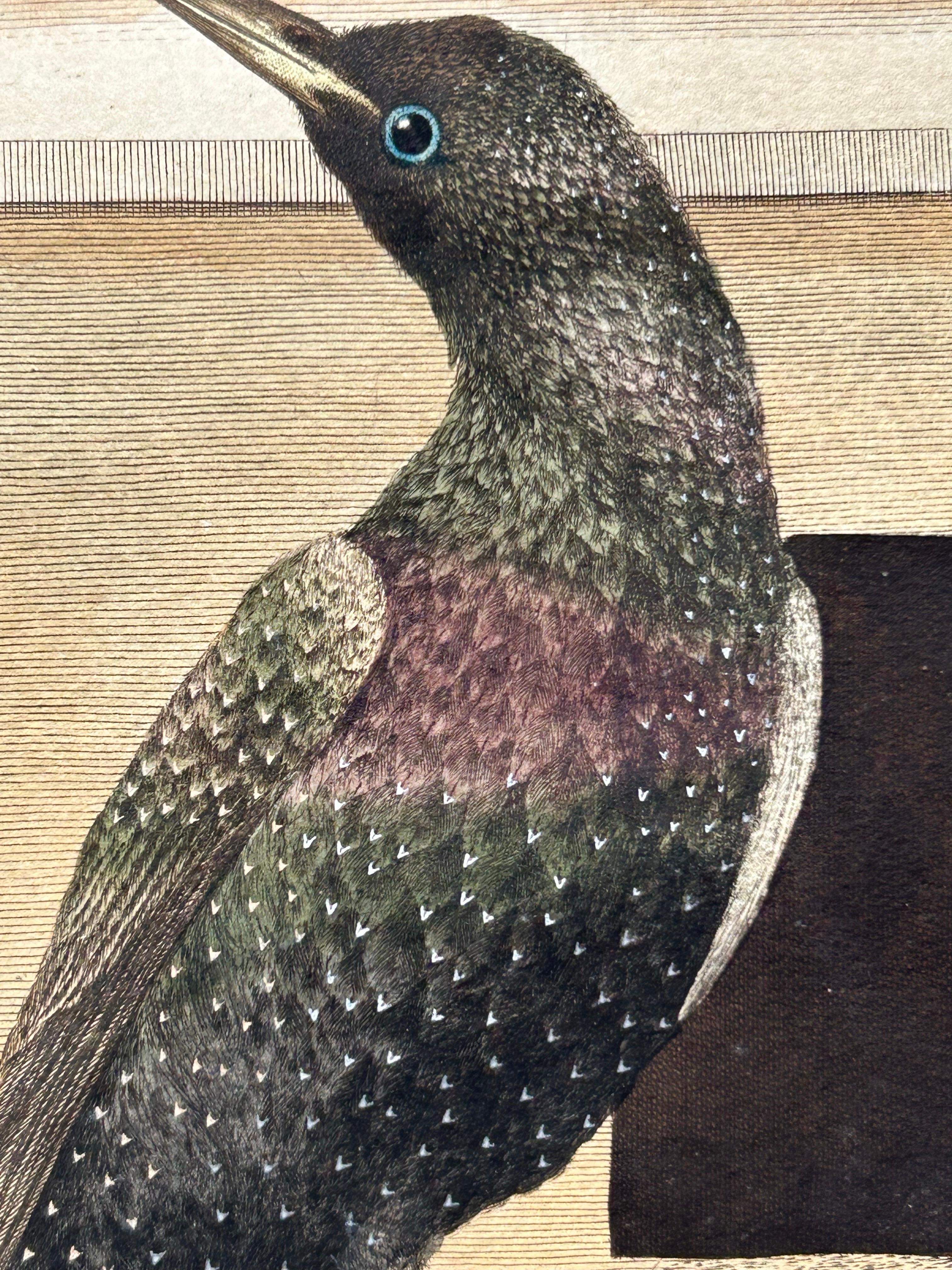
This antique hand-coloured engraving shows two European starlings (Sturnus vulgaris) alongside the white-throated dipper (Cinclus cinclus). The starlings are beautifully rendered with their iridescent plumage, speckled with green and violet highlights, and are shown near a nesting box with a clutch of pale blue eggs, underlining their familiar presence in rural and urban landscapes. Above them, the white-throated dipper is depicted perched on a branch, identifiable by its dark plumage and distinct white breast.
The European starling is one of the most widespread passerine birds in Europe and is well known for its adaptability, mimicry, and remarkable flocking behaviour, producing vast murmurations in flight. By contrast, the dipper is a semi-aquatic passerine inhabiting fast-flowing rivers and streams across Europe and Asia. It is unique in its ability to dive and walk underwater, feeding on aquatic invertebrates. The juxtaposition of these species on one plate illustrates the breadth of avian life depicted in this monumental ornithological work.
This print originates from Nederlandsche Vogelen; volgens hunne huishouding, aert en eigenschappen beschreeven (Amsterdam, 1770–1829), the first comprehensive ornithological study published in the Netherlands. Created by Cornelis Nozeman, Martinus Houttuyn, and the Sepp family, it sought to document all bird species found in the Dutch Republic, each plate carefully engraved and hand-coloured to life-like accuracy. Many species were shown with nests and eggs, offering a full natural history perspective.
Condition: Very good. Fine, strong impression with clean colouring. Some minor age-related toning in the margins, some wrinkles along the bottom edge and one small marginal tear. Accompanied by the original descriptive text sheet.
Framing tips: This striking plate would frame well with a soft cream or pale grey mount to highlight the subtle tones of the dipper and the glossy iridescence of the starlings. A dark wood or ebonised frame will lend contrast, while a gilt frame would emphasize its decorative and historic value.