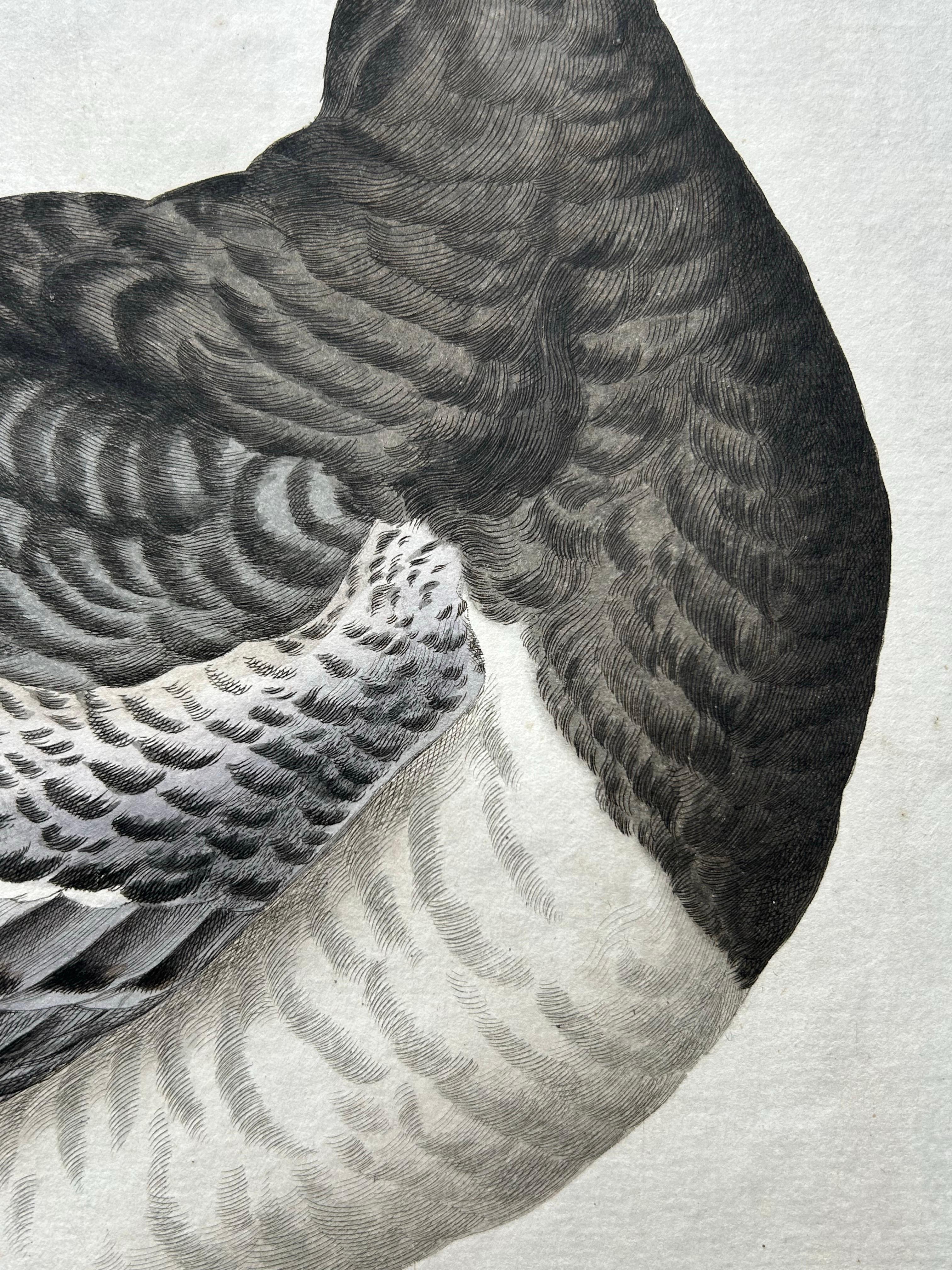
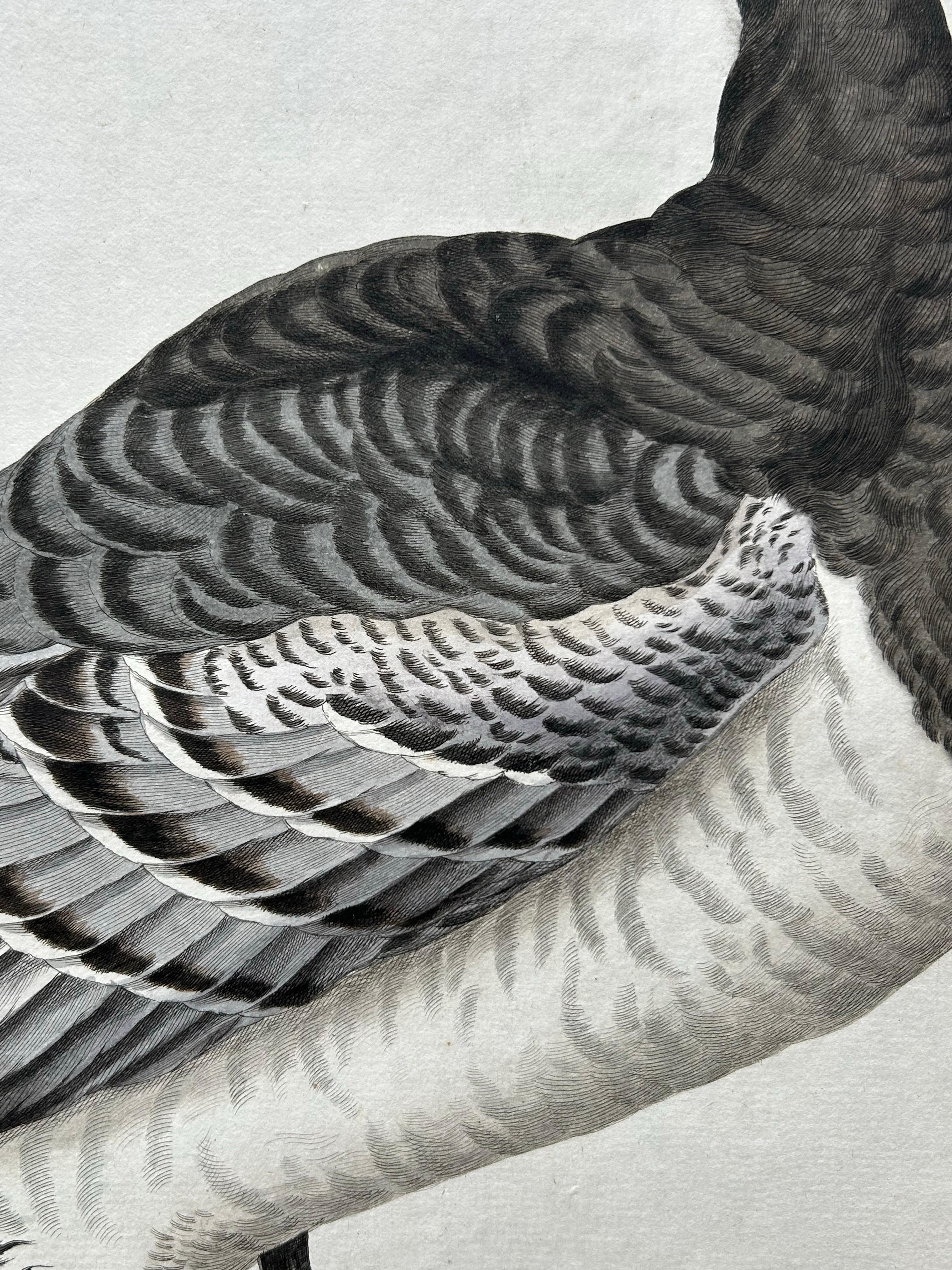
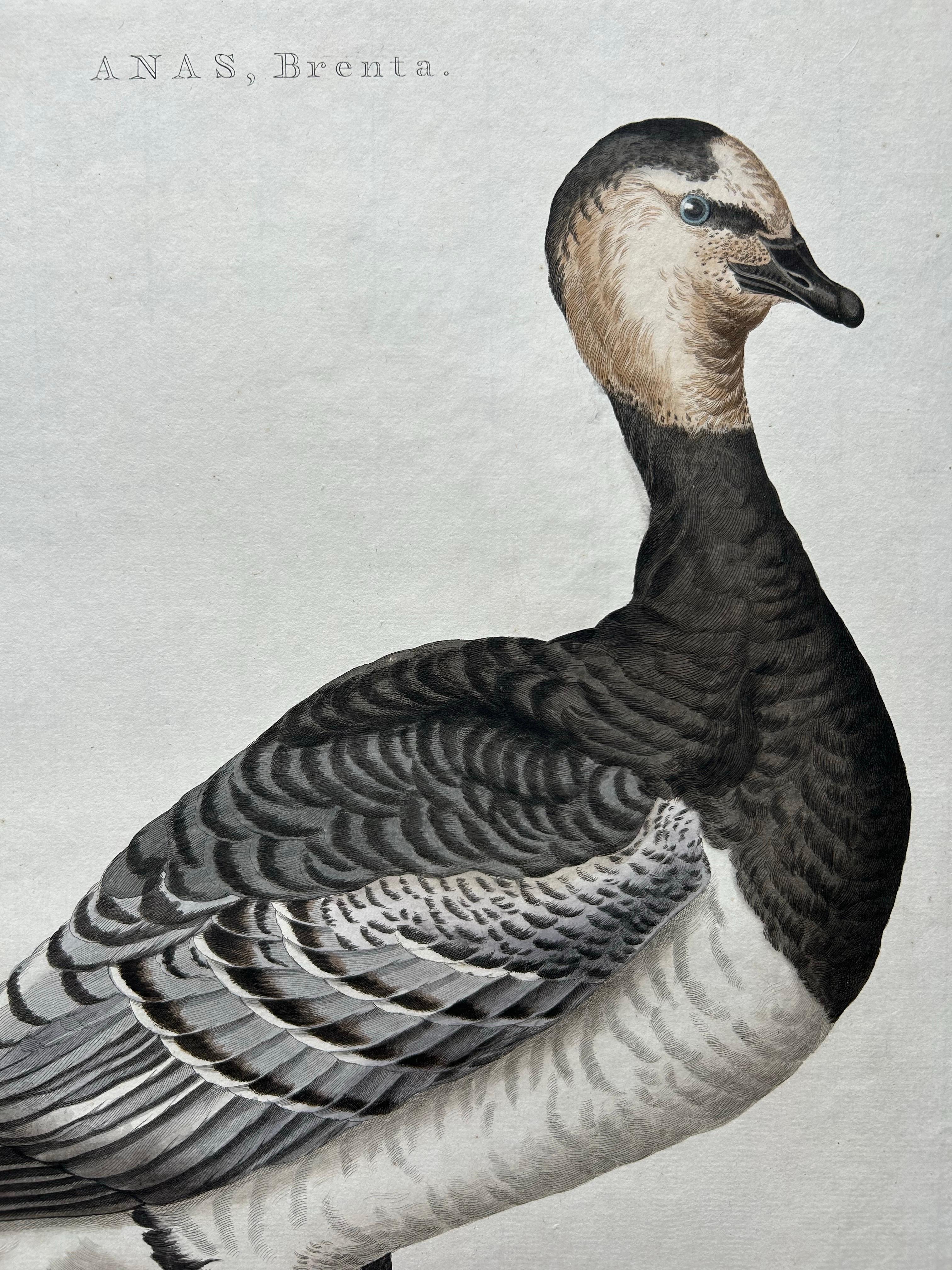
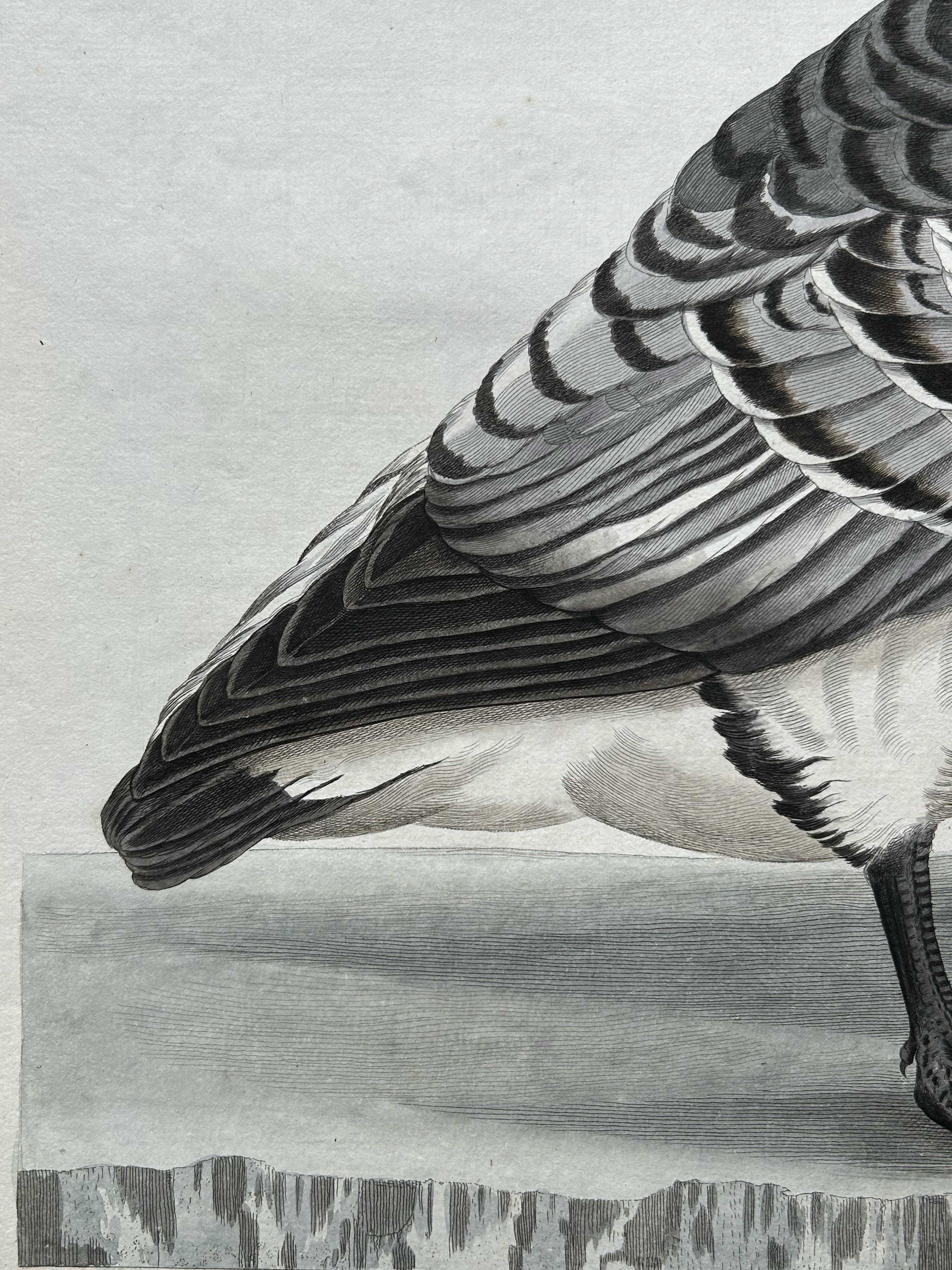
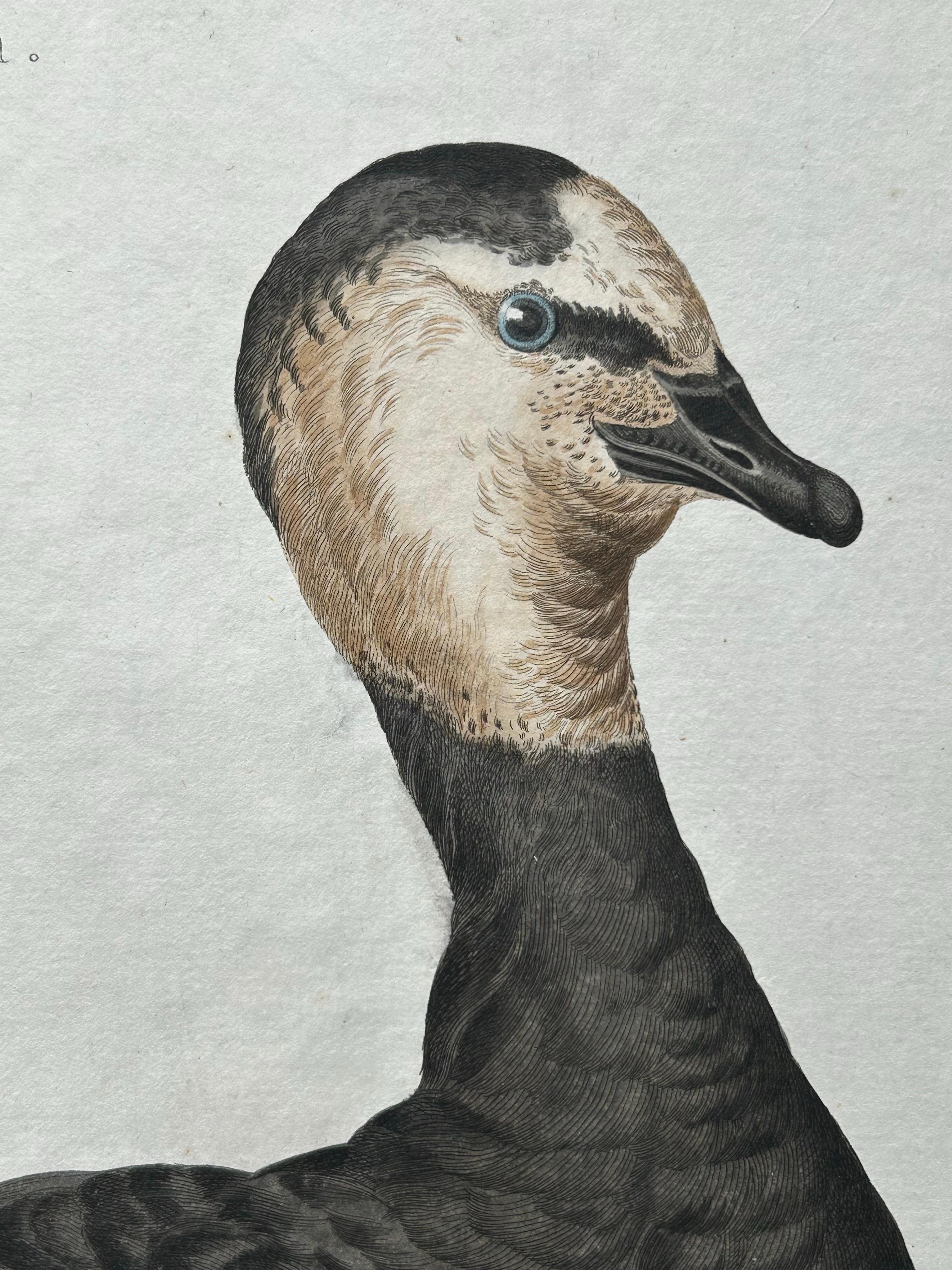
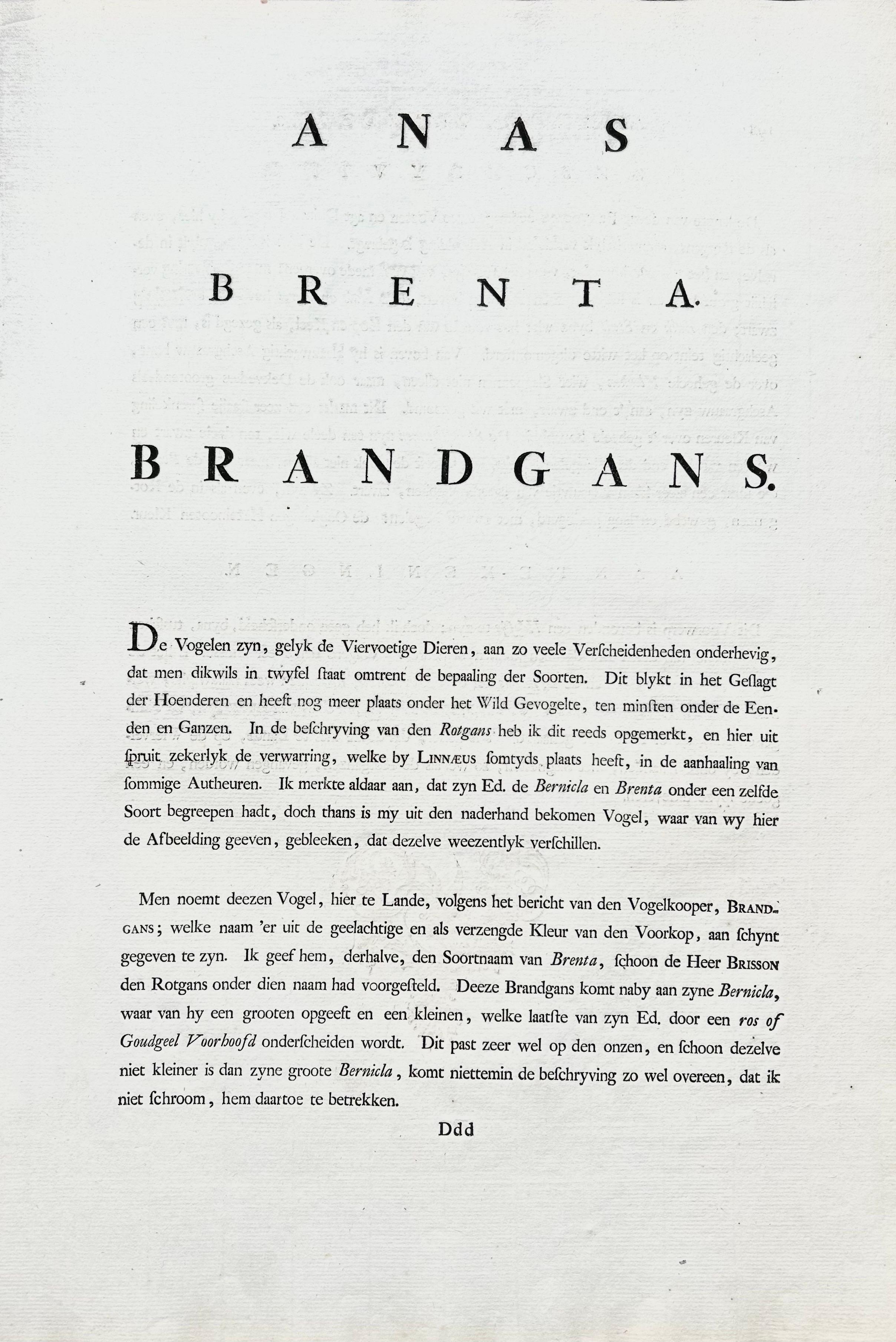
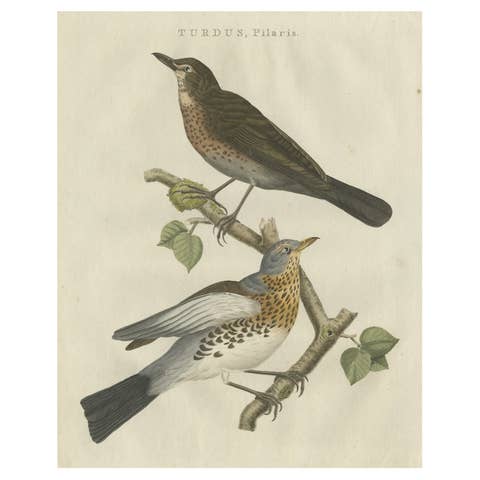
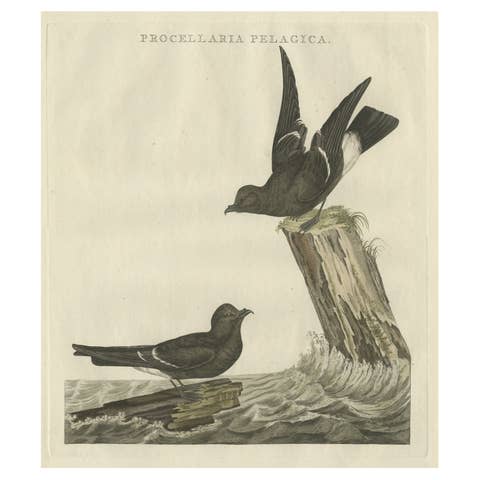
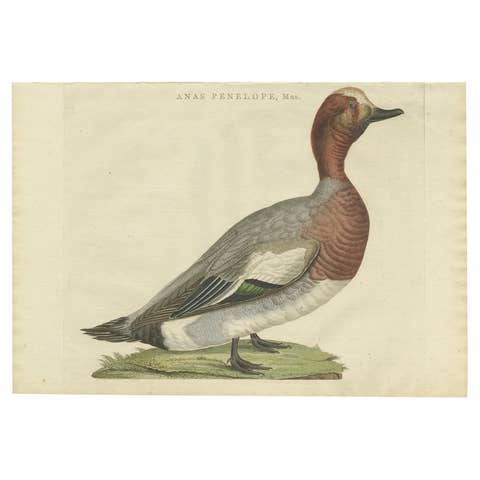
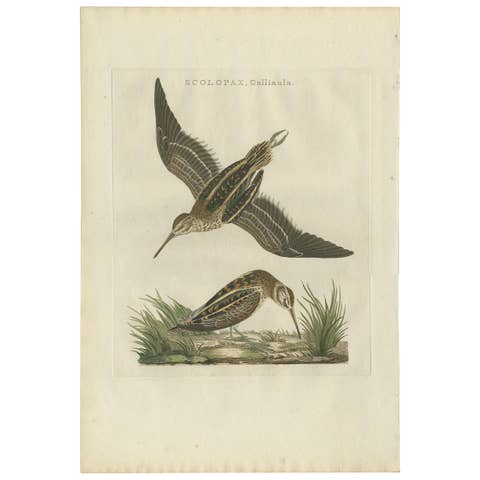
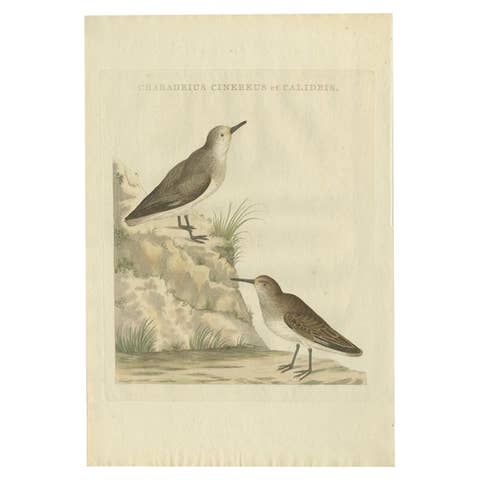
Very good impression with plate marks and original hand colour. Minor age toning and light handling marks to margins. The two accompanying text pages are clean, with only faint foxing and small margin spots, paper strong and supple.
About this sheet
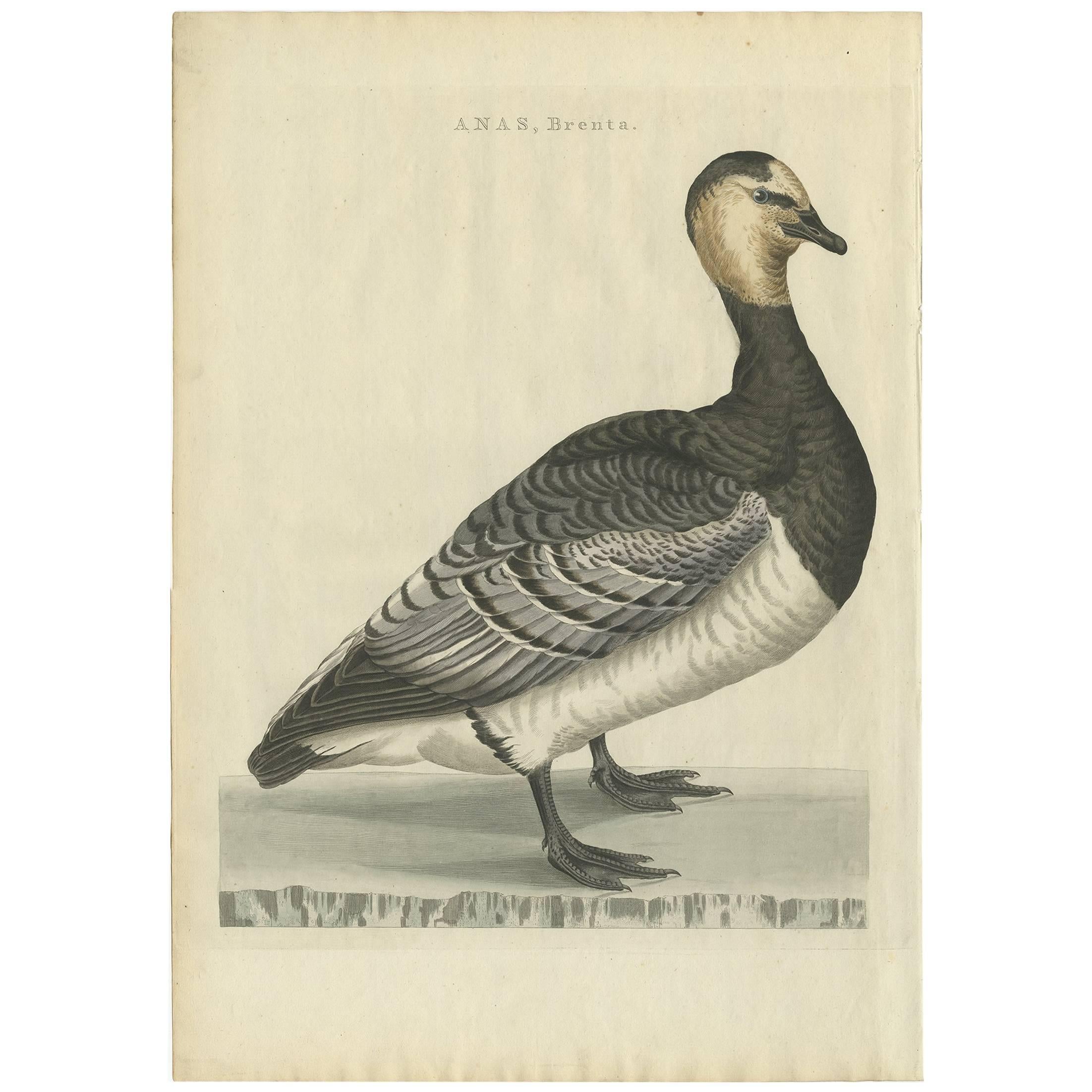
Anas, Brenta – Barnacle Goose from Nederlandsche Vogelen, 1770–1829
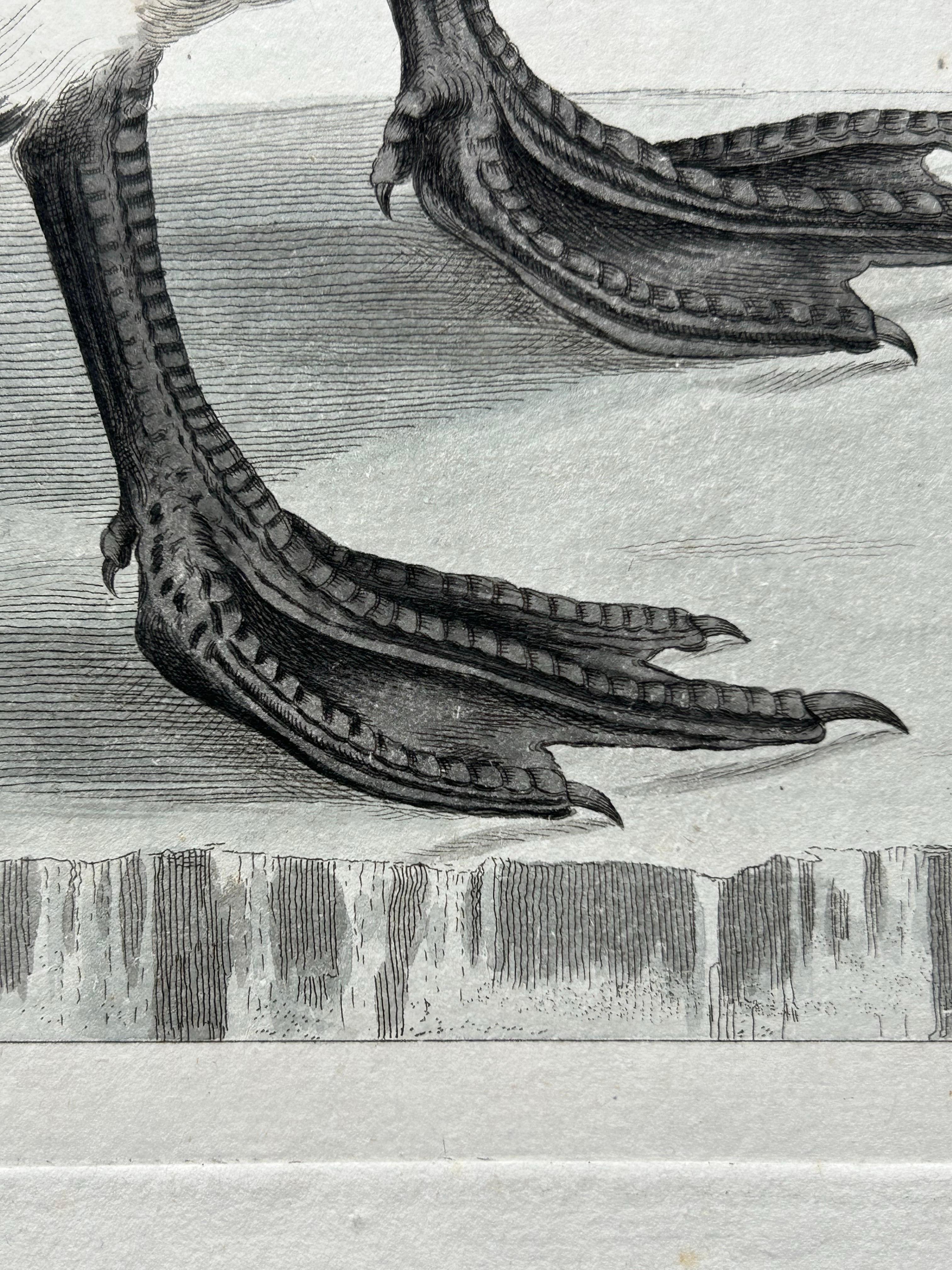
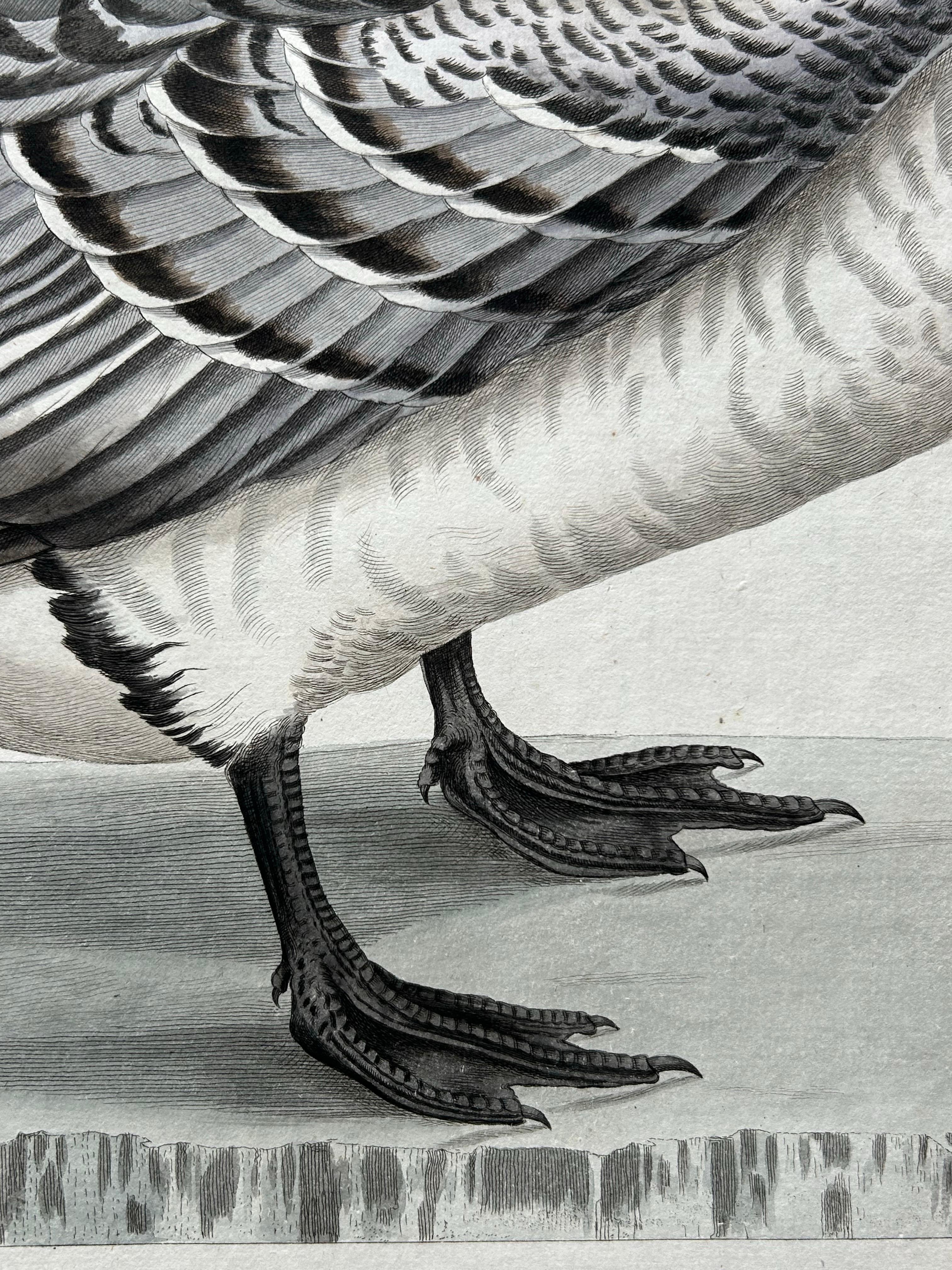
This antique hand-coloured engraving shows the barnacle goose (Branta leucopsis), a striking waterfowl known for its bold black-and-white plumage and distinctive white face. Standing in profile, the bird is rendered with fine attention to feather texture and subtle tonal variations, from the bluish-grey barring on its wings to the rich black of its neck and breast. The depiction reflects the naturalistic approach of the great Dutch ornithological work Nederlandsche Vogelen, where birds were often illustrated close to life size and in lifelike poses.
The barnacle goose belongs to the genus Branta, which comprises the black geese, differing from the grey Anser geese by their predominantly dark plumage and contrasting markings. Once shrouded in myth, medieval Europeans believed this goose hatched from barnacles attached to driftwood, a legend only dispelled through closer natural observation. In reality, the species breeds in Arctic regions, including Greenland and Svalbard, and migrates south in winter. Its tight family groups and strong site fidelity make it a familiar sight in coastal wetlands and estuaries.
This print originates from Nederlandsche Vogelen; volgens hunne huisdouding, aert, en eigenschappen beschreeven, published in Amsterdam between 1770 and 1829 by Cornelius Nozeman, Martinus Houttuyn, and J.C. Sepp. It stands as the first and most important ornithological study of the Netherlands, notable for combining detailed written descriptions with exquisite copperplate engravings. The accompanying original Dutch text pages provide rich historical and scientific observations on the species, its behaviour, nesting habits, and physical characteristics, as understood in the late 18th and early 19th centuries.
Condition summary: Very good impression with plate marks and original hand colour. Minor age toning and light handling marks to margins. The two accompanying text pages are clean, with only faint foxing and small margin spots, paper strong and supple.
Framing tips: A cool off-white or pale grey mount will complement the crisp black-and-white contrast of the bird’s plumage. A thin black or dark oak frame will enhance its elegant form. UV-protective glazing is advised to preserve the delicate watercolour tones.