About this sheet
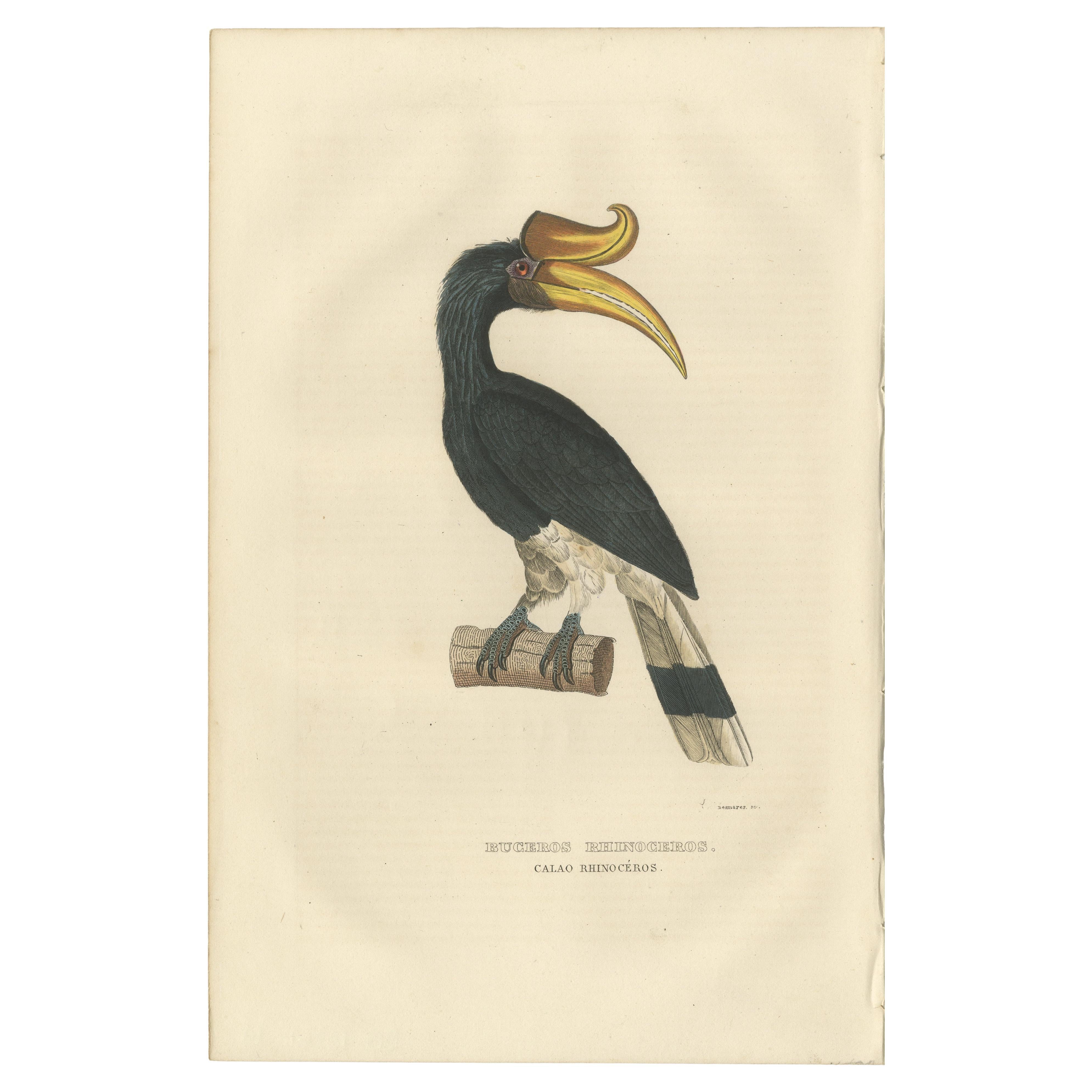
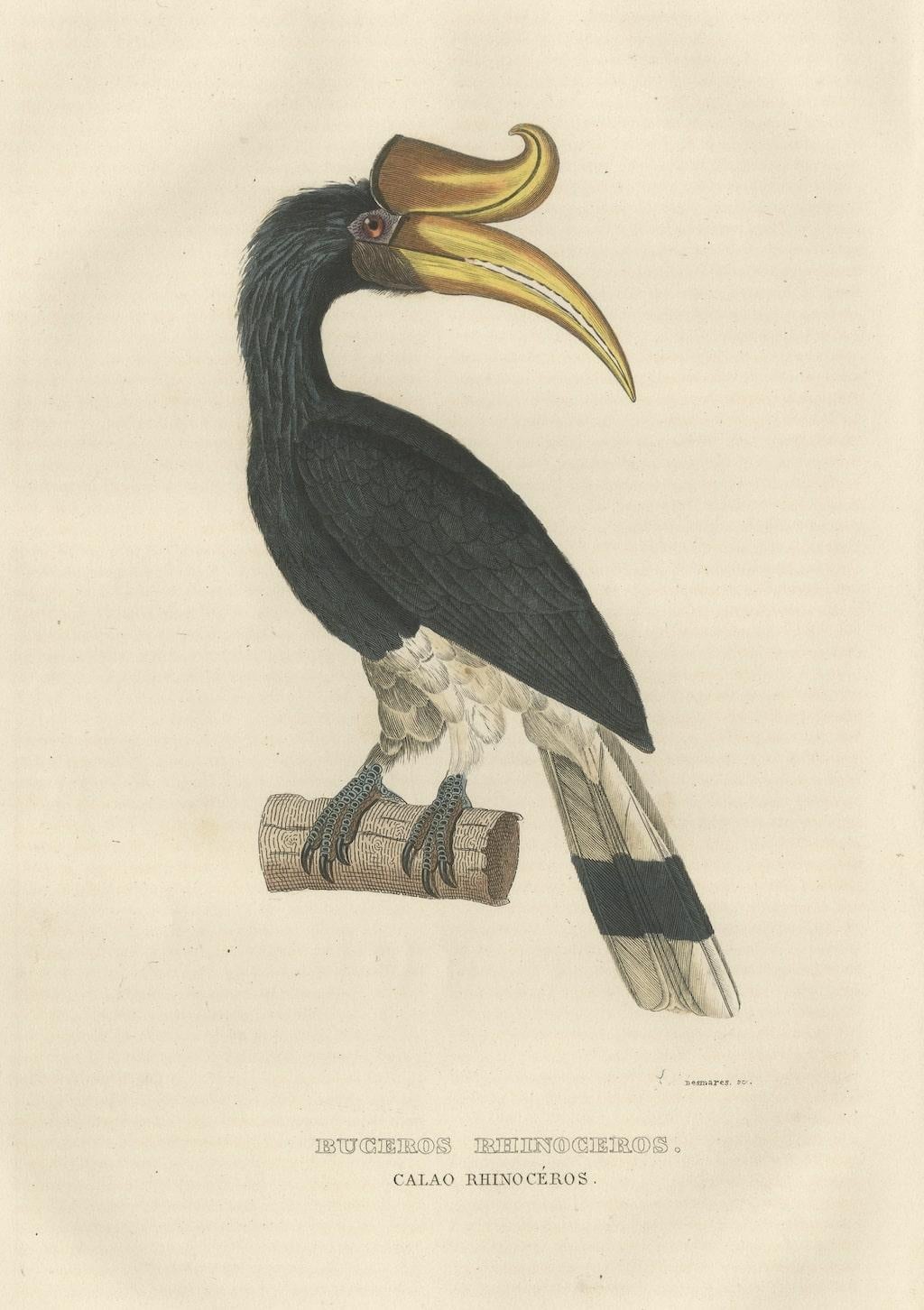
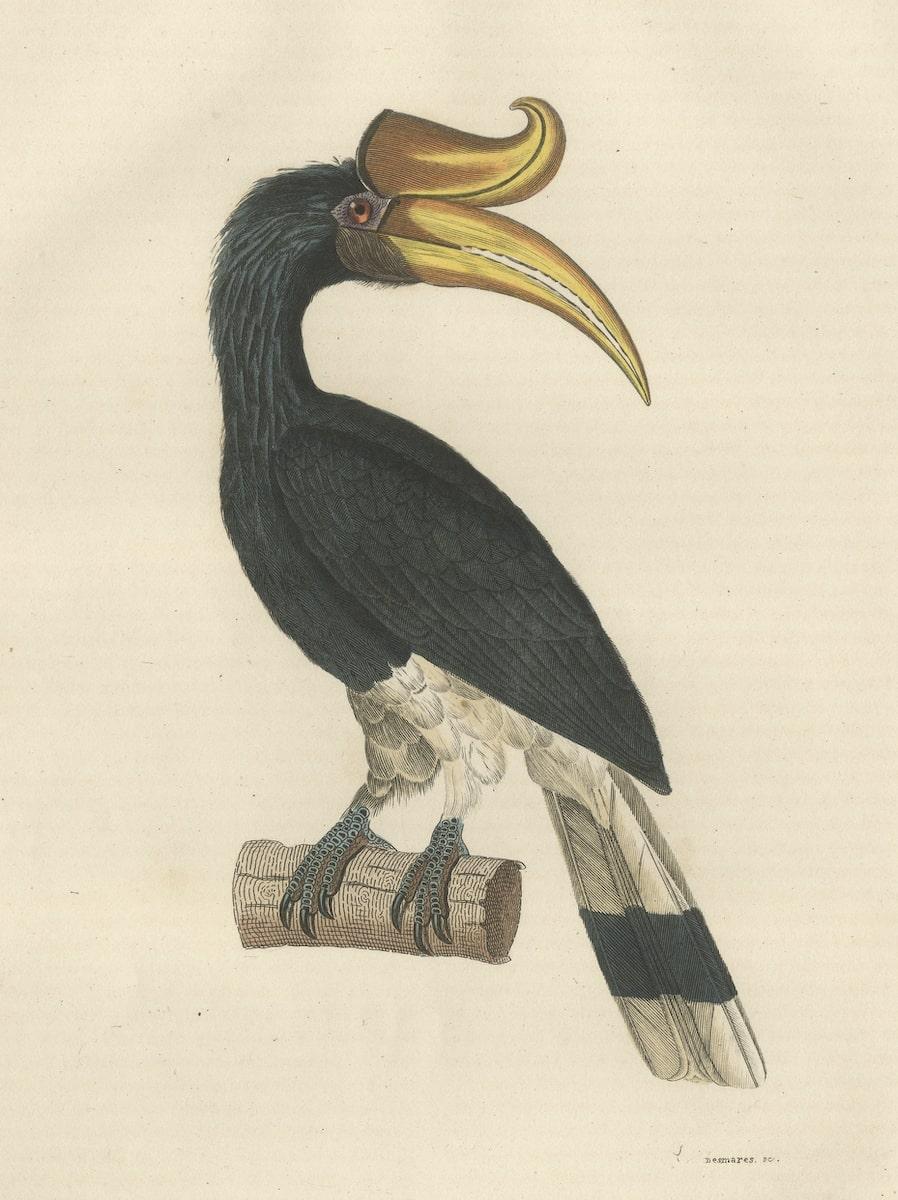
The Rhinoceros Hornbill, also known as the "Calao Rhinocéros" in French, is a remarkable and striking bird native to the forests of Southeast Asia, particularly found in Malaysia, Indonesia, and Thailand. This majestic bird is renowned for its distinctive appearance and remarkable horn-like casque atop its bill.
With its large size and striking features, the Rhinoceros Hornbill stands out among its avian counterparts. Its jet-black plumage, contrasted with its vibrant red-orange eye-ring and legs, makes for a visually captivating sight. However, its most prominent feature is the large, casque-shaped growth on top of its bill, resembling the horn of a rhinoceros, from which it derives its name.
In flight, this magnificent bird showcases its broad wingspan and elegant flight patterns, often emitting loud, distinctive calls echoing through the dense forest canopy. Renowned for its impressive aerial agility, the Rhinoceros Hornbill is also known for its ability to maneuver effortlessly among the treetops.
Known for its role as a seed disperser in its habitat, the Rhinoceros Hornbill plays a crucial ecological role in maintaining the balance of its forest environment. Its unique appearance, graceful flight, and ecological importance make it a captivating and iconic species within the biodiversity of Southeast Asian forests.
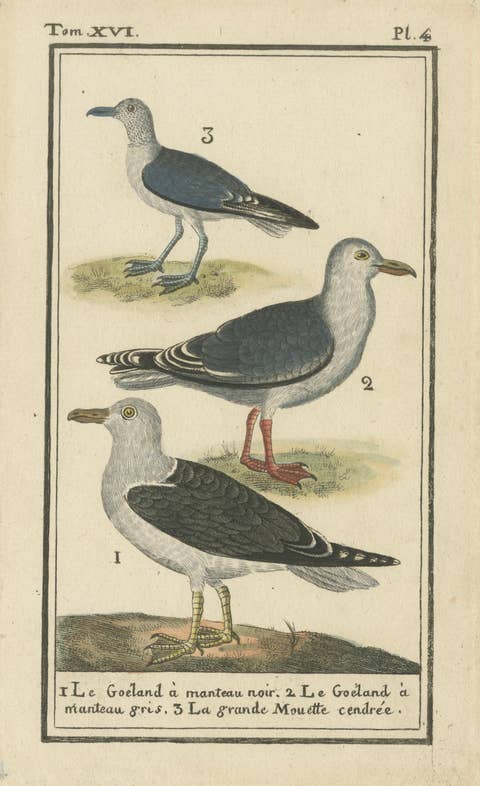
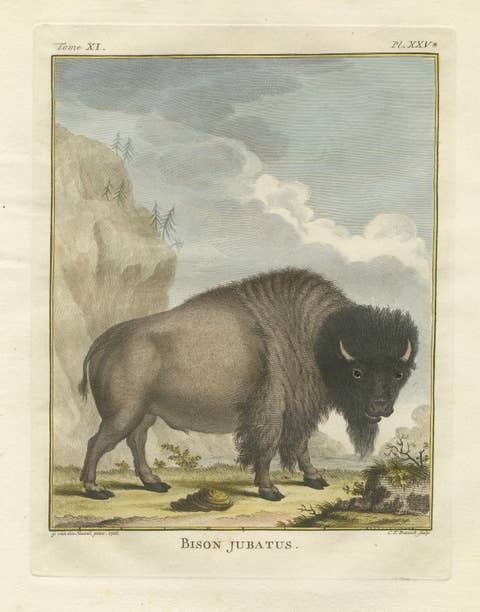
Engraving with original hand colouring, heightened with arabic gum on wove (vellin) paper.
More info on the book in which it was published:
The 'Dictionnaire Classique des Sciences Naturelles' by Pierre Auguste Joseph Drapiez stands as a remarkable testament to 19th-century natural sciences. Published in Brussels in 1845, this work represents an expansive collation of knowledge, building upon the pioneering works of Buffon, Daubenton, Lacepede, Cuvier, de Jussieu, and other influential naturalists.
The prints within this compendium likely showcase a rich amalgamation of artistic precision and scientific accuracy. Drapiez, himself a Belgian naturalist, would have aimed for detailed representations of flora, fauna, and scientific phenomena, mirroring the illustrative styles prevalent during his time. Given the era's emphasis on illustration, these prints were likely engraved meticulously, possibly portraying intricate anatomical details or lifelike depictions of the natural world.
With Drapiez's background in natural history, the prints might bear testament to his commitment to scientific authenticity, aiming to educate and inspire scholars and enthusiasts alike. These engravings would have complemented the text, offering visual aids that elucidate the concepts and specimens discussed in the volume.
Overall, the prints of 'Dictionnaire Classique des Sciences Naturelles' likely serve as both artistic representations and invaluable scientific resources, encapsulating the essence of 19th-century natural history exploration and documentation.