Noddy Tern – Antique Bird Print by John Gould, Hand-Colored c.1832
€ 450
Original antique · The actual sheet photographed · Certificate of authenticity on request · Sold unframed · Worldwide shipping from € 15 (rates)
Date
1832
Mapmaker / artist
John Gould (Artist)
Sheet size
37 × 54.5 cm (14.6 × 21.5 in)
Condition
Good
Reference
BG-07001
What the condition grades mean
Excellent
Bright and clean, with no faults worth mentioning.
Very good
Only light signs of age, such as faint toning.
Good
Normal signs of age for a sheet of this period: toning, some foxing, small marks or neat old repairs.
Fair
Clear faults such as staining, tears or repairs, priced to match.
Every fault we see is written in the condition note, and the whole sheet is shown uncropped in the photos.
Condition
Very good condition overall. General age-related toning; minor marginal imperfections and four small punched holes outside the image area (top margin), typical of original binding. Some tiny marginal tears.
About this sheet
Noddy Tern – Antique Bird Print by John Gould, Hand-Colored c.1832
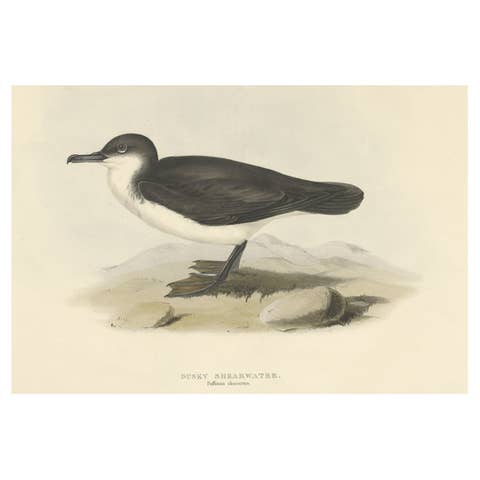
This elegant hand-colored lithograph features the Noddy Tern (Anous stolidus), a sleek and graceful seabird captured in exquisite detail by renowned ornithologist and artist John Gould. The print originates from Gould’s acclaimed work Birds of Europe, published between 1832 and 1837, one of the most important 19th-century contributions to ornithological illustration.
The Noddy Tern is depicted standing in profile on a pale rocky outcrop, its smooth black-brown plumage rendered with refined tonal shading. Gould’s lithographic precision highlights the bird’s long, slender bill and confident posture—hallmarks of this oceanic species, which is known for its aerial agility and coastal nesting habits. The subtle backdrop leaves full attention to the subject, lending the image a timeless, almost sculptural quality.
Gould’s Birds of Europe was a monumental achievement of natural history publishing, combining scientific observation with artistic mastery. This particular image exemplifies his ability to elevate ornithological documentation to fine art—making it highly desirable to collectors of antique natural history prints, decorators, and bird enthusiasts alike.
Condition report: Very good condition overall. General age-related toning; minor marginal imperfections and four small punched holes outside the image area (top margin), typical of original binding. Some tiny marginal tears.
Framing tips: This print pairs well with a narrow, dark wood or black lacquer frame, and a soft ivory or pale gray mat, allowing the contrast of the bird’s dark plumage to stand out. Ideal for a natural history gallery wall or a refined study.