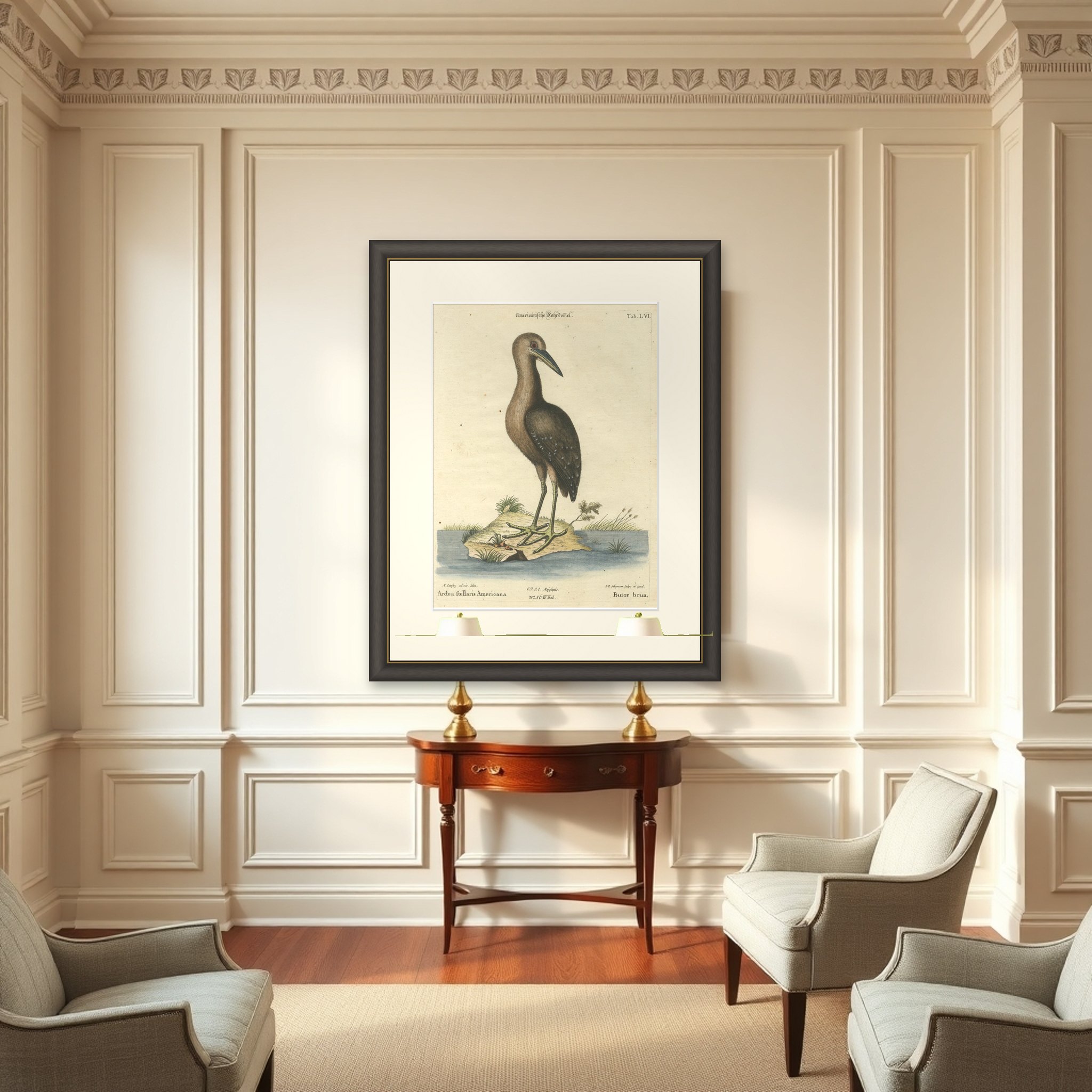
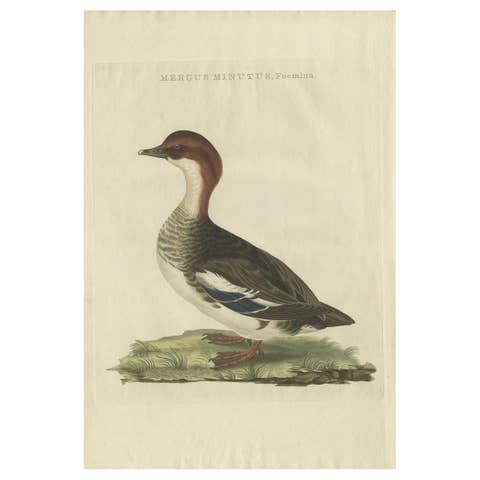
18th Century Hand-Colored Engraving of the American Bittern by Seligmann
€ 660
Original antique · The actual sheet photographed · Certificate of authenticity on request · Sold unframed · Worldwide shipping from € 15 (rates)
Sheet size
37 × 25 cm (14.6 × 9.8 in)
Reference
BG-13986
What the condition grades mean
Excellent
Bright and clean, with no faults worth mentioning.
Very good
Only light signs of age, such as faint toning.
Good
Normal signs of age for a sheet of this period: toning, some foxing, small marks or neat old repairs.
Fair
Clear faults such as staining, tears or repairs, priced to match.
Every fault we see is written in the condition note, and the whole sheet is shown uncropped in the photos.
Condition
Good. Vibrant colors, minimal fading. Paper shows light toning and minor foxing. Edges sharp; no tears, no folds. Slight handling marks, mostly outside platmark, not affecting image quality.
About this sheet
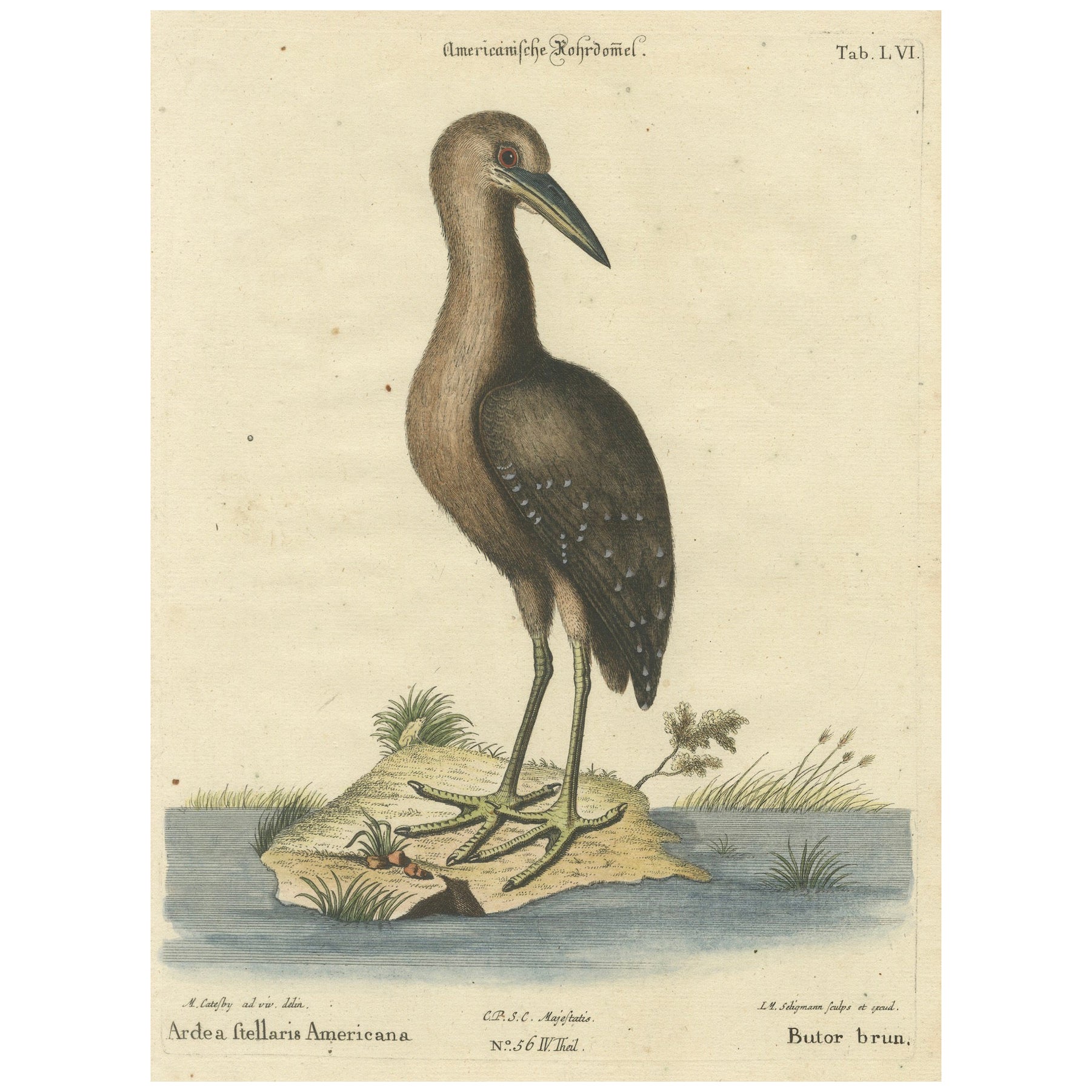
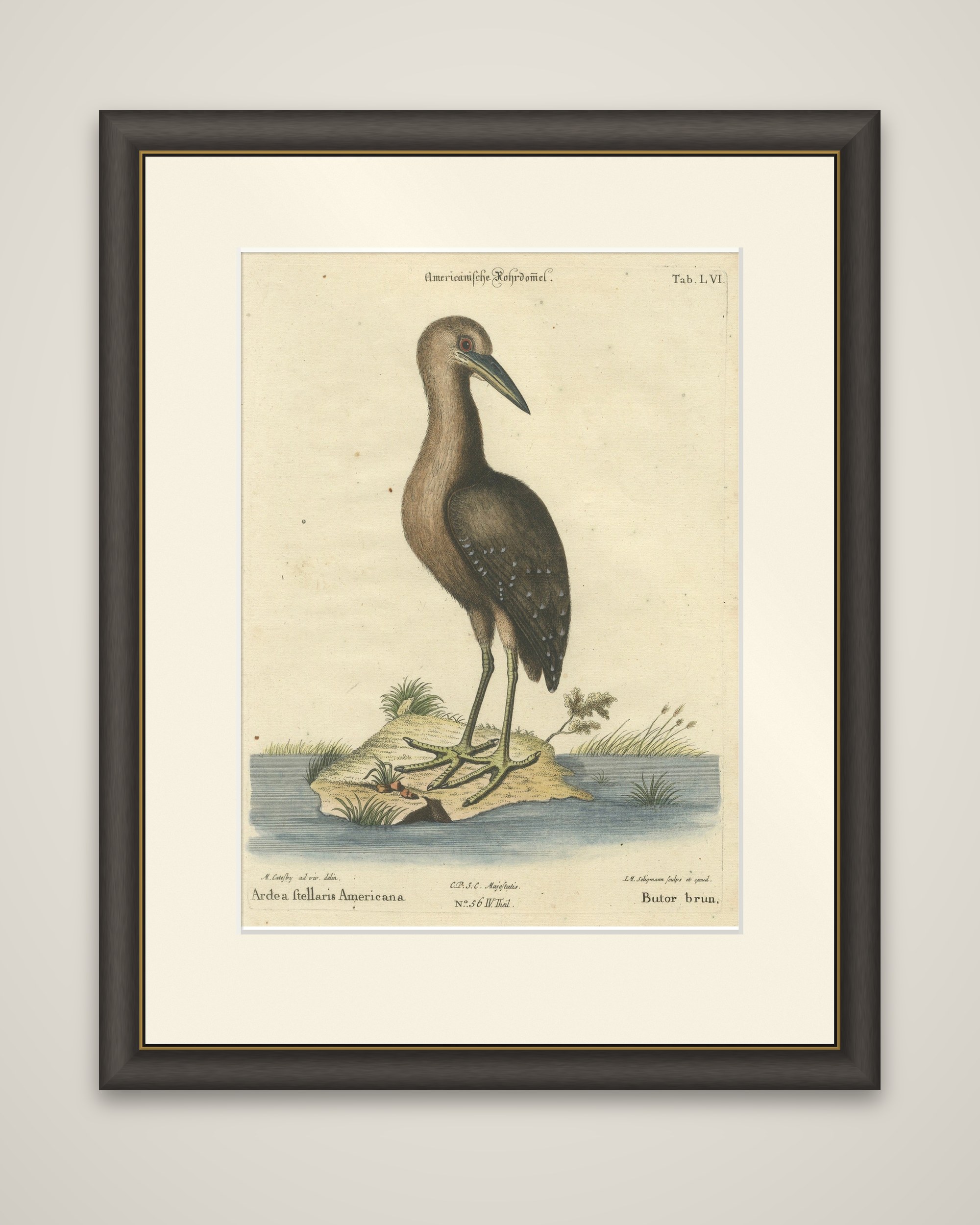
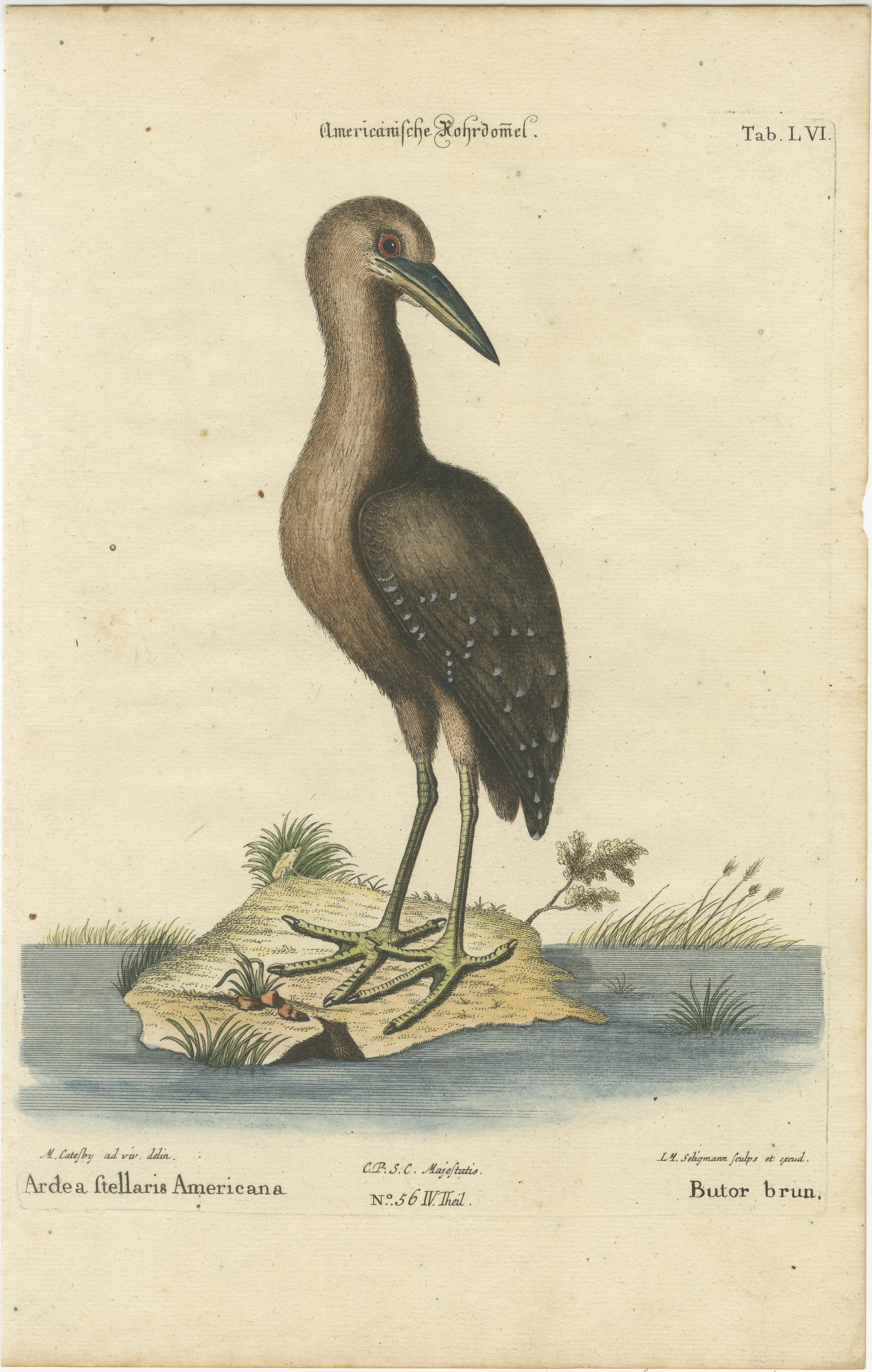
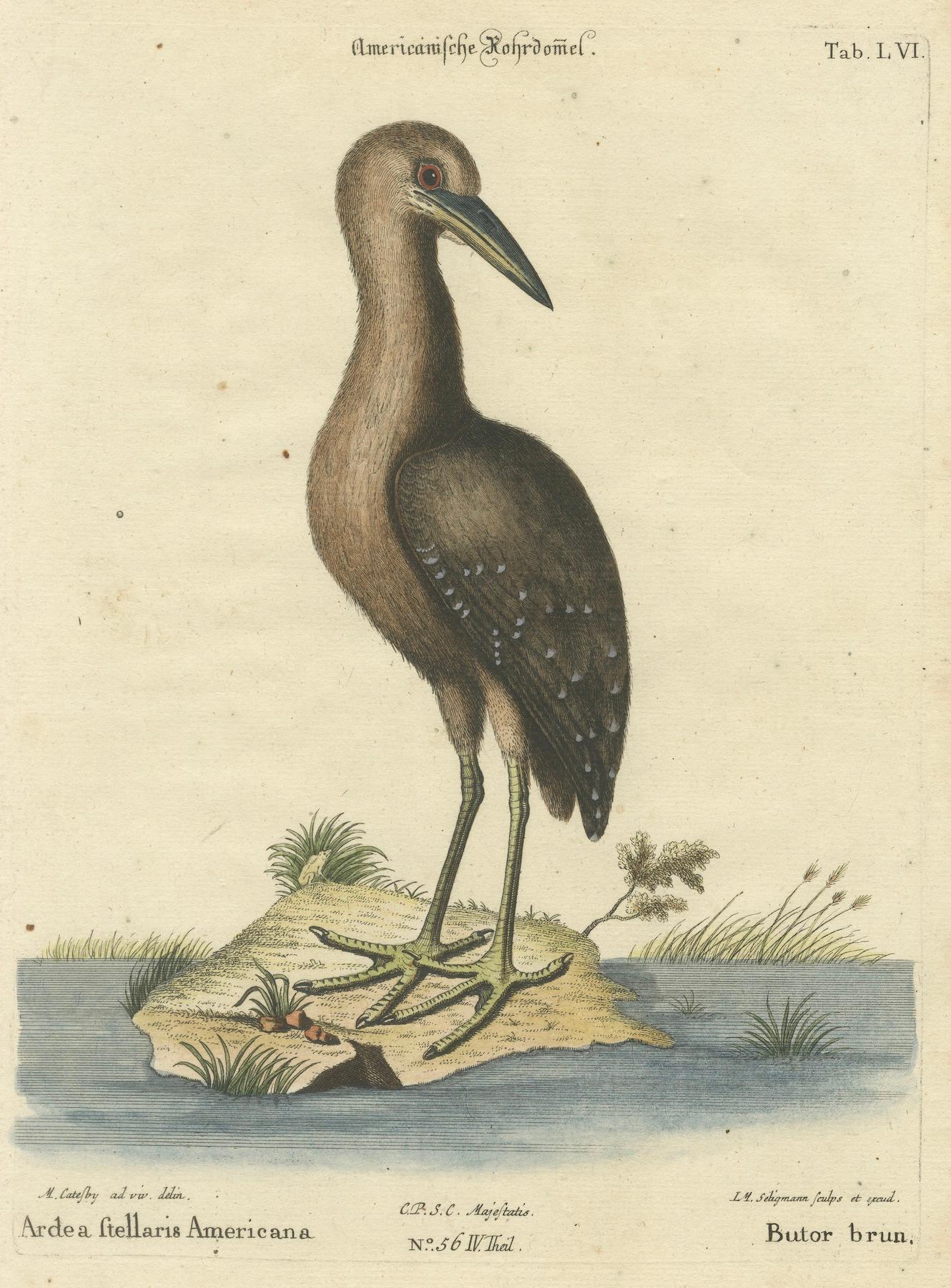
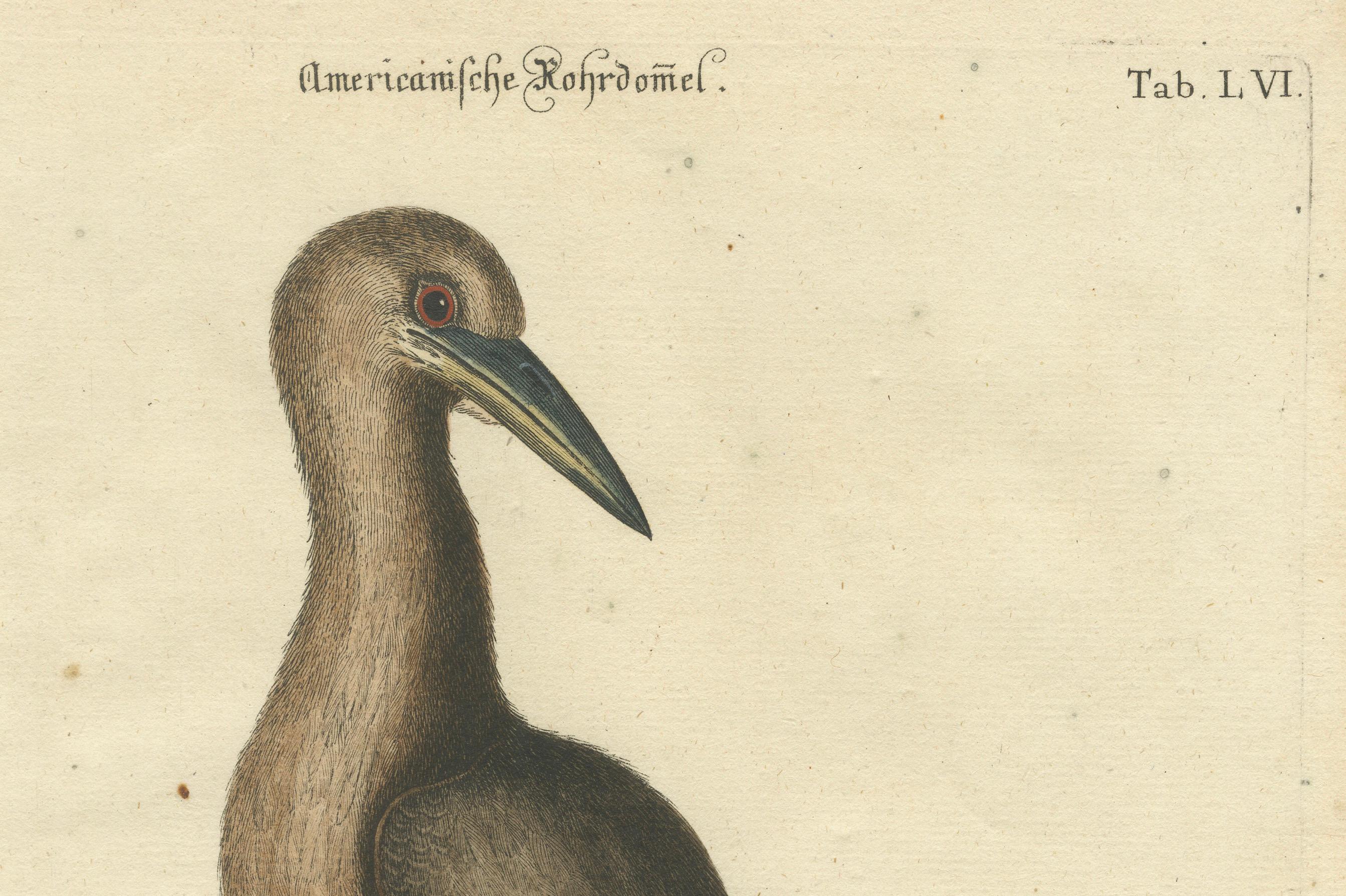
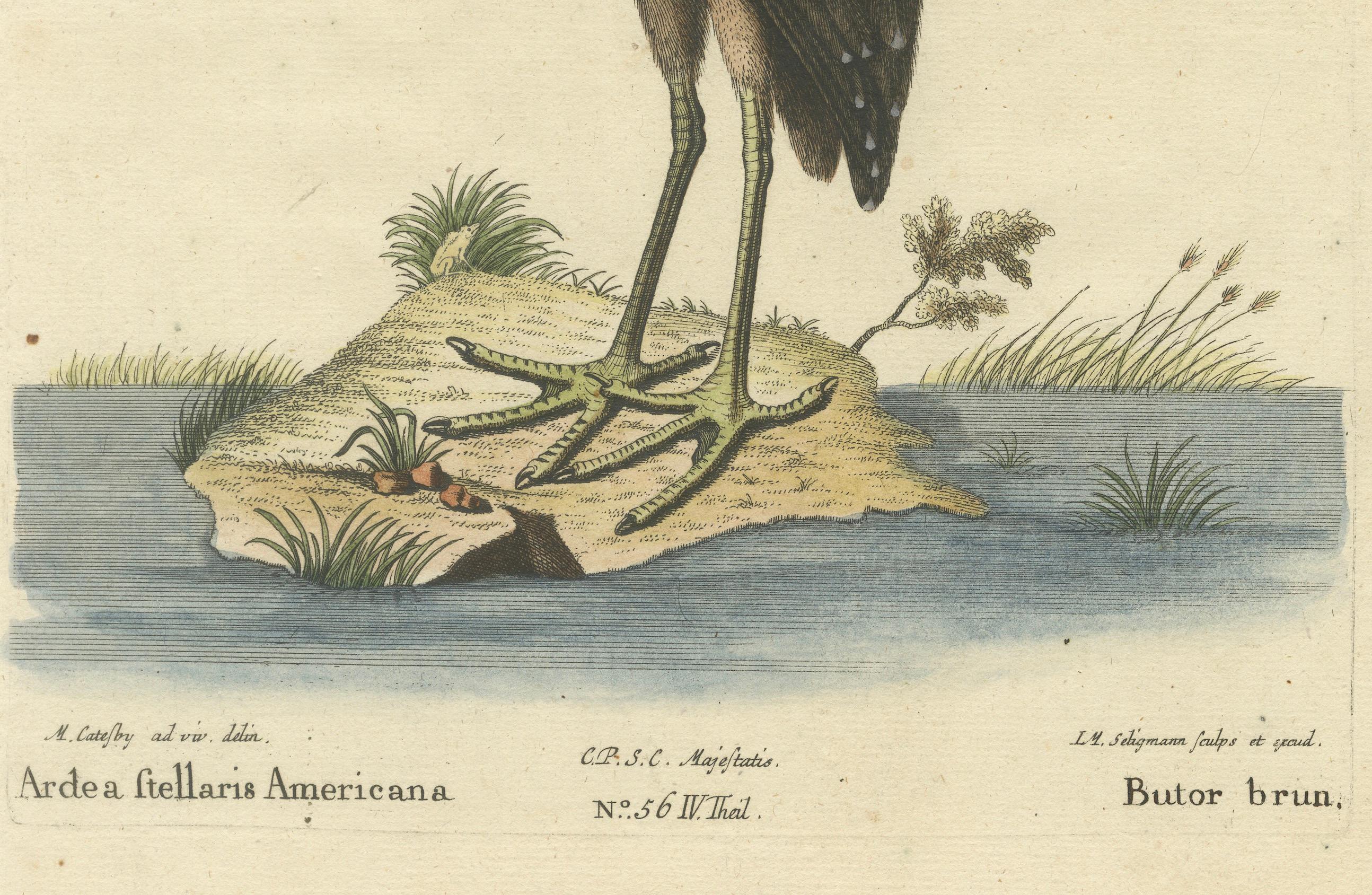
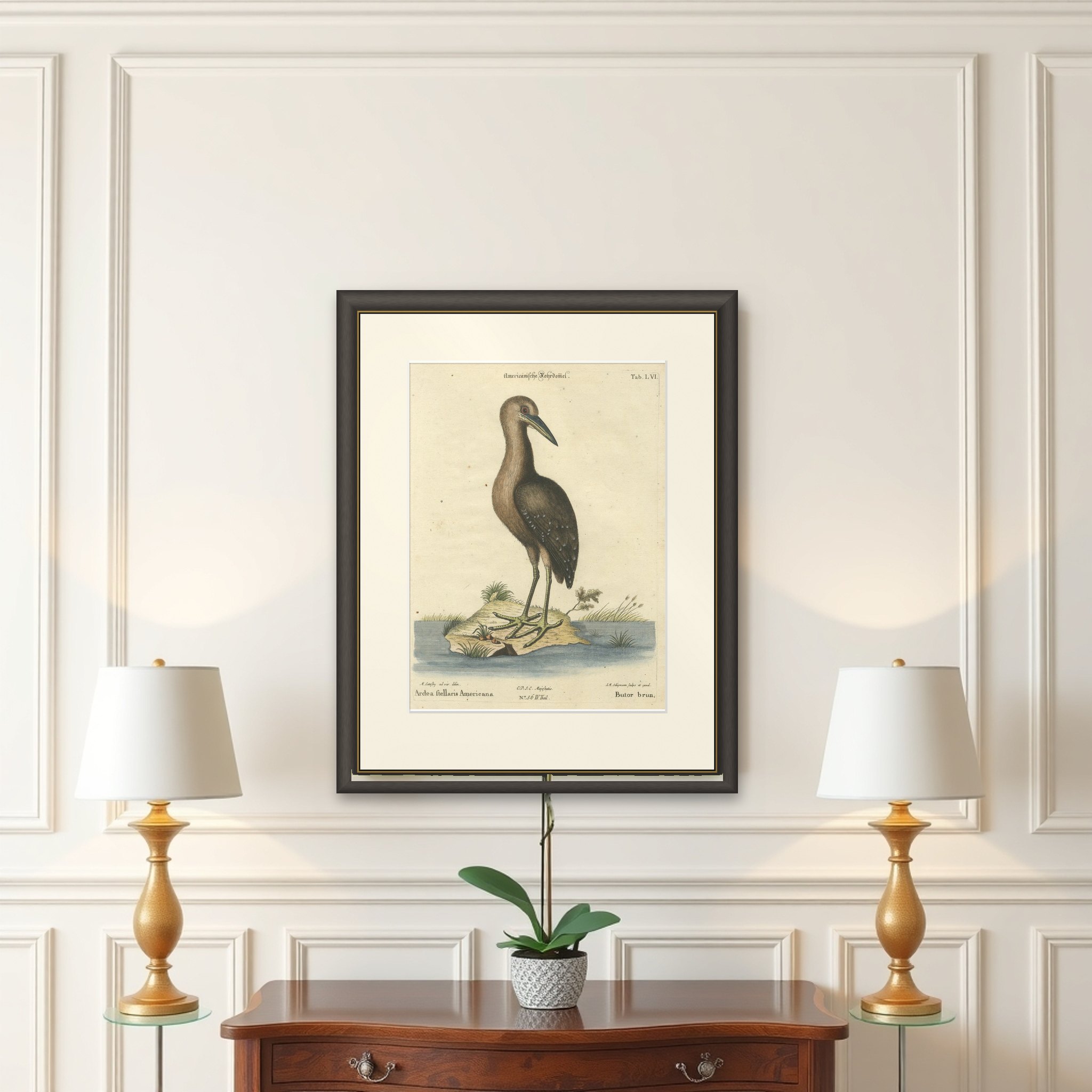
The American bittern, titled "Americanische Rohrdomel", in an original hand-colored copperplate engraving from Johann Michael Seligmann's Sammlung verschiedener ausländischer und seltener Vögel, an eighteenth-century Nuremberg collection of foreign and rare birds. The plate is numbered "Tab. LVI" at the upper right and lettered below with the Latin "Ardea stellaris Americana", "N° 56 IV Theil" and the French "Butor brun", with the credit "M. Catesby ad vivum delin." at the lower left and Seligmann's engraving credit at the lower right.
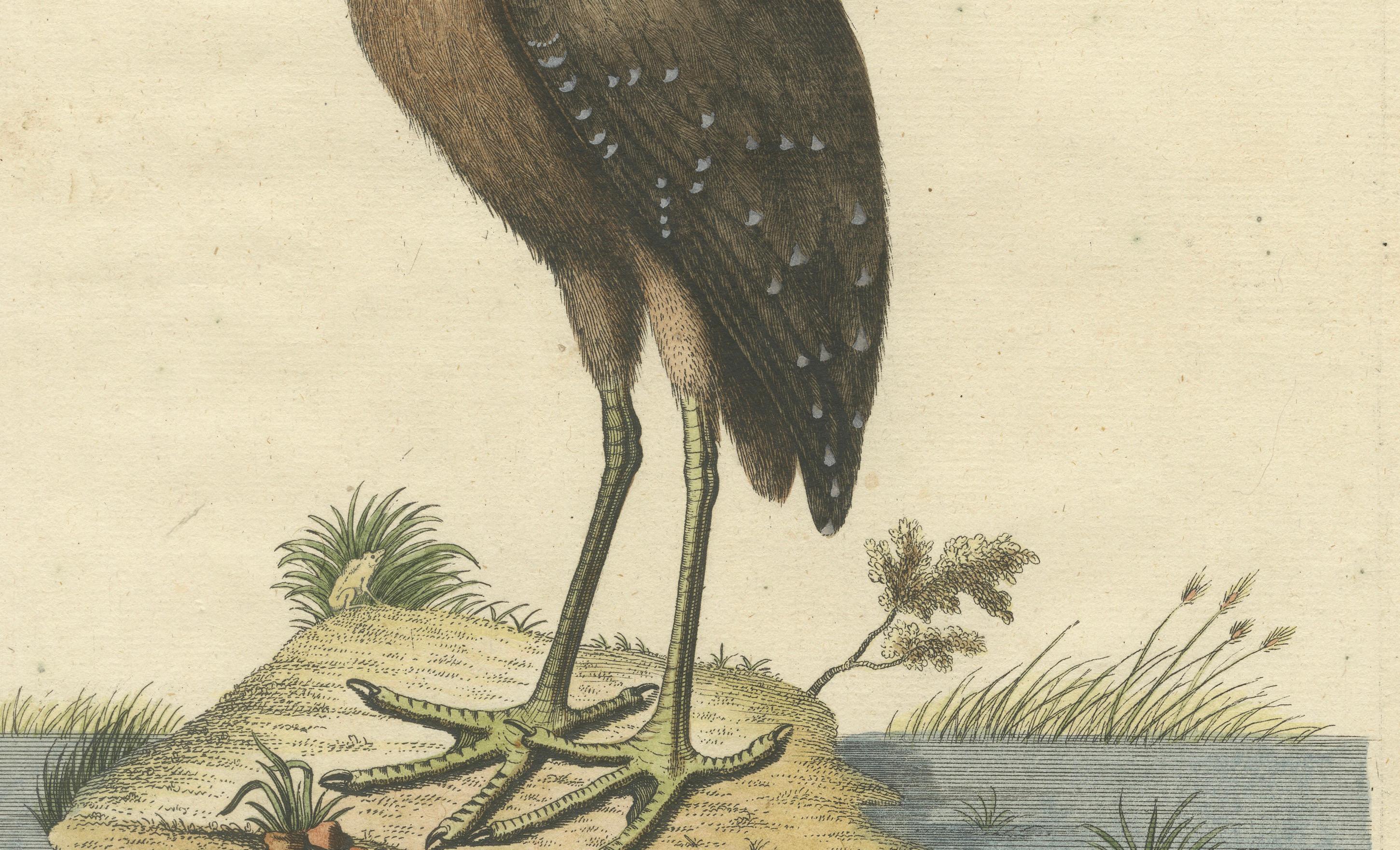
A single bird stands tall and upright on a small, low island of sand and grass, facing right, with its neck drawn up and its long, pointed bill held level. The plumage is warm brown on the head and breast and darker on the folded wing, where the feathers are edged and spotted in white, and the legs and long toes are a pale yellow-green. A blue-gray band of water stretches across the foreground and background, with a few tufts of grass and reeds at the sides and a small branch behind the bird at the right.
The bird and its setting come from Mark Catesby's drawings of the wildlife of the Carolinas and the Bahamas, which Seligmann re-engraved for German readers, with the captions in German, Latin and French.