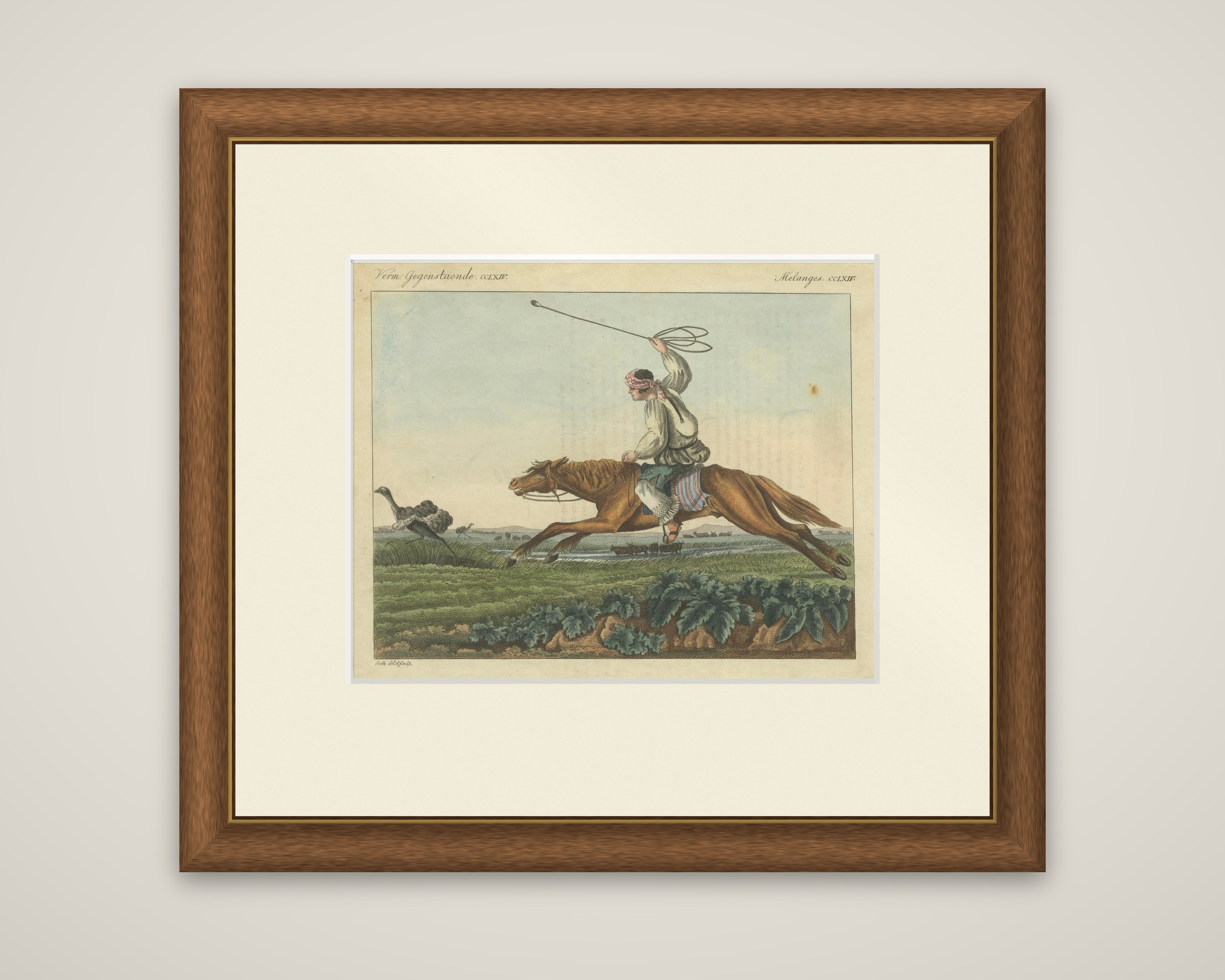
1823 Hand-Colored Engraving - Gaucho Hunting Ostrich with Bolas in the Pampas
€ 140
Original antique · The actual sheet photographed · Certificate of authenticity on request · Sold unframed · Worldwide shipping from € 15 (rates)
Date
1823
Sheet size
19.5 × 23.5 cm (7.7 × 9.3 in)
Condition
Good
Reference
BG-13997-9
What the condition grades mean
Excellent
Bright and clean, with no faults worth mentioning.
Very good
Only light signs of age, such as faint toning.
Good
Normal signs of age for a sheet of this period: toning, some foxing, small marks or neat old repairs.
Fair
Clear faults such as staining, tears or repairs, priced to match.
Every fault we see is written in the condition note, and the whole sheet is shown uncropped in the photos.
Condition
Condition report: Margins lightly toned, scattered minor foxing spots, original hand-coloring remains vivid, slight edge wear, no major tears or damage. Study the images carefully.
About this sheet
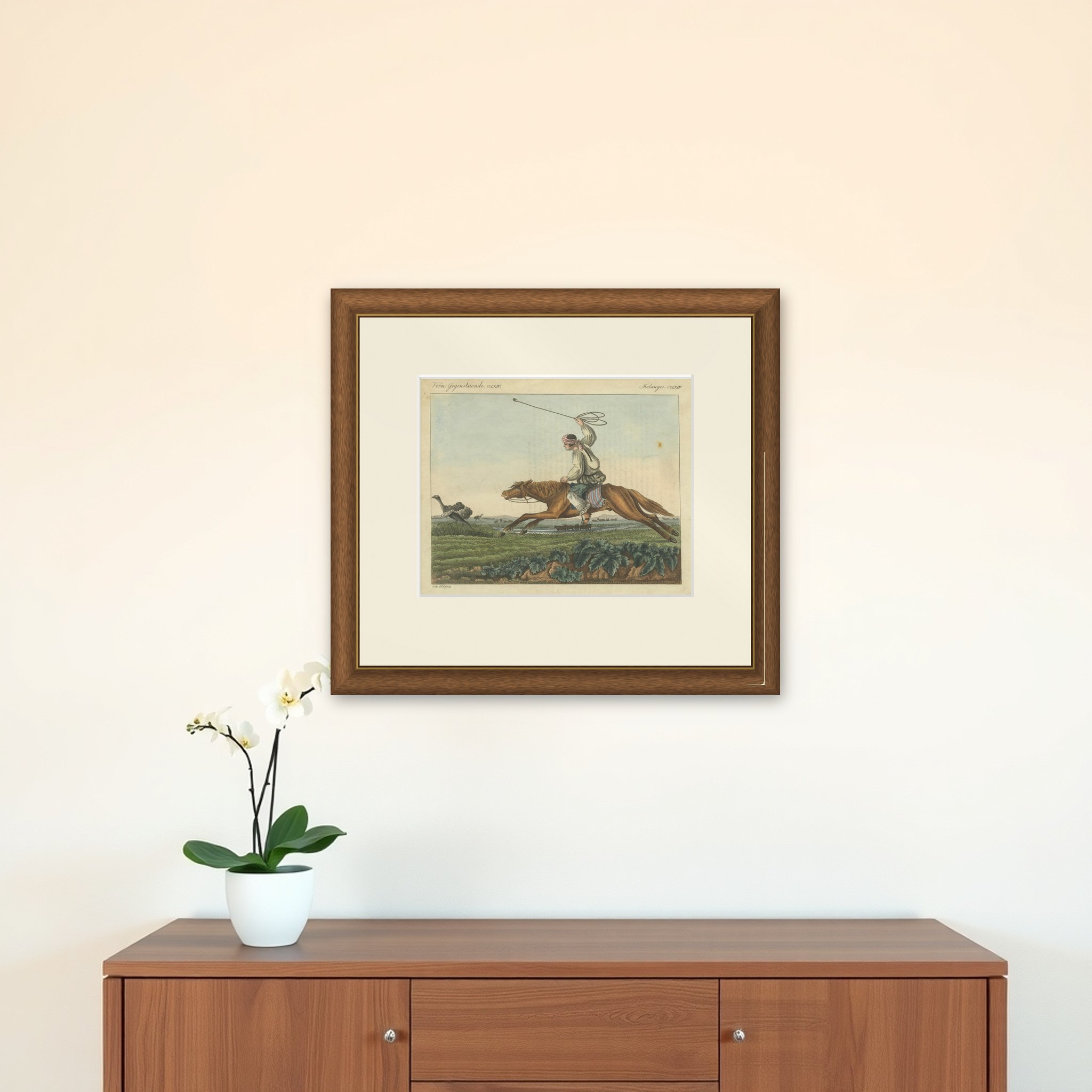
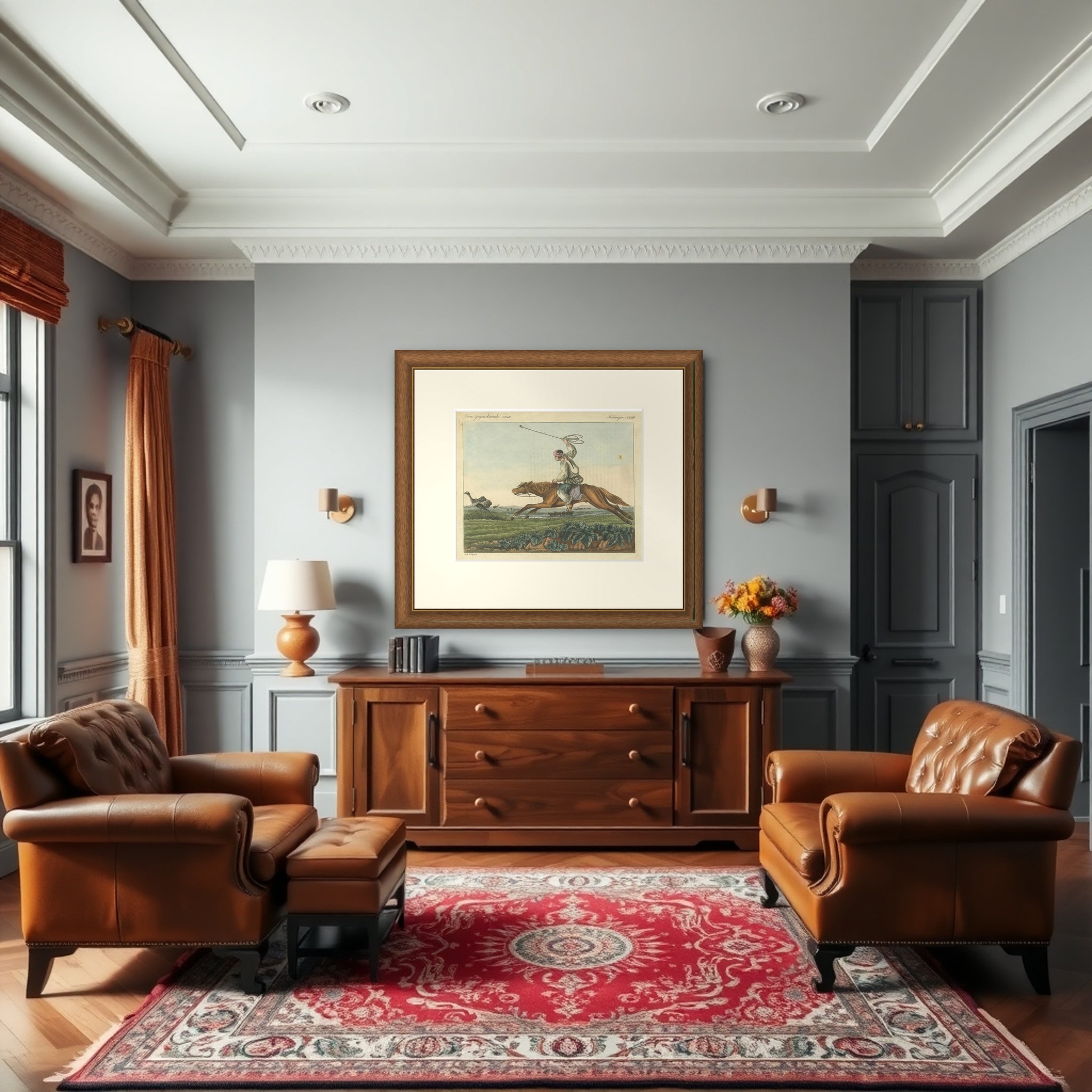
A gaucho hunting a rhea with bolas on the pampas, an original hand-colored copper engraving of 1823 by Goetz from Friedrich Johann Bertuch's Bilderbuch fuer Kinder (Picture Book for Children). The plate is lettered "Verm. Gegenstaende. CCLXIV" at the upper left and "Melanges. CCLXIV" at the upper right, and the engraver's signature appears in the lower left corner of the image.
The rider fills the center of the sheet, stretched flat along a galloping chestnut horse, one arm raised over his head with the weighted cords of the bolas whirling above him. He wears a red head cloth, a white shirt, a striped saddle blanket and fringed white trousers, and his feet are in open sandals. Ahead of the horse a rhea, the South American ostrich, runs through the grass with its wings spread, and a second bird stands farther off. Grazing animals dot the plain, a stream runs across the middle distance, and large-leaved plants fill the foreground under a pale sky.
The bolas, three stone or iron balls on a thong, were thrown to entangle the legs of running game, and the pampas of the River Plate were the country where gauchos used them. Bertuch's picture book ran in parts from 1790 to 1830 and numbered nearly 1,200 plates.